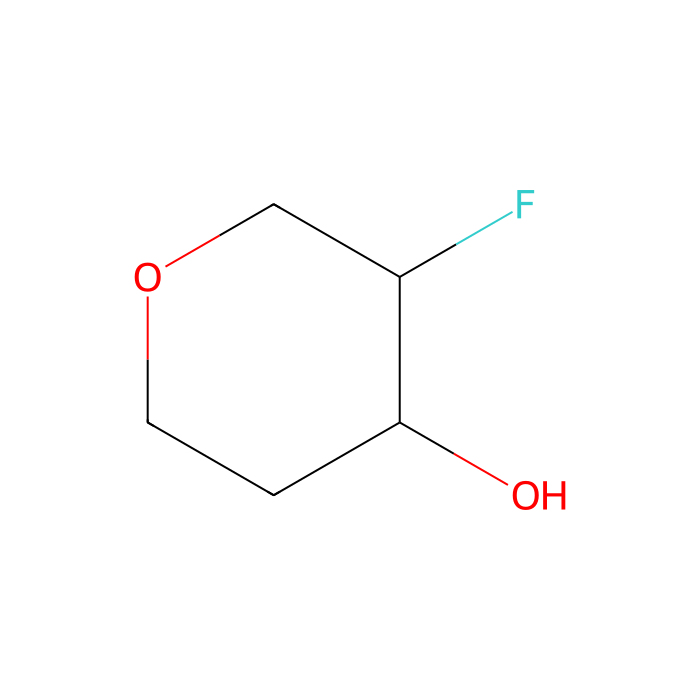
This compound belongs to the class of organic compounds known as oxanes. These are compounds containing an oxane (tetrahydropyran) ring, which is a six-member saturated aliphatic heterocycle with one oxygen atom and five carbon atoms.
External Descriptors
Not available
1. Djoumbou Feunang Y, Eisner R, Knox C, Chepelev L, Hastings J, Owen G, Fahy E, Steinbeck C, Subramanian S, Bolton E, Greiner R, and Wishart DS. ClassyFire: Automated Chemical Classification With A Comprehensive, Computable Taxonomy. Journal of Cheminformatics, 2016, 8:61.
Certificati (CoA, COO, BSE/TSE e tabella di analisi)
C of A & Other Certificates(BSE/TSE, COO):
Analytical Chart:
Proprietà chimiche e fisiche
Peso molecolare
120.120 g/mol
XLogP3
0.000
Hydrogen Bond Donor Count
1
Hydrogen Bond Acceptor Count
3
Rotatable Bond Count
0
Exact Mass
120.059 Da
Monoisotopic Mass
120.059 Da
Topological Polar Surface Area
29.500 Ų
Heavy Atom Count
8
Formal Charge
0
Complexity
76.800
Isotope Atom Count
0
Defined Atom Stereocenter Count
2
Undefined Atom Stereocenter Count
0
Defined Bond Stereocenter Count
0
Undefined Bond Stereocenter Count
0
The total count of all stereochemical bonds
0
Covalently-Bonded Unit Count
1
Calcolatori di soluzioni
Molarity Calculator
Determine the necessary mass, volume, or concentration for preparing a solution.
Dilution Calculator
Determine the dilution needed to prepare a stock solution.
Reconstitution Calculator
Recensioni
Recensioni dei clienti
Application Protocols
Not applicable. No immunoassay or bioassay protocols (e.g., WB, IHC, IF, FC) are associated with this small-molecule building block. For synthetic applications, see the Reaction Conditions and Synthetic Utility sections for general laboratory guidance.
Biological Roles
This product is intended solely for laboratory research. No biological role is assigned for this specific small molecule.
General context (literature)
Fluorine substitution in small molecules is widely used in medicinal chemistry to modulate metabolic stability, conformation, and physicochemical properties (e.g., pKa and lipophilicity). However, cis-3-fluorooxan-4-ol itself is not a known endogenous metabolite or cofactor.
The oxane (tetrahydropyran) ring is a common motif in natural products and carbohydrate chemistry, where oxygen-containing rings influence hydrogen-bonding and 3D shape. Here, the presence of both an endocyclic oxygen and a pendant alcohol creates multiple hydrogen-bonding interactions with proteins or solvents, which can be useful in probe design.
Assay utility
As a fragment-like scaffold, it may serve as a control or starting point in structure–activity studies or as a solvating/templating component in supramolecular experiments, but such uses are project-specific and not intrinsic biological functions.
No clinical or therapeutic claims are made or implied. For any biological testing, ensure appropriate approvals and handle according to institutional safety policies.
Buffer Applications
This compound is a neutral organic building block and is not typically used as a buffering agent. It lacks a defined acid–base pair suitable for maintaining pH in aqueous systems.
Practical note
If dissolution in aqueous buffers is required for an assay, use co-solvents such as DMSO or MeCN (final DMSO ≤1–2% v/v is common in biochemical assays) and pre-validate solubility and assay compatibility.
Adjust buffer composition (e.g., 0.01–0.05% nonionic surfactant) to mitigate adsorption losses of small polar organics if needed.
For true buffer needs, select established systems (phosphate, HEPES, MOPS, acetate) appropriate to your target pH range.
Green Alternatives
Because cis-3-fluorooxan-4-ol is a specialty building block rather than a process solvent or bulk reagent, greener practice focuses on solvent and reagent choices in its transformations.
Greener solvent choices (general guidance)
Prefer 2-MeTHF, CPME, EtOAc, MeCN, or ethanol over chlorinated solvents where compatible with the reaction.
For aqueous-organic systems, consider MeCN/H2O or EtOAc/H2O biphasic media instead of DCM.
Oxidations of the secondary alcohol
Greener alternatives: TEMPO/NaOCl (bleach) in aqueous buffer/MeCN or Oxone-based systems can replace chromium(VI) reagents. Control temperature and pH to limit ring cleavage.
Substitution after OH activation
Use greener sulfonylating conditions (e.g., p-toluenesulfonic anhydride in EtOAc or MeCN) and avoid DMF/DMSO if MeCN or 2-MeTHF suffices.
Workup and purification
Minimize silica usage by employing crystallization or reverse-phase catch-and-release where feasible. Utilize solvent recycling for EtOAc, MeCN, and alcohols.
Comparison snapshot (general)
DCM vs EtOAc: EtOAc offers lower toxicity and better biodegradability; both support many oxidation/protection steps.
THF vs 2-MeTHF: 2-MeTHF is biorenewable, forms peroxides more slowly, and can replace THF in many substitution/protection reactions.
These measures do not alter the item’s identity; they improve the environmental profile of routes employing cis-3-fluorooxan-4-ol.
Pharmaceutical Uses
Excipient/formulation role
Not used as a pharmacopeial excipient to our knowledge; no compendial status is indicated for this item. Not specified for this item; refer to CoA/Spec Sheet if pharmacopeial information becomes available.
Process/industrial relevance (general)
As a stereodefined fluorinated oxacycle, cis-3-fluorooxan-4-ol can serve as a synthetic intermediate in API discovery and route scouting, enabling installation of a metabolically robust C(sp3)–F motif and a transformable secondary alcohol.
Handling in pharmaceutical R&D settings
Typical uses include incorporation into fragment libraries, elaboration via SN2/Mitsunobu to diversify at C4, or oxidation to access carbonyl derivatives for further coupling.
When considered for GMP routes, define impurity profiles (including cis/trans and potential ring-opened species), residual solvents, and chiral purity if applicable.
No therapeutic claims are made. Material is supplied for research use only.
Physical Properties
Item-specific property values have not been provided for this SKU. Where possible, general/literature expectations for this structural class are summarized for reference. Do not treat these as specifications.
Item-specific values
Appearance: Not specified for this item; refer to CoA/Spec Sheet.
Molecular Weight: Not specified for this item; refer to CoA/Spec Sheet. (Literature/computed for C5H9FO2 ≈ 120.12 g/mol.)
Molecular Formula: Not specified for this item; refer to CoA/Spec Sheet.
General/literature expectations for small fluorinated cyclic alcohols (reference only)
Physical state: Often colorless liquids or low-melting solids at ambient temperature; hydrogen bonding from the OH elevates boiling point relative to the parent ether.
Volatility: Lower than tetrahydropyran due to the secondary alcohol; expect moderate vapor pressure.
Solubility: Miscible with many organic solvents (e.g., ethers, esters, chlorinated solvents). Limited to moderate solubility in water; OH enables some aqueous affinity versus non-hydroxylated ethers.
Hydrogen bonding: Acts as H-bond donor and acceptor (OH), plus an additional acceptor site at the ring oxygen; F is weak H-bond acceptor.
Density/refractive index/logP: Typically higher density and refractive index than non-fluorinated analogs of similar MW; logP modest due to OH, but F can slightly increase lipophilicity—quantitative values not assigned here.
For authoritative specifications (bp, mp, density, refractive index, purity), consult the item’s CoA/Spec Sheet for SKU C174117.
Quality and Grades
Item-specific grade/purity
Grade/Purity: Not specified for this item; refer to CoA/Spec Sheet.
What grade entails (general guidance)
Synthetic building blocks are commonly offered as “95%+” or higher assay with residual solvent and impurity profiles documented on a Certificate of Analysis (CoA). Where applicable, optically enriched versions list enantiomeric/diastereomeric excess (ee/de). Absent such notations, material is typically racemic/diastereomerically defined only by the named isomer (here, cis).
For chromatographic or spectroscopic applications, additional attributes (e.g., low UV cut-off, metal content) may be reported. None are specified here for this SKU.
Stabilizers and additives
No stabilizer information is provided for this item. If a stabilizer is used (e.g., trace acid or base), it will appear on the CoA. Lack of stabilizer listing does not imply absence—verify on receipt if critical for your workflow.
Identity/quality verification (best practices)
NMR: Distinctive coupling of the C3–F center (large 1JHF and vicinal 3JHF couplings) and the C4–OH proton (exchangeable) facilitate assignment. Diastereomeric purity (cis vs trans) can be assessed by characteristic coupling patterns and NOE.
MS: M+ peak consistent with ~120.1 Da (literature/computed); common fragments include loss of HF or water.
IR: Broad O–H stretch; C–F stretch typically 1000–1400 cm−1.
Refer to the CoA/Spec Sheet for the definitive specifications of SKU C174117.
Reaction and Applications
Role in synthesis (general)
cis-3-Fluorooxan-4-ol is a versatile, stereodefined fluorinated building block for discovery chemistry and SAR campaigns. The juxtaposition of a secondary alcohol and a C(sp3)–F center on an oxacyclic scaffold enables modular diversification while retaining a metabolically robust fluorine.
Alcohol activation/substitution: Convert the C4–OH to sulfonates (Ts/ Ms/ Ns) or halides (SOCl2, PBr3) for SN2 displacement, enabling installation of N-, O-, S-, or C-nucleophiles. Note that SN2 proceeds with inversion at C4, allowing stereochemical control (cis → trans at C3/C4 upon substitution).
Oxidation: Secondary alcohol → ketone (e.g., Dess–Martin periodinane, PCC, Swern), affording 3-fluorooxan-4-one, a handle for further enolization or reductive amination.
Mitsunobu: Install less nucleophilic partners (e.g., phenols, carboxylic acids) with inversion at C4; useful for accessing trans diastereomers from the cis alcohol.
Protection: Silyl ethers (TBS, TBDPS) or carbonates (Boc2O) to mask the OH during downstream chemistry, particularly under basic/organometallic conditions.
Ring functionalization: Directed lithiation/metalation is generally not applicable due to the heteroatoms and C–F; instead, rely on substitution at C4 after activation or oxidation/reduction sequences.
Application areas
Introduction of a polar fluorinated motif into fragment libraries and lead-like scaffolds.
Conformationally restricted glycomimetic or carbohydrate-adjacent motifs where THP frameworks are used.
Exploration of fluorine effects on pKa, lipophilicity, and dipole within oxygen-rich rings.
Practical tips
Maintain anhydrous conditions for moisture-sensitive steps (activation, Mitsunobu).
Monitor diastereomeric outcomes when performing stereoinvertive reactions at C4; confirm by NMR (JHF patterns/NOE).
Reaction Conditions
The following are general literature-style conditions commonly employed with secondary alcohols on oxacycles; adjust to your scale and safety constraints. These are not item-specific specifications.
Tosylation (activation of OH)
Typical: TsCl (1.1–1.5 equiv), pyridine or Et3N (2–3 equiv), 0–25 °C, 1–4 h in DCM or MeCN. Monitor for elimination; maintain low temperature and use hindered base to minimize dehydration.
Mitsunobu inversion/etherification
PPh3 (1.2–1.5 equiv), DIAD/DEAD (1.2–1.5 equiv), pronucleophile (1.5–2.0 equiv), THF or toluene, 0 °C to rt, 2–16 h. Expect inversion at C4; confirm diastereomeric outcome.
Oxidation to ketone
Dess–Martin periodinane (1.2 equiv), DCM or EtOAc, 0–25 °C, 0.5–2 h; or TEMPO (5–10 mol%), NaOCl (1.5–2.0 equiv active chlorine), pH ~8.6 buffer, MeCN/H2O (1:1), 0–10 °C, 1–3 h. Quench carefully to avoid ring cleavage.
Halogenation of OH
SOCl2 (1.2–1.5 equiv) with pyridine or DMF catalyst, 0–25 °C, DCM or toluene; or PBr3 (1.1–1.3 equiv), 0–5 °C to rt. Proceed via SN2 at C4 (inversion). Control temperature to suppress elimination.
Protection as silyl ether
TBSCl (1.2–1.5 equiv), imidazole (2.0 equiv), DMF or DCM, 0–25 °C, 1–3 h. Fluorine at C3 is typically unaffected.
Workup/purification tips
Avoid strong acid in aqueous workups that may promote ring opening. Use buffered washes when feasible. Silica gel with 0.5–1% Et3N or rapid purification reduces tailing of free alcohols.
All conditions should be validated experimentally and assessed for safety and scalability.
Safety and Handling
Regulatory note
Research Use Only. Not for human or veterinary use.
GHS classification (item-specific)
Signal Word: Not specified for this item; refer to SDS.
Hazard Statements (H-Statements): Not specified for this item; refer to SDS.
Pictograms and GHS Classifications: Not specified for this item; refer to SDS.
General hazards for fluorinated secondary alcohols and cyclic ethers (literature/general guidance)
May cause irritation to skin, eyes, and respiratory tract on contact or inhalation.
Ethers can form peroxides upon prolonged exposure to air and light; while the pendant OH reduces volatility and may slow peroxide formation compared to simple ethers, best practice is to store tightly closed and periodically check if long-stored.
Incompatibilities (general)
Strong oxidizers (risk of exotherm/oxidation).
Strong acids/bases may induce ring-opening or dehydration; acid chlorides/anhydrides/isocyanates will acylate the alcohol.
Reactive metals/strong hydrides may deprotonate the OH.
Recommended PPE and hygiene
Use chemical-resistant gloves (e.g., nitrile), lab coat, and splash goggles.
Handle in a fume hood to control vapors/aerosols.
First-aid overview (general)
Skin: Wash with soap and water; remove contaminated clothing.
Eyes: Rinse cautiously with water for several minutes; seek medical evaluation.
Inhalation: Move to fresh air; monitor breathing; seek medical advice if symptoms persist.
Ingestion: Rinse mouth; do not induce vomiting unless directed by medical personnel.
Always consult the product SDS for definitive and current safety information.
Solvent Selection
This product is a small-molecule building block rather than a bulk solvent. Solvent selection here refers to media for dissolution, reaction, and purification.
Solubility/miscibility trends (general)
Readily soluble in polar aprotic organic solvents: acetone, acetonitrile, DMSO, DMF, THF, and ethyl acetate.
Good solubility in chlorinated solvents (DCM, chloroform). Variable solubility in hydrocarbons (hexanes, toluene) depending on temperature.
Limited to moderate solubility in water due to the single OH; co-solvents may be required for aqueous systems.
Selection guidance by application
Nucleophilic substitution after OH activation (e.g., tosylate/mesylate): use dry polar aprotic solvents (DMF, DMSO, NMP, MeCN) to enhance SN2 rates.
Oxidation of the secondary alcohol (to ketone): choose MeCN, acetone, DCM, or EtOAc compatible with your oxidant (e.g., Dess–Martin in DCM/EtOAc; TEMPO/bleach in MeCN/H2O biphasic systems).
Protecting group manipulations (silylation, carbonates): anhydrous DCM, THF, or DMF with appropriate base.
Purification considerations
Normal-phase silica gel: alcohol function may cause tailing; add a small % of Et3N to the eluent or use gradient with increasing EtOAc/MeOH.
Reverse-phase methods: C18 with water/MeCN containing 0.1% formic acid or NH4HCO3 for improved peak shape.
Comparison note
Relative to non-hydroxylated ethers, the OH improves polarity and chromatographic handling but reduces volatility for solvent-removal steps.
General storage guidance (literature/best practices)
Store tightly closed under inert headspace (e.g., nitrogen or argon) to limit oxidative/peroxide formation common to ethers.
Protect from prolonged exposure to air, light, and moisture. Use amber vials if long-term storage is anticipated.
If intended for moisture-sensitive reactions, dry before use (e.g., azeotrope with toluene or dry over molecular sieves) and handle under anhydrous conditions.
Periodically check long-stored material for peroxide formation if the container has been opened multiple times (peroxide test strips) and discard safely if peroxides are detected.
Reconstitution and handling
Physical state is not specified for this item; refer to CoA/Spec Sheet. If solidifies on cold storage, warm gently to ambient and mix to homogeneity before dispensing.
Prepare stock solutions in dry, compatible solvents (e.g., DMSO, MeCN, THF) and store aliquots at low temperature as appropriate for your application to minimize freeze–thaw cycles.
Follow your institution’s chemical hygiene plan and consult the SDS for definitive handling and disposal guidance.
Structure and Identity
cis-3-Fluorooxan-4-ol is a saturated six-membered heterocycle (oxane, i.e., tetrahydropyran) bearing a fluorine at C3 and a hydroxyl at C4 in a cis relationship.
Item-specific identifiers (from Product Data)
SKU: C174117
Product Name: cis-3-fluorooxan-4-ol
CAS: 1422188-18-8
CID: 105531217
InChIKey: 227683 (as provided)
SMILES: Not specified for this item; refer to CoA/Spec Sheet.
Ring system: Six-membered oxacycle (tetrahydropyran framework) with one endocyclic oxygen.
Functional groups: Secondary alcohol at C4; C–F bond at C3; saturated backbone (no C=C).
Stereochemistry: Two adjacent stereocenters at C3 and C4; “cis” indicates the F and OH substituents are on the same face of the ring (diastereomeric relative to the trans isomer). Commercial material may be racemic with respect to absolute configuration unless an enantioenriched material is specified (not specified for this item; refer to CoA/Spec Sheet).
Computed/literature elemental formula and mass (for reference)
Molecular formula (derived from structure): C5H9FO2 (literature/computed)
Formula mass: ~120.12 g/mol (literature/computed)
2D structural description (verbal)
A chair-like tetrahydropyran ring in which C3 bears F and C4 bears OH; both substituents oriented on the same face (cis). The ring oxygen is positioned between C1 and C5; the C4 hydroxyl is secondary and capable of hydrogen bonding.
Synthetic Utility
Functional elements and reactivity
Secondary alcohol at C4: amenable to protection (TBS/TBDPS, carbonates), oxidation (DMP, TEMPO/bleach), and activation (tosylate/mesylate) for nucleophilic substitution with inversion (stereocontrol lever).
C(sp3)–F at C3: typically inert to many reaction conditions; serves as a conformational and electronic modulator. It can direct neighboring stereochemical outcomes and influence acidity of adjacent C–H bonds.
Oxacycle: contributes to polarity and solubility; under strong acid or base, ring opening to ω-halo/ω-alkoxy alcohols is possible and should be monitored.
Named and strategic reactions (literature/general)
Mitsunobu inversion at C4 to access the trans isomeric relationship with incoming nucleophiles.
Appel or halogenation (PPh3/CX4 or SOCl2, PBr3) to transform OH → halide, enabling SN2 couplings.
Oxidation to the ketone followed by reductive amination provides amine-bearing analogs without perturbing the C–F center.
Carbamate/urethane formation (reaction with isocyanates or via CDI) builds masked amines and modulates polarity.
Retrosynthetic value
Serves as a fluorinated surrogate for THP-protected alcohols where retention of the ring is desired in the final scaffold, offering vectors at C4 (diversification) while preserving the stereodefined C3–F motif.
Practical guidance
Confirm cis diastereochemistry before stereosensitive steps (NOE, JHF analysis).
Use non-nucleophilic bases (DIPEA, 2,6-lutidine) to avoid undesired ring opening during activation.
Target Specificity
Not applicable. This product is a small organic reagent and is not an antibody, enzyme, or affinity reagent. No target, epitope, clone, or species reactivity information applies.
We use cookies to ensure the website functions properly and, where permitted, to improve your experience. You can manage your preferences at any time in Settings. Learn more in our Cookie Policy.
Shall we send you a message when we have discounts available?
Remind me later
Thank you! Please check your email inbox to confirm.
Products are supplied to verified businesses, institutions, and qualified professionals for research and development use only. Not for use in humans, animals, diagnosis, or therapy.