GRADE & PURITYMoligand™?Moligand™ — Aladdin's line of ligands and bioactive small molecules. Use for receptor, pathway, and binding studies needing defined small-molecule tools.10 mM in DMSO
Moligand™, 10 mM in DMSO Moligand™ for sensitive chromatographic and analytical workflows requiring minimal baseline interference.
🌡
Storage & shipping
Store at -80°C Ships Dry ice packs + Cold packs Check lot-specific COA for exact specifications.
📋
Quality documents
SDS, COA, datasheet, and spec sheet available for download. Lot-specific COA accessible via lot number lookup.
📚
Literature proof
Cited in 0 peer-reviewed publications across chromatography, organic synthesis, and cross-coupling reactions.
Panoramica
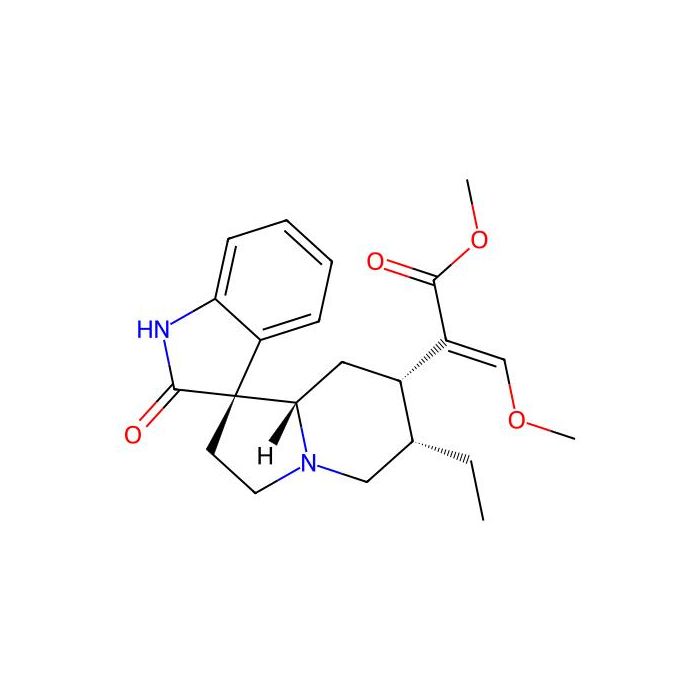
Corynoxine B is a natural alkaloid and autophagy inducer that can improve Mn induced cellular autophagy dysregulation and enhance clearance of alpha synuclein (alpha syn) in Parkinson's disease mice.
Specifications
Specifiche e purezza
Moligand™, 10 mM in DMSO
Condizioni di conservazione di stoccaggio
Store at -80°C
Spedito in
Dry ice packs + Cold packs
Questo prodotto richiede spedizione a catena fredda. I servizi di terra e altri servizi economici non sono disponibili.
Certificati (CoA, COO, BSE/TSE e tabella di analisi)
C of A & Other Certificates(BSE/TSE, COO):
Analytical Chart:
Calcolatori di soluzioni
Molarity Calculator
Determine the necessary mass, volume, or concentration for preparing a solution.
Dilution Calculator
Determine the dilution needed to prepare a stock solution.
Reconstitution Calculator
Recensioni
Recensioni dei clienti
Application Protocols
No tested applications or recommended protocols are provided in the Product Data for this item.
Suggested uses such as HTS, SPR, NMR binding, or cell-based assays are general possibilities for Moligand™-type small molecules. However, specific concentrations, dilutions, or assay parameters are not specified for this product and should be determined empirically by the user.
Please consult the CoA/Spec Sheet and SDS, and perform pilot experiments to define conditions suitable for your system.
Biological Roles
Item-specific biological data are not provided. The following summarizes general, literature-based context for the chemotype only; no claims are made for this specific lot or product.
Chemical taxonomy: Corynoxine B is an oxindole-type monoterpene indole alkaloid associated with Uncaria species (Rubiaceae). These natural products arise from the coupling of tryptamine and a monoterpene (secologanin) followed by oxidative rearrangements to an oxindole framework.
Molecular features of interest in chemical biology: The rigid, three-dimensional scaffold with an embedded lactam and multiple stereocenters provides defined H-bonding vectors and shape complementarity, making such alkaloids useful probes in ligandability studies of protein surfaces.
Typical experimental uses (general): As purified natural-product standards for dereplication, biosynthetic pathway studies, or as reference ligands in target engagement and biophysical assays.
ADME-relevant considerations (general, not item-specific): Oxindole alkaloids often show moderate lipophilicity and low basicity relative to tertiary-amine MIAs; permeability and solubility can be assay- and formulation-dependent. Protein binding may be significant due to aromatic and lipophilic surface area.
All biological investigations must be performed under appropriate institutional approvals. For research use only; not for use in humans or diagnostic procedures.
Buffer Applications
This product is a small-molecule natural product, not a buffering agent. It does not constitute or define a buffer system.
If dissolved for biochemical assays, prepare stocks in a suitable organic co-solvent (commonly DMSO) and dilute into your chosen assay buffer (e.g., phosphate, HEPES, Tris) while monitoring for precipitation.
Buffer selection should be driven by the biology/assay target; no specific buffer system is recommended for this compound.
Item-specific buffer formulations or pKa values are not provided; refer to CoA/Spec Sheet for any available guidance.
Green Alternatives
While Corynoxine B itself is a target compound rather than a solvent or reagent, greener choices can be made for its handling, dissolution, and analysis.
Solvent considerations (general):
Prefer lower-toxicity, greener solvents when feasible: ethanol or isopropanol over methanol; acetonitrile over DMF/DMAc for LC–MS sample prep; water-based assay buffers with minimal DMSO carryover.
For NMR, consider bio-based or lower-toxicity deuterated solvents (e.g., ethanol-d6) if solubility allows; otherwise, DMSO-d6 remains common.
Process and waste minimization:
Use microscale assay formats (384/1536-well) to reduce solvent usage.
Implement on-plate serial dilutions to limit multiple stock preparations.
Collect DMSO and acetonitrile wastes for dedicated solvent recycling streams where available.
Acetonitrile (ACN) | DMF/DMSO (high % in assay) | ACN is volatile and LC–MS friendly; lower solvency than DMSO, flammable.
Aqueous buffers with ≤1% DMSO | Higher DMSO percentages | Reduced solvent burden; may encounter solubility limits.
Adopt fit-for-purpose greener options while verifying compound stability, solubility, and assay performance.
Pharmaceutical Uses
No pharmacopeial status or excipient role is claimed for this product. It is supplied strictly for research use only.
Not indicated as an active pharmaceutical ingredient (API) or an excipient.
Typical R&D context (general): may be employed as a reference natural product or ligand in discovery screening, analytical method development, or pre-formulation research. Any formulation experiments should be confined to laboratory investigation and are not intended for clinical use.
Regulatory note: This material is not manufactured under cGMP for human use. Do not use for diagnostic or therapeutic applications.
Physical Properties
Item-specific specifications are not provided in the Product Data. For authoritative values, consult the current CoA/Spec Sheet.
Appearance: Not specified for this item; refer to CoA/Spec Sheet.
Molecular formula: Not specified for this item; refer to CoA/Spec Sheet.
Molecular weight: Not specified for this item; refer to CoA/Spec Sheet.
Melting point, boiling point, density: Not specified for this item; refer to CoA/Spec Sheet.
UV/Vis characteristics, refractive index, logP, pKa: Not specified for this item; refer to CoA/Spec Sheet.
General guidance (literature/general, not item-specific):
MIAs like Corynoxine B are typically solids at ambient temperature, often pale to off-white.
Solubility profiles commonly favor polar aprotic organic solvents (e.g., DMSO, DMF) and alcohols (MeOH, EtOH); aqueous solubility is usually limited unless formulated or salt forms are used.
The oxindole lactam is neutral (amide), so overall basicity is lower than tertiary-amine MIAs; ionization in the physiological pH range is minimal, which can affect aqueous solubility.
Always verify exact values and solvent compatibility on the lot-specific CoA before use.
What Moligand™ implies (Aladdin general guidance):
Moligand™ designates compounds curated for use as ligands in discovery screening, chemical biology, or target-engagement studies. Typical expectations include:
High chemical purity suitable for biochemical/biophysical assays (exact purity specification: Not specified for this item; refer to CoA/Spec Sheet).
Identity verified by modern spectroscopic/analytical methods (e.g., NMR, MS, and/or HPLC), with accompanying documentation available on request.
Packaging and handling optimized to minimize degradation and moisture uptake during distribution.
What is not implied:
Regulatory/pharmacopoeial compliance (e.g., USP/EP) is not claimed.
Clinical or diagnostic suitability is not claimed; this material is for research use only (see Research Use Note).
Practical notes for users:
For screening libraries, consider preparing a validated master stock (e.g., in dry DMSO) and performing post-dissolution QC (HPLC/LC–MS) to confirm integrity in your solvent system.
If chiroptical purity or stereochemistry is critical, verify enantiomeric/diastereomeric ratios by chiral HPLC as needed; specific stereochemical data are not provided here and should be confirmed per application.
Always defer to the lot-specific CoA/Spec Sheet for actual numerical specifications.
Reaction and Applications
This product is supplied as a Moligand™ small molecule intended primarily for screening and chemical biology rather than as a synthetic reagent.
Applications (general/literature for ligandable natural products):
Biochemical/biophysical screening: Use as a defined ligand in high-throughput screening (HTS), affinity selection–mass spectrometry (AS–MS), surface plasmon resonance (SPR), microscale thermophoresis (MST), thermal shift (DSF), or NMR binding assays to probe protein–ligand interactions.
Phenotypic assays: Evaluate as a reference chemotype in cell-based readouts to explore structure–activity relationships within oxindole alkaloids. Control for DMSO carryover and potential aggregation.
Analytical reference: Serve as a reference standard in LC–MS or HPLC methods for natural product dereplication and metabolomics of Uncaria spp. extracts.
Practical tips (general):
Aggregation and false positives: Screen for colloidal aggregation (e.g., add nonionic detergent, run orthogonal assays) as polycyclic alkaloids can form aggregates at higher micromolar concentrations.
Solubility/stability: Prepare fresh DMSO stocks under dry, inert conditions; avoid repeated freeze–thaw cycles. Check for precipitation on dilution into aqueous buffers.
Light and oxidation: Although oxindoles are generally robust, prolonged exposure to strong light or oxidants can lead to degradation; protect solutions from light and air when possible.
Note: No specific reaction chemistry or named-reaction roles are claimed for this item; it is supplied for research screening and analytical use.
Reaction Conditions
Not typically applicable. This product is not supplied as a reagent for carrying out specific named reactions, and no item-specific reaction conditions are provided.
General guidance for handling solutions (non-reaction):
Prepare solutions under dry conditions using anhydrous solvents (e.g., DMSO, ACN, MeOH) to maximize stability.
Avoid strong acids/bases and strong oxidants unless conducting controlled derivatizations; the oxindole lactam may be susceptible to hydrolysis or rearrangement under forcing conditions.
For any planned chemical modification, establish conditions empirically and validate by analytical methods. Refer to primary literature for reaction conditions relevant to oxindole alkaloid derivatization.
Safety and Handling
Item-specific GHS information is not provided in the Product Data. Always consult the SDS for authoritative safety data.
GHS classification, signal word, pictograms, hazard (H) statements: Not specified for this item; refer to SDS.
General laboratory safety guidance (literature/general):
Handle as a bioactive small molecule alkaloid with unknown or variable toxicity. Avoid inhalation, ingestion, and skin contact.
Recommended PPE: lab coat, safety glasses, and appropriate chemically resistant gloves (e.g., nitrile). Work in a chemical fume hood when weighing or preparing solutions.
Avoid dust generation and aerosolization of powders. Use antistatic tools and closed containers.
Incompatibilities: Strong oxidizers may react with organic compounds; avoid mixing until compatibility is confirmed. For solution handling, avoid reactive bases/acids that could induce degradation of the lactam or ether functions.
First-aid overview: If on skin or in eyes, rinse with plenty of water for ≥15 minutes and remove contaminated clothing; if inhaled, move to fresh air; if ingested, rinse mouth. Seek medical attention in all exposure cases. Provide SDS to responders.
Spill/cleanup: Avoid raising dust; collect with inert absorbent and dispose per institutional and local regulations.
Waste: Dispose of as organic chemical waste; do not release to drains.
Storage: See Storage & Reconstitution tab for item-specific conditions.
Solvent Selection
Item-specific solubility data are not provided. The following guidance is based on general behavior of oxindole-type monoterpene indole alkaloids (literature/general):
Polarity and miscibility (general):
Expected to be moderately lipophilic with limited aqueous solubility as a free base/lactam.
DMSO and DMF typically dissolve such alkaloids well and are preferred for high-concentration screening stocks.
Alcohols (MeOH, EtOH) often provide moderate solubility; acetonitrile can be an alternative for LC-MS–compatible stocks at lower concentrations.
Insolubility or low solubility is common in nonpolar hydrocarbons (hexanes) and in water without co-solvent.
Practical selection tips:
For biochemical/biophysical assays: Prepare concentrated stocks in anhydrous DMSO and dilute into assay buffer, keeping final DMSO ≤0.5–1% v/v to maintain assay performance. Verify absence of precipitation upon dilution.
For LC–MS sample prep: Use acetonitrile/water with 0.1% formic acid or ammonium acetate as needed for ionization; confirm stability under chosen conditions.
For NMR: CDCl3 may be insufficient; consider DMSO-d6, CD3OD, or CD3CN based on solubility and spectral needs.
Comparison (general considerations):
DMSO: maximum solvency, hygroscopic; may interfere with some assays at higher %.
MeOH/EtOH: easier volatility but may give poorer solubility and potential transesterification/solvolysis risks at elevated temperature.
ACN: LC–MS friendly, moderate solvency.
Confirm solvent compatibility and stability with small-scale tests before committing precious samples.
Storage and Reconstitution
Item-specific storage: Store at -80°C (from Product Data).
Shipping conditions: Shipped on dry ice packs + cold packs (from Product Data) to maintain low temperature and product integrity during transit.
Research use: For research use only.
Reconstitution and handling:
Reconstitution solvent, concentration, and stability: Not specified for this item; refer to CoA/Spec Sheet.
General handling guidance (non-item-specific):
Allow the container to equilibrate to room temperature in a desiccator before opening to minimize moisture condensation.
If preparing stock solutions (e.g., in anhydrous DMSO or alcohols), aliquot into inert, moisture-tight vials to avoid repeated freeze–thaw cycles. Store aliquots at the recommended -80°C.
Protect from light and humidity during storage and handling.
Always consult the lot-specific CoA and SDS for definitive instructions.
Structure and Identity
Corynoxine B is a member of the monoterpene indole alkaloid (MIA) family, cataloged here as a Moligand-grade small molecule for screening collections.
Item-specific identifiers (from Product Data):
SKU: C1499830
Product name: Corynoxine B
CAS: 17391-18-3
PubChem CID: 10091424
InChIKey: Not specified for this item; refer to CoA/Spec Sheet.
SMILES: Not specified for this item; refer to CoA/Spec Sheet.
Structural class and features (literature/general):
Belongs to the oxindole-type MIAs derived biosynthetically from tryptamine and a monoterpene unit.
Contains an oxindole (indolin-2-one) lactam core fused into a polycyclic scaffold with multiple stereocenters.
Typically exhibits oxygenated substituents (e.g., hydroxyl/ether functions) on the caged framework; exact substituent pattern defines the B-diastereomer versus related congeners.
Corynoxine A and B are known diastereomers; Corynoxine B differs by configuration at one or more stereogenic centers in the polycyclic ring system (literature), leading to distinct chiroptical and chromatographic behavior.
2D structure in words (literature/general):
An indole nucleus oxidized at C-2 to an oxindole (lactam) is embedded in a rigid, bridged polycyclic ring system. The molecule is compact and conformationally restricted, with several ring junction stereocenters. Functional groups commonly include a lactam carbonyl (H-bond acceptor), at least one ether or alcohol (H-bond donor/acceptor potential), and multiple sp3 carbons providing a pronounced three-dimensional topology suited for ligand screening.
Note: Exact molecular formula and molecular weight are not specified for this item; refer to CoA/Spec Sheet.
Synthetic Utility
Corynoxine B is supplied as a finished small-molecule ligand rather than a general-purpose synthetic building block. Consequently, routine transformations using it as a reagent are uncommon.
General/literature considerations for the chemotype:
Functional-group handles potentially present in oxindole alkaloids (lactam carbonyls, secondary alcohols/ethers) can, in principle, engage in derivatization (e.g., acylation, carbamate formation, selective oxidations/reductions), but such modifications are typically explored in medicinal chemistry SAR campaigns rather than preparative chemistry.
The rigid polycyclic framework offers a scaffold for semi-synthetic analog generation, though protecting-group strategies and stereocontrol are challenging; reactions must be chemoselective to avoid perturbing the oxindole core.
As a reference standard, it is frequently used to validate synthetic routes toward related oxindole alkaloids by co-injection in HPLC/LC–MS and by spectral comparison.
If pursuing derivatization, perform small-scale feasibility studies, monitor by LC–MS/NMR, and confirm retention of stereochemical integrity. No item-specific reactivity or synthetic protocols are provided.
Target Specificity
No target specificity, antigen, or binding partner information is provided in the Product Data for this item.
This Moligand™ listing does not include validated biological targets, clone/isotype (antibodies), or species reactivity.
Any target engagement studies should be designed and validated by the end user using appropriate positive/negative controls and orthogonal assay formats.
Need help choosing the grade?
Our grade selection guide covers purity, stabilizer status, and application suitability for all variants in our catalog.
We use cookies to ensure the website functions properly and, where permitted, to improve your experience. You can manage your preferences at any time in Settings. Learn more in our Cookie Policy.
Shall we send you a message when we have discounts available?
Remind me later
Thank you! Please check your email inbox to confirm.
Products are supplied to verified businesses, institutions, and qualified professionals for research and development use only. Not for use in humans, animals, diagnosis, or therapy.