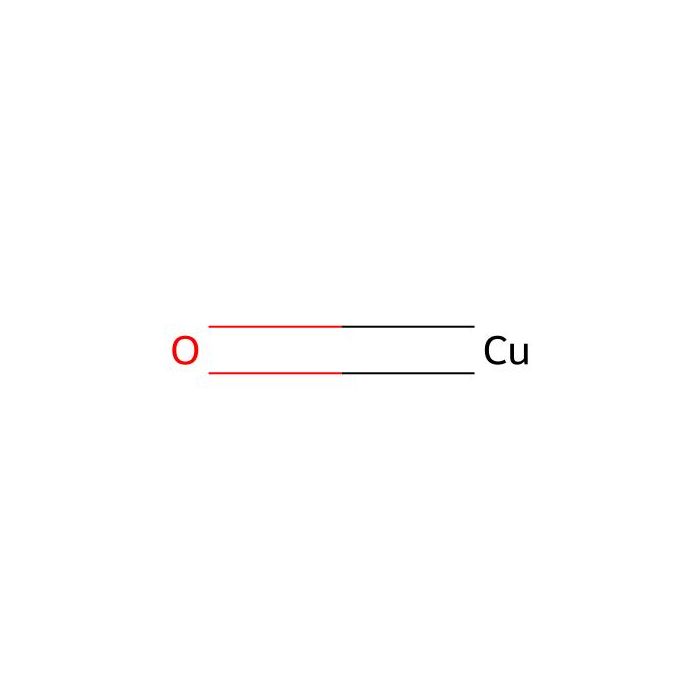
Cupric oxide - ≥98.5% metals basis, 50-100nm, used for The toxicity of copper oxide nanoparticles has been reported. Cu2O has been used to coat copper nanoparticles (Cu2O NPs). Copper oxide nanoparticles have been reported as anode materials for lithium-i
Cupric oxide - ≥98.5% metals basis, 50-100nm, used for The toxicity of copper oxide nanoparticles has been reported. Cu2O has been used to coat copper nanoparticles (Cu2O NPs). Copper oxide nanoparticles have been reported as anode materials for lithium-i
≥98.5% metals basis, 50-100nm for sensitive chromatographic and analytical workflows requiring minimal baseline interference.
🌡
Storage & shipping
Room temperature,Desiccated Ships Normal Check lot-specific COA for exact specifications.
📋
Quality documents
SDS, COA, datasheet, and spec sheet available for download. Lot-specific COA accessible via lot number lookup.
📚
Literature proof
Cited in 462 peer-reviewed publications across chromatography, organic synthesis, and cross-coupling reactions.
Panoramica
Copper oxides (Cu2O, CuO) are p-type semiconductor materials with small band gap energies. The high physical and chemical stability of metal oxide nanoparticles makes them very useful in catalytic applications. These compounds have a monoclinic structure. Nanosized copper oxide compounds can be prepared using thermal plasma technology.
Specifications
Specifiche e purezza
≥98.5% metals basis, 50-100nm
Applicazione
The toxicity of copper oxide nanoparticles has been reported. Cu2O has been used to coat copper nanoparticles (Cu2O NPs). Copper oxide nanoparticles have been reported as anode materials for lithium-ion batteries and have been used as gas sensors due to t
Transition metal oxide - Inorganic oxide - Inorganic salt
Descrizione
This compound belongs to the class of inorganic compounds known as transition metal oxides. These are inorganic compounds containing an oxygen atom of an oxidation state of -2, in which the heaviest atom bonded to the oxygen is a transition metal.
External Descriptors
Not available
1. Djoumbou Feunang Y, Eisner R, Knox C, Chepelev L, Hastings J, Owen G, Fahy E, Steinbeck C, Subramanian S, Bolton E, Greiner R, and Wishart DS. ClassyFire: Automated Chemical Classification With A Comprehensive, Computable Taxonomy. Journal of Cheminformatics, 2016, 8:61.
Utilizziamo i cookie per garantire il corretto funzionamento del sito web e, ove consentito, per migliorare la tua esperienza. Puoi gestire le tue preferenze in qualsiasi momento nelle Impostazioni. Per saperne di più, consulta la nostra Cookie Policy.
Desidera che le inviamo un messaggio quando avremo sconti disponibili?
Ricordamelo più tardi
Grazie! Controlli la sua casella di posta per confermare.
Products are supplied to verified businesses, institutions, and qualified professionals for research and development use only. Not for use in humans, animals, diagnosis, or therapy.

 G2602315