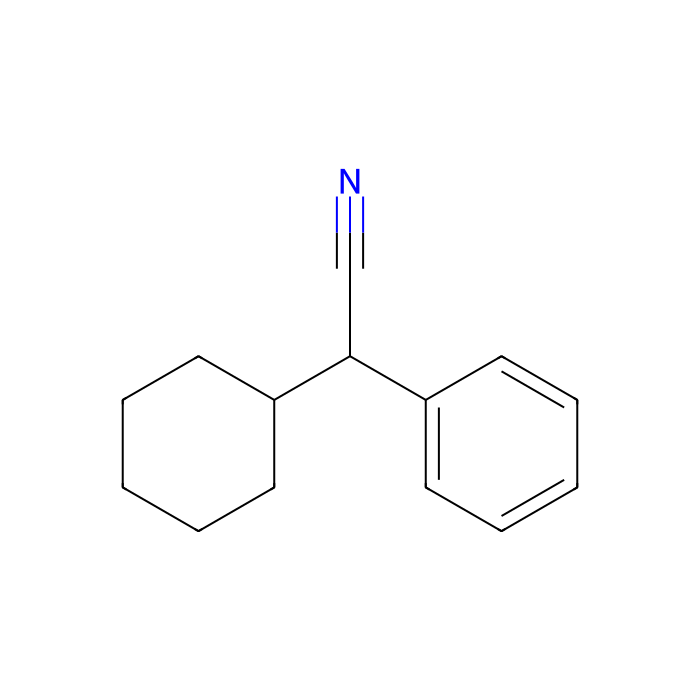
This compound belongs to the class of organic compounds known as benzene and substituted derivatives. These are aromatic compounds containing one monocyclic ring system consisting of benzene.
External Descriptors
Not available
1. Djoumbou Feunang Y, Eisner R, Knox C, Chepelev L, Hastings J, Owen G, Fahy E, Steinbeck C, Subramanian S, Bolton E, Greiner R, and Wishart DS. ClassyFire: Automated Chemical Classification With A Comprehensive, Computable Taxonomy. Journal of Cheminformatics, 2016, 8:61.
Certificati (CoA, COO, BSE/TSE e tabella di analisi)
C of A & Other Certificates(BSE/TSE, COO):
Analytical Chart:
Proprietà chimiche e fisiche
Peso molecolare
199.290 g/mol
XLogP3
4.400
Hydrogen Bond Donor Count
0
Hydrogen Bond Acceptor Count
1
Rotatable Bond Count
2
Exact Mass
199.136 Da
Monoisotopic Mass
199.136 Da
Topological Polar Surface Area
23.800 Ų
Heavy Atom Count
15
Formal Charge
0
Complexity
225.000
Isotope Atom Count
0
Defined Atom Stereocenter Count
0
Undefined Atom Stereocenter Count
1
Defined Bond Stereocenter Count
0
Undefined Bond Stereocenter Count
0
The total count of all stereochemical bonds
0
Covalently-Bonded Unit Count
1
Calcolatori di soluzioni
Molarity Calculator
Determine the necessary mass, volume, or concentration for preparing a solution.
Dilution Calculator
Determine the dilution needed to prepare a stock solution.
Reconstitution Calculator
Recensioni
Recensioni dei clienti
Application Protocols
Not applicable as an assay reagent (e.g., WB/IHC/IF/FC). This product is a synthetic building block.
For synthetic use, see Reaction Conditions and Synthetic Utility tabs for generalized procedures. Always tailor stoichiometry, solvent, and temperature to your specific transformation and consult primary literature.
Biological Roles
Item-specific biological data: Not specified for this item; refer to CoA/Spec Sheet. Product is for research use only.
General perspective (biochemistry/literature)
Organic nitriles are not common primary metabolites in mammals but are encountered in natural products and can be processed by microbial nitrilases/nitrile hydratases to amides/acids.
As a synthetic aryl–alkyl nitrile, this compound is best viewed as a chemical building block or probe precursor rather than a biomolecule. Any biological interactions would be context-dependent on downstream derivatives.
In biocatalysis, nitrile-converting enzymes (NHases, nitrilases, amidases) can transform benzylic nitriles to corresponding amides/acids under mild, aqueous conditions—useful for green functional group interconversions.
No clinical or therapeutic claims are made or implied.
Buffer Applications
Not typically applicable. CYCLOHEXYLPHENYLACETONITRILE is a hydrophobic organic building block, not a buffering agent.
For aqueous work, it may be handled in biphasic systems buffered for reaction control (e.g., during hydrolysis), but the compound itself does not constitute a buffer system.
Green Alternatives
Context: This product is a synthetic building block. Greener choices relate to how you use it (solvent, reagents, and process), not a different “solvent alternative.”
Greener process options (general/literature)
Solvents: prefer 2-MeTHF, EtOAc, MeOH, or CPME over chlorinated solvents where feasible. Replace DMF/DMSO with greener polar aprotics (PC, GBL, Cyrene, propylene carbonate) when compatible.
Reductions: use catalytic hydrogenation (H2, Pd/C or Raney Ni) instead of stoichiometric hydrides (LAH) to minimize waste; explore transfer hydrogenation (e.g., HCOONH4) for milder conditions.
Hydrolysis: aqueous or biphasic mineral-acid catalysis can reduce organic solvent usage; consider solid acids (Amberlyst, Nafion) for ease of separation.
Workup: implement solvent recycling, aqueous base/acid neutralization with minimal salt load, and crystallization-driven isolations to avoid chromatographic silica waste.
Comparison snapshot (illustrative)
LAH in THF (traditional) vs H2/Pd in EtOH (greener): similar chemoselectivity for nitrile → amine with markedly reduced inorganic waste and safer quench profile.
DCM extraction vs EtOAc extraction: EtOAc offers lower toxicity and better biodegradability, often with comparable partitioning.
Supplier considerations
Request CoA to confirm residual solvent profile and consider greener downstream processing protocols to lower E-factors.
Pharmaceutical Uses
Item-specific pharmacopeial status/excipient role: Not specified for this item; refer to CoA/Spec Sheet.
General context (non-clinical)
Aryl–alkyl nitriles frequently serve as synthetic intermediates in the preparation of amines, ketones, and carboxylic acids that may advance into API candidates. This compound may be leveraged in route scouting to access benzylic amines or diaryl ketones.
Process considerations: control of residual metal catalysts (if hydrogenation or cross-coupling is used), low levels of residual solvents, and defined impurity profiles (benzylic oxidation, oligomers) are typical quality targets in pharmaceutical development.
No therapeutic claims are made; for research and process development use only.
Physical Properties
Item-specific values
Appearance: Not specified for this item; refer to CoA/Spec Sheet.
Grade/Purity: Not specified for this item; refer to CoA/Spec Sheet.
Literature/general expectations for aryl–alkyl nitriles (for planning only; not item specifications)
Physical state: many benzylic nitriles are low-melting solids or high-boiling liquids; hydrophobic with modest polarity from the nitrile group.
Solubility: typically soluble in common organic solvents (EtOAc, DCM, toluene, THF, MeCN, alcohols) and poorly soluble in water.
Volatility: generally low to moderate; nitriles with aryl content tend to have higher boiling points than simple aliphatic nitriles.
Spectroscopic signatures: strong IR band near 2220–2250 cm⁻¹ (νC≡N) (literature); 13C NMR nitrile carbon often ~115–125 ppm (low intensity) (literature); benzylic CH near 3.2–4.0 ppm in 1H NMR depending on substitution (literature).
Do not use the above values as specifications. For exact MP/BP/density/refractive index, see the item’s CoA/SDS.
Quality and Grades
Item-specific status
Grade/Purity: Not specified for this item; refer to CoA/Spec Sheet.
Guidance on typical grades (general information)
Research grade: suitable for most synthetic applications; impurity profile adequate for routine lab work.
High-purity/Low-water grades: employed when trace metals, peroxides, or UV-absorbing impurities are critical (e.g., photoredox or analytical contexts). For this nitrile, low-benzylic oxidation content and low residual solvents are often desired.
Pharmaceutical/intermediate grade: may include tighter limits on residual solvents/metals and detailed trace analysis; consult regulatory specs if using in GMP settings.
Stabilizers/additives
No stabilizer is noted for this item. If stabilizers are a concern for your application (e.g., sensitive catalysis), request a stabilizer-free lot or confirm by CoA.
Verification
For assay, GC/HPLC area %, residual solvents, water (KF), metals, and any specific impurity limits: Not specified for this item; refer to CoA/Spec Sheet.
Reaction and Applications
General roles (literature)
Versatile benzylic nitrile building block enabling C–C, C–N, and C–O bond constructions.
Representative transformations (with notes)
Nucleophilic addition to nitriles → imines/imidates → ketones after hydrolysis (e.g., RMgX/RLi addition at −78 to 0 °C; aqueous workup then acidic hydrolysis yields tertiary/diaryl ketones).
Reduction of nitrile → primary amine (LiAlH4, BH3·THF, catalytic hydrogenation over Raney Ni/Pd/C). Benzylic context facilitates hydrogenation under milder conditions.
Partial reduction → imine/aldimine capture to form secondary amines (e.g., DIBAL-H at low temperature followed by amine trapping).
Hydrolysis → amide (mild) or carboxylic acid (harsh) using H2SO4/HCl (aq) or NaOH/KOH under reflux; benzylic activation can accelerate.
Pinner reaction → imidates/amide esters using ROH/HCl(g) for subsequent amidine/amide synthesis.
α-Functionalization: deprotonation at the benzylic position with strong bases (LDA, LiHMDS) enables alkylation/acylation; the adjacent phenyl and nitrile stabilize the carbanion.
Cross-coupling on aryl ring (if further substituted with halogen) or hydrogenolysis manipulations on cyclohexyl ring for scaffold diversification.
Use cases
Intermediate toward diaryl/aryl–alkyl ketones via nitrile addition chemistry.
Precursor to benzylic primary amines employed in ligand, material, or agrochemical discovery.
Practical tips
Maintain anhydrous conditions for organometallic additions; quench carefully to avoid overhydrolysis.
Monitor reductions by IR (loss of νC≡N) and by GC/LC; nitrile reduction can proceed rapidly on Pd/C—control equivalents to avoid over-hydrogenolysis of aromatic groups.
Reaction Conditions
The following are literature-general conditions for benzylic/aryl–alkyl nitriles; optimize for your substrate and scale. They are not specifications for this item.
Nitrile → primary amine (reduction)
H2 (1–10 bar), Pd/C (5–10 wt%), EtOH or MeOH, 20–50 °C, 2–16 h; monitor by IR (loss of 2230 cm⁻¹) and TLC/GC.
Alternatively: LiAlH4 (1.5–3.0 equiv) in THF, 0 °C → reflux, 1–4 h; careful, exothermic quench.
RMgX (2–3 equiv) or RLi (1.5–2.0 equiv) in THF/Et2O, −78 to 0 °C; then aqueous acid (2–3 M HCl), reflux 1–3 h to hydrolyze the intermediate imine to ketone.
Hydrolysis to amide/acid
Amide: 6 M HCl or 3 M H2SO4, 60–90 °C, 2–8 h; Acid: refluxing 6 M HCl or 4–6 M NaOH, 6–24 h (workup via extraction or precipitation depending on product pKa).
Partial reduction/imidate chemistry
DIBAL-H (1.2–1.5 equiv), toluene, −78 °C, 0.5–2 h to generate aldehyde/imine equivalents; trap in situ as needed.
α-Deprotonation/alkylation
LDA (1.1–1.5 equiv) in THF at −78 to −20 °C, then add alkyl electrophile (1.2–2.0 equiv); warm to 0–25 °C and quench.
Workup and purification
Neutralize carefully; use silica gel with a small amount of Et3N if tailing occurs; consider crystallization to minimize silica waste.
Safety and Handling
Item-specific hazard data
Signal word: Not specified for this item; refer to SDS.
GHS classification/pictograms/H-statements: Not specified for this item; refer to SDS.
General safety considerations for organic nitriles (literature/good practice)
Hazards: many nitriles can be harmful if swallowed, inhaled, or absorbed through skin; some release toxic gases under strong hydrolysis/combustion. Avoid aerosol formation and inhalation of vapors.
PPE: lab coat, safety glasses or splash goggles, and appropriate chemically resistant gloves (e.g., nitrile gloves). Handle in a fume hood.
Incompatibilities: strong acids/bases (may hydrolyze nitriles to amides/acids), strong oxidizers, and reducing agents (depending on intended chemistry). Avoid strong Lewis acids when unintended reaction is a concern.
First aid (overview; defer to SDS): move to fresh air if inhaled; rinse skin with water for ≥15 min on contact; flush eyes with water for ≥15 min; if ingested, rinse mouth—seek medical attention. Provide SDS to responders.
Fire response: use CO2, dry chemical, or alcohol-resistant foam. Combustion may produce CO/CO2 and nitrogen oxides.
Storage/handling
Store tightly closed at room temperature as per Product Data; keep away from ignition sources and incompatible reagents. Segregate from strong acids/bases and oxidizers.
Always consult the item-specific SDS for authoritative safety information.
Solvent Selection
Applicability: This product is a nitrile-functionalized organic building block rather than a solvent. Guidance below addresses solvents commonly used to dissolve and manipulate it in synthesis and analysis (general/literature-based).
Solubility/miscibility (typical for aryl–alkyl nitriles)
Expected to dissolve well in polar aprotic and many nonpolar organic solvents: DCM/CHCl3, EtOAc, THF/2-MeTHF, toluene, MeCN, acetone, and alcohols; low solubility in water.
Selection guidance
Reaction media: polar aprotic solvents (THF, 2-MeTHF, DME, DMF, DMSO) favor nucleophilic additions to nitriles and metalations; toluene or xylene are suitable for high-temperature steps (e.g., hydrolysis, reductions under hydrogenation catalysts).
Workup and crystallization: EtOAc/hexanes or toluene/hexanes systems often give good phase behavior; MeOH or i-PrOH can aid in trituration if product is crystalline.
Chromatography: start with 0–30% EtOAc/hexanes or 0–10% MeOH/DCM; add 0.1% Et3N if tailing occurs due to interaction with silica.
Comparison snapshot (general)
THF vs 2-MeTHF: similar polarity; 2-MeTHF offers greener profile and easier phase separation with water.
DCM vs EtOAc: DCM provides higher solvating power and lower viscosity; EtOAc is more benign and biodegradable.
Always verify actual solubility for your target system empirically.
Storage and Reconstitution
Item-specific storage
Storage conditions: Room temperature (from Product Data).
Shipped in: Normal (from Product Data).
General guidance
Keep container tightly closed, protected from moisture and strong acids/bases. Store away from oxidizers and ignition sources.
If solidifying/oiling-out occurs, gently warm to ambient temperature before dispensing. If needed for solution handling, prepare stock solutions in dry, oxygen-stable solvents (e.g., toluene, THF, EtOAc) immediately prior to use.
No reconstitution buffer is applicable; this is not a bioreagent.
Stability
Nitriles are generally stable under neutral, dry conditions. Avoid prolonged exposure to strong UV, acidic or basic environments that may hydrolyze the nitrile.
SMILES: Not specified for this item; refer to CoA/Spec Sheet.
Molecular formula: Not specified for this item; refer to CoA/Spec Sheet.
Molecular weight: Not specified for this item; refer to CoA/Spec Sheet.
Interpreted structural features (general/literature-based, consistent with the name “cyclohexylphenylacetonitrile”)
Contains a nitrile (–C≡N) functional group appended to a benzylic carbon that also bears a cyclohexyl and phenyl substituent (an aryl/alkyl-substituted acetonitrile motif).
Key scaffolds: one aromatic phenyl ring and one saturated cyclohexyl ring; one sp-hybridized nitrile carbon.
2D description in words: a benzylic carbon flanked by a phenyl ring and a cyclohexyl ring and bearing a terminal nitrile group, giving an aryl–alkyl-substituted α-nitrile building block.
Notes
Exact stereochemistry is not applicable (the described skeleton is achiral unless further substitution is present).
For definitive structure identifiers (canonical SMILES/InChI), consult the item-specific CoA/SDS.
Synthetic Utility
Functional group leverage
Nitrile (–C≡N): convertible handle to amines (reduction), amides/acids (hydrolysis), imidates (Pinner), and heterocycles (e.g., imidazolines, pyrimidines) via condensation.
Benzylic position: acidifiable under strong base for α-functionalization (alkylation/acylation) owing to conjugation with the phenyl and electron-withdrawing nitrile.
Dual hydrophobic substituents (phenyl and cyclohexyl) impart lipophilicity useful in SAR exploration for materials or discovery chemistry.
Retrosynthetic value (literature)
Serves as a masked carbonyl equivalent: addition of organometallics to the nitrile followed by hydrolysis furnishes ketones that are otherwise challenging due to steric hindrance.
Acts as an amine precursor: stepwise nitrile → primary amine enables access to secondary/tertiary amines via reductive amination or acylation.
Named/typical transformations
Pinner, Ritter-type derivatizations (via cationic intermediates on benzylic center), Grignard/RLi additions to nitriles, catalytic hydrogenation to amines.
Practical notes
Protect sensitive substituents during strong hydride reductions; aromatic rings typically survive hydrogenation for nitrile reduction, but conditions must be tuned to avoid ring hydrogenation when cyclohexyl is present.
Target Specificity
Not applicable. This product is a small-molecule chemical reagent, not a biological targeting reagent (e.g., antibody, ligand with defined receptor specificity). No antigen/epitope/clone/isotype information applies.
We use cookies to ensure the website functions properly and, where permitted, to improve your experience. You can manage your preferences at any time in Settings. Learn more in our Cookie Policy.
Shall we send you a message when we have discounts available?
Remind me later
Thank you! Please check your email inbox to confirm.
Products are supplied to verified businesses, institutions, and qualified professionals for research and development use only. Not for use in humans, animals, diagnosis, or therapy.