QUALITÀ & PUREZZAMoligand™?Moligand™ — Aladdin's line of ligands and bioactive small molecules. Use for receptor, pathway, and binding studies needing defined small-molecule tools.10 mM in DMSO
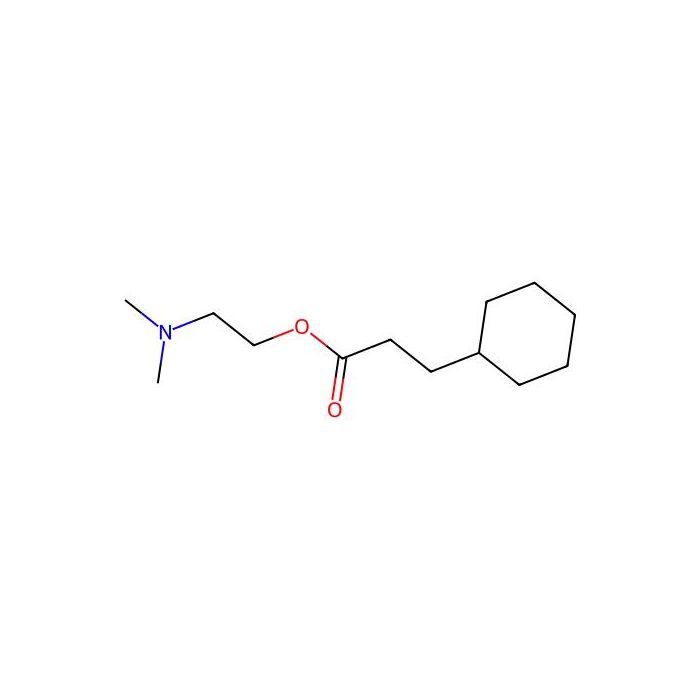
Cyprodenate (Actebral) is an orally active psychotonic brain activator. Cyprodenate can be used for the research of metabolism.
Specifiche
Specifiche e purezza
Moligand™, 10 mM in DMSO
Condizioni di conservazione di stoccaggio
Protected from light,Store at -80°C
Spedito in
Dry ice packs + Cold packs
Questo prodotto richiede spedizione a catena fredda. I servizi di terra e altri servizi economici non sono disponibili.
Grado
Moligand™
Tipo di azione
ANTAGONIST
Nomi e identificatori
Peso molecolare
227.34
Dati avanzati
Certificati (CoA, COO, BSE/TSE e tabella di analisi)
C of A & Other Certificates(BSE/TSE, COO):
Analytical Chart:
Calcolatori di soluzioni
Molarity Calculator
Determine the necessary mass, volume, or concentration for preparing a solution.
Dilution Calculator
Determine the dilution needed to prepare a stock solution.
Reconstitution Calculator
Recensioni
Recensioni dei clienti
Application Protocols
No vendor-validated, target-specific protocols are provided for this item. The following general protocols are suitable for Moligand™ screening compounds and should be adapted to the assay and target of interest.
General biochemical assay protocol (example framework):
Prepare 10 mM Cyprodenate stock in dry DMSO (protect from light).
Make a 10-point, 3-fold serial dilution in DMSO.
Add 100× stocks to assay buffer to give a final vehicle of 0.5–1.0% v/v.
Incubate with target enzyme/protein for 15–30 min; initiate reaction and measure readout.
Fit dose–response (four-parameter logistic), report IC50/EC50 with hill slope and confidence intervals.
General cell-based assay protocol (example framework):
Seed cells and allow to adhere/restore overnight.
Treat with compound dilutions keeping vehicle ≤0.1–0.5% DMSO.
Include vehicle and positive control wells; assess compound fluorescence/absorbance interference where relevant.
Analytical verification:
Verify stock concentration by UV or quantitative NMR when standards are available; check for photodegradation.
These templates are starting points; optimize concentrations, timings, and buffers for your specific system.
Biological Roles
No item-specific biological function, pathway engagement, or target annotation is provided in the product data for this Moligand™ screening compound.
Research context (general for small-molecule screening members):
Such compounds are typically deployed to probe biological systems in vitro and in cells to discover or validate molecular targets, modulate pathways, or serve as starting points for chemical probe development.
Without verified target annotation, users should treat activity observations cautiously, perform orthogonal assays, and control for assay artifacts (fluorescence interference, redox cycling, aggregation).
Recommended best practices:
Annotate any observed bioactivity with assay conditions, vehicle percentage, and compound lot/age.
Replicate findings across detection modalities (e.g., enzymatic vs biophysical binding) and include counter-screens to rule out non-specific mechanisms.
If a structure file is available, compute physicochemical properties (logD7.4, TPSA, pKa) to anticipate permeability and solubility behavior; confirm experimentally.
Note: Any biological roles reported in external literature should be verified against the exact structure, salt form, and lot. Aladdin supplies this product strictly for research use only.
Buffer Applications
This product is not a classical buffering reagent. However, its successful use in biochemical and cellular assays depends on compatible buffer systems and careful solvent carryover management.
Common buffers for screening (general):
Biochemical targets: HEPES (pH 7.0–7.5), Tris (pH 7.0–8.0), or PBS with 0.01–0.05% Tween-20 to mitigate aggregation/adhesion.
Cell-based assays: HBSS or phenol red–free DMEM/RPMI with 0.1–1% BSA where protein binding needs control; maintain DMSO ≤0.1–0.5% if cells are sensitive.
Preparation tips:
Prepare a concentrated DMSO stock (e.g., 10 mM), then dilute into buffer to the working concentration immediately before use to limit precipitation and degradation.
Include vehicle controls at the highest solvent % present in test wells.
Use low-binding plasticware and polypropylene plates to reduce adsorption losses of hydrophobic compounds.
Stability checks:
Inspect turbidity after dilution; if precipitation occurs, increase surfactant slightly (≤0.05% Tween-20) or adjust dilution order and temperature.
All buffer choices should be validated empirically for the specific biological assay.
Green Alternatives
As a screening compound, the principal environmental considerations concern choice of solvents and work practices rather than the compound itself. Where feasible, adopt greener solvent systems and minimize waste.
Greener solvent choices for stock and assay solutions (general):
Reduce DMSO usage by maximizing solubility assessment to select the minimal required stock concentration and by using aqueous cosolvent systems (e.g., 5–10% DMSO in buffer) when compatible.
Consider ethanol or isopropanol as alternative vehicles where assay sensitivity to DMSO is high and compound solubility allows.
Operational practices:
Use miniaturized assay formats (384/1536-well) to reduce solvent and compound consumption.
Employ sealed, low-evaporation plates to limit solvent losses and emissions.
Consolidate waste streams and avoid chlorinated solvents in cleanup/analytical steps where ACN/water systems suffice.
Comparison (general guidance):
Criterion | Conventional choice | Greener alternative | Trade-offs
Analytics | ACN/0.1% FA | MeOH/water, or ACN reduction | Changes in chromatographic selectivity
Cleaning | Chlorinated solvents | Ethanol/iPrOH | May be less effective for highly lipophilic residues
These practices do not alter the item’s specifications; they are process-level improvements.
Pharmaceutical Uses
No pharmacopeial status, excipient role, or formulation specification is provided for this item. Aladdin supplies Cyprodenate solely for laboratory research use; it is not intended for human or veterinary use, diagnostic procedures, or as an active pharmaceutical ingredient.
Research/formulation context (general):
May be used as a reference material, positive/negative control, or hit compound in preclinical discovery workflows.
For in vitro ADME profiling (e.g., microsomal stability, plasma protein binding), prepare accurately quantified DMSO stocks and maintain consistent vehicle percentages across conditions.
If in vivo research is contemplated by qualified laboratories, develop de novo formulation strategies (e.g., PEG400/saline, Captisol, or lipid vehicles) based on experimentally determined solubility and stability. No recommendations are provided or implied by the product data.
Regulatory note: No claims are made regarding GMP status, compendial compliance, or clinical suitability. For any regulated use, obtain appropriate reference standards and follow institutional and regulatory guidelines.
Physical Properties
Item-specific physicochemical constants are not included in the product data. Where needed for experimental design, consult the CoA/SDS or verify experimentally.
Physical state/appearance: Not specified for this item; refer to CoA/Spec Sheet.
Melting point: Not specified for this item; refer to CoA/Spec Sheet.
Boiling point: Not specified for this item; refer to CoA/Spec Sheet.
Density: Not specified for this item; refer to CoA/Spec Sheet.
Refractive index: Not specified for this item; refer to CoA/Spec Sheet.
Aqueous solubility: Not specified for this item; refer to CoA/Spec Sheet.
Solubility in common screening solvents (practical guidance, general):
DMSO: Preferred for Moligand™ compounds; prepare 10–50 mM stocks and dilute into assay buffers to ≤1% DMSO final.
Ethanol or methanol: Secondary options when DMSO interference is a concern; assess solubility and assay tolerance.
LogP/logD, pKa, polar surface area: Not specified for this item; refer to CoA/Spec Sheet. If needed, compute from the structure (literature/computed) using cheminformatics tools and validate experimentally.
Hygroscopicity/photolability: Product data indicate “Protected from light,” suggesting potential light sensitivity; minimize light exposure during weighing and solution prep.
Note: Treat any literature/computed values as guidance for method development only; they are not item specifications.
Quality and Grades
Supplied grade: Moligand™
Moligand™ denotes inclusion in a curated small-molecule/ligand screening collection designed for discovery biology, target validation, and chemical probe development.
Emphasis is on identity and suitability for screening (e.g., solubility in DMSO, stability under frozen, light-protected conditions), rather than chromatographic or synthetic grades (e.g., HPLC grade solvents, ACS reagents).
Purity: Not specified for this item; refer to CoA/Spec Sheet.
Stabilizers/inhibitors: Not specified for this item; refer to CoA/Spec Sheet.
QC expectations for Moligand™ items (general):
Analytical identity confirmation (e.g., HRMS and/or NMR) and purity by chromatographic assay are typically provided on the CoA for the specific lot.
Where applicable, water content (KF) or residual solvent may be reported on the CoA; use those values for assay suitability decisions.
Implications for use:
Ideal for primary/secondary screening, MoA studies, and SAR scoping when used with appropriate controls.
For quantitative bioassays, confirm lot-specific purity and prepare dose–response curves accounting for purity-adjusted concentrations if needed.
Documentation: Request and archive the lot-specific CoA and SDS in your ELN/LIMS for audit trails and reproducibility.
Reaction and Applications
This product is offered as a Moligand™ screening compound rather than as a synthetic reagent. Accordingly, its primary applications are in discovery biology and chemical biology rather than in stoichiometric or catalytic transformations.
Typical research applications (general for small-molecule ligands):
High-throughput screening (HTS) and focused screening campaigns against biochemical or cellular targets.
Hit validation, orthogonal assay confirmation, and preliminary structure–activity relationship (SAR) exploration.
Mechanism-of-action (MoA) hypothesis generation through phenotypic profiling or chemoproteomics when structure permits tagging.
Assay development tips:
Prepare a 10 mM DMSO master stock, create serial dilutions to establish full dose–response curves (≥10 points, 3–4-fold dilution series), and cap DMSO at ≤0.5–1.0% v/v in-well.
Include plate controls: positive control inhibitor/activator (if available), vehicle control, and no-enzyme/no-cell background.
Monitor compound aggregation by detergent supplementation (e.g., 0.01–0.05% Tween-20) and counterscreens.
Analytical characterization (general):
Verify identity and purity by LC–MS and 1H NMR before critical studies; check for degradation if exposed to light/heat.
For stability-indicating analytics, compare fresh vs post-assay LC–MS profiles.
Note: No specific named organic reactions or catalytic roles are associated with this item in the product data.
Reaction Conditions
Classical synthetic “reaction conditions” are not applicable because the item is supplied as a Moligand™ screening compound rather than a reagent. The most relevant “conditions” pertain to preparing, handling, and applying solutions in assays.
Stock preparation (general best practices):
Prepare 10–50 mM stocks in anhydrous DMSO under low light. Vortex/sonicate as needed. Confirm complete dissolution visually.
Aliquot into amber or foil-wrapped microtubes to avoid repeated freeze–thaw; flush with inert gas if sensitive and store immediately at −80°C.
Working solutions:
Dilute into assay buffer/cell media to achieve the desired concentration, keeping final vehicle ≤0.5–1.0% v/v (or lower for sensitive cells/enzymes).
Prepare fresh immediately before use to minimize precipitation and degradation; discard turbid solutions.
LC/UPLC injections: acetonitrile/water with 0.1% formic acid (analytical only).
Note: If a structural data sheet is included, compute predicted solubility/logD to refine solvent choice; confirm experimentally.
Storage and Reconstitution
Storage temperature: Store at −80°C (per product data).
Light sensitivity: Protect from light. Use amber vials or wrap containers in aluminum foil during handling and storage.
Shipping: Shipped on dry ice packs + cold packs to maintain low temperature during transit.
Short-term handling:
Minimize time at ambient temperature. Equilibrate the sealed vial to room temperature in a desiccator before opening to prevent moisture condensation.
Reconstitution (general for Moligand™ compounds):
Prepare concentrated stock solutions in anhydrous DMSO (e.g., 10–50 mM). Vortex/sonicate as needed to achieve clarity.
If aqueous stocks are required, first dissolve in DMSO, then dilute into buffer to the desired concentration immediately before use; monitor for precipitation.
Aliquoting:
Divide stock into single-use aliquots (e.g., 10–50 µL) in amber, low-binding microtubes to avoid repeated freeze–thaw.
Stability after reconstitution:
At −80°C, DMSO stocks are typically stable for weeks to months; verify by LC–MS or HPLC periodically. Item-specific stability is Not specified for this item; refer to CoA/Spec Sheet.
Avoid repeated freeze–thaw cycles; thaw on ice and keep protected from light during use.
Research use notice: For research use only.
Always defer to the lot-specific CoA/SDS for definitive storage and stability limits.
Structure and Identity
Product: Cyprodenate (SKU: C1495148)
CAS: 15585-86-1 (catalog identifier)
PubChem CID: 71875 (literature identifier)
Molecular formula: Not specified for this item; refer to CoA/Spec Sheet.
Molecular weight: Not specified for this item; refer to CoA/Spec Sheet.
InChIKey: Not specified for this item; refer to CoA/Spec Sheet.
SMILES: Not specified for this item; refer to CoA/Spec Sheet.
Item-specific structural descriptors are not provided in the product data. As listed, this product is supplied as a Moligand™ library member intended for screening and discovery workflows. Consult the accompanying CoA or structure file (SD/SMILES, if provided with shipment) for definitive structural details used in cheminformatics and assay registration.
How to reference it in data systems:
Use the CAS (15585-86-1) and internal SKU for unambiguous identification in ELNs/LIMS.
When available, import the vendor-provided SD file or PubChem CID 71875 record (literature) to retrieve structural fingerprints and descriptors (logP, TPSA, HBD/HBA) for screening triage.
Synthetic Utility
This product is offered as a screening compound rather than a synthetic building block or reagent. Without item-specific structural information in the product data, synthetic transformations or retrosynthetic applications cannot be prescribed.
Practical guidance (general):
If you intend derivatization (e.g., to create analogs or tagged probes), request or confirm the exact structure from the CoA/structure file and assess functional groups amenable to selective modification (e.g., phenols, amines, carboxyls, halides) before planning routes.
For analytical method development (HPLC/UPLC): establish a stability-indicating gradient using ACN/H2O (0.1% FA) and monitor potential photodegradation products given the “protect from light” storage requirement.
Purification/characterization (general):
Use LC–MS, 1H/13C NMR, and, if relevant, photostability testing under ICH Q1B light-stress conditions to map degradation pathways.
In summary, treat Cyprodenate primarily as a ready-to-use research ligand; synthetic utility is secondary and depends on structural details not provided here.
Target Specificity
Target/epitope/clone/isotype: Not applicable. This product is not an antibody or biologic.
Item-specific target annotation: Not specified for this item; refer to literature or internal screening data if available.
Notes for users:
When no definitive target is provided, consider unbiased profiling (e.g., thermal shift assays, CETSA, kinome panels, or broad enzyme panels) to identify potential interactions.
Record all assay conditions and lot identifiers to support reproducibility and later structure–activity analyses.
Hai bisogno di aiuto per scegliere la qualità?
La nostra guida alla selezione delle qualità copre purezza, stato dello stabilizzatore e idoneità all'applicazione per tutte le varianti del nostro catalogo.
Utilizziamo i cookie per garantire il corretto funzionamento del sito web e, ove consentito, per migliorare la tua esperienza. Puoi gestire le tue preferenze in qualsiasi momento nelle Impostazioni. Per saperne di più, consulta la nostra Cookie Policy.
Desidera che le inviamo un messaggio quando avremo sconti disponibili?
Ricordamelo più tardi
Grazie! Controlli la sua casella di posta per confermare.
Products are supplied to verified businesses, institutions, and qualified professionals for research and development use only. Not for use in humans, animals, diagnosis, or therapy.