Demethylasterriquinone B1 - Moligand™, ≥95% , CAS No.78860-34-1

CAS: 78860-34-1 Cat. No.: D287434 Formula: C32H30N2O4 Peso molecolare: 506.59
Disponibile su ordine
GRADE & PURITY Moligand™ ? Moligand™ — Aladdin's line of ligands and bioactive small molecules. Use for receptor, pathway, and binding studies needing defined small-molecule tools. ≥95%
Synonyms
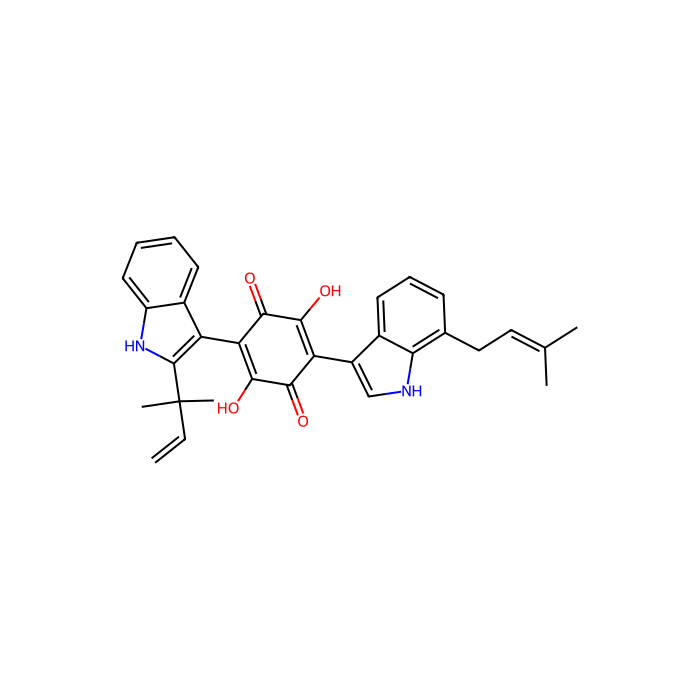
DAQ B1, L-783,281, DMAQ-B1 | 2-[2-(1,1-Dimethyl-2-propenyl)-1H-indol-3-yl]-3,6-dihydroxy-5-[7-(3-methyl-2-butenyl)-1H-indol-3-yl]-2,5-cyclohexadiene-1,4-dione | Demethylasterriquinone B1
Storage
Store at -20°C,Desiccated
Shipped In
Ice chest + Ice pads
★
Size
Germania (EU)
USA*
Price
Qty
1mg
D287434-1mg
Su ordinazione · 8–12 settimane
277,59€
5mg
D287434-5mg
Su ordinazione · 8–12 settimane
867,65€
Enter a quantity for the sizes you want to add.
🧪

Why this grade

Moligand™, ≥95% Moligand™ for sensitive chromatographic and analytical workflows requiring minimal baseline interference.

🌡

Storage & shipping

Store at -20°C,Desiccated Ships Ice chest + Ice pads Check lot-specific COA for exact specifications.

📋

Quality documents

SDS, COA, datasheet, and spec sheet available for download. Lot-specific COA accessible via lot number lookup.

📚

Literature proof

Cited in 0 peer-reviewed publications across chromatography, organic synthesis, and cross-coupling reactions.

Specifications

Sinonimi
DAQ B1, L-783,281, DMAQ-B1 | 2-[2-(1,1-Dimethyl-2-propenyl)-1H-indol-3-yl]-3,6-dihydroxy-5-[7-(3-methyl-2-butenyl)-1H-indol-3-yl]-2,5-cyclohexadiene-1,4-dione | Demethylasterriquinone B1
Specifiche e purezza
Moligand™, ≥95%
Meccanismi biochimici e fisiologici
Selective insulin receptor (IR) activator (EC50values are 3 - 6μM for IRTK and 100μM for IGF1R and EGFR). Increases IRβsubunit tyrosine phosphorylation and activation of PI 3-kinase and Akt, but not ERK. Induces glucose uptake in adipocytes and skeletal m
Condizioni di conservazione di stoccaggio
Store at -20°C,Desiccated
Spedito in
Ice chest + Ice pads
Questo prodotto richiede spedizione a catena fredda. I servizi di terra e altri servizi economici non sono disponibili.
Grado
Moligand™
Tipo di azione
ACTIVATOR
Purezza
≥95%
Nomi e identificatori
Sorrisi canoniciCC(=CCC1=C2C(=CC=C1)C(=CN2)C3=C(C(=O)C(=C(C3=O)O)C4=C(NC5=CC=CC=C54)C(C)(C)C=C)O)C
IUPAC Name2,5-dihydroxy-3-[2-(2-methylbut-3-en-2-yl)-1H-indol-3-yl]-6-[7-(3-methylbut-2-enyl)-1H-indol-3-yl]cyclohexa-2,5-diene-1,4-dione
InChIKeyXMGNJVXBPZAETK-UHFFFAOYSA-N
INCHI1S/C32H30N2O4/c1-6-32(4,5)31-23(20-11-7-8-13-22(20)34-31)25-29(37)27(35)24(28(36)30(25)38)21-16-33-26-18(15-14-17(2)3)10-9-12-19(21)26/h6-14,16,33-35,38H,1,15H2,2-5H3
Isomeri SMILES CC(=CCC1=C2C(=CC=C1)C(=CN2)C3=C(C(=O)C(=C(C3=O)O)C4=C(NC5=CC=CC=C54)C(C)(C)C=C)O)C
Peso molecolare 506.59
Reaxy-Rn 5673602
Reaxys-RN_link_address https://www.reaxys.com/reaxys/secured/hopinto.do?context=S&query=IDE.XRN=5673602&ln=

Documentazione

📋 Safety Data Sheet (SDS)

Comprehensive hazard, handling, storage, and regulatory compliance document.

Download SDS →

✅ Certificate of Analysis (COA)

Lot-specific quality data. Enter your lot number to retrieve the exact COA.

Look up COA →

📊 Datasheet

Quick-reference summary of product specifications and applications.

View datasheet →

🔬 Specification Sheet

Full quality attributes and acceptance criteria for this grade.

View spec sheet →

Advanced Data

Taxonomic Classification

Taxonomy Tree

KingdomOrganic compounds
SuperclassLipids and lipid-like molecules
ClassePrenol lipids
SubclassQuinone and hydroquinone lipids
Intermediate Tree Nodes Not available
Direct ParentPrenylquinones
Alternative Parents Indoles  P-benzoquinones  Substituted pyrroles  Benzenoids  Vinylogous acids  Heteroaromatic compounds  Enols  Azacyclic compounds  Organonitrogen compounds  Organic oxides  Hydrocarbon derivatives  
Molecular FrameworkAromatic heteropolycyclic compounds
Substituents Prenylbenzoquinone - Indole - Indole or derivatives - P-benzoquinone - Quinone - Benzenoid - Substituted pyrrole - Heteroaromatic compound - Pyrrole - Vinylogous acid - Ketone - Cyclic ketone - Azacycle - Enol - Organoheterocyclic compound - Hydrocarbon derivative - Organic oxide - Organooxygen compound - Organonitrogen compound - Organic oxygen compound - Organic nitrogen compound - Carbonyl group - Aromatic heteropolycyclic compound
DescrizioneThis compound belongs to the class of organic compounds known as prenylquinones. These are quinones with a structure characterized by the quinone ring substituted by an prenyl side-chain.
External Descriptors Not available
Struttura 3D
Modello di struttura chimica interattiva


Certificati (CoA, COO, BSE/TSE e tabella di analisi)
C of A & Other Certificates(BSE/TSE, COO):
Analytical Chart:

Find and download the COA for your product by matching the lot number on the packaging.

2 results found

Lot NumberCertificate TypeDataOggetto
J2521787Certificate of AnalysisAug 06, 2025 D287434
I2522635Certificate of AnalysisJul 02, 2025 D287434
Proprietà chimiche e fisiche
SolubilitàSolvent:DMSO, Max Conc. mg/mL: 50.66, Max Conc. mM: 100
SensibilitàMoisture sensitive
Peso molecolare506.600 g/mol
XLogP37.200
Hydrogen Bond Donor Count4
Hydrogen Bond Acceptor Count4
Rotatable Bond Count6
Exact Mass506.221 Da
Monoisotopic Mass506.221 Da
Topological Polar Surface Area106.000 Ų
Heavy Atom Count38
Formal Charge0
Complexity1090.000
Isotope Atom Count0
Defined Atom Stereocenter Count0
Undefined Atom Stereocenter Count0
Defined Bond Stereocenter Count0
Undefined Bond Stereocenter Count0
The total count of all stereochemical bonds0
Covalently-Bonded Unit Count1
Calcolatori di soluzioni
Recensioni

Recensioni dei clienti

Application Protocols

Only product-data-sourced protocols or tested applications may be listed here. None are provided for this SKU. • Tested applications (e.g., WB, IHC, IF, FC) and recommended dilutions: Not specified for this item; refer to CoA/Spec Sheet.

General handling (non-protocol guidance) • Stock preparation: dissolve in anhydrous DMSO to 10–50 mM, vortex/sonicate to clarity, and aliquot into amber vials. Store at −20 °C, desiccated. • Use: immediately before experiments, dilute the DMSO stock into assay buffer/media to the desired final concentration, ensuring the final DMSO percentage is compatible with the system. • Controls: include vehicle controls and, where applicable, orthogonal readouts to mitigate redox/chromophore interference.

Biological Roles

Scope of this section • The following content summarizes general, literature-based properties of quinonoid small molecules and asterriquinone-type scaffolds in biochemical research. It does not constitute medical or clinical claims and is not item-specific unless stated in Product Data (none provided).

General biochemical considerations (literature) • Redox activity: quinones readily participate in reversible redox chemistry (Q/QH2 cycles), enabling interactions with cellular oxidoreductases and potential modulation of reactive oxygen species under experimental conditions. • Protein interactions: planar, polyaromatic systems with hydrogen-bond donors/acceptors can engage protein binding sites through π–π stacking, hydrophobic contacts, and carbonyl-directed H‑bonding. Quinone carbonyls can also act as Michael acceptors toward nucleophilic residues under certain conditions, a factor to consider in covalency assessments. • Pathway interrogation: such scaffolds are employed as chemical probes in cell signaling and metabolism studies to interrogate kinase cascades, stress responses, and transcriptional programs in vitro. • Spectroscopic utility: strong UV–vis signatures aid in tracking uptake and distribution in model systems (e.g., chromatographic profiling of cell extracts).

Practical guidance • Use vehicle controls to decouple compound effects from DMSO or redox-coupled assay artifacts. • Include antioxidant or nucleophile scavenger controls (e.g., glutathione) when evaluating mechanism-of-action hypotheses involving Michael acceptor chemistry. • Confirm target engagement with orthogonal methods (biochemical vs cellular) due to the pleiotropic behaviors common to redox-active quinones.

Buffer Applications

Not typically applicable. • Demethylasterriquinone B1 is a small-molecule research ligand and is not used as a buffering agent or pH-control component. It does not constitute a classical buffer system. • For experimental use, it is commonly dissolved in DMSO and subsequently diluted into preselected biological or analytical buffers appropriate to the assay. Consult the Solvent Selection and Storage & Reconstitution sections for practical handling guidance.

Green Alternatives

Context • Demethylasterriquinone B1 is a research-grade small molecule, not a process solvent or auxiliary; therefore, “green alternative” considerations focus on handling media and formulation choices rather than substituting the active compound itself.

Greener handling choices (general) • Solvent base: choose DMSO as the primary stock solvent over DMF/NMP when assay-compatible due to lower toxicity and better EHS profile. • Dilution media: favor aqueous buffers with minimal organic cosolvent, employing solubility enhancers (cyclodextrins, serum albumin, or mild nonionic surfactants) where compatible with your assay. • Plastics and waste: use glass vials to reduce sorption and allow effective rinsing; segregate DMSO waste for appropriate disposal. Opt for energy-efficient cold storage by minimizing open-door time and using aliquots to reduce freeze–thaw cycles.

Trade-offs (balanced view) • DMSO advantages: broad solvency, biodegradability, and lower volatility; drawbacks include potential biological effects above ~0.5–1% v/v and compatibility issues with some plastics and enzyme assays. • Alcohols (MeOH/EtOH): greener than chlorinated solvents but may not dissolve hydrophobic quinones adequately and can perturb biological systems at modest concentrations.

Implementation tips • Prepare concentrated DMSO stocks to minimize the final cosolvent fraction in assays. • Validate greener solubilization aids (e.g., hydroxypropyl-β‑cyclodextrin) empirically to ensure no assay interference. • Maintain light protection and inert headspace regardless of solvent choice to limit degradation and waste.

Pharmaceutical Uses

Not applicable as a formulated excipient or pharmacopeial substance. • Demethylasterriquinone B1 is supplied strictly for research use (per Product Data) and is not indicated for pharmaceutical formulation, clinical, or diagnostic use. • No compendial monographs or excipient roles are provided for this item. Any discussion of drug product incorporation would be out of scope. Researchers may employ the compound as a chemical probe or reference standard in preclinical, in vitro studies only. • For any regulated application (e.g., GLP tox studies), obtain batch-specific analytical documentation (CoA, stability data) and confirm suitability with your QA unit.

Physical Properties

Item-specific physico-chemical specifications • Appearance: Not specified for this item; refer to CoA/Spec Sheet. • Molecular weight: Not specified for this item; refer to CoA/Spec Sheet. • Melting point, boiling point, density, refractive index, UV cutoff, residual solvents, water/peroxide/metal content: Not specified for this item; refer to CoA/Spec Sheet.

General/literature expectations for asterriquinone-type quinones (informational only; not item specifications) • Physical state/color: typically deeply colored crystalline solid owing to the extended quinonoid chromophore. • Solubility profile: low aqueous solubility; readily soluble in polar aprotic organic media such as DMSO and DMF; variably soluble in MeOH/EtOH and chlorinated solvents depending on substitution. • Partitioning: conjugated, polyaromatic frameworks are often lipophilic (moderate-to-high logP, literature), which supports DMSO stock preparation and dilution into assay buffers with cosolvent. • Spectroscopy: strong visible/UV absorption bands characteristic of p‑quinone chromophores; potential fluorescence quenching in protein-binding assays should be considered. • Chemical stability: quinones may undergo redox cycling, nucleophilic addition (Michael-type) at activated positions, and photodegradation under intense light; protect from light and moisture.

Practical handling notes (general) • Prepare concentrated stocks (e.g., 10–50 mM) in anhydrous DMSO and store aliquots at −20 °C. • Warm to room temperature and vortex/sonicate briefly before use; avoid aqueous exposure until immediate experimental use to minimize hydrolysis or reduction.

Quality and Grades

Item-specific grade • Grade: Moligand™ (per Product Data).

What Moligand™ implies (program-level description) • The Moligand™ designation is used at Aladdin Scientific to denote small molecules provisioned for ligand discovery, screening, and chemical biology applications. While individual analytical specifications can vary by SKU, Moligand™ items are curated for use in in vitro research workflows (e.g., biochemical/biophysical assays, phenotypic screens).

Analytical characterization • Typical characterization for Moligand™ items may include HPLC/UPLC purity, HRMS or MS, and NMR identity confirmation. Exact acceptance criteria, chromatographic methods (wavelengths, gradients), and purity thresholds are item-specific and are not provided here. • Purity/assay, residual solvent, water content, and any stabilizers: Not specified for this item; refer to CoA/Spec Sheet.

Implications for use • Moligand™ materials are suitable for preparing DMSO stock solutions for HTS, target engagement assays, and orthogonal follow-up. Low UV background and mass spectral cleanliness are typically prioritized for assay compatibility, but confirm on the CoA for this SKU. • If your application involves quantitation (e.g., standard curve generation), request the batch-specific purity and use potency correction as needed (assay-corrected concentration). • For photolabile or redox-active scaffolds (as quinones often are), minimize light and oxygen exposure during handling to preserve assay reproducibility.

Reaction and Applications

Scope of use • This SKU is positioned as a small-molecule research ligand (Moligand™). It is primarily applied as a chemical probe candidate in biochemical/cellular studies rather than as a synthetic reagent or bulk auxiliary.

Research applications (literature/general; not item-specific claims) • Chemical biology: quinone-containing scaffolds such as Demethylasterriquinone B1 are frequently explored for modulation of redox-sensitive pathways and receptor-proximal signaling in cells. They are deployed in phenotypic screening cascades, target engagement studies (thermal shift, CETSA, DARTS), and mechanism-of-action profiling. • Biophysics/assay development: the chromophoric quinone core provides strong UV–vis absorbance useful for rapid quantitation of stock concentration and for tracking compound recovery in fractionation workflows. • Redox chemistry: in vitro, quinones participate in single- or two-electron processes (e.g., comproportionation/disproportionation), enabling use as model substrates for enzyme (oxidoreductase) assays or electron-transfer studies.

Practical considerations • Light/oxygen sensitivity: protect solutions from light and minimize headspace oxygen to limit redox degradation. Consider nitrogen- or argon-purged vials for long incubations. • Adsorptive loss: polyaromatic scaffolds can adhere to plastics; use low-binding polypropylene or glass vials and PTFE-lined caps. • Interference controls: account for potential optical interference in colorimetric or redox-coupled assays; include vehicle and spectral overlap controls.

Reaction Conditions

Context • This product is intended for use as a research ligand/chemical probe. It is not commonly deployed as a reagent setting stoichiometric or catalytic reaction conditions. Accordingly, no item-specific reaction condition data are provided.

General conditions for handling/derivatization of quinone-containing scaffolds (literature; guidance only) • Solvents: dry DMSO, DMF, MeCN, or chlorinated solvents for coupling/derivatization steps; aqueous buffers only for immediate assay use after dilution from DMSO stocks. • Atmosphere: inert gas (N2/Ar) recommended to limit oxidative side reactions. • Temperature: many functionalizations proceed at ambient to 60 °C; sensitive transformations may require 0–5 °C to control Michael additions or preserve oxidation state. • Bases/nucleophiles: employ mild, non-nucleophilic bases (e.g., DIPEA) to avoid unwanted 1,4‑addition; if conjugate addition is desired, thiols/amines under buffered or aprotic conditions are typical. • Workup: minimize exposure to strong reducing agents and light; use rapid chromatographic purification with light protection (amber glassware) to retain quinone integrity.

Yields and kinetics • Expected yields and rates are highly substrate- and method-dependent; no generalized, item-specific values are available for this SKU. Consult primary literature for quinone functionalization protocols relevant to your substitution pattern.

Safety and Handling

GHS/SDS status for this item • Signal word, hazard statements, GHS classification, and pictograms: Not specified for this item; refer to the SDS provided with the shipment and the CoA/Spec Sheet for authoritative safety data.

General safety considerations for quinonoid aromatics (literature/good practice; not item-specific) • Hazards: quinones can be skin/eye irritants and may cause respiratory irritation. Some quinones participate in redox cycling, generating reactive oxygen species in vitro; handle within a fume hood. • PPE: lab coat, safety glasses, and appropriate chemically resistant gloves (e.g., nitrile). Avoid skin contact and inhalation of dust or aerosols. • Engineering controls: use in a certified chemical fume hood; avoid open bench weighing if dusting is possible. Employ closed transfer for DMSO stocks when feasible. • Incompatibilities: strong reducing agents (can reduce the quinone), strong bases or nucleophiles (can add to activated double bonds), and strong acids (possible hydrolysis) may degrade the compound. Oxidants and light can also impact stability; protect from light. • First aid (overview): in case of skin contact, wash with soap and water; for eye exposure, rinse cautiously with water for several minutes and seek medical attention; if inhaled, move to fresh air; if ingested, rinse mouth and seek medical advice. Always follow your institutional EHS procedures.

Storage and transport • Store at −20 °C, desiccated (per Product Data). Shipments are provided cold (ice chest + ice pads) to maintain integrity. Allow to equilibrate to room temperature in sealed container before opening to avoid condensation.

Solvent Selection

Applicability • Demethylasterriquinone B1 is supplied as a research chemical standard rather than a bulk solvent. Solvent selection here refers to dissolving and handling the compound in research workflows.

Preferred solvents (general guidance for quinonoid polyaromatics) • Primary: anhydrous DMSO (excellent solvating power; compatible with biological assays at ≤0.1–1% v/v). • Secondary: DMF and NMP (good solubilization, but higher toxicity; typically avoided in cell assays). Methanol or ethanol may dissolve modestly depending on substitution; chlorinated solvents (DCM/CHCl3) can be effective for synthetic manipulations. • Aqueous media: intrinsically low solubility is expected. Use aqueous buffers only after dilution from a DMSO stock, observing final cosolvent limits for your assay system.

Practical tips • Prepare 10–50 mM DMSO stocks, vortex/sonicate to clarity, then sterile-filter through PTFE (0.2 µm) if needed for cell-based work. Avoid cellulose ester filters which can bind hydrophobic molecules. • To mitigate precipitation on dilution, add stock slowly to vigorously stirred buffer containing 0.01–0.1% w/v carrier protein (e.g., BSA) or nonionic surfactant where assay-compatible.

Comparison (general) • DMSO vs alcohols: DMSO affords higher maximum concentrations and better stability for hydrophobic quinones; alcohols can promote side reactions or extraction into plastics. • Aqueous-only systems: not recommended due to precipitation risk; consider cyclodextrin or lipid carriers if DMSO must be minimized.

Storage and Reconstitution

Storage (item-specific) • Store at −20 °C, desiccated (per Product Data). Shipments are provided cold (ice chest + ice pads). Maintain in original, tightly closed container protected from light and moisture.

Reconstitution and handling (general guidance) • Solvent: use anhydrous DMSO to prepare concentrated stock solutions (e.g., 10–50 mM). If alternate solvents are required (DMF, MeOH), verify solubility and compatibility with your assay. • Technique: allow vial to equilibrate to room temperature while sealed to avoid condensation. Open under dry air or inert gas if feasible. Vortex/sonicate to aid dissolution. • Aliquoting: dispense single-use aliquots into amber or foil-wrapped vials to limit light exposure and freeze–thaw cycles. • Freeze–thaw: avoid repeated cycles. Thaw on ice or at room temperature just before use; refreezing small, unused aliquots is preferable to cycling a master stock. • Stability: quinone-type scaffolds may be sensitive to light, moisture, and reducing environments. Prepare fresh working solutions immediately prior to use and discard if discoloration/precipitation occurs.

Documentation • For batch-specific purity, residual solvent/water content, and any stabilizers, consult the CoA/Spec Sheet. For safe handling, review the SDS accompanying the shipment.

Structure and Identity

• Product name: Demethylasterriquinone B1 (DMAQ-B1) • CAS: 78860-34-1; PubChem CID: 3013166 • InChIKey: Not specified for this item; refer to CoA/Spec Sheet. (The value provided in Product Data is incomplete.) • SMILES: Not specified for this item; refer to CoA/Spec Sheet. • Molecular formula: Not specified for this item; refer to CoA/Spec Sheet. • Molecular weight: Not specified for this item; refer to CoA/Spec Sheet.

Structural features (general, literature-based): • Chemical class: member of the asterriquinone family of fungal quinonoid natural products/derivatives. • Functional groups: typically incorporates conjugated quinone carbonyls and phenolic/aryl moieties; “demethyl” substitution pattern indicates fewer O‑methyl groups relative to the parent asterriquinone B1. • Expected 2D topology (descriptive): an extended, polyaromatic, conjugated scaffold containing two carbonyl groups arranged in a quinone motif; additional aryl rings provide a rigid, largely planar core with limited rotatable bonds. Phenolic or anilide-type positions may be present depending on exact substitution pattern (literature). • Stereochemistry: none typically assigned for the planar quinone/aromatic core (literature).

Notes: • Item-specific identifiers beyond CAS/CID are not provided in the Product Data. Where exact structural strings (SMILES/InChI) and formula/MW are required for regulatory filings or analytical work, consult the CoA/Spec Sheet or contact Aladdin Scientific Technical Support. • The above qualitative description reflects the known chemical family (literature) and is not a substitute for item-specific structural identifiers.

Synthetic Utility

Role in synthesis • Demethylasterriquinone B1 is primarily a target molecule/probe rather than a general synthetic building block. Nevertheless, the quinone/aromatic framework offers functional handles for derivatization in method development or SAR campaigns.

Reactivity features (general, literature) • Quinone carbonyls: electrophilic centers amenable to 1,4‑conjugate addition by soft nucleophiles (thiols, amines) and to reversible redox transformations (e.g., reduction to hydroquinone). These features enable probe derivatization and bioconjugation strategies. • Phenolic/aryl sites: where present, can undergo O‑alkylation/acylation, Suzuki/Chan–Lam cross-coupling after appropriate halogenation/activation, or late-stage C–H functionalization. • Redox modulation: reversible interconversion between quinone/hydroquinone states can be exploited to tune electronics for binding or to install protecting groups (e.g., acetal-type masking of hydroquinones in related systems).

Practical notes • Protect from reducing agents and strong bases during functionalization to avoid over-reduction or undesired Michael additions. • Use dry, oxygen-limited conditions to preserve the quinone state when required. • For analytical support, UV–vis monitoring at quinone absorbance maxima and LC–MS are effective for tracking transformations.

Item-specific specs (purity, stabilizers, etc.) are not provided; consult the CoA for suitability in synthetic campaigns.

Target Specificity

Only product-data-sourced details may be listed here. • Target/biomolecule, epitope, species reactivity, clone/isotype: Not specified for this item; refer to CoA/Spec Sheet.

Note: Although literature may discuss potential biological targets for compounds in the asterriquinone family, Aladdin Scientific makes no target-specific representation for this SKU in the absence of product-level validation data.

Need help choosing the grade?

Our grade selection guide covers purity, stabilizer status, and application suitability for all variants in our catalog.

View Moligand™ grade guide →

Shall we send you a message when we have discounts available?

Remind me later

Thank you! Please check your email inbox to confirm.

Oops! Notifications are disabled.