viscosità 160±10mPa.s for sensitive chromatographic and analytical workflows requiring minimal baseline interference.
🌡
Storage & shipping
Temperatura ambiente Ships Normale Check lot-specific COA for exact specifications.
📋
Quality documents
SDS, COA, datasheet, and spec sheet available for download. Lot-specific COA accessible via lot number lookup.
📚
Literature proof
Cited in 419 peer-reviewed publications across chromatography, organic synthesis, and cross-coupling reactions.
Panoramica
L'olio di silicone è utilizzato come mezzo di calibrazione nei bagni a temperatura controllata nei laboratori, grazie alle sue buone caratteristiche termiche e alla bassa infiammabilità. Viene inoltre utilizzato come componente attivo di grassi siliconici, lubrificanti e fluidi per il trasferimento di calore. Trova applicazione nei cosmetici, nei balsami per capelli e come sorbente per l'analisi dello spazio di testa (analisi dei gas disciolti) degli alimenti.
This compound belongs to the class of organic compounds known as siloxanes. These are saturated silicon-oxygen hydrides with unbranched or branched chains of alternating silicon and oxygen atoms (each silicon atom is separated from its nearest silicon neighbours by single oxygen atoms). The general structure of unbranched siloxanes is H3Si[OSiH2]nOSiH3. H3Si[OSiH2]nOSiH[OSiH2OSiH3]2 is an example of a branched siloxane. By extension hydrocarbyl derivatives are commonly included.
External Descriptors
organosilicon compound
1. Djoumbou Feunang Y, Eisner R, Knox C, Chepelev L, Hastings J, Owen G, Fahy E, Steinbeck C, Subramanian S, Bolton E, Greiner R, and Wishart DS. ClassyFire: Automated Chemical Classification With A Comprehensive, Computable Taxonomy. Journal of Cheminformatics, 2016, 8:61.
Determine the necessary mass, volume, or concentration for preparing a solution.
Dilution Calculator
Determine the dilution needed to prepare a stock solution.
Reconstitution Calculator
Recensioni
Recensioni dei clienti
Application Protocols
Not applicable for immunoassays or molecular biology test methods (e.g., WB, IHC, IF, FC). No tested biological application protocols or dilutions are provided for this silicone oil.
Practical handling tips (general/literature):
For use as a heat bath medium: Charge a clean, dry bath reservoir; set the circulator temperature gradually to avoid local overheating; cover the bath when not in active use.
For antifoam use: Start with minimal additions under agitation; measure foaming tendency before/after and titrate to effect; avoid over-dosing which can stabilize emulsions.
For mold release: Apply the thinnest functional film to reduce transfer; wipe excess and verify absence of adverse effects on downstream coatings/adhesion tests.
Biological Roles
Dimethylsilicone oil (PDMS) does not have intrinsic biological activity in the sense of a discrete metabolite or signaling molecule. It is best understood as an inert polymeric material with the following laboratory-relevant biological interfaces (general/literature):
Bioprocessing utility
Antifoam agent: Small amounts can suppress foam in fermentations, bioreactors, and media preparation. Efficacy depends on dispersion, presence of particulates (e.g., hydrophobic silica), and medium composition.
Hydrophobic barrier: Forms water-repellent films; used in microfluidic devices as an immiscible phase with aqueous buffers or cell suspensions.
Biointerface characteristics
Low surface energy and protein adsorption: Untreated PDMS tends to adsorb hydrophobic biomolecules; plasma treatment can temporarily render surfaces hydrophilic by generating silanol groups.
Gas permeability: Crosslinked PDMS elastomers are permeable to O2/CO2; for PDMS fluids, gas solubility is high relative to water but device-level behavior depends on geometry and flow.
Toxicology context
Generally regarded as low acute toxicity and chemically inert; however, emulsified oils can interact with cell membranes or assay readouts (e.g., scattering/fluorescence background). Validate compatibility for sensitive bioassays.
Regulatory notes
Food/pharma antifoam and processing aids exist (e.g., dimethicone/simethicone), but compliance is grade- and jurisdiction-specific. For this SKU, no compliance claims are made; Not specified for this item—refer to CoA/Spec Sheet.
All uses are for research and laboratory applications only; no clinical or therapeutic claims are implied.
Buffer Applications
Dimethylsilicone oil is not a buffering agent and does not participate in acid–base equilibria. It is immiscible with aqueous buffers and thus has no conventional buffer preparation role.
Practical lab note (literature)
As an immiscible overlay: Can be used as an inert oil overlay to minimize evaporation from small aqueous buffer volumes in certain assays or as a physical barrier in microdroplet workflows. Verify that the oil does not interfere with optical detection or surface interactions in the specific assay.
For buffer selection or preparation, refer instead to dedicated buffering systems (e.g., phosphate, HEPES, Tris) appropriate to your pH range and ionic strength requirements.
Green Alternatives
Selection of a process medium should weigh safety, environmental persistence, and performance. For the roles typically served by dimethylsilicone oil (PDMS), consider the following (literature-based comparison; not item-specific):
Environmental context (general)
PDMS exhibits low acute toxicity and low vapor pressure (reduced VOC emissions) but is persistent and can spread widely, complicating cleanup. Biodegradation occurs slowly via hydrolysis/oxidation pathways.
Alternatives and trade-offs
Mineral oil (highly refined): Lower cost; acceptable for moderate temperatures. Drawbacks: narrower thermal stability window, higher volatility/oxidation at elevated T, higher fumes.
Polyalphaolefins (PAO): Improved oxidative stability vs mineral oil; good low-temp fluidity. Still petroleum-derived; higher volatility than high-vis PDMS.
Vegetable/ester-based heat transfer fluids: Renewable content; good biodegradability. Typically lower maximum use temperatures and more prone to hydrolysis/oxidation; may polymerize or varnish under heat stress.
Perfluoropolyethers (PFPEs): Exceptional thermal/oxidative and chemical stability; nonflammable. Trade-offs: high cost, high GWP, limited availability; poor solvency.
Glycol-based fluids (for moderate temperatures): Water-miscible, easier cleanup. Limited to lower temperature ranges; conductive and unsuitable for electrical insulation.
Practical guidance
For green solvent initiatives in synthesis, silicone oil is generally not a reaction solvent; consider propylene carbonate, 2-MeTHF, CPME, or ethyl acetate for reactions instead, chosen by polarity and process needs.
Where cleanup and environmental release are concerns, select fluids with certified biodegradability and ensure secondary containment and robust spill response plans.
Pharmaceutical Uses
No pharmacopeial or regulatory grade is specified for this item; Not specified for this item—refer to CoA/Spec Sheet. The following notes describe general/literature roles for dimethylsilicone oils in pharmaceutical manufacturing and formulation, without therapeutic claims:
Processing aid and excipient roles (general)
Antifoam/defoamer: Used in manufacturing to control foam in aqueous/non-aqueous processes (granulation, fermentation, purification). Typical use levels are low and require appropriate grade compliance (e.g., dimethicone/simethicone standards) when applicable.
Lubricant/release agent: Applied to equipment surfaces, tablet tooling, and molds to reduce sticking and facilitate demolding; must be validated for extractables/leachables.
Coating and surface modifier: Provides water repellency and improves glide/feel in certain topical bases (grade-specific; additive-free oils preferred for sensitive applications).
Analytical/quality considerations
Volatile silicone content (cyclic siloxanes D3–D5) is often controlled; residuals may be limited in some jurisdictions.
Particle and metal content, acid number, and peroxide value are sometimes specified for pharma-grade silicones; for this SKU, such specifications are Not specified—refer to CoA/Spec Sheet.
Handling in GMP contexts
Use documented, pharmacopeia-compliant grades where required; maintain traceability and cleaning validation to manage silicone persistence on equipment surfaces.
All uses are for research and laboratory purposes only; no clinical use is claimed for this product.
Physical Properties
Note: Specific specifications for this catalog item (e.g., viscosity grade, exact density, refractive index) are not provided. Values below are general/literature characteristics of PDMS fluids for context; they are not item-specific specifications.
Appearance (item-specific): Not specified for this item; refer to CoA/Spec Sheet. PDMS oils are typically clear, colorless liquids (literature).
Molecular weight: Polydisperse; not single-valued. Not specified for this item; refer to CoA/Spec Sheet.
Boiling behavior (literature): Very high; conventional distillation at atmospheric pressure is impractical. Thermal decomposition can occur >200–300 °C depending on grade; vacuum devolatilization is used industrially.
Flash point (literature): Typically high (often >250–300 °C, closed cup) but viscosity-dependent.
Pour point (literature): Typically very low (remains fluid at sub-zero temperatures; exact value depends on viscosity grade).
Density (literature): ~0.96–0.98 g/mL at 25 °C for ~100 cSt PDMS; decreases slightly with temperature and increases modestly with viscosity.
Refractive index nD20 (literature): ~1.403–1.406 (viscosity-dependent).
Surface tension (literature): ~20–21 mN/m at 25 °C (significantly lower than hydrocarbons/water).
Solubility (literature): Insoluble in water; miscible with many nonpolar/aprotic organics (e.g., toluene, hexanes, chlorinated solvents). Swells/sparsely soluble in some aromatics; incompatible with strong polar protic solvents for long-term exposure.
Viscosity: Defining property of PDMS fluids, commonly from ~0.65 cSt to >100,000 cSt; Not specified for this item; refer to CoA/Spec Sheet.
LogP/pKa: Not applicable/meaningful for high-MW polymers.
Quality and Grades
Item-specific grade/purity: Not specified for this item; refer to CoA/Spec Sheet.
Understanding silicone oil grades (general)
Viscosity grade: The primary differentiator (e.g., 10, 50, 100, 1000 cSt). Viscosity correlates with average molecular weight and influences volatility, thermal stability, and flow.
End-group chemistry: Commonly trimethylsilyl-terminated (low reactivity, minimal volatility) or silanol-terminated (slightly higher polarity/reactivity). End group strongly affects compatibility, cure behavior with crosslinkers, and volatility/bleed. End-group type is grade-specific; Not specified for this item; refer to CoA/Spec Sheet.
Volatile content: Low boilers (cyclics such as D3–D5) may be controlled for specialty applications (electrical, analytical). If critical, request a low-volatiles grade (e.g., devolatilized).
Additives: Some silicone fluids contain anti-foam actives, phenyl-modified siloxanes, or crosslinkers; this product’s additive status is Not specified for this item; refer to CoA/Spec Sheet.
Fit-for-purpose guidance (general)
For high-temperature baths and dielectric applications: Prefer higher-viscosity, low-volatility, trimethylsilyl-terminated PDMS with documented breakdown/flash points.
For antifoam or release: Lower-viscosity PDMS improves dispersion and spread; ensure compliance with process (e.g., food-contact, pharma) if applicable.
Analytical contexts (e.g., GC bath oil): Select grades with certified low UV absorbance/low volatility if baseline stability is critical.
Documentation
For this SKU, request CoA/Spec Sheet for viscosity, end-group, volatile content, and any compliance statements (USP, FCC, food, electronic, etc.), if relevant to your application.
Reaction and Applications
While not a conventional molecular reagent, dimethylsilicone oil (PDMS) plays important roles as a process medium and functional additive:
Heat-transfer medium (literature)
Stable for prolonged operation across broad temperature windows (grade-dependent). Used in thermostated baths, oil heating mantles, and jacketed reactors where low volatility and thermal stability are needed.
Practical tips: Select viscosity and flash point appropriate to the setpoint; de-gas before precision temperature control to minimize bubble nucleation; use stainless or glass wetted parts.
Nonstick/release and hydrophobization (literature)
Thin films provide durable, low-energy surfaces. Useful in die casting, injection molding release, and surface water repellency treatments.
Antifoam and defoaming aid (literature)
Small additions (ppm–low hundreds ppm) suppress foam in aqueous and nonaqueous systems; performance depends on dispersion and presence of hydrophobic silica or emulsifiers.
Dielectric/insulating fluid (literature)
High resistivity and low dielectric loss support use in HV test baths, transformer oil substitutes (where allowed), and potting/encapsulation fluids.
Microfluidics and interfacial studies (literature)
As a continuous oil phase for droplet microfluidics; low interfacial tension with aqueous phases enables precise droplet generation. Note: Specialized functional silicones/fluorosilicones may be preferred for surfactant compatibility.
Analytical and lab practice (literature)
Bath oil for GC and melting point apparatus; lubricant for vacuum joints (using specific high-vacuum silicone greases rather than oils when vapor pressure is critical).
Notably, PDMS is generally chemically inert under neutral conditions and does not participate in common named organic reactions; instead, it provides a controlled physical environment for processes.
Reaction Conditions
Because dimethylsilicone oil functions mainly as a medium and not a reagent, “reaction conditions” pertain to its use parameters rather than stoichiometric chemistry (general/literature):
Heat bath operation
Temperature range: Select grade based on published working ranges; many PDMS bath oils support ~−40 to 200–250 °C continuous service. Confirm flash point, pour point, and maximum recommended film temperature from supplier data for the chosen viscosity grade.
Best practices: Use a thermostated circulator with adequate pumping capacity for the oil’s viscosity. Minimize hot spots; avoid exposure to open heating elements above the recommended film temperature. Cover baths to reduce dust ingress.
Antifoam application
Dosing: Often effective at low ppm levels; optimize empirically. Pre-dispersing in a small aliquot of process liquid or using an appropriate emulsifier can improve performance in aqueous systems.
Compatibility: Validate against downstream analytical methods; silicones can foul membranes and bias surface analyses.
Hydrophobic overlays and microfluidics
Use in droplet generation devices with suitable surfactants designed for silicone oils if stability is required. Control shear rates and channel surface energy to manage droplet size and coalescence.
Cleaning and maintenance
Remove residues with nonpolar solvents (e.g., toluene, heptane) followed by detergent wash. For glassware, a base bath will degrade PDMS but must be handled with extreme caution; alternatively, use dedicated silicone cleaners.
Note: No stoichiometric yields or kinetic data apply, as PDMS is not a reactive participant. Always consult the SDS and grade-specific technical data before high-temperature use.
Safety and Handling
Item-specific GHS information is not provided in the Product Data. Always consult the SDS for authoritative guidance.
GHS/Classification
Signal word, hazard statements, pictograms: Not specified for this item; refer to SDS.
General note (literature): Dimethylsilicone oils are typically classified as low acute toxicity, non-corrosive, and non-hazardous for transport; classifications vary by viscosity/additives.
Key hazards and precautions (general)
Slip hazard: Spills create extremely slippery surfaces—contain and clean immediately with absorbent and detergent.
Fire behavior: Combustible; high flash point but can burn. Use foam, dry chemical, or CO2 for large fires; water fog for cooling only. Thermal decomposition may release formaldehyde and siloxane fragments at elevated temperatures.
Incompatibilities: Avoid strong oxidizers; strong acids/bases at elevated temperature can catalyze depolymerization or crosslinking. Prolonged contact may swell certain elastomers and plastics.
Inhalation of aerosols/mists should be minimized; avoid prolonged skin contact. PDMS can defat skin on repeated exposure.
PPE and handling (general best practices)
Wear safety glasses with side shields, lab coat, and appropriate chemically resistant gloves (e.g., nitrile). Use local ventilation if generating mist/aerosol or heating.
For spill response: Use inert absorbents (vermiculite, polypropylene pads). Degrease floors with surfactant to remove residual slip film.
First aid overview: Fresh air after inhalation of mist; wash skin with soap and water; flush eyes with water; seek medical attention if irritation persists. Refer to SDS.
Waste disposal
Collect as nonhalogenated organic waste unless local regulations require otherwise. Do not discharge to drains due to slip hazard and persistence.
Solvent Selection
Dimethylsilicone oil is not typically used as a reaction solvent in synthetic organic chemistry; it is a non-volatile, nonpolar, insulating fluid employed as a heat-transfer medium, lubricant, release agent, or hydrophobic phase.
Polarity/miscibility profile (literature)
Polarity: Very low; nonpolar, low cohesive energy density.
Dielectric constant: ~2.7–2.9 (literature), indicating poor ability to solvate ions.
Miscibility: Insoluble in water and polar protic solvents; miscible with many hydrocarbons and chlorinated solvents; limited miscibility with ethers/esters; swells silicone elastomers.
Selection considerations (general)
As a heat-transfer medium: Compared to mineral oil, PDMS offers wider liquid temperature ranges, higher thermal oxidation stability, and lower viscosity change with temperature.
As an immersion fluid for temperature baths: Low volatility reduces fumes and mass loss; check viscosity/flash point for operating range.
As a mold release or surface wetting aid: Low surface tension and high spreading coefficient favor uniform thin films.
Comparison snapshot (literature, qualitative)
Silicone oil vs mineral oil: Silicone oil has lower surface tension, higher thermal/oxidative stability, better electrical insulation, but higher cost and potential to contaminate analytical surfaces due to persistence.
Silicone oil vs perfluorinated fluids: PDMS is less dense and more economical, but has lower chemical inertness and narrower high-temperature window than perfluoropolyethers.
If a true reaction solvent is required, consider alternatives under “Green Alternatives” below and select based on solvation needs rather than silicone oil.
Storage and Reconstitution
Storage (from Product Data)
Store at room temperature. Shipped under normal conditions.
Container/material compatibility (general)
Store in tightly sealed glass or compatible plastic (e.g., HDPE) containers to prevent contamination and dust ingress. Avoid long-term contact with silicone-sensitive components where transfer is problematic. Secondary containment is recommended to mitigate slip hazards from leaks.
Stability (general/literature)
Chemically stable under ambient conditions. Protect from strong oxidizers and from prolonged exposure to strong acids/bases, especially at elevated temperatures. Minimize air entrainment and moisture ingress if electrical or dielectric performance is critical.
Reconstitution
Not applicable. Product is supplied as a ready-to-use liquid; no reconstitution required.
Handling after opening
Keep container closed when not in use to prevent contamination with particulates. If high-purity or low-volatiles performance is required, consider nitrogen headspace and minimize heat history.
Freeze/thaw guidance
Not relevant; PDMS oils remain liquid well below 0 °C (grade-dependent). If cold-thickened, allow to equilibrate to ambient temperature before use.
For any item-specific limits (e.g., viscosity grade, volatiles), refer to the CoA/Spec Sheet for this SKU.
Structure and Identity
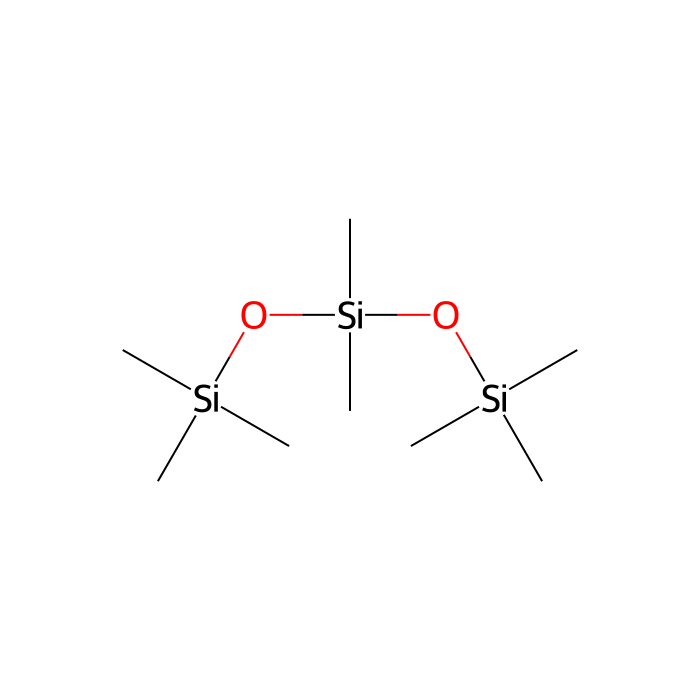
Dimethylsilicone oil is a silicone fluid composed of repeating polydimethylsiloxane (PDMS) units.
Item identity (from Product Data)
SKU: D301977
Product name: Dimethylsilicone oil
CAS: 63148-62-9 (PDMS fluids)
InChIKey: 56370
Storage conditions: Room temperature; shipped under normal conditions
Polymer description (general/literature)
Chemical class: Linear polysiloxane
Repeat unit: –[Si(CH3)2–O]–
Representative repeat-unit formula: C2H6OSi (per unit); overall polymer is (C2H6OSi)n
Overall molecular formula and exact molecular weight: Not single-valued for polymers; Not specified for this item; refer to CoA/Spec Sheet.
Structural features: Alternating silicon and oxygen atoms in the backbone (siloxane), each Si bearing two methyl substituents; typically linear chains with narrow to broad molecular-weight distributions depending on grade.
Stereochemistry: Not applicable (siloxane backbone is achiral; tacticity not defined as in vinyl polymers).
2D structure in words (general)
A –Si–O–Si–O–Si– chain forms the backbone; every silicon bears two methyl groups pointing away from the backbone. End groups are commonly trimethylsilyl or silanol, depending on synthesis/finishing (grade-specific; not specified for this item).
Synthetic Utility
Dimethylsilicone oil is not a reactive reagent; its synthetic value lies in its function as a medium, barrier, or processing aid (general/literature):
Thermal medium for high-temperature operations
Provides uniform heat transfer for reactions requiring stable temperatures above the limits of water/glycols. Common for oil baths in the 50–250 °C range (grade-dependent). Low volatility reduces fuming and mass loss.
Hydrophobic phase and interfacial control
Serves as the continuous phase for biphasic or multiphase systems, enabling phase-transfer or interfacial catalysis studies where a very low polarity medium is desired. Its low surface tension can influence droplet size and coalescence.
Anti-foam and degassing aid
Trace amounts can collapse foam in workups and extractions, improving phase disengagement and reducing mechanical entrainment of organic phases.
Equipment lubrication and sealing
Light PDMS oils can temporarily lubricate stopcocks, septa, and o-rings; for sustained vacuum or chemical resistance, dedicated silicone greases are preferred due to lower vapor pressure and higher consistency.
Analytical applications
As a stable bath medium for GC inlet liner conditioning or melting point determinations, where temperature uniformity is critical and solvent vapors are undesirable.
Caveats: Avoid contact with strong acids/bases at elevated temperatures (catalyzes depolymerization/crosslinking). Silicone contamination can interfere with coatings, spectroscopy baselines, and surface-sensitive reactions—maintain silicone-free workflows when required.
Target Specificity
Not applicable. Dimethylsilicone oil is not a biological targeting reagent (e.g., antibody, ligand, or inhibitor), and no target specificity data are provided for this item.
Utilizziamo i cookie per garantire il corretto funzionamento del sito web e, ove consentito, per migliorare la tua esperienza. Puoi gestire le tue preferenze in qualsiasi momento nelle Impostazioni. Per saperne di più, consulta la nostra Cookie Policy.
Desidera che le inviamo un messaggio quando avremo sconti disponibili?
Ricordamelo più tardi
Grazie! Controlli la sua casella di posta per confermare.
Products are supplied to verified businesses, institutions, and qualified professionals for research and development use only. Not for use in humans, animals, diagnosis, or therapy.

 J2214240