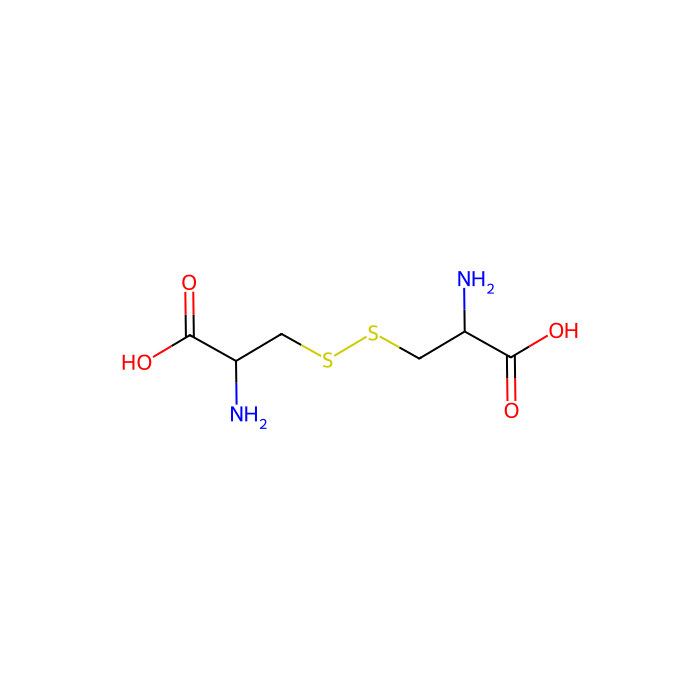
DL-Cystine - ≥98% , CAS No.923-32-0

CAS: 923-32-0 Cat. No.: C100539 Formula: C6H12N2O4S2 Peso molecolare: 240.3 Beilstein Registry Number: 1728095 Numero EC: 213-094-5
Disponibile su ordine
QUALITÀ & PUREZZA ≥98%
Synonyms
DL-Cystine, free base|Bis(.beta.-amino-.beta.-carboxyethyl)disulfide|Cystine_RamanathanGurudeeban|2-amino-3-(2-amino-3-hydroxy-3-oxopropyl)disulfanylpropansäure|Zystin|3,3'-Dithiobis(2-aminopropionic acid)|Propanoic acid,3'-dithiobis[2-amino-, [R-(R*,R*)]-|DL-CYSTINE|Alanine,3'-dithiodi-|L-3,3'-dithiodialanine|.beta.,.beta.'-Dithiodialanine|CYSTINE, (L)|Cystine,(S)|cystine|DL-Cystine (H-DL-Cys(1)-OH.H-DL-Cys(1)-OH)|(-)-Cystine|.beta.,.beta.'-dicarboxydiethyldisulfide|3,7-diamino-5-phenyl-phenaziniuchloride|2-amino-3-[(2-amino-2-carboxyethyl)disulfanyl]propanoic acid|Pharmakon1600-01300099|.beta.,.beta.'-Diamino-.beta.,.beta.'-dicarboxydiethyl disulfide|alpha-Diamino-beta-dithiolactic acid|3,3'-disulfanediylbis(2-aminopropanoic acid)|cistina|.beta.,.beta.'-Dithiobisalanine|Cystine acid|(H-Cys-OH)|(H-DL-Cys-OH)2|DL-CYSTINE-2,2',3,3,3',3'-D6|Alanine,3'-dithiobis-|Cystin|Dicysteine|SBI-0207067.P001|2-amino-3-[(2-amino-3-hydroxy-3-oxo-propyl)disulfanyl]propanoic acid|Bis(.beta.-amino-.beta.-carboxyethyl) disulfide
Storage
Room temperature
Shipped In
Normal
★
Dimensione
Germania (EU)
USA*
Prezzo
Qtà
1g
C100539-1g
—
Disponibile ≥10

8,59€

12,93€
Salva 4,34 € (33.56%)
5g
C100539-5g
—
3 Disponibile

17,27€

25,95€
Salva 8,68 € (33.44%)
25g
C100539-25g
—
7 Disponibile

58,92€

88,42€
Salva 29,50 € (33.37%)
100g
C100539-100g
—
2 Disponibile

169,12€

254,16€
Salva 85,04 € (33.46%)
Enter a quantity for the sizes you want to add.

Panoramica

DL-cystine is used in the preparation of sulfur-containing dimeric and monomeric surfactants.

Specifiche

Sinonimi
DL-Cystine, free base | Bis(.beta.-amino-.beta.-carboxyethyl)disulfide | Cystine_RamanathanGurudeeban | 2-amino-3-(2-amino-3-hydroxy-3-oxopropyl)disulfanylpropansäure | Zystin | 3,3'-Dithiobis(2-aminopropionic acid) | Propanoic acid,3'-dithiobis[2-amino-, [R-(R*,R*)]- | DL-CYSTINE | Alanine,3'-dithiodi- | L-3,3'-dithiodialanine | .beta.,. Mostra altro
Specifiche e purezza
≥98%
Meccanismi biochimici e fisiologici
DL-Cystine is a racemic mixture of the proteinogenic amino acids L-cystine and the non-proteinogenic D-cystine. DL-cystine is used in the preparation of sulfur-containing dimeric and monomeric surfactants.
Condizioni di conservazione di stoccaggio
Room temperature
Spedito in
Normal
Purezza
≥98%
Nomi e identificatori
Pubchem Sid
Pubchem Sid Url
https://pubchem.ncbi.nlm.nih.gov/substance/488179533
SMILES
C(C(C(=O)O)N)SSCC(C(=O)O)N
IUPAC Name
2-amino-3-[(2-amino-2-carboxyethyl)disulfanyl]propanoic acid
InChIKey
LEVWYRKDKASIDU-UHFFFAOYSA-N
InChI
1S/C6H12N2O4S2/c7-3(5(9)10)1-13-14-2-4(8)6(11)12/h3-4H,1-2,7-8H2,(H,9,10)(H,11,12)
Isomeri SMILES
C(C(C(=O)O)N)SSCC(C(=O)O)N
WGK Germania
3
Peso molecolare
240.3
Beilstein
1728095
Reaxys
1728091
Reaxys-RN_link_address
https://www.reaxys.com/reaxys/secured/hopinto.do?context=S&query=IDE.XRN=1728091&ln=

Dati avanzati

Taxonomic Classification

Taxonomy Tree

KingdomOrganic compounds
SuperclassOrganic acids and derivatives
ClasseCarboxylic acids and derivatives
SubclassAmino acids, peptides, and analogues
Intermediate Tree Nodes Amino acids and derivatives - Alpha amino acids and derivatives
Direct ParentCysteine and derivatives
Alternative Parents Alpha amino acids  Dicarboxylic acids and derivatives  Dialkyldisulfides  Amino acids  Sulfenyl compounds  Carboxylic acids  Organopnictogen compounds  Organic oxides  Monoalkylamines  Hydrocarbon derivatives  Carbonyl compounds  
Molecular FrameworkAliphatic acyclic compounds
Substituents Cysteine or derivatives - Alpha-amino acid - Dicarboxylic acid or derivatives - Organic disulfide - Dialkyldisulfide - Amino acid - Sulfenyl compound - Carboxylic acid - Hydrocarbon derivative - Organic nitrogen compound - Primary amine - Organosulfur compound - Organooxygen compound - Organonitrogen compound - Primary aliphatic amine - Organic oxygen compound - Carbonyl group - Amine - Organopnictogen compound - Organic oxide - Aliphatic acyclic compound
DescrizioneThis compound belongs to the class of organic compounds known as cysteine and derivatives. These are compounds containing cysteine or a derivative thereof resulting from reaction of cysteine at the amino group or the carboxy group, or from the replacement of any hydrogen of glycine by a heteroatom.
External Descriptors Other amino acids
Struttura 3D
Modello di struttura chimica interattiva


Obiettivi associati (umani)
PMP22 Tbio Peripheral myelin protein 22 (699 Activities)
Activity TypeRelationActivity valueUnitsAction TypeJournalPubMed IddoiAssay Aladdin ID
Obiettivi associati (non umani)
rep Replicase polyprotein 1ab (378 Activities)
Activity TypeRelationActivity valueUnitsAction TypeJournalPubMed IddoiAssay Aladdin ID
Rorc Nuclear receptor ROR-gamma (89407 Activities)
Activity TypeRelationActivity valueUnitsAction TypeJournalPubMed IddoiAssay Aladdin ID
Meccanismi d'azione
Certificati (CoA, COO, BSE/TSE e tabella di analisi)
C of A & Other Certificates(BSE/TSE, COO):
Analytical Chart:

Find and download the COA for your product by matching the lot number on the packaging.

21 results found

Lot NumberCertificate TypeDataOggetto
J2126266J2126266Certificate of AnalysisAug 11, 2025 C100539
L2308325L2308325Certificate of AnalysisNov 25, 2023 C100539
L2308324L2308324Certificate of AnalysisNov 25, 2023 C100539
L2308323L2308323Certificate of AnalysisNov 25, 2023 C100539
E2614027E2614027Certificate of AnalysisNov 25, 2023 C100539
F23251201F23251201Certificate of AnalysisMay 12, 2023 C100539
F23251330F23251330Certificate of AnalysisMay 12, 2023 C100539
F23251303F23251303Certificate of AnalysisMay 12, 2023 C100539
F23251293F23251293Certificate of AnalysisMay 12, 2023 C100539
F23251286F23251286Certificate of AnalysisMay 12, 2023 C100539
F23251280F23251280Certificate of AnalysisMay 12, 2023 C100539
A2608037A2608037Certificate of AnalysisMay 12, 2023 C100539
F23251191F23251191Certificate of AnalysisMay 12, 2023 C100539
F23251175F23251175Certificate of AnalysisMay 12, 2023 C100539
J1415025J1415025Certificate of AnalysisJul 20, 2022 C100539
F2302912F2302912Certificate of AnalysisOct 11, 2021 C100539
E2304495E2304495Certificate of AnalysisOct 11, 2021 C100539
E2304347E2304347Certificate of AnalysisOct 11, 2021 C100539
D2324102D2324102Certificate of AnalysisOct 11, 2021 C100539
C2320602C2320602Certificate of AnalysisOct 11, 2021 C100539
C2320601C2320601Certificate of AnalysisOct 11, 2021 C100539
Proprietà chimiche e fisiche
SolubilitàSoluble in dilute acid and alkali solution, highly soluble in water, not soluble in alcohol
Rotazione specifica [α]-2.0 to +2.0 deg(C=1,1mol/L HCl)
Punto di fusione (°C)227°C
Peso molecolare240.3
XLogP3-6.300
Hydrogen Bond Donor Count4
Hydrogen Bond Acceptor Count8
Rotatable Bond Count7
Exact Mass240.024 Da
Monoisotopic Mass240.024 Da
Topological Polar Surface Area177.000 Ų
Heavy Atom Count14
Formal Charge0
Complexity192.000
Isotope Atom Count0
Defined Atom Stereocenter Count0
Undefined Atom Stereocenter Count2
Defined Bond Stereocenter Count0
Undefined Bond Stereocenter Count0
The total count of all stereochemical bonds0
Covalently-Bonded Unit Count1
Sicurezza e pericoli (GHS)
Pictogrammi
Segnale
Warning
Indicazioni di pericolo

H302:Harmful if swallowed

Precauzioni

P264:Wash hands [and …] thoroughly after handling.

P270:Do not eat, drink or smoke when using this product.

P330:Rinse mouth.

P301+P312:IF SWALLOWED: call a POISON CENTER/doctor/... IF you feel unwell.

P501:Dispose of contents/container to an approved waste disposal plant.

WGK Germania
3
Reaxys
1728091
Reaxys-RN_link_address
https://www.reaxys.com/reaxys/secured/hopinto.do?context=S&query=IDE.XRN=1728091&ln=
Indice Merck
2782
Citations of This Product
Calcolatori di soluzioni
Recensioni

Recensioni dei clienti

Application Protocols

No vendor-validated application protocols are provided in the Product Data for this item. The following notes are general laboratory considerations only (not product-validated procedures):

  • Preparing an aqueous stock

    • Weigh the required amount of DL-cystine. Wet with a small volume of 0.1–0.5 M HCl (or NaOH) to aid dissolution, stir with gentle warming (≤40 °C), then bring to volume with buffer or water. Adjust pH to target after full dissolution. Filter if clarity/sterility is required.
  • Example redox buffer setup (literature guidance)

    • Mix buffered solutions of cystine and cysteine to achieve a defined ratio (e.g., 2 mM cystine / 1 mM cysteine in 50 mM phosphate, pH 7.5, with 0.5 mM EDTA). Allow to equilibrate 15–30 min before use. Verify Eh if critical.
  • Disulfide exchange demonstration

    • Combine a thiol-containing substrate with DL-cystine in pH 8–8.5 buffer; monitor exchange by HPLC. Quench with acid or iodoacetamide to cap free thiols before analysis.

For application-specific, validated instructions, consult peer-reviewed literature and develop SOPs suited to your laboratory and instrumentation.

Biological Roles

General biochemical context (literature; not product-specific and not a clinical claim):

  • Structural role

    • Cystine is the disulfide-linked dimer of cysteine residues found in proteins. Disulfide bonds stabilize tertiary and quaternary structures, influence folding pathways, and confer mechanical/thermal stability, especially in secreted and extracellular proteins.
  • Redox homeostasis

    • The cystine/cysteine redox couple participates in maintaining cellular redox balance. Cystine uptake and intracellular reduction to cysteine supply sulfur for glutathione biosynthesis and other thiol-dependent processes.
  • Metabolic pathways

    • Interconverts with cysteine via thiol–disulfide exchange and enzymatic redox systems. Serves as a sulfur source in transsulfuration and contributes to taurine and sulfate production.
  • Transport considerations

    • In biology, the extracellular import of cystine coupled to glutamate export (system xC−) and its rapid intracellular reduction are widely studied phenomena used to probe oxidative stress and thiol metabolism in model systems.
  • Laboratory relevance

    • In defined media and redox-buffered systems, the cystine/cysteine ratio is used to modulate redox potential (Eh). Researchers leverage this to study folding, disulfide isomerization, and oxidative protein assembly in vitro.

Note: The above describes general roles in biochemistry for research interpretation only.

Buffer Applications

DL-Cystine itself is not a primary buffering agent, but it is integral to preparing redox-defined buffer systems (literature guidance).

  • Redox buffers

    • Cysteine/cystine pairs set defined redox potentials (Eh) according to the Nernst equation (E°′ for cystine/cysteine ~ −250 mV at pH 7, literature). By adjusting total thiol/disulfide and their ratio, one can create reproducible oxidative environments for protein folding studies.
    • Practical recipe (example, not a product specification): Prepare 0.1 M phosphate or Tris buffer at desired pH (e.g., pH 7.5). Dissolve cystine in minimal 0.1–0.5 M HCl or NaOH, dilute into buffer, and mix with cysteine stock to achieve, for example, 2 mM cystine / 1 mM cysteine (more oxidizing) or 0.5 mM cystine / 2 mM cysteine (more reducing). Include 0.1–1 mM EDTA to chelate trace metals.
  • Notes

    • Solubility improves at non-neutral pH; adjust the final pH after mixing. Filter-sterilize if sterility is required. Monitor Eh with a redox electrode or calculate from concentrations.
    • DL vs L form: For biochemical assays sensitive to stereochemistry (e.g., enzymes specific to L-cysteine), consider whether DL-cystine is appropriate; otherwise, it can serve as a redox-active, non-enzymatic component.
Green Alternatives

This product is a solid amino acid dimer, not a volatile organic solvent. “Green alternatives” in the conventional solvent sense are not directly applicable.

  • Relevant green chemistry considerations (general)

    • Solvent choice for dissolution: prefer water and aqueous buffers; avoid unnecessary use of organic solvents since cystine is insoluble in most of them.
    • Redox reagents: where feasible, use oxygen/air or glutathione (GSH/GSSG) couples instead of stoichiometric halogen oxidants for cysteine-to-cystine conversions.
    • Energy and waste: enhance dissolution with moderate warming and efficient stirring rather than prolonged high-temperature treatments; neutralize/segregate sulfur-containing aqueous waste appropriately.
  • Comparison examples (contextual; literature)

    • Oxidation to form disulfides: air/O2 or enzymatic catalysts (e.g., mild oxidase systems in biocatalysis research) can be greener than iodine or other halogen-based oxidants.
    • Reductive cleavage: TCEP (non-thiol, odorless, aqueous) may be preferable to β-mercaptoethanol for odor and volatility reasons; electrochemical reduction can eliminate chemical reductant waste in some setups.

In summary, prioritize water-based processing and mild redox systems to align cystine workflows with green chemistry principles.

Pharmaceutical Uses

No therapeutic claims are made. The following describes general formulation/manufacturing roles observed in the literature for cystine; these are not product specifications.

  • Excipient and processing roles (general)

    • Redox modulation: Cystine (often with cysteine) can be used in bioprocess buffers to control oxidative folding of disulfide-containing biologics in vitro.
    • Media/feed component: In cell and microbial culture development, cystine may be included as a sulfur source or as a redox partner for process optimization studies.
    • Stabilization studies: Inclusion in formulation screening to probe disulfide scrambling or resistance to reduction/oxidation during stress testing.
  • Regulatory/compendial

    • Depending on grade, cystine has monographs in certain pharmacopeias (e.g., L-cystine). Suitability for GMP use depends on grade-specific specifications (assay, impurities, endotoxin/bioburden) documented on a compliant CoA.
  • Practical considerations

    • Selection between DL- and L-cystine should match process needs; biological systems typically utilize L-forms. Solubility management via pH adjustment is often necessary. Filtration through 0.22 μm is standard for sterile solutions prepared in aqueous vehicles.

For this catalog item, grade/purity and intended regulatory use are Not specified for this item; refer to CoA/Spec Sheet.

Physical Properties

Item-specific properties not provided in the Product Data are left unspecified below. Consult the CoA/Specification Sheet for lot-specific values.

  • Item-specific (from Product Data)

    • Molecular Formula: Not specified for this item; refer to CoA/Spec Sheet.
    • Molecular Weight: Not specified for this item; refer to CoA/Spec Sheet.
    • Appearance: Not specified for this item; refer to CoA/Spec Sheet.
  • Literature/general reference values for cystine (not product specifications)

    • Molecular formula: C6H12N2O4S2
    • Molecular weight: ~240.30 g/mol
    • Physical state: crystalline solid; typically colorless to off-white (literature)
    • Melting/decomposition: reported to decompose on heating; onset commonly cited around 240–260 °C with darkening (literature)
    • Solubility: sparingly soluble in water at neutral pH; markedly more soluble in acidic or basic media; insoluble in most common organic solvents (literature)
    • Acid–base behavior: diprotic carboxylic acid with two basic amino groups (zwitterionic around its isoelectric point); typical pI ≈ 5.0 (literature)
    • pKa values (approx., literature): pKa1 (CO2H) ~1.7–2.0; pKa2 (NH3+/NH2) ~8.0–8.5; second carboxyl/amine similar; the disulfide has no thiol pKa because –SH groups are oxidized (literature)
    • LogP/logD: highly hydrophilic/ionic; logP not commonly used due to zwitterionic nature (literature)
    • Optical activity: DL (racemic) overall optically inactive as a bulk material, though constituent stereocenters exist in each residue.
Quality and Grades
  • Item-specific (from Product Data)

    • Grade/Purity: Not specified for this item; refer to CoA/Spec Sheet.
  • Guidance on grades for DL-cystine (general context; not product specifications)

    • Common research grades: "Reagent" or "ACS" grade for general synthesis; "Biochemical" or "Cell culture" grade for sensitive biological work (lower bioburden, tighter heavy-metal/endotoxin limits); "Peptide synthesis" grade emphasizing low water/ash and trace metals.
    • Spectrophotometric characteristics: As a non-aromatic amino acid dimer, cystine has negligible absorbance above ~230 nm; HPLC-grade criteria are not typically applicable unless formulated for chromatographic reference standards.
    • Impurity considerations: Typical impurities include cysteine (from partial reduction), oxidized sulfur species, inorganic salts (from crystallization), moisture, and trace metals. Acceptance limits vary by grade and vendor.
    • What to check on the CoA: assay method (e.g., titrimetric, HPLC), enantiomeric composition (DL vs L), loss on drying, heavy metals, chloride/sulfate ash, bioburden/endotoxin if applicable to your use case.
    • Stabilizers: Not generally required for cystine. If any additive is used (e.g., anti-caking agent), it should be declared on the CoA; none is specified for this item.
Reaction and Applications

DL-Cystine is a versatile sulfur-containing building block used across redox chemistry, peptide synthesis, and materials/biochemical research.

  • Redox chemistry (general)

    • Acts as the oxidized partner in the cysteine/cystine redox couple. Useful for setting and maintaining defined redox potentials in vitro, studying thiol–disulfide exchange, and modeling protein folding environments.
    • Readily reduced to cysteine by DTT, TCEP, mercaptoethanol, or electrochemically; iodometric and air oxidation of cysteine regenerate cystine.
  • Peptide/biopolymer applications

    • Source of disulfide linkages in synthetic peptides and polymer conjugates; forms intramolecular or intermolecular crosslinks via disulfide exchange.
    • Employed as a dicarboxylic, diamino monomer to introduce redox-cleavable linkers within hydrogels and drug-carrier matrices (research use).
  • Coordination/metal-binding contexts

    • Although the disulfide is relatively inert, amine/carboxylate groups enable salt formation and coordination to metals; trace metals can catalyze redox processes—consider chelation if redox stability is critical.
  • Analytical uses

    • Calibration/validation for amino acid analysis workflows after hydrolysis/derivatization.
  • Practical tips

    • Use fresh solutions; control pH during dissolution to enhance solubility. For redox experiments, rigorously define dissolved oxygen levels and include metal chelators (e.g., EDTA) to suppress adventitious redox cycling.
    • In peptide disulfide formation, mild oxidants (air, GSSG) or buffer-mediated oxidation allow selective disulfide formation; monitor by LC–MS.
Reaction Conditions

General literature guidance for reactions involving cystine (not product specifications):

  • Reduction to cysteine

    • Reagents: TCEP (aqueous, pH 7–8), DTT (pH 7–8), β-mercaptoethanol (pH 7–8). Typical conditions: 1–10 mM cystine, 5–20 mM reductant, 20–37 °C, 15–120 min. Monitor by Ellman’s reagent (DTNB) after quenching, or LC–MS.
  • Oxidation of cysteine to cystine

    • Air/O2 bubbling or gentle stirring in buffered solution (pH 7–8) with catalytic Cu2+ or trace metals (or without, longer times). Alternatively, iodine (I2) in aqueous buffer at pH ~7; add I2 dropwise until endpoint (starch test), then remove excess with thiosulfate. Temperatures: ambient; times: 0.5–24 h depending on method.
  • Disulfide exchange/reshuffling

    • Base-catalyzed (pH 8–9) thiolate-mediated exchange between cystine and thiol substrates; catalytic phosphines can accelerate. Control pH and exclude excess oxygen to limit over-oxidation.
  • Amide bond formation

    • EDC/NHS or DIC/HOBt in water/DMF mixtures; maintain pH 5–6 for EDC-mediated coupling to limit O→N acyl transfer. For poorly soluble substrates, pre-form NHS esters.
  • Solvents and media

    • Predominantly aqueous buffers (phosphate, Tris, HEPES). Co-solvents (up to 20–30% DMF/DMSO) may aid solubilization of partners; cystine itself remains ionic and water-preferring when pH-adjusted.
  • Yields

    • Highly method-dependent; reductions typically go to completion under excess reductant; oxidative couplings can afford high conversions with controlled conditions. Always confirm by analytical methods (HPLC/LC–MS).
Safety and Handling

Always consult the SDS for authoritative safety information. Item-specific GHS details were not provided in the Product Data.

  • Item-specific (from Product Data)

    • GHS classification: Not specified for this item; refer to SDS.
    • Signal word: Not specified for this item; refer to SDS.
    • H-statements/Pictograms: Not specified for this item; refer to SDS.
    • Storage: Room temperature; ship under normal conditions.
  • General safety guidance for amino acid solids (literature/practice)

    • Hazards: Cystine is generally regarded as low hazard compared with volatile organics; dust may cause mechanical irritation. Avoid inhalation of dust and contact with eyes/skin.
    • PPE: Use lab coat, safety glasses, and suitable gloves (e.g., nitrile). Employ dust control (local exhaust) if handling powders in bulk.
    • Handling: Avoid generating dust; use in well-ventilated areas. Do not eat, drink, or smoke when using this product. Wash hands thoroughly after handling.
    • Incompatibilities: Strong oxidizing agents are not typically reactive with disulfides under ambient conditions, but powerful reductants (e.g., DTT, TCEP, NaBH4) reduce disulfide bonds to cysteine; strong bases/acids increase solubility—use compatible materials of construction.
    • First aid (general): If inhaled, move to fresh air. On skin/eye contact, rinse with water for several minutes; remove contaminated clothing. If ingested, rinse mouth; seek medical advice if unwell. Refer to SDS for full measures.
    • Fire: Nonvolatile solid; use extinguishing media appropriate for surrounding fire. Thermal decomposition may produce sulfur- and nitrogen-containing fumes.
Solvent Selection

As a zwitterionic amino acid dimer, DL-cystine exhibits limited solubility in neutral water and is largely insoluble in most organic solvents.

  • Solubility profile (literature; general)

    • Water: sparingly soluble at neutral pH; solubility increases markedly under acidic (e.g., 0.1–1 M HCl) or basic (e.g., 0.1–1 M NaOH) conditions due to ionization of functional groups.
    • Alcohols, ethers, hydrocarbons, chlorinated solvents: essentially insoluble.
    • Aqueous buffers: solubility depends strongly on pH and ionic strength; chelating agents do not substantially affect solubility but can sequester trace metals that may catalyze redox processes.
  • Practical choices

    • For stock solutions: use dilute HCl or NaOH to reach desired concentration, then adjust pH after dilution if needed. Gentle warming and stirring aid dissolution; avoid strong heating that may promote degradation over prolonged times.
    • For redox applications: prepare paired cysteine/cystine solutions in the same buffer to control redox potential (see Buffer Applications). Filter-sterilize (0.22 μm) if sterility is required.
  • Comparison (general)

    • Cystine vs cysteine: cystine is oxidized, less soluble at neutral pH, and redox-stable; cysteine is more soluble but air-sensitive and prone to oxidation.
    • Disulfide analogs (e.g., homocystine): similar solubility behavior but different pKa/pI; choose based on structural requirements for peptide work.
Storage and Reconstitution
  • Item-specific (from Product Data)

    • Storage conditions: Room temperature.
    • Shipped in: Normal conditions.
  • General guidance (literature/practice; not product specifications)

    • Solid storage: Keep tightly closed in a dry container at ambient temperature. Protect from excessive humidity to minimize caking and hydrolytic changes. Desiccation is helpful for long-term storage.
    • Stability: As a solid, cystine is comparatively stable; avoid prolonged exposure to high heat. Trace metal contamination and high pH can catalyze redox processes in solution.
    • Reconstitution: To prepare solutions, use water or buffer with pH adjustment (small volumes of dilute HCl/NaOH) to aid dissolution. Gentle warming (≤40 °C) and stirring improve solubility. After dissolution, adjust pH to the target range and filter if required.
    • Solution handling: Prepare fresh when possible. For short-term storage, refrigerate at 2–8 °C. For longer-term storage, aliquot and freeze at −20 °C to limit microbial growth; avoid repeated freeze–thaw cycles. Inspect for precipitation or color change before use.

Note: Appearance, assay, and impurity limits are Not specified for this item; refer to CoA/Spec Sheet and the SDS for definitive guidance.

Structure and Identity

DL-Cystine is the disulfide-linked dimer of cysteine and the oxidized counterpart of cysteine in thiol/disulfide redox chemistry.

  • Item-specific (from Product Data)

    • SKU: C100539
    • Product name: DL-Cystine
    • CAS: 923-32-0
    • InChIKey: 197736 (as listed in vendor record)
    • Storage conditions: Room temperature; shipped under normal conditions
    • Grade/Purity: Not specified for this item; refer to CoA/Spec Sheet.
    • Appearance: Not specified for this item; refer to CoA/Spec Sheet.
  • Literature/Computed identifiers (general reference; not item specifications)

    • Molecular formula (cystine): C6H12N2O4S2
    • Molecular weight: ~240.30 g/mol (literature)
    • SMILES (racemic, no stereochemical flags): NC(C(=O)O)CSSC(C(=O)O)N
    • Core structural features: two α-amino acids coupled via a central disulfide (–S–S–) bridge; each monomer bears an α-amino (–NH2) and a carboxyl (–CO2H). In zwitterionic form at neutral pH, the amines are protonated (–NH3+) and carboxylates deprotonated (–CO2–).
  • 2D structural description (general)

    • Symmetric molecule composed of two cysteine residues linked through their thiol side chains to form a disulfide. Each side comprises –CH(NH2)–CO2H backbone with a –CH2– substituent that connects to the central –S–S– unit, yielding HO2C–CH(NH2)–CH2–S–S–CH2–CH(NH2)–CO2H. DL designation indicates racemic mixture (D,D + L,L and meso contributions where applicable).
Synthetic Utility

DL-Cystine is a bifunctional, redox-active building block offering both amino and carboxyl groups along with a central disulfide, enabling diverse transformations.

  • Functional group handles

    • Two primary amines and two carboxylic acids permit amide/peptide coupling, salt formation, and polymer conjugation. The disulfide serves as a cleavable linker responsive to reductive environments.
  • Named/typical transformations (literature)

    • Carbodiimide-mediated couplings (EDC/HOBt, DIC/DMAP) to attach cystine into peptides or to surfaces via amide bonds.
    • Disulfide exchange with thiols to install or reshuffle disulfide connectivity under basic conditions or with catalysts (e.g., thiolate or phosphine-mediated).
    • Selective reduction (TCEP, DTT) to cysteine followed by orthogonal thiol protection (Acm, Trt, StBu) for stepwise disulfide engineering in peptide synthesis.
  • Materials chemistry

    • Incorporation into hydrogels, dendrimers, or polymer backbones to create redox-responsive, degradable linkages. Crosslink density can be tuned via stoichiometry, enabling controlled mechanical properties and triggered dissolution in reducing environments.
  • Retrosynthetic value

    • Serves as a masked dithiol equivalent. Reductive unmasking provides two thiols at defined spacing, useful for constructing dithiol-containing ligands or bidentate anchors for metal/oxide surfaces.

Practical tip: Because cystine is sparingly soluble at neutral pH, conduct couplings either in mixed aqueous/organic media with pH control or via active ester intermediates to ensure efficient conversion.

Target Specificity

Not applicable. This product is a small-molecule amino acid dimer, not an antibody, probe, or affinity reagent. No antigen/epitope/clone/isotype information is provided or relevant for DL-cystine.

Desidera che le inviamo un messaggio quando avremo sconti disponibili?

Ricordamelo più tardi

Grazie! Controlli la sua casella di posta per confermare.

Ops! Le notifiche sono disabilitate.