GRADE & PURITYMoligand™?Moligand™ — Aladdin's line of ligands and bioactive small molecules. Use for receptor, pathway, and binding studies needing defined small-molecule tools.≥98%
Moligand™, ≥98% Moligand™ for sensitive chromatographic and analytical workflows requiring minimal baseline interference.
🌡
Storage & shipping
Store at -20°C Ships Ice chest + Ice pads Check lot-specific COA for exact specifications.
📋
Quality documents
SDS, COA, datasheet, and spec sheet available for download. Lot-specific COA accessible via lot number lookup.
📚
Literature proof
Cited in 0 peer-reviewed publications across chromatography, organic synthesis, and cross-coupling reactions.
Panoramica
Information
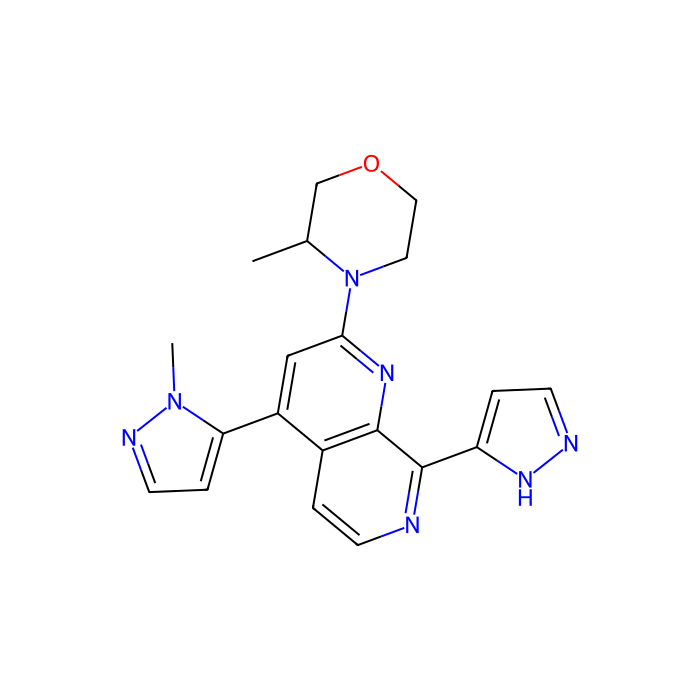
Elimusertib (BAY-1895344) is a very potent and highly selectiveATR (ataxia telangiectasia and Rad3-related)inhibitor with IC50 of 7 nM. Elimusertib potently inhibits proliferation of a broad spectrum of human tumor cell lines with median IC50 of 78 nM.
Targets
ATR (Cell-free assay) 7 nM
In vitro
BAY-1895344 inhibits tumor cell growth and viability and exhibits potent antiproliferative activity in a broad spectrum of human tumor cell lines.
In vivo
BAY 1895344 exhibits strong monotherapy efficacy in cancer xenograft models that carry DNA damage repair deficiencies.
Cell Research(from reference)
Cell lines:HT-29 cells, M059J cells, 38 cancer cell lines
Elimusertib (BAY-1895344) is a very potent and highly selective ATR (ataxia telangiectasia and Rad3-related) inhibitor with IC50 of 7 nM. Elimusertib potently inhibits proliferation of a broad spectrum of human tumor cell lines with median IC50 of 78 nM.
Condizioni di conservazione di stoccaggio
Store at -20°C
Spedito in
Ice chest + Ice pads
Questo prodotto richiede spedizione a catena fredda. I servizi di terra e altri servizi economici non sono disponibili.
This compound belongs to the class of organic compounds known as naphthyridines. These are compounds containing a naphthyridine moiety, a naphthalene in which a carbon atom has been replaced by a nitrogen in each of the two rings. The naphthyridine skeleton can also be described as an assembly two fused pyridine rings, which do not share their nitrogen atom.
External Descriptors
Not available
1. Djoumbou Feunang Y, Eisner R, Knox C, Chepelev L, Hastings J, Owen G, Fahy E, Steinbeck C, Subramanian S, Bolton E, Greiner R, and Wishart DS. ClassyFire: Automated Chemical Classification With A Comprehensive, Computable Taxonomy. Journal of Cheminformatics, 2016, 8:61.
Determine the necessary mass, volume, or concentration for preparing a solution.
Dilution Calculator
Determine the dilution needed to prepare a stock solution.
Reconstitution Calculator
Recensioni
Recensioni dei clienti
Application Protocols
Tested applications and recommended dilutions for this specific catalog item are not specified; refer to CoA/Spec Sheet.
General research workflows (guidance only):
Biochemical kinase assays: Prepare serial dilutions from a DMSO stock to construct concentration–response curves; include vehicle controls. Use appropriate substrate and readouts (e.g., ADP-Glo, radiometric, TR-FRET) and calculate IC50 with replicates.
Cell-based assays: Establish a tolerability window for DMSO and compound concentration in the relevant cell line. Monitor on-target biomarkers (e.g., p-CHK1) and viability readouts in parallel to decouple cytotoxicity from target modulation.
Target engagement: Consider CETSA, NanoBRET, or phospho-proteomics to confirm on-target interactions in cells.
Storage of working solutions: Keep assay plates protected from light and evaporation; use low-binding plastics and minimize time at room temperature.
All procedures should be validated and optimized by the end user for their specific system. This product is supplied for research use only.
Biological Roles
General literature context (no medical/clinical claims):
Elimusertib (BAY-1895344) is widely referenced as a selective small-molecule inhibitor of ATR (Ataxia Telangiectasia and Rad3-related kinase), a central regulator of the cellular response to DNA replication stress. ATR senses single-stranded DNA at stalled replication forks and coordinates signaling through CHK1, modulating cell-cycle checkpoints, origin firing, and DNA repair.
Inhibition of ATR is used in research to probe dependencies in cells experiencing endogenous or induced replication stress. Tool compounds of this class allow dissection of pathways involving RPA-coated ssDNA, ATRIP recruitment, TOPBP1/ETAA1 activation, and downstream phosphorylation cascades.
Chemical biology applications include: mapping checkpoint activation thresholds, evaluating synthetic interactions with defects in homologous recombination, and profiling replication origin dynamics under stress.
Selectivity considerations: In kinase-focused studies, researchers typically benchmark on-target ATR pathway modulation versus potential off-targets (e.g., related PIKK family members such as ATM or DNA-PKcs) using biochemical panels and phospho-specific readouts. Users should establish on-target biomarkers (e.g., p-CHK1 Ser345 reductions) appropriate to their system.
Important notes:
Biological activity can be assay- and context-dependent; confirm potency and selectivity under your experimental conditions.
This product is provided strictly for research use only. No clinical, diagnostic, or in vivo therapeutic use is supported by this listing.
Buffer Applications
This product is a small-molecule tool compound and is not a buffering agent. Therefore, conventional buffer system design (e.g., phosphate, HEPES, Tris) is not directly applicable to this item.
Practical notes for use of buffers with this compound (general guidance):
Prepare concentrated stocks in anhydrous DMSO, then dilute into your chosen assay buffer (e.g., HEPES-, Tris-, or phosphate-based) to the desired final concentration, keeping the final DMSO fraction as low as assay-tolerated (commonly 0.1–1% v/v).
To mitigate precipitation upon dilution, add the DMSO stock to a well-mixed, pre-warmed buffer while vortexing or pipette-mixing. Verify solution clarity and consider a brief centrifugation step.
Some proteins and cell systems are sensitive to DMSO; include appropriate vehicle controls and assess potential buffer–compound interactions (e.g., with serum proteins or detergents).
For specific buffer recipes, pH ranges, or ionic strengths, refer to protocols for your biological assay rather than to this compound listing.
Green Alternatives
Green chemistry considerations are generally framed for solvents, reagents, and processes. This catalog item is a bioactive small molecule (tool inhibitor) rather than a process reagent; direct “green alternative” substitutions are therefore not typically applicable.
That said, you can improve the environmental profile of work involving this compound by focusing on the system and process rather than the molecule itself:
Solvent system: Favor water-rich assay buffers with the minimum necessary percentage of DMSO; avoid chlorinated solvents. Where organic vehicles are required, use DMSO over DMF or NMP, and avoid unnecessary solvent volumes.
Scale management: Conduct microscale assays (low μL) to minimize material use and solvent waste.
Energy: Store at the recommended temperature, but perform incubations at ambient temperatures where compatible with assay performance to reduce energy load.
Waste handling: Segregate DMSO- and acetonitrile-containing wastes for appropriate disposal. Prevent entry into drains.
Comparison (process-focused):
High-DMSO assays vs mixed vehicles: Mixed vehicles using a lower DMSO fraction with compatible surfactants can reduce DMSO load while maintaining solubility, but require control experiments to avoid assay artifacts.
For greener reagent choices in synthetic chemistry contexts, this section is not applicable because the product is not used as a reaction solvent or reagent.
Pharmaceutical Uses
Formulation/manufacturing context (no therapeutic claims):
In research and development settings, this compound may serve as a reference standard or tool molecule for analytical method development (e.g., LC–MS/MS quantification in matrices), in vitro pharmacology assays, or as a positive control in target validation workflows.
It is not supplied as a pharmacopeial grade and is not intended for clinical formulation or human/animal administration.
Excipient and dosage form relevance:
Not applicable; this listing does not include excipient systems or dosage form development guidance.
Regulatory status:
No GMP, USP/EP, or ICH quality designations are claimed for this item. Any use in regulated environments requires independent qualification by the end user.
Analytical considerations in a pharmaceutical R&D laboratory:
Establish a reference standard file with verified identity and purity (per CoA), stability-indicating methods (e.g., LC with photodiode array and MS), and storage/handling logs.
For method transfer or cross-lab studies, document lot numbers, solvent composition of working stocks, and solution stability windows to ensure reproducibility.
All uses are for research only; no clinical or diagnostic applications are supported by this product.
Physical Properties
Item-specific specifications:
Appearance: Not specified for this item; refer to CoA/Spec Sheet.
Molecular weight: Not specified for this item; refer to CoA/Spec Sheet.
Molecular formula: Not specified for this item; refer to CoA/Spec Sheet.
Melting point, boiling point, density, refractive index: Not specified for this item; refer to CoA/Spec Sheet.
UV/Vis characteristics, HPLC assay, water/peroxide/metal content: Not specified for this item; refer to CoA/Spec Sheet.
Literature/general handling properties for kinase inhibitors of this class (guidance only, not item specifications):
Aggregation/solubility: ATR inhibitors are commonly hydrophobic with good solubility in anhydrous DMSO, limited solubility in pure water, and improved aqueous compatibility upon dilution into buffered media containing co-solvent or surfactant.
pKa/logP: Such chemotypes often have multiple basic/neutral heteroatoms with moderate to high cLogP to enable cell permeability. Exact values for this item are not specified.
Practical notes:
Stock solutions for screening are typically prepared at 10–50 mM in dry DMSO, then diluted into assay buffer immediately before use to minimize precipitation. Validate solubility at working concentrations and confirm absence of visible particulates.
Filter sterilization (0.22 μm PTFE) may be used for cell-based assay stocks if compatible with solvent content. Always confirm concentration by UV or LC as appropriate.
For definitive numeric properties of this catalog item, consult the CoA/Spec Sheet.
Quality and Grades
Grade/Purity for this catalog item: Moligand™.
What Moligand™ signifies (general description):
Moligand™ denotes a discovery-screening–oriented quality level intended for biochemical/biophysical screening, target engagement, and medicinal chemistry research. It is not a GMP grade and is not intended for human or veterinary use.
Typical expectations for Moligand™ offerings include provision of identity data (e.g., HPLC/LC–MS and/or NMR) and controlled storage/shipping to preserve integrity. Exact purity thresholds, chromatographic methods, residual solvents, water content, and elemental analysis are not specified for this item; refer to CoA/Spec Sheet.
Practical implications for users:
Suitable for use as a reference compound or tool molecule in enzymatic assays, cell-based assays, and mechanistic studies, subject to users’ own qualification.
If ultra-low UV background or trace-metal specifications are critical (e.g., for photophysical measurements or metal-catalyzed reactions), verify details on the CoA/Spec Sheet or request additional QC information.
Batch-to-batch continuity: When reproducing screening data, retain aliquots of the same lot, or document lot numbers, as minor differences in salt form, solvate state, or residual moisture may affect apparent potency/solubility.
Stabilizers/antioxidants:
Presence/absence of stabilizers for this item is not specified. If your application is oxidation-sensitive, consider nitrogen backfilling and minimal headspace for DMSO stocks.
Reaction and Applications
This product is primarily a bioactive reference compound and is not typically employed as a reagent or catalyst in synthetic transformations.
Applicable research uses (non-clinical):
As a tool inhibitor in biochemical assays exploring DNA damage response signaling, checkpoint activation, and replication stress pathways where ATR is implicated. Users should validate concentration–response relationships under their assay conditions.
As a reference control in cell-based target engagement studies, chemical biology, or proteomics workflows that investigate kinase pathway modulation.
Not typically applicable:
It is not commonly used in named organic reactions, stoichiometric transformations, or catalysis. For synthetic chemistry operations, refer instead to the “Synthetic Utility” and “Reaction Conditions” tabs, which note the limited applicability for this compound type.
Practical notes for assay applications (general):
Prepare fresh DMSO stocks as needed; avoid extended exposure to moisture, light, and elevated temperatures.
Confirm integrity by LC–MS or HPLC prior to critical studies, especially after multiple freeze–thaw events.
Include vehicle controls and, when possible, orthogonal tool compounds to verify on-target effects.
All uses are for research only; no clinical or diagnostic applications are supported.
Reaction Conditions
Not typically applicable. Elimusertib (BAY-1895344) is provided as a bioactive tool compound rather than a reagent for chemical reactions.
If using in biological assays (general practice-based guidance, not item specifications):
Stock preparation: Dissolve in anhydrous DMSO (e.g., 10–50 mM). Vortex and, if needed, gently warm to 25–37°C to aid dissolution. Do not overheat.
Working solutions: Dilute into assay buffer to achieve desired final concentration with minimal DMSO (commonly 0.1–1% v/v). Mix thoroughly to avoid precipitation.
Light/temperature: Protect from prolonged light exposure and maintain at ambient temperature during setup; return unused stocks to recommended storage promptly.
Stability checks: For critical studies, confirm solution stability via LC–MS or HPLC over the assay time course.
Because this compound is not used as a synthetic reagent, no standard ranges for equivalents, catalysts, or yields are relevant here.
Safety and Handling
GHS/SDS information (item-specific):
Signal word, hazard statements, pictograms, and classification: Not specified for this item; refer to SDS.
General laboratory safety for small-molecule kinase inhibitors (guidance; defer to SDS):
Potential hazards: May cause irritation to skin, eyes, or respiratory tract. Avoid inhalation of dust or aerosols and contact with skin/eyes. Handle powders in a fume hood or ventilated enclosure.
Personal protective equipment (PPE): Lab coat, safety glasses, and appropriate chemical-resistant gloves (e.g., nitrile). Consider double-gloving for extended handling in DMSO.
Hygiene measures: Avoid ingestion; wash hands after handling. Do not pipette by mouth. Keep containers tightly closed when not in use to minimize moisture uptake and contamination.
Incompatibilities: Strong oxidizers and strong acids/bases may cause degradation; avoid prolonged exposure to light and elevated temperatures. Use dry, oxygen-free conditions for long-term DMSO stocks when possible.
First aid (overview; follow SDS):
Eyes: Rinse cautiously with water for several minutes; remove contact lenses if present and easy to do; seek medical attention if irritation persists.
Skin: Wash with soap and water; remove contaminated clothing.
Inhalation: Move to fresh air; seek medical advice if symptoms occur.
Ingestion: Rinse mouth; do not induce vomiting; seek medical advice.
Spill response: Avoid dust generation; absorb solutions with inert material; collect for disposal per local regulations.
Always consult the product-specific SDS for authoritative hazard, toxicological, and disposal information.
Solvent Selection
This product is a bioactive small molecule, not a laboratory solvent. Solvent selection here refers to vehicles for dissolution in assays.
Item-specific solubility data: Not specified for this item; refer to CoA/Spec Sheet.
General guidance for small-molecule kinase inhibitors (literature/practice-based):
Primary solvent: Anhydrous DMSO is the most common solvent for preparing concentrated stocks (e.g., 10–50 mM), due to broad solvency and chemical compatibility.
Alternative co-solvents: DMF or acetonitrile can sometimes aid solubility; aqueous buffers typically require a small percentage of DMSO (0.1–1% v/v, sometimes higher) to maintain compound in solution.
Aqueous media: Direct dissolution into water or PBS can lead to precipitation; pre-dissolve in DMSO before dilution. Add compound last, with mixing, to pre-warmed buffer to reduce microprecipitation.
Adsorption and losses: Hydrophobic inhibitors may adsorb to plastic. Use low-binding polypropylene or borosilicate glass, and minimize compound exposure to air–liquid interfaces.
Comparison (general):
DMSO vs ethanol: DMSO offers higher solvency and chemical stability; ethanol may allow rapid microbial growth in dilute solutions and can alter cell membrane properties at >0.5–1%.
DMSO vs DMF: DMSO is less volatile and generally less noxious; DMF offers similar solvency but is more hygroscopic and toxic. Choose based on assay tolerance and safety policy.
Storage and Reconstitution
Item-specific conditions:
Storage conditions: Store at -20°C (as provided in the product data).
Shipped in: Ice chest + Ice pads.
Appearance: Not specified for this item; refer to CoA/Spec Sheet.
General guidance for reconstitution and handling of small-molecule inhibitors:
Upon receipt, allow the sealed container to equilibrate to room temperature before opening to avoid moisture condensation. If supplied as a solid, partition into single-use aliquots under dry conditions.
Reconstitution solvent: Use anhydrous DMSO to prepare a concentrated stock (e.g., 10–50 mM). Vortex to dissolve; brief warming (25–37°C) may assist. Document exact concentration.
Aliquoting: Dispense into amber, tightly sealed vials or low-bind microtubes with minimal headspace; consider argon or nitrogen backfill for long-term storage.
Stability: Minimize freeze–thaw cycles by storing aliquots at -20°C or below. Record preparation and expiry dates per lab SOPs. For extended storage, evaluate integrity by HPLC/LC–MS at defined intervals.
Aqueous working solutions: Prepare immediately before use; avoid storing diluted solutions for extended periods to limit hydrolysis/oxidation risk.
For definitive shelf-life, solubility limits, and analytical confirmation, consult the CoA/Spec Sheet and product SDS.
InChIKey (item-specific): 433212 (as provided). Full standardized InChIKey: Not specified for this item; refer to CoA/Spec Sheet.
SMILES: Not specified for this item; refer to CoA/Spec Sheet.
Molecular formula: Not specified for this item; refer to CoA/Spec Sheet.
Molecular weight: Not specified for this item; refer to CoA/Spec Sheet.
Structural overview (general, literature-level, no structural drawing here):
Elimusertib is a small-molecule kinase inhibitor designed to target the ATR (Ataxia Telangiectasia and Rad3-related) serine/threonine kinase. Compounds in this chemotype typically incorporate heteroaromatic ring systems that present hydrogen bond donor/acceptor arrays to engage the hinge region of the kinase, together with substituents that occupy the gatekeeper-adjacent pocket and solvent front.
The 2D architecture (literature-general) commonly features: one or more nitrogen-rich cores (e.g., di/tri-azine- or quinazolinone-like motifs), appended aryl/heteroaryl substituents, and polar functionalities tuned for solubility and selectivity. Exact ring composition and stereochemistry for this catalog item are not specified.
Notes on identity:
For unequivocal identification of this specific lot or batch, please consult the Certificate of Analysis (CoA) for definitive structure descriptors (complete InChI, SMILES) and analytical identity data (e.g., HPLC purity, HRMS, NMR).
Synthetic Utility
This product is a finalized small-molecule tool inhibitor and is not typically used as a building block, reagent, or catalyst in preparative organic synthesis.
Context and limits of utility in synthesis:
The molecular framework of ATR inhibitors usually contains multiple heteroaromatic cores and tailored substituents optimized for biological activity, making them more suitable as reference standards than as modular intermediates.
Functional group interconversion or derivatization may be possible in principle, but such activities are outside the scope of the catalog use and would require bespoke route scouting and analytical requalification.
Recommendations for chemists who nonetheless plan transformations for SAR:
Begin with a route-back analysis to identify late-stage diversification handles (e.g., aryl halides for cross-coupling, nucleophilic heteroatoms for alkylation/acylation). Because these are not specified for this item, consult primary literature or perform full structure elucidation first.
Validate any modified compounds independently; alterations will change identity, purity, and potentially safety profile, invalidating the original CoA.
For general reagents suited to cross-coupling, C–H activation, or heteroaryl construction, please see other entries in the reagent catalog. This item’s primary value is as a bioactive reference compound.
Target Specificity
Item-specific target details (antigen/epitope/clone/isotype or biochemical target panel) are not specified for this item; refer to CoA/Spec Sheet.
General literature context (for user orientation only):
Elimusertib (BAY-1895344) is commonly described in the literature as a selective inhibitor of ATR kinase within the PIKK family. Researchers often evaluate on-target activity using biomarkers such as CHK1 phosphorylation changes and cell-cycle checkpoint readouts. Off-target profiling typically includes ATM and DNA-PKcs, among others.
Users should generate or consult independent data sets to confirm selectivity and potency in their specific assay systems.
Need help choosing the grade?
Our grade selection guide covers purity, stabilizer status, and application suitability for all variants in our catalog.
We use cookies to ensure the website functions properly and, where permitted, to improve your experience. You can manage your preferences at any time in Settings. Learn more in our Cookie Policy.
Shall we send you a message when we have discounts available?
Remind me later
Thank you! Please check your email inbox to confirm.
Products are supplied to verified businesses, institutions, and qualified professionals for research and development use only. Not for use in humans, animals, diagnosis, or therapy.

 K2211228