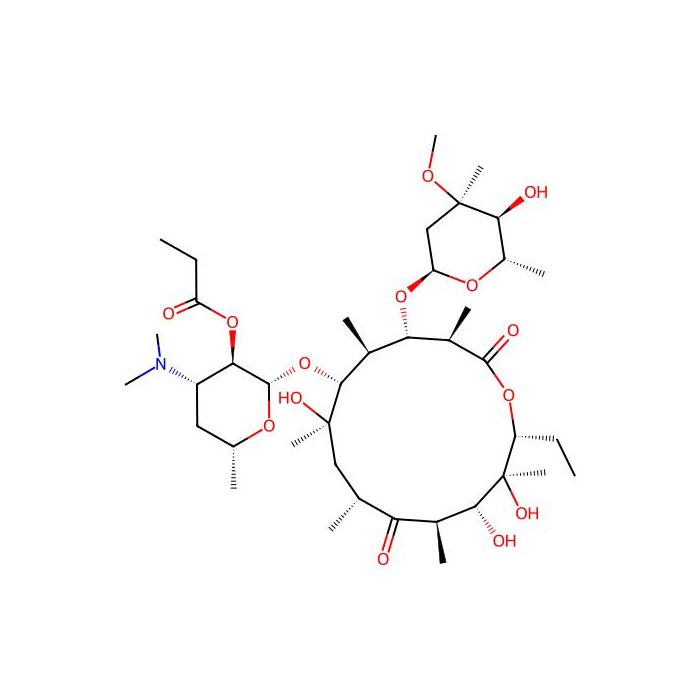
Eritromicina 2'-propionato - ≥95% , CAS No.134-36-1

CAS: 134-36-1 Cat. No.: E694386 Numero EC: 205-140-8 PubChem CID: 71277
Disponibile su ordine
GRADE & PURITY ≥95%
Storage
Room temperature
★
Size
Germania (EU)
USA*
Price
Qty
5mg
E694386-5mg
Su ordinazione · 8–12 settimane

262,84€

307,09€
Salva 44,25 € (14.41%)
25mg
E694386-25mg
Su ordinazione · 8–12 settimane

986,53€

1.151,40€
Salva 164,87 € (14.32%)
Enter a quantity for the sizes you want to add.
🧪

Why this grade

≥95% for sensitive chromatographic and analytical workflows requiring minimal baseline interference.

🌡

Storage & shipping

Room temperature Ships Check lot-specific COA for exact specifications.

📋

Quality documents

SDS, COA, datasheet, and spec sheet available for download. Lot-specific COA accessible via lot number lookup.

📚

Literature proof

Cited in 0 peer-reviewed publications across chromatography, organic synthesis, and cross-coupling reactions.

Specifications

Specifiche e purezza
≥95%
Condizioni di conservazione di stoccaggio
Room temperature
Purezza
≥95%
Nomi e identificatori
Sorrisi canoniciCCC1C(C(C(C(=O)C(CC(C(C(C(C(C(=O)O1)C)OC2CC(C(C(O2)C)O)(C)OC)C)OC3C(C(CC(O3)C)N(C)C)OC(=O)CC)(C)O)C)C)O)(C)O
IUPAC Name[(2S,3R,4S,6R)-4-(dimethylamino)-2-[[(3R,4S,5S,6R,7R,9R,11R,12R,13S,14R)-14-ethyl-7,12,13-trihydroxy-4-[(2R,4R,5S,6S)-5-hydroxy-4-methoxy-4,6-dimethyloxan-2-yl]oxy-3,5,7,9,11,13-hexamethyl-2,10-dioxo-oxacyclotetradec-6-yl]oxy]-6-methyloxan-3-yl] propanoate
InChIKeyTYQXKHPOXXXCTP-CSLYCKPJSA-N
INCHI1S/C40H71NO14/c1-15-27-40(11,48)33(44)22(5)30(43)20(3)18-38(9,47)35(55-37-32(53-28(42)16-2)26(41(12)13)17-21(4)50-37)23(6)31(24(7)36(46)52-27)54-29-19-39(10,49-14)34(45)25(8)51-29/h20-27,29,31-35,37,44-45,47-48H,15-19H2,1-14H3/t20-,21-,22+,23+,24-,25+,26+,27-,29+,31+,32-,33-,34+,35-,37+,38-,39-,40-/m1/s1
Isomeri SMILES CC[C@@H]1[C@@]([C@@H]([C@H](C(=O)[C@@H](C[C@@]([C@@H]([C@H]([C@@H]([C@H](C(=O)O1)C)O[C@H]2C[C@@]([C@H]([C@@H](O2)C)O)(C)OC)C)O[C@H]3[C@@H]([C@H](C[C@H](O3)C)N(C)C)OC(=O)CC)(C)O)C)C)O)(C)O
CAS alternativo 134-36-1
PubChem CID 71277
Termini MeSH erythromycin propionate;propionyl eryhthromycin

Documentazione

📋 Safety Data Sheet (SDS)

Comprehensive hazard, handling, storage, and regulatory compliance document.

Download SDS →

✅ Certificate of Analysis (COA)

Lot-specific quality data. Enter your lot number to retrieve the exact COA.

Look up COA →

📊 Datasheet

Quick-reference summary of product specifications and applications.

View datasheet →

🔬 Specification Sheet

Full quality attributes and acceptance criteria for this grade.

View spec sheet →

Advanced Data

Taxonomic Classification

Taxonomy Tree

KingdomOrganic compounds
SuperclassOrganic oxygen compounds
ClasseOrganooxygen compounds
SubclassCarbohydrates and carbohydrate conjugates
Intermediate Tree Nodes Aminosaccharides
Direct ParentAminoglycosides
Alternative Parents Macrolides and analogues  O-glycosyl compounds  Oxanes  Dicarboxylic acids and derivatives  Monosaccharides  Tertiary alcohols  Trialkylamines  Secondary alcohols  Amino acids and derivatives  Carboxylic acid esters  Cyclic ketones  Lactones  Acetals  Polyols  Oxacyclic compounds  Dialkyl ethers  Organopnictogen compounds  Organic oxides  Hydrocarbon derivatives  
Molecular FrameworkAliphatic heteromonocyclic compounds
Substituents Aminoglycoside core - Macrolide - Glycosyl compound - O-glycosyl compound - Dicarboxylic acid or derivatives - Monosaccharide - Oxane - Tertiary alcohol - Amino acid or derivatives - Carboxylic acid ester - Ketone - Lactone - Cyclic ketone - Secondary alcohol - Tertiary aliphatic amine - Tertiary amine - Ether - Dialkyl ether - Oxacycle - Organoheterocyclic compound - Acetal - Polyol - Carboxylic acid derivative - Hydrocarbon derivative - Amine - Organic oxide - Organopnictogen compound - Alcohol - Organonitrogen compound - Organic nitrogen compound - Carbonyl group - Aliphatic heteromonocyclic compound
DescrizioneThis compound belongs to the class of organic compounds known as aminoglycosides. These are molecules or a portion of a molecule composed of amino-modified sugars.
External Descriptors erythromycin derivative
Struttura 3D
Modello di struttura chimica interattiva


Obiettivi associati (umani)
PDE5A Tclin Phosphodiesterase 5A (5113 Activities)
Activity TypeRelationActivity valueUnitsAction TypeJournalPubMed IddoiAssay Aladdin ID
EGFR Tclin Epidermal growth factor receptor erbB1 (33727 Activities)
Activity TypeRelationActivity valueUnitsAction TypeJournalPubMed IddoiAssay Aladdin ID
F2 Tclin Thrombin (11687 Activities)
Activity TypeRelationActivity valueUnitsAction TypeJournalPubMed IddoiAssay Aladdin ID
CA2 Tclin Carbonic anhydrase II (17698 Activities)
Activity TypeRelationActivity valueUnitsAction TypeJournalPubMed IddoiAssay Aladdin ID
ESR1 Tclin Estrogen receptor alpha (17718 Activities)
Activity TypeRelationActivity valueUnitsAction TypeJournalPubMed IddoiAssay Aladdin ID
HMGCR Tclin HMG-CoA reductase (2475 Activities)
Activity TypeRelationActivity valueUnitsAction TypeJournalPubMed IddoiAssay Aladdin ID
NR3C1 Tclin Glucocorticoid receptor (14987 Activities)
Activity TypeRelationActivity valueUnitsAction TypeJournalPubMed IddoiAssay Aladdin ID
INSR Tclin Insulin receptor (5558 Activities)
Activity TypeRelationActivity valueUnitsAction TypeJournalPubMed IddoiAssay Aladdin ID
PGR Tclin Progesterone receptor (8562 Activities)
Activity TypeRelationActivity valueUnitsAction TypeJournalPubMed IddoiAssay Aladdin ID
ADRB2 Tclin Beta-2 adrenergic receptor (11824 Activities)
Activity TypeRelationActivity valueUnitsAction TypeJournalPubMed IddoiAssay Aladdin ID
CHRM2 Tclin Muscarinic acetylcholine receptor M2 (10671 Activities)
Activity TypeRelationActivity valueUnitsAction TypeJournalPubMed IddoiAssay Aladdin ID
ADRB1 Tclin Beta-1 adrenergic receptor (6630 Activities)
Activity TypeRelationActivity valueUnitsAction TypeJournalPubMed IddoiAssay Aladdin ID
HTR1A Tclin Serotonin 1a (5-HT1a) receptor (14969 Activities)
Activity TypeRelationActivity valueUnitsAction TypeJournalPubMed IddoiAssay Aladdin ID
ADRA2A Tclin Alpha-2a adrenergic receptor (9450 Activities)
Activity TypeRelationActivity valueUnitsAction TypeJournalPubMed IddoiAssay Aladdin ID
AR Tclin Androgen Receptor (11781 Activities)
Activity TypeRelationActivity valueUnitsAction TypeJournalPubMed IddoiAssay Aladdin ID
CHRM1 Tclin Muscarinic acetylcholine receptor M1 (12690 Activities)
Activity TypeRelationActivity valueUnitsAction TypeJournalPubMed IddoiAssay Aladdin ID
ACE Tclin Angiotensin-converting enzyme (1423 Activities)
Activity TypeRelationActivity valueUnitsAction TypeJournalPubMed IddoiAssay Aladdin ID
DRD2 Tclin Dopamine D2 receptor (23596 Activities)
Activity TypeRelationActivity valueUnitsAction TypeJournalPubMed IddoiAssay Aladdin ID
GABRA1 Tclin GABA receptor alpha-1 subunit (399 Activities)
Activity TypeRelationActivity valueUnitsAction TypeJournalPubMed IddoiAssay Aladdin ID
MAOA Tclin Monoamine oxidase A (11911 Activities)
Activity TypeRelationActivity valueUnitsAction TypeJournalPubMed IddoiAssay Aladdin ID
CNR1 Tclin Cannabinoid CB1 receptor (20913 Activities)
Activity TypeRelationActivity valueUnitsAction TypeJournalPubMed IddoiAssay Aladdin ID
DRD1 Tclin Dopamine D1 receptor (9720 Activities)
Activity TypeRelationActivity valueUnitsAction TypeJournalPubMed IddoiAssay Aladdin ID
DRD4 Tchem Dopamine D4 receptor (7907 Activities)
Activity TypeRelationActivity valueUnitsAction TypeJournalPubMed IddoiAssay Aladdin ID
ACHE Tclin Acetylcholinesterase (18204 Activities)
Activity TypeRelationActivity valueUnitsAction TypeJournalPubMed IddoiAssay Aladdin ID
PTGS1 Tclin Cyclooxygenase-1 (9233 Activities)
Activity TypeRelationActivity valueUnitsAction TypeJournalPubMed IddoiAssay Aladdin ID
SLC6A2 Tclin Norepinephrine transporter (10102 Activities)
Activity TypeRelationActivity valueUnitsAction TypeJournalPubMed IddoiAssay Aladdin ID
HRH2 Tclin Histamine H2 receptor (5428 Activities)
Activity TypeRelationActivity valueUnitsAction TypeJournalPubMed IddoiAssay Aladdin ID
ADRA1D Tclin Alpha-1d adrenergic receptor (4171 Activities)
Activity TypeRelationActivity valueUnitsAction TypeJournalPubMed IddoiAssay Aladdin ID
HTR1B Tclin Serotonin 1b (5-HT1b) receptor (2801 Activities)
Activity TypeRelationActivity valueUnitsAction TypeJournalPubMed IddoiAssay Aladdin ID
HTR2A Tclin Serotonin 2a (5-HT2a) receptor (14758 Activities)
Activity TypeRelationActivity valueUnitsAction TypeJournalPubMed IddoiAssay Aladdin ID
HTR2C Tclin Serotonin 2c (5-HT2c) receptor (11471 Activities)
Activity TypeRelationActivity valueUnitsAction TypeJournalPubMed IddoiAssay Aladdin ID
ADORA1 Tclin Adenosine A1 receptor (17603 Activities)
Activity TypeRelationActivity valueUnitsAction TypeJournalPubMed IddoiAssay Aladdin ID
CALCR Tclin Calcitonin receptor (2215 Activities)
Activity TypeRelationActivity valueUnitsAction TypeJournalPubMed IddoiAssay Aladdin ID
SLC6A4 Tclin Serotonin transporter (12625 Activities)
Activity TypeRelationActivity valueUnitsAction TypeJournalPubMed IddoiAssay Aladdin ID
ADRA1A Tclin Alpha-1a adrenergic receptor (8359 Activities)
Activity TypeRelationActivity valueUnitsAction TypeJournalPubMed IddoiAssay Aladdin ID
PTGS2 Tclin Cyclooxygenase-2 (13999 Activities)
Activity TypeRelationActivity valueUnitsAction TypeJournalPubMed IddoiAssay Aladdin ID
HRH1 Tclin Histamine H1 receptor (7573 Activities)
Activity TypeRelationActivity valueUnitsAction TypeJournalPubMed IddoiAssay Aladdin ID
ADRA1B Tclin Alpha-1b adrenergic receptor (2912 Activities)
Activity TypeRelationActivity valueUnitsAction TypeJournalPubMed IddoiAssay Aladdin ID
OPRM1 Tclin Mu opioid receptor (19785 Activities)
Activity TypeRelationActivity valueUnitsAction TypeJournalPubMed IddoiAssay Aladdin ID
DRD3 Tclin Dopamine D3 receptor (14368 Activities)
Activity TypeRelationActivity valueUnitsAction TypeJournalPubMed IddoiAssay Aladdin ID
AVPR1A Tclin Vasopressin V1a receptor (5412 Activities)
Activity TypeRelationActivity valueUnitsAction TypeJournalPubMed IddoiAssay Aladdin ID
OPRD1 Tclin Delta opioid receptor (15096 Activities)
Activity TypeRelationActivity valueUnitsAction TypeJournalPubMed IddoiAssay Aladdin ID
OPRK1 Tclin Kappa opioid receptor (16155 Activities)
Activity TypeRelationActivity valueUnitsAction TypeJournalPubMed IddoiAssay Aladdin ID
SLC6A3 Tclin Dopamine transporter (10535 Activities)
Activity TypeRelationActivity valueUnitsAction TypeJournalPubMed IddoiAssay Aladdin ID
KCNH2 Tclin HERG (29587 Activities)
Activity TypeRelationActivity valueUnitsAction TypeJournalPubMed IddoiAssay Aladdin ID
HTR4 Tclin Serotonin 4 (5-HT4) receptor (2068 Activities)
Activity TypeRelationActivity valueUnitsAction TypeJournalPubMed IddoiAssay Aladdin ID
PDE3A Tclin Phosphodiesterase 3A (3309 Activities)
Activity TypeRelationActivity valueUnitsAction TypeJournalPubMed IddoiAssay Aladdin ID
ESR2 Tclin Estrogen receptor beta (9272 Activities)
Activity TypeRelationActivity valueUnitsAction TypeJournalPubMed IddoiAssay Aladdin ID
CYSLTR1 Tclin Cysteinyl leukotriene receptor 1 (2118 Activities)
Activity TypeRelationActivity valueUnitsAction TypeJournalPubMed IddoiAssay Aladdin ID
ERBB2 Tclin Receptor protein-tyrosine kinase erbB-2 (7851 Activities)
Activity TypeRelationActivity valueUnitsAction TypeJournalPubMed IddoiAssay Aladdin ID
Obiettivi associati (non umani)
Agtr2 Angiotensin II type 2 (AT-2) receptor (803 Activities)
Activity TypeRelationActivity valueUnitsAction TypeJournalPubMed IddoiAssay Aladdin ID
Mc4r Melanocortin receptor 4 (1205 Activities)
Activity TypeRelationActivity valueUnitsAction TypeJournalPubMed IddoiAssay Aladdin ID
Ltc4s Leukotriene C4 synthase (1 Activities)
Activity TypeRelationActivity valueUnitsAction TypeJournalPubMed IddoiAssay Aladdin ID
Sigmar1 Sigma opioid receptor (160 Activities)
Activity TypeRelationActivity valueUnitsAction TypeJournalPubMed IddoiAssay Aladdin ID
Npy1r Neuropeptide Y receptor type 1 (8 Activities)
Activity TypeRelationActivity valueUnitsAction TypeJournalPubMed IddoiAssay Aladdin ID
Cckar Cholecystokinin A receptor (90 Activities)
Activity TypeRelationActivity valueUnitsAction TypeJournalPubMed IddoiAssay Aladdin ID
Nos2 Nitric oxide synthase, inducible (3573 Activities)
Activity TypeRelationActivity valueUnitsAction TypeJournalPubMed IddoiAssay Aladdin ID
Mapk1 MAP kinase ERK2 (650 Activities)
Activity TypeRelationActivity valueUnitsAction TypeJournalPubMed IddoiAssay Aladdin ID
Hdac6 Histone deacetylase 6 (222 Activities)
Activity TypeRelationActivity valueUnitsAction TypeJournalPubMed IddoiAssay Aladdin ID
Mmp9 Matrix metalloproteinase 9 (38 Activities)
Activity TypeRelationActivity valueUnitsAction TypeJournalPubMed IddoiAssay Aladdin ID
Meccanismi d'azione
Certificati (CoA, COO, BSE/TSE e tabella di analisi)
C of A & Other Certificates(BSE/TSE, COO):
Analytical Chart:
Proprietà chimiche e fisiche
Peso molecolare790.000 g/mol
XLogP33.700
Hydrogen Bond Donor Count4
Hydrogen Bond Acceptor Count15
Rotatable Bond Count10
Exact Mass789.487 Da
Monoisotopic Mass789.487 Da
Topological Polar Surface Area200.000 Ų
Heavy Atom Count55
Formal Charge0
Complexity1300.000
Isotope Atom Count0
Defined Atom Stereocenter Count18
Undefined Atom Stereocenter Count0
Defined Bond Stereocenter Count0
Undefined Bond Stereocenter Count0
The total count of all stereochemical bonds0
Covalently-Bonded Unit Count1
Calcolatori di soluzioni
Recensioni

Recensioni dei clienti

Application Protocols

No item-specific, validated application protocols are provided for this product. Refer to the primary literature for procedures involving erythromycin ester manipulations, analytical methods (HPLC/LC–MS), and formulation studies.

General recommendations:

  • Prepare fresh stock solutions in dry organic solvent (e.g., DMSO, ethanol) and dilute into assay media immediately before use.
  • For chromatography, consider adding a volatile base (e.g., 0.1% TEA) to mobile phases or pre-treat silica with base to minimize tailing and degradation.
  • For hydrolysis/deprotection studies, use buffered systems near neutral pH and monitor kinetics by LC–MS.
Biological Roles

Erythromycin 2'-Propionate is a modified macrolide derived from erythromycin. In biochemical and microbiological research, macrolides are widely studied as ligands of the large ribosomal subunit.

General, literature-based notes (no clinical claims):

  • Binding site: Macrolides interact within the nascent peptide exit tunnel of the 50S ribosomal subunit, contacting 23S rRNA. Acyl modifications at the desosamine 2'-position modulate hydrogen bonding and steric fit in this region, informing structure–activity relationships.
  • Physicochemical effects: Propionylation at 2' increases hydrophobic surface area and can reduce basicity of the proximal hydroxyl environment, often altering partitioning into membranes and binding kinetics in in vitro systems.
  • Ionization: The desosamine tertiary dimethylamino group remains the principal basic site; salt formation (e.g., hydrochloride) is commonly used in biochemical assays for solubilization while balancing pH-dependent stability.
  • Metabolism/biotransformation (research context): Esterases can hydrolyze 2'-acyl macrolides in vitro, providing a convenient handle to probe enzymatic pathways or to generate the parent 2'-OH under controlled conditions.

Use in model systems:

  • Employed as a comparator to other erythromycin derivatives (e.g., ethylsuccinate, estolate) to delineate the impact of ester chemistry on ribosomal binding, efflux susceptibility, and permeability in bacterial membrane models.
Buffer Applications

This compound is not a buffering agent and is not typically used to prepare buffer solutions. Handling in aqueous buffers should be minimized due to potential acid-catalyzed degradation of the macrolide.

Practical notes for assays requiring aqueous media (general guidance):

  • Use near-neutral buffers (e.g., phosphate, HEPES, MOPS at pH 7.0–7.8) and keep exposure times short.
  • Prepare concentrated stocks in a compatible organic solvent (e.g., DMSO or ethanol) and dilute into buffer immediately before use, keeping final organic cosolvent ≤1–2% v/v if required by the assay.
  • Avoid strongly acidic additives (e.g., TFA) that can accelerate degradation.
Green Alternatives

Greener processing can be implemented without compromising integrity of the macrolide scaffold.

Comparison (general guidance):

  • DCM/chloroform → 2-MeTHF or ethyl acetate: Comparable solvency for macrolide esters with lower toxicity and better environmental profiles.
  • Acetone/MeCN are relatively acceptable from a green chemistry standpoint; ethanol and isopropanol are preferable for recrystallization/extraction when feasible.
  • DMF/DMSO → Cyrene, propylene carbonate, or dimethyl isosorbide: Greener high-boiling alternatives; assess solubility and stability experimentally.

Trade-offs:

  • 2-MeTHF is immiscible with water and simplifies workups but can contain peroxides; monitor and use inhibitor-tested lots. It can also promote different crystallization habits than EtOAc.
  • Ethyl acetate is broadly compatible and biodegradable but may co-extract water; dry with suitable agents and minimize residence time to limit ester hydrolysis.
  • Greener high-boilers (Cyrene, propylene carbonate) can pose removal challenges and may interact with basic amines; validate for your downstream needs.

Process tips:

  • Use buffered aqueous phases near pH 7–8 during extractions to reduce acid-catalyzed degradation.
  • Prefer ambient-temperature operations and short contact times with aqueous media.
  • Implement solvent recovery where possible and document residual solvent limits in accordance with ICH Q3C if developing analytical methods.
Pharmaceutical Uses

For research and development use only. No medical or clinical claims are made.

Formulation and pre-formulation context (general, literature):

  • Prodrug/ester strategy: 2'-acylation of erythromycin is a classical approach to modulate lipophilicity, taste masking, and stability for oral dosage form research. The propionate at 2' can participate in ion-pair complexation (e.g., with alkyl sulfates) to alter solid-state properties.
  • Salt/complex formation: Formation of noncovalent complexes (e.g., estolate-type propionate–lauryl sulfate) has been explored to improve compressibility and dispersion. Such complexes are studied for their impact on dissolution and stability without altering the macrolide core covalently beyond the 2'-ester.
  • Solid-state characterization: Differential scanning calorimetry, PXRD, and moisture sorption analyses are typically performed because macrolide esters can exhibit polymorphism or amorphous tendencies.
  • Degradation pathways: Hydrolysis of the propionate, macrolactone opening, and sugar loss can occur under acidic or high-humidity conditions; stability-indicating HPLC is essential during formulation screening.

Regulatory notes:

  • Pharmacopeial monographs for specific erythromycin derivatives may exist, but none are specified for this item. Refer to your quality unit and the CoA/Spec Sheet for compliance requirements relevant to your application.
Physical Properties
  • Appearance: Not specified for this item; refer to CoA/Spec Sheet.
  • Molecular Weight: Not specified for this item; refer to CoA/Spec Sheet.
  • Molecular Formula: Not specified for this item; refer to CoA/Spec Sheet.
  • Melting point / glass transition: Not specified for this item; refer to CoA/Spec Sheet.
  • Boiling point: Not applicable for this high-mass macrolide; decomposes before boiling (general, literature for macrolides).
  • Density: Not specified for this item; refer to CoA/Spec Sheet.
  • Refractive index: Not applicable to solids; Not specified for this item; refer to CoA/Spec Sheet.

Solubility (general guidance, literature for erythromycin esters):

  • Practically insoluble in water at neutral pH; increased apparent solubility in acidic aqueous media due to amine protonation but with risk of acid-catalyzed degradation of the macrolide.
  • Soluble in polar aprotic and moderately polar organic solvents (e.g., acetone, acetonitrile, ethyl acetate, dichloromethane, chloroform) and in alcohols (methanol, ethanol, isopropanol). Highly soluble in DMSO and DMF.

Ionization and lipophilicity (general, literature):

  • Contains a tertiary dimethylamino group (basic; typical macrolide pKa of the dimethylammonium ~8–9, literature). Propionylation at 2' generally increases lipophilicity (logP increases relative to erythromycin base), improving solubility in less polar organic media.

Stability notes (general for macrolides):

  • Acid-sensitive (risk of intramolecular ketal/hemiketal formation and lactone cleavage). More stable under neutral to slightly basic, anhydrous conditions.
  • Avoid prolonged exposure to elevated temperature and moisture to limit hydrolysis of the propionate ester.
Quality and Grades
  • Grade/Purity: Not specified for this item; refer to CoA/Spec Sheet for assay, impurity profile, and related substances.

What to expect for macrolide derivatives (general guidance):

  • Assay/purity is commonly established by HPLC with UV or ELSD detection due to weak chromophores. Identity confirmation may include HRMS and 1H/13C NMR.
  • Residual solvents and water content (Karl Fischer) are typically controlled because hydrolysis can be moisture-promoted.
  • Related substances may include positional isomers (acyl migration on hydroxyl groups), unesterified erythromycin, and hydrolysis products; control via stability-indicating methods is recommended.

Notes on stabilizers and additives:

  • No stabilizer information is provided for this item. If stabilizers (e.g., small amounts of base) are used in some macrolide products to suppress acid degradation, they will be declared on the CoA/Spec Sheet.

Practical implications:

  • For analytical work, use freshly prepared solutions and protect from acidic conditions to minimize on-instrument degradation.
  • For reproducible research, document lot number and confirm purity by your in-house method upon receipt.
Reaction and Applications

Research use focuses on semi-synthesis and structure–activity investigations of macrolides.

Applications (general/literature for erythromycin esters):

  • Protecting-group strategy: The 2'-propionate serves as a temporary protection of the desosamine 2'-OH, enabling selective manipulation at other hydroxyls on the macrocycle or sugars.
  • Intermediate to complexes: The propionate ester is a precursor in forming erythromycin estolate-type complexes (propionate–lauryl sulfate ion pairs) studied for physicochemical and formulation properties.
  • SAR studies: Modulating acylation at the desosamine 2'-position affects basicity, lipophilicity, and binding interactions with ribosomal RNA in biochemical assays.
  • Analytical standards: Used as a reference or process impurity marker in macrolide manufacturing analytics.

Practical tips:

  • Ester stability: Avoid strong acid; even weak acids can induce acyl migration or hydrolysis. Maintain neutral to slightly basic conditions (trace base such as triethylamine can suppress on-silica decomposition during chromatography).
  • Selective transformations: For further acylations/methylations elsewhere, employ catalysts like DMAP under Steglich-type conditions (DCC/EDC) at low temperature to limit scrambling.
  • Deprotection: Basic or enzymatic hydrolysis can regenerate the 2'-OH selectively; monitor closely by LC to avoid lactone opening.
  • Nucleophilicity/basicity: The desosamine tertiary amine can be protonated to form salts for purification; be aware salt formation may impact solubility and crystallinity.

Documentation: Capture exact reaction conditions used in your lab notebook; macrolide scaffolds are sensitive, and small deviations can change outcomes significantly.

Reaction Conditions

General, literature-based guidance for working with erythromycin esters (adjust to your specific lab context):

  • Solvents: Anhydrous DCM, CHCl3, EtOAc, THF, MeCN, acetone; DMSO/DMF for high-concentration stock or coupling reactions. Add 0.1% TEA during chromatography to suppress acid-catalyzed degradation.
  • Temperature: 0–25 °C for most acylations and carbamate formations; avoid heating above ~40 °C for extended periods to limit ester hydrolysis and macrolide rearrangements.
  • Bases/catalysts: DMAP (0.05–0.2 eq) with EDC/DCC for acylations; DIPEA or TEA as base. For hydrogenations or reductions, use mild conditions and monitor closely.
  • Times: 0.5–24 h depending on transformation; monitor by TLC (with base modifier) or LC–MS. Macrolides can show streaking on silica; use neutral alumina or reversed-phase when needed.
  • Workup: Quench with saturated bicarbonate or dilute neutral buffer. Avoid acidic washes. Dry organic layers thoroughly (Na2SO4 or MgSO4) and minimize time in wet solvents.
  • Yields: Highly route- and substrate-dependent; macrolide manipulations often deliver moderate isolated yields (30–80%, literature) due to sensitivity and purification challenges.

Analytical control:

  • Use stability-indicating HPLC (e.g., C18, gradient water/MeCN with 0.1% formic acid or ammonium formate; validate to ensure minimal on-column degradation). LC–MS is valuable for tracking acyl migration and hydrolysis.
Safety and Handling
  • GHS Classification: Not specified for this item; consult SDS.
  • Signal Word / H-Statements / Pictograms: Not specified for this item; consult SDS.

General laboratory safety guidance (macrolide esters):

  • Avoid inhalation of dust and contact with skin/eyes. Use appropriate PPE: lab coat, nitrile gloves, safety glasses or face shield when handling powders/solutions.
  • Work in a chemical fume hood when weighing, dissolving, or transferring to prevent aerosol exposure.
  • Prevent exposure to acids and strong oxidizers; erythromycin scaffolds are acid-sensitive and can degrade, potentially forming irritant byproducts.
  • Handle dry; moisture can promote ester hydrolysis.

First-aid overview (consult SDS for definitive instructions):

  • Inhalation: Move to fresh air; seek medical attention if symptoms occur.
  • Skin contact: Wash with soap and water; remove contaminated clothing.
  • Eye contact: Rinse cautiously with water for several minutes; remove contact lenses if present and easy to do; seek medical attention if irritation persists.
  • Ingestion: Rinse mouth; do not induce vomiting; seek medical attention.

Spill and waste:

  • Avoid dust formation; collect with inert absorbent for solids. Dispose of in accordance with institutional, local, and national regulations.

Fire safety:

  • Combustible organic solid. Use CO2, dry chemical, or foam. Combustion may produce CO/CO2 and nitrogen/oxygenated organics.

Always refer to the product SDS for authoritative hazard information and local regulatory guidance.

Solvent Selection

Solvent choice for Erythromycin 2'-Propionate should balance solubility, stability, and downstream processing.

  • Polarity class: Moderately nonpolar to polar-aprotic solvates preferred; water solubility is poor at neutral pH.
  • Good organic solvents (general, literature for macrolide esters): DMSO, DMF, acetone, acetonitrile, ethyl acetate, dichloromethane, chloroform, methanol, ethanol, isopropanol.
  • Aqueous media: Limited solubility unless acidified; however, acidic media can accelerate degradation. If aqueous handling is required, use buffered solutions near neutral pH and minimize residence time.
  • For preparative chromatography: Ethyl acetate/hexanes or DCM/methanol gradients are common; add a trace of base (e.g., 0.1% triethylamine) to suppress tailing and acid-catalyzed on-column transformations (general practice).
  • Avoid strongly acidic solvents/additives (TFA, HCl) unless intentionally forming a salt, and even then, evaluate stability.

When to choose specific solvents:

  • DMSO or DMF: For stock solutions at high concentration; excellent solvating power, but consider their high boiling points for removal.
  • Ethyl acetate or isopropanol: For crystallizations or extractions where moderate polarity is needed.
  • 2-MeTHF or EtOAc: Greener replacements for DCM/chloroform in extractions and workups.

Drying and stability:

  • Keep solvents anhydrous where possible to limit ester hydrolysis. Avoid prolonged heating during solvent removal.
Storage and Reconstitution
  • Storage Conditions (from Product Data): Room temperature.
  • Shipped In: Not specified for this item; refer to CoA/Spec Sheet.

Best practices (general for macrolide esters):

  • Store in a tightly closed container under dry, inert atmosphere if possible. Include desiccant. Protect from light.
  • Avoid acidic vapors (e.g., from acetic or HCl sources) in shared storage, which can promote degradation.

Reconstitution:

  • Solvents: DMSO, DMF, ethanol, methanol, acetone, acetonitrile, ethyl acetate, dichloromethane. Choose based on application and downstream compatibility.
  • Suggested stock concentrations (research use): 1–50 mg/mL depending on solvent and intended use. Filter through 0.22 µm PTFE if particle-free solutions are required.
  • Aqueous use: Dilute organic stock into buffer immediately before use; keep final organic content minimal (typically ≤1–2% v/v) and avoid acidic pH.

Stability of solutions:

  • Organic stocks are generally stable for days to weeks at 2–8 °C when protected from moisture and light; verify by HPLC before critical experiments. Aqueous mixtures should be used promptly.

Research Use Note: For research use only.

Structure and Identity

Erythromycin 2'-Propionate is a semi-synthetic macrolide in which the 2'-hydroxyl of the desosamine sugar of erythromycin is esterified with a propionyl group, increasing lipophilicity while retaining the 14-membered lactone core.

  • SKU: E694386
  • Product Name: Erythromycin 2'-Propionate
  • CAS: 134-36-1
  • PubChem CID (literature): 71277
  • InChIKey: 353430 (as provided in Product Data)
  • SMILES: Not specified for this item; refer to CoA/Spec Sheet.
  • Molecular Formula: Not specified for this item; refer to CoA/Spec Sheet.
  • Molecular Weight: Not specified for this item; refer to CoA/Spec Sheet.

Structural features (general, literature):

  • 14-membered macrolactone ring bearing multiple secondary/tertiary alcohols and ketone functionality.
  • Two sugar residues attached via glycosidic linkages: desosamine (tertiary dimethylamino sugar) and cladinose (neutral deoxy sugar).
  • The 2'-OH on desosamine is acylated as a propionate ester; tertiary dimethylamino remains basic (typically protonatable in acidic media).
  • Multiple stereocenters (erythromycin scaffolds carry >10 chiral centers); macrolide conformation sensitive to solvent and pH.

2D description in words:

  • A large, oxygen-rich macrocycle (lactone) substituted by two glycosides; the desosamine sugar bears a dimethylamino group and, in this derivative, an O–C(O)–CH2–CH3 substituent at the 2' position. The cladinose residue remains unacylated. The macrocycle includes a conjugated carbonyl and several hydroxyl-bearing stereocenters distributed around the ring.
Synthetic Utility

Erythromycin 2'-Propionate is a valuable intermediate and protecting-group variant for macrolide chemistry.

Key functional groups and reactivity (general, literature):

  • 14-membered macrolactone: Sensitive to acids; compatible with mild nucleophiles and bases. Transesterification/lactone opening must be avoided through careful pH control.
  • Multiple alcohols: Differentially reactive; 2'-OH (masked as propionate) reduces undesired participation during selective derivatizations elsewhere (e.g., 6-O-alkylation, 9-keto modifications).
  • Tertiary dimethylamino: Can be converted to salts to adjust solubility/crystallinity for separations; nucleophilicity is limited but basicity influences neighboring group effects.
  • Glycosidic linkages: Acid-labile; avoid protic acids and silica exposure without base modifiers.

Typical transformations:

  • Further acylations or carbamate formation at unprotected hydroxyls using EDC/HOBt or DCC/DMAP under cold, anhydrous conditions.
  • Selective oxidations or reductions near the 9-keto/hemiketal region to tune conformation (e.g., borohydride reductions conducted at 0–5 °C in alcohols or THF; literature).
  • Deprotection of the 2'-propionate under mild basic hydrolysis or enzymatic means to regenerate erythromycin’s 2'-OH when needed.

Retrosynthetic value:

  • Serves as a branch point to produce diverse 2'-modified macrolides for SAR libraries while maintaining the core erythronolide A framework.
Target Specificity

Not applicable. This product is a small-molecule macrolide derivative, not an antibody or biological that targets a specific antigen. No clone/isotype or species reactivity data apply.

Shall we send you a message when we have discounts available?

Remind me later

Thank you! Please check your email inbox to confirm.

Oops! Notifications are disabled.