
From Diverse Ketones to Three-Dimensional Spirocyclic Building Blocks: Reaction Design of [1.1.1]Propellane-Involved Ketone Ring Expansion
From Diverse Ketones to Three-Dimensional Spirocyclic Building Blocks: Reaction Design of [1.1.1]Propellane-Involved Ketone Ring Expansion
1 Research Background: Ketone Ring Expansion from “Single-Atom Insertion” to “Ring-Fragment Incorporation”
Ganesh A. Kadam, Suparnak Midya, Vitalina Levchenko, Vadym Sham, Pavel K. Mykhailiuk, and Durga P. Hari reported Ring-Expansion of Ketones with [1.1.1]Propellane, published in the Journal of the American Chemical Society, 2026, 148, 388–399, DOI: 10.1021/jacs.5c14022. This study introduces a ketone ring-expansion method using [1.1.1]propellane as the reactive unit. It enables the conversion of diverse ketones, especially cyclic ketones, into spirocyclic ketones or functionalized ketone products containing a methylenecyclobutane fragment. These products can be further used to prepare mono-spirocyclic, bis-spirocyclic, and tris-spirocyclic frameworks, as well as 2-oxabicyclo[2.1.1]hexane-type structures.
1.1 Main Capabilities of Traditional Ketone Ring Expansion
Ketones are common and readily available carbonyl feedstocks in organic synthesis. Traditional ketone ring-expansion methods mainly include the following:
Method | Inserted Unit | Representative Transformation | Main Value |
Diazo compound-mediated ring expansion | C | Insertion of one carbon atom into a ketone ring | Enlargement of carbocyclic frameworks |
Beckmann rearrangement | N | Conversion of ketoximes into lactams | Construction of nitrogen-containing rings |
Baeyer–Villiger oxidation | O | Conversion of ketones into esters or lactones | Construction of oxygen-containing rings |
From the perspective of the net skeletal change in cyclic ketone products, these classical methods usually correspond to single-atom ring expansion or homologation involving C, N, or O. They can alter ring size and functional-group type, but it is difficult for them to introduce a complete three-dimensional cyclic fragment in a single step.
1.2 Core Problem Addressed by This Study
In medicinal chemistry and molecular building-block development, researchers need not only to “expand a ring” but also to rapidly access frameworks with three-dimensional shape, further functionalizability, and value for structural optimization. Spirocyclic, bridged, and high-sp³-carbon frameworks can alter the spatial orientation, rigidity, and physicochemical properties of molecules, making them common structural optimization directions in drug discovery.
The key breakthrough of this study lies in the use of strain release from [1.1.1]propellane to introduce a methylenecyclobutane fragment into ketone systems, thereby extending ketone ring expansion from traditional single-atom ring expansion/homologation to “ring-fragment incorporation.”
2 Core Structure: High Strain and Synthetic Value of [1.1.1]Propellane
2.1 Basic Information on [1.1.1]Propellane
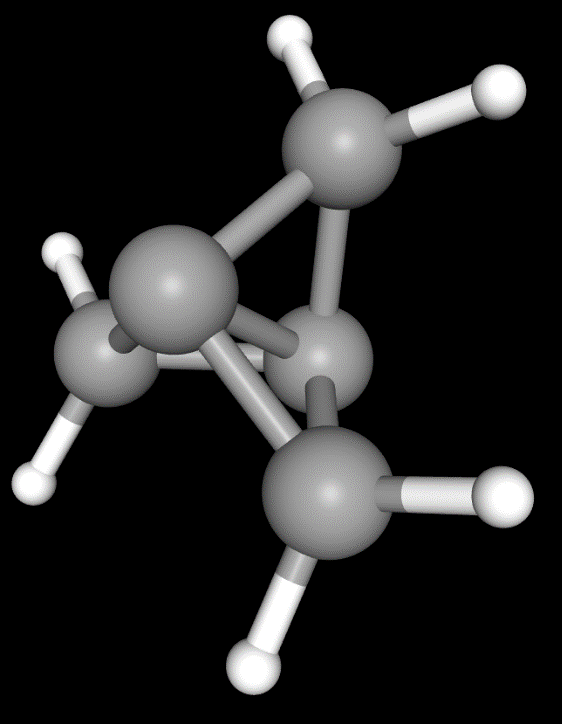
[1.1.1]Propellane, has the molecular formula C₅H₆ and CAS number 35634-10-7. This compound consists of three cyclopropane rings sharing one central C–C bond and is a typical highly strained small-ring hydrocarbon. The central C–C bond is embedded in a highly strained structure.
2.2 Synthetic Significance of the High-Strain Structure
The value of [1.1.1]propellane arises from the following aspects:
Structural Feature | Reaction Significance |
High ring strain | Provides a strong driving force for bond cleavage and reorganization |
Unique central C–C bond | Enables the formation of new carbon frameworks through strain release |
Compact and rigid structure | Facilitates the construction of three-dimensional, conformationally constrained molecular frameworks |
Ability to participate in multiple activation modes | Widely used in the construction of bicyclo[1.1.1]pentane, abbreviated as BCP, and related structures |
Previously, [1.1.1]propellane was commonly used for the synthesis of bicyclo[1.1.1]pentane (BCP) structures. Bicyclo[1.1.1]pentane is a three-dimensional benzene bioisostere that has attracted broad attention in medicinal chemistry. It can be used to explore aromatic-ring replacement, increase molecular three-dimensionality, and optimize physicochemical properties.
The distinctive feature of this study is that the reaction target is no longer the conventional construction of bicyclo[1.1.1]pentane (BCP) structures. Instead, under Lewis acid catalysis, [1.1.1]propellane participates in the ring expansion of ketones and, in the case of cyclic ketones, can directly form spirocyclic ketone products containing a methylenecyclobutane fragment.
Therefore, in this reaction, [1.1.1]propellane is not an ordinary addition reagent. Rather, it plays three key roles:
① It provides the driving force of strain release, promoting the reaction along the ring-expansion pathway;
② It provides the methylenecyclobutane structural fragment, giving the product a more pronounced three-dimensional skeletal character;
③ It remodels cyclic ketone frameworks into spirocyclic ketone structures, providing a synthetic entry point for the subsequent construction of mono-spirocyclic, bis-spirocyclic, and multi-spirocyclic building blocks.
3 Reaction Design: Lewis Acid-Controlled Selective Transformation of [1.1.1]Propellane
3.1 The Key Challenge in Reaction Design
Highly strained molecules are reactive, but high reactivity does not necessarily mean good selectivity. In a reaction system, [1.1.1]propellane may undergo dimerization, oligomerization, or other side reactions. The challenge of this study is not simply to make [1.1.1]propellane react, but to direct it selectively into the desired ring-expansion pathway in the presence of ketones.
The study employs a Lewis acid catalytic system. Its core role is to activate the ketone carbonyl group and guide [1.1.1]propellane through an ordered process of C–C bond formation and skeletal rearrangement.
3.2 Proposed Reaction Pathway
According to the control experiments and Density Functional Theory, abbreviated as DFT, calculations reported in the article, the reaction supports an ionic mechanism.
The mechanism can be simplified into four stages:
1. Carbonyl activation
Ketone + Lewis acid → Lewis acid-coordinated activated carbonyl
2. Participation of [1.1.1]propellane in bond formation
Activated carbonyl + [1.1.1]propellane → Formation of a new C–C bond
3. Strain release and formation of a cationic intermediate
Polarization/cleavage of the central bond → Cyclobutyl cation-type intermediate
4. Ring expansion
Rearrangement of the cationic intermediate → Spirocyclic ketone containing a methylenecyclobutane fragment
In this process, the Lewis acid does more than simply increase the reaction rate; it determines whether the reaction can proceed along the desired pathway. Without Lewis acid activation, the ketone carbonyl group is insufficiently reactive. In the presence of a Lewis acid, the carbonyl group is activated, and the strain release of [1.1.1]propellane can be matched with the C–C bond-forming process, thereby driving completion of the ring expansion.
3.3 Control of Reaction Selectivity by Lewis Acid and Solvent
The preferred conditions reported in the article are Sc(OTf)₃, scandium triflate, in toluene at room temperature. Specifically:
Reaction Factor | Role |
Sc(OTf)₃ | Activates the ketone carbonyl group and promotes the desired ring expansion |
Toluene | Improves the yield/selectivity of the desired product |
Room temperature | Provides mild operating conditions suitable for substrates sensitive to functional groups |
Reaction time of approximately 12 h | Balances conversion with control of side reactions |
The core of this reaction lies in the effective match between Lewis acid activation of the carbonyl group and strain release of [1.1.1]propellane. This allows the reaction to avoid unproductive consumption of [1.1.1]propellane and instead proceed toward the construction of the target framework.
4 Methodological Advantages: Rapid Access from Common Ketones to Spirocyclic Building Blocks
4.1 Substrate Scope Demonstrates Feedstock Applicability
This method covers multiple types of carbonyl substrates, including cyclic ketones, acyclic ketones, diketones, and some aldehydes. Publicly available abstracts indicate that the reaction is compatible with functional groups such as esters, amides, and amines, and can be scaled up to 56 g.
Substrate Type | Reaction Value |
Cyclic ketones | Direct construction of spirocyclic ketones |
Cyclic diketones | Formation of mono-insertion or bis-insertion products |
Acyclic ketones | Expansion to functionalized ketones with different substitution patterns |
Aldehydes | Can serve as extended substrates for related skeletal editing |
Heteroatom-containing ketones | Support the construction of heterocyclic spirocyclic building blocks |
4.2 Efficiency in Constructing Spirocyclic Frameworks
The prominent synthetic value of this method lies in the efficient construction of spirocyclic ketones. In a spirocyclic structure, two rings share a quaternary central carbon atom. Such structures typically possess strong rigidity and well-defined spatial orientation, making them highly valuable in medicinal chemistry and molecular building-block design.
4.3 Iterative Construction of Multi-Spirocyclic Frameworks
This study further demonstrates the iterative synthetic capability of “insertion–transformation–reinsertion,” enabling the construction of mono-spirocyclic, bis-spirocyclic, and tris-spirocyclic structures from simple ketones.

This is an important highlight of the study. A single reaction can generate a spirocyclic ketone; repeated use of this strategy can gradually increase skeletal complexity. For molecular building-block development, such iterative capability is more practically valuable than a single high-yielding model reaction, because it enables the establishment of structural series around the same reaction logic.
5 Medicinal Chemistry Value: Access to oxa-BCH-Type Saturated Benzene Bioisosteres
5.1 Structural Significance of 2-Oxabicyclo[2.1.1]hexane
2-Oxabicyclo[2.1.1]hexane, also known as oxa-BCH, is an oxygen-containing bridged saturated framework. It can be regarded as a bicyclo[2.1.1]hexane, BCH, framework in which an oxygen atom has been introduced.
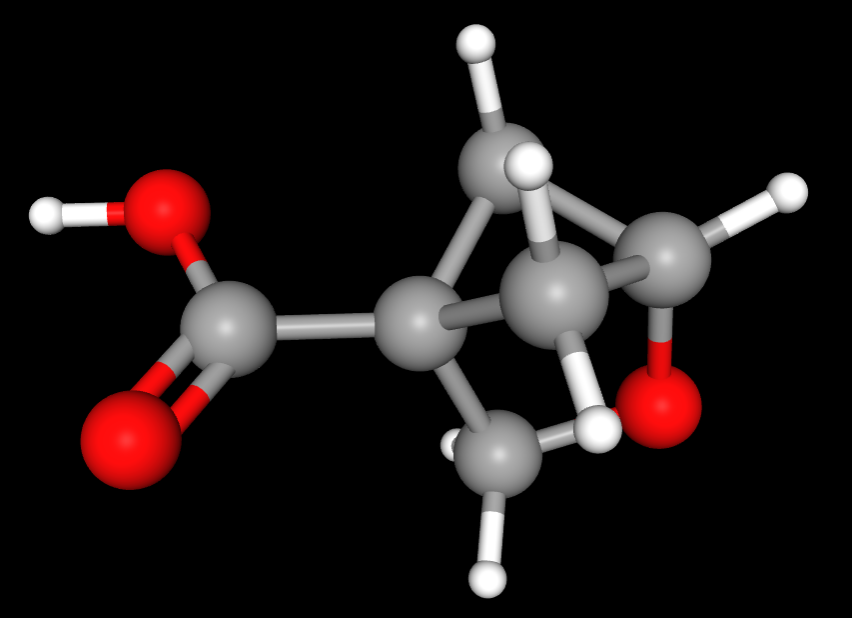
In medicinal chemistry, oxa-BCH has attracted attention because it can be used to mimic certain spatial geometrical features of ortho-substituted benzene rings while introducing higher saturation and a more three-dimensional conformation. Compared with ortho-substituted benzene rings, oxa-BCH is not an aromatic system and does not possess the π-electronic structure of benzene. The similarity between the two mainly lies in the relative spatial positions of substituents and the conformational constraints they impose.
Comparison Object | Structural Feature | Medicinal Chemistry Significance |
Ortho-substituted benzene ring | R¹ and R² are located at adjacent positions on the benzene ring, and the overall structure is relatively planar | A common aromatic fragment that is easy to modify, but may increase molecular planarity and lipophilicity |
oxa-BCH | R¹ and R² are connected to two adjacent spatial positions on an oxygen-containing bridged framework, giving a more three-dimensional structure | Can serve as a saturated bioisostere of ortho-substituted benzene rings for exploring aromatic-ring replacement and physicochemical-property optimization |
The value of oxa-BCH does not lie in fully replicating the electronic properties of benzene, but in providing an alternative framework with a similar spatial relationship between substituents while being more saturated and more three-dimensional. Relevant studies show that, in some bioactive compounds, replacing an ortho-substituted benzene ring with 2-oxabicyclo[2.1.1]hexane can reduce lipophilicity and improve certain physicochemical properties. However, the specific effect still depends on the structure of the target molecule and its mode of binding to the biological target.
5.2 From Ketone Ring Expansion to Benzene-Ring Replacement
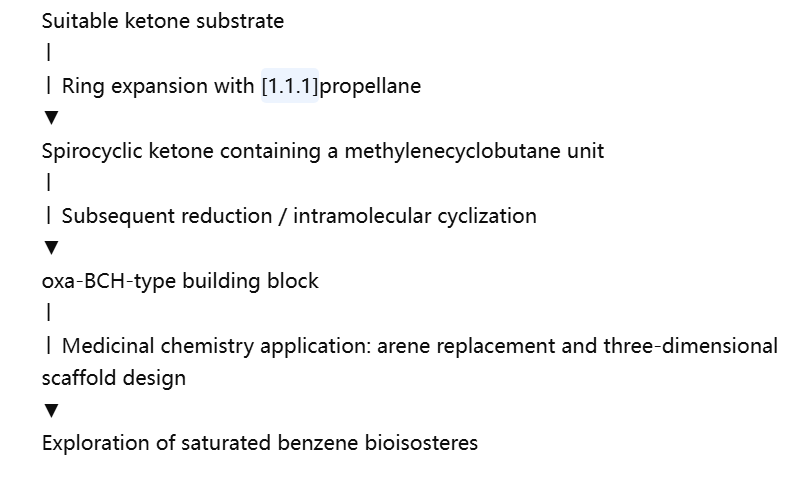
The medicinal chemistry value of this JACS work lies in connecting “ketone ring-expansion products” with “saturated benzene bioisosteres.” The synthetic logic can be summarized as follows:
Aromatic-ring replacement and three-dimensional molecular design
The key to this route is to first construct spirocyclic ketones containing a methylenecyclobutane fragment through ketone ring expansion involving [1.1.1]propellane, and then access fused oxa-BCH / oxa-BCH-related structures through subsequent transformations such as reduction and intramolecular cyclization. oxa-BCH-type structures can be further used for aromatic-ring replacement and three-dimensional framework design, supporting the exploration of saturated benzene bioisosteres.
5.3 Practical Application Directions
This method is particularly suitable for molecular design needs focused on the following aspects:
Design Need | Value Provided by This Method |
Construction of spirocyclic ketones | Direct access from simple ketones to spirocyclic frameworks |
Increasing molecular three-dimensionality | Introduction of saturated small rings and spirocyclic centers |
Exploration of aromatic-ring replacement | Further conversion into oxa-BCH-type structures |
Establishment of building-block series | Construction of multi-spirocyclic structures through an iterative strategy |
Retention of sites for further modification | Products contain carbonyl groups and alkene-related transformation sites |
6 Product Transformations: Spirocyclic Ketones as Further Modifiable Synthetic Intermediates
6.1 Usable Structural Units in the Products
The spirocyclic ketones obtained from this reaction usually contain multiple sites that can undergo further transformation. Their synthetic value also comes from the strong downstream modifiability retained in the products.
Structural Unit | Possible Transformations |
Ketone carbonyl | Reduction, oxidation, oxime formation, condensation, cyclization |
Methylenecyclobutane fragment | Cycloaddition, oxidation, functionalization |
Spirocyclic center | Provides a rigid three-dimensional framework |
Alkene feature | Epoxidation, cyclopropanation, metathesis, and related transformations |
6.2 Relationship to Molecular Building-Block Development
A practical method for molecular building-block synthesis needs to meet three requirements:
① The starting materials should be readily available;
② The reaction should be scalable;
③ The products should be amenable to further transformation.
This study addresses all three points: ketone starting materials are broadly available; the reaction can be scaled up to 56 g; and the products can undergo various transformations to access more complex structures.
The core products of this reaction are spirocyclic ketone intermediates that can be used for further synthesis. Their value is reflected in two directions:
Direction A: Building-block synthesis
Simple ketone → Spirocyclic ketone → Monomeric building block / medicinal chemistry intermediate
Direction B: Framework expansion
Simple ketone → Spirocyclic ketone → New ketone intermediate → Multi-spirocyclic framework
This makes the reaction suitable not only for route design toward individual target molecules, but also for the rapid preparation of three-dimensional building-block series.
7 Representative Chemical Classification Tables Related to the Conversion of Diverse Ketones into Three-Dimensional Spirocyclic Building Blocks
Table 1 Core Reaction Reagent, Catalyst, and Reaction Conditions
Category | CAS No. | Aladdin Catalog No. | Name | Specification or Purity | Product Features and Applications |
Core high-strain reaction reagent | 35634-10-7 | [1.1.1]Propellane | ≥95% | A key reagent for ketone ring expansion, used to introduce a methylenecyclobutane fragment and construct spirocyclic ketone frameworks | |
Lewis acid catalyst | 144026-79-9 | S475205 | Scandium(III) trifluoromethanesulfonate | ≥99.995% metals basis | Used for carbonyl activation and to promote ketone ring expansion involving [1.1.1]propellane |
Reaction solvent | 108-88-3 | T399633 | Toluene, regulated precursor chemical | Anhydrous grade, ≥99.8% | A key solvent under the reported literature conditions, used to improve the selectivity of the desired ring-expansion reaction |
Control ring-expansion reagent | 18107-18-1 | (Trimethylsilyl)diazomethane | 2.0 M in hexanes | Can be used for methylene-insertion ring expansion and serves as a methodological comparison with [1.1.1]propellane-based ring-fragment insertion |
Table 2 Ketone and Aldehyde Substrates
Category | CAS No. | Aladdin Catalog No. | Name | Specification or Purity | Product Features and Applications |
Small-ring ketone substrate | 1191-95-3 | Cyclobutanone | ≥99% | A small-ring carbonyl substrate that can be used to explore the influence of ring size on ketone ring-expansion reactions | |
Cyclic ketone substrate | 120-92-3 | Cyclopentanone | Chemically pure, CP, ≥97% | A common cyclic ketone substrate suitable for spirocyclic ketone synthesis and ring-expansion substrate screening | |
Cyclic ketone substrate | 108-94-1 | Cyclohexanone | AR, ≥99.5% | A representative cyclic ketone substrate suitable for constructing spirocyclic ketones containing a methylenecyclobutane fragment | |
Medium-ring ketone substrate | 502-42-1 | Cycloheptanone | ≥99% | A medium-ring carbonyl substrate that can be used to expand spirocyclic ketone structures with different ring sizes | |
Medium-ring ketone substrate | 502-49-8 | Cyclooctanone | ≥97% | A medium-ring ketone substrate that can be used to evaluate the applicability of ketone ring expansion to medium-ring systems | |
Macrocyclic ketone substrate | 830-13-7 | Cyclododecanone | ≥99% | A macrocyclic carbonyl substrate that can be used for the construction of spirocyclized structures in macrocyclic systems | |
Diketone substrate | 637-88-7 | 1,4-Cyclohexanedione | ≥98% | A dicarbonyl substrate that can be used in studies of mono-insertion, bis-insertion, and multi-spirocyclic framework construction | |
Diketone substrate | 23391-99-3 | 4,4′-Bicyclohexanone | ≥98% (GC) | A diketone substrate suitable for bis-spirocyclic framework synthesis and sequential ring-expansion studies | |
Heterocyclic ketone substrate | 29943-42-8 | Tetrahydropyranone | ≥97% | An oxygen-containing heterocyclic ketone substrate that can be used for the synthesis of oxygen-containing spirocyclic building blocks | |
Acyclic ketone substrate | 123-19-3 | 4-Heptanone | ≥98% | An aliphatic ketone substrate that can be used to evaluate the applicability of acyclic ketones in ring-expansion reactions | |
Acyclic ketone substrate | 502-56-7 | 5-Nonanone | ≥98% | A symmetrical aliphatic ketone substrate that can be used to expand the substrate scope of acyclic ketones | |
Complex ketone substrate | 17283-81-7 | Dihydro-β-ionone | ≥90% | A complex alicyclic ketone substrate that can be used to evaluate the compatibility of the reaction with substituted alicyclic structures | |
Aldehyde substrate | 123-72-8 | n-Butyraldehyde | Distilled grade, ≥99.5% | An aliphatic aldehyde substrate that can be used to study the high reactivity of aldehydes and the formation of sequential-insertion products | |
Aldehyde substrate | 104-53-0 | 3-Phenylpropionaldehyde | ≥95% | An aralkyl aldehyde substrate that can be used for aldehyde substrate expansion and the synthesis of functionalized products |
Table 3 Reagents for Downstream Transformation, Mechanistic Verification, and Structural Modification
Category | CAS No. | Aladdin Catalog No. | Name | Specification or Purity | Product Features and Applications |
Reducing reagent | 16940-66-2 | S432207 | Sodium borohydride, regulated explosive-precursor chemical | purum p.a., ≥96% | Used for reduction of the carbonyl group in spirocyclic ketones, enabling downstream transformations such as reduction and cyclization |
Strong reducing reagent | 16853-85-3 | L432195 | Lithium aluminum hydride, LAH | Suitable for synthesis, powder | Used for the reduction of carbonyl, ester, and other functional groups, supporting studies on spirocyclic ketone derivatization |
Oxidizing reagent | 937-14-4 | 3-Chloroperoxybenzoic acid, mCPBA | ≥85% | Used for alkene epoxidation and oxidative transformations, suitable for downstream modification of the methylenecyclobutane fragment | |
Metathesis catalyst | 172222-30-9 | Bis(tricyclohexylphosphine)benzylidene ruthenium dichloride | Ru 12.3% | Used for alkene metathesis reactions and can expand skeletal modification of spirocyclic ketone products | |
Metathesis catalyst | 246047-72-3 | Grubbs second-generation catalyst | ≥99.95% metals basis | Used for alkene metathesis and ring-closing metathesis, supporting structural diversification of products | |
Cycloaddition substrate | 91-64-5 | Coumarin | AR, ≥98% | Can participate in alkene cycloaddition reactions and be used to expand the ring-system structures of spirocyclic ketone products | |
Mechanistic verification reagent | 100-42-5 | Styrene | CP, containing 10–15 ppm 4-tert-butylcatechol as stabilizer | Can be used in carbene-trapping control experiments to help assess whether the reaction proceeds through a carbene pathway; can also serve as a reference reagent for the design of mechanistic control experiments | |
Mechanistic verification reagent | 2495-35-4 | Benzyl acrylate, containing MEHQ stabilizer | ≥97% (GC) | Can be used in carbene-trapping or alkene-competition experiments to support mechanistic studies | |
Structural-fragment-related reagent | 1120-56-5 | Methylenecyclobutane | ≥95% | Related to the methylenecyclobutane fragment in the target products and can be used for studies on the reactivity of small-ring alkenes |
Table 4 Medicinal Chemistry-Related Three-Dimensional Building Blocks and Bioisosteres
Category | CAS No. | Aladdin Catalog No. | Name | Specification or Purity | Product Features and Applications |
oxa-BCH-type building block | 1784145-36-3 | 2-Oxabicyclo[2.1.1]hexane-4-carboxylic acid | ≥97% | A building block related to saturated benzene bioisosteres, used for ortho-substituted arene replacement and three-dimensional framework design | |
oxa-BCH-type bifunctional building block | 2287287-55-0 | 4-(tert-Butoxycarbonylamino)-2-oxabicyclo[2.1.1]hexane-1-carboxylic acid | ≥97% | A three-dimensional building block containing protected amino and carboxylic acid functional groups, suitable for medicinal chemistry structural modification | |
BCP-type building block | 22287-28-1 | Bicyclo[1.1.1]pentane-1-carboxylic acid | ≥97% | A representative three-dimensional benzene bioisostere building block, used for aromatic-ring replacement and conformationally restricted molecular design | |
Small-ring carboxylic acid building block | 3721-95-7 | Cyclobutanecarboxylic acid | ≥98% | A cyclobutane-type small-ring carboxylic acid building block, used to construct saturated small-ring fragments and spirocycle-related derivatives |
Note: The above are representative Aladdin products related to scientific research and formulation studies. Some reagents are directly related to the reported literature conditions, while others are selection references for downstream transformation, mechanistic exploration, or structural-analogy studies. Specific applications should be confirmed according to the experimental design. For more product specifications, grades, and COA information, search by “product name/CAS/catalog number” on the Aladdin official website.
References
[1] Kadam, G. A.; Midya, S.; Levchenko, V.; Sham, V.; Mykhailiuk, P. K.; Hari, D. P. Ring-Expansion of Ketones with [1.1.1]Propellane. J. Am. Chem. Soc. 2026, 148 (1), 388–399. DOI: 10.1021/jacs.5c14022.
[2] NIST Chemistry WebBook. [1.1.1]Propellane, CAS Registry Number 35634-10-7. Formula: C₅H₆; Molecular Weight: 66.1011; InChIKey: ZTXSPLGEGCABFL-UHFFFAOYSA-N.
[3] Denisenko, A.; Garbuz, P.; Voloshchuk, N. M.; Holota, Y.; Al-Maali, G.; Borysko, P.; Mykhailiuk, P. K. 2-Oxabicyclo[2.1.1]hexanes as Saturated Bioisosteres of the Ortho-substituted Phenyl Ring. Nat. Chem. 2023, 15, 1155–1163. DOI: 10.1038/s41557-023-01222-0.
For more related articles, please see below:
Spirocyclic Building Blocks for Scaffold Assembly
Innovations in the design of stereospecific drug molecular structures: Spirocyclic Scaffolds
Cyclic isomers--Azabicyclic molecular building blocks to aid drug design