QUALITÀ & PUREZZAMoligand™?Moligand™ — Aladdin's line of ligands and bioactive small molecules. Use for receptor, pathway, and binding studies needing defined small-molecule tools.≥99%
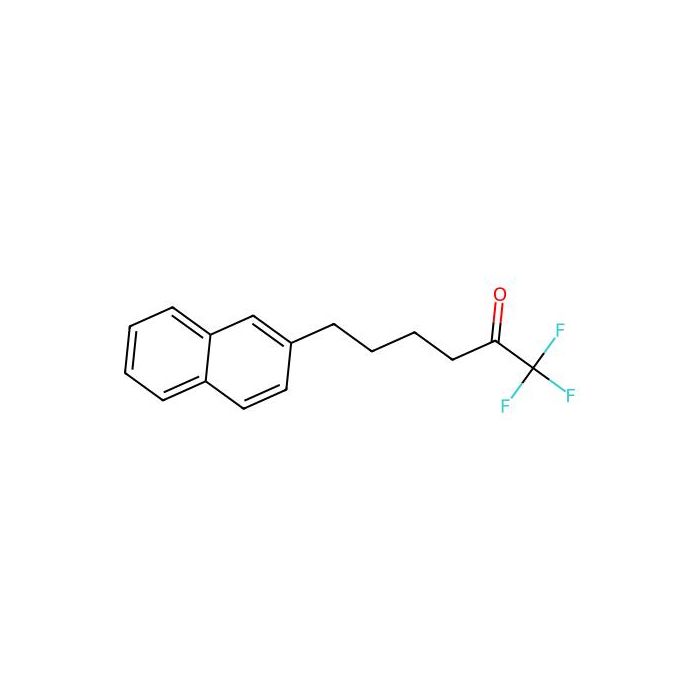
FKGK18 is a selective group VIA calcium-independent phospholipase A 2 (GVIA iPLA 2 ) inhibitor. FKGK18 is a fluoroketone (FK)-based compound with IC 50 s of 50 nM and 3 μM for iPLA 2 β and iPLA 2 γ. FKGK18 can be used for the research of beta-cell apoptosis and diabetes
In Vitro
FKGK18 (1 nM; 1 h) inhibits glucose-stimulated insulin secretion (GSIS) and prostaglandin E2 (PGE2) generation. FKGK18 (0.1-10 nM; 24 h) inhibits beta-cell apoptosis. FKGK18 (0.1-10 μM; 24 h) affects immune cells function and influences B-cell survival. MCE has not independently confirmed the accuracy of these methods. They are for reference only. Cell Viability AssayCell Line: Human pancreatic islets Concentration: 1 nM Incubation Time: 1 h Result: Inhibited GSIS from pancreatic islets, AA hydrolysis from beta-cells membranes and PGE2 generation. Penetrated islets and the beta-cells from islets. Apoptosis AnalysisCell Line: INS-1 OE cells Concentration: 0.1-10 nM Incubation Time: 24 h Result: Inhibited beta-cells apoptosis induced by ER-stress. Cell Viability AssayCell Line: CD4 + T-cell and B-cell from 8–12-week-old NOD female mice Concentration: 0.1-10 μM/L Incubation Time: 24 h Result: Decreased TNF-α generation, reduced viability of B cell and antibody production.
In Vivo
FKGK18 (20 mg/kg; i.p. three times per week from 10 days until euthanasia) reduces diabetes incidence. MCE has not independently confirmed the accuracy of these methods. They are for reference only. Animal Model: 10-day-old female NOD miceDosage: 20 mg/kg Administration: Intraperitoneal injection; 20 mg/kg three times per week; from 10 days until euthanasia Result: Reduced diabetes incidence and maintained better glucose homeostasis.
Form:Solid
IC50& Target:IC50: 50 nM (iPLA2β), 3 μM (iPLA2γ)
Specifiche
Specifiche e purezza
Moligand™,≥99%
Meccanismi biochimici e fisiologici
FKGK18 is a selective group VIA calcium-independent phospholipase A 2 (GVIA iPLA 2 ) inhibitor. FKGK18 is a fluoroketone (FK)-based compound with IC 50 s of 50 nM and 3 μM for iPLA 2 β and iPLA 2 γ. FKGK18 can be used for the research of beta-cell apoptos
Condizioni di conservazione di stoccaggio
Store at -20°C
Spedito in
Ice chest + Ice pads
Questo prodotto richiede spedizione a catena fredda. I servizi di terra e altri servizi economici non sono disponibili.
This compound belongs to the class of organic compounds known as naphthalenes. These are compounds containing a naphthalene moiety, which consists of two fused benzene rings.
External Descriptors
Not available
1. Djoumbou Feunang Y, Eisner R, Knox C, Chepelev L, Hastings J, Owen G, Fahy E, Steinbeck C, Subramanian S, Bolton E, Greiner R, and Wishart DS. ClassyFire: Automated Chemical Classification With A Comprehensive, Computable Taxonomy. Journal of Cheminformatics, 2016, 8:61.
Certificati (CoA, COO, BSE/TSE e tabella di analisi)
C of A & Other Certificates(BSE/TSE, COO):
Analytical Chart:
Proprietà chimiche e fisiche
Peso molecolare
280.28
XLogP3
5.500
Hydrogen Bond Donor Count
0
Hydrogen Bond Acceptor Count
4
Rotatable Bond Count
5
Exact Mass
280.107 Da
Monoisotopic Mass
280.107 Da
Topological Polar Surface Area
17.100 Ų
Heavy Atom Count
20
Formal Charge
0
Complexity
324.000
Isotope Atom Count
0
Defined Atom Stereocenter Count
0
Undefined Atom Stereocenter Count
0
Defined Bond Stereocenter Count
0
Undefined Bond Stereocenter Count
0
The total count of all stereochemical bonds
0
Covalently-Bonded Unit Count
1
Calcolatori di soluzioni
Molarity Calculator
Determine the necessary mass, volume, or concentration for preparing a solution.
Dilution Calculator
Determine the dilution needed to prepare a stock solution.
Reconstitution Calculator
Recensioni
Recensioni dei clienti
Application Protocols
No tested applications are listed in the Product Data. The following general protocol outlines best practices for handling small-molecule screening compounds like FKGK18. This is general guidance, not item-specific.
Example workflow for assay use:
Stock preparation
Warm to room temperature in a desiccated environment.
Dissolve to 10–50 mM in anhydrous DMSO. Vortex and, if needed, sonicate briefly. Record exact concentration.
Optional: Clarify by centrifugation or 0.22 µm PTFE filtration to remove particulates.
Stability check (recommended)
Analyze a fresh aliquot by LC–MS (time 0) and after 24–48 h at room temperature and 4 °C to ensure stability in DMSO.
Working solution
Dilute stock into assay buffer to desired concentrations, keeping final DMSO constant (e.g., 0.1–0.5% v/v). Mix thoroughly to avoid local supersaturation.
Plate handling
Use low-binding tips/plates. For hydrophobic compounds, include 0.01–0.1% nonionic surfactant if assay-compatible to reduce adsorption.
Controls
Vehicle-only controls at matched DMSO; if a reference inhibitor/ligand is available, include as a positive control.
Data quality
Run serial dilutions (≥8 points) in technical replicates. Monitor Z′ factor and include counterscreens for assay interference.
For any validated, item-specific protocol, consult the CoA/Spec Sheet or vendor technical note.
Biological Roles
Item-specific biological function or endogenous role is not provided for FKGK18. As a cataloged research ligand/small molecule, it is a synthetic compound intended for in vitro/in vivo research contexts rather than a metabolite or biopolymer with a defined physiological role.
General guidance (not item-specific):
Such compounds are often used to probe biochemical pathways, map structure–activity relationships (SAR), and support target validation efforts.
Interpretation of biological data should include controls for solvent effects (e.g., matched DMSO), off-target profiling if available, and orthogonal readouts to mitigate assay interference.
If literature associates FKGK18 with a particular target or pathway, confirm identity, stereochemistry (if applicable), and purity match before extrapolating published potency/selectivity.
Note: No medical or clinical claims are made; this product is for research use only (as stated in the Product Data).
Buffer Applications
FKGK18 is not a buffering agent. No buffer system or pKa data are provided in the Product Data. Accordingly, there are no item-specific buffer formulations to report.
Practical assay considerations (general, not item-specific):
Prepare compound stocks in DMSO, then dilute into the assay buffer of choice (e.g., PBS, HEPES, Tris) ensuring final DMSO is constant across all wells.
Maintain buffer ionic strength and pH appropriate to the biological system; include protein or mild surfactant if adsorption or precipitation is observed.
Filter buffers (0.22 µm) and degas when assay readouts are sensitive to particulates or dissolved gases.
For item-specific buffering information (if relevant to solubility/stability), consult the CoA/Spec Sheet.
Green Alternatives
While FKGK18 is a screening compound (not a solvent/reagent), greener choices can be applied to its handling and assay workflows.
Opportunities for greener practice (general guidance):
Solvent minimization: Use the smallest feasible DMSO stock concentration to reduce total DMSO mass introduced into assays; standardize on 0.1–0.5% final DMSO if assay-compatible.
Aqueous-first approach: Favor direct dissolution or rapid dilution into aqueous buffers; employ mild surfactants (where compatible) to limit reliance on organic co-solvents.
Greener co-solvents: If an alternative to DMSO is needed, consider ethanol or water–ethanol mixtures when biologically compatible. Avoid chlorinated solvents for routine handling.
Micro-scale operations: Conduct screening and confirmation experiments in miniaturized plate formats (384/1536-well) to reduce solvent/compound consumption and waste.
Waste management: Segregate DMSO- and acetonitrile-containing wastes; use solvent recovery programs where available.
Illustrative comparison (general, not item-specific):
DMSO: Excellent solvency and assay compatibility; high boiling point complicates recovery; moderate EHS profile.
Ethanol: Renewable and lower toxicity; limited solvency for very hydrophobic compounds; volatility can affect dosing.
Acetonitrile: Good solvency and LC compatibility; petrochemical origin and toxicity considerations.
Bottom line: Prefer aqueous buffers and ethanol when feasible; otherwise, use DMSO sparingly with careful plate design to minimize environmental footprint.
Pharmaceutical Uses
No pharmacopeial status, excipient role, or clinical application is provided for this item. FKGK18 is supplied for research use only.
Context (general, not item-specific):
Screening compounds like FKGK18 may be used in discovery research, hit validation, and preclinical assay development but are not qualified as drug substances or excipients.
If formulation studies are conducted (e.g., for PK in animal models), ensure research-grade materials and vehicles are explicitly documented, and do not extrapolate to clinical suitability.
For any work approaching regulated development, specialized GMP-grade materials, full impurity profiling, and ICH stability programs are required — none are implied for this research product.
Conclusion: No pharmaceutical-use claims apply; this product is intended strictly for laboratory research.
Physical Properties
Item-specific physicochemical data are not provided in the Product Data.
Appearance: Not specified for this item; refer to CoA/Spec Sheet.
Melting point / Boiling point: Not specified for this item; refer to CoA/Spec Sheet.
Density / Refractive index: Not specified for this item; refer to CoA/Spec Sheet.
LogP / pKa: Not specified for this item; refer to CoA/Spec Sheet.
Aqueous solubility: Not specified for this item; refer to CoA/Spec Sheet.
General laboratory guidance (literature/practice-based, not item-specific):
Library screening compounds are commonly supplied as solids or concentrated DMSO solutions. In the absence of specific solubility data, initial stock solutions at 10–50 mM in anhydrous DMSO are often used, followed by dilution into assay buffer to ≤0.1–1% DMSO v/v.
If the compound is hydrophobic, consider co-solvents (e.g., DMSO first, then dilution with buffer containing 0.01–0.1% nonionic surfactant) to mitigate precipitation at working concentrations.
For quality-critical assays, determine compound stability in DMSO and in the intended buffer by LC–UV/LC–MS time-course (e.g., 0, 24, 48 h at room temperature and 4 °C).
Important: Do not treat the above as specifications. For exact physical properties of this item (FKGK18, SKU F649923), consult the CoA/Spec Sheet and SDS.
Quality and Grades
Grade/Purity (Product Data): Moligand™. No further item-specific analytical specifications (assay %, residual solvents, metals, water, UV cut-off) are provided here.
What “Moligand™” typically implies (general description):
Denotes a research-grade small-molecule/ligand suitable for screening, target engagement studies, and SAR exploration. Focus is on identity confirmation and suitability for biochemical/cellular assays rather than compliance with pharmacopeial monographs.
Lots are commonly accompanied by a Certificate of Analysis detailing identity checks (e.g., LC–MS, NMR) and purity by HPLC/UPLC. Because exact metrics are not in the Product Data, treat any numerical values as “Not specified for this item; refer to CoA/Spec Sheet.”
Practical quality guidance:
Verify lot-specific purity, counter-ions, and residual solvent levels (if any) on the CoA before quantitative studies.
For sensitive assays (e.g., fluorescence or MS-based), confirm that background signal from impurities is acceptable; if necessary, re-purify (flash prep/semiprep HPLC) and document new purity.
If the compound is hygroscopic or polymorphic (unknown here), equilibrate handling to a low-humidity environment and document solid form for reproducibility.
Traceability and documentation:
Record SKU (F649923), lot number, receipt date, and storage location (−20 °C). Attach CoA and SDS to your ELN entry for auditability.
Note: This product is for research use only (from Product Data).
Reaction and Applications
This product is sold as a research ligand/screening compound rather than as a synthetic reagent. No item-specific reactivity or use-cases are provided in the Product Data.
Applicable research applications (general, not item-specific):
Mechanistic studies: Time-dependent effects, reversibility testing (washout or dilution), and orthogonal confirmation (e.g., CETSA, pull-down with immobilized analogs if available).
Good practice for assay use:
Confirm compound identity and purity by LC–MS/NMR before critical decisions.
Establish DMSO stock stability (freeze–thaw robustness, room-temperature bench time) and check for degradants that might confound results.
Use serial dilutions spanning ≥8–10 points to capture potency accurately; include counter-screens for assay interference (e.g., redox cycling, fluorescence quench/enhancement tests) where relevant.
Note: Because no specific mechanistic or target information is provided for FKGK18 in the Product Data, avoid assuming a mode of action without verifying from primary literature or the vendor’s CoA/technical sheet.
Reaction Conditions
Not applicable. FKGK18 is not supplied as a synthetic reagent, and the Product Data provide no reaction chemistry or conditions.
General guidance if chemical modification is pursued (not item-specific):
Select solvents and temperatures based on the known functional groups once the full structure is confirmed from the CoA/Spec Sheet or primary literature.
Begin with small-scale scouting (e.g., 5–20 mg) to evaluate stability to bases/acids, redox conditions, and heat. Monitor by LC–MS and TLC.
As no item-specific conditions are provided, consult primary references and perform due diligence experiments before committing resources.
Safety and Handling
Safety details for this specific item are not provided in the Product Data and should be taken from the SDS.
GHS Classification / Pictograms / H-Statements / Signal Word: Not specified for this item; refer to SDS.
General PPE: Wear lab coat, safety glasses, and appropriate chemically resistant gloves. Use in a chemical fume hood to avoid inhalation of dusts/aerosols.
Storage Conditions (Product Data): Store at −20 °C. Protect from moisture and, if the compound is light sensitive (not specified), protect from light.
Shipping (Product Data): Shipped in ice chest with ice pads to maintain low temperature.
Incompatibilities: Unknown for this item; in general, keep away from strong oxidizers/reducers, strong acids/bases until specific compatibility is known from SDS.
Hygiene measures: Avoid ingestion, inhalation, or skin contact. Wash thoroughly after handling. Decontaminate work surfaces after use.
First aid (general guidance):
Inhalation: Move to fresh air; seek medical attention if symptoms persist.
Skin contact: Wash with soap and water; remove contaminated clothing.
Eye contact: Rinse cautiously with water for several minutes; remove contact lenses if present and easy to do.
Ingestion: Rinse mouth; seek medical advice.
Special risks: Bioactivity is possible (screening ligand). Handle on a small scale with appropriate containment. For DMSO stock handling, avoid contact — DMSO can enhance dermal absorption of solutes.
Always defer to the SDS for authoritative hazard and response information.
Solvent Selection
Item-specific solubility and polarity data are not provided. The following are general, literature-based practices for small-molecule screening compounds and should not be treated as specifications for FKGK18.
Primary solvent for stocks: Anhydrous DMSO is the default for many discovery libraries due to broad solvating power and compatibility with biochemical and cell-based assays at ≤0.1–1% v/v.
Working solutions: Prepare concentrated DMSO stocks (e.g., 10–50 mM), then dilute into assay buffer (PBS, HEPES, Tris, etc.). Maintain final DMSO content consistent between control and treatment wells.
Alternative co-solvents (if needed): DMF, ethanol, or acetonitrile can help dissolve stubborn solids, followed by immediate dilution into buffer. Validate assay tolerance to these co-solvents (often ≤0.1–0.5% v/v).
Aqueous compatibility: If precipitation occurs upon dilution, add slowly with vigorous mixing; use a small amount of surfactant (e.g., 0.01–0.1% Tween-20 or Pluronic F-68) as permitted by the assay.
Adsorption minimization: For hydrophobic compounds, precondition plasticware with buffer containing 0.01% surfactant or use low-binding tubes/plates.
Light/oxygen sensitivity (unknown for this item): When in doubt, prepare and store solutions under inert gas and protect from light; confirm stability by LC–MS.
Selection rationale:
Choose DMSO for broad compatibility; prefer ethanol for membrane-partitioning studies if cells tolerate it; use acetonitrile for rapid injection in LC-based assays. Confirm final solvent content matches assay performance requirements.
Storage and Reconstitution
Storage Conditions (Product Data): Store at −20 °C.
Shipping (Product Data): Ice chest with ice pads to maintain cold chain.
Appearance: Not specified for this item; refer to CoA/Spec Sheet.
General best practices (not item-specific):
Store solid or DMSO stock in tightly sealed, chemically compatible containers (amber vials if light sensitivity is suspected). Include desiccant to limit moisture ingress.
Avoid repeated freeze–thaw cycles: prepare single-use aliquots of DMSO or aqueous stocks and keep working aliquots at 4 °C during the assay day.
For reconstitution, allow vial to warm in a desiccator to prevent condensation, then weigh quickly and dissolve in anhydrous DMSO. Record exact mass, solvent lot, and final concentration.
Stability is molecule-dependent. Confirm by periodic LC–MS/UPLC checks; discard solutions showing significant degradation or precipitation.
If long-term storage in solution is required, store at −20 to −80 °C in DMSO under inert gas. Protect from moisture and, if applicable, from light.
Note: In the absence of item-specific solubility and stability data, treat all handling as exploratory and verify with the CoA/Spec Sheet and SDS prior to critical experiments.
Structure and Identity
Concise overview: FKGK18 is listed as a small-molecule research ligand within a screening library context. Item-specific structural identifiers are largely not provided in the Product Data and should be confirmed from the CoA/Spec Sheet.
Product Name: FKGK18 (SKU: F649923)
CAS: 1071001-09-6 (from Product Data)
PubChem CID: 25060069 (from Product Data)
InChIKey: 375762 (from Product Data; abbreviated/not standard length — verify in CoA/SDS)
SMILES: Not specified for this item; refer to CoA/Spec Sheet.
Molecular Formula: Not specified for this item; refer to CoA/Spec Sheet.
Molecular Weight: Not specified for this item; refer to CoA/Spec Sheet.
Structural features (general, not item-specific):
Product Data do not include a 2D structure. Without a SMILES/InChI, the exact functional groups, ring systems, or stereochemistry cannot be reported for this specific lot.
As a member of a small-molecule/compound library, FKGK18 is expected to be an organic molecule intended for target/phenotypic screening; however, precise structural motifs are not provided here and must be taken from the Certificate of Analysis or authoritative databases.
Practical note:
If structural confirmation is required for assay transfer or structure–activity relationship (SAR) work, request the vendor’s CoA/Spec Sheet and, where necessary, verify identity by LC–MS and/or NMR prior to scale-up experiments.
Synthetic Utility
FKGK18 is offered as a research ligand rather than a building block. No synthetic reactivity or functional group data are provided in the Product Data; therefore, it is not positioned as a reagent or intermediate in preparative chemistry.
General notes (not item-specific):
If derivatization is contemplated (e.g., for probe synthesis, biotinylation, or linker attachment), obtain the full structure (CoA/Spec Sheet) to assess available functional handles and stability constraints.
Prior to any synthetic modification, confirm identity and purity by orthogonal methods (LC–MS, NMR), and establish a reference chromatographic method for in-process control.
For SAR series expansion, ensure unambiguous mapping between analog IDs and structures to avoid misannotation in biological datasets.
Given the absence of structure and reactivity information in the Product Data, no specific synthetic transformations can be recommended for this item.
Target Specificity
No target, pathway, or selectivity profile is provided for this product in the supplied Product Data.
Item-specific details such as target name, binding site/epitope, Ki/IC50 values, and off-targets are: Not specified for this item; refer to CoA/Spec Sheet and the primary literature.
If employing FKGK18 as a tool compound, confirm target engagement using orthogonal assays (e.g., biochemical potency, biophysical binding, and cellular readouts) and incorporate appropriate negative controls and counterscreens.
Note: This section intentionally avoids speculation beyond the provided Product Data.
Domande frequenti
What is the purity of this product?
This product is supplied at ≥99% purity (chemical assay). Lot-specific values are stated on the Certificate of Analysis.
What is Moligand??
Moligand? is one of Aladdin Scientific's premium product lines, formulated for high-purity applications across multiple workflows. Compared to standard grades in the same workflow, Moligand? products typically offer tighter specifications, more rigorous QC, and stronger lot-to-lot consistency.
How should this product be stored?
Store at ?20 °C. Freezer storage is required to maintain the specified shelf life.
How is this product shipped?
This product ships in an insulated container with ice pads. Unpack on arrival and transfer it to the storage condition stated above.
What are the CAS number, molecular formula and molecular weight?
The CAS Number is 1071001-09-6, the molecular formula is C16H15F3O, and the molecular weight is 280.28 g/mol. InChIKey VCWWTQMRNJSJGC-UHFFFAOYSA-N.
What documentation is provided?
Available product documentation, including Certificates of Analysis (COA), Safety Data Sheets (SDS), and specification sheets, is shown in the product document area. Document availability and access follow the current site policy.
Hai bisogno di aiuto per scegliere la qualità?
La nostra guida alla selezione delle qualità copre purezza, stato dello stabilizzatore e idoneità all'applicazione per tutte le varianti del nostro catalogo.
Utilizziamo i cookie per garantire il corretto funzionamento del sito web e, ove consentito, per migliorare la tua esperienza. Puoi gestire le tue preferenze in qualsiasi momento nelle Impostazioni. Per saperne di più, consulta la nostra Cookie Policy.
Desidera che le inviamo un messaggio quando avremo sconti disponibili?
Ricordamelo più tardi
Grazie! Controlli la sua casella di posta per confermare.
Products are supplied to verified businesses, institutions, and qualified professionals for research and development use only. Not for use in humans, animals, diagnosis, or therapy.