Certificati (CoA, COO, BSE/TSE e tabella di analisi)
C of A & Other Certificates(BSE/TSE, COO):
Analytical Chart:
Proprietà chimiche e fisiche
DMSO (mM) Solubilità massima
10
Calcolatori di soluzioni
Molarity Calculator
Determine the necessary mass, volume, or concentration for preparing a solution.
Dilution Calculator
Determine the dilution needed to prepare a stock solution.
Reconstitution Calculator
Recensioni
Recensioni dei clienti
Application Protocols
No tested application protocols are provided for GI-558744. The following is general guidance for handling small-molecule screening compounds.
General HTS/assay stock preparation (example workflow; not item-specific):
Equilibrate the vial to room temperature inside a desiccator before opening to prevent moisture condensation.
Prepare a 10–50 mM DMSO stock solution (concentration chosen based on solubility tests). Vortex, sonicate, and gently warm (≤37 °C) if needed.
Sterile-filter through 0.22 µm PTFE/nylon if sterility is required and compatible; avoid adsorptive membranes for lipophilic compounds.
Aliquot into low-bind tubes (single-use volumes), label with concentration, date, and solvent, and store at −80 °C.
For assays, dilute into buffer or media to the desired final concentration, maintaining a constant vehicle percentage in all wells (e.g., 0.5% DMSO v/v).
Controls and quality checks:
Include vehicle controls, positive controls (assay-dependent), and detergent controls to detect aggregation artifacts.
Verify absence of precipitation visually and by plate reader baseline checks or light scattering, where available.
Any item-specific application recommendations, tested concentrations, or positive control pairings: Not specified for this item; refer to internal SOPs.
Biological Roles
No biological target(s) or mechanism(s) of action are provided for GI-558744 in the present listing. Without structural and target information, specific biological roles cannot be assigned.
General context for small-molecule library members:
Exploratory tool compounds: Employed to probe biochemical pathways, enzyme activities, or receptor signaling in discovery-phase research.
Lead identification: Upon observing activity in a screen, orthogonal assays and counter-screens help confirm on-target effects and rule out pan-assay interference (PAINS) or promiscuity.
ADME/T profiling: If advanced, in vitro profiling (microsomal stability, permeability, protein binding, solubility) informs suitability for further optimization. These data are not provided for this item.
Caveats:
Do not infer therapeutic potential or biological specificity from library provenance alone. All functional claims require empirical evidence.
Assay interference risks (fluorescence quenching, aggregation, redox activity) should be controlled experimentally; include detergent conditions, redox probes, and orthogonal readouts.
Documentation:
For any biological role assignment or pathway mapping, obtain the structure and compare against curated databases (e.g., PubChem, ChEMBL) using the provided CAS (1164452-80-5) or CID (135439827), then validate with your internal data. No such mappings are included in this product data.
Buffer Applications
This product is not a buffer reagent. No buffer capacity or pKa data are provided or implied.
Practical considerations for using small molecules in buffered systems (general guidance):
Vehicle control: Maintain identical DMSO (or other cosolvent) percentages across test and control wells (commonly ≤0.5–1% v/v).
Pre-dissolution: Prepare a concentrated stock in DMSO (or validated solvent), then dilute into buffer with rapid mixing to avoid local supersaturation and precipitation.
pH sensitivity: If the compound is later found to be ionizable, buffer pH can markedly affect solubility and apparent potency. Conduct pH scouting around the intended assay pH to ensure solubility and stability.
Protein binding: Serum proteins and albumin can sequester hydrophobic molecules, effectively reducing free concentration; consider protein-free buffer for biophysical assays or quantify unbound fraction.
Surfactants: Minimal non-ionic surfactants (e.g., 0.01–0.05% Tween-20/80) can help maintain colloidal stability if precipitation is observed; confirm no assay interference.
Item-specific buffer recipes, pH ranges, and ionic strength details: Not specified for this item; refer to CoA/Spec Sheet if later provided.
Green Alternatives
Because GI-558744 is used primarily at screening scale, the green chemistry focus is on minimizing hazardous solvent use during stock preparation and assay dilution. Item-specific solvent compatibility is not available; the following is general guidance.
Greener choices for common tasks (general):
Stock solutions: While DMSO is standard, consider partial substitution with ethanol for tolerant assays to reduce DMSO burden. Validate solubility and assay performance.
Assay dilution: Favor aqueous buffers with the lowest feasible organic content. Use minimal non-ionic surfactant to maintain solubility only if required.
Workup/cleaning: Prefer ethanol/isopropanol over chlorinated solvents for bench cleaning and vial rinses when compatible.
Tradeoffs:
DMSO offers superior solvency and stability but is less green than bio-derived alcohols; ethanol is greener but may not dissolve highly lipophilic compounds and can perturb some assays at lower thresholds.
PEG-400 is low volatility and worker-friendly but may interfere with some readouts and complicate LC–MS.
Small comparison (general, not product-specific):
DMSO: high solvency; medium EHS profile; excellent for HTS stocks.
PEG-400: greener/low vapor; high viscosity; potential assay interference.
Programmatic tips:
Centralize stock preparation to minimize waste, standardize concentrations, and reduce repeat dissolutions.
Use micro-aliquoting to prevent discard due to freeze–thaw degradation.
Pharmaceutical Uses
No pharmacopeial status, excipient role, or formulation specification is provided for GI-558744. This product is supplied strictly for research use only.
General discovery-phase context (non-clinical):
Screening and hit finding: Compounds like GI-558744 may be used in in vitro or ex vivo discovery workflows to explore biological targets. This is not a statement of efficacy or safety.
Pre-formulation experiments: Solubility profiling, stability in various media, and compatibility with excipient systems may be conducted as research activities. Any such data are not provided for this item.
No clinical/diagnostic claims: The product is not approved for use in humans or animals and is not supplied under GMP.
If translational work is anticipated:
Establish a documented chain from RUO material to any subsequent grade (e.g., GMP) with full analytical comparability. None of these attributes are specified for this listing.
Item-specific regulatory designations (USP/EP/JP monographs, GMP status, residual solvent limits, elemental impurity class): Not specified for this item; refer to CoA/Spec Sheet.
Physical Properties
Item-specific values have not been provided in the current record. Where a value is not listed below, please interpret as: Not specified for this item; refer to CoA/Spec Sheet.
Appearance: Not specified for this item; refer to CoA/Spec Sheet.
Molecular Weight: Not specified for this item; refer to CoA/Spec Sheet.
Molecular Formula: Not specified for this item; refer to CoA/Spec Sheet.
Melting Point (literature/typical for library solids): Not available for this specific CAS; many screening solids melt between 80–250 °C (literature, general), but do not apply this to GI-558744 without CoA.
Boiling Point: Not specified for this item; refer to CoA/Spec Sheet.
Density: Not specified for this item; refer to CoA/Spec Sheet.
LogP/logD, pKa, Polar Surface Area: Not specified for this item; refer to CoA/Spec Sheet.
Solubility: Not specified for this item; refer to CoA/Spec Sheet.
Refractive Index/UV–Vis cutoff: Not specified for this item; refer to CoA/Spec Sheet.
Practical guidance (general, not item-specific):
For unknown solids, begin solubility screening with dry DMSO to generate a 10–50 mM stock, then dilute into assay media with careful DMSO percentage control (commonly ≤0.5–1% v/v in final assay).
If aqueous delivery is required, evaluate cosolvents (ethanol, PEG-400) or surfactant systems (0.01–0.1% Tween-80 or Pluronic) in pilot tests. Always confirm absence of precipitation by visual check and light scattering where possible.
If light sensitivity is unknown, handle under low light and use amber vials as a precaution.
Quality and Grades
Item-specific grade or purity is not provided in the current record.
Grade/Purity: Not specified for this item; refer to CoA/Spec Sheet.
Context and expectations for small-molecule library compounds:
Research-use only (RUO): Supplied for discovery, screening, and method development—not for diagnostic, therapeutic, or human/animal administration.
Analytical characterization (typical for RUO compounds): Suppliers often provide purity by HPLC/UPLC (area% at a fixed wavelength/ELSD), and identity by HRMS/LC–MS and/or NMR. Request the batch-specific CoA for GI-558744 to confirm current specifications and acceptance criteria.
UV profile and chromatographic suitability: If the compound will be used in HPLC-based assays, low baseline absorbance and well-resolved retention are desirable; however, no item-specific UV characteristics are available here.
Stabilizers/Inhibitors: None are stated; if present in a particular batch, details would appear on the CoA. Do not assume any stabilizer is present without documentation.
Impurities and salts: Library compounds can be supplied as free bases/acids or salts, and occasionally as solvates/hydrates. Confirm the supplied form and counterion (if any) on the batch CoA before preparing stock solutions.
Recommendation:
Prior to critical assays, perform in-house verification (LC–MS purity/ID) and, if needed, dry the material in vacuo and assess water content by Karl Fischer—guided by your internal QA procedures.
Reaction and Applications
This catalog entry is positioned as a small-molecule library compound for discovery workflows rather than as a synthetic reagent. No manufacturer application text is provided beyond research-use context.
Typical research applications (general, not item-specific):
High-throughput screening (HTS) and hit identification: Evaluate bioactivity across enzyme, receptor, or cell-based panels. Maintain consistent DMSO levels and include vehicle controls.
Profiling and SAR seed: If activity is observed, GI-558744 could serve as a chemical seed for structure–activity relationship (SAR) exploration once structure is confirmed.
Mechanistic probes: With target linkage established, can be used in orthogonal assays (biochemical vs cell-based) to validate on-target effects.
Cheminformatics integration: Use CAS and CID to retrieve structural data (where available) for ADME predictions, similarity searching, and liability alerts.
Not typically applicable:
Named synthetic reactions (e.g., cross-couplings, Grignards) are generally not relevant unless GI-558744 is intended as a building block, which is not indicated here.
Practical guidance:
Prepare single-use aliquots of concentrated DMSO stocks to avoid freeze–thaw.
Confirm purity/identity (LC–MS) prior to primary screening if the target readout is sensitive to impurities.
Include counter-screen assays to detect assay interference (aggregation, redox cycling, fluorescence quenching). Employ detergent and redox controls as appropriate.
Reaction Conditions
Not typically applicable. GI-558744 is sold as a small-molecule screening compound rather than a reagent intended for promoting or undergoing named synthetic transformations.
If used in discovery biology:
Focus on conditions for solution preparation and assay compatibility rather than synthetic parameters.
General solution-preparation guidance (not item-specific):
Stock preparation: Dissolve in anhydrous DMSO to a validated concentration (e.g., 10–50 mM). Sonication and gentle warming (≤37 °C) can aid dissolution. Do not overheat.
Dilution into assay media: Add stock slowly with vigorous mixing to reach final solvent ≤0.5–1% v/v unless your assay tolerates more. Inspect for precipitation.
Adsorption mitigation: Use low-bind plastics or silanized glass for highly lipophilic molecules; verify recovery by analytical assay.
Item-specific catalytic conditions, temperatures, or yields: Not specified for this item; refer to CoA/Spec Sheet if synthetic use is intended.
Safety and Handling
Hazard classification for this specific catalog item has not been disclosed.
GHS Classification: Not specified for this item; refer to SDS.
Signal Word / Pictograms / H-Statements: Not specified for this item; refer to SDS.
General laboratory precautions for small-molecule research compounds:
PPE: Lab coat, safety glasses, and appropriate chemical-resistant gloves (e.g., nitrile). Use in a chemical fume hood to avoid inhalation of dust or aerosols.
Avoid exposure: Prevent skin/eye contact, inhalation of powders, and ingestion. Wash hands thoroughly after handling.
Incompatibilities: Unknown for this item; segregate from strong oxidizers and acids/bases by default until specific compatibility is known.
Spill response: For small spills, wet-wipe or use absorbent pads to minimize dust; dispose according to institutional hazardous waste procedures.
First aid (general): If inhaled, move to fresh air; if on skin, wash with soap and water; if in eyes, rinse cautiously with water for several minutes; if ingested, rinse mouth and seek medical advice. Always consult the SDS for authoritative instructions.
Waste disposal: Treat as organic laboratory chemical waste unless otherwise specified by SDS.
Storage risk controls:
Store at the specified temperature (−80 °C). Keep tightly closed, desiccated, and protected from light as a prudent precaution. Avoid repeated freeze–thaw; work from aliquots.
Solvent Selection
Item-specific solubility data are not available. The following is general guidance for small-molecule screening compounds.
Primary stock solvent: Anhydrous DMSO is the default due to broad solvating power and biological assay compatibility at low v/v.
Secondary solvents (for stubborn compounds): DMF, NMP, acetone, acetonitrile, ethanol, isopropanol, or PEG-400. For aqueous delivery, consider co-solvent mixtures (e.g., DMSO:water, ethanol:water) or minimal non-ionic surfactants.
Aqueous media: If water solubility is uncertain, pre-dissolve in DMSO at high concentration (e.g., 10–50 mM), then dilute into buffer or media with vigorous mixing to avoid precipitation.
pH adjustments: If acidic or basic functionality is later confirmed, solubility may improve by pH modulation. Do not adjust pH without structural knowledge—pilot on small scale first.
Quick comparison (general):
DMSO: very high solvency; biologically tolerated ≤0.5–1% v/v in many assays; hygroscopic.
DMF/NMP: strong polar aprotic; better solvency for some heteroaromatics; higher toxicity—use only when needed.
Ethanol/IPA: greener and volatile; limited for highly lipophilic molecules but easier to remove.
Practical tips:
Warm gently (≤37 °C) and sonicate to aid dissolution. Filter 0.22 µm if assay permits. Document final solvent % to ensure assay reproducibility.
Storage and Reconstitution
Follow the product-specific storage directive and shipping conditions. Where details are missing, use conservative best practices for small-molecule research compounds.
Storage Conditions (item-specific): Store at −80 °C.
Shipped In (item-specific):Dry ice packs + Cold packs.
Appearance: Not specified for this item; refer to CoA/Spec Sheet.
Reconstitution (general guidance, not item-specific):
Allow the sealed container to equilibrate to room temperature in a desiccator before opening to avoid moisture condensation.
Prepare a concentrated stock (commonly in DMSO) at a validated concentration based on small-scale solubility trials.
If aqueous use is required, dilute the organic stock into buffer with rapid mixing, monitoring for precipitation.
Aliquot into single-use volumes to prevent repeated freeze–thaw; label with concentration, solvent, lot, and date.
Handling and stability notes:
Protect from moisture and, if sensitivity is unknown, from light (use amber vials/foil wrap).
Avoid repeated freeze–thaw cycles. Thaw on ice or at room temperature, use promptly, and refreeze remaining aliquots quickly.
Item-specific shelf life, impurity limits, water/peroxide content, or stabilizers: Not specified for this item; refer to CoA/Spec Sheet.
Research Use Statement (item-specific):
For research use only. Not for human or animal use.
Structure and Identity
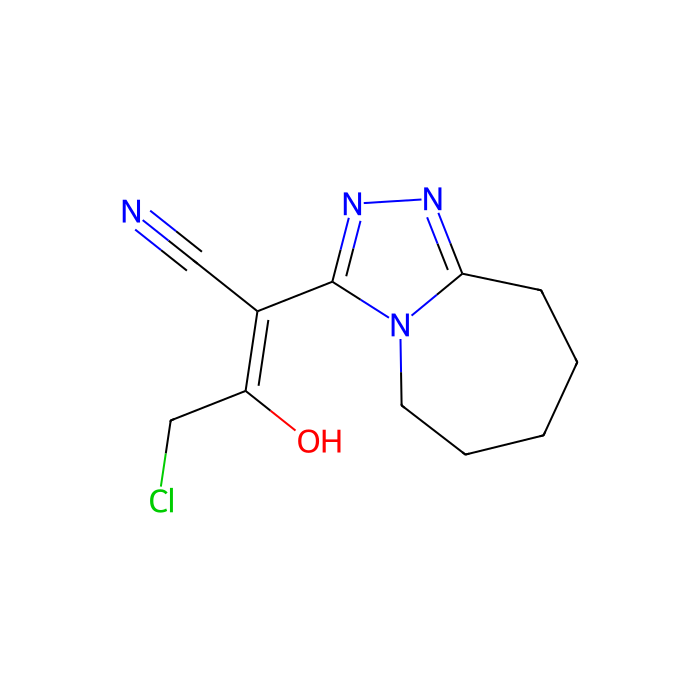
Brief overview: GI-558744 (SKU G420751) is listed in our small-molecule compound library. Item-specific structural descriptors are largely not provided in the current product record.
Product Name (Catalog): GI-558744
SKU: G420751
CAS: 1164452-80-5
PubChem CID: 135439827
InChIKey: 437389 (as provided; note this is not the typical 27-character hashed InChIKey format)
SMILES: Not specified for this item; refer to CoA/Spec Sheet.
Molecular Formula: Not specified for this item; refer to CoA/Spec Sheet.
Molecular Weight: Not specified for this item; refer to CoA/Spec Sheet.
Structural features (item-specific):
Not available in the current listing. No ring systems, functional groups, or stereochemical assignments can be described without the structure. Please consult the Certificate of Analysis (CoA) or a structure disclosure when available.
General note (for small-molecule library compounds):
Compounds in discovery libraries typically comprise one or more aromatic/heteroaromatic cores with appended heteroatoms (N/O/S/halogens) and may include hydrogen-bond donors/acceptors and drug-like physicochemical profiles. This is general context only, not specific to GI-558744.
2D structure description:
Not available for this item in the present product data. If you require structural confirmation (2D/3D), please request the latest batch CoA or SDF record associated with CAS 1164452-80-5.
Synthetic Utility
GI-558744 is presented as a screening compound, not as a functionalized building block or reagent. Without structural disclosure, specific synthetic reactivity or transformation pathways cannot be described.
General notes (when structure is known):
If functional groups (e.g., aryl halide, boronate, nitrile, amide, aniline, alcohol) are present, late-stage diversification via cross-coupling (Suzuki–Miyaura, Buchwald–Hartwig), nitrile reductions, amide couplings, or etherifications may be feasible. These are hypothetical and not assigned to GI-558744.
Recommended practice for SAR derivatization (if/when structure becomes available):
Map liabilities: Identify metabolically labile sites and structural alerts using in silico filters before proposing synthetic modifications.
Maintain solubility: Balance lipophilicity and polarity to keep assay tractability (stock solution formation, permeability vs efflux).
Orthogonal handles: Introduce or exploit synthetic handles compatible with robust transformations to build analog series efficiently.
Item-specific reactive handles, protective group strategies, or synthetic schemes: Not specified for this item; refer to CoA/Spec Sheet or structural dossier.
Target Specificity
Target, mechanism, and selectivity data are not provided for GI-558744.
Antigen/epitope/clone/isotype (for antibodies): Not applicable—this is a small-molecule compound.
Biochemical or receptor target: Not specified for this item; refer to primary literature or internal screening data if available.
Guidance for establishing specificity (general):
Use orthogonal assays (biochemical vs cellular) and appropriate counter-screens (off-target family members, related pathways) to assess selectivity.
Employ dose–response curves, time-dependence studies, and mechanistic controls (e.g., ATP-shift for kinase assays) to differentiate competitive vs non-competitive behavior.
Profile against selectivity panels once initial potency is observed to map broader interaction space.
No item-specific potency (IC50/Ki/Kd), kinetics, or binding-site information is available in this product data.
Domande frequenti
How should this product be stored?
Store at ?80 °C. Ultra-low temperature storage is required to maintain the specified shelf life.
How is this product shipped?
This product ships frozen with dry ice and cold packs. Unpack on arrival and transfer it to the storage condition stated above; handle dry ice with insulated gloves in a ventilated area.
What are the CAS number, molecular formula and molecular weight?
The CAS Number is 1164452-80-5, the molecular formula is C14H9NO3, and the molecular weight is 239.22616 g/mol. InChIKey YHKAIDWCAOGZMK-HJWRWDBZSA-N.
What documentation is provided?
Available product documentation, including Certificates of Analysis (COA), Safety Data Sheets (SDS), and specification sheets, is shown in the product document area. Document availability and access follow the current site policy.
Utilizziamo i cookie per garantire il corretto funzionamento del sito web e, ove consentito, per migliorare la tua esperienza. Puoi gestire le tue preferenze in qualsiasi momento nelle Impostazioni. Per saperne di più, consulta la nostra Cookie Policy.
Desidera che le inviamo un messaggio quando avremo sconti disponibili?
Ricordamelo più tardi
Grazie! Controlli la sua casella di posta per confermare.
Products are supplied to verified businesses, institutions, and qualified professionals for research and development use only. Not for use in humans, animals, diagnosis, or therapy.