GRADE & PURITYMoligand™?Moligand™ — Aladdin's line of ligands and bioactive small molecules. Use for receptor, pathway, and binding studies needing defined small-molecule tools.≥98%(HPLC)
Selective ADAM10 metalloprotease inhibitor; displays over 100-fold higher potency at ADAM10 compared to ADAM17. Blocks constitutive release of IL-6R, CX3CL1 and CXCL16 in cell-based cleavage experiments. Inhibits calcium ionophore-induced betacellulin she
Condizioni di conservazione di stoccaggio
Store at -20°C
Spedito in
Ice chest + Ice pads
Questo prodotto richiede spedizione a catena fredda. I servizi di terra e altri servizi economici non sono disponibili.
This compound belongs to the class of organic compounds known as hybrid peptides. These are compounds containing at least two different types of amino acids (alpha, beta, gamma, delta) linked to each other through a peptide bond.
External Descriptors
Not available
1. Djoumbou Feunang Y, Eisner R, Knox C, Chepelev L, Hastings J, Owen G, Fahy E, Steinbeck C, Subramanian S, Bolton E, Greiner R, and Wishart DS. ClassyFire: Automated Chemical Classification With A Comprehensive, Computable Taxonomy. Journal of Cheminformatics, 2016, 8:61.
Determine the necessary mass, volume, or concentration for preparing a solution.
Dilution Calculator
Determine the dilution needed to prepare a stock solution.
Reconstitution Calculator
Recensioni
Recensioni dei clienti
Application Protocols
No item-specific, validated application protocols are provided in the product data.
General guidance (not item-specific; adapt to your assay):
Prepare a concentrated stock solution in anhydrous DMSO (e.g., 10–50 mM if soluble). Confirm solubility visually and by analytical means (HPLC/LC–MS).
Serially dilute into assay buffer or media to the desired concentrations, maintaining vehicle below tolerated levels (often ≤0.1–0.5% v/v DMSO).
Include vehicle-only and positive/negative controls; consider a 10-point, 3-fold dilution series for robust curve fitting.
Preincubate with the biological target where appropriate to ensure equilibrium prior to initiation of the reaction/readout.
Record lot number, stock concentration, storage conditions, and number of freeze–thaw cycles for traceability.
For authoritative, item-specific protocols, consult the CoA/SDS and peer-reviewed literature describing GI254023X in systems comparable to your application.
Biological Roles
Context (literature; not item-specific):
GI254023X is widely cited as a small-molecule tool used to interrogate zinc-dependent metalloprotease biology, particularly in systems where selective modulation of disintegrin and metalloproteinase (ADAM) family activity is of interest. It is commonly described as a potent inhibitor employed to study substrate shedding events and downstream signaling consequences in biochemical and cellular models.
Use in discovery workflows:
Functions as a reference control to benchmark assay performance, inform structure–activity relationships (SAR), and establish pharmacological sensitivity in cell lines or enzyme preparations.
Supports mechanistic dissection of proteolytic processing pathways (e.g., ectodomain shedding) by enabling acute, reversible modulation in vitro.
Selectivity considerations:
Reported selectivity profiles can vary across literature due to differences in assay format, enzyme source, and conditions. Users should consult primary sources for quantitative potency/selectivity data relevant to their system and validate in-house.
Caveats:
Off-target chelation or redox activity can confound interpretation at elevated concentrations; appropriate counterscreens and dose titrations are recommended.
Reminder: All uses are for laboratory research only. No medical or clinical use is intended or implied.
Buffer Applications
Not typically applicable. GI254023X is a research tool small molecule and does not serve as a buffering agent. For experimental work, choose your assay buffer based on the target system (e.g., HEPES, Tris, or phosphate buffers), ionic strength, pH, cofactors, and detergent requirements.
Practical note (general):
When preparing working solutions, pre-dissolve the compound in an appropriate organic vehicle (commonly anhydrous DMSO), then dilute into the assay buffer to the desired final concentration while maintaining the vehicle below the tolerated v/v percentage for your system.
Green Alternatives
Because GI254023X is a research tool compound rather than a solvent or reagent, green chemistry considerations focus on solvent systems for preparing stocks and running assays.
Greener solvent considerations (general):
Replace or reduce DMSO content where feasible by using more benign vehicles or lower final cosolvent percentages.
Evaluate biocompatible solubilizers (e.g., hydroxypropyl-β-cyclodextrin) to reduce reliance on high-boiling polar aprotics in aqueous assays.
Start with the minimal DMSO necessary for solubility, then serially dilute into buffer to ≤0.1–0.5% v/v.
Assess greener alternatives in pilot assays to confirm no interference with readouts.
Note: Solubility and stability in alternative vehicles must be determined empirically for this item.
Pharmaceutical Uses
This product is supplied strictly for research use only and is not intended for human or veterinary applications.
Research and development context (general, not item-specific):
Employed as a tool/benchmark inhibitor in early discovery to validate targets, de-risk assay formats, and establish pharmacological controls in biochemical and cell-based assays.
Can serve as a spike-in control during method development for bioanalytical quantification (e.g., LC–MS/MS) to assess recovery, matrix effects, and stability profiles, provided suitable internal standards are used.
Manufacturing/formulation relevance:
None for finished pharmaceuticals. No pharmacopeial monograph application is indicated in the provided data.
Not provided for this item:
Any excipient role, compendial status, or clinical/formulation use details: Not specified for this item; refer to CoA/Spec Sheet.
Compliance reminder:
Handle under research-use-only policies. Do not incorporate into products intended for administration to humans or animals.
Physical Properties
Item-specific physicochemical specifications are not provided in the product data and should be confirmed on the lot-specific CoA.
Appearance: Not specified for this item; refer to CoA/Spec Sheet.
Molecular weight: Not specified for this item; refer to CoA/Spec Sheet.
Molecular formula: Not specified for this item; refer to CoA/Spec Sheet.
Melting point: Not specified for this item; refer to CoA/Spec Sheet.
Boiling point: Not applicable/Not typically reported for this class; refer to CoA/Spec Sheet if available.
Density: Not specified for this item; refer to CoA/Spec Sheet.
Refractive index: Not applicable for solids; refer to CoA/Spec Sheet.
UV-Vis characteristics: Not specified for this item; refer to CoA/Spec Sheet.
Solubility: Not specified for this item; refer to CoA/Spec Sheet.
General literature/practice (not item-specific):
Many hydrophobic small-molecule inhibitors are readily soluble in anhydrous DMSO (e.g., 10–50 mM stock solutions), with limited aqueous solubility. Cosolvent systems (DMSO→buffer dilution) are commonly used to reach working concentrations (often ≤0.1–0.5% v/v DMSO in assay media).
For light- or moisture-sensitive compounds, low-temperature storage and minimized exposure to ambient conditions are recommended.
Note: Always confirm the exact solubility, extinction coefficients, and spectral properties for your exact lot from the CoA or by small-scale empirical testing.
Quality and Grades
Grade: Moligand™ (product data)
What Moligand™ signifies (general description):
Moligand™ denotes a research-grade small-molecule tool compound intended for ligand discovery, target validation, and screening workflows. Emphasis is typically placed on identity confirmation and high assay suitability rather than bulk-process specifications.
Implications for the user:
Intended use: For research use only (product data). Not for human or veterinary use.
Documentation: For each lot, consult the CoA for identity metrics (e.g., structure confirmation methods such as NMR/HRMS/HPLC) and assay-suitable purity.
Assay performance: Tool compounds often prioritize consistency in identity and purity to support reproducibility in biochemical, cellular, and target-engagement assays. If ultra-low UV background, trace-metal content, or residual-solvent thresholds are critical for your method, confirm these requirements explicitly with the lot CoA.
Not provided for this item (consult CoA/Spec Sheet):
Specific assay purity %, residual solvents, water content, metal limits, stabilizers, and UV cutoffs: Not specified for this item; refer to CoA/Spec Sheet.
Batch acceptance tips:
Verify identity against a trusted reference (CAS, CID, structural spectra).
Confirm purity by orthogonal methods when necessary (e.g., HPLC-UV and qNMR).
Reaction and Applications
This item is primarily a bioactive small-molecule research tool and is not typically employed as a synthetic reagent. Accordingly, classical organic reaction use (e.g., as a catalyst, building block, or solvent) is not its main domain.
Applications (research tool context; literature-informed, not item-specific):
Used as a reference compound in biochemical assays designed to probe metalloprotease activity and zinc-dependent catalytic mechanisms.
Employed in cell-based target-engagement studies to delineate on-target versus off-target effects via concentration-response profiling.
Serves as a positive control in assay development and screening cascades where a well-characterized inhibitor is required to validate dynamic range and Z′-factor.
Practical tips:
Prepare fresh working dilutions immediately prior to use to minimize hydrolysis or oxidation pathways common to some chelating pharmacophores.
Include vehicle controls matching the highest cosolvent concentration used for the test article.
Consider counter-screens (e.g., general cytotoxicity, unrelated enzyme assays) to monitor non-specific interference at higher concentrations.
Note: If your intent is chemical synthesis, this compound is not generally leveraged as a building block. See “Synthetic Utility” for limitations.
Reaction Conditions
Classical synthetic “reaction conditions” are not applicable. This product is used as a bioactive tool compound rather than a reagent or catalyst.
Assay usage conditions (general practice; not item-specific):
Stock preparation: Often prepared at 10–50 mM in anhydrous DMSO; exact solubility for this item is not specified and should be verified experimentally.
Working concentrations: Determined by target sensitivity and assay format; typical screening ranges span low nM to low μM in biochemical assays and up to several μM in cellular assays, with matched vehicle controls.
Incubation: Time and temperature are assay-dependent; many enzyme assays run at 25–37°C with preincubation to ensure equilibration.
Stability: Minimize time in aqueous media if hydrolysis is suspected; use fresh dilutions and avoid repeated freeze–thaw.
Not provided for this item:
Lot-specific potency, Ki/IC50, or selectivity data; buffer composition; cofactors; or recommended exposure times. Consult the literature and validate under your experimental conditions.
Safety and Handling
Hazard information was not provided for this item and must be obtained from the product SDS for authoritative guidance.
Signal word (GHS): Not specified for this item; refer to SDS.
GHS classification/pictograms: Not specified for this item; refer to SDS.
H/P statements: Not specified for this item; refer to SDS.
General laboratory precautions (good practice, not item-specific):
Handle in a chemical fume hood; avoid inhalation, ingestion, and skin/eye contact.
Prevent dust generation/aerosolization; use weigh boats and antistatic measures if needed.
For solutions, use compatible, dry, clean syringes/tips; cap vials immediately after use to limit moisture/oxidation.
Incompatibilities and stability (general):
Many hydroxamate-containing metalloprotease tool compounds can be sensitive to hydrolysis under strong acidic or basic conditions and may show reduced stability in aqueous media over time; prepare fresh working solutions as needed.
Avoid prolonged exposure to light and elevated temperatures. Store according to product guidance (see Storage & Reconstitution).
First aid (overview; defer to SDS):
Skin/eye contact: Rinse with copious water for ≥15 minutes; remove contaminated clothing.
Inhalation: Move to fresh air; seek medical attention if symptoms persist.
Ingestion: Rinse mouth; do not induce vomiting; seek medical attention.
Waste: Collect disposal streams as organic hazardous waste per institutional and regulatory requirements.
Solvent Selection
This product is a small-molecule tool compound, not used as a solvent. Solvent discussion below focuses on preparing analytical and assay stocks. Item-specific solubility limits are not provided and should be verified empirically.
Typical choices (general practice):
DMSO (anhydrous): Primary choice for hydrophobic inhibitors; supports concentrated stocks (e.g., 10–50 mM) and reliable freezing/aliquoting.
DMF or NMP: Alternative polar aprotic vehicles when DMSO is incompatible; verify cell compatibility and background effects.
Ethanol: Acceptable for lower-concentration stocks; miscible with aqueous buffers but may impact some bioassays above ~0.5–1% v/v.
Aqueous media: Often require cosolvent and/or cyclodextrin carriers to reach target concentrations.
Practical guidance:
Prepare a small test panel (DMSO, DMF, ethanol) to assess solubility and assay background at intended working dilutions.
Filter sterile stocks (0.22 μm PTFE) only if fully dissolved and chemically stable; avoid adsorption losses for small volumes.
Maintain final assay cosolvent below tolerance thresholds (commonly ≤0.1–0.5% DMSO v/v) to limit biological confounds.
Not specified for this item:
Exact solubility in DMSO, ethanol, water, pH dependence, or partition data: Not specified for this item; refer to CoA/Spec Sheet or determine experimentally.
Storage and Reconstitution
Storage (product data):
Store at −20°C.
Shipped in: Ice chest + Ice pads (product data).
General handling and reconstitution (not item-specific):
Allow container to equilibrate to room temperature in a desiccated environment before opening to prevent condensation.
For initial dissolution, use dry, oxygen-free solvent when feasible (commonly anhydrous DMSO) to prepare a concentrated stock; exact solubility for this item is not specified.
Suggested stock concentration: Determine empirically; many small-molecule tool compounds are prepared as 10–50 mM stocks when soluble. Label vials with concentration, date, and solvent.
Aliquot into small, single-use volumes to minimize freeze–thaw cycles. Store tightly sealed at −20°C (or colder, if required by your stability assessment), protected from light.
Thaw on ice or at room temperature briefly; vortex to ensure homogeneity. Discard aliquots showing precipitation, discoloration, or anomalous chromatographic purity.
Aqueous working solutions should be prepared fresh and used promptly. Avoid prolonged exposure at ambient temperature.
Not specified for this item:
Exact solvent, concentration limits, stability in solution, or light sensitivity: Not specified for this item; refer to CoA/Spec Sheet.
Research Use Note: For research use only.
Structure and Identity
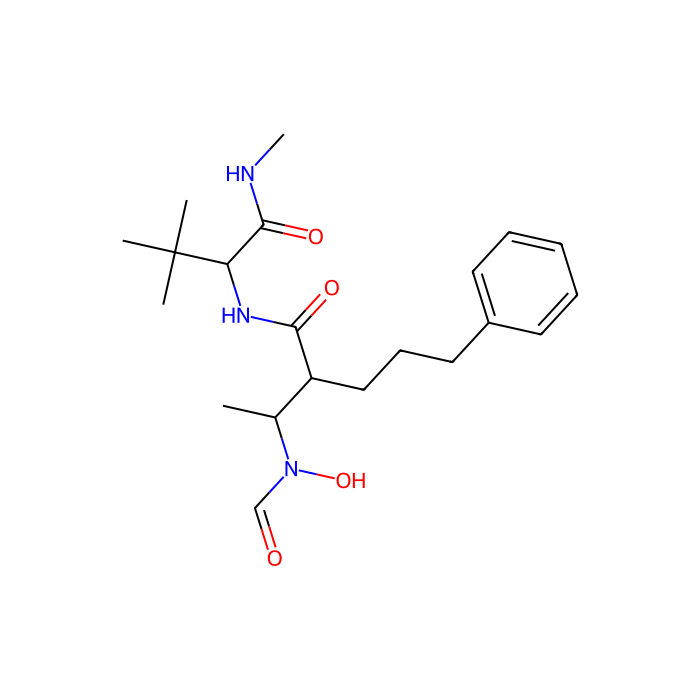
Brief overview: GI254023X is offered as a Moligand™ small-molecule research tool. Item-specific structural identifiers are limited in the provided data; authoritative identifiers should be confirmed on the Certificate of Analysis (CoA) for your lot.
Product name: GI254023X (research tool compound)
SKU: G169107
CAS: 260264-93-5 (product data)
PubChem CID: 9952396 (product data)
InChIKey: 102464 (product data; note: this is not in the standard 27-character InChIKey format; verify against CoA/SDS or primary databases for your lot)
SMILES: Not specified for this item; refer to CoA/Spec Sheet.
Molecular formula: Not specified for this item; refer to CoA/Spec Sheet.
Molecular weight: Not specified for this item; refer to CoA/Spec Sheet.
Structural features (general literature context):
GI254023X is widely referenced in the literature as a hydroxamate-bearing, zinc-binding small molecule used as a metalloprotease tool inhibitor. Exact substituents and stereochemical elements should be verified from a primary structural source for the specific lot.
2D structural description (general):
Typical representations show an aromatic/heteroaromatic scaffold bearing a hydroxamate or related bidentate chelating moiety capable of coordinating a catalytic Zn2+ center. Additional aryl or haloaryl substituents may modulate potency and selectivity. Please consult the CoA/Spec Sheet or trusted structure databases for the definitive structure for your procurement.
Synthetic Utility
Not a typical synthetic building block or reagent. GI254023X is supplied as a final small-molecule tool compound and is generally used directly in biochemical or cellular assays rather than in multistep synthesis.
Guidance for chemists (general):
If derivatization or probe development is desired (e.g., biotinylation, photoaffinity tagging), consult the primary structure to identify modifiable vectors that preserve activity. Such efforts require de novo medicinal chemistry and SAR exploration.
For analytical method development (e.g., stability-indicating HPLC), treat this compound as an analyte. Establish forced-degradation pathways (acid/base, oxidative, thermal, photolysis) to define robustness of your method.
Not provided for this item:
Functional group map, protecting-group strategies, or reactive handles: Not specified for this item; refer to CoA/Spec Sheet and primary literature on GI254023X analogs.
Target Specificity
Only item-specific information should be listed here. The provided product data do not specify a target, selectivity profile, or binding constants.
Target(s): Not specified for this item; refer to CoA/Spec Sheet.
Species reactivity: Not specified for this item; refer to CoA/Spec Sheet.
Binding mode/epitope: Not specified for this item; refer to CoA/Spec Sheet.
Affinity/IC50/Ki: Not specified for this item; refer to CoA/Spec Sheet.
Note: GI254023X is commonly discussed in the literature as a metalloprotease tool inhibitor. Users should consult primary sources for quantitative specificity data relevant to their system and verify empirically.
Need help choosing the grade?
Our grade selection guide covers purity, stabilizer status, and application suitability for all variants in our catalog.
We use cookies to ensure the website functions properly and, where permitted, to improve your experience. You can manage your preferences at any time in Settings. Learn more in our Cookie Policy.
Shall we send you a message when we have discounts available?
Remind me later
Thank you! Please check your email inbox to confirm.
Products are supplied to verified businesses, institutions, and qualified professionals for research and development use only. Not for use in humans, animals, diagnosis, or therapy.

 A2211792