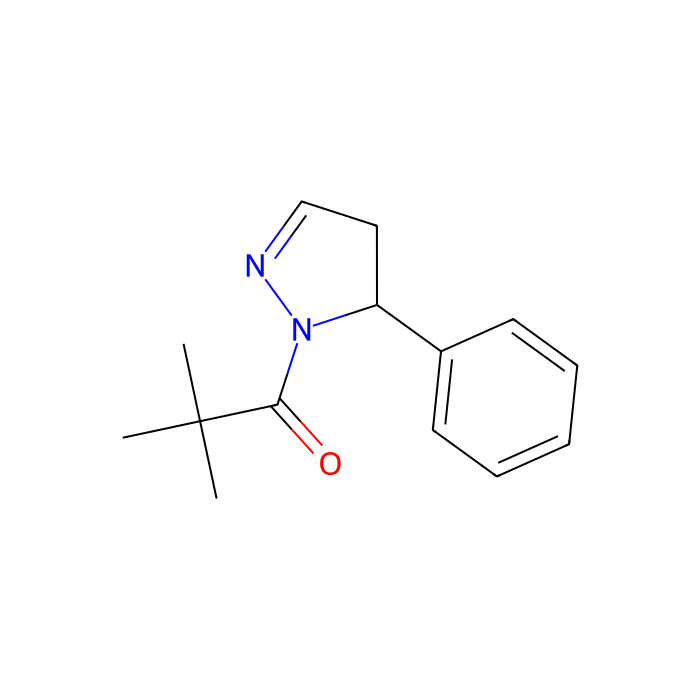
GSK'963 - Moligand™, ≥98% , Inhibitor of receptor interacting serine/threonine kinase 1, CAS No.2049868-46-2, Inhibitor of receptor interacting serine/threonine kinase 1

CAS: 2049868-46-2 Cat. No.: G414090 Formula: C14H18N2O Peso molecolare: 230.31
Disponibile su ordine
QUALITÀ & PUREZZA Moligand™ ? Moligand™ — Aladdin's line of ligands and bioactive small molecules. Use for receptor, pathway, and binding studies needing defined small-molecule tools. ≥98%
Storage
Store at -20°C
Shipped In
Ice chest + Ice pads
★
Dimensione
Germania (EU)
USA*
Prezzo
Qtà
1mg
G414090-1mg
—
3 Disponibile
54,58€
5mg
G414090-5mg
—
3 Disponibile
118,79€
25mg
G414090-25mg
—
2 Disponibile
440,72€
100mg
G414090-100mg
—
2 Disponibile
1.410,86€
Enter a quantity for the sizes you want to add.

Panoramica

Information

GSK'963 GSK'963 is a chiral small-molecule inhibitor of RIP1 kinase (RIPK1) with an IC50 of 29 nM in FP binding assays. It is >10 000-fold selective for RIP1 over 339 other kinases.


Targets

RIP1 kinase (Cell-free assay) 29 nM


In vitro

GSK\'963 inhibits RIP1-dependent cell death with an IC50 of between 1 and 4\u2009nM in human and murine cells.


In vivo

GSK\'963 is a potent inhibitor of a TNF+zVAD-mediated lethal shock. At 2\u2009mg/kg, GSK\'963 would maintain blood concentrations above the concentration required for 90% inhibition of RIP1 activity for an extended period of time compared with Nec-1.


Cell Research(from reference)

Cell lines:BMDM 

Concentrations:100\u2009nM 

Incubation Time:30 min 

Specifiche

Specifiche e purezza
Moligand™, ≥98%
Meccanismi biochimici e fisiologici
GSK'963 is a chiral small-molecule inhibitor of RIP1 kinase (RIPK1) with an IC50 of 29 nM in FP binding assays. It is >10\u2009000-fold selective for RIP1 over 339 other kinases.
Condizioni di conservazione di stoccaggio
Store at -20°C
Spedito in
Ice chest + Ice pads
Questo prodotto richiede spedizione a catena fredda. I servizi di terra e altri servizi economici non sono disponibili.
Grado
Moligand™
Tipo di azione
INHIBITOR
Meccanismo d'azione
Inhibitor of receptor interacting serine/threonine kinase 1
Purezza
≥98%
Nomi e identificatori
Pubchem Sid
Pubchem Sid Url
https://pubchem.ncbi.nlm.nih.gov/substance/504772983
SMILES
CC(C)(C)C(=O)N1C(CC=N1)C2=CC=CC=C2
IUPAC Name
2,2-dimethyl-1-[(3S)-3-phenyl-3,4-dihydropyrazol-2-yl]propan-1-one
InChIKey
NJQVSLWJBLPTMD-LBPRGKRZSA-N
InChI
1S/C14H18N2O/c1-14(2,3)13(17)16-12(9-10-15-16)11-7-5-4-6-8-11/h4-8,10,12H,9H2,1-3H3/t12-/m0/s1
Isomeri SMILES
CC(C)(C)C(=O)N1[C@@H](CC=N1)C2=CC=CC=C2
Peso molecolare
230.31
Reaxys
30457426
Reaxys-RN_link_address
https://www.reaxys.com/reaxys/secured/hopinto.do?context=S&query=IDE.XRN=30457426&ln=

Dati avanzati

Struttura 3D
Modello di struttura chimica interattiva


Obiettivi associati (umani)
RIPK1 Tchem Receptor-interacting serine/threonine-protein kinase 1 (6 Activities)
Activity TypeActivity Value -log(M)Mechanism of ActionActivity ReferencePublications (PubMed IDs)
ABL1 Tclin Tyrosine-protein kinase ABL (18331 Activities)
Activity TypeRelationActivity valueUnitsAction TypeJournalPubMed IddoiAssay Aladdin ID
EGFR Tclin Epidermal growth factor receptor erbB1 (33727 Activities)
Activity TypeRelationActivity valueUnitsAction TypeJournalPubMed IddoiAssay Aladdin ID
INSR Tclin Insulin receptor (5558 Activities)
Activity TypeRelationActivity valueUnitsAction TypeJournalPubMed IddoiAssay Aladdin ID
ERBB2 Tclin Receptor protein-tyrosine kinase erbB-2 (7851 Activities)
Activity TypeRelationActivity valueUnitsAction TypeJournalPubMed IddoiAssay Aladdin ID
PDGFRB Tclin Platelet-derived growth factor receptor beta (5195 Activities)
Activity TypeRelationActivity valueUnitsAction TypeJournalPubMed IddoiAssay Aladdin ID
IGF1R Tclin Insulin-like growth factor I receptor (8605 Activities)
Activity TypeRelationActivity valueUnitsAction TypeJournalPubMed IddoiAssay Aladdin ID
KIT Tclin Stem cell growth factor receptor (10667 Activities)
Activity TypeRelationActivity valueUnitsAction TypeJournalPubMed IddoiAssay Aladdin ID
CSNK2A1 Tchem Casein kinase II alpha (3512 Activities)
Activity TypeRelationActivity valueUnitsAction TypeJournalPubMed IddoiAssay Aladdin ID
DAPK3 Tchem Death-associated protein kinase 3 (2108 Activities)
Activity TypeRelationActivity valueUnitsAction TypeJournalPubMed IddoiAssay Aladdin ID
MAPK11 Tchem MAP kinase p38 beta (2785 Activities)
Activity TypeRelationActivity valueUnitsAction TypeJournalPubMed IddoiAssay Aladdin ID
LCK Tclin Tyrosine-protein kinase LCK (9212 Activities)
Activity TypeRelationActivity valueUnitsAction TypeJournalPubMed IddoiAssay Aladdin ID
MAPK14 Tchem MAP kinase p38 alpha (12866 Activities)
Activity TypeRelationActivity valueUnitsAction TypeJournalPubMed IddoiAssay Aladdin ID
GSK3B Tclin Glycogen synthase kinase-3 beta (11785 Activities)
Activity TypeRelationActivity valueUnitsAction TypeJournalPubMed IddoiAssay Aladdin ID
PRKACB Tchem cAMP-dependent protein kinase beta-1 catalytic subunit (589 Activities)
Activity TypeRelationActivity valueUnitsAction TypeJournalPubMed IddoiAssay Aladdin ID
PRKCZ Tchem Protein kinase C zeta (2414 Activities)
Activity TypeRelationActivity valueUnitsAction TypeJournalPubMed IddoiAssay Aladdin ID
MAP2K6 Tchem Dual specificity mitogen-activated protein kinase kinase 6 (1284 Activities)
Activity TypeRelationActivity valueUnitsAction TypeJournalPubMed IddoiAssay Aladdin ID
MYLK Tchem Myosin light chain kinase, smooth muscle (1267 Activities)
Activity TypeRelationActivity valueUnitsAction TypeJournalPubMed IddoiAssay Aladdin ID
CSNK1G1 Tchem Casein kinase I gamma 1 (2496 Activities)
Activity TypeRelationActivity valueUnitsAction TypeJournalPubMed IddoiAssay Aladdin ID
FGFR2 Tclin Fibroblast growth factor receptor 2 (3405 Activities)
Activity TypeRelationActivity valueUnitsAction TypeJournalPubMed IddoiAssay Aladdin ID
FGFR1 Tclin Fibroblast growth factor receptor 1 (9149 Activities)
Activity TypeRelationActivity valueUnitsAction TypeJournalPubMed IddoiAssay Aladdin ID
STK3 Tchem Serine/threonine-protein kinase MST2 (3069 Activities)
Activity TypeRelationActivity valueUnitsAction TypeJournalPubMed IddoiAssay Aladdin ID
CSNK1D Tchem Casein kinase I delta (4546 Activities)
Activity TypeRelationActivity valueUnitsAction TypeJournalPubMed IddoiAssay Aladdin ID
CAMK2B Tchem CaM kinase II beta (1626 Activities)
Activity TypeRelationActivity valueUnitsAction TypeJournalPubMed IddoiAssay Aladdin ID
SRC Tclin Tyrosine-protein kinase SRC (10310 Activities)
Activity TypeRelationActivity valueUnitsAction TypeJournalPubMed IddoiAssay Aladdin ID
MAP2K3 Tchem Dual specificity mitogen-activated protein kinase kinase 3 (632 Activities)
Activity TypeRelationActivity valueUnitsAction TypeJournalPubMed IddoiAssay Aladdin ID
CHEK2 Tchem Serine/threonine-protein kinase Chk2 (4015 Activities)
Activity TypeRelationActivity valueUnitsAction TypeJournalPubMed IddoiAssay Aladdin ID
PDPK1 Tchem 3-phosphoinositide dependent protein kinase-1 (3758 Activities)
Activity TypeRelationActivity valueUnitsAction TypeJournalPubMed IddoiAssay Aladdin ID
AKT2 Tchem Serine/threonine-protein kinase AKT2 (4301 Activities)
Activity TypeRelationActivity valueUnitsAction TypeJournalPubMed IddoiAssay Aladdin ID
AKT3 Tchem Serine/threonine-protein kinase AKT3 (3157 Activities)
Activity TypeRelationActivity valueUnitsAction TypeJournalPubMed IddoiAssay Aladdin ID
GRK2 Tchem G-protein coupled receptor kinase 2 (1019 Activities)
Activity TypeRelationActivity valueUnitsAction TypeJournalPubMed IddoiAssay Aladdin ID
CHUK Tchem Inhibitor of nuclear factor kappa B kinase alpha subunit (3170 Activities)
Activity TypeRelationActivity valueUnitsAction TypeJournalPubMed IddoiAssay Aladdin ID
IKBKB Tchem Inhibitor of nuclear factor kappa B kinase beta subunit (5554 Activities)
Activity TypeRelationActivity valueUnitsAction TypeJournalPubMed IddoiAssay Aladdin ID
DAPK2 Tchem Death-associated protein kinase 2 (740 Activities)
Activity TypeRelationActivity valueUnitsAction TypeJournalPubMed IddoiAssay Aladdin ID
AURKB Tchem Serine/threonine-protein kinase Aurora-B (6805 Activities)
Activity TypeRelationActivity valueUnitsAction TypeJournalPubMed IddoiAssay Aladdin ID
RPS6KA4 Tchem Ribosomal protein S6 kinase alpha 4 (2104 Activities)
Activity TypeRelationActivity valueUnitsAction TypeJournalPubMed IddoiAssay Aladdin ID
ROCK1 Tclin Rho-associated protein kinase 1 (4723 Activities)
Activity TypeRelationActivity valueUnitsAction TypeJournalPubMed IddoiAssay Aladdin ID
PIM1 Tchem Serine/threonine-protein kinase PIM1 (9629 Activities)
Activity TypeRelationActivity valueUnitsAction TypeJournalPubMed IddoiAssay Aladdin ID
PKN2 Tchem Protein kinase N2 (1991 Activities)
Activity TypeRelationActivity valueUnitsAction TypeJournalPubMed IddoiAssay Aladdin ID
CSK Tchem Tyrosine-protein kinase CSK (2395 Activities)
Activity TypeRelationActivity valueUnitsAction TypeJournalPubMed IddoiAssay Aladdin ID
JAK3 Tclin Tyrosine-protein kinase JAK3 (8349 Activities)
Activity TypeRelationActivity valueUnitsAction TypeJournalPubMed IddoiAssay Aladdin ID
RPS6KA5 Tchem Ribosomal protein S6 kinase alpha 5 (3355 Activities)
Activity TypeRelationActivity valueUnitsAction TypeJournalPubMed IddoiAssay Aladdin ID
PRKCE Tchem Protein kinase C epsilon (1520 Activities)
Activity TypeRelationActivity valueUnitsAction TypeJournalPubMed IddoiAssay Aladdin ID
PRKCG Tchem Protein kinase C gamma (2471 Activities)
Activity TypeRelationActivity valueUnitsAction TypeJournalPubMed IddoiAssay Aladdin ID
PRKD3 Tchem Protein kinase C nu (2315 Activities)
Activity TypeRelationActivity valueUnitsAction TypeJournalPubMed IddoiAssay Aladdin ID
PRKCI Tchem Protein kinase C iota (2821 Activities)
Activity TypeRelationActivity valueUnitsAction TypeJournalPubMed IddoiAssay Aladdin ID
PRKD1 Tchem Protein kinase C mu (1904 Activities)
Activity TypeRelationActivity valueUnitsAction TypeJournalPubMed IddoiAssay Aladdin ID
RAF1 Tclin Serine/threonine-protein kinase RAF (4169 Activities)
Activity TypeRelationActivity valueUnitsAction TypeJournalPubMed IddoiAssay Aladdin ID
SYK Tclin Tyrosine-protein kinase SYK (7372 Activities)
Activity TypeRelationActivity valueUnitsAction TypeJournalPubMed IddoiAssay Aladdin ID
PLK1 Tchem Serine/threonine-protein kinase PLK1 (28605 Activities)
Activity TypeRelationActivity valueUnitsAction TypeJournalPubMed IddoiAssay Aladdin ID
ITK Tclin Tyrosine-protein kinase ITK/TSK (3699 Activities)
Activity TypeRelationActivity valueUnitsAction TypeJournalPubMed IddoiAssay Aladdin ID
Obiettivi associati (non umani)
Prkcd Protein kinase C delta (192 Activities)
Activity TypeRelationActivity valueUnitsAction TypeJournalPubMed IddoiAssay Aladdin ID
Prkcb Protein kinase C beta (2 Activities)
Activity TypeRelationActivity valueUnitsAction TypeJournalPubMed IddoiAssay Aladdin ID
Mapk1 MAP kinase ERK2 (650 Activities)
Activity TypeRelationActivity valueUnitsAction TypeJournalPubMed IddoiAssay Aladdin ID
Fgfr4 Fibroblast growth factor receptor 4 (138 Activities)
Activity TypeRelationActivity valueUnitsAction TypeJournalPubMed IddoiAssay Aladdin ID
Fgfr3 Fibroblast growth factor receptor 3 (21 Activities)
Activity TypeRelationActivity valueUnitsAction TypeJournalPubMed IddoiAssay Aladdin ID
Camk2g CaM kinase II gamma (1 Activities)
Activity TypeRelationActivity valueUnitsAction TypeJournalPubMed IddoiAssay Aladdin ID
Gck Hexokinase type IV (278 Activities)
Activity TypeRelationActivity valueUnitsAction TypeJournalPubMed IddoiAssay Aladdin ID
Tec Tyrosine-protein kinase TEC (25 Activities)
Activity TypeRelationActivity valueUnitsAction TypeJournalPubMed IddoiAssay Aladdin ID
L929 (3802 Activities)
Activity TypeRelationActivity valueUnitsAction TypeJournalPubMed IddoiAssay Aladdin ID
Meccanismi d'azione
Certificati (CoA, COO, BSE/TSE e tabella di analisi)
C of A & Other Certificates(BSE/TSE, COO):
Analytical Chart:

Find and download the COA for your product by matching the lot number on the packaging.

5 results found

Lot NumberCertificate TypeDataOggetto
J2213760J2213760Certificate of AnalysisJul 10, 2025 G414090
J2213813J2213813Certificate of AnalysisJul 10, 2025 G414090
J2213820J2213820Certificate of AnalysisJul 10, 2025 G414090
J2213821J2213821Certificate of AnalysisJul 10, 2025 G414090
K2412073K2412073Certificate of AnalysisJun 17, 2022 G414090
Proprietà chimiche e fisiche
SolubilitàSolubility (25°C) In vitro DMSO: 46 mg/mL (199.73 mM); Ethanol: 46 mg/mL (199.73 mM); Water: Insoluble;
Peso molecolare230.31
XLogP32.100
Hydrogen Bond Donor Count0
Hydrogen Bond Acceptor Count2
Rotatable Bond Count2
Exact Mass230.142 Da
Monoisotopic Mass230.142 Da
Topological Polar Surface Area32.700 Ų
Heavy Atom Count17
Formal Charge0
Complexity311.000
Isotope Atom Count0
Defined Atom Stereocenter Count1
Undefined Atom Stereocenter Count0
Defined Bond Stereocenter Count0
Undefined Bond Stereocenter Count0
The total count of all stereochemical bonds0
Covalently-Bonded Unit Count1
Sicurezza e pericoli (GHS)
Pictogrammi
Segnale
Warning
Indicazioni di pericolo

H302:Harmful if swallowed

H315:Causes skin irritation

H319:Causes serious eye irritation

H335:May cause respiratory irritation

Precauzioni

P261:Avoid breathing dust/fume/gas/mist/vapors/spray.

P305+P351+P338:IF IN EYES: Rinse cautiously with water for several minutes. Remove contact lenses if present and easy to do - continue rinsing.

Reaxys
30457426
Reaxys-RN_link_address
https://www.reaxys.com/reaxys/secured/hopinto.do?context=S&query=IDE.XRN=30457426&ln=
Domande frequenti e articoli
Calcolatori di soluzioni
Recensioni

Recensioni dei clienti

Application Protocols

Validated application protocols (WB, IHC, IF, FC, etc.) are not provided for this item.

General small-molecule probe handling in assays:

  • Prepare a 10–50 mM DMSO stock; vortex/sonicate to fully dissolve.
  • Filter through 0.22 µm PTFE for particle-free solutions if required by HTS/biophysical setups.
  • Titrate in half-log or quarter-log dilutions to generate concentration–response curves; maintain constant DMSO across all conditions.
  • Include appropriate positive/negative controls and evaluate signal windows, Z’ factors, and potential assay interference.

For any specialized protocol (e.g., live-cell imaging, SPR/ITC), adapt solvent content and equilibration times to instrument requirements and compound behavior.

Biological Roles

Biological context (general/literature): GSK’963 is cited in the literature as a selective small-molecule probe for interrogating innate immune signaling pathways that involve kinase-mediated regulation of inflammatory responses. It is widely employed as a chemical tool in target validation, pathway mapping, and mechanistic studies in cell and biochemical systems.

Use considerations (non-clinical):

  • Functions as a reference inhibitor in pathway assays to confirm on-target modulation using orthogonal readouts (e.g., phosphorylation state changes, cytokine release assays in vitro).
  • Suitable as a comparator compound in selectivity panels (kinome or enzyme families) to assess off-target landscapes of new chemical entities.

Best practices:

  • Pair with appropriate negative controls and inactive analogs; include DMSO vehicle controls.
  • Validate concentration–effect relationships (EC50/IC50) within your system; literature potencies can vary with assay format and conditions.

Important: All uses are for research only; no medical, diagnostic, or therapeutic applications are implied.

Buffer Applications

This item is not a buffering agent. However, it is frequently dosed into biological buffers as a DMSO stock for assays.

Practical guidance (general):

  • Prepare concentrated DMSO stocks and dilute into assay buffer (e.g., PBS, HBSS, HEPES- or Tris-buffered media) maintaining a constant final DMSO percentage across all wells/samples.
  • Keep final DMSO at ≤0.1–1.0% v/v depending on cell type/assay tolerance; verify empirically.
  • Pre-warm buffers and add compound last with thorough mixing to minimize precipitation.

If buffer composition influences activity (e.g., divalent cations, redox environment), run a buffer–matrix study to verify robustness of the readout.

Green Alternatives

As a discrete small-molecule probe, GSK’963 itself is not a reagent that has direct “green” substitutes. However, greener handling choices can be made in its use and formulation.

Greener practice considerations (general):

  • Solvent choice: Prefer DMSO–water systems over chlorinated solvents for stock preparation and dilutions. Avoid DMF/NMP when possible due to reproductive toxicity concerns.
  • Miniaturization: Use low-volume assay formats (384/1536-well) to reduce solvent and compound consumption.
  • Waste management: Segregate DMSO aqueous waste for appropriate disposal; avoid unnecessary rinses with chlorinated solvents during vial/sample prep.
  • Energy: Store consolidated aliquots to minimize freezer door-open time; use room-temperature handling steps when chemical stability allows.

Comparison (general):

  • DMSO vs DMF/NMP: DMSO has a more favorable EHS profile and is widely accepted in screening; DMF/NMP are less preferred.
  • Ethyl lactate or bio-based solvents may assist in cleaning glassware instead of chlorinated solvents, provided residue does not interfere with assays.
Pharmaceutical Uses

No pharmacopeial or excipient roles are provided for this item. GSK’963 is supplied strictly as a research probe.

Formulation context for research (general):

  • For in vitro work, prepare DMSO stocks and dilute into aqueous assay media.
  • For in vivo exploratory research (where institutionally permitted), solubilization often employs co-solvent systems (e.g., PEG400/solutol/saline) designed specifically for the compound; such use must follow institutional approvals and is outside the scope of this catalog entry.

No clinical, diagnostic, or therapeutic applications are claimed or supported.

Physical Properties

Item-specific physicochemical data are not provided in the product data.

  • Appearance: Not specified for this item; refer to CoA/Spec Sheet.
  • Melting point (MP): Not specified for this item; refer to CoA/Spec Sheet.
  • Boiling point (BP): Not applicable; typically handled as a solid for solution preparation.
  • Density: Not specified for this item; refer to CoA/Spec Sheet.
  • LogP, pKa, refractive index: Not specified for this item; refer to CoA/Spec Sheet.
  • Solubility (practical guidance, literature/general): Small-molecule screening probes like GSK’963 are commonly dissolved at 10–50 mM in anhydrous DMSO to prepare master stocks; dilution into aqueous assay buffers is typically ≤1% DMSO v/v to maintain solubility and cell compatibility. Actual solubility limits must be determined empirically for your lot.

Working solutions (general):

  • Prepare a concentrated DMSO stock, vortex and, if needed, sonicate gently to aid dissolution. Filter (0.22 µm PTFE) if particle-free solutions are required for HTS/biochemical assays.
  • Avoid strong acids/bases during dissolution unless stability is documented.

Note: For authoritative property values (MP, purity, water content), consult the lot-specific CoA or request a Spec Sheet.

Quality and Grades
  • Grade/Purity: Moligand™ (as provided). Moligand denotes inclusion in a curated small-molecule/compound library suitable for screening, probe development, and chemical biology.

What Moligand™ typically implies (general):

  • Emphasis on identity confirmation (e.g., LC–MS/NMR) and suitability for assay use.
  • Stock solution readiness (compatibility with DMSO-based handling for HTS and secondary assays).
  • May include plate-ready or barcoded formats upon request in some programs.

Item-specific notes:

  • Purity percentage, residual solvents, water content, metals, and stabilizers: Not specified for this item; refer to CoA/Spec Sheet.

Recommendations for QC on receipt:

  • Perform orthogonal ID checks (LC–MS retention time and exact mass; 1H NMR for structural integrity).
  • Verify purity in your analytical system (e.g., HPLC/UPLC-UV or CAD). For bioassays sensitive to UV background, obtain a UV trace of your lot.
  • Record solubility behavior in your relevant assay buffer to ensure reproducibility across screens.
Reaction and Applications

This product is a finished small-molecule probe and is not primarily used as a synthetic reagent. Its main application domain is as a reference compound/control in screening and pathway interrogation experiments.

Research applications (general, non-clinical):

  • Use as a positive control or tool compound in biochemical assays to interrogate innate immunity/kinase signaling pathways, with matched inactive analogs where appropriate.
  • Benchmarking in cell-based assays to validate target engagement readouts, time-course responses, and off-target profiling workflows.
  • Inclusion in mini-panels for structure–activity relationship (SAR) hypothesis testing alongside analog series.

Practical tips:

  • Prepare a 10–50 mM DMSO stock, aliquot, and avoid repeated freeze–thaw to maintain integrity.
  • Confirm absence of assay interference (aggregators, redox cycling, fluorescence overlap) via counter-screens (e.g., detergent sensitivity, light/dark controls).
  • For chemoproteomics/target ID use, consider photoaffinity or clickable analogs; use GSK’963 as a competitive reference control.

Note: If you intend to derivatize the molecule for probe development, obtain the full structural information (SMILES/InChI) and stability data from literature or CoA before planning synthetic transformations.

Reaction Conditions

This product is not intended as a reagent in chemical reactions; therefore, defined reaction conditions are not applicable.

Assay use conditions (general, literature-informed good practice):

  • Stock solutions: 10–50 mM in anhydrous DMSO; store aliquots at −20°C, protected from light and moisture.
  • Working concentrations: Typically nanomolar to low micromolar in biochemical/cell assays; determine empirically via concentration–response curves in your assay matrix.
  • Incubation: 15–60 minutes pre-incubation is commonly used for target engagement in cell-based settings, but optimize for your endpoint kinetics.
  • Controls: Include vehicle controls, positive controls, and orthogonal assays to confirm specificity and exclude assay interference.

Report any deviations or compound-specific stability observations (e.g., precipitation on dilution, light sensitivity) in your ELN to ensure reproducibility.

Safety and Handling
  • GHS classification / pictograms / H-statements: Not specified for this item; refer to the SDS for authoritative hazard information.
  • Signal word: Not specified for this item; refer to SDS.

General laboratory safety (good practice for small-molecule research probes):

  • Handle in a fume hood; avoid inhalation of dust and contact with skin/eyes.
  • PPE: Lab coat, safety glasses, and appropriate chemically resistant gloves (e.g., nitrile). Change gloves regularly when handling DMSO solutions due to transdermal transport potential of DMSO.
  • Incompatibilities: Avoid strong oxidizers and strong acids/bases until specific stability data are confirmed. Keep away from light/moisture if the compound shows photosensitivity or hydrolytic liability (verify via CoA/SDS).
  • Spill/cleanup: Collect solids with disposable tools; absorb solutions with inert material (vermiculite), dispose per institutional guidelines.
  • First aid (overview): In case of skin/eye contact, rinse with water for ≥15 min; if inhaled, move to fresh air; if ingested, seek medical attention. Always consult the SDS for detailed measures.

Disposal: Treat as organic laboratory waste; follow local regulations.

For research use only; not for human or veterinary use.

Solvent Selection

GSK’963 is supplied as a research probe typically prepared as concentrated DMSO stocks for HTS and mechanistic assays.

  • Primary solvent (general practice): Anhydrous DMSO (10–50 mM stocks). DMSO offers high solvating power for heteroatom-rich small molecules and is compatible with most biochemical and cell-based assays at ≤1% v/v.
  • Secondary solvents: DMF or ethanol can be explored for intermediate stocks if compatible with downstream assays; final assay media should remain predominantly aqueous.
  • Aqueous buffers: Direct dissolution in water or PBS is often limited for hydrophobic probes; dissolve in DMSO first, then dilute into buffer with vigorous mixing to avoid precipitation.

Selection guidance:

  • If precipitation occurs on dilution, add the DMSO stock slowly into pre-warmed buffer with continuous mixing, or include solubilizing excipients approved for your assay format (e.g., minimal Tween-20 for biochemical assays). Validate effects on assay readout.
  • For biophysical assays (SPR/DSF), match DMSO content in sample and reference channels to minimize refractive index artifacts.

Comparison (general):

  • DMSO vs DMF: DMSO is broadly accepted in bioassays; DMF can be more toxic and is less favored in live-cell contexts.
  • Ethanol: Lower solvating power for many kinase-pathway probes; may be suitable for less lipophilic chemotypes.
Storage and Reconstitution
  • Storage conditions (as provided): Store at −20°C.
  • Shipping: Ice chest + ice pads.
  • Research use note: For research use only.

Reconstitution and handling (general best practice for small-molecule probes):

  • Allow vial to equilibrate to room temperature in a desiccator before opening to avoid moisture condensation.
  • Prepare concentrated stocks (10–50 mM) in anhydrous DMSO; aliquot into low-bind tubes to minimize adsorption and freeze–thaw cycling.
  • Protect from light if the scaffold is photosensitive (verify via CoA/SDS or preliminary testing).
  • Avoid repeated freeze–thaw; thaw aliquots on ice or at room temperature, mix gently, and promptly return unused material to −20°C.
  • For long-term storage of DMSO stocks, consider −20°C to −80°C; periodically inspect for precipitation or discoloration and re-verify by LC–MS/HPLC if critical to assays.

Item-specific stabilizers, hydrates/solvates, and solution stability: Not specified for this item; refer to CoA/Spec Sheet.

Structure and Identity

A research-grade small-molecule probe from the Moligand collection, supplied for screening and chemical biology.

  • Product name: GSK'963 (SKU: G414090)
  • CAS: 2049868-46-2
  • PubChem CID: 122703613
  • InChIKey (as provided): 240280
  • SMILES: Not specified for this item; refer to CoA/Spec Sheet.
  • Molecular formula: Not specified for this item; refer to CoA/Spec Sheet.
  • Molecular weight: Not specified for this item; refer to CoA/Spec Sheet.

Structural description (general/literature):

  • GSK’963 is reported in the literature as a small-molecule kinase pathway probe developed by GSK; it is commonly used as a selective chemical tool in inflammation/innate immunity pathway studies. Detailed atom connectivity (SMILES/InChI) and stereochemistry should be taken from the primary reference or supplier CoA to ensure exact identity matching for your lot.

Identity best practices:

  • Confirm identity by LC–MS (exact mass and isotopic pattern) and 1H/13C NMR against literature spectra.
  • Cross-verify with CAS and CID in internal registration systems; use InChIKey/SMILES from the CoA for unambiguous structure-search operations.
Synthetic Utility

As supplied, GSK’963 is a finished, target-directed small molecule and is not generally used as a synthetic building block.

If derivatization is desired for probe development (general guidance):

  • Map functional handles (e.g., heteroaromatics, amides/ureas, secondary amines) from the verified structure (CoA/literature) to identify positions tolerant to substitution for linkers (biotin/alkyne/azide) used in chemoproteomics.
  • Maintain key pharmacophore elements essential for target engagement; use matched molecular pair analysis to plan conservative modifications.
  • Protect sensitive motifs during multistep analog synthesis and consider late-stage diversification (C–H activation, SNAr on activated aryls) if scaffold permits.

Note: Obtain full structural data (SMILES/InChI) before synthetic planning to avoid loss of activity due to unintended scaffold perturbation.

Target Specificity

Item-specific target details are not provided in the product data.

  • Target name, epitope, species reactivity, and related parameters: Not specified for this item; refer to literature and your internal validation data.

Best practices (general):

  • Establish target engagement with orthogonal readouts (biochemical potency, cellular pathway markers, and, where applicable, CETSA/DARTS or chemoproteomics).
  • Profile off-target activity using appropriate panels relevant to your program.

Domande frequenti

What is the purity of this product?
This product is supplied at ≥98% purity (chemical assay). Lot-specific values are stated on the Certificate of Analysis.
What is Moligand??
Moligand? is one of Aladdin Scientific's premium product lines, formulated for high-purity applications across multiple workflows. Compared to standard grades in the same workflow, Moligand? products typically offer tighter specifications, more rigorous QC, and stronger lot-to-lot consistency.
How should this product be stored?
Store at ?20 °C. Freezer storage is required to maintain the specified shelf life.
How is this product shipped?
This product ships in an insulated container with ice pads. Unpack on arrival and transfer it to the storage condition stated above.
What are the CAS number, molecular formula and molecular weight?
The CAS Number is 2049868-46-2, the molecular formula is C14H18N2O, and the molecular weight is 230.31 g/mol. InChIKey NJQVSLWJBLPTMD-LBPRGKRZSA-N.
What documentation is provided?
Available product documentation, including Certificates of Analysis (COA), Safety Data Sheets (SDS), and specification sheets, is shown in the product document area. Document availability and access follow the current site policy.

Hai bisogno di aiuto per scegliere la qualità?

La nostra guida alla selezione delle qualità copre purezza, stato dello stabilizzatore e idoneità all'applicazione per tutte le varianti del nostro catalogo.

Visualizza la guida alle qualità Moligand™ →

Desidera che le inviamo un messaggio quando avremo sconti disponibili?

Ricordamelo più tardi

Grazie! Controlli la sua casella di posta per confermare.

Ops! Le notifiche sono disabilitate.