GRADE & PURITYMoligand™?Moligand™ — Aladdin's line of ligands and bioactive small molecules. Use for receptor, pathway, and binding studies needing defined small-molecule tools.10 mM in DMSO
Certificati (CoA, COO, BSE/TSE e tabella di analisi)
C of A & Other Certificates(BSE/TSE, COO):
Analytical Chart:
Calcolatori di soluzioni
Molarity Calculator
Determine the necessary mass, volume, or concentration for preparing a solution.
Dilution Calculator
Determine the dilution needed to prepare a stock solution.
Reconstitution Calculator
Recensioni
Recensioni dei clienti
Application Protocols
No vendor-validated application protocols are provided for this item.
General screening protocol guidance (for small-molecule ligands):
Stock solution: Prepare a concentrated solution in anhydrous DMSO (e.g., 10–50 mM). Vortex and, if needed, briefly sonicate. Filter through a 0.22 µm PTFE filter if particulates persist.
Dose–response: Perform serial dilutions in DMSO, then back-dilute into assay buffer to reach final test concentrations and maintain uniform vehicle control.
Controls: Include vehicle-only, positive control (known active compound), and negative control conditions. For fluorescence/absorbance assays, include inner-filter/compound autofluorescence checks.
Stability checks: Confirm pre/post-assay integrity by LC–MS when feasible.
Assay-specific parameters (WB, IHC, IF, FC, enzymatic, electrophysiology): Not specified for this item; optimize per internal SOPs.
Biological Roles
Research context (general/literature):
HC-series molecules are commonly used as bioactive ligands in chemical biology and screening. Public database entry CID 573747 corresponds to HC-056456; consult the primary literature and database records for proposed protein targets, selectivity profiles, and assay potencies.
Literature has reported certain HC-series compounds as modulators of ion channels or signaling proteins; confirm the exact target class and mechanism for HC-056456 from peer-reviewed sources before study design.
Best practices for biological use:
Validate identity/purity via LC–MS and, if necessary, NMR prior to biological experiments.
Establish a working concentration range using preliminary dose–response tests with appropriate vehicle controls (matching %DMSO). Monitor for aggregation or fluorescence interference in optical assays.
Confirm on-target effects with orthogonal assays (e.g., electrophysiology vs. calcium imaging for channel modulators; enzymatic vs. cellular readouts for enzymes) to exclude off-target or assay-artifact activity.
Important notes:
No clinical or diagnostic claims are made. This product is for research use only.
Item-specific biological activity, targets, Ki/IC50/EC50 values: Not specified for this item; consult literature and the CoA/Spec Sheet.
Buffer Applications
This product is a small-molecule ligand and does not function as a classical buffering agent. Consequently, standard buffer system recipes (e.g., phosphate, HEPES, Tris) are not applicable.
Practical assay guidance (general):
Prepare concentrated DMSO stocks and dilute into pre-equilibrated assay buffers (e.g., HEPES, PBS, HBSS) with thorough mixing to mitigate precipitation.
Maintain a consistent vehicle percentage across controls and treated samples to prevent solvent-driven artifacts.
For low-solubility compounds, include non-ionic surfactants at low levels (e.g., 0.01–0.05% Tween-20 or Pluronic F-127) when compatible with the assay to reduce nonspecific adsorption and improve delivery.
Item-specific buffer compatibility, pH stability, and ionic-strength effects: Not specified for this item; refer to experimental pretests and literature precedents.
Green Alternatives
Because HC-056456 is a discrete screening ligand rather than a process solvent or reagent, green-alternative considerations center on solvent choice and handling practices in assays and analytical workflows.
Greener handling strategies (general guidance):
Prefer aqueous buffers with minimal DMSO content in final assay wells (≤0.1–0.5% v/v when compatible with assay sensitivity) to reduce solvent burden.
Use 2-propanol or ethanol for intermediate rinses instead of halogenated solvents where analytically acceptable.
For chromatography, consider water/ACN or water/EtOH gradients instead of chlorinated eluents. Use mass-directed fraction collection to minimize solvent usage.
Implement microplate-based assays and miniaturization to reduce per-experiment solvent consumption.
Trade-offs:
Lower-organic systems can reduce solubility for hydrophobic ligands, leading to precipitation and assay variability. Validate with solubility and recovery checks.
Ethanol is greener than ACN by several metrics but can interfere with some enzyme/cell assays; assess biological compatibility case by case.
Waste minimization:
Consolidate DMSO-containing waste and segregate halogenated streams. Employ in-house solvent recycling for ACN and alcohols where available.
Pharmaceutical Uses
This material is not offered as a pharmaceutical substance or excipient and is designated For research use only.
Context for formulation scientists (general information):
Screening ligands like HC-056456 may be formulated short-term in discovery settings for in vitro assays or exploratory in vivo research (non-clinical). Such work typically uses DMSO stocks diluted into aqueous vehicles containing co-solvents/surfactants (e.g., PEG400, captisol, polysorbates) as permitted by institutional guidelines. These approaches are strictly research-oriented and outside pharmacopeial specifications.
Regulatory/quality notes:
No pharmacopeia monograph is implied.
GMP status: not applicable; not for therapeutic, diagnostic, or human/animal consumption use.
Any claims of dosage, therapeutic indication, or clinical application are out of scope and not supported by this listing.
Physical Properties
Item-specific physico-chemical specifications are not provided for this listing.
Appearance (item-specific): Not specified for this item; refer to CoA/Spec Sheet.
Melting point (item-specific): Not specified for this item; refer to CoA/Spec Sheet.
Boiling point (item-specific): Not specified for this item; refer to CoA/Spec Sheet.
Density (item-specific): Not specified for this item; refer to CoA/Spec Sheet.
Solubility (item-specific): Not specified for this item; refer to CoA/Spec Sheet.
LogP, pKa, refractive index (item-specific): Not specified for this item; refer to CoA/Spec Sheet.
Practical notes for small-molecule library members (general/literature guidance):
Many screening ligands are handled as DMSO stock solutions (e.g., 10–50 mM) due to broad solubilizing power; water solubility may be limited depending on heteroatom content and ionizable groups.
If the compound bears basic amines, acidic phenols, or carboxylates (to be verified from structure), solubility can often be tuned by adjusting pH with volatile acids/bases for analytical workup.
Prior to experimental use, verify identity and purity by LC–MS/HRMS and 1H NMR; measure exact solubility in intended assay media to avoid precipitation or adsorption losses.
Always treat values in public databases as literature references and rely on the item CoA/Spec Sheet for lot-specific specifications.
Quality and Grades
Grade/Purity: Moligand™ (item-specific)
What Moligand™ typically signifies (general description):
A discovery-grade small-molecule intended for screening, target validation, and SAR exploration. Emphasis is placed on identity confirmation and suitability for library workflows rather than chromatographic solvent specs or biopharmaceutical excipient standards.
Typically supported by analytical characterization such as LC–MS (and/or HRMS) and purity by chromatographic methods suitable for screening. Exact acceptance criteria, residual solvent limits, and any salt form/stoichiometry are lot-specific.
Implications for use:
Suitable for biochemical, biophysical, and cell-based assays in research settings; not intended for clinical applications, diagnostics, or GMP manufacturing.
If low-UV background or endotoxin control is required for a specific application, verify with the lot CoA/Spec Sheet; these attributes are not implied by Moligand™ unless explicitly stated.
Item-specific notes:
Purity value, stabilizers, counter-ions, and water/peroxide/metal specifications: Not specified for this item; refer to CoA/Spec Sheet.
Recommended practice: Confirm purity and identity upon receipt if the research depends on stringent thresholds (e.g., re-check LC–MS purity in your system and confirm salt state).
Reaction and Applications
This product is supplied as a small-molecule screening ligand and is not primarily intended as a synthetic reagent. As such, classical reaction families (e.g., coupling agents, bases, oxidants/reductants) are not applicable.
If researchers choose to derivatize or immobilize the molecule (general guidance):
Verify the presence and accessibility of functional handles (e.g., anilines, phenols, halides) from the structure in the CoA/literature before planning transformations.
Typical transformations for probe development may include: amide coupling to linkers, O/N-alkylation for SAR, or biotin/fluorophore conjugation using NHS esters or click chemistry—contingent on the presence of compatible motifs.
Maintain analytical oversight (LC–MS, NMR, HPLC purity) when modifying the molecule to preserve activity.
For primary use, consult the Biological Roles and Application Protocols sections for screening-focused guidance.
Reaction Conditions
Not applicable in the classical sense. HC-056456 is not supplied as a catalyst, reagent, or monomer.
Assay and handling conditions (general guidance for small-molecule ligands):
Stock preparation: Often 10–50 mM in anhydrous DMSO; verify solubility empirically.
Working concentrations: Determine empirically via dose–response; include vehicle controls matching %DMSO (commonly ≤0.1–0.5% v/v in final assay media).
Temperature/light: Prepare and handle away from strong light and excessive heat. Conduct stability checks (e.g., LC–MS at t=0 and after incubation) when assays require extended exposure at 25–37°C.
Adsorption/aggregation: Mitigate by using low-binding plastics and brief sonication or surfactants compatible with the assay.
Exact temperatures, catalysts, and yields (synthetic context): Not applicable for this product.
Safety and Handling
GHS and hazard details are not specified in the provided data for this item. Handle as a research-only organic compound with unknown acute toxicity profile.
GHS Classification, Signal Word, H-Statements, Pictograms (item-specific): Not specified for this item; refer to SDS.
Primary hazards (general precautionary guidance): Treat as potentially harmful if swallowed, inhaled, or in contact with skin/eyes. Avoid aerosol generation. Use in a chemical fume hood.
Personal protective equipment (PPE): Laboratory coat, safety glasses, and appropriate chemical-resistant gloves (e.g., nitrile). Consider double-gloving for DMSO solutions which can enhance dermal absorption.
Storage incompatibilities: Segregate from strong oxidizers and strong acids/bases unless structure indicates compatibility. Avoid light/moisture exposure until details are confirmed from the CoA/SDS.
First-aid overview (general):
Skin/eye contact: Rinse with water for ≥15 min; remove contaminated clothing; seek medical advice.
Inhalation: Move to fresh air; seek medical attention if symptoms occur.
Ingestion: Rinse mouth; do not induce vomiting; seek medical attention.
Spill/accidental release: Absorb liquids with inert material; collect solids by gentle sweeping; avoid dust. Dispose via licensed chemical waste contractor.
Always consult the product’s SDS for authoritative safety data and emergency procedures.
Solvent Selection
Given the absence of item-specific solubility data, select solvents using best practices for small-molecule screening compounds.
General guidance (literature/practice):
Primary stock solvent: Anhydrous DMSO is commonly used for HC-series screening ligands due to high solvating power and assay compatibility at low final %DMSO.
Secondary solvents/co-solvents: DMF, ethanol, or acetonitrile (HPLC-grade) can be considered depending on the compound’s polarity and functional groups. For aqueous assays, prepare a concentrated DMSO stock and dilute into buffered media with vigorous mixing to minimize precipitation.
Miscibility profile: DMSO is miscible with water; ACN and EtOH are water-miscible; DMF is water-miscible but hygroscopic. Avoid nonpolar solvents for assay work unless required for specific biophysical methods.
Small comparison (general):
DMSO: maximal solubilization; may permeate gloves—use care.
Ethanol: more biocompatible but lower solubility for many heteroaromatics.
ACN: volatile, good for analytical dilutions; less favored in live-cell assays.
Action items:
Determine actual solubility and stability in your assay buffer by small-scale tests and light/protein binding assessments.
Filter or centrifuge stocks if particulates form; avoid freeze–thaw of dilute aqueous working solutions.
Storage and Reconstitution
Storage Conditions (item-specific): Store at -80°C.
Shipped In (item-specific): Dry ice packs + Cold packs.
Appearance (item-specific): Not specified for this item; refer to CoA/Spec Sheet.
Reconstitution (general guidance for screening compounds):
Allow container to equilibrate to room temperature in a desiccated environment before opening to avoid moisture condensation.
Prepare a concentrated stock in anhydrous DMSO (common range 10–50 mM), adjusting based on confirmed solubility. Record exact concentration by weight-in/volume and, if needed, verify by UV or quantitative NMR when chromophores/reference standards permit.
Aliquot into small, single-use volumes in inert, low-binding vials or 96-well plates to avoid repeated freeze–thaw.
Stability and handling:
Store frozen aliquots at -80°C; avoid frost-free freezers. Minimize exposure to air, moisture, and light.
For short-term use, -20°C storage of DMSO stocks may be acceptable; confirm stability by LC–MS.
Aqueous working solutions are typically less stable—prepare fresh on the day of use and keep on ice or at 4°C as assay allows.
All item-specific stability limits (shelf life, degradants, light sensitivity): Not specified for this item; consult the CoA/Spec Sheet and SDS.
Structure and Identity
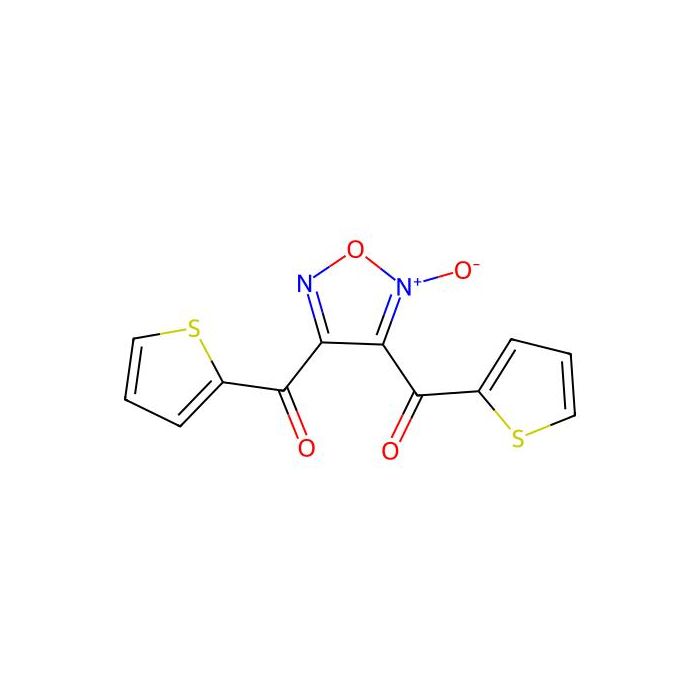
Brief overview: HC-056456 is supplied as a Moligand-grade small-molecule library member for discovery and screening workflows.
SKU: H1494670
Product Name: HC-056456
CAS: 7733-96-2
PubChem CID (literature identifier): 573747
InChIKey (item-specific): Not specified for this item; refer to CoA/Spec Sheet.
SMILES (item-specific): Not specified for this item; refer to CoA/Spec Sheet.
Molecular Formula (item-specific): Not specified for this item; refer to CoA/Spec Sheet.
Molecular Weight (item-specific): Not specified for this item; refer to CoA/Spec Sheet.
Structural features (general/literature context):
HC-series compounds are small organic ligands typically designed for target modulation in screening campaigns. Specific ring systems, heteroatoms, and stereochemistry for HC-056456 should be confirmed from primary literature or PubChem (CID 573747) and the item’s CoA.
2D structural description (general guidance):
As the exact connectivity is not specified in the provided product data, Aladdin does not depict a structure here. Consult the CoA/Spec Sheet and public databases (using the CAS or CID) to confirm functional groups, aromaticity, and any chiral centers before planning stock solution preparation or analytical characterization.
Synthetic Utility
Not typically applicable. HC-056456 is supplied for use as a screening ligand rather than as a general-purpose synthetic building block or reagent.
If derivatization is pursued for probe development (general guidance):
Confirm functional groups from the structure (via CoA/literature) before planning linkages (e.g., amide formation to attach linkers, click-chemistry handles, or immobilization tags).
Protect potentially liability-prone motifs during multistep synthesis and monitor for activity loss after modifications.
Use orthogonal analytics (LC–MS, NMR, UV–vis) to characterize any derivatives and benchmark activity relative to the parent compound.
Item-specific functional group reactivity and named-reaction suitability: Not specified for this item; consult structural information from authoritative sources.
Target Specificity
Item-specific target, selectivity, and potency data are not provided in the product data.
Target(s), pathway(s), species reactivity, and binding constants: Not specified for this item; consult primary literature associated with CAS 7733-96-2 or PubChem CID 573747, and verify any claims against your intended assay system.
Recommendation:
Establish target engagement with orthogonal methods and include appropriate positive/negative controls. Cross-validate in multiple assay formats to confirm specificity.
Need help choosing the grade?
Our grade selection guide covers purity, stabilizer status, and application suitability for all variants in our catalog.
We use cookies to ensure the website functions properly and, where permitted, to improve your experience. You can manage your preferences at any time in Settings. Learn more in our Cookie Policy.
Shall we send you a message when we have discounts available?
Remind me later
Thank you! Please check your email inbox to confirm.
Products are supplied to verified businesses, institutions, and qualified professionals for research and development use only. Not for use in humans, animals, diagnosis, or therapy.