Determine the necessary mass, volume, or concentration for preparing a solution.
| Activity Type | Activity Value -log(M) | Mechanism of Action | Activity Reference | Publications (PubMed IDs) |
|---|

Moligand™, 10mM in DMSO Moligand™ for sensitive chromatographic and analytical workflows requiring minimal baseline interference.
Store at -80°C Ships Dry ice packs + Cold packs Check lot-specific COA for exact specifications.
SDS, COA, datasheet, and spec sheet available for download. Lot-specific COA accessible via lot number lookup.
Cited in 0 peer-reviewed publications across chromatography, organic synthesis, and cross-coupling reactions.
Information
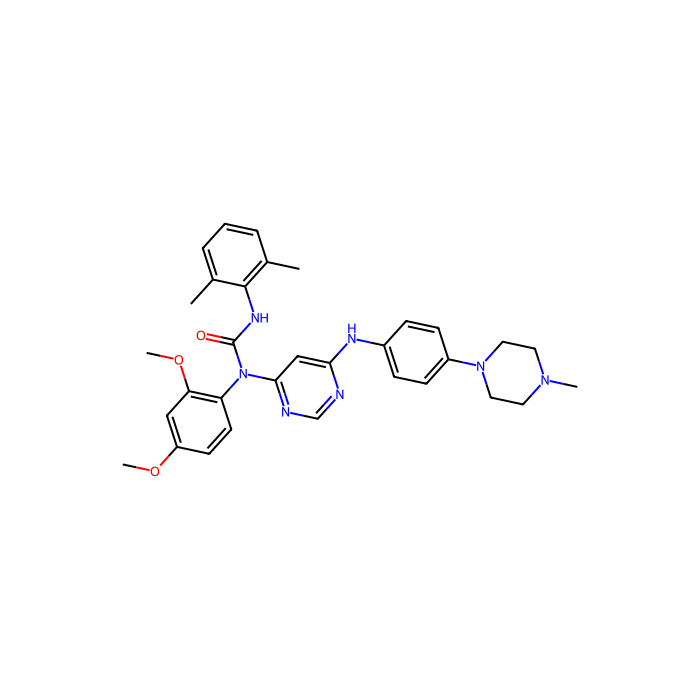
HG-9-91-01 HG-9-91-01 (SIK inhibitor 1) is a potent and highly selective inhibitor of salt-inducible kinase (SIK) with IC50 of 0.92 nM, 6.6 nM and 9.6 nM for SIK1, SIK2 and SIK3, respectively.
Targets
SIK1 (Cell-free assay); SIK2 (Cell-free assay); SIK3 (Cell-free assay) 0.92 nM; 6.6 nM; 9.6 nM
In vitro
HG-9-91-01 is a potent and selective inhibitor of SIK. HG-9-91-01 not only targets the ATP-binding site, but also a small hydrophobic pocket adjacent to this site that is created by the presence of a small amino acid residue at this gatekeeper site. HG-9-91-01 inhibits a number of protein tyrosine kinases that possess a threonine residue at the gatekeeper site, such as Src family members (Src, Lck, and Yes), BTK, and the FGF and Ephrin receptors. HG-9-91-01 potently inhibits the SIKs and, crucially, does not inhibit any other member of the AMPK-related kinase subfamily, which all possess a large hydrophobic residue (Met or Leu) at the gatekeeper site. HG-9-91-01 increases LPS-stimulated IL-10 production and greatly suppressed proinflammatory cytokine secretion, even when cells are costimulated with IFNγ to generate fully polarized classically activated (M1) macrophages.
In vivo
HG-9-91-01 is > 99% serum bound and rapidly degraded by mouse liver microsomes (t1/2 = 11 min) making this compound unsuitable for direct injection into animals.
Cell Research(from reference)
Cell lines:Macrophages
Concentrations:500 nM
Incubation Time:1 h
Comprehensive hazard, handling, storage, and regulatory compliance document.
Download SDS →Lot-specific quality data. Enter your lot number to retrieve the exact COA.
Look up COA →Full quality attributes and acceptance criteria for this grade.
View spec sheet →Taxonomy Tree
| Kingdom | Organic compounds |
|---|---|
| Superclass | Organoheterocyclic compounds |
| Classe | Diazinanes |
| Subclass | Piperazines |
| Intermediate Tree Nodes | Not available |
| Direct Parent | Phenylpiperazines |
| Alternative Parents | N-arylpiperazines N-phenylureas Dimethoxybenzenes Methoxyanilines m-Xylenes Phenoxy compounds Anisoles Dialkylarylamines Alkyl aryl ethers Aminopyrimidines and derivatives N-methylpiperazines Imidolactams Heteroaromatic compounds Ureas Trialkylamines Azacyclic compounds Hydrocarbon derivatives Carbonyl compounds Organic oxides |
| Molecular Framework | Aromatic heteromonocyclic compounds |
| Substituents | Phenylpiperazine - N-arylpiperazine - N-phenylurea - M-dimethoxybenzene - Dimethoxybenzene - Methoxyaniline - Anisole - Phenoxy compound - Phenol ether - M-xylene - Xylene - Tertiary aliphatic/aromatic amine - Methoxybenzene - Aniline or substituted anilines - Dialkylarylamine - Alkyl aryl ether - Aminopyrimidine - N-methylpiperazine - N-alkylpiperazine - Imidolactam - Pyrimidine - Benzenoid - Monocyclic benzene moiety - Heteroaromatic compound - Urea - Tertiary aliphatic amine - Tertiary amine - Azacycle - Ether - Amine - Organic oxygen compound - Organonitrogen compound - Carbonyl group - Organooxygen compound - Organic nitrogen compound - Organic oxide - Hydrocarbon derivative - Aromatic heteromonocyclic compound |
| Descrizione | This compound belongs to the class of organic compounds known as phenylpiperazines. These are compounds containing a phenylpiperazine skeleton, which consists of a piperazine bound to a phenyl group. |
| External Descriptors | Not available |
| Activity Type | Activity Value -log(M) | Mechanism of Action | Activity Reference | Publications (PubMed IDs) |
|---|
| Activity Type | Activity Value -log(M) | Mechanism of Action | Activity Reference | Publications (PubMed IDs) |
|---|
| Activity Type | Activity Value -log(M) | Mechanism of Action | Activity Reference | Publications (PubMed IDs) |
|---|
| Activity Type | Relation | Activity value | Units | Action Type | Journal | PubMed Id | doi | Assay Aladdin ID |
|---|
| Activity Type | Relation | Activity value | Units | Action Type | Journal | PubMed Id | doi | Assay Aladdin ID |
|---|
| Activity Type | Relation | Activity value | Units | Action Type | Journal | PubMed Id | doi | Assay Aladdin ID |
|---|
| Activity Type | Relation | Activity value | Units | Action Type | Journal | PubMed Id | doi | Assay Aladdin ID |
|---|
| Activity Type | Relation | Activity value | Units | Action Type | Journal | PubMed Id | doi | Assay Aladdin ID |
|---|
| Activity Type | Relation | Activity value | Units | Action Type | Journal | PubMed Id | doi | Assay Aladdin ID |
|---|
| Activity Type | Relation | Activity value | Units | Action Type | Journal | PubMed Id | doi | Assay Aladdin ID |
|---|
| Activity Type | Relation | Activity value | Units | Action Type | Journal | PubMed Id | doi | Assay Aladdin ID |
|---|
| Activity Type | Relation | Activity value | Units | Action Type | Journal | PubMed Id | doi | Assay Aladdin ID |
|---|
| Activity Type | Relation | Activity value | Units | Action Type | Journal | PubMed Id | doi | Assay Aladdin ID |
|---|
| Activity Type | Relation | Activity value | Units | Action Type | Journal | PubMed Id | doi | Assay Aladdin ID |
|---|
| Activity Type | Relation | Activity value | Units | Action Type | Journal | PubMed Id | doi | Assay Aladdin ID |
|---|
| Activity Type | Relation | Activity value | Units | Action Type | Journal | PubMed Id | doi | Assay Aladdin ID |
|---|
| Activity Type | Relation | Activity value | Units | Action Type | Journal | PubMed Id | doi | Assay Aladdin ID |
|---|
| Activity Type | Relation | Activity value | Units | Action Type | Journal | PubMed Id | doi | Assay Aladdin ID |
|---|
| Activity Type | Relation | Activity value | Units | Action Type | Journal | PubMed Id | doi | Assay Aladdin ID |
|---|
| Activity Type | Relation | Activity value | Units | Action Type | Journal | PubMed Id | doi | Assay Aladdin ID |
|---|
| Activity Type | Relation | Activity value | Units | Action Type | Journal | PubMed Id | doi | Assay Aladdin ID |
|---|
| Activity Type | Relation | Activity value | Units | Action Type | Journal | PubMed Id | doi | Assay Aladdin ID |
|---|
| Activity Type | Relation | Activity value | Units | Action Type | Journal | PubMed Id | doi | Assay Aladdin ID |
|---|
| Activity Type | Relation | Activity value | Units | Action Type | Journal | PubMed Id | doi | Assay Aladdin ID |
|---|
| Activity Type | Relation | Activity value | Units | Action Type | Journal | PubMed Id | doi | Assay Aladdin ID |
|---|
| DMSO (mg/mL) Solubilità massima | 100 |
|---|---|
| DMSO (mM) Solubilità massima | 176.155580608794 |
| Acqua (mg/mL) Solubilità massima | <1 |
| Peso molecolare | 567.700 g/mol |
| XLogP3 | 5.300 |
| Hydrogen Bond Donor Count | 2 |
| Hydrogen Bond Acceptor Count | 8 |
| Rotatable Bond Count | 8 |
| Exact Mass | 567.296 Da |
| Monoisotopic Mass | 567.296 Da |
| Topological Polar Surface Area | 95.100 Ų |
| Heavy Atom Count | 42 |
| Formal Charge | 0 |
| Complexity | 825.000 |
| Isotope Atom Count | 0 |
| Defined Atom Stereocenter Count | 0 |
| Undefined Atom Stereocenter Count | 0 |
| Defined Bond Stereocenter Count | 0 |
| Undefined Bond Stereocenter Count | 0 |
| The total count of all stereochemical bonds | 0 |
| Covalently-Bonded Unit Count | 1 |
Our grade selection guide covers purity, stabilizer status, and application suitability for all variants in our catalog.
View Moligand™ grade guide →