QUALITÀ & PUREZZACarrier Free?Carrier-free — supplied without added carrier protein/stabilizer. Use when carriers (e.g. BSA) would interfere with conjugation or sensitive assays.ExactAb™?ExactAb™ — Aladdin's antibody line emphasizing precision and validated quality. Use for reliable, specificity-validated antibody applications.Azide Free?Azide-free — without sodium azide preservative. Use in conjugations, cell work, or assays where azide is toxic or inhibitory.Validated?Validated grade — performance confirmed in defined applications before release. Use when you want documented assurance the reagent works as stated.See COA
Mouse anti Human IGFBP3 Antibody, Monoclonal (D15), could be used for WB and so on.
Application:
WB: 0.5-2µg/mL
Protein Function
IGF-binding proteins prolong the half-life of the IGFs and have been shown to either inhibit or stimulate the growth promoting effects of the IGFs on cell culture. They alter the interaction of IGFs with their cell surface receptors. Insulin like growth factor binding protein 3 (IGFBP3) is a member of the superfamily of insulin like growth factor (IGF) binding proteins which include six high affinity IGF binding proteins (IGFBP) and at least four low affinity binding proteins referred to as IGFBP related proteins (IGFBPrP). The IGFBP members are cysteine rich proteins with conserved cysteine residues clustered in the amino terminal and the carboxy terminal regions of the molecule. The cDNA sequence encoding the mature human IGFBP3 is fused to the signal peptide of CD33. Human IGFBP3 is the major IGF binding protein in plasma where it exists in a ternary complex with IGFI or IGFII and an acid labile subunit. IGFBPs hold a central position in IGF ligand-receptor interactions through influences on both the bioavailability and distribution of IGFs in the extracellular environment. Insulin like growth factor binding protein 3 (IGFBP3) can modulate the mitogenic and metabolic effects of the insulin like growth factors (IGFs). Insulin like growth factor binding protein 3 (IGFBP3) is expressed in multiple tissues. The highest expression level is found in the non paranchymal cells of the liver. The expression levels are higher during extrauterine life and peak during puberty. Insulin like growth factors (IGFs) and IGF binding proteins (IGFBPs) play important roles in cell growth and differentiation. IGFBP3 is one of the factors in serum that is responsible for high serum induced apoptosis in PC3 cells, a prostate cancer cell line. IGFBP3 is important in controlling glucose homeostasis with increased urinary levels in type I diabetes with persistent microalbuminuria.
Specifiche
Product Name
IGFBP3 Mouse mAb - Anticorpo primario, specific to IGFBP3, Mouse IgG1
Sinonimi
Acid stable subunit of the 140 K IGF complex antibody|Binding protein 29 antibody|Binding protein 53 antibody|BP 53 antibody|BP53 antibody|IBP 3 antibody|IBP3 antibody|IGF binding protein 3 antibody|IGFBP 3 antibody|Insulin Like Growth Factor Binding Protein 3 antibody|Monoclonal Antibody to Insulin Like Growth Factor Binding Protein 3 (IGFBP3)|IBP-3|IGF-binding protein 3|IGFBP-3
Specifiche e purezza
Carrier Free, ExactAb™, Azide Free, Validated, See COA
Specie ospite
Mouse
Specificità
IGFBP3
Immunogeno
Recombinant IGFBP3 expressed in E.coli (AA 135-277)
Controllo positivo
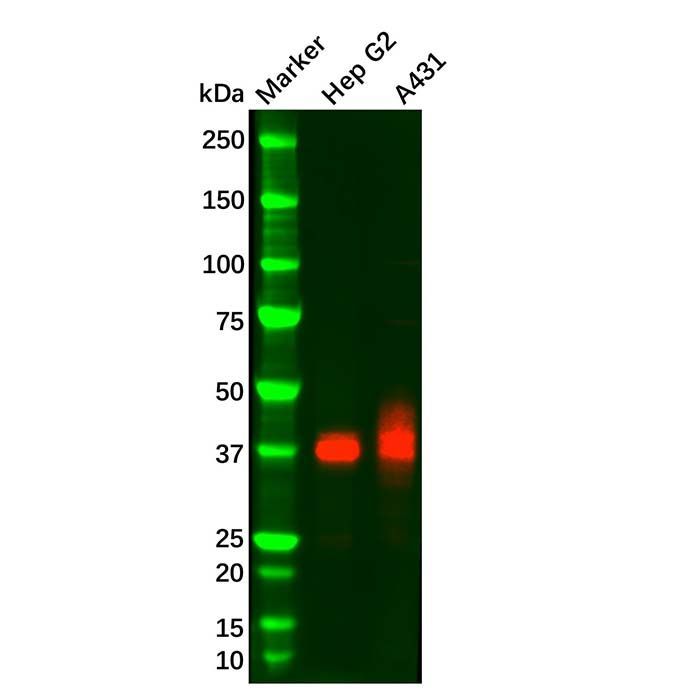
WB: A431 and Hep G2 cell lysates.
Coniugazione
Unconjugated
Grado
Azide Free, Carrier Free, ExactAb™, Validated
Isotipo
Mouse IgG1
Tipo di catena leggera
kappa
SDS-PAGE
150 kDa
Metodo di purificazione
Protein A + Protein G purified
Concentrazione
See COA
Product Line
Prodotti biologici
Stoccaggio e spedizione
Forma
Liquid
Condizioni di conservazione di stoccaggio
Store at -20°C,Avoid repeated freezing and thawing
Spedito in
Ice chest + Ice pads
Stabilità e conservazione
Store at 4℃ short term (1-2 weeks). Store at -20℃ long term (24 months). Upon receipt, it is recommended to aliquot. Avoid freeze/thaw cycle.
Immagini
IGFBP3 Mouse mAb (Ab109567) - Western Blot All lanes: IGFBP3 Mouse mAb (Ab109567) at 1/1000 dilution Samples: Lysates at 20 µg per lane Secondary: Goat Anti-Mouse IgG H&L (HRP) (Ab138040) at 1/20000 dilution
Predicted band size: 30 kDa Observed band size: 37 kDa Exposure time: 9.1 s
Applicazione
Applicazione
Dilution info
WB
0.5-2µg/mL
Dati avanzati
Obiettivi associati (umani)
IGFBP3TchemInsulin-like growth factor-binding protein 3 (0 Activities)
Determine the necessary mass, volume, or concentration for preparing a solution.
Dilution Calculator
Determine the dilution needed to prepare a stock solution.
Reconstitution Calculator
Recensioni
Recensioni dei clienti
Application Protocols
Manufacturer-tested applications, recommended dilutions, and positive controls: Not specified for this item; refer to CoA/Spec Sheet.
General considerations (non-product-specific; no performance claims):
Establish assay-specific titrations using appropriate positive/negative controls (e.g., IGFBP3-expressing lysates or conditioned media).
Validate specificity via orthogonal methods (knockdown/knockout, recombinant protein competition) before critical studies.
For conjugation, determine antibody concentration (A280 or BCA) and buffer compatibility prior to labeling; this product is Carrier Free and Azide Free, which supports downstream conjugation workflows.
Biological Roles
Target overview (literature):
IGFBP3 (Insulin-like Growth Factor Binding Protein 3) is a secreted glycoprotein that binds IGF-I and IGF-II with high affinity, modulating IGF bioavailability, transport, and receptor engagement.
It circulates predominantly in a ternary complex with IGFs and the acid-labile subunit (ALS), extending IGF half-life and regulating endocrine and paracrine signaling.
Functional notes (literature):
Beyond IGF sequestration, IGFBP3 has IGF-independent roles, including interactions with cell-surface receptors and nuclear localization sequences that influence transcriptional programs.
Post-translational modifications (glycosylation, proteolysis) and protease-mediated cleavage (e.g., by metalloproteinases) regulate its affinity and functional outcomes.
Expression is responsive to hormonal and stress signals; levels vary across tissues and physiological states.
Research implications:
Mapping IGFBP3 abundance, localization, and processing informs studies of growth factor signaling, metabolism, and extracellular matrix biology.
An antibody specific to IGFBP3 enables detection/quantification in lysates, conditioned media, and biofluids via immunoassays. Species cross-reactivity, clone, and epitope for this item are not specified; consult the CoA/Spec Sheet to match your experimental system.
Buffer Applications
Item-specific note: Supplied as Carrier Free and Azide Free; final buffer composition and concentration are not specified for this item. Refer to CoA/Spec Sheet.
General buffer guidance for monoclonal antibodies:
Storage buffers: PBS or TBS at pH 7.2–7.6, 150 mM NaCl; optional stabilizers such as 5–10% glycerol or 0.1–0.5% trehalose can help at −20 °C (only if compatible with your downstream use). Avoid adding carrier proteins if conjugation or sensitive assays are planned.
Assay buffers: include 0.05–0.1% Tween-20 for washing in immunoassays to reduce nonspecific binding; add 1–5% serum or protein blocker in blocking buffers (e.g., BSA, milk) unless interference is expected.
Conjugation-compatible buffers: use amine-free buffers (e.g., 50 mM phosphate, pH 7.2–7.4) without Tris or glycine for NHS-ester labeling; remove excess salts/additives by desalting prior to reaction.
Sterile handling: filter (0.22 µm) after buffer exchange if long-term storage in solution is required; maintain asepsis since the product is Azide Free.
Green Alternatives
Applicability: Antibody reagents are typically supplied in aqueous buffers; environmental considerations center on buffer composition, preservatives, and waste minimization rather than solvent substitution.
Greener practice suggestions (general):
Use phosphate- or HEPES-based buffers prepared with high-purity water; avoid unnecessary organic cosolvents.
Choose azide-free formulations (this item is Azide Free) to reduce toxic preservative use; manage microbial control via sterile technique, filtration, or storage at −20 °C.
Minimize single-use plastics by planning aliquots efficiently; employ recyclable secondary containers where allowed by biosafety rules.
Prefer HRP-compatible, low-toxicity wash buffers and dispose of antibody-containing waste according to local regulations.
Pharmaceutical Uses
Item scope: For research use only (per Product Data). Not for diagnostic, therapeutic, or clinical use.
Relevant non-clinical laboratory roles (general):
Analytical reagent in bioprocess and formulation development laboratories for quantifying IGFBP3 in cell culture supernatants or stability studies via ELISA or Western blot.
Tool for target engagement or biomarker exploration in preclinical research models.
Potential use as a capture or detection reagent in qualified assays after appropriate in-house validation; no pharmacopeial monograph or GMP status is specified for this item.
Compliance note:
No cGMP, endotoxin, or residual impurity specifications are provided here. For any regulated workflow, obtain detailed documentation (CoA, SDS, lot-specific validation, and quality agreements) and conduct in-house qualification.
Physical Properties
Item-specific physical data:
Appearance: Not specified for this item; refer to CoA/Spec Sheet.
Concentration/formulation: Not specified for this item; refer to CoA/Spec Sheet.
Refractive index, density, pKa, logP: Not applicable/reported for protein biologics; not specified for this item.
Literature/general values for IgG-class antibodies (for context; not product specifications):
Typical molecular mass: ~150 kDa for whole IgG; ~50 kDa heavy chain and ~25 kDa light chain under reducing SDS-PAGE.
Isoelectric point (pI): commonly ~6–9 depending on isotype and sequence.
Solubility: readily soluble in aqueous physiological buffers (e.g., PBS, TBS) across pH ~6–8; stability may depend on ionic strength and excipients.
Stability enhancers: proteins (e.g., BSA), sugars (trehalose, sucrose), and surfactants (0.01%–0.05% Tween-20) are often used, but this item is Carrier Free and Azide Free per Product Data; do not add carriers unless your application requires and compatibility is confirmed.
Carrier Free: supplied without protein carriers (e.g., BSA, gelatin). Advantages: precise mass balance for conjugation, cleaner backgrounds in immunoassays, and improved compatibility with labeling chemistries (NHS/SMCC). Handle with care to avoid adsorption; consider low-protein–binding plastics.
Azide Free: no sodium azide preservative. Benefits: compatible with HRP-based assays, live-cell applications, and conjugation; requires stricter aseptic handling or use of alternative preservatives if long-term storage in solution is planned.
ExactAb™: designation indicates a high-consistency monoclonal format. Specific attributes for this brand (e.g., recombinant production, lot-to-lot uniformity) are not specified for this item; refer to CoA/Spec Sheet for confirmation.
Validated: indicates the antibody has undergone application/target validation by the manufacturer. Specific validated applications and species reactivity are not specified for this item; consult the CoA/Spec Sheet.
Purity/Grade caveats:
No item-specific purity %, endotoxin level, aggregation profile, or residual host-cell protein/DNA data are provided here. Request the CoA/Spec Sheet for QC metrics (SDS-PAGE, SEC-HPLC, ELISA titration, and binding specificity).
Reaction and Applications
Item context: As a monoclonal antibody to IGFBP3, utility is in immunoassays and affinity-based detection rather than chemical reactions.
Research applications (general, literature; not product-specific performance claims):
Western blotting: detection of IGFBP3 in cell/tissue lysates under reducing/non-reducing conditions, often revealing mature and processed forms.
Immunoprecipitation/Co-IP: enrichment of IGFBP3 and associated complexes from biological samples for downstream MS or immunoblot analysis.
Immunocytochemistry/Immunohistochemistry: localization of IGFBP3 in fixed cells/tissues; fixation and antigen retrieval conditions should be optimized per sample.
ELISA/ELISpot: capture or detection in sandwich assays, contingent on epitope compatibility.
Flow cytometry: less common unless IGFBP3 is surface-associated or intracellularly stained after permeabilization.
Practical tips (general):
Because the product is Carrier Free and Azide Free, it is well-suited for covalent labeling (e.g., fluorophores, biotin) using NHS-esters or maleimides; confirm isotype/concentration before conjugation.
Optimize antibody dilutions and incubation times empirically; validate specificity using positive/negative controls, knockdown/knockout lines, or peptide blocking when feasible.
Reaction Conditions
Not applicable to chemical synthesis. For immunochemical applications, conditions vary by assay and must be empirically optimized (e.g., incubation times/temperatures, blocking reagents, wash stringency). Because this item’s application details are not specified, consult the CoA/Spec Sheet and standard protocols for Western blot, ELISA, IHC/ICC, or IP as appropriate.
Safety and Handling
GHS/labeling (item-specific):
Signal word: Not specified for this item; refer to SDS.
Hazard statements, pictograms, classification: Not specified for this item; refer to SDS.
General laboratory safety for antibodies (guidance; defer to SDS):
Handle using good laboratory practices: lab coat, gloves, and eye protection.
Avoid ingestion, inhalation of aerosols, and contact with skin/eyes. Work on clean surfaces; disinfect spills with appropriate protein-compatible disinfectants.
Biological origin materials should be considered potentially biohazardous if sourced from biological fluids; this product is a purified research reagent, but always follow institutional biosafety procedures.
Sodium azide is commonly used as a preservative in some antibodies; this product is Azide Free per Product Data, reducing azide-related hazards and compatibility issues with HRP and metal plumbing.
Incompatibilities and cautions (general):
Avoid repeated freeze–thaw cycles (can cause aggregation and activity loss) — aligns with Product Data guidance.
Store away from proteases and microbial contamination; use sterile technique and low-protein–binding plastics for aliquoting.
First aid (general):
Skin/eye contact: rinse with water for several minutes; remove contaminated clothing.
Ingestion/inhalation: seek medical attention if unwell. Always consult the product SDS for authoritative instructions.
Solvent Selection
Applicability: This product is an aqueous protein reagent; organic solvent selection is not typically relevant.
Practical notes (general):
Preferred matrices: isotonic aqueous buffers (e.g., PBS, TBS) at neutral pH. Avoid high percentages of organic solvents that denature proteins.
For conjugation workflows, use amine-free buffers (e.g., PBS without Tris) when performing NHS-ester coupling; ensure the buffer is free of carriers and azide (this item is already Carrier Free and Azide Free).
Storage and Reconstitution
Item-specific storage:
Store at −20 °C (per Product Data).
Avoid repeated freezing and thawing; aliquot upon first receipt to minimize freeze–thaw cycles.
Shipped cold: Ice chest + ice pads (per Product Data). Inspect upon arrival; if warm, place at recommended storage temperature as soon as possible.
Reconstitution and handling:
Physical state and recommended diluent are not specified for this item; refer to CoA/Spec Sheet. If received lyophilized, reconstitute with sterile, neutral pH buffer (e.g., PBS) to a convenient stock concentration; gently invert—do not vortex vigorously.
For liquid formulations, keep on ice during use and return promptly to storage. Use low-protein–binding tubes and sterile technique, especially as the product is Azide Free.
Short- and long-term storage (general guidance):
Working aliquots can be stored at 4 °C for short periods (days to a week) if aseptic; for longer terms, store at −20 °C or below. Addition of stabilizers (e.g., 5–10% glycerol) may be beneficial if compatible with your application.
Do not store in frost-free freezers subject to temperature cycling. Record lot number, concentration, and number of freeze–thaw events on aliquot labels.
Research Use Note: For research use only.
Structure and Identity
Item-specific identifiers:
Product name: IGFBP3 Mouse mAb (monoclonal antibody)
SKU: Ab109567
CAS: Not specified for this item; refer to CoA/Spec Sheet.
Molecular formula: Not specified for this item; refer to CoA/Spec Sheet.
Molecular weight: Not specified for this item; refer to CoA/Spec Sheet.
InChIKey / SMILES: Not applicable to proteins; not provided for this item.
Structural features (general, literature):
Monoclonal antibodies are typically Y‑shaped glycoproteins composed of two identical heavy chains and two identical light chains linked by disulfide bonds.
Common isotypes for mouse mAbs include IgG1, IgG2a, IgG2b, etc. (isotype for this item: Not specified for this item; refer to CoA/Spec Sheet.).
Two Fab arms (antigen-binding) with complementarity-determining regions (CDRs) that recognize IGFBP3 epitopes; one Fc stem (constant region) enabling Protein A/G binding (isotype dependent).
Synthetic Utility
Not typically applicable. As an antibody reagent, this product is not used as a synthetic building block or reagent in chemical transformations. See Reaction & Applications for immunoassay-related uses and Buffer Applications for handling guidance.
Target Specificity
Antigen/Target: IGFBP3 (Insulin-like Growth Factor Binding Protein 3)
Clone, isotype, epitope, species reactivity, and cross-reactivity: Not specified for this item; refer to CoA/Spec Sheet.
Validation note: The item is listed as Validated, but specific validated applications and species are not provided here. Consult lot-specific data for confirmation of specificity and performance.
Hai bisogno di aiuto per scegliere la qualità?
La nostra guida alla selezione delle qualità copre purezza, stato dello stabilizzatore e idoneità all'applicazione per tutte le varianti del nostro catalogo.
Utilizziamo i cookie per garantire il corretto funzionamento del sito web e, ove consentito, per migliorare la tua esperienza. Puoi gestire le tue preferenze in qualsiasi momento nelle Impostazioni. Per saperne di più, consulta la nostra Cookie Policy.
Desidera che le inviamo un messaggio quando avremo sconti disponibili?
Ricordamelo più tardi
Grazie! Controlli la sua casella di posta per confermare.
Products are supplied to verified businesses, institutions, and qualified professionals for research and development use only. Not for use in humans, animals, diagnosis, or therapy.

 ZJ24F1011887