≥95%(HPLC) for sensitive chromatographic and analytical workflows requiring minimal baseline interference.
🌡
Storage & shipping
Store at -20°C Ships Ice chest + Ice pads Check lot-specific COA for exact specifications.
📋
Quality documents
SDS, COA, datasheet, and spec sheet available for download. Lot-specific COA accessible via lot number lookup.
📚
Literature proof
Cited in 0 peer-reviewed publications across chromatography, organic synthesis, and cross-coupling reactions.
Panoramica
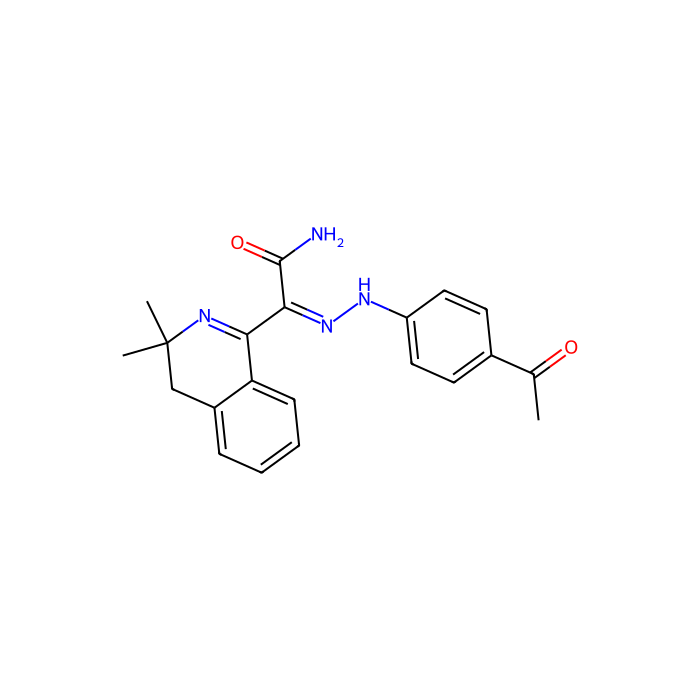
Q 1 has many functions such as decreasing Wnt-stimulated phosphorylation, maintaining the pluripotency of murine ESCs, preventing PP2A/Nkd interaction and so on. IQ 1 maintains the pluripotency of murine ESCs in long-term culture in a Wnt-dependent manner. IQ 1 decreased Wnt-stimulated phosphorylation of p300 at Ser-89.IQ-1 binds to serine/threonine phosphatase PP2A and prevents PP2A/Nkd interaction.The binding of IQ 1 to PR72/130 leads to decreased phosphorylation of the coactivator protein p300 at Ser-89. IQ 1 thereby diminishes the β-catenin/p300 interaction and prevents β-catenin coactivator switching from CBP to p300.
IQ-1 enhances β-catenin/CBP interactions and blocks β-catenin/p300 driven transcription, which enables mouse embryonic stem cells (ESCs) to be maintained in an undifferentiated pluripotent state, allowing expansion and self-renewal of mouse ESC population
Condizioni di conservazione di stoccaggio
Store at -20°C
Spedito in
Ice chest + Ice pads
Questo prodotto richiede spedizione a catena fredda. I servizi di terra e altri servizi economici non sono disponibili.
Nota
Wherever possible, you should prepare and use solutions on the same day. However, if you need to make up stock solutions in advance, we recommend that you store the solution as aliquots in tightly sealed vials at -20°C. Generally, these will be useable for up to one month. Before use, and prior to opening the vial we recommend that you allow your product to equilibrate to room temperature for at least 1 hour. Need more advice on solubility, usage and handling? Please visit our frequently asked questions (FAQ) page for more details.
This compound belongs to the class of organic compounds known as alkyl-phenylketones. These are aromatic compounds containing a ketone substituted by one alkyl group, and a phenyl group.
External Descriptors
Not available
1. Djoumbou Feunang Y, Eisner R, Knox C, Chepelev L, Hastings J, Owen G, Fahy E, Steinbeck C, Subramanian S, Bolton E, Greiner R, and Wishart DS. ClassyFire: Automated Chemical Classification With A Comprehensive, Computable Taxonomy. Journal of Cheminformatics, 2016, 8:61.
solubility DMSO: 10 mg/mL, clear;Ethanol :7 mg/mL Insoluble in water
Peso molecolare
362.400 g/mol
XLogP3
3.500
Hydrogen Bond Donor Count
2
Hydrogen Bond Acceptor Count
5
Rotatable Bond Count
5
Exact Mass
362.174 Da
Monoisotopic Mass
362.174 Da
Topological Polar Surface Area
96.900 Ų
Heavy Atom Count
27
Formal Charge
0
Complexity
645.000
Isotope Atom Count
0
Defined Atom Stereocenter Count
0
Undefined Atom Stereocenter Count
0
Defined Bond Stereocenter Count
1
Undefined Bond Stereocenter Count
0
The total count of all stereochemical bonds
1
Covalently-Bonded Unit Count
1
Calcolatori di soluzioni
Molarity Calculator
Determine the necessary mass, volume, or concentration for preparing a solution.
Dilution Calculator
Determine the dilution needed to prepare a stock solution.
Reconstitution Calculator
Recensioni
Recensioni dei clienti
Application Protocols
No vendor-validated protocols are provided for this item. The following are general best practices for small-molecule use in biochemical or cell-based assays.
Stock preparation:
Prepare 10–50 mM stocks in anhydrous DMSO, based on verified molecular weight from the CoA. Vortex and, if needed, brief sonication to aid dissolution. Sterile-filter (0.2 µm PTFE) for cell assays.
Working solutions:
Prepare serial dilutions in DMSO, then back-dilute into assay buffer or culture medium to achieve desired final concentrations. Keep final DMSO consistent across all wells (typically 0.1–0.5% v/v; up to 1–2% if assay-tolerated).
Controls:
Include vehicle controls (DMSO only), and if available, a reference compound. Run at least triplicate technical replicates per concentration.
Plate handling:
Use low-binding polypropylene plates or add a small amount of carrier protein (e.g., 0.1% BSA) if nonspecific adsorption is suspected. Seal plates to limit evaporation.
Stability checks:
Assess pre/post-assay integrity by LC–MS or UV to confirm no significant degradation or precipitation during the assay window.
Note: Adapt concentrations and exposure times to your specific assay type and cell line. All use is for research purposes only.
Biological Roles
Item-specific biological targets, pathways, or modes of action for IQ-1 are not provided in this listing.
Target/mechanism: Not specified for this item; refer to CoA/Spec Sheet and primary literature linked to CAS 331001-62-8 or PubChem CID 5721207.
Recommended approach:
Perform a literature search using the CAS or CID to locate peer-reviewed reports, including any cellular phenotypes, biochemical targets, and typical working concentrations.
Verify that the structure and salt/form reported in literature match the material received (lot-specific identity confirmation) before extrapolating conditions.
Assay precautions (general):
Use appropriate vehicle controls and replicate dose–response experiments to determine apparent potency under your specific assay conditions.
Evaluate cytotoxicity independently (e.g., resazurin/ATP-based assays) when performing cell-based studies to distinguish on-target effects from nonspecific toxicity.
Note: All statements here are general guidance for small-molecule research probes. No clinical or diagnostic use is intended or implied. Always confirm biological activity and selectivity empirically in your system.
Buffer Applications
Not typically applicable. IQ-1 is a discrete small-molecule research compound rather than a buffering agent.
For aqueous assay use, prepare a concentrated DMSO stock and dilute into your chosen buffer (e.g., PBS, HEPES, or assay-specific buffer). Maintain consistent final DMSO across conditions.
If precipitation occurs upon dilution, pre-equilibrate the compound into a small volume of ethanol or DMSO before buffer addition, or incorporate gentle surfactants if assay-compatible.
No item-specific buffer system, pH range, or formulation data are provided; refer to your assay’s validated buffer conditions.
Green Alternatives
Green chemistry considerations for handling small-molecule screening compounds primarily involve solvent choices and process minimization. No item-specific solvent or synthesis details are provided.
Prefer DMSO over DMF/NMP where feasible: DMSO generally offers a more favorable EHS profile and is widely accepted for biological assays at low percentages.
Replace chlorinated solvents in prep/cleanup: When preparing analytical samples, prefer ethyl acetate, isopropanol, or acetonitrile over dichloromethane/chloroform when chromatographic resolution permits.
Micro-scale operations: Use microplate-based dilutions and low-dead-volume reservoirs to reduce solvent waste during HTS or SAR studies.
Aqueous-compatible vehicles: Where assay-compatible, consider ethanol:water or PEG-400:water cosolvent systems to reduce reliance on high-boiling polar aprotics; validate for assay interference.
Illustrative comparison (general):
DMSO vs DMF/NMP: Lower worker exposure risk and better biodegradability profile; comparable solvency for many heteroaromatics; DMSO can increase permeability of gloves—ensure proper glove selection and change frequency.
Ethyl acetate vs dichloromethane (extractions/cleanup): Lower toxicity and environmental impact, though with higher boiling point and potential for emulsions.
Process tips:
Consolidate dilutions to reduce container use; employ sealable microplates to limit evaporation.
Plan for solvent recycling where institutional facilities exist (ACN and IPA recovery from analytical workflows).
Pharmaceutical Uses
No pharmacopeial status, excipient role, or formulation specifications are provided for this item. It is labeled For research use only.
Intended use: Laboratory research, screening, and discovery applications. Not for human or veterinary use, clinical diagnostics, or therapeutic administration.
If using in pre-formulation or ADME studies (in vitro), confirm identity, purity, and form via the batch CoA and perform independent characterization as required by your QA procedures.
Regulatory note: This product is not accompanied by GMP documentation and is not intended for IND-enabling or clinical manufacturing activities.
Any exploration of formulation behavior (solubility in biorelevant media, stability, or compatibility studies) should be conducted solely for non-clinical research purposes with appropriate analytical controls.
Physical Properties
Only item-specific storage is provided. All other physico-chemical specifications are not included in this listing.
Appearance: Not specified for this item; refer to CoA/Spec Sheet.
Melting point: Not specified for this item; refer to CoA/Spec Sheet.
Boiling point: Not specified for this item; refer to CoA/Spec Sheet.
Density: Not specified for this item; refer to CoA/Spec Sheet.
Solubility: Not specified for this item; refer to CoA/Spec Sheet.
LogP/logD: Not specified for this item; refer to CoA/Spec Sheet.
pKa: Not specified for this item; refer to CoA/Spec Sheet.
Refractive index: Not applicable for a solid; or Not specified for this item if liquid. Refer to CoA/Spec Sheet.
UV-Vis characteristics: Not specified for this item; refer to CoA/Spec Sheet.
Practical handling notes (general, not item-specific):
Most small-molecule screening compounds are supplied as solids or films suitable for reconstitution in anhydrous DMSO to prepare concentrated stocks (e.g., 10–50 mM), then diluted into assay buffers. Verify solubility empirically.
If material appears as a thin film, briefly centrifuge the vial before opening to avoid loss. Bring to room temperature in a desiccated environment to minimize condensation before unsealing cold-stored vials.
For quantitative work, determine an extinction coefficient or use a gravimetric approach when preparing stock concentrations; do not assume spectral constants without verification.
Quality and Grades
Grade/Purity: Not specified for this item; refer to CoA/Spec Sheet.
Research Use Note: For research use only (not for human or veterinary use).
How to interpret quality for small-molecule screening compounds (general guidance):
Purity reporting: Typically provided as HPLC area % with a specified detection wavelength, plus orthogonal identity confirmation (MS/HRMS and/or NMR). Review the CoA for actual values and analytical methods used for this lot.
Residual solvents/water/metal content: Not specified for this item; refer to CoA/Spec Sheet. If your application is sensitive (e.g., biophysical binding, crystallography), request additional characterization.
Form and counterions: If provided as a free base/neutral form versus a salt can affect solubility and mass calculations. Confirm exact form on the CoA/label prior to solution prep.
UV background for HTS: If using in optical assays, ask for low-UV impurity data or run a quick spectral scan to assess interference within your readout window.
Batch-to-batch considerations:
Record the lot number in ELNs; retain a small reference aliquot frozen for cross-run comparability.
For SAR or QC suites, collect your own orthogonal identity (e.g., 1H NMR in d6-DMSO) and purity checks upon receipt.
Reaction and Applications
This product is listed as a small-molecule research compound from a compound library, intended primarily for biochemical/biological assay use and target discovery workflows rather than as a synthetic reagent.
Practical research applications (general, not item-specific):
Assay development: Use as a defined chemical entity in enzyme, receptor, or pathway-based assays. Establish dose–response curves and determine apparent potency metrics (e.g., IC50/EC50) under your standardized conditions.
Cell-based studies: Prepare sterile-filtered working solutions, monitor vehicle effects (DMSO control), and confirm compound stability in culture medium over the assay window.
Orthogonal confirmation: Combine biochemical inhibition/activation readouts with orthogonal methods (thermal shift, CETSA, SPR, DSF) to validate direct interactions if a protein target is implicated in your study.
Chemical biology controls: Incorporate time-dependent studies, washout experiments, and negative/structural analog controls to delineate on-target versus off-target effects.
Tips for reliable results:
Solubility and aggregation: Screen at multiple final DMSO concentrations; include detergent controls where appropriate to identify colloidal aggregation artifacts.
Redox/light sensitivity: In absence of data, minimize light exposure and avoid repeated thaw cycles. Test stability by LC–MS at end of assay.
Data integrity: Record lot numbers and exact stock concentrations with gravimetric preparation for reproducibility across campaigns.
Reaction Conditions
Not applicable to this listing. IQ-1 is not provided as a reagent or catalyst for chemical transformations, and no reaction-condition guidance is relevant for its use as a screening compound.
If you intend to modify the molecule for SAR or probe development, consult literature associated with CAS 331001-62-8 for synthetic procedures, then establish reaction conditions empirically with appropriate analytical monitoring (TLC/LC–MS/NMR).
Safety and Handling
Safety information specific to this item is not fully provided in the listing. Handle as a research chemical of unknown toxicity.
GHS classification: Not specified for this item; refer to SDS.
Signal word and H-statements: Not specified for this item; refer to SDS.
Pictograms: Not specified for this item; refer to SDS.
General laboratory precautions (not item-specific):
Use in a chemical fume hood. Avoid inhalation of dust/aerosols and contact with skin/eyes.
Wear appropriate PPE: lab coat, safety glasses, and chemically resistant gloves (e.g., nitrile). For weighing powders, consider double-gloving and using antistatic tools.
Avoid generating dust; use microspatulas and antistatic weigh boats. Cap vials promptly.
Unknown toxicology: minimize exposure, use secondary containment, and decontaminate work surfaces after use.
Incompatibilities: Without structural data, assume general incompatibilities common to organic compounds—strong oxidizers, strong acids/bases, and reactive reducing agents. Segregate accordingly.
First aid (overview; defer to SDS for specifics):
Skin/eye contact: Rinse with water for at least 15 minutes; remove contaminated clothing; seek medical attention.
Inhalation: Move to fresh air; seek medical attention if symptoms occur.
Ingestion: Rinse mouth; do not induce vomiting; seek medical attention.
Waste disposal:
Collect solutions and solids as organic chemical waste per institutional and regulatory guidance. Do not dispose to drain.
Solvent Selection
Item-specific solubility is not provided. The following are general, practical strategies for small-molecule library compounds like IQ-1.
Primary stock solvent: Anhydrous DMSO is the most common choice due to broad solvency, chemical stability, and assay compatibility at low final percentages.
Alternative high-boiling polar aprotics: DMF or NMP can dissolve some recalcitrant compounds, but they may be less assay-friendly; use only if DMSO is inadequate.
Cosolvent systems for aqueous work: Prepare a DMSO concentrate, then dilute into buffered saline or cell culture media, keeping final DMSO at 0.1–0.5% v/v when possible. If precipitation occurs, consider 2–5% DMSO, or pre-dilute into ethanol:water (1:9) before buffer addition.
Surfactant-assisted delivery: For very hydrophobic analytes, a small amount of non-ionic surfactant (e.g., 0.01–0.05% Tween 80 or Pluronic F-127) can help maintain clarity; verify that surfactants do not interfere with your assay.
Analytical dissolution checks: Inspect visually and by light scattering/UV scan. Filtration through 0.2 µm PTFE can remove microprecipitates prior to dosing in biophysical assays.
Comparison notes (general):
DMSO vs DMF: DMSO offers better biocompatibility and lower volatility; DMF may provide marginally higher solvency for certain aromatic/heteroaromatic scaffolds but is less preferred in live-cell assays.
DMSO vs ethanol: Ethanol is volatile and can alter membrane properties; limit to low percentages or pre-dissolve only before immediate dilution.
Storage and Reconstitution
Item-specific conditions provided:
Storage Conditions: Store at −20°C.
Shipped In: Ice chest + ice pads (cold-packed).
Additional guidance (general, not item-specific):
Upon receipt: Allow the sealed container to equilibrate to room temperature in a desiccator before opening to prevent moisture condensation.
Long-term storage: Keep tightly closed under dry, inert atmosphere if possible. If supplied as a film or lyophilized solid, store in the original container or transfer to an amber, low-dead-volume vial with desiccant.
Reconstitution:
Use anhydrous DMSO to prepare a concentrated stock (e.g., 10–50 mM). Confirm exact concentration gravimetrically and/or by UV if an extinction coefficient is known. If insoluble, warm gently (≤40°C) and vortex/sonicate; avoid prolonged heating.
Aliquot stocks into single-use portions to minimize freeze–thaw cycles. Label with concentration, solvent, lot, and date.
Working solution stability: In absence of item-specific data, prepare fresh dilutions immediately before use. Discard solutions showing precipitation or visible discoloration.
Specifications not provided for this item (refer to CoA/Spec Sheet): appearance, purity/grade, molecular formula/weight, and hazard classification.
Structure and Identity
Brief description: IQ-1 is listed as a small-molecule research compound in our compound library category. Detailed structural identifiers are not fully provided in this listing.
SKU: I169621
Product Name: IQ-1
CAS: 331001-62-8
PubChem CID: 5721207
InChIKey: 8532 (truncated/not complete in this listing; Not specified for this item; refer to CoA/Spec Sheet.)
SMILES: Not specified for this item; refer to CoA/Spec Sheet.
Molecular formula: Not specified for this item; refer to CoA/Spec Sheet.
Molecular weight: Not specified for this item; refer to CoA/Spec Sheet.
Structural features (general note):
Item-specific functional groups, ring systems, and stereochemistry are not provided here. Please consult the Certificate of Analysis (CoA), Spec Sheet, or primary literature linked to CAS 331001-62-8 / CID 5721207 for confirmed structural depiction and 2D/3D coordinates.
How to reference the structure (practical guidance):
Use the CAS (331001-62-8) or CID (5721207) to pull a vetted structure from major databases when preparing internal ELNs, safety documents, or analytical methods.
Cross-check any downloaded structure against the batch CoA before ordering analytical reference standards or setting up quantitation assays.
Synthetic Utility
Not typically applicable. IQ-1 is supplied as a finished small-molecule research compound intended for screening and mechanistic studies, not as a synthetic building block or reagent.
If derivatization or analog synthesis is desired for SAR, obtain the confirmed structure from primary databases (using CAS 331001-62-8 / CID 5721207) and consult the literature for reported synthetic routes, protecting group strategies, and diversification points. Ensure that any synthetic use complies with your institutional safety and regulatory frameworks.
For analytical development, method transfer (HPLC/UPLC, LC–MS) using the parent compound can support impurity profiling and metabolite ID studies in purely research settings.
Target Specificity
No target, selectivity profile, or biochemical binding data are provided in this listing.
Target(s): Not specified for this item; refer to CoA/Spec Sheet and primary literature.
Selectivity: Not specified for this item; refer to published comparative studies, if available.
Recommendation:
Determine target engagement in your system using orthogonal assays (e.g., CETSA/thermal shift for proteins, reporter assays for pathways) and compare with negative controls or close structural analogs.
We use cookies to ensure the website functions properly and, where permitted, to improve your experience. You can manage your preferences at any time in Settings. Learn more in our Cookie Policy.
Shall we send you a message when we have discounts available?
Remind me later
Thank you! Please check your email inbox to confirm.
Products are supplied to verified businesses, institutions, and qualified professionals for research and development use only. Not for use in humans, animals, diagnosis, or therapy.

 L2412099