Isookanin - Moligand™,≥98% , CAS No.1036-49-3

CAS: 1036-49-3 Cat. No.: I649131 Formula: C15H12O6 Peso molecolare: 288.25 PubChem CID: 91196552
Disponibile su ordine
QUALITÀ & PUREZZA Moligand™ ? Moligand™ — Aladdin's line of ligands and bioactive small molecules. Use for receptor, pathway, and binding studies needing defined small-molecule tools. ≥98%
Synonyms
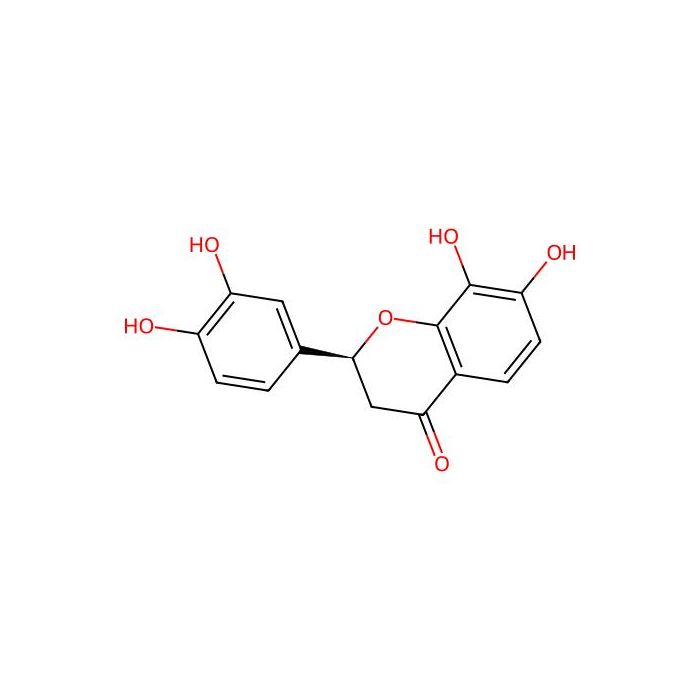
(S)-2-(3,4-Dihydroxyphenyl)-7,8-dihydroxychroman-4-one
Storage
Store at 2-8°C,Protected from light
Shipped In
Wet ice
★
Dimensione
Germania (EU)
USA*
Prezzo
Qtà
1mg
I649131-1mg
Su ordinazione · 8–12 settimane
25,95€
5mg
I649131-5mg
Su ordinazione · 8–12 settimane
51,98€
25mg
I649131-25mg
Su ordinazione · 8–12 settimane
121,40€
100mg
I649131-100mg
Su ordinazione · 8–12 settimane
433,78€
Enter a quantity for the sizes you want to add.

Panoramica


Isookanin can be used for the research of various illnesses including cancers, skin rashes, snake and insects bites, diabetes mellitus, diarrhoea. Isookanin acts as an anti-viral agent against HSV and varicella-zoster virus (VZV). Antioxidant activity.

Specifiche

Sinonimi
(S)-2-(3,4-Dihydroxyphenyl)-7,8-dihydroxychroman-4-one
Specifiche e purezza
Moligand™,≥98%
Condizioni di conservazione di stoccaggio
Store at 2-8°C,Protected from light
Spedito in
Wet ice
Questo prodotto richiede spedizione a catena fredda. I servizi di terra e altri servizi economici non sono disponibili.
Grado
Moligand™
Tipo di azione
INHIBITOR
Purezza
≥98%
Nomi e identificatori
Sorrisi canonici
C1C(OC2=C(C1=O)C=CC(=C2O)O)C3=CC(=C(C=C3)O)O
IUPAC Name
(2S)-2-(3,4-dihydroxyphenyl)-7,8-dihydroxy-2,3-dihydrochromen-4-one
InChIKey
ZPVNWCMRCGXRJD-ZDUSSCGKSA-N
INCHI
1S/C15H12O6/c16-9-3-1-7(5-12(9)19)13-6-11(18)8-2-4-10(17)14(20)15(8)21-13/h1-5,13,16-17,19-20H,6H2/t13-/m0/s1
Isomeri SMILES
C1[C@H](OC2=C(C1=O)C=CC(=C2O)O)C3=CC(=C(C=C3)O)O
PubChem CID
91196552
Termini MeSH
isookanin
Peso molecolare
288.25

Dati avanzati

Taxonomic Classification

Taxonomy Tree

KingdomOrganic compounds
SuperclassPhenylpropanoids and polyketides
ClasseFlavonoids
SubclassFlavans
Intermediate Tree Nodes Not available
Direct ParentFlavanones
Alternative Parents 8-hydroxyflavonoids  7-hydroxyflavonoids  4'-hydroxyflavonoids  3'-hydroxyflavonoids  Chromones  Catechols  Aryl alkyl ketones  Alkyl aryl ethers  1-hydroxy-4-unsubstituted benzenoids  1-hydroxy-2-unsubstituted benzenoids  Benzene and substituted derivatives  Oxacyclic compounds  Organic oxides  Hydrocarbon derivatives  
Molecular FrameworkAromatic heteropolycyclic compounds
Substituents Flavanone - Hydroxyflavonoid - 8-hydroxyflavonoid - 7-hydroxyflavonoid - 4'-hydroxyflavonoid - 3'-hydroxyflavonoid - Chromone - 1-benzopyran - Benzopyran - Chromane - Aryl alkyl ketone - Aryl ketone - Catechol - Alkyl aryl ether - Phenol - 1-hydroxy-2-unsubstituted benzenoid - 1-hydroxy-4-unsubstituted benzenoid - Benzenoid - Monocyclic benzene moiety - Ketone - Organoheterocyclic compound - Oxacycle - Ether - Organic oxygen compound - Organooxygen compound - Hydrocarbon derivative - Organic oxide - Aromatic heteropolycyclic compound
DescrizioneThis compound belongs to the class of organic compounds known as flavanones. These are compounds containing a flavan-3-one moiety, with a structure characterized by a 2-phenyl-3,4-dihydro-2H-1-benzopyran bearing a ketone at the carbon C3.
External Descriptors Not available
Struttura 3D
Modello di struttura chimica interattiva


Meccanismi d'azione
Certificati (CoA, COO, BSE/TSE e tabella di analisi)
C of A & Other Certificates(BSE/TSE, COO):
Analytical Chart:

Find and download the COA for your product by matching the lot number on the packaging.

4 results found

Lot NumberCertificate TypeDataOggetto
I2602698I2602698Certificate of AnalysisMar 27, 2026 I649131
I2602699I2602699Certificate of AnalysisMar 27, 2026 I649131
I2602700I2602700Certificate of AnalysisMar 27, 2026 I649131
I2602701I2602701Certificate of AnalysisMar 27, 2026 I649131
Proprietà chimiche e fisiche
SensibilitàLight sensitive
Peso molecolare288.250 g/mol
XLogP31.500
Hydrogen Bond Donor Count4
Hydrogen Bond Acceptor Count6
Rotatable Bond Count1
Exact Mass288.063 Da
Monoisotopic Mass288.063 Da
Topological Polar Surface Area107.000 Ų
Heavy Atom Count21
Formal Charge0
Complexity400.000
Isotope Atom Count0
Defined Atom Stereocenter Count1
Undefined Atom Stereocenter Count0
Defined Bond Stereocenter Count0
Undefined Bond Stereocenter Count0
The total count of all stereochemical bonds0
Covalently-Bonded Unit Count1
Calcolatori di soluzioni
Recensioni

Recensioni dei clienti

Application Protocols

Item-specific tested applications and recommended conditions: Not specified for this item; refer to CoA/Spec Sheet or catalog updates.

General laboratory guidance (screening/analytical):

  • Stock solutions: Prepare in DMSO at 10–50 mM (literature practice). Mix thoroughly and, if necessary, sonicate briefly. Protect from light.
  • Working concentrations: Dilute into assay buffer to the desired concentration while keeping final DMSO ≤0.5–1% v/v to minimize assay interference. Verify absence of precipitation (visual check or light scattering).
  • HPLC analysis: Reverse-phase C18; gradient water (0.1% formic acid) / acetonitrile (0.1% formic acid); monitor 254–370 nm. Inject promptly to minimize on-instrument oxidation of phenols.
  • Stability checks: Assess after multiple freeze–thaw cycles by LC–MS to confirm no degradation; aliquot stocks to avoid repeated thawing.

Note: The above are generalized practices for polyphenolic small molecules and are not validated protocols for SKU I649131. Optimize for your assay/instrumentation.

Biological Roles

General biological context (literature; not product-specific claims):

  • Natural product class: Isookanin is a plant-derived flavonoid (flavanone subclass). Flavonoids function as secondary metabolites involved in pigmentation, UV protection, and plant defense.
  • Redox chemistry: The polyphenolic motif can undergo reversible oxidation to phenoxyl radicals and quinone-like species, contributing to radical scavenging capacity in chemical assays. Chelation with metal ions (e.g., Fe3+, Cu2+) also modulates redox behavior.
  • Interactions with biomacromolecules: Multiple hydrogen-bond donors/acceptors and aromatic surfaces enable noncovalent binding to proteins and nucleic acids in vitro (e.g., through π–π stacking, H-bonding, and hydrophobic interactions), which is relevant for biophysical screening.
  • Metabolism (biotransformations in general flavonoid chemistry): Typical phase I/II routes include O-methylation (COMT), glucuronidation (UGT), sulfation (SULT), and microbial ring transformations. These pathways alter polarity and binding properties.
  • Ionization state: Phenolic pKa values imply partial deprotonation near neutral-to-basic pH, which can alter binding and spectroscopic readouts; assays should control pH and ionic strength to maintain consistency.

Important limits: The above annotations describe general biochemistry of flavanones. No medical, nutritional, or physiological efficacy is claimed for this product. Use strictly for laboratory research, method development, and screening.

Buffer Applications

Isookanin is not a buffering agent and is not used to prepare defined pH buffer systems.

Practical guidance:

  • For biochemical assays involving isookanin, choose a buffer system suitable for your target (e.g., phosphate, HEPES, Tris) and verify that the buffer does not induce unintended ionization or precipitation of the polyphenol.
  • Control organic cosolvent content (e.g., ≤1% DMSO) and maintain constant pH to limit phenolate formation and redox drift.

For details on solubility in assay media and stock solution preparation, see the Solvent Selection and Application Protocols sections.

Green Alternatives

Context: Isookanin itself is the analyte/building block; greener considerations mainly concern solvent and reagent choices in handling and derivatization.

Greener solvent swaps (literature-based; balance performance vs. impact):

| Use case | Conventional choice | Greener alternative | Notes/tradeoffs | |---|---|---|---| | Stock solutions | DMF | DMSO, ethanol | DMSO is broadly accepted; ethanol is renewable but may limit concentration. | | Extraction/workup | Dichloromethane | Ethyl acetate, MTBE, 2-MeTHF | EtOAc is biodegradable; 2-MeTHF offers good polarity with lower toxicity than THF, but can form peroxides over time. | | Normal-phase chromatography | Hexane/EtOAc | Heptane/EtOAc, cyclopentyl methyl ether (CPME) | Heptane has a better safety profile than hexane; CPME is a greener ether with low peroxide tendency vs THF. | | Protection (acylation) | Acyl chloride/DMAP in DCM | Acid anhydride in EtOAc or MeTHF | Reduces chlorinated solvent use; watch reaction rates/selectivity. |

Operational suggestions:

  • Prefer ethanol or ethyl acetate for recrystallizations when feasible.
  • Minimize DMSO/DMF volumes; recover and recycle where facility permits.
  • Avoid strong bases in water where oxidative color changes occur; buffered alcohol/water systems can be effective for gentle manipulations.

Note: Always validate solubility, selectivity, and stability of isookanin under greener conditions; polyphenols can undergo base- or light-induced transformations.

Pharmaceutical Uses

This product is supplied for research use only. No clinical or therapeutic use is intended or implied.

Relevant non-clinical/use-in-development contexts (literature/general):

  • Analytical reference: Flavonoid standards like isookanin are used in method development, system suitability testing, and impurity profiling for botanical extracts or synthetic analog programs.
  • Preformulation screening: Polyphenolic scaffolds can be evaluated for physicochemical properties (solubility vs. pH, lipophilicity, solid-state form) in early discovery to inform derivatization strategies.
  • Excipient status: Not recognized as a common pharmaceutical excipient; no compendial monograph is known for isookanin specifically (to the best of public literature). Any use in formulations would be exploratory and for laboratory studies only.

Compliance reminders:

  • Not GMP-grade. For any regulated workflow, qualify material in-house and consult quality assurance regarding compendial requirements.
  • Avoid making therapeutic or health-related interpretations from lab assays; use solely as a research chemical scaffold or analytical standard.
Physical Properties

Item-specific specifications (this SKU):

  • Appearance: Not specified for this item; refer to CoA/Spec Sheet.
  • Molecular formula: Not specified for this item; refer to CoA/Spec Sheet.
  • Molecular weight: Not specified for this item; refer to CoA/Spec Sheet.

Literature/general properties for isookanin (reference only; not product specifications):

  • Class: polyphenolic flavanone
  • Typical molecular formula: C15H12O6; MW ~288.25 g/mol
  • Physical state: polyphenolic solids are typically yellow to off-white crystalline powders (literature, varies by purity/solvate)
  • Solubility profile: sparingly soluble in water; soluble in polar organic solvents such as DMSO, DMF, and alcohols (methanol, ethanol); moderate solubility in acetone/ethyl acetate; poor solubility in nonpolar hydrocarbons. Actual solubility depends on polymorph and hydration.
  • Acid–base behavior: multiple phenolic OH groups (pKa values for phenolic oxygens commonly ~7–10, literature ranges; exact pKa set depends on substitution and solvent).
  • Lipophilicity: flavanone polyphenols often show moderate polarity (cLogP roughly in the 1–2.5 range, method-dependent; literature).
  • UV/Vis: strong aromatic/phenolate absorption in near-UV; band positions shift with pH (literature behavior of flavonoids).

Important: Do not treat the above as specifications for SKU I649131. For definitive numerical data (mp, water content, UV cutoff, residual solvents, metals), see the CoA/Spec Sheet; if not listed there, determine experimentally under your conditions.

Quality and Grades
  • Grade for this item: Moligand™

What Moligand™ typically signifies (general program description; not a purity guarantee):

  • Moligand is Aladdin Scientific’s screening-grade designation for small molecules curated for ligandability, chemical tractability, and diversity for discovery projects. Materials are intended for research use in assay development, target validation, and SAR exploration.
  • Purity, residual solvent, and ID testing: Not specified for this item; refer to CoA/Spec Sheet. Screening-grade compounds are generally suitable for biochemical/biophysical assays after dissolution in DMSO or appropriate solvent and are commonly verified by LC–MS and/or 1H NMR.

Implications for use:

  • Chromatography/analytical work: If low-UV background or metal-trace limits are critical (e.g., LC–UV quantitation, metalloprotein assays), verify on the CoA or perform in-house qualification. Do not assume HPLC-grade UV cutoffs or ppb metal limits unless stated.
  • Stabilizers: Not specified for this item; refer to CoA/Spec Sheet.
  • Salt/solvate form: Not specified for this item; confirm on CoA, as solvate state can influence solubility and assay response.

Documentation supplied on request:

  • CoA with identity (e.g., LC–MS, NMR), purity, and lot-level storage guidance.
  • SDS for safety classification and handling.

Bottom line: Moligand™ grade is optimized for discovery workflows. For critical analytical or formulation work, confirm the exact specifications for your lot (purity %, water, residual solvents, metals) on the CoA.

Reaction and Applications

Research applications (expanding on Moligand™ discovery use):

  • Screening ligand: Isookanin serves as a polyphenolic scaffold with multiple hydrogen-bond donors/acceptors and π-systems, enabling diverse noncovalent interactions in enzyme or protein-binding assays, fragment growth, or pharmacophore mapping.
  • Analytical reference: Used as a flavonoid standard in method development (HPLC–UV/LC–MS) and as a control for phenolic redox/UV responses (literature context).

Synthetic/derivatization chemistry (literature guidance):

  • O-Acylation/O-alkylation: Phenolic OH groups can be selectively protected or derivatized (e.g., acyl chlorides or anhydrides with pyridine/DMAP; alkyl halides with K2CO3 in acetone/MeCN) to modulate lipophilicity and stability.
  • Metal complexation: Polyphenols chelate transition metals (e.g., Al3+, Fe3+, Cu2+), used to probe binding and spectroscopic shifts; consider pH control to define stoichiometry.
  • Glycosylation: Phenolic O-glycosides prepared using peracetylated glycosyl donors with Lewis acids (BF3·OEt2, TMSOTf) to access analogs for SAR.
  • Oxidative transformations: Phenoxyl radical chemistry (e.g., with Ag2O, hypervalent iodine) can lead to coupling or quinone-like products for mechanistic studies.
  • Photochemistry: UV-induced tautomerism and degradation are relevant; protect from light during reactions and chromatography to preserve the native flavanone.

Practical tips:

  • Drying: While not extremely water-sensitive, moisture affects base-mediated O-alkylation efficiency and chromatographic tailing. Dry solvents and use basic pre-treated silica if necessary.
  • Monitoring: LC–MS is preferred; phenols can tail on normal-phase TLC—add a trace of base (Et3N) to eluent to sharpen spots.
Reaction Conditions

General, literature-type conditions for common manipulations of polyphenolic flavanones like isookanin (guidance only; optimize per substrate):

  • O-alkylation (selective):

    • Conditions: Alkyl halide (1.1–1.5 eq), K2CO3 or Cs2CO3 (2–3 eq), acetone or MeCN (0.05–0.2 M), 25–60°C, 2–16 h.
    • Notes: Order of reactivity often 7-OH ≈ 5-OH > 4′-OH > 2′-OH (substrate-dependent). Use phase-transfer catalysts (TBAB) to enhance rates in acetone.
  • O-acylation (global or selective):

    • Conditions: Ac2O (3–6 eq) with catalytic DMAP in pyridine/CH2Cl2 or EtOAc, 0–25°C, 1–4 h for peracylation.
    • Notes: For monoacylation, protect-block strategies or steric control are needed; quench with methanol and work up under minimal light.
  • Glycosylation (O-glycoside formation):

    • Donor: Peracetylated glycosyl bromide/trichloroacetimidate; promoter: Ag2CO3 or TMSOTf; solvent: CH2Cl2 or toluene; −20 to 0°C; 1–6 h.
    • Notes: Pre-protect other phenols to control site-selectivity. Carefully exclude moisture.
  • Halogenation for cross-coupling precursors:

    • Conditions: NBS/NCS in DMF/AcOH at 0–25°C (minutes to hours).
    • Notes: Protect phenols to avoid side reactions; confirm regiochemistry by HMBC.
  • Analytical/assay stock prep:

    • Dissolve in anhydrous DMSO (e.g., 10–50 mM), vortex and gentle heat (≤40°C) if needed; filter (0.2 µm PTFE) to remove particulates.

Yields vary widely (30–90%) depending on protection strategy and substitution pattern. Monitor by LC–MS and quench reactions promptly to limit oxidative darkening.

Safety and Handling

Item-specific safety data provided: Not specified for this item; refer to SDS for authoritative classification.

General GHS guidance for polyphenolic flavonoids (literature/context; not a specification):

  • Likely hazards: Many flavonoids are not classified as acutely toxic, but may cause skin/eye irritation or respiratory irritation as nuisance dust. Avoid inhalation of fine powders.
  • Signal word/Pictograms: Not specified for this item; consult SDS.

Best practices (lab-scale):

  • PPE: lab coat, safety glasses, and appropriate gloves (e.g., nitrile). Use a dust mask or work in a fume hood when handling powders.
  • Engineering controls: handle solids in a ventilated enclosure to minimize airborne dust; avoid generating aerosols during solution preparation.
  • Incompatibilities: strong oxidizers, strong bases (can induce degradation or rapid phenolate formation), and strong acids under heating (possible hydrolysis or rearrangement); avoid prolonged exposure to light and elevated temperatures (photooxidation of phenolics).
  • First aid (overview; defer to SDS): If on skin or in eyes, rinse with water for several minutes; remove contaminated clothing. If inhaled, move to fresh air. If ingested, rinse mouth and seek advice. Provide the SDS to medical personnel.
  • Spill/cleanup: Avoid raising dust; sweep up with inert absorbent. Dispose per institutional and local regulations.

Always consult the current SDS from Aladdin Scientific for hazard statements (H-codes), precautionary statements (P-codes), and transport/regulatory information.

Solvent Selection

Isookanin is a polyphenolic flavanone with limited aqueous solubility. Choice of solvent strongly impacts assay fidelity and synthetic manipulations.

General miscibility/solubility (literature):

  • Highly suitable: DMSO, DMF (strong hydrogen-bond acceptors that solvate phenols); often used to prepare concentrated stocks (e.g., 10–50 mM) for screening.
  • Good: methanol, ethanol, acetone, ethyl acetate (moderate solubility; good for crystallization and workups).
  • Limited: water, neutral buffers (solubility may improve at basic pH via phenolate formation, but this can alter redox/UV behavior and assay outcomes).
  • Poor: nonpolar hydrocarbons (hexanes, heptane) and weakly polar ethers.

Selection tips by application:

  • Biochemical assays: Prepare a DMSO stock and dilute into assay buffer; keep final DMSO ≤0.5–1% v/v to minimize assay artifacts. Pre-warm and vortex to ensure homogeneity.
  • Preparative chromatography: Use EtOAc/MeOH/MeCN systems with acid modifiers (e.g., 0.1% formic acid) to sharpen peaks by suppressing tailing from phenolic interactions.
  • Spectroscopy: For UV–Vis studies of phenolic equilibria, choose MeOH or mixed aqueous–alcohol media and control pH; avoid strong base unless phenolate spectra are desired.

Quick comparison (literature, qualitative):

  • DMSO: highest solvating power; hygroscopic, may affect bioassays.
  • Ethanol: greener, lower toxicity; moderate solubility; good for recrystallization.
  • Ethyl acetate: useful for extractions and crystallizations; limited for concentrated stock solutions.

Always verify solubility for your lot and intended concentration; polymorph/solvate form can influence behavior.

Storage and Reconstitution

Item-specific storage and shipping (from Product Data):

  • Storage conditions: Store at 2–8°C, protected from light.
  • Shipped in: Wet ice.

General handling and reconstitution guidance (literature/practice; not a specification):

  • Light and oxygen sensitivity: Polyphenolic flavonoids can slowly oxidize and discolor under light/air. Minimize exposure by working under low light and using amber vials. Purge headspace with inert gas (N2/Ar) for long-term storage.
  • Solid storage: Keep tightly capped in a dry environment with desiccant if compatible. Avoid prolonged room-temperature storage.
  • Solution storage: Prepare concentrated stocks in anhydrous DMSO or ethanol. Aliquot into amber microvials to avoid repeated freeze–thaw. Store at 2–8°C for short term (days) or −20°C for longer term (weeks to a few months). Inspect for precipitation or color changes before use.
  • Reconstitution: Warm to room temperature, vortex, and briefly sonicate if needed to fully dissolve. Filter through 0.2 µm PTFE for analytical applications.

Research use only: This material is not intended for human or animal administration. For definitive lot-specific stability data (e.g., retest date, hygroscopicity, residual solvents), consult the CoA/Spec Sheet.

Structure and Identity

Brief overview: Isookanin is a polyhydroxyflavanone (flavonoid) scaffold commonly used as a small-molecule ligand in discovery and screening collections.

  • SKU: I649131
  • Product name: Isookanin
  • CAS: 1036-49-3
  • Category: Small molecules and compound library (Moligand collection)
  • Grade/Purity: Moligand™ (see Quality & Grades)
  • Storage: 2–8°C, protected from light; shipped on wet ice (item-specific, see Storage tab)

Item-specific identifiers from Product Data:

  • InChIKey: Not specified for this item; refer to CoA/Spec Sheet.
  • SMILES: Not specified for this item; refer to CoA/Spec Sheet.

Computed/literature identity (for reference only; confirm against the CoA before regulatory/analytical use):

  • Common structural class: flavanone (C6–C3–C6) with four phenolic OH groups.
  • Typical molecular formula (literature): C15H12O6
  • Typical molecular weight (literature): ~288.25 g/mol
  • Core features (2D description): a chromanone (flavanone) C-ring fused to an A-ring resorcinol motif (5,7-dihydroxy), with a B-ring bearing two phenolic OH groups (commonly at 2′ and 4′). The C-ring is a saturated heterocycle (flavanone) with a carbonyl at C-4.

Notes:

  • The above formula/structure annotations are literature descriptors for isookanin and provided for context; exact stereochemistry, substitution pattern, and any salt/solvate state for this lot should be verified on the CoA/Spec Sheet.
Synthetic Utility

Functional-group landscape:

  • Four phenolic OH groups enable selective protection (benzyl, silyl, acyl) and diversification (O-alkylation, O-arylation).
  • A flavanone carbonyl (C-4) supports enolization and further transformations (e.g., aldol-type chemistry, though constrained by the ring system) and conjugate additions on appropriately activated derivatives.

Typical transformations (literature):

  • O-alkylation: K2CO3 or Cs2CO3 in acetone/MeCN/DMF with alkyl halides yields mono- or poly-ethers; orthogonal protection strategies leverage differential OH acidity (5,7 vs. 2′,4′ positions).
  • O-acylation: Ac2O/DMAP or acyl chlorides/pyridine to tune lipophilicity and chromatographic behavior; useful for prodrug-like analogs in discovery chemistry (research only).
  • Electrophilic aromatic substitution: Nitration or halogenation under carefully controlled conditions on less deactivated positions; regioselectivity governed by existing OH groups.
  • Cross-coupling from pre-halogenated analogs: Installation of aryl bromides/chlorides on the B-ring enables Suzuki–Miyaura or Buchwald–Hartwig routes after protection of phenols.
  • Glycosylation: Access to O-glycosides using peracetylated donors (e.g., with TMSOTf) expands polarity space for SAR.
  • Metal complexation: Formation of chelates (e.g., with Al3+, Fe3+) to probe binding and electronic effects; reversible and pH-dependent.

Retrosynthetic value:

  • Serves as a versatile polyphenolic core for generating focused libraries of ethers/esters/glycosides and C–C coupled analogs, facilitating exploration of H-bonding topology, π-surfaces, and lipophilicity in medicinal chemistry campaigns.
Target Specificity

Not applicable. This product is a small-molecule flavonoid, not an antibody, enzyme, or biologic. No antigen/epitope, clone, or species reactivity is defined.

For potential biochemical interaction studies (e.g., binding to proteins or enzymes), see Reaction & Applications and Biological Roles for general, literature-based considerations. Any target engagement must be established empirically for your system.

Domande frequenti

What is the purity of this product?
This product is supplied at ≥98% purity (chemical assay). Lot-specific values are stated on the Certificate of Analysis.
What is Moligand??
Moligand? is one of Aladdin Scientific's premium product lines, formulated for high-purity applications across multiple workflows. Compared to standard grades in the same workflow, Moligand? products typically offer tighter specifications, more rigorous QC, and stronger lot-to-lot consistency.
How should this product be stored?
Store at 2–8 °C, protected from light. The material is light-sensitive — keep it in its original opaque or amber container.
How is this product shipped?
This product ships chilled on wet ice. Unpack on arrival and transfer it to the storage condition stated above.
What are the CAS number, molecular formula and molecular weight?
The CAS Number is 1036-49-3, the molecular formula is C15H12O6, and the molecular weight is 288.25 g/mol. InChIKey ZPVNWCMRCGXRJD-ZDUSSCGKSA-N.
What documentation is provided?
Available product documentation, including Certificates of Analysis (COA), Safety Data Sheets (SDS), and specification sheets, is shown in the product document area. Document availability and access follow the current site policy.

Hai bisogno di aiuto per scegliere la qualità?

La nostra guida alla selezione delle qualità copre purezza, stato dello stabilizzatore e idoneità all'applicazione per tutte le varianti del nostro catalogo.

Visualizza la guida alle qualità Moligand™ →

Desidera che le inviamo un messaggio quando avremo sconti disponibili?

Ricordamelo più tardi

Grazie! Controlli la sua casella di posta per confermare.

Ops! Le notifiche sono disabilitate.