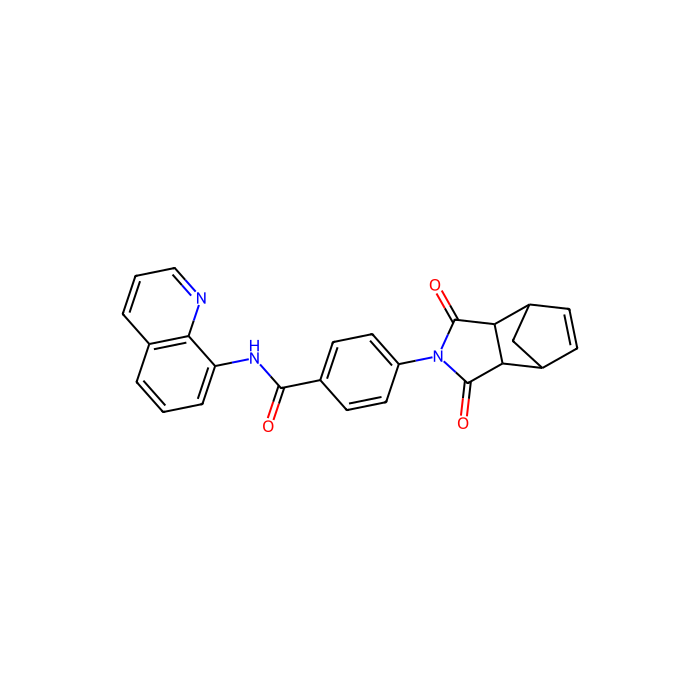
 L1813172
Determine the necessary mass, volume, or concentration for preparing a solution.
| Activity Type | Activity Value -log(M) | Mechanism of Action | Activity Reference | Publications (PubMed IDs) |
|---|

≥98% for sensitive chromatographic and analytical workflows requiring minimal baseline interference.
Room temperature Ships Normal Check lot-specific COA for exact specifications.
SDS, COA, datasheet, and spec sheet available for download. Lot-specific COA accessible via lot number lookup.
Cited in 1 peer-reviewed publications across chromatography, organic synthesis, and cross-coupling reactions.
Comprehensive hazard, handling, storage, and regulatory compliance document.
Download SDS →Lot-specific quality data. Enter your lot number to retrieve the exact COA.
Look up COA →Full quality attributes and acceptance criteria for this grade.
View spec sheet →Taxonomy Tree
| Kingdom | Organic compounds |
|---|---|
| Superclass | Benzenoids |
| Classe | Benzene and substituted derivatives |
| Subclass | Benzoic acids and derivatives |
| Intermediate Tree Nodes | Not available |
| Direct Parent | Acylaminobenzoic acid and derivatives |
| Alternative Parents | Phenylpyrrolidines Quinolines and derivatives Isoindolones Benzamides Benzoyl derivatives Pyrrolidine-2-ones N-substituted carboxylic acid imides Pyridines and derivatives Pyrroles Heteroaromatic compounds Dicarboximides Secondary carboxylic acid amides Lactams Azacyclic compounds Organic oxides Hydrocarbon derivatives Carbonyl compounds Organonitrogen compounds Organopnictogen compounds |
| Molecular Framework | Aromatic heteropolycyclic compounds |
| Substituents | Acylaminobenzoic acid or derivatives - 1-phenylpyrrolidine - Isoindolone - Quinoline - Benzamide - Isoindoline - Isoindole or derivatives - Benzoyl - Carboxylic acid imide, n-substituted - Pyridine - Pyrrolidone - 2-pyrrolidone - Pyrrolidine - Pyrrole - Heteroaromatic compound - Carboxylic acid imide - Dicarboximide - Secondary carboxylic acid amide - Carboxamide group - Lactam - Organoheterocyclic compound - Azacycle - Carboxylic acid derivative - Organopnictogen compound - Organonitrogen compound - Organooxygen compound - Organic oxygen compound - Organic nitrogen compound - Carbonyl group - Organic oxide - Hydrocarbon derivative - Aromatic heteropolycyclic compound |
| Descrizione | This compound belongs to the class of organic compounds known as acylaminobenzoic acid and derivatives. These are derivatives of amino benzoic acid derivatives where the amine group is N-acylated. |
| External Descriptors | dicarboximide - bridged compound |
| Activity Type | Activity Value -log(M) | Mechanism of Action | Activity Reference | Publications (PubMed IDs) |
|---|
| Activity Type | Activity Value -log(M) | Mechanism of Action | Activity Reference | Publications (PubMed IDs) |
|---|
| Activity Type | Relation | Activity value | Units | Action Type | Journal | PubMed Id | doi | Assay Aladdin ID |
|---|
| Activity Type | Relation | Activity value | Units | Action Type | Journal | PubMed Id | doi | Assay Aladdin ID |
|---|
| Activity Type | Relation | Activity value | Units | Action Type | Journal | PubMed Id | doi | Assay Aladdin ID |
|---|
| Activity Type | Relation | Activity value | Units | Action Type | Journal | PubMed Id | doi | Assay Aladdin ID |
|---|
| Activity Type | Relation | Activity value | Units | Action Type | Journal | PubMed Id | doi | Assay Aladdin ID |
|---|
| Activity Type | Relation | Activity value | Units | Action Type | Journal | PubMed Id | doi | Assay Aladdin ID |
|---|
| Activity Type | Relation | Activity value | Units | Action Type | Journal | PubMed Id | doi | Assay Aladdin ID |
|---|
| Activity Type | Relation | Activity value | Units | Action Type | Journal | PubMed Id | doi | Assay Aladdin ID |
|---|
| Activity Type | Relation | Activity value | Units | Action Type | Journal | PubMed Id | doi | Assay Aladdin ID |
|---|
| Activity Type | Relation | Activity value | Units | Action Type | Journal | PubMed Id | doi | Assay Aladdin ID |
|---|
| Activity Type | Relation | Activity value | Units | Action Type | Journal | PubMed Id | doi | Assay Aladdin ID |
|---|
| Activity Type | Relation | Activity value | Units | Action Type | Journal | PubMed Id | doi | Assay Aladdin ID |
|---|
| Activity Type | Relation | Activity value | Units | Action Type | Journal | PubMed Id | doi | Assay Aladdin ID |
|---|
| Activity Type | Relation | Activity value | Units | Action Type | Journal | PubMed Id | doi | Assay Aladdin ID |
|---|
| Activity Type | Relation | Activity value | Units | Action Type | Journal | PubMed Id | doi | Assay Aladdin ID |
|---|
| Activity Type | Relation | Activity value | Units | Action Type | Journal | PubMed Id | doi | Assay Aladdin ID |
|---|
| Activity Type | Relation | Activity value | Units | Action Type | Journal | PubMed Id | doi | Assay Aladdin ID |
|---|
| Activity Type | Relation | Activity value | Units | Action Type | Journal | PubMed Id | doi | Assay Aladdin ID |
|---|
| Activity Type | Relation | Activity value | Units | Action Type | Journal | PubMed Id | doi | Assay Aladdin ID |
|---|
| Activity Type | Relation | Activity value | Units | Action Type | Journal | PubMed Id | doi | Assay Aladdin ID |
|---|
| Activity Type | Relation | Activity value | Units | Action Type | Journal | PubMed Id | doi | Assay Aladdin ID |
|---|
| Activity Type | Relation | Activity value | Units | Action Type | Journal | PubMed Id | doi | Assay Aladdin ID |
|---|
| Activity Type | Relation | Activity value | Units | Action Type | Journal | PubMed Id | doi | Assay Aladdin ID |
|---|
| Activity Type | Relation | Activity value | Units | Action Type | Journal | PubMed Id | doi | Assay Aladdin ID |
|---|
| Activity Type | Relation | Activity value | Units | Action Type | Journal | PubMed Id | doi | Assay Aladdin ID |
|---|
| Activity Type | Relation | Activity value | Units | Action Type | Journal | PubMed Id | doi | Assay Aladdin ID |
|---|
| Activity Type | Relation | Activity value | Units | Action Type | Journal | PubMed Id | doi | Assay Aladdin ID |
|---|
| Activity Type | Relation | Activity value | Units | Action Type | Journal | PubMed Id | doi | Assay Aladdin ID |
|---|
| Activity Type | Relation | Activity value | Units | Action Type | Journal | PubMed Id | doi | Assay Aladdin ID |
|---|
| Solubilità | Solvent:DMSO, Max Conc. mg/mL: 40.94, Max Conc. mM: 100 |
|---|---|
| Peso molecolare | 409.400 g/mol |
| XLogP3 | 2.900 |
| Hydrogen Bond Donor Count | 1 |
| Hydrogen Bond Acceptor Count | 4 |
| Rotatable Bond Count | 3 |
| Exact Mass | 409.143 Da |
| Monoisotopic Mass | 409.143 Da |
| Topological Polar Surface Area | 79.400 Ų |
| Heavy Atom Count | 31 |
| Formal Charge | 0 |
| Complexity | 772.000 |
| Isotope Atom Count | 0 |
| Defined Atom Stereocenter Count | 4 |
| Undefined Atom Stereocenter Count | 0 |
| Defined Bond Stereocenter Count | 0 |
| Undefined Bond Stereocenter Count | 0 |
| The total count of all stereochemical bonds | 0 |
| Covalently-Bonded Unit Count | 1 |
Item-specific, validated application protocols are not provided for this catalog entry. The following general, literature-based guidance is offered for typical cell-based use of Wnt pathway inhibitors like IWR-1. Adjust to your system and consult primary sources.
Preparation of stock:
Cell-based reporter assay (general outline):
Western blot readouts (general):
Biochemical assays:
These are general guidelines; verify conditions for your cell line and endpoint.
Research-use, literature-based summary (no clinical claims):
Important notes:
IWR-1 is not a buffering agent and is not used to prepare pH buffer systems. Accordingly, there are no standard buffer recipes or buffering ranges associated with this product.
Practical note (general):
As IWR-1 is a bioactive screening compound rather than a process solvent or commonly used reagent, the concept of “green alternative solvents/reagents” is generally not applicable.
Context and practical notes (general):
Bottom line: Greener choices are better framed around solvent management and assay design (miniaturization, low final DMSO) rather than substituting the compound itself, which serves as a specific biochemical probe.
This product is offered strictly for research use only. It is not an API, excipient, or GMP material, and is not intended for human or veterinary use.
Research and development context (literature, no clinical claims):
Regulatory status:
Documentation:
The catalog entry does not provide item-specific physicochemical specifications for IWR-1.
Practical notes (general):
Interpretation and guidance (general):
Documentation: Request the Certificate of Analysis for batch-specific assay purity, identity, and any residual volatile profile relevant to your experimental needs.
This product is supplied as a bioactive small molecule for research use, not as a synthetic reagent. Consequently, conventional organic reaction applications (e.g., couplings, reductions, Grignard reactions) are not typically relevant.
Applicability to chemical synthesis: Not typically used as a reagent, catalyst, or solvent in preparative chemistry. If incorporated into medicinal chemistry workflows, it serves as a reference standard or control compound rather than a building block.
Research application context (literature):
If your goal is organic transformation development, consider browsing Aladdin’s reagent categories (acids, bases, catalysts, coupling reagents, solvents) for appropriate chemicals. For bioassays and mechanism studies, see the “Biological Roles,” “Target Specificity,” and “Application Protocols” sections in this page.
Not applicable. IWR-1 is not sold for use as a reagent in chemical transformations, so standard reaction condition guidance (solvent, catalysts, temperature, stoichiometry) does not apply.
Assay preparation conditions (general, literature):
All values above are general literature guidance for Wnt-pathway tool compounds and should be validated empirically for your system.
Item-specific GHS classification and hazard statements are not provided in the Product Data for IWR-1.
General laboratory safety guidance (not a substitute for SDS):
Always consult the product-specific SDS for authoritative hazard, toxicological, and disposal information.
IWR-1 is used primarily as a bioactive tool compound rather than a processing solvent. This section summarizes dissolution media selection for assay stock solutions.
Comparison (general):
Reconstitution and handling (general best practices):
Disposal: Collect solvent-containing waste according to institutional and regulatory requirements.
IWR-1 (SKU I129780) is a small-molecule research tool compound widely used to modulate Wnt/β-catenin signaling in cell-based studies (literature). Item-specific structure fields below reflect the catalog record for this product.
Item-specific identifiers from Product Data:
Molecular formula: Not specified for this item; refer to CoA/Spec Sheet.
Molecular weight: Not specified for this item; refer to CoA/Spec Sheet.
Structural features (general, literature):
2D structural description (general):
IWR-1 is supplied as a finished bioactive small molecule and is not commonly used as a synthetic intermediate or reagent.
If your goal is to perform organic synthesis around Wnt pathway modulators, consult the literature for robust routes to IWR-class inhibitors and obtain starting materials and coupling reagents from Aladdin’s catalog. For characterization of purchased IWR-1, use orthogonal analytics (LC/MS, 1H/13C NMR, HRMS) to confirm identity and purity.
Item-specific target validation data are not provided in the Product Data. The following is a literature-based summary for research context only.
Note: No antibody epitope, clone, isotype, or species-reactivity data apply to this small-molecule product.