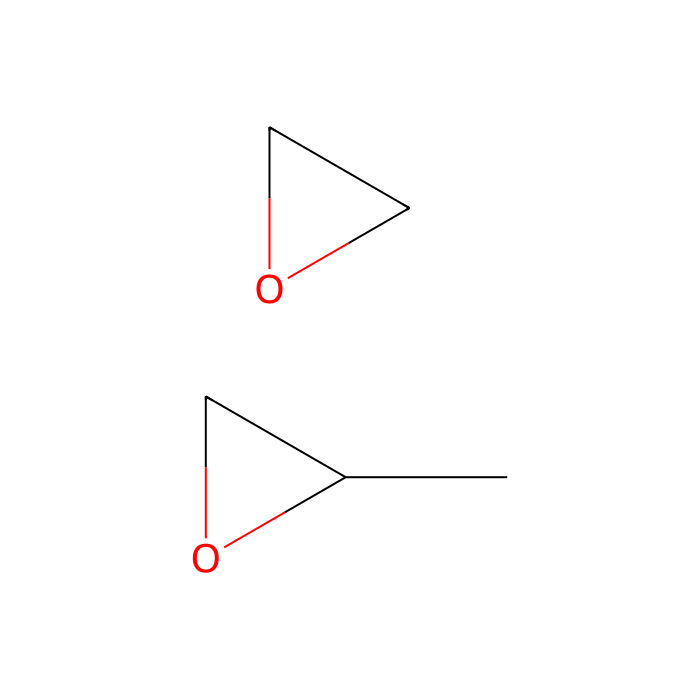
Kolliphor® P 188 , CAS No.9003-11-6

CAS: 9003-11-6 Cat. No.: K434430 Numero EC: 618-355-0
Disponibile su ordine
Synonyms
Poloxamer 331|Poloxamer 407|Pluronic L 122|F-108|Pluronic F-68|2-methyloxirane|Pluronic L 61|oxirane|8800 (Average Mn)|PEG-PPG-PEG|Poly(ethylene glycol)-block-poly(propylene glycol)-block-poly(ethylene glycol)|Lutrol F68
Storage
Room temperature
Shipped In
Normal
★
Dimensione
Germania (EU)
USA*
Prezzo
Qtà
50g
K434430-50g
—
Disponibile ≥10
25,95€
250g
K434430-250g
4 Disponibile
5 Disponibile
86,69€
Enter a quantity for the sizes you want to add.

Panoramica

Application:

Kolliphor P 188 has been widely used as a thickening agent and gel binder. This research grade product is intended for use in R&D and development only.

Product description:

Poloxamers are ABA-type co-polymers of poly (ethylene oxide) (PEO=A) and poly (propylene oxide) (PPO=B). The approximate relative amount of PEO and the average molecular weight of the PPO are indicated in the name of the poloxamer. For example, P 188 succeeding the word Kolliphor® indicates a poloxamer with ca. 80% m/m PEO (P 188; 8x10= 80%) and approximately average molecular weight of PPO of 1800 (P 188; 18x100= 1800)

Other Notes:

The Kolliphor P grades are poloxamers from the extensive line of Pluronic block copolymers.

Specifiche

Sinonimi
Poloxamer 331 | Poloxamer 407 | Pluronic L 122 | F-108 | Pluronic F-68 | 2-methyloxirane | Pluronic L 61 | oxirane | 8800 (Average Mn) | PEG-PPG-PEG | Poly(ethylene glycol)-block-poly(propylene glycol)-block-poly(ethylene glycol) | Lutrol F68
Informazioni legali
Condizioni di conservazione di stoccaggio
Room temperature
Spedito in
Normal
Tipo di azione
INHIBITOR
Nomi e identificatori
Pubchem Sid
Pubchem Sid Url
https://pubchem.ncbi.nlm.nih.gov/substance/504753255
SMILES
CC1CO1.C1CO1
IUPAC Name
2-methyloxirane;oxirane
InChIKey
RVGRUAULSDPKGF-UHFFFAOYSA-N
InChI
1S/C3H6O.C2H4O/c1-3-2-4-3;1-2-3-1/h3H,2H2,1H3;1-2H2
Isomeri SMILES
CC1CO1.C1CO1
CAS alternativo
691397-13-4
Reaxys
13268566
Reaxys-RN_link_address
https://www.reaxys.com/reaxys/secured/hopinto.do?context=S&query=IDE.XRN=13268566&ln=

Dati avanzati

Taxonomic Classification

Taxonomy Tree

KingdomOrganic compounds
SuperclassOrganoheterocyclic compounds
ClasseEpoxides
SubclassNot available
Intermediate Tree Nodes Not available
Direct ParentEpoxides
Alternative Parents Oxacyclic compounds  Dialkyl ethers  Hydrocarbon derivatives  
Molecular FrameworkNot available
Substituents Oxacycle - Ether - Oxirane - Dialkyl ether - Organic oxygen compound - Hydrocarbon derivative - Organooxygen compound - Aliphatic heteromonocyclic compound
DescrizioneThis compound belongs to the class of organic compounds known as epoxides. These are compounds containing a cyclic ether with three ring atoms(one oxygen and two carbon atoms).
External Descriptors Not available
Struttura 3D
Modello di struttura chimica interattiva


Certificati (CoA, COO, BSE/TSE e tabella di analisi)
C of A & Other Certificates(BSE/TSE, COO):
Analytical Chart:

Find and download the COA for your product by matching the lot number on the packaging.

31 results found

Lot NumberCertificate TypeDataOggetto
H2617120H2617120Certificate of AnalysisJun 13, 2026 K434430
H2617119H2617119Certificate of AnalysisJun 13, 2026 K434430
H2617118H2617118Certificate of AnalysisJun 13, 2026 K434430
A2614372A2614372Certificate of AnalysisJan 10, 2026 K434430
A2614558A2614558Certificate of AnalysisJan 10, 2026 K434430
A2614559A2614559Certificate of AnalysisJan 10, 2026 K434430
D2610112D2610112Certificate of AnalysisJan 10, 2026 K434430
E2628049E2628049Certificate of AnalysisJan 10, 2026 K434430
L2509099L2509099Certificate of AnalysisMay 16, 2025 K434430
I2519064I2519064Certificate of AnalysisMay 16, 2025 K434430
E2530621E2530621Certificate of AnalysisMay 16, 2025 K434430
E2523471E2523471Certificate of AnalysisMay 16, 2025 K434430
E2523360E2523360Certificate of AnalysisMay 16, 2025 K434430
E2523339E2523339Certificate of AnalysisMay 16, 2025 K434430
E2523340E2523340Certificate of AnalysisMay 16, 2025 K434430
I2511072I2511072Certificate of AnalysisMar 31, 2025 K434430
D2507545D2507545Certificate of AnalysisMar 31, 2025 K434430
D2507546D2507546Certificate of AnalysisMar 31, 2025 K434430
I2412395I2412395Certificate of AnalysisSep 05, 2024 K434430
G2411593G2411593Certificate of AnalysisJun 19, 2024 K434430
G2411597G2411597Certificate of AnalysisJun 19, 2024 K434430
I2402498I2402498Certificate of AnalysisJun 19, 2024 K434430
A2419066A2419066Certificate of AnalysisJul 26, 2023 K434430
H2309968H2309968Certificate of AnalysisJul 26, 2023 K434430
H2309953H2309953Certificate of AnalysisJul 26, 2023 K434430
H2309941H2309941Certificate of AnalysisJul 26, 2023 K434430
E2409034E2409034Certificate of AnalysisJul 26, 2023 K434430
C23111141C23111141Certificate of AnalysisFeb 27, 2023 K434430
F2325070F2325070Certificate of AnalysisFeb 27, 2023 K434430
E2310125E2310125Certificate of AnalysisFeb 27, 2023 K434430
C23111125C23111125Certificate of AnalysisFeb 27, 2023 K434430
Proprietà chimiche e fisiche
Indice di rifrazione1.459
Punto di ebollizione (°C)> 149 °C
Punto di fusione (°C)40-50 °C
Peso molecolare102.13
XLogP3
Hydrogen Bond Donor Count0
Hydrogen Bond Acceptor Count2
Rotatable Bond Count0
Exact Mass102.068 Da
Monoisotopic Mass102.068 Da
Topological Polar Surface Area25.100 Ų
Heavy Atom Count7
Formal Charge0
Complexity36.700
Isotope Atom Count0
Defined Atom Stereocenter Count0
Undefined Atom Stereocenter Count1
Defined Bond Stereocenter Count0
Undefined Bond Stereocenter Count0
The total count of all stereochemical bonds0
Covalently-Bonded Unit Count2
Sicurezza e pericoli (GHS)
Reaxys
13268566
Reaxys-RN_link_address
https://www.reaxys.com/reaxys/secured/hopinto.do?context=S&query=IDE.XRN=13268566&ln=
Domande frequenti e articoli
Poloxamers Explained: A Comprehensive Guide to Non-Ionic Block Copolymer Surfactants
A Panoramic Guide to Surfactants: Definitions & Mechanisms, Key Metrics, Application Scenarios, and Selection Navigation (Tables 1–3)
Materials Can “Switch”: How Smart Polymers Respond to Temperature, pH, and Light (with Experimental Selection Tips & Product Navigation)
Understanding Hydrophilic Polymers in Aqueous Systems: Hydration Mechanisms, Structural Knobs, and Task-Oriented Selection Guide (Including Tables 1–3)
Biomedical Polymer Insights: Role-Based Task Map, Six Key Material Levers, and a Risk-Driven Evidence Chain (including the Product Navigation Guide and Product Tables 1–3)
Review of the Structural Characteristics, Biological Functions, and Application Advances of Lycopene
Tissue Dissociation for Single-Cell Preparation: Sample Handling and Quality Control Strategies
Key Judgments in Medical Hydrogel R&D: From Polymer Source and Crosslinking Strategy to Sterilization Planning, Scale-Up Feasibility, and Quality Control
Injectable Thermosensitive Gels: Gelation Behavior, Rheological Properties, and Drug Release Characteristics
Potassium Fatty Acid Soaps: Structure and Formulation Applications—Production Processes, Alkalinity, Foam Control, and Low-Foam Cleaning
Solvents, Co-solvents, and Solubilization Systems in Home and Personal Care Formulations: Classification, Functions, and Selection Guide
Signal Transduction Mechanism of Graphene Biosensors: From Molecular Recognition to Electrical/Optical Signal Readout and Materials Selection
From Structure to Selection: Mechanisms and Application Assessment of Low-Foam Oil and Wax Removal with Fatty Acid Methyl Ester Ethoxylates (FMEE)
Mechanism of Action and Selection Logic of Defoamers for Daily Chemical Products: Foam Stability, Foam-Breaking Mechanisms, and Representative Raw Material Analysis
Mechanisms and Troubleshooting of Foam Reduction in Personal and Household Care Formulations: Film Rupture, Weak Interfacial Films, Insufficient Surfactant Supply, and Phase-State Disturbance
Structural Logic of Nonionic Surfactants: Mechanisms of Action, Classification Features, and Selection Principles
Application of Conductive Carbon Black in Coatings: Selection Criteria, Dispersion Control, and Conductive Network Construction
Understanding the Four Classes of Surfactants Through Molecular Charge: Application Logic of Anionic, Cationic, Amphoteric and Zwitterionic, and Nonionic Surfactants in Personal Care and Home Care
Mechanistic Analysis of Topical Glutathione in Skincare: Cellular Redox Regulation, Skin Delivery Challenges, and SLN-Based Delivery Strategies
Antioxidant Mechanisms, Stability, and Delivery Strategies of Resveratrol in Skincare Research
Antioxidant Mechanisms of Ferulic Acid in Skincare, Vitamin C/E Synergy, and Stable Delivery Applications
Mechanism of Action of Porous Silica in Oil-Control Loose Powder: Pore Structure, Capillary Imbibition, and Surface Modification
Exosome-Related Ingredients in Skincare Products: Sources and Preparation, Quality Control, Evidence of Efficacy, and Safety Assessment
Mechanism of Action of Tranexamic Acid in Pigmentation Care: From the Plasmin System to Regulation of Inflammation-Driven Pro-Melanogenic Signaling
Potential Mechanisms of p-Cymene in Problem-Prone Skin: Membrane Perturbation, Inflammatory Signaling Modulation, and Localized Delivery
How Coenzyme Q10 Acts on the Skin: Mitochondrial Electron Transfer, Antioxidant Protection of Membrane Lipids, and Lipid-Carrier Delivery
What Is Direct Compression? Process Characteristics, Suitability Criteria, and Excipient Selection
Citations of This Product
Calcolatori di soluzioni
Recensioni

Recensioni dei clienti

Domande frequenti

How should this product be stored?
Store at room temperature.
How is this product shipped?
This product ships under standard ambient conditions. No temperature-controlled packaging is required.
What are the CAS number, molecular formula and molecular weight?
The CAS Number is 9003-11-6. InChIKey RVGRUAULSDPKGF-UHFFFAOYSA-N.
What documentation is provided?
Available product documentation, including Certificates of Analysis (COA), Safety Data Sheets (SDS), and specification sheets, is shown in the product document area. Document availability and access follow the current site policy.

Desidera che le inviamo un messaggio quando avremo sconti disponibili?

Ricordamelo più tardi

Grazie! Controlli la sua casella di posta per confermare.

Ops! Le notifiche sono disabilitate.