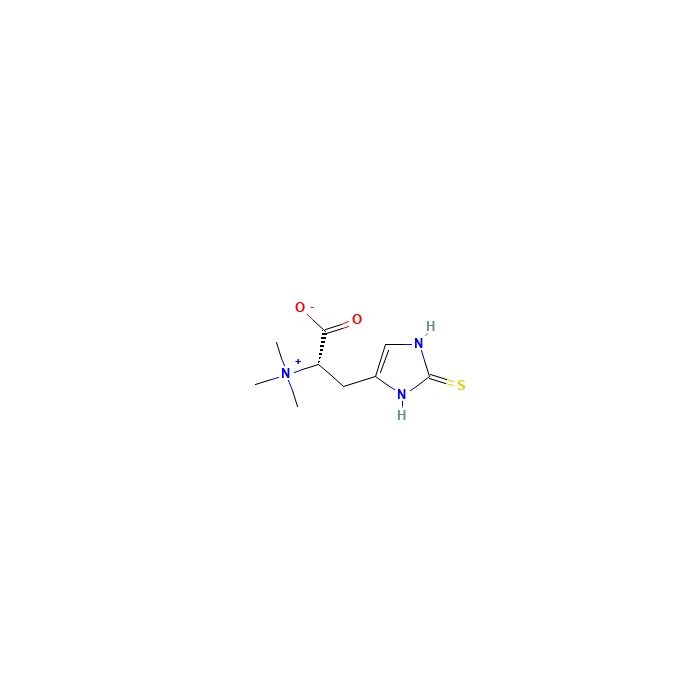
L-(+)-Ergothioneine - Moligand™, ≥98% , CAS No.497-30-3

CAS: 497-30-3 Cat. No.: L134175 Formula: C9H15N3O2S Peso molecolare: 229.30 Numero EC: 207-843-5
Disponibile su ordine
QUALITÀ & PUREZZA Moligand™ ? Moligand™ — Aladdin's line of ligands and bioactive small molecules. Use for receptor, pathway, and binding studies needing defined small-molecule tools. ≥98%
Synonyms
2-mercaptohistidine trimethylbetaine|ergothioneine (thione form)|ERGOTHIONEINE [MI]|1H-Imidazole-4-ethaniminium, alpha-carboxy-2,3-dihydro-N,N,N-trimethyl-2-thioxo-, hydroxide, inner salt, (S)-|(S)-3-(2-Thioxo-2,3-dihydro-1H-imidazol-4-yl)-2-(trimethylammonio)propanoate|Thiasine|(2S)-3-(2-mercapto-1H-imidazol-5-yl)-2-(trimethylammonio)propanoate|Ergothioneine L-(+)|Ergothionine;L-(+)-Ergothioneine;Erythrothioneine|Nalpha,Nalpha,Nalpha-trimethyl-2-sulfanylidene-2,3-dihydro-L-histidine|1H-Imidazole-4-ethanaminium, .alpha.-carboxy-2,3-dihydro-N,N,N-trimethyl-2-thioxo-, inner salt, (.alpha.S)-|Fyfanon|3-(2-sulfanylidene-1,3-dihydroimidazol-4-yl)-2-trimethylammonio-propanoate|1H-Imidazole-4-ethanaminium, alpha-carboxy-2,3-dihydro-N,N,N-trimethyl-2-thioxo-, inner salt, (S)-|(2S)-3-(2-thioxo-2,3-dihydro-1H-imidazol-4-yl)-2-(trimethylazaniumyl)propanoate|(S)-(1-Carboxy-2-(2-mercaptoimidazol-4-yl)ethyl)trimethylammonium hydroxide|L-(+)-Ergothioneine|LY-294,002|Sympectothion|(2S)-3-(2-mercapto-1H-imidazol-5-yl)-2-(trimethylazaniumyl)propanoate|thiolhistidinebetaine|(alphaS)-alpha-carboxy-2,3-dihydro-N,N,N-trimethyl-2-thioxo-1H-imidazole-4-ethanaminium inner salt|Ergothionine|L-Ergothioneine|1H-Imidazole-4-ethanaminium, alpha-carboxy-2,3-dihydro-N,N,N-trimethyl-2-thioxo-, hydroxide, inner salt, (S)-|l-Thioneine|(2S)-3-(2-sulfanylidene-2,3-dihydro-1H-imidazol-4-yl)-2-(trimethylazaniumyl)propanoate|ergothioneine thione|Thioneine|erythrothioneine|Ammonium, (1-carboxy-2-(2-mercaptoimidazol-4-yl)ethyl)trimethyl-, hydroxide, inner salt, L-(+)-|ERGOTHIONEINE [INCI]|ergothioneine thiol|1H-Imidazole-4-ethanaminium, alpha-carboxy-2,3-dihydro-N,N,N-trimethyl-2-thioxo-, inner salt, (alphaS)-|ERGOTHIONEINE
Storage
Store at -20°C
Shipped In
Ice chest + Ice pads
★
Dimensione
Germania (EU)
USA*
Prezzo
Qtà
50mg
L134175-50mg
—
9 Disponibile
14,66€
250mg
L134175-250mg
—
Disponibile ≥10
43,30€
1g
L134175-1g
—
5 Disponibile
121,40€
5g
L134175-5g
Su ordinazione · 8–12 settimane
407,75€
25g
L134175-25g
Su ordinazione · 8–12 settimane
1.388,30€
Enter a quantity for the sizes you want to add.

Panoramica

Ergothioneine is a stable antioxidant that can be found under conditions of excessive oxidative stress in plant and animal tissue. Ergothioneine can scavenge free radicals and protect cells from UV-induced ROS with higher efficiency than antioxidants coenzyme Q(10) or idebenone. The compound could be a non-toxic thiol buffering antioxidant, enhance cell viability induced by hydrogen peroxide (H2O2), and inhibit DNA oxidation by peroxynitrite (ONOO-) in the human neuronal hybridoma cell line (N-18-RE-105).
An antioxidant and free radical scavenger

Application:

L - (+) - ergot sulfur is suitable for studying its reactivity with 2,2 '- and 4,4' - bipyridine disulfides (2-Py-S-S-2-Py and 4-Py-S-S-4-Py). 

It can also be used for the incubation of experimental cells and for in vitro kinase activity measurement of ATM (Ataxia telangiectasia mutation) or ATR (ATM - and RAD3- related).

L - (+) - ergot has been used to: 

1. As a component of the cumulus oocyte complex (COC) maturation medium, its protective effect on lipid peroxidation formation was tested; 

2. As an antioxidant compound, it is used to detect type 2 diabetes patients; 

3. As a positive control for soluble carrier protein 22A4 (SLC22A4) transport detection.

Specifiche

Sinonimi
2-mercaptohistidine trimethylbetaine | ergothioneine (thione form) | ERGOTHIONEINE [MI] | 1H-Imidazole-4-ethaniminium, alpha-carboxy-2,3-dihydro-N,N,N-trimethyl-2-thioxo-, hydroxide, inner salt, (S)- | (S)-3-(2-Thioxo-2,3-dihydro-1H-imidazol-4-yl)-2-(trimethylammonio)propanoate | Thiasine | (2S)-3-(2-mercapto-1H-imidazol-5-yl)-2-(trimethy Mostra altro
Specifiche e purezza
Moligand™, ≥98%
Meccanismi biochimici e fisiologici
L - (+) - ergothione (ET) has the highest concentration in oxidative stress tissues, and the highest concentration in blood, lens, bone marrow, semen, and liver. It is an antioxidant that prevents cell apoptosis by clearing reactive oxygen species and nitrogen. The antioxidant activity mainly comes from sulfhydryl groups. It is the substrate of SLC22A4 (solute carrier group 22, member 4) transporter. Blocking tumor necrosis factor (TNF) in alveolar macrophages α Release interleukin-8 (IL-8). IL-8 is an inflammatory cytokine. It can also regulate oxidative damage to the liver and kidneys, and has a protective effect on lipid peroxidation. It is also responsible for endogenous glutathione and α- Preservation of tocopherols. ET is an antioxidant that can resist γ And ultraviolet radiation. In human skin fibroblasts exposed to ultraviolet radiation, it can scavenge reactive oxygen species (ROS) and inhibit the expression of matrix metalloproteinase 1 (MMP1). It may also prevent skin aging caused by ultraviolet radiation.
Condizioni di conservazione di stoccaggio
Store at -20°C
Spedito in
Ice chest + Ice pads
Questo prodotto richiede spedizione a catena fredda. I servizi di terra e altri servizi economici non sono disponibili.
Grado
Moligand™
Tipo di azione
INHIBITOR
Purezza
≥98%
Nomi e identificatori
Pubchem Sid
Pubchem Sid Url
https://pubchem.ncbi.nlm.nih.gov/substance/488195377
SMILES
C[N+](C)(C)C(CC1=CNC(=S)N1)C(=O)[O-]
IUPAC Name
(2S)-3-(2-sulfanylidene-1,3-dihydroimidazol-4-yl)-2-(trimethylazaniumyl)propanoate
InChIKey
SSISHJJTAXXQAX-ZETCQYMHSA-N
InChI
1S/C9H15N3O2S/c1-12(2,3)7(8(13)14)4-6-5-10-9(15)11-6/h5,7H,4H2,1-3H3,(H2-,10,11,13,14,15)/t7-/m0/s1
Isomeri SMILES
C[N+](C)(C)[C@@H](CC1=CNC(=S)N1)C(=O)[O-]
WGK Germania
3
Peso molecolare
229.30
Reaxy-Rn
3910838
Reaxys-RN_link_address
https://www.reaxys.com/reaxys/secured/hopinto.do?context=S&query=IDE.XRN=3910838&ln=

Dati avanzati

Taxonomic Classification

Taxonomy Tree

KingdomOrganic compounds
SuperclassOrganic acids and derivatives
ClasseCarboxylic acids and derivatives
SubclassAmino acids, peptides, and analogues
Intermediate Tree Nodes Amino acids and derivatives - Alpha amino acids and derivatives
Direct ParentHistidine and derivatives
Alternative Parents L-alpha-amino acids  Imidazolyl carboxylic acids and derivatives  Aralkylamines  Imidazolethiones  Tetraalkylammonium salts  Heteroaromatic compounds  Thioureas  Carboxylic acid salts  Azacyclic compounds  Carboxylic acids  Monocarboxylic acids and derivatives  Organopnictogen compounds  Organic salts  Organic oxides  Hydrocarbon derivatives  Carbonyl compounds  
Molecular FrameworkAromatic heteromonocyclic compounds
Substituents Histidine or derivatives - Alpha-amino acid - L-alpha-amino acid - Imidazolyl carboxylic acid derivative - Aralkylamine - Imidazole-2-thione - Azole - Imidazole - Quaternary ammonium salt - Heteroaromatic compound - Tetraalkylammonium salt - Thiourea - Carboxylic acid salt - Organoheterocyclic compound - Azacycle - Carboxylic acid - Monocarboxylic acid or derivatives - Hydrocarbon derivative - Organonitrogen compound - Organooxygen compound - Organopnictogen compound - Organic oxygen compound - Amine - Organosulfur compound - Organic oxide - Organic salt - Organic nitrogen compound - Carbonyl group - Aromatic heteromonocyclic compound
DescrizioneThis compound belongs to the class of organic compounds known as histidine and derivatives. These are compounds containing cysteine or a derivative thereof resulting from reaction of cysteine at the amino group or the carboxy group, or from the replacement of any hydrogen of glycine by a heteroatom.
External Descriptors amino-acid betaine - L-histidine derivative
Struttura 3D
Modello di struttura chimica interattiva


Obiettivi associati (non umani)
Hdac6 Histone deacetylase 6 (222 Activities)
Activity TypeRelationActivity valueUnitsAction TypeJournalPubMed IddoiAssay Aladdin ID
Meccanismi d'azione
Certificati (CoA, COO, BSE/TSE e tabella di analisi)
C of A & Other Certificates(BSE/TSE, COO):
Analytical Chart:

Find and download the COA for your product by matching the lot number on the packaging.

42 results found

Lot NumberCertificate TypeDataOggetto
K2428534K2428534Certificate of AnalysisSep 02, 2026 L134175
K2504501K2504501Certificate of AnalysisSep 29, 2025 L134175
K2504493K2504493Certificate of AnalysisSep 29, 2025 L134175
K2504491K2504491Certificate of AnalysisSep 29, 2025 L134175
K2504490K2504490Certificate of AnalysisSep 29, 2025 L134175
K2504489K2504489Certificate of AnalysisSep 29, 2025 L134175
J2614084J2614084Certificate of AnalysisSep 29, 2025 L134175
E2512290E2512290Certificate of AnalysisApr 07, 2025 L134175
E2512340E2512340Certificate of AnalysisApr 07, 2025 L134175
E2512339E2512339Certificate of AnalysisApr 07, 2025 L134175
E2512338E2512338Certificate of AnalysisApr 07, 2025 L134175
K2428535K2428535Certificate of AnalysisNov 13, 2024 L134175
K2428536K2428536Certificate of AnalysisNov 13, 2024 L134175
F2421534F2421534Certificate of AnalysisJun 05, 2024 L134175
F2421535F2421535Certificate of AnalysisJun 05, 2024 L134175
F2421536F2421536Certificate of AnalysisJun 05, 2024 L134175
F2421537F2421537Certificate of AnalysisJun 05, 2024 L134175
E2421048E2421048Certificate of AnalysisOct 28, 2023 L134175
K2307380K2307380Certificate of AnalysisOct 28, 2023 L134175
K2307387K2307387Certificate of AnalysisOct 28, 2023 L134175
K2307364K2307364Certificate of AnalysisOct 28, 2023 L134175
K2307360K2307360Certificate of AnalysisOct 28, 2023 L134175
G2320879G2320879Certificate of AnalysisJun 15, 2023 L134175
G2320884G2320884Certificate of AnalysisJun 15, 2023 L134175
G2320883G2320883Certificate of AnalysisJun 15, 2023 L134175
G2320880G2320880Certificate of AnalysisJun 15, 2023 L134175
G2320875G2320875Certificate of AnalysisJun 15, 2023 L134175
A2305434A2305434Certificate of AnalysisNov 12, 2022 L134175
A2305463A2305463Certificate of AnalysisNov 12, 2022 L134175
A2305471A2305471Certificate of AnalysisNov 12, 2022 L134175
A2305473A2305473Certificate of AnalysisNov 12, 2022 L134175
A2305522A2305522Certificate of AnalysisNov 12, 2022 L134175
A2305516A2305516Certificate of AnalysisNov 12, 2022 L134175
H2205920H2205920Certificate of AnalysisJul 16, 2022 L134175
H2205923H2205923Certificate of AnalysisJul 16, 2022 L134175
H2205922H2205922Certificate of AnalysisJul 16, 2022 L134175
H2205921H2205921Certificate of AnalysisJul 16, 2022 L134175
A2218624A2218624Certificate of AnalysisDec 30, 2021 L134175
A2218671A2218671Certificate of AnalysisDec 30, 2021 L134175
A2218666A2218666Certificate of AnalysisDec 30, 2021 L134175
A2218639A2218639Certificate of AnalysisDec 30, 2021 L134175
A2218625A2218625Certificate of AnalysisDec 30, 2021 L134175
Proprietà chimiche e fisiche
SolubilitàSoluble in water (50 mg/ml), acetone, hot ethanol, and methanol.
Punto di fusione (°C)255 - 259 °C
Peso molecolare229.300 g/mol
XLogP30.300
Hydrogen Bond Donor Count2
Hydrogen Bond Acceptor Count3
Rotatable Bond Count3
Exact Mass229.088 Da
Monoisotopic Mass229.088 Da
Topological Polar Surface Area96.300 Ų
Heavy Atom Count15
Formal Charge0
Complexity314.000
Isotope Atom Count0
Defined Atom Stereocenter Count1
Undefined Atom Stereocenter Count0
Defined Bond Stereocenter Count0
Undefined Bond Stereocenter Count0
The total count of all stereochemical bonds0
Covalently-Bonded Unit Count1
Domande frequenti e articoli
Antioxidant Enzyme Networks in Skin Cells and Their Applications in Skincare and Cosmetics
What Is Synthetic Biology? The Industrialization Pathway from Upstream Reagent Toolchains to Biomanufacturing Applications
Summary of Research Advances in Oxidative Stress
Mechanistic Analysis of Topical Glutathione in Skincare: Cellular Redox Regulation, Skin Delivery Challenges, and SLN-Based Delivery Strategies
Anti-Photoaging Potential of Artemia Extract: UV-Induced Damage Cascades, HSP70-Related Stress Protection, and GP4G Metabolic Insights
Structural Characteristics of Ergothioneine, OCTN1-Mediated Uptake by Skin Cells, and Antioxidant Mechanisms
Citations of This Product
Calcolatori di soluzioni
Recensioni

Recensioni dei clienti

Application Protocols

Standardized, product-validated application protocols (e.g., WB/IHC/IF/FC) are not applicable to this small molecule. Below are general, literature-based procedures for preparing and using ergothioneine solutions in research.

  • Preparation of aqueous stock solution:

    • Weigh required amount quickly to minimize ambient moisture uptake
    • Dissolve in ultrapure water or buffer (e.g., PBS, 10–50 mM) to achieve 10–100 mM stock; mix gently until clear
    • Optional: Filter-sterilize (0.22 µm) for cell-free biological assays
    • Aliquot and store at −20°C protected from light; avoid repeated freeze–thaw
  • DMSO stock (when minimal water is required):

    • Prepare a concentrated stock (e.g., 100–500 mM in anhydrous DMSO)
    • Immediately dilute into aqueous buffer before use to a final DMSO content compatible with the assay
  • Use in antioxidant/redox assays (example framework):

    • Prepare serial dilutions in assay buffer (pH 7.2–7.6)
    • Include appropriate positive/negative controls (e.g., known oxidants and scavengers)
    • Monitor endpoints by UV–Vis, fluorescence, or LC–MS as appropriate to the assay design
  • Metal-binding studies:

    • Work under inert atmosphere when redox state is critical
    • Titrate metal salts into EGT solutions while monitoring spectroscopic signatures (UV–Vis, CD, EPR, NMR)

Note: Exact concentrations, incubation times, and detection methods should be optimized per system and are Not specified for this item; consult primary literature.

Biological Roles

The following describes literature knowledge about L-(+)-Ergothioneine in biochemistry; it is provided for research context only and not as a medical claim.

  • Origin and distribution (literature):

    • Biosynthesized by certain fungi and bacteria; accumulated in higher organisms via active transport
    • Notably abundant in mushrooms and some plant tissues; detected in human and animal tissues
  • Transport and cellular handling:

    • Selectively transported by OCTN1 (SLC22A4), a high-affinity cation transporter that concentrates EGT intracellularly
    • Zwitterionic betaine structure facilitates retention and compatibility within aqueous cellular environments
  • Chemical biology function:

    • Acts as an endogenous antioxidant/radical scavenger; the thione form stabilizes sulfur-centered resonance, modulating redox activity compared with classical thiols
    • Coordinates metal ions and may modulate metal-catalyzed redox processes
    • Participates in maintaining redox balance in vitro models; used to probe ROS/RNS pathways
  • Analytical/metabolomic relevance:

    • Serves as a biomarker candidate for dietary exposure and redox status in metabolomics workflows
    • Quantified by LC–MS/MS (often HILIC or mixed-mode) using stable-isotope dilution; sample preparation typically involves protein precipitation followed by aqueous-organic extraction
  • Protein/enzymatic interactions (literature):

    • Interacts noncovalently with protein sites via cation–π and hydrogen bonding; does not typically form disulfides due to thione preference

Note: Biological roles and mechanisms vary by organism and context; users should design experiments to test hypotheses relevant to their systems.

Buffer Applications

Ergothioneine is not itself a buffering agent. However, it is frequently incorporated into buffer systems as a redox-active additive to stabilize sensitive analytes, enzymes, or cells in research settings.

  • Typical inclusion strategies (literature/practice):

    • Add 0.1–10 mM EGT to physiological buffers (e.g., PBS, HEPES, phosphate, MOPS) to mitigate oxidative stress in vitro; optimal level is assay-dependent
    • Maintain pH 6.8–7.8 to preserve the zwitterionic state and favor the thione tautomer; avoid strong oxidants in the formulation
  • Example buffer contexts:

    • Enzyme assays: Supplementation to protect thiol-sensitive enzymes/reagents from ROS during incubation
    • Cell-free systems: Inclusion during preparation and storage of protein standards or labile metabolites
    • Analytical sample prep: Spiking into extraction solvents to limit artifactual oxidation of sulfur species
  • Practical notes:

    • Filter-sterilize solutions (0.22 µm) for biological work; prepare fresh or store aliquots at −20°C to limit slow oxidative changes
    • Avoid metal contamination; trace metal chelators (e.g., EDTA at low mM) can be combined if metal-catalyzed oxidation is a concern, recognizing potential interplay with EGT’s own metal-binding
  • Non-applicable aspects:

    • Formal buffer capacity/pKa ranges are not relevant to EGT; select the buffering agent based on desired pH and ionic strength. EGT serves as an additive, not the primary buffer component.
Green Alternatives

This item is a solid metabolite/ligand, not a volatile organic solvent. “Green alternatives” here refer to greener media and conditions for its use and derivatization.

  • Solvent and medium choices (greener practice):

    • Prefer water or aqueous buffers as the primary medium for dissolution, assays, and many transformations
    • When organic co-solvent is needed, use bio-based ethanol or low-toxicity acetonitrile in minimal amounts; avoid chlorinated solvents
    • For drying/activation steps prior to derivatization, replace DMF/DMAc with aqueous-organic systems where feasible
  • Oxidant/reductant selection:

    • Avoid stoichiometric heavy-metal oxidants; favor catalytic, O2-based or electrochemical methods when investigating redox transformations
    • For reductions, consider hydrogen transfer reagents (e.g., formate) or catalytic hydrogenation under benign conditions rather than strong hydrides when compatible
  • Workup and purification:

    • Leverage solid-phase extraction (SPE, HILIC cartridges) to minimize solvent volumes in place of large-volume liquid–liquid extractions
    • Use lyophilization for water-based formulations instead of evaporating high-boiling organics
  • Comparison (contextual):

    • Versus thiol-based antioxidants like DTT or β-mercaptoethanol, EGT is less odorous and less volatile, easing EHS burdens; however, it may require more polar media and careful pH control to access S-chemistry
  • Waste minimization:

    • Prepare concentrated aqueous stocks and dilute at point of use to reduce container and solvent waste
    • Adopt microscale assays and plate-based methods to cut reagent consumption.
Pharmaceutical Uses

For research and development context only; this catalog item is for research use and not for human or veterinary applications.

  • Potential roles in formulation research (literature/general):

    • Antioxidant/excipient candidate to protect oxidation-sensitive actives in preformulation studies
    • Component in lyophilized or aqueous prototype formulations to evaluate stability improvements under oxidative stress
    • Model compound for transporter studies (e.g., OCTN1 interactions) in discovery-phase ADME research
  • Regulatory/compendial status:

    • No pharmacopeial monograph is cited in the Product Data. Users should not assume USP/EP/JP compliance.
    • Quality attributes for clinical use (endotoxin, bioburden, residual solvents, elemental impurities) are Not specified for this item; refer to CoA/Spec Sheet.
  • Processing considerations:

    • High aqueous solubility supports aqueous-based processes; DMSO stocks may be used for screening with prompt dilution into aqueous media
    • Incompatibilities: avoid strong oxidants; control metal ion content that may catalyze oxidation
  • Stability in dosage-form research (general):

    • Protect from light and oxygen during solution storage; use nitrogen headspace where feasible
    • Evaluate pH 6–8 for solution prototypes to maintain zwitterionic form and minimize degradation
  • Labeling and claims:

    • No therapeutic or clinical claims are made for this product. Any use in drug products would require separate sourcing and qualification to appropriate GMP standards.
Physical Properties

Note: Item-specific specifications (exact melting point, water content, etc.) are not provided in the Product Data. Values below are general/literature descriptors for L-(+)-Ergothioneine and should be used as guidance only.

  • Aggregate state/appearance: Solid (literature); item-specific appearance Not specified for this item; refer to CoA/Spec Sheet.
  • Molecular formula and weight (literature): C9H15N3O2S; ~229.30 g/mol
  • Melting point: Not specified for this item; refer to CoA/Spec Sheet. (Ergothioneine is reported to be a high-melting, thermally robust zwitterionic solid; decomposition may precede/obscure melting in some reports, literature.)
  • Boiling point: Not applicable (decomposes before boiling; literature)
  • Density: Not specified for this item; refer to CoA/Spec Sheet.
  • Solubility (qualitative, literature):
    • Highly soluble in water and aqueous buffers (zwitterionic betaine)
    • Soluble in polar protic solvents; limited solubility in nonpolar organic solvents
    • Frequently dissolved in water or aqueous saline for biochemical applications
  • pKa / acid-base behavior (literature, qualitative):
    • Exists largely as a zwitterion across neutral pH; displays thiol–thione tautomerism with the thione favored in water, reducing nucleophilicity of sulfur vs typical thiols
  • Partitioning (literature, qualitative): Hydrophilic; expected low logP and preferential partitioning into aqueous phase
  • UV–Vis (literature, qualitative): Aromatic imidazole and thione chromophores absorb in UV; exact λmax/ε Not specified for this item; refer to CoA/Spec Sheet.
  • Refractive index, viscosity: Not applicable to solids; Not specified for this item; refer to CoA/Spec Sheet.
Quality and Grades
  • Grade: Moligand™ (as provided). This designation indicates a research-grade material suitable for chemical, biochemical, and ligand/probe discovery workflows. It emphasizes consistent identity and practicality for screening, binding studies, and synthesis support rather than clinical/compliance use.

  • What the Moligand™ grade implies (general guidance):

    • Identity assured (structure confirmed by standard analytical techniques such as NMR/HRMS/LC as appropriate to supplier practices)
    • Suitable for routine R&D, screening assays, and method development
    • Not intended for GMP manufacture, clinical, or diagnostic use
  • Item-specific analytical specifications:

    • Purity, residual solvents, water content, trace metals, stabilizers, and UV cutoffs: Not specified for this item; refer to CoA/Spec Sheet.
  • Practical implications for L-(+)-Ergothioneine users:

    • The zwitterionic nature can lead to strong retention on HILIC phases and weak on reversed-phase without ion-pairing; for QC, consider orthogonal chromatographic methods (RP with acid modifier, and HILIC)
    • If using in bioassays, verify endotoxin/bioburden requirements for your application; this catalog listing does not specify those attributes
  • Batch documentation: For regulatory or publication needs, request the lot-specific CoA showing identity confirmation, purity determination method (e.g., HPLC area%), and storage guidance.

Reaction and Applications

Ergothioneine (EGT) is valued in research as a sulfur-based redox-active small molecule and metal ligand rather than as a generic coupling reagent. Its unique thione-dominant tautomer and zwitterionic betaine enable distinctive chemistry and applications.

  • Redox and radical chemistry (literature/general):

    • Acts as a sacrificial antioxidant/radical scavenger in mechanistic studies; buffers reactive oxygen species (ROS/RNS) in model systems
    • Thione resonance lowers free thiol nucleophilicity relative to canonical thiols (e.g., cysteine), influencing reaction pathways
  • Metal binding and coordination:

    • Imidazole nitrogen and thione sulfur can chelate metal centers (Cu, Fe, Zn), enabling use as a ligand/probe for metal-mediated catalysis or metalloenzyme models
  • Derivatization chemistry:

    • N-Acylation/alkylation of the imidazole or modification of the carboxylate can generate EGT derivatives for probes
    • S-alkylation under appropriately activating conditions demonstrates thiol reactivity when the thione is biased toward thiolate (strong base, polar aprotic)
  • Analytical applications:

    • Employed as an internal/external standard or spike-in control in redox assays
    • Used to benchmark HILIC-MS methods for zwitterionic metabolites
  • Practical tips:

    • Maintain neutral to mildly basic pH for aqueous workups; minimize strong oxidants
    • For S-functionalization, drive the equilibrium to thiolate (strong base, anhydrous conditions) or employ electrophiles with high leaving-group ability
    • For metal-binding studies, prepare anaerobic/deoxygenated solutions to control redox state and metal oxidation state.
Reaction Conditions

Typical conditions below are general, literature-based guidance for working with ergothioneine in chemical transformations; they are not product-specific specifications.

  • S-alkylation/thioether formation:

    • Solvent: Polar aprotic (DMF, DMSO, MeCN) or mixed aqueous-organic
    • Base: Strong, non-nucleophilic (e.g., K2CO3, Cs2CO3, or stronger if needed) to bias toward thiolate; phase-transfer catalysts can help in aqueous media
    • Electrophiles: Alkyl halides, Michael acceptors, activated esters
    • Temperature: 20–60°C; monitor to avoid decomposition
  • Imidazole N-alkylation/acylation:

    • Reagents: Alkyl halides or acyl chlorides/anhydrides with base (e.g., NaHCO3, DIPEA)
    • Solvent: Water/MeCN or DMF; adjust pH to maintain reactivity while minimizing side reactions
  • Carboxylate coupling (amide/ester formation):

    • Activation: EDC/NHS or DIC/DMAP in aqueous-organic media for bioconjugation
    • pH: 6.0–7.5 to preserve thione integrity and avoid excessive side reactions
  • Metal complex preparation:

    • Dissolve EGT in deoxygenated water or buffer; add metal salt stoichiometrically under inert atmosphere
    • pH control (6–7.5) often critical to define coordination state and suppress hydrolysis/oxidation
  • Analytical/assay preparations:

    • Stocks: Prepare 10–100 mM in water (or higher in DMSO) and dilute into buffer immediately before use
    • Stability: Protect from light; consider N2/Ar headspace for long incubations
  • Yields and times: Highly dependent on substrate/electrophile and conditions; consult the primary literature for the specific transformation of interest.

Safety and Handling

GHS details were not provided for this catalog item. Always consult the product SDS for authoritative information.

  • GHS classification and hazard statements: Not specified for this item; refer to CoA/Spec Sheet and SDS.
  • Anticipated hazards (general): Ergothioneine is a zwitterionic amino acid derivative with low volatility; dust generation should be minimized. Avoid inhalation, ingestion, and contact with skin/eyes.
  • PPE recommendations (good laboratory practice):
    • Lab coat, safety glasses or splash goggles, and appropriate chemical-resistant gloves (e.g., nitrile)
    • Use a dust mask/respirator if airborne particulate may be generated; handle powders in a fume hood or ventilated enclosure
  • Handling notes:
    • Hygroscopicity is possible with zwitterionic betaines; keep containers tightly closed and minimize exposure to ambient humidity
    • Protect from prolonged light exposure to limit slow oxidation or degradation of the thione functionality
    • Avoid strong oxidizing agents that may convert sulfur functionalities
  • First aid (overview; defer to SDS):
    • Inhalation: Move to fresh air; seek medical attention if symptoms persist
    • Skin: Wash with soap and water; remove contaminated clothing
    • Eyes: Rinse cautiously with water for several minutes; remove contact lenses if present and easy; seek medical attention if irritation persists
    • Ingestion: Rinse mouth; do not induce vomiting; seek medical advice
  • Storage incompatibilities (general): Strong oxidizers; strong acids/bases that could promote decomposition or unwanted derivatization
  • Waste disposal: Collect aqueous/solid waste according to local regulations for nonhalogenated organics/biochemical waste; do not discharge to drains.
Solvent Selection

Ergothioneine is a polar, zwitterionic, water-preferring small molecule. Solvent choice is driven by dissolution for analytical/bioassay use or for derivatization chemistry.

  • Primary solvents (literature guidance):

    • Water and aqueous buffers (pH ~6–8) provide rapid dissolution; heating (room temp to 37°C) and gentle stirring can help
    • Saline and phosphate-buffered saline are commonly used for biological studies
    • DMSO can serve as a co-solvent for stock solutions when aqueous volume must be limited; dilute promptly into buffer to minimize high organic exposure to biomolecules
  • Limited/poor solvents:

    • Nonpolar and weakly polar aprotic solvents (hexanes, toluene, ether, CPME) show negligible solubility due to the zwitterionic betaine structure
    • Alcohols (MeOH, EtOH) may dissolve modestly but usually less effectively than water
  • Practical selection scenarios:

    • Bioassay stock: Prepare in water or buffer; if needed, 10–100 mM stock in water or 100–500 mM in DMSO followed by immediate aqueous dilution (literature practice). Exact solubility limits Not specified for this item; verify empirically.
    • Chromatography: For HPLC sample preparation, aqueous mobile phase with small % organic (e.g., 0–10% ACN/MeOH) or HILIC-compatible solvents. Additive acids (0.1% formic) or volatile buffers (e.g., ammonium formate) can improve peak shape.
  • Compatibility:

    • Stable under neutral conditions; avoid strong oxidants in solution
    • Light protection recommended to limit slow oxidative changes.
Storage and Reconstitution
  • Storage conditions (item-specific):

    • Store at −20°C (as provided in Product Data)
    • Shipped in an ice chest with ice pads to maintain cold chain
    • Keep container tightly closed; protect from light and ambient humidity
  • Stability notes (general/literature):

    • Solid form is generally stable when dry, protected from light, and cold-stored
    • Aqueous solutions are stable for short-term use at 2–8°C; for longer-term storage, aliquot and freeze at −20°C or below. Avoid repeated freeze–thaw cycles.
  • Reconstitution guidance (general):

    • Solvent: Ultrapure water or compatible buffer (pH 6.8–7.8). DMSO may be used for concentrated stocks with immediate aqueous dilution before use.
    • Technique: Add solvent incrementally with gentle swirling; brief sonication can assist dissolution
    • Concentration limits: Exact solubility Not specified for this item; verify empirically for your matrix
  • In-use handling:

    • Prepare fresh working solutions on the day of use when possible
    • For sensitive redox applications, sparge solutions with nitrogen/argon and use amber vials to minimize oxidation and photolysis
  • Documentation:

    • For lot-specific details (appearance, purity, water content), consult the CoA/Spec Sheet accompanying the shipment
  • Research use note: For research use only; not for diagnostic, clinical, or therapeutic applications.

Structure and Identity

L-(+)-Ergothioneine is a naturally occurring thio-imidazole betaine derived from histidine; it exists predominantly in the thione (C=S) tautomer at physiological pH and as a zwitterion.

  • Item identifiers (as provided):
    • SKU: L134175
    • CAS: 497-30-3
    • InChIKey: 344089 (as provided in Product Data)
    • Category: Chemical & Biochemical Reagents; Research use only
  • Names and synonyms (literature):
    • Common: Ergothioneine; EGT; L-Ergothioneine
    • IUPAC (representative, literature): 2-mercaptohistidine trimethylbetaine (thione form predominates)
  • Composition (literature values):
    • Molecular formula: C9H15N3O2S (literature)
    • Molecular weight: ~229.30 g/mol (literature)
  • Connectivity and functional groups (general chemistry description):
    • Core: Imidazole ring of histidine bearing a thione/thiol at C2 (thio-imidazole)
    • Betaine: Permanently charged quaternary ammonium (N,N,N-trimethylated) on the side-chain amino group; internal carboxylate anion (zwitterionic overall)
    • Tautomerism: Thiol–thione equilibrium; thione (C=S) form is favored in water
    • Stereochemistry: L-configuration at the α-carbon (same as L-histidine)
  • Structural description in words:
    • An L-histidine backbone (α-carboxylate and α-ammonium) whose side-chain imidazole is substituted at C2 by a thione/thiol sulfur. The α-amino is trimethylated to a fixed quaternary ammonium, giving a zwitterion. The imidazole nitrogen atoms remain part of an aromatic five-membered ring contributing to metal-binding and proton-transfer chemistry.
  • Structural encodings:
    • SMILES: Not specified for this item; refer to CoA/Spec Sheet.
    • InChI: Not specified for this item; refer to CoA/Spec Sheet.
Synthetic Utility

As a functionalized, sulfur-containing L-amino acid derivative, ergothioneine offers unique handles for synthetic and coordination chemistry, particularly where a biologically relevant thione/imidazole motif is desired.

  • Functional group platform:

    • Thione/thiol at the imidazole C2 position (tautomeric, sulfur-centered reactivity)
    • Imidazole ring (nucleophilic/π-basic sites for electrophilic substitution or N-alkylation/acylation)
    • Zwitterionic betaine (quaternary ammonium and carboxylate) influencing solubility, ion-pairing, and separations
  • Representative transformations (literature/general):

    • S-alkylation/acylation under basic, polar-aprotic conditions to generate thioethers or thioesters (requires shifting tautomeric equilibrium or strong electrophiles)
    • N-functionalization on imidazole nitrogens for probe construction, often via alkyl halides or activated esters
    • Metal complexation to form EGT–metal adducts for modeling metalloenzyme sites or catalysis studies (Cu, Zn, Fe)
    • Coupling of the carboxylate (after activation) to form esters/amides for prodrug or probe analogs
  • Retrosynthetic value:

    • Provides a preassembled thio-imidazole motif that is challenging to introduce late-stage on peptides or small molecules
    • The L-stereocenter enables chiral pool approaches to thione-bearing targets
  • Practical notes:

    • High polarity can complicate extractions; favor SPE (HILIC/mixed-mode) or ion-exchange for purification
    • For solid-phase or peptide conjugation, convert to activated esters or use water-compatible coupling reagents; buffer pH 6–7.5 to preserve integrity
    • Protect from oxidation during steps targeting sulfur reactivity; exclude air and metals as needed.
Target Specificity

This product is a small-molecule metabolite, not an antibody or biological targeting reagent. Therefore, typical target-specific attributes such as antigen name, clone, isotype, or species reactivity do not apply.

  • Not applicable fields:
    • Antigen/epitope, clone ID, isotype, host species, cross-reactivity, and tested applications are not relevant for this item.

For biochemical target engagement studies (transporters, enzymes, metal centers), refer instead to sections Reaction & Applications, Biological Roles, and Application Protocols for research-oriented guidance.

Desidera che le inviamo un messaggio quando avremo sconti disponibili?

Ricordamelo più tardi

Grazie! Controlli la sua casella di posta per confermare.

Ops! Le notifiche sono disabilitate.