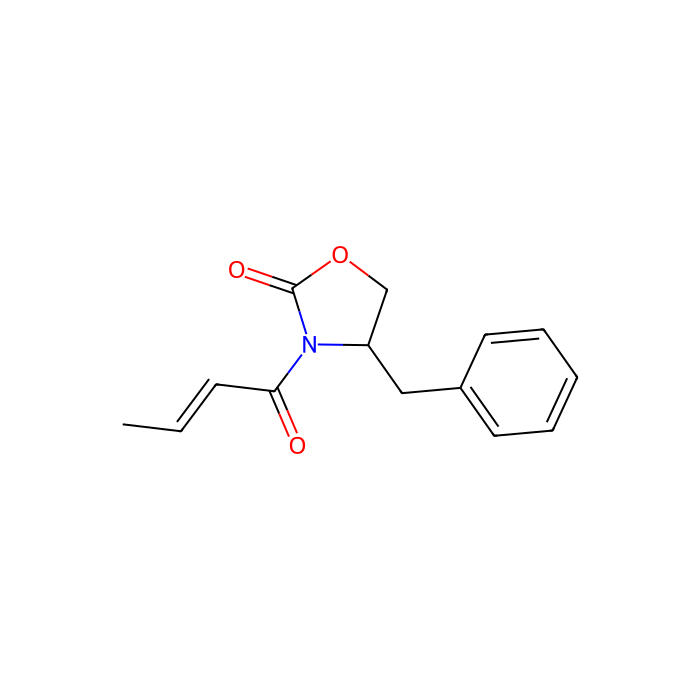
This compound belongs to the class of organic compounds known as oxazolidinones. These are compounds containing an oxazolidinone moiety, which is an oxazolidine bearing a ketone group.
External Descriptors
Not available
1. Djoumbou Feunang Y, Eisner R, Knox C, Chepelev L, Hastings J, Owen G, Fahy E, Steinbeck C, Subramanian S, Bolton E, Greiner R, and Wishart DS. ClassyFire: Automated Chemical Classification With A Comprehensive, Computable Taxonomy. Journal of Cheminformatics, 2016, 8:61.
Determine the necessary mass, volume, or concentration for preparing a solution.
Dilution Calculator
Determine the dilution needed to prepare a stock solution.
Reconstitution Calculator
Recensioni
Recensioni dei clienti
Application Protocols
No tested application protocols are provided in the Product Data for this item. The following general workflow illustrates typical handling of small-molecule probes in cell-based assays (literature/generic):
Prepare a 10–50 mM stock in anhydrous DMSO; vortex and, if needed, brief sonication to aid dissolution.
Perform serial dilutions in DMSO to create intermediate stocks, then dose into pre-warmed media to reach final working concentrations with constant vehicle percentage.
Include controls: vehicle-only, time-matched; optional rescue/competition controls where applicable.
Confirm solubility: visually inspect for precipitation after dosing; if present, reduce concentration or increase serum/cosolvent within tolerance limits.
Endpoint assays: harvest cells for Western blotting, qPCR, or viability after defined exposure times; collect supernatants for secreted markers if relevant.
These steps are illustrative and must be adapted to your model system. For validated, item-specific protocols, consult the primary literature on Locostatin or develop internal SOPs.
Biological Roles
The following describes literature-reported research roles; it does not imply any therapeutic or diagnostic use.
Chemical probe for signaling: Locostatin is widely cited as a small-molecule used to interrogate intracellular signaling pathways. It has been used to study Raf kinase inhibitory protein (RKIP) function by covalently modifying the protein and disrupting its interactions (literature).
Mode of action (literature): Functions as an electrophilic modifier, reacting with nucleophilic residues on target proteins, which can alter protein-protein interactions and downstream kinase cascades. Effects are typically evaluated via changes in phosphorylation states and cellular phenotypes.
Use contexts: Cell culture models, cell-free lysate labeling, and mechanistic biochemistry experiments. Dosing commonly spans low-to-mid micromolar regimes, with careful control of exposure time and vehicle percentage (literature practice; not item specifications).
Off-target considerations: As with many covalent probes, promiscuous labeling can occur; chemoproteomic profiling and competition experiments are recommended to assess selectivity and to deconvolute phenotypes.
Best practices (general):
Employ orthogonal validation (genetic knockdown/overexpression of suspected targets) to corroborate small-molecule effects.
Include time-course and washout studies to distinguish reversible vs. durable covalent effects.
Buffer Applications
Locostatin is not a buffering agent and is not used to control pH. This section is generally not applicable.
Practical note (general):
When dosing into biological buffers (e.g., PBS, HBSS, culture media), introduce Locostatin from a concentrated DMSO stock to minimize precipitation and maintain a constant vehicle percentage across treatments.
Green Alternatives
As a specialized biochemical probe, Locostatin does not have a direct “green” replacement with identical mechanistic behavior. Nonetheless, greener practice can be applied to its use.
Greener practice levers (general):
Solvent optimization: Prefer water-miscible, lower-toxicity solvents for stocks and workups when feasible (DMSO over DMF; ethanol/water co-solvent for intermediate dilutions if compatible).
Minimize solvent volumes: Use high-concentration DMSO stocks and microdosing into aqueous media to reduce organic solvent consumption.
Waste management: Segregate halogenated from non-halogenated organic waste; use adsorbents efficiently to reduce volume.
Energy: The product stores at room temperature per Product Data, reducing refrigeration energy demand.
Comparison (illustrative, general):
DMSO vs DMF: DMSO has a more favorable toxicity and environmental profile and is preferred for biological stocks; DMF is a reproductive toxin and should be minimized.
Acetonitrile vs dichloromethane (for extractions): Acetonitrile/water biphasic systems can sometimes replace chlorinated solvents; applicability depends on the exact assay and analyte partitioning.
Note: Because Locostatin’s bioactivity is tied to its specific electrophilic scaffold, substituting with a different compound is not a like-for-like green alternative; instead, optimize handling and solvent choices.
Pharmaceutical Uses
No pharmacopeial or excipient use is claimed for this product. It is supplied strictly for research use only (per Product Data: For research use only).
Context for formulation scientists (general):
In preclinical research settings, compounds like Locostatin may be formulated for in vitro assays or exploratory in vivo studies; however, such activities require institution-specific approvals and are outside the scope of this catalog listing.
No compendial monograph or approved excipient role is associated with this item to our knowledge. Do not use for human or veterinary applications.
Physical Properties
Only item-independent literature guidance is provided below. Do not use as product specifications.
Appearance: Not specified for this item; refer to CoA/Spec Sheet.
Melting/boiling point: Not specified for this item; refer to CoA/Spec Sheet (literature values vary by batch/form and are not provided here).
Density/refractive index: Not specified for this item; refer to CoA/Spec Sheet.
Solubility (literature, general): Often prepared as concentrated stocks in DMSO due to hydrophobic character; limited aqueous solubility is commonly reported for similar bioactive probes. Aqueous working solutions typically require cosolvent and/or surfactant (e.g., ≤0.1–1% DMSO or nonionic detergent) in cell-based assays.
LogP/cLogP: Not specified for this item; refer to CoA/Spec Sheet (literature reports suggest lipophilicity for cellular permeability).
pKa: Not typically reported; Not specified for this item.
UV–Vis characteristics: Not specified for this item; refer to CoA/Spec Sheet.
Notes for practitioners (general):
If crystallinity/oiling-out complicates weighing, dissolve directly into anhydrous DMSO to make a standard stock (e.g., 10–50 mM), then dilute into aqueous media immediately before use to minimize precipitation.
Filter sterilization of working solutions (0.22 µm, solvent-compatible) may be needed for cell culture experiments.
Quality and Grades
Item-specific grade/purity: Not specified for this item; refer to CoA/Spec Sheet.
How to interpret common research grades (general guidance):
Research grade: Suitable for most discovery biology and chemistry workflows. Purity is typically established by HPLC/LC–MS and/or NMR, but exact specifications vary by lot and supplier.
Analytical/HPLC grade (if applicable): Emphasizes low UV background and low residue for analytical use. Not indicated for this item unless stated on the CoA.
Stabilizers/inhibitors: Some electrophilic probes are shipped without stabilizers to preserve activity. If a stabilizer is present, it will be declared on the CoA; absence of such a note should not be construed as absence—verify on the CoA.
What to check on receiving (practitioner tips):
Confirm identity by LC–MS or NMR if your workflow is sensitivity-critical.
Review CoA for assay purity, residual solvents, and water content (if reported). If specifications are critical (e.g., exact purity threshold, counterions), pre-define acceptance criteria aligned to your protocol.
Reaction and Applications
This product is primarily used as a biochemical probe rather than a general synthetic reagent. No item-specific application notes were provided. The following are literature-based research uses without implying suitability for any therapeutic purpose.
Chemical biology (literature): Locostatin is reported as a covalent modifier used to perturb intracellular signaling pathways by reacting with nucleophilic amino acid side chains on target proteins. It has been employed to study the functional role of RKIP (Raf kinase inhibitory protein) in signaling networks.
Probe deployment: Typical workflows involve preparing DMSO stocks and treating cells or lysates at micromolar concentrations, followed by readouts such as Western blotting, phospho-proteomics, or phenotypic assays. Reaction of electrophilic centers with cysteine/lysine/histidine residues is often monitored indirectly via pathway activity changes.
Target engagement (literature): Chemoproteomic strategies (competition assays, click/probe analogs, or activity-based protein profiling) can be used to validate covalent engagement.
Practical tips (general):
Freshly prepare working solutions to limit hydrolysis or adventitious reaction with nucleophiles in media.
Include vehicle controls (matching DMSO percentage) and, if available, an inactive analog or rescue experiment to support specificity claims.
Consider glutathione and serum components as sinks for electrophiles; titrate dose-time conditions accordingly.
Reaction Conditions
No item-specific synthetic reaction conditions are provided because Locostatin is supplied as a research probe rather than a reagent. The following notes apply to biological application conditions (literature guidance) rather than chemical synthesis.
Stock preparation: Dissolve in anhydrous DMSO to 10–50 mM. Store small aliquots to minimize freeze–thaw and moisture exposure.
Dosing range (cell-based, literature): Typically low-to-mid micromolar; optimize per cell line and endpoint. Maintain constant DMSO across control and treated wells (often 0.05–0.5% v/v).
Exposure: 0.5–24 h depending on pathway kinetics and desired covalent engagement; washout studies may clarify durability of effects.
Controls: Include vehicle control and, where available, an inactive analog or competition with a nucleophile-resistant variant to assess specificity.
Readouts: Western blot of pathway markers, viability assays, transcriptomics/proteomics for broad phenotyping (literature examples).
These conditions are general literature practices and are not specifications. Always pilot-dose and confirm solubility and stability under your exact assay conditions.
Safety and Handling
Authoritative safety information is provided in the SDS. The following are general laboratory precautions for small-molecule bioactive probes; they are not product specifications.
GHS classification, pictograms, H-statements: Not specified for this item; refer to SDS.
Signal word: Not specified for this item; refer to SDS.
General precautions (good laboratory practice):
PPE: Wear lab coat, safety glasses, and appropriate chemical-resistant gloves (e.g., nitrile). Handle powders/solids in a fume hood to avoid inhalation and dust generation.
Avoid exposure: Prevent skin/eye contact and inhalation of dust or aerosols. Use local exhaust ventilation when weighing or dissolving.
Incompatibilities: Avoid strong oxidizers and strong bases/acids unless compatible with your experimental design. Protect electrophilic probes from nucleophile-rich storage environments (amines/thiols) to reduce degradation.
First aid (overview): In case of skin/eye contact, rinse with water for ≥15 minutes and remove contaminated clothing. If inhaled, move to fresh air. If ingested, rinse mouth; do not induce vomiting; seek medical attention. Always consult the SDS for full instructions.
Spill response: Absorb small spills with inert material; avoid dust formation. Dispose according to institutional and local regulations.
Waste: Collect organic solutions and contaminated disposables as hazardous chemical waste; label with contents and hazards.
Storage per Product Data: Room temperature. Keep container tightly closed in a dry, well-ventilated place; protect from light and moisture as prudent practice.
Solvent Selection
Locostatin is commonly handled as a lipophilic, electrophile-bearing probe (literature). Without item-specific solubility data, select solvents pragmatically for your application.
Primary stock solvent (literature): Anhydrous DMSO is widely used to prepare 10–50 mM stocks due to high solvating power for hydrophobic probes.
Alternate solvents: DMF, acetonitrile, or ethyl acetate may dissolve the solid for synthetic manipulations; for biological assays, limit residual organic content (e.g., ≤0.1–0.5% DMSO v/v in final media, as tolerated by cells).
Aqueous formulations: Typically require cosolvent and/or carriers (e.g., serum proteins, cyclodextrins, or micelle-forming detergents). Assess precipitation visually and by turbidity.
Selection considerations (general):
Polarity/miscibility: DMSO and DMF are polar aprotic and miscible with water, aiding serial dilution into buffers. Nonpolar solvents (toluene, hexanes) are generally unsuitable for biological use but may be relevant in synthesis or extractions.
Stability: Electrophilic probes may react with nucleophilic solvents (amines, thiols). Avoid ethanolamines and strong nucleophiles during stock preparation.
Mini comparison (general):
DMSO: Highest solvency; compatible with cell culture at low %; potential to reduce disulfides at elevated concentrations.
DMF: Good solvency; less preferred for biological work; may contain impurities (dimethylamine) that can react.
Acetonitrile: Moderate solvency; useful for LC compatibility; limited solubility for very hydrophobic analytes.
Container: Keep tightly closed in a dry, well-ventilated place. Protect from moisture and prolonged light exposure as a prudent practice for electrophilic probes.
Stability: Not specified for this item; refer to CoA/Spec Sheet for shelf-life and retest date.
Reconstitution (general, literature-based):
Solvent: Anhydrous DMSO is commonly used to prepare concentrated stocks (e.g., 10–50 mM). Filter if particulate persists (PTFE, solvent-compatible, 0.22 µm).
Aliquoting: Prepare single-use aliquots to avoid repeated freeze–thaw and moisture ingress. Store aliquots desiccated and protected from light.
Working solutions: Prepare immediately before use by diluting into pre-warmed assay buffer or culture media; maintain a constant final DMSO percentage across samples.
Freeze–thaw guidance:
If refrigerated or frozen stocks are used in your lab practice, avoid multiple cycles by aliquoting; equilibrate to room temperature before opening to prevent condensation.
Note: Exact solubility, concentration limits, and stability are not specified for this item; consult the CoA/SDS and verify experimentally under your conditions.
Structure and Identity
Brief description: Locostatin is a small-molecule research chemical commonly used as a covalent probe in cell signaling studies (literature). Item-specific structure fields were not provided in the Product Data.
Product name: Locostatin
CAS: 90719-30-5
PubChem CID: 5702600 (literature identifier)
InChIKey (from Product Data): 369164 (note: not a standard-length InChIKey; consult CoA/SDS for the definitive identifier)
Molecular formula: Not specified for this item; refer to CoA/Spec Sheet.
Molecular weight: Not specified for this item; refer to CoA/Spec Sheet.
SMILES: Not specified for this item; refer to CoA/Spec Sheet.
Structural features (general, literature):
Reported in the literature as a lipophilic, electrophile-bearing small molecule used to covalently modify proteins (e.g., RKIP) in cellular studies.
Typical features discussed in papers include an electrophilic warhead and an aromatic/alkyl scaffold that support cell permeability (literature, not item-specific).
2D structure (descriptive, literature):
Depicted as an organic, non-polymeric small molecule with an electrophilic center capable of Michael-type or acyl transfer reactions to nucleophilic residues on proteins (general literature description). For the exact, authoritative structure used for this item, consult the product CoA.
Synthetic Utility
Locostatin is primarily valued as a finished probe rather than as a synthon. Accordingly, synthetic utility as a building block is limited.
General considerations (literature/generic):
Functional group behavior: Electrophilic centers designed for covalent protein labeling can be labile toward strong nucleophiles and bases, which may limit their use in multistep synthesis.
Derivatization: Researchers sometimes prepare tagged analogs (e.g., alkyne/azide handles) for chemoproteomics via click-chemistry. Such derivatization typically requires careful preservation of the electrophile and scaffold sterics to retain biological activity (literature practice).
Stability: Protect the reactive moiety during synthetic manipulations by using neutral to mildly acidic conditions and anhydrous, oxygen-limited environments when necessary.
If your goal is to create affinity or reporter versions of Locostatin, consider late-stage diversification strategies (e.g., selective handle installation on non-critical aromatic positions), guided by SAR reported in the literature. Verify activity of any analogs in the same assays used for the parent compound.
Target Specificity
This section typically applies to biologics/antibodies. No target specificity data are provided in the Product Data for this small-molecule product.
Item-specific antigen/epitope/clone/isotype: Not applicable.
Literature note (context only, not an item specification): Locostatin has been used as a chemical probe to study RKIP-related biology, but definitive target panels and affinity data should be sourced from primary publications and are not provided here.
We use cookies to ensure the website functions properly and, where permitted, to improve your experience. You can manage your preferences at any time in Settings. Learn more in our Cookie Policy.
Shall we send you a message when we have discounts available?
Remind me later
Thank you! Please check your email inbox to confirm.
Products are supplied to verified businesses, institutions, and qualified professionals for research and development use only. Not for use in humans, animals, diagnosis, or therapy.

 L2326097