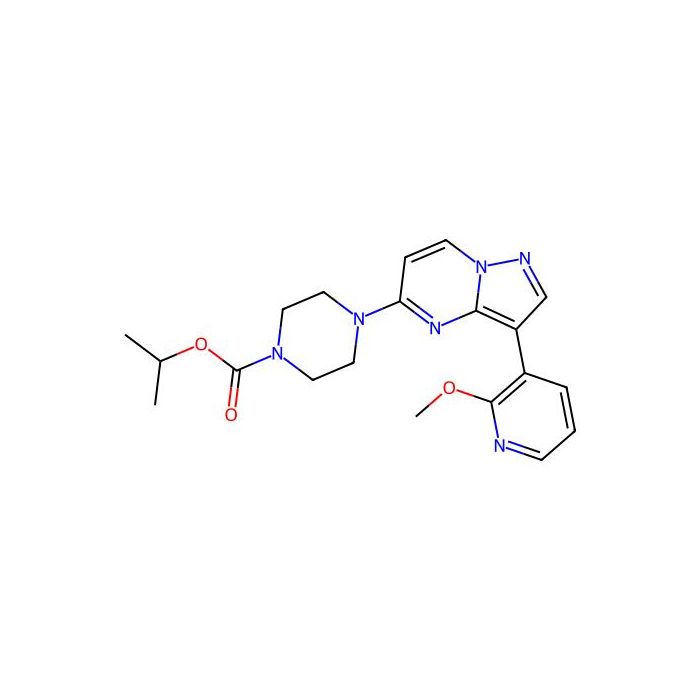
LP-935509 - ≥99% , CAS No.1454555-29-3

CAS: 1454555-29-3 Cat. No.: L647310 Formula: C20H24N6O3 Peso molecolare: 396.44 Numero EC: 884-546-2 PubChem CID: 86697436
Disponibile su ordine
QUALITÀ & PUREZZA ≥99%
Storage
Store at -20°C
Shipped In
Ice chest + Ice pads
★
Dimensione
Germania (EU)
USA*
Prezzo
Qtà
5mg
L647310-5mg
Su ordinazione · 8–12 settimane
165,65€
10mg
L647310-10mg
Su ordinazione · 8–12 settimane
287,13€
50mg
L647310-50mg
Su ordinazione · 8–12 settimane
1.033,39€
100mg
L647310-100mg
Su ordinazione · 8–12 settimane
1.823,03€
Enter a quantity for the sizes you want to add.

Panoramica

LP-935509 is an orally active, potent, selective, ATP-competitive and brain-penetrant inhibitor of adaptor protein-2 associated kinase 1 (AAK1) with an IC 50 of 3.3 nM and a K i of 0.9 nM, respectively. LP-935509 is also a potent inhibitor of BIKE ( IC 50 =14 nM) and a modest inhibitor of GAK ( IC 50 =320 nM). LP-935509 shows antinociceptive activity. LP-935509 can be used for neuropathic pain and SARS-CoV-2 research

In Vitro

LP-935509 inhibits μ2 phosphorylation with an IC 50 value of 2.8 ± 0.4 nM, inhibits phosphorylation of a peptide derived from the μ2 protein with an IC 50 value of 3.3 ± 0.7 nM. LP-935509 exhibits a dose-dependent inhibition of the SARS-CoV-2 S-RBD internalization into host cells. MCE has not independently confirmed the accuracy of these methods. They are for reference only.

In Vivo

LP-935509 (0-60 mg/kg; PO, single) causes a robust reduction in pain behavior . LP-935509 (0.1-30 mg/kg; PO, single dosage) causes a dose-dependent reversal of thermal hyperalgesia in CCI model . LP-935509 (IV (1 mg/kg) or orally (10 mg/kg); once) has 100% oral bioavailability and a plasma half life of 3.6 hours . MCE has not independently confirmed the accuracy of these methods. They are for reference only. Animal Model: Male C57BL/6J mice (with SNL(spinal nerve ligation) injury, n=8-10 male mice per group) Dosage: 0, 10, 30 and 60 mg/kg (10 ml/kg) Administration: PO, single Result: Caused a dose-dependent reduction in phase II paw flinches that was significantly lower than the vehicle-treated animals; exhibited a dose-dependent reversal of the mechanical allodynia; Caused a robust reduction in pain behavior. Animal Model: Male Sprague-Dawley rats (CCI (chronic constriction injury)-operated rats) Dosage: 0, 0.1, 0.3, 1, 3, 10, or 30 mg/kg Administration: PO, two daily, for 5 days Result: Caused a dose-dependent reversal of thermal hyperalgesia, cold allodynia, mechanical allodynia, and mechanical hyperalgesia in CCI animals. Reversed the behavioral deficits, with ED 50 values ranging from 2 mg/kg to 10 mg/kg. Animal Model: Male Sprague-Dawley rats Dosage: 1 mg/kg (IV), 10 mg/kg (PO) Administration: IV, PO; once (Pharmacokinetic Analysis) Result: Had 100% oral bioavailability and a plasma half life of 3.6 hours; The Cmax for the 10 mg/kg oral dose was 5.2 µM at 0.5-hour postdose; had a plasma-free fraction of 2.6% in mice. Brain drug levels exceeded plasma drug levels with a brain/plasma drug ratio typically between 3 and 4, showing that LP-935509 was highly brain-penetrant.

Form:Solid

IC50& Target:IC50: 3.3 ± 0.7 nM (AAK1), 14 nM (BIKE), 320 ± 40 nM (GAK)

Specifiche

Specifiche e purezza
≥99%
Meccanismi biochimici e fisiologici
LP-935509 is an orally active, potent, selective, ATP-competitive and brain-penetrant inhibitor of adaptor protein-2 associated kinase 1 (AAK1) with an IC 50 of 3.3 nM and a K i of 0.9 nM, respectively. LP-935509 is also a potent inhibitor of BIKE ( IC 50
Condizioni di conservazione di stoccaggio
Store at -20°C
Spedito in
Ice chest + Ice pads
Questo prodotto richiede spedizione a catena fredda. I servizi di terra e altri servizi economici non sono disponibili.
Tipo di azione
INHIBITOR
Purezza
≥99%
Nomi e identificatori
SMILES
CC(C)OC(=O)N1CCN(CC1)C2=NC3=C(C=NN3C=C2)C4=C(N=CC=C4)OC
IUPAC Name
propan-2-yl 4-[3-(2-methoxypyridin-3-yl)pyrazolo[1,5-a]pyrimidin-5-yl]piperazine-1-carboxylate
InChIKey
GOOYSJIWTIHOGW-UHFFFAOYSA-N
InChI
1S/C20H24N6O3/c1-14(2)29-20(27)25-11-9-24(10-12-25)17-6-8-26-18(23-17)16(13-22-26)15-5-4-7-21-19(15)28-3/h4-8,13-14H,9-12H2,1-3H3
Isomeri SMILES
CC(C)OC(=O)N1CCN(CC1)C2=NC3=C(C=NN3C=C2)C4=C(N=CC=C4)OC
PubChem CID
86697436
Peso molecolare
396.44

Dati avanzati

Taxonomic Classification

Taxonomy Tree

KingdomOrganic compounds
SuperclassOrganoheterocyclic compounds
ClasseDiazinanes
SubclassPiperazines
Intermediate Tree Nodes Not available
Direct ParentN-arylpiperazines
Alternative Parents Pyrazolylpyridines  Pyrazolo[1,5-a]pyrimidines  Piperazine carboxylic acids  Dialkylarylamines  Aminopyrimidines and derivatives  Alkyl aryl ethers  Imidolactams  Pyrazoles  Heteroaromatic compounds  Carbamate esters  Azacyclic compounds  Organic oxides  Hydrocarbon derivatives  Carbonyl compounds  
Molecular FrameworkAromatic heteropolycyclic compounds
Substituents N-arylpiperazine - 3-pyrazolylpyridine - Pyrazolo[1,5-a]pyrimidine - Piperazine-1-carboxylic acid - Pyrazolopyrimidine - Dialkylarylamine - Alkyl aryl ether - Aminopyrimidine - Imidolactam - Pyrimidine - Pyridine - Azole - Heteroaromatic compound - Pyrazole - Carbamic acid ester - Ether - Azacycle - Organooxygen compound - Organonitrogen compound - Organic nitrogen compound - Carbonyl group - Organic oxide - Organic oxygen compound - Hydrocarbon derivative - Amine - Aromatic heteropolycyclic compound
DescrizioneThis compound belongs to the class of organic compounds known as n-arylpiperazines. These are organic compounds containing a piperazine ring where the nitrogen ring atom carries an aryl group.
External Descriptors Not available
Struttura 3D
Modello di struttura chimica interattiva


Obiettivi associati (umani)
AAK1 Tchem AP2-associated protein kinase 1 (1 Activities)
Activity TypeActivity Value -log(M)Mechanism of ActionActivity ReferencePublications (PubMed IDs)
Meccanismi d'azione
Certificati (CoA, COO, BSE/TSE e tabella di analisi)
C of A & Other Certificates(BSE/TSE, COO):
Analytical Chart:
Proprietà chimiche e fisiche
SolubilitàDMSO : 50 mg/mL (126.12 mM; Need ultrasonic)
Peso molecolare396.4
XLogP32.100
Hydrogen Bond Donor Count0
Hydrogen Bond Acceptor Count7
Rotatable Bond Count5
Exact Mass396.191 Da
Monoisotopic Mass396.191 Da
Topological Polar Surface Area85.100 Ų
Heavy Atom Count29
Formal Charge0
Complexity556.000
Isotope Atom Count0
Defined Atom Stereocenter Count0
Undefined Atom Stereocenter Count0
Defined Bond Stereocenter Count0
Undefined Bond Stereocenter Count0
The total count of all stereochemical bonds0
Covalently-Bonded Unit Count1
Calcolatori di soluzioni
Recensioni

Recensioni dei clienti

Application Protocols

No vendor-tested application protocols are provided for this item.

General protocol templates (research use only):

  • Preparation of DMSO master stock:
    • Warm vial to room temperature in a desiccator. Weigh required amount quickly. Add anhydrous DMSO to achieve 10–50 mM. Vortex and sonicate briefly until homogeneous. Filter (0.22 µm PTFE) if needed.
  • Plate-based screening (biochemical or cellular):
    • Prepare serial dilutions in DMSO (e.g., 3-fold) and transfer to assay plates via acoustic dispensing. Ensure final DMSO content is within assay tolerance. Include vehicle controls and at least 8-point concentration–response.
  • Thermal shift or binding assays:
    • Mix compound dilutions with target protein under assay buffer conditions; include dye or label as required. Assess signal interference controls.

Documentation:

  • Record lot number, exact concentration, solvent, and dispense method in ELN/LIMS. Attach chromatograms/mass spectra if purity confirmation is performed.

Item-specific recommendations (dilutions, positive controls, validated applications): Not specified for this item; refer to CoA/Spec Sheet or develop internally.

Biological Roles

Item-specific biological targets, modes of action, and pathways are not provided in the Product Data. Accordingly, no claims are made regarding LP-935509’s biological role.

General context for small-molecule research tools:

  • Chemical probes can modulate enzyme activity, receptor signaling, or protein–protein interactions to dissect pathway function in cells or in vitro systems.
  • In chemical biology workflows, compounds are used to establish target engagement (e.g., CETSA, DARTS, pull-downs) and to map downstream effects via transcriptomics/proteomics/metabolomics.
  • Selectivity profiling across panels (kinases, GPCRs, ion channels, etc.) and counter-screens is essential to attribute phenotypic outcomes to specific targets.
  • Orthogonal confirmation: Genetic perturbations (siRNA/CRISPR) and structurally distinct probes with similar activity strengthen causal interpretations.

Best practices:

  • Determine solubility/aggregation limits to avoid assay artifacts.
  • Establish concentration–response relationships with appropriate vehicle controls and replicate statistics.
  • Implement contamination checks (endotoxin for cellular work; residual solvents) when relevant.

Research Use Note: For research use only; not for human or veterinary use. For any biological conclusions, derive and document evidence with your own validated assays; no target specificity is provided here.

Buffer Applications

This product is a research small molecule, not a buffering reagent. Therefore, classical buffer-system guidance (pKa, buffering range, recipe) is not applicable.

Practical notes (assay buffer interface):

  • When introducing DMSO stocks into aqueous buffers, add slowly with mixing to prevent precipitation. Maintain final DMSO at assay-tolerated levels (commonly ≤0.1–0.5% v/v, general guidance).
  • Include inert protein (e.g., 0.1% BSA) or low-level nonionic surfactant (e.g., 0.01–0.05% Tween 20) if nonspecific adsorption or aggregation is suspected.

Item-specific buffer-related properties (pKa, solubility limits, stability): Not specified for this item; refer to CoA/Spec Sheet or determine empirically.

Green Alternatives

Greener handling considerations focus on solvents and workup since the compound structure and hazards are not specified.

Solvent choices (greener options; general guidance):

  • Prefer ethanol or water-miscible bio-based solvents (where feasible) for analytical/sample prep. However, solubility constraints often necessitate DMSO.
  • 2-Methyltetrahydrofuran (2-MeTHF) or CPME can replace dichloromethane in extraction/flash processes during analog synthesis (if applicable).
  • Acetonitrile can often substitute for DMF/NMP in LC and some sample preparations due to lower chronic toxicity.

Illustrative comparison (general):

  • DMSO: High solvency; low volatility; good EHS profile relative to DMF/NMP; glove permeation risk remains.
  • Ethanol: Renewable and low toxicity; may be insufficient for very lipophilic compounds.
  • 2-MeTHF: Bio-derived; lower peroxide risk than THF; favorable for many synthetic steps, but less polar.

Operational tips to reduce environmental footprint:

  • Use high-concentration master stocks and miniaturized assays (acoustic dispensing) to cut solvent consumption.
  • Employ closed-vial thawing and nitrogen backfilling to extend stock life and reduce waste.
  • Plan aliquot sizes to eliminate unnecessary freeze–thaw cycles and disposals.

Caveat: Choose greener options only after confirming compound stability and assay performance; item-specific stability/solubility are not provided and must be established experimentally.

Pharmaceutical Uses

No pharmacopeial status or formulation role is provided for this item. LP-935509 is supplied strictly for research use; no clinical or therapeutic applications are claimed or supported.

General considerations for discovery-stage compounds (nonclinical, research-only):

  • Preformulation screening (solubility in biorelevant media, pH–solubility profile, stability) may be performed to characterize behavior in model systems; these data are not provided for this item.
  • Salt/solid-form selection, excipient compatibility, and polymorph screening are typical in development settings but are out of scope here without item-specific data.
  • For in vitro ADME research (permeability, microsomal stability, plasma protein binding), develop fit-for-purpose analytical methods (LC–MS/MS). No ADME data are provided for this item.

Compliance note:

  • This material is for research use only and is not manufactured under GMP. Do not use in humans or in diagnostic procedures. For any regulated work, source GMP-grade material or conduct appropriate qualification per your quality system.
Physical Properties

Item-specific physicochemical specifications are not provided in the Product Data. Do not assume values for analytical method development; verify via CoA/Spec Sheet.

  • Appearance: Not specified for this item; refer to CoA/Spec Sheet.
  • Melting point (MP): Not specified for this item; refer to CoA/Spec Sheet.
  • Boiling point (BP): Not applicable/unknown for a likely solid research compound; not specified for this item; refer to CoA/Spec Sheet.
  • Density: Not specified for this item; refer to CoA/Spec Sheet.
  • Refractive index: Not applicable to solids; not specified for this item; refer to CoA/Spec Sheet.
  • Solubility: Not specified for this item; typical practice for screening compounds is dissolution in anhydrous DMSO to prepare 10–50 mM stocks (general guidance, not a specification).
  • logP/logD, pKa: Not specified for this item; consult literature or CoA.

Practical notes (general, literature-based best practices for small-molecule tools):

  • Prepare anhydrous DMSO stocks under inert atmosphere if the structure suggests hydrolysis/oxidation sensitivity; store aliquots at −20 °C.
  • For aqueous assays, pre-dilute DMSO stocks into assay buffer to keep final DMSO ≤0.1–0.5% v/v, unless assay tolerates higher.
  • If crystallinity or poor wetting is observed, gentle heating (≤37 °C) and sonication can aid dissolution; avoid prolonged heating.

Always confirm item-specific physical data with the lot-specific CoA before critical experiments.

Quality and Grades
  • Grade/Purity: Not specified for this item; refer to CoA/Spec Sheet. Library compounds are often supplied at high chemical purity (e.g., ≥95% by LC–MS/HPLC), but this is not specified here.

What “library compound” typically implies (general guidance):

  • Identity confirmation: Typically supported by LC–MS and/or 1H NMR. Some vendors include HRMS and purity by UV/ELSD. Confirm in the lot-specific documentation.
  • Purity relevance: For biochemical and cell-based assays, impurities can confound potency/phenotype. Verify purity threshold meets your study’s requirements.
  • Counter-ions/solvates: If salt form or solvate is relevant to your protocols (e.g., mass calculations, solubility), confirm with the CoA.
  • UV profile: If intended for HPLC-based quantitation, low-UV impurities and extinction coefficient data may be desirable; request data if not present in the CoA.

Recommendations for incoming QC (user side):

  • Orthogonal ID check (e.g., LC–MS + 1H NMR) on first use for critical projects.
  • Quick purity screen by analytical HPLC across multiple wavelengths (210–300 nm) to detect nonchromophoric impurities.
  • Record lot number on all data; maintain aliquot traceability.

Note: In absence of a stated grade, treat the material as a research reagent requiring verification prior to regulated or GLP workflows.

Reaction and Applications

Research applications (general for bioactive small molecules):

  • Chemical biology: Use as a defined small-molecule tool in target engagement, pathway modulation, and phenotypic screening. Incorporate into focused libraries for SAR exploration.
  • Assay development: Create DMSO stock solutions for biochemical/biophysical assays (enzyme activity, binding, thermal shift), cellular assays, or high-content imaging. Validate concentration by quantitative NMR or UV if extinction coefficient is known.
  • Analytical controls: Employ as a positive/negative control in platforms once target activity is established in your lab (activity not specified here; establish independently).

Methodological tips:

  • Plate handling: Dispense with acoustic or pin-tool systems to minimize DMSO volume and edge effects. Use randomized layouts and include vehicle controls.
  • Adsorption/aggregation: Assess with detergent controls, dynamic light scattering, or counter-screens to rule out colloidal behavior.
  • Stability checks: Evaluate freeze–thaw resilience and bench stability by LC–MS. If degradation is observed, switch to single-use aliquots and minimize light/air exposure.

Synthetic chemistry context:

  • If using as a lead for derivatization, obtain or elucidate the structure, then design analogs via classical medicinal chemistry strategies (isosteres, heterocycle edits, side-chain scans). Item-specific reactivity is unknown; confirm functional group compatibility experimentally.

Note: No manufacturer application notes are provided for this item. All uses are for research only; no diagnostic or therapeutic use.

Reaction Conditions

No item-specific chemical reaction conditions are applicable without the known structure. However, for common research uses (stock preparation and assay introduction), the following general, literature-based practices apply:

Stock solution preparation (typical):

  • Solvent: Anhydrous DMSO (primary). Alternative: DMF or ethanol if compatible with downstream assays.
  • Concentration: 10–50 mM as a starting point; adjust based on solubility. Confirm concentration by weight, qNMR, or UV (if extinction coefficient is available).
  • Aids: Gentle warming (≤37 °C) and brief sonication to ensure complete dissolution. Avoid strong acids/bases unless stability is known.

Aqueous assay dilution:

  • Add DMSO stock slowly to buffered media with mixing; target final DMSO ≤0.1–0.5% v/v (assay-dependent).
  • If precipitation occurs, lower intermediate concentration steps or include 0.01–0.05% nonionic surfactant (general practice) and re-test.

Stability checks:

  • Short-term bench stability: Spot-check by LC–MS after 4–24 h at room temperature.
  • Freeze–thaw: Evaluate 3–5 cycles; adopt single-use aliquots if degradation observed.
  • Light/air: If chromophores or oxidation-sensitive moieties exist (unknown here), protect from light and blanket with inert gas during storage and handling.

Note: For true synthetic reaction conditions (e.g., coupling, cycloadditions), obtain the confirmed structure and consult primary literature. None are specified for this item.

Safety and Handling

Safety data fields are not populated in the Product Data. Treat as a laboratory research chemical with unknown hazards; apply conservative controls and consult the SDS for authoritative guidance.

Item-specific data from Product Data:

  • GHS Classification: Not specified for this item; refer to SDS.
  • Signal word / H-statements / Pictograms: Not specified for this item; refer to SDS.

General laboratory precautions (good practice):

  • Engineering controls: Work in a certified chemical fume hood; avoid aerosol/dust formation during weighing.
  • PPE: Lab coat, safety glasses or splash goggles, and appropriate chemical-resistant gloves (e.g., nitrile). Consider double-gloving for DMSO solutions to reduce permeation risk.
  • Handling: Avoid inhalation, ingestion, and skin/eye contact. Use micro-spatulas and antistatic precautions for fine powders.
  • Incompatibilities: Unknown for this item; in absence of data, segregate from strong oxidizers and strong acids/bases. Avoid moisture if compound is hydrolytically sensitive (verify via CoA/SDS).
  • Spill response: For small spills, absorb with inert material, collect for disposal as hazardous chemical waste. Prevent release to drains.
  • First aid (overview; defer to SDS): Eye/skin contact—rinse with water for at least 15 minutes; remove contaminated clothing. Inhalation—move to fresh air. Ingestion—rinse mouth; seek medical advice.
  • Waste: Dispose via licensed chemical waste contractor in accordance with institutional and local regulations.

Research Use Note: For research use only.

Solvent Selection

Given the lack of item-specific solubility data, select solvents using standard practices for heteroatom-containing drug-like small molecules.

Primary choices (general guidance):

  • DMSO (anhydrous): First-line solvent for screening stocks (10–50 mM). High solvating power; mixability with aqueous buffers after serial dilution.
  • DMF or NMP: Useful for method development and sample prep when DMSO is insufficient; consider toxicity and PPE.
  • Acetonitrile, methanol, ethanol: For analytical dilutions and LC compatibility; test for precipitation upon aqueous mixing.

Aqueous systems:

  • Pre-dilute DMSO stock into buffer with vigorous mixing to limit local supersaturation. Maintain final DMSO at a level tolerated by the assay (often ≤0.1–0.5% v/v).
  • Use surfactant-containing assay buffers (e.g., 0.01–0.05% Tween 20) when nonspecific adsorption or aggregation is suspected (general practice).

Small comparison (general characteristics):

  • DMSO: Highest solvency; slow water-induced precipitation; permeates gloves—use caution.
  • MeOH/EtOH: Volatile, protic; may alter assay readouts; lower solvency for lipophilic compounds.
  • ACN: LC-friendly, volatile; limited for very polar or very nonpolar analytes.

Tips:

  • Warm (≤37 °C) and vortex/sonicate to aid dissolution; avoid strong base/acid unless stability is confirmed.
  • Filter 0.22 µm before LC/biophysical analyses if particulates persist.

Item-specific solubility: Not specified for this item; refer to CoA/Spec Sheet.

Storage and Reconstitution

Item-specific conditions from Product Data:

  • Storage: Store at −20 °C.
  • Shipping: Shipped in an ice chest with ice pads (cold chain maintained).

General best practices for research small molecules:

  • As-received solid (if supplied as solid; appearance not specified): Keep tightly closed in original container, desiccated, protected from light. Warm to room temperature in a desiccator before opening to avoid moisture condensation.
  • Reconstitution: Use anhydrous DMSO for initial stock preparation unless CoA indicates otherwise. Start at 10–50 mM; adjust based on observed solubility. Document exact solvent and concentration.
  • Aliquoting: Prepare single-use aliquots (amber vials/tubes) to minimize freeze–thaw and headspace moisture. Backfill with inert gas (N2/Ar) if oxidation sensitivity is suspected.
  • Storage of solutions: Store aliquots at −20 °C in sealed, chemically compatible containers. Avoid frost-free freezer cycles. Protect from light.
  • Stability/retention time: Not specified for this item; determine empirically by periodic LC–MS/HPLC checks (e.g., monthly) and after freeze–thaw.
  • Thawing: Thaw on ice or at room temperature; mix gently to re-homogenize. Do not refreeze partially used aliquots—discard per institutional waste procedures.

Research Use Note: For research use only. Consult CoA and SDS for any additional, lot-specific storage and handling instructions.

Structure and Identity

Brief overview: LP-935509 is supplied as a research-use small-molecule library member. Item-specific structural identifiers are largely not disclosed in the Product Data.

  • SKU: L647310
  • Product name: LP-935509
  • CAS: 1454555-29-3 (item-specific)
  • PubChem CID: 86697436 (literature cross-reference)
  • InChIKey: 107497 (item-specific; note: atypical format as provided)
  • SMILES: Not specified for this item; refer to CoA/Spec Sheet.
  • Molecular formula: Not specified for this item; refer to CoA/Spec Sheet.
  • Molecular weight: Not specified for this item; refer to CoA/Spec Sheet.

Structural features (general guidance):

  • The precise 2D structure, functional groups, and stereochemistry are not provided in the Product Data. For definitive structural interpretation, consult the Certificate of Analysis (CoA) or supplier specification.

2D structure description (general):

  • Not available from the provided data. If structure is required for docking, modeling, or analytical method development, retrieve MOL/SDF from the CoA or from trusted databases (cross-checking against the exact CAS and supplier lot).
Synthetic Utility

Item-specific functional groups and reactivity are not provided; therefore, no definitive synthetic transformations can be recommended for LP-935509.

General guidance if using this compound as a lead for analog synthesis:

  • Obtain the exact structure (from CoA or primary literature) and identify liabilities (oxidation-prone heteroaromatics, hydrolyzable amides/esters, basic amines, etc.).
  • Plan diversification vectors (Scaffold hopping, ring substitutions, side-chain modifications, heteroatom isosteres) informed by computed physicochemical properties (cLogP, TPSA, pKa) and in vitro data.
  • Protecting-group strategy: Choose orthogonal PGs compatible with the core scaffold once known. Avoid harsh conditions until stability is established.
  • Late-stage diversification: Consider C–H activation, photocatalytic functionalization, or SuFEx handles if the scaffold permits, to accelerate SAR.

Analytical support:

  • Use LC–MS for rapid reaction scouting; confirm final identity with HRMS and NMR (1H, 13C, HSQC/HMBC as needed). Assess purity across multiple UV wavelengths.

Caveat: All synthetic utility depends on the actual structure of LP-935509, which is not provided here. Do not infer reactivity without verified structural information.

Target Specificity

No target, pathway, or binding specificity is provided in the Product Data for LP-935509. Accordingly, no claims are made regarding biochemical targets or selectivity profiles.

If target annotation is required for your research:

  • Perform in-house profiling across relevant target panels (e.g., kinases, GPCRs, ion channels) to establish activity and selectivity.
  • Use orthogonal readouts and counterscreens to exclude assay artifacts (fluorescence interference, redox cycling, aggregation).
  • Cross-reference with peer-reviewed literature or trusted databases, ensuring exact CAS and structure match the supplied material/lot.

Item-specific target data: Not specified for this item; refer to CoA/Spec Sheet or your own validation.

Domande frequenti

What is the purity of this product?
This product is supplied at ≥99% purity (chemical assay). Lot-specific values are stated on the Certificate of Analysis.
How should this product be stored?
Store at ?20 °C. Freezer storage is required to maintain the specified shelf life.
How is this product shipped?
This product ships in an insulated container with ice pads. Unpack on arrival and transfer it to the storage condition stated above.
What are the CAS number, molecular formula and molecular weight?
The CAS Number is 1454555-29-3, the molecular formula is C20H24N6O3, and the molecular weight is 396.44 g/mol. InChIKey GOOYSJIWTIHOGW-UHFFFAOYSA-N.
What documentation is provided?
Available product documentation, including Certificates of Analysis (COA), Safety Data Sheets (SDS), and specification sheets, is shown in the product document area. Document availability and access follow the current site policy.

Desidera che le inviamo un messaggio quando avremo sconti disponibili?

Ricordamelo più tardi

Grazie! Controlli la sua casella di posta per confermare.

Ops! Le notifiche sono disabilitate.