QUALITÀ & PUREZZAMoligand™?Moligand™ — Aladdin's line of ligands and bioactive small molecules. Use for receptor, pathway, and binding studies needing defined small-molecule tools.10 mM in DMSO
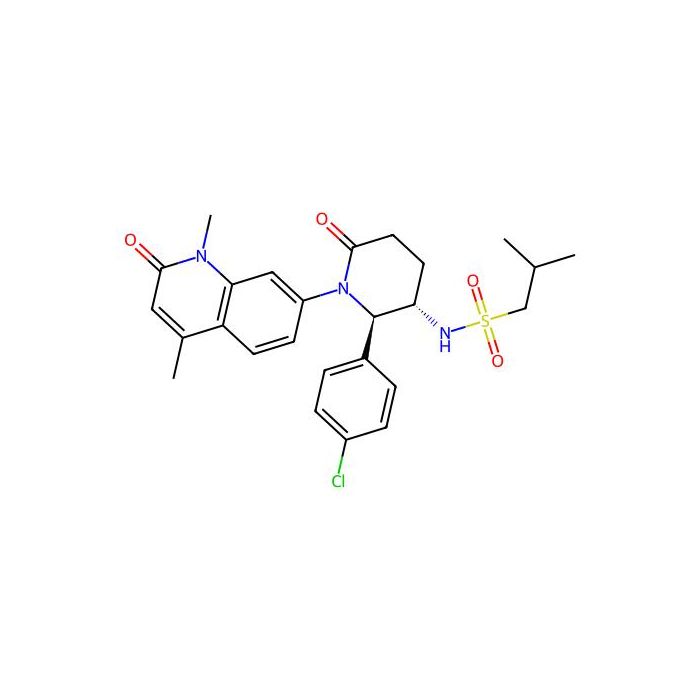
LP99, an epigenetic probe, is a potent and selective inhibitor of the BRD7 and BRD9 bromodomains with a K d of 99 nM against BRD9. LP99 disrupts the binding of BRD7 and BRD9 to chromatin in cells.
Specifiche
Specifiche e purezza
Moligand™, 10 mM in DMSO
Condizioni di conservazione di stoccaggio
Store at -80°C
Spedito in
Dry ice packs + Cold packs
Questo prodotto richiede spedizione a catena fredda. I servizi di terra e altri servizi economici non sono disponibili.
Certificati (CoA, COO, BSE/TSE e tabella di analisi)
C of A & Other Certificates(BSE/TSE, COO):
Analytical Chart:
Calcolatori di soluzioni
Molarity Calculator
Determine the necessary mass, volume, or concentration for preparing a solution.
Dilution Calculator
Determine the dilution needed to prepare a stock solution.
Reconstitution Calculator
Recensioni
Recensioni dei clienti
Application Protocols
No item-specific, vendor-validated application protocols are provided. The following are general starting points for small-molecule bromodomain probes:
Preparing stocks:
Dissolve LP99 in anhydrous DMSO to 10–50 mM. Store aliquots at −80°C. Avoid repeated freeze–thaw.
Biochemical displacement assay (general):
Buffer: 25 mM HEPES pH 7.5, 150 mM NaCl, 0.01–0.05% Tween-20, 0.1% BSA.
Incubate bromodomain protein with tracer and serial dilutions of LP99 (8–10 points, 3-fold dilutions) at room temperature for 30–60 min; read via FP/HTRF/AlphaScreen per kit guidance.
Thermal shift (DSF/TSA) (general):
Mix protein with SYPRO Orange and LP99 at multiple concentrations; run melt curve from 20–95°C; assess ΔTm vs vehicle.
Cell-based treatments (general):
Add from DMSO stocks to culture medium, keeping final DMSO ≤0.1–0.5%. Include vehicle controls and, where possible, inactive analogs/orthogonal probes.
Data quality controls:
Confirm solubility at top test concentrations; use centrifugation or filtration to remove particulates. Maintain constant DMSO across all conditions.
These are general guidelines; optimize for your protein construct, detection technology, and cell model.
Biological Roles
Background (literature/general):
Bromodomains (BRDs) are epigenetic reader modules that recognize ε-N-acetyllysine on histone tails, modulating chromatin structure and transcriptional programs.
BRD7 and BRD9 are non-BET bromodomain proteins implicated in chromatin remodeling complexes and transcriptional regulation. BRD9 is a component of the ncBAF (non-canonical BAF) complex, while BRD7 has roles in tumor suppressor pathways and PI3K signaling (literature).
Relevance of LP99 as a probe (literature):
LP99 has been reported as a selective small-molecule ligand for BRD7/BRD9 bromodomains, enabling studies of acetyl-lysine reader engagement and downstream transcriptional effects. Probes like LP99 facilitate target validation, pathway mapping, and chemical genetics through reversible occupancy of the Kac-binding pocket.
Practical considerations:
Employ genetic controls (e.g., bromodomain-dead mutants or knockdowns) alongside chemical probing to corroborate on-target mechanisms.
Use concentration ranges that bracket reported binding affinities, and include orthogonal assays to decouple primary target effects from potential off-targets.
Note: No biological activity values or specific mechanistic data are provided with this item; consult peer-reviewed literature for detailed binding parameters and cellular phenotypes and verify under your experimental conditions.
Buffer Applications
LP99 is not a buffering agent and is not used to control solution pH. Therefore, typical buffer formulation guidance (e.g., phosphate, Tris, HEPES systems) does not apply.
Practical note:
When using LP99 in biochemical assays, select a buffer compatible with your bromodomain assay format (commonly HEPES or Tris with NaCl and detergent), and maintain constant final DMSO concentration across all wells. Include BSA or similar carrier protein when needed to minimize nonspecific adsorption.
Green Alternatives
While LP99 itself is the analyte of interest rather than a process solvent, greener practice considerations apply to its handling and assay use:
Solvent choice: Prefer DMSO over DMF for routine stocks due to lower toxicity and more favorable environmental profile. Limit DMF and chlorinated solvents to method development where essential.
Stock concentration: Use high-concentration DMSO stocks (e.g., 10–50 mM) to minimize solvent volume introduced into aqueous assays, reducing waste and exposure.
Miniaturization: Employ low-volume microplate formats (384/1536-well) to decrease compound and solvent consumption without compromising data quality.
Illustrative comparison (general):
DMSO vs DMF: DMSO offers lower volatility and better operator safety; DMF presents higher chronic toxicity concerns. Choose DMSO unless specific solvency constraints dictate otherwise.
Aqueous co-solvents: Where feasible, introduce PEG-400 or cyclodextrin carriers for solubilization as greener additives, balancing potential biological interference.
Waste management:
Segregate DMSO-containing liquid waste; avoid unnecessary dilution that increases total waste volume. Use adsorbents for small spills and dispose per local regulations.
Note: These recommendations are general green-chemistry practices for small-molecule probe handling and are not item-specific specifications.
Pharmaceutical Uses
This product is supplied strictly for research use and is not intended for human or veterinary applications.
Role in pharmaceutical R&D (general): LP99 may be used as a reference chemical probe in discovery biology to interrogate bromodomain targets, assist in hypothesis testing, and benchmark emerging chemotypes in screening cascades.
Formulation context: For in vitro and ex vivo studies, LP99 is typically handled as a DMSO stock and diluted into assay media. No pharmacopoeial monograph or excipient status is associated with LP99.
No claims are made regarding clinical efficacy, safety, or suitability for therapeutic use. Any preformulation or ADME discussions should be performed internally with appropriate controls and are outside the scope of this catalog item.
Physical Properties
Item-specific physical-chemical specifications are not provided in the current product data and should be verified on the CoA/Spec Sheet.
Appearance: Not specified for this item; refer to CoA/Spec Sheet.
Melting point: Not specified for this item; refer to CoA/Spec Sheet.
Boiling point: Not applicable/Not specified for this solid probe; refer to CoA/Spec Sheet.
Density: Not specified for this item; refer to CoA/Spec Sheet.
Solubility: Not specified for this item; refer to CoA/Spec Sheet. General guidance (literature): bromodomain probes like LP99 are commonly dissolved in anhydrous DMSO to prepare concentrated stocks (e.g., 10–50 mM) and then diluted into aqueous assay buffers with ≤1% final DMSO.
logP/logD: Not specified for this item; refer to CoA/Spec Sheet.
pKa values: Not specified for this item; refer to CoA/Spec Sheet.
Refractive index: Not applicable for solids; not specified for this item.
Notes for users (general practice)
If handling for analytics, determine exact solubility by small-scale titration in DMSO or DMSO/water mixtures and confirm by HPLC/UV.
For crystallography/biophysics, consider cosolvents (DMSO, DMF) and maintain low water content in initial stocks to avoid precipitation upon dilution.
Quality and Grades
Grade: Moligand™
What Moligand™ indicates (general explanation):
A small-molecule ligand suitable for research screening and target engagement studies, typically provided at high purity with low residual solvent levels to support biochemical/biophysical assays. Exact acceptance criteria (purity threshold, residual solvents, water content, and identity confirmation) are defined per internal specification for this program.
What is specific to this item:
LP99 is offered as a Moligand™ research probe. Item-specific analytical values (e.g., LC/HPLC purity, NMR identity, water content, residual solvents, counterions/salt form) are Not specified for this item; refer to CoA/Spec Sheet.
Implications for use:
Moligand™-grade materials are generally optimized for reproducibility in in vitro assays, target engagement studies (e.g., biochemical binding, thermal shift, SPR), and cell-based experiments where compound integrity and purity are critical.
UV/fluorescence background is not defined here; if using in optical assays, confirm by recording a blank spectrum of the working concentration in the assay buffer.
Documentation:
Request the lot-specific CoA and, if needed, a full analytical package (1H NMR, LC/ELSD/UV/MS traces) to meet your internal QA requirements.
Reaction and Applications
Context and applications (research-tool use; literature/general):
LP99 is widely described as a chemical probe for bromodomains BRD7 and BRD9, enabling interrogation of chromatin-reader biology, acetyl-lysine recognition, and non-BET bromodomain function in cells.
Typical deployments include biochemical binding assays (AlphaScreen/HTRF, FP, ITC), biophysical engagement (DSF/TSA, CETSA), and cell-based pathway studies where selectivity versus other bromodomains is assessed.
In chemical biology, LP99 can serve as a reference control for tool-compound panels, assisting selectivity profiling and orthogonal target validation.
Assay execution tips (general):
Use matched vehicle controls and concentration–response curves across at least 8–10 points. Normalize final DMSO content across wells (commonly 0.1–0.5%).
For cellular assays, pre-warm media and add compound via intermediate DMSO stocks to avoid local supersaturation; mix thoroughly.
Incorporate orthogonal readouts (e.g., thermal stabilization vs displacement assays) to distinguish target engagement from off-target or assay-artifact effects.
Note: No item-specific activity data, potency (e.g., Kd/IC50), or selectivity figures are provided in this listing. Consult primary literature on LP99 and verify with in-house controls and reference standards for your assay system.
Reaction Conditions
This product is not intended for use as a reagent in chemical transformations; therefore, classic reaction-condition guidance (solvent, catalyst, temperature, stoichiometry) does not apply.
Assay preparation conditions (general guidance for probe handling):
Stock solutions: Prepare at 10–50 mM in anhydrous DMSO. Vortex and, if necessary, briefly sonicate. Verify clarity and absence of precipitate; filter through 0.2 µm PTFE if particles persist.
Working solutions: Dilute into assay buffer to desired concentrations while maintaining a constant final DMSO percentage (commonly 0.1–1% v/v). Mix thoroughly to avoid local supersaturation.
Temperature: Conduct binding and biophysical assays at the temperature recommended for the method (e.g., 20–25°C for many biophysical assays; 37°C for cellular assays). Avoid prolonged exposure of compound solutions to elevated temperatures.
Light sensitivity/oxidation: Unknown for this item; minimize exposure to light and air as a precaution, and prepare fresh working solutions daily.
For any chemical reactions involving LP99 (e.g., derivatization for probe conjugates), develop conditions de novo and validate stability experimentally.
Safety and Handling
GHS classification: Not specified for this item; refer to SDS.
Signal word / H-Statements / Pictograms: Not specified for this item; refer to SDS.
Research use: For research use only. Not for human or veterinary use.
General laboratory precautions (not item-specific; follow SDS):
PPE: laboratory coat, safety glasses, and appropriate chemical-resistant gloves. Avoid inhalation of dust and contact with skin/eyes. Handle in a fume hood during weighing and solution preparation.
Storage incompatibilities: Avoid strong oxidizers and strong acids/bases unless compatibility is known. Keep dry; minimize exposure of DMSO stocks to moisture and repeated freeze–thaw.
First aid (overview; consult SDS): In case of skin/eye contact, rinse with water for at least 15 minutes. If inhaled, move to fresh air. If ingested, rinse mouth and seek medical attention.
Spill/cleanup: Avoid dust generation. Collect solids with disposable tools; absorb DMSO solutions with inert material and dispose of in accordance with institutional and local regulations.
Thermal sensitivity: Store frozen as directed to preserve integrity; avoid prolonged exposure to ambient temperatures.
Always consult the official SDS accompanying the lot for authoritative hazard, toxicological, transport, and disposal information.
Solvent Selection
LP99 is a neutral small-molecule probe. Item-specific solubility parameters are not provided; the following guidance is based on common practice for bromodomain ligands (general, literature):
Primary stock solvent: DMSO is typically preferred due to broad solvating power and assay compatibility up to ~0.1–1% v/v final.
Alternative solvents: DMF can dissolve many heteroaromatics but is less favored in biology-facing assays. For biophysical work, mixtures such as DMSO:water or DMSO:buffer can be used after preparing a concentrated anhydrous DMSO stock.
Aqueous compatibility: Direct dissolution in aqueous buffers is often limited; co-solvent approaches minimize precipitation. Filter or centrifuge to remove particulates before use.
Quick comparison (general):
DMSO: best overall solubility; excellent freeze–thaw stability; low volatility.
DMF: good solvency; higher toxicity and water uptake; scrutinize for amide exchange in certain assays.
Ethanol: sometimes useful for intermediate stocks; volatility and assay interference can limit use.
Practical tips:
Prepare a 10–50 mM DMSO stock, verify clarity, then dilute into buffer with vigorous mixing to the desired working concentration keeping final DMSO constant across controls.
For NMR or crystallography, d6-DMSO or d6-acetone may be suitable; confirm sample stability over the acquisition window.
Storage and Reconstitution
Storage conditions (item-specific): Store at −80°C.
Shipping (item-specific): Shipped on dry ice packs + cold packs to maintain low temperature.
Reconstitution and handling (general guidance for small-molecule probes):
Reconstitution solvent: Anhydrous DMSO is typically used for initial stock solutions. Item-specific solubility is Not specified for this item; refer to CoA/Spec Sheet and verify experimentally.
Concentration: Prepare 10–50 mM stocks to minimize DMSO in assays. Record exact concentration gravimetrically or by quantitative NMR/UV where applicable.
Aliquoting: Dispense into single-use aliquots (e.g., 10–50 µL) in inert, low-bind tubes or 96-well plates. Flush headspace with inert gas if long-term storage is planned.
Freeze–thaw: Minimize cycles; thaw quickly at room temperature, mix, and keep on ice during use. Discard aliquots showing precipitation or discoloration.
Light/air: Store protected from light; keep containers tightly sealed to limit moisture ingress and oxidation.
Expiry and integrity:
Monitor integrity by periodic LC–MS/HPLC checks after storage. Item-specific shelf life and retest intervals are Not specified for this item; refer to CoA/Spec Sheet and your institutional QC practices.
Structure and Identity
Product name: LP99 (SKU: L1498890)
CAS: 1808951-93-0
PubChem CID: 91827372
InChIKey: Not specified for this item; refer to CoA/Spec Sheet.
SMILES: Not specified for this item; refer to CoA/Spec Sheet.
Molecular formula: Not specified for this item; refer to CoA/Spec Sheet.
Molecular weight: Not specified for this item; refer to CoA/Spec Sheet.
Structural description
Item-specific structural representation is not provided in the current product data. LP99 is known in the literature as a small-molecule bromodomain ligand developed as a chemical probe for the BRD7/BRD9 subfamily of BET-related bromodomains (literature). It typically features heteroaromatic and amide/urea-like recognition motifs designed to engage the acetyl-lysine binding pocket (literature, general).
2D structural features (general, literature): compact heteroaromatic core, H-bond donor/acceptor array aligned to the conserved Asn in the bromodomain Kac site, and a lipophilic substituent addressing the ZA/BC channel. Exact atom connectivity for this catalog item is not listed here and should be confirmed from the CoA/SDS or primary literature for LP99.
Synthetic Utility
LP99 is a target-like small molecule and is not typically employed as a reagent, catalyst, or building block in synthetic chemistry.
General insights (literature/general):
Bromodomain ligands such as LP99 often incorporate heteroaromatic scaffolds and H-bonding motifs that recapitulate acetyl-lysine recognition. While these design elements are instructive for medicinal chemistry, the intact molecule has limited value as a synthetic synthon.
If analog development is pursued, structure–activity efforts typically vary heteroaromatic cores, amide/urea linkers, and lipophilic substituents to tune potency and selectivity across bromodomain subfamilies. Such work relies on de novo synthesis rather than derivatization of LP99 itself.
Conclusion: Consider LP99 as a benchmarking probe for assay development and target validation rather than as a synthetic intermediate.
Target Specificity
Item-specific binding data are not provided in this listing. Literature context is summarized for user orientation:
Primary targets (literature): Bromodomain-containing proteins BRD7 and BRD9 (non-BET subfamily). LP99 has been described as a selective ligand for these bromodomains, binding in the acetyl-lysine recognition pocket.
Selectivity (literature): Reported selectivity versus many other bromodomains, though the exact fold-selectivity and panel coverage should be confirmed from primary sources and with your in-house assays.
Mode of action (literature): Reversible, competitive engagement of the Kac-binding site, displacing acetyl-lysine-mimetic ligands in biochemical assays.
Note: For this catalog item, no target validation data, Kd/IC50 values, or selectivity panels are provided. Users should confirm target engagement with orthogonal methods under their specific assay conditions.
Domande frequenti
How should this product be stored?
Store at ?80 °C. Ultra-low temperature storage is required to maintain the specified shelf life.
What is Moligand??
Moligand? is one of Aladdin Scientific's premium product lines, formulated for high-purity applications across multiple workflows. Compared to standard grades in the same workflow, Moligand? products typically offer tighter specifications, more rigorous QC, and stronger lot-to-lot consistency.
How is this product shipped?
This product ships frozen with dry ice and cold packs. Unpack on arrival and transfer it to the storage condition stated above; handle dry ice with insulated gloves in a ventilated area.
What are the CAS number, molecular formula and molecular weight?
The CAS Number is 1808951-93-0, the molecular formula is C26H30ClN3O4S, and the molecular weight is 516.05 g/mol.
What documentation is provided?
Available product documentation, including Certificates of Analysis (COA), Safety Data Sheets (SDS), and specification sheets, is shown in the product document area. Document availability and access follow the current site policy.
Hai bisogno di aiuto per scegliere la qualità?
La nostra guida alla selezione delle qualità copre purezza, stato dello stabilizzatore e idoneità all'applicazione per tutte le varianti del nostro catalogo.
Utilizziamo i cookie per garantire il corretto funzionamento del sito web e, ove consentito, per migliorare la tua esperienza. Puoi gestire le tue preferenze in qualsiasi momento nelle Impostazioni. Per saperne di più, consulta la nostra Cookie Policy.
Desidera che le inviamo un messaggio quando avremo sconti disponibili?
Ricordamelo più tardi
Grazie! Controlli la sua casella di posta per confermare.
Products are supplied to verified businesses, institutions, and qualified professionals for research and development use only. Not for use in humans, animals, diagnosis, or therapy.