Post-transition metal silicate - Silicate - Inorganic sodium salt - Inorganic post-transition metal salt - Inorganic oxide - Inorganic salt - Inorganic metalloid salt
Descrizione
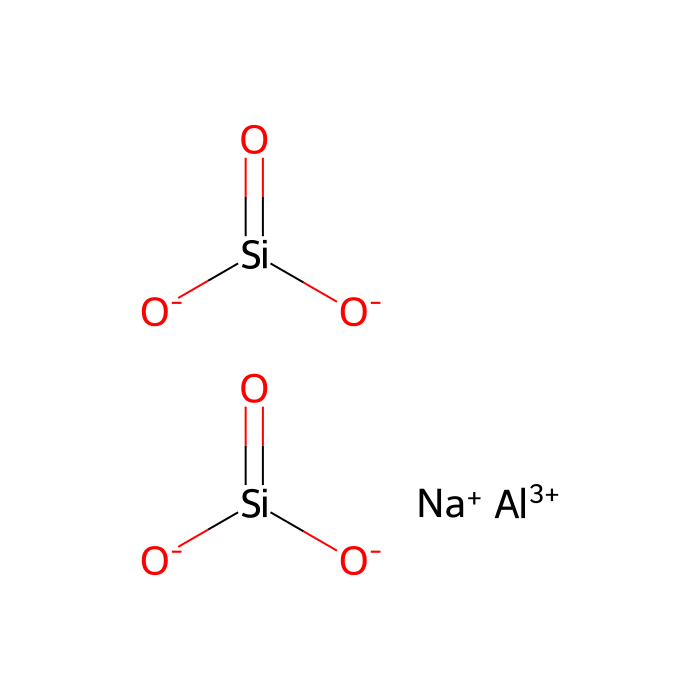
This compound belongs to the class of inorganic compounds known as post-transition metal silicates. These are inorganic compounds in which the largest oxoanion is silicate, and in which the heaviest atom not in an oxoanion is a post-transition metal.
External Descriptors
Not available
1. Djoumbou Feunang Y, Eisner R, Knox C, Chepelev L, Hastings J, Owen G, Fahy E, Steinbeck C, Subramanian S, Bolton E, Greiner R, and Wishart DS. ClassyFire: Automated Chemical Classification With A Comprehensive, Computable Taxonomy. Journal of Cheminformatics, 2016, 8:61.
Determine the necessary mass, volume, or concentration for preparing a solution.
Dilution Calculator
Determine the dilution needed to prepare a stock solution.
Reconstitution Calculator
Recensioni
Recensioni dei clienti
Application Protocols
No application protocols are specified for this item in the Product Data. Refer to peer-reviewed procedures and standard laboratory manuals for solvent drying and water-scavenging workflows using 5 Å molecular sieves.
Biological Roles
This product is an inorganic aluminosilicate adsorbent and does not play a biological role in cells or organisms.
No enzymatic, signaling, or metabolic function is associated with zeolitic molecular sieves (general knowledge).
In biochemical workflows, they may be used operationally (e.g., drying solvents or removing trace water from reaction media), but they are not active biological reagents.
For projects requiring biologically relevant buffers, cofactors, or ligands, refer to appropriate biochemical reagents. This material is intended for research and process use as an adsorbent only.
Buffer Applications
Not typically applicable. Molecular sieves, 5 Å, are solid adsorbents used for drying and separations, not for preparing or maintaining aqueous buffer systems.
If water removal from an organic phase is needed prior to bioconjugation or peptide coupling, sieves can be used upstream; they are not used within buffer compositions.
Green Alternatives
Molecular sieves offer a regenerable alternative to single-use chemical desiccants, aligning with waste minimization and safer chemistry.
Comparison to common drying agents (general/literature)
MgSO4/Na2SO4: Cheap, fast for workups but single-use; generate solid waste; less effective for deep drying of bulk solvents.
CaH2: Powerful; reacts chemically and irreversibly; generates hydrogen and caustic byproducts; disposal and safety concerns.
P2O5: Extremely strong dehydrating agent; corrosive and hazardous; difficult to handle and dispose.
Sodium/benzophenone: Delivers very dry ethers but pyrophoric; requires stringent oxygen exclusion and produces hazardous residues.
Molecular sieves (5A): Regenerable by heating, minimal leaching, low hazard profile, and suitable for in-situ use; adsorption is primarily physical, avoiding reactive byproducts.
Illustrative trade-off table (general guidance)
Regenerability: 5A = yes (thermal) | CaH2/P2O5/Na = no
Selectivity: 5A provides size selectivity; chemical agents do not
Conclusion: For most routine solvent drying and water-scavenging steps, 5A molecular sieves are a greener, safer choice, with the caveat that proper activation and containment are needed to realize performance.
Pharmaceutical Uses
No therapeutic or clinical claims. For research and manufacturing support only.
General formulation/manufacturing contexts (literature/industry practice):
Solvent management: Drying of process solvents under GMP-like conditions; sieves can be deployed in fixed beds or added to solvent hold tanks.
Process intensification: Water removal to drive equilibrium reactions (e.g., esterifications, acetalizations) in API/intermediate manufacturing.
Packaging/desiccation: Zeolite-based desiccants are commonly used in packaging to control humidity; 5A’s pore size is suitable for water uptake while limiting adsorption of larger volatiles.
Item-specific pharmacopeial status, residuals, and extractables/leachables are not specified for this item; refer to CoA/Spec Sheet and applicable regulatory guidelines if considering use in regulated environments.
Physical Properties
Item-specific specifications
Appearance: Not specified for this item; refer to CoA/Spec Sheet.
Molecular Formula: Not specified for this item; refer to CoA/Spec Sheet.
Molecular Weight: Not specified for this item; refer to CoA/Spec Sheet.
Typical properties (literature/general; not item-specific specifications)
Form: Solid inorganic crystalline powder, beads, or pellets; color typically off-white to beige (literature).
Pore aperture (effective): ~5 Å (0.5 nm) for 5A (literature).
Water adsorption capacity: Commonly 15–25 wt% at ambient conditions before saturation, depending on particle size and activation state (literature).
Thermal stability: Stable to >400 °C under inert/oxidative atmospheres; can be regenerated by heating to 250–350 °C under vacuum or dry purge (literature).
Solubility: Insoluble in water and organic solvents; can be degraded by strong acids (dealumination) and by chelating bases under harsh conditions (literature).
Surface area: Often 400–800 m²/g for activated materials (BET), varying by manufacturer and form (literature).
Bulk density: Typically 0.55–0.80 g/mL for beads; depends on size/shape (literature).
pH (slurry): Near neutral to mildly basic; can slowly increase pH of water via ion exchange (literature).
Practical notes (general)
Physical properties are strongly influenced by activation history, particle size, and binder content. Always consult the item’s CoA/Spec Sheet for exact specifications applicable to this SKU.
Quality and Grades
Item-specific grade/purity
Grade/Purity: Not specified for this item; refer to CoA/Spec Sheet.
What “5 Å molecular sieves” implies (general)
Composition/form: Ca2+-exchanged A-type zeolite with an effective pore aperture of ~5 Å. Available commercially as beads/pellets/powders; some products contain binders (e.g., clay) to enhance mechanical strength.
Performance indicators (typical, literature): Residual LOI (loss on ignition), ignition loss after activation, water capacity (wt%), crush strength (for beads), particle size distribution, and attrition resistance. Low residual moisture and high water capacity indicate effective activation and framework integrity.
UV/ICP specs: For general drying applications these are rarely specified; high-purity grades for sensitive catalysis may list trace metal content and low extractables—consult CoA where applicable.
Implications for use
Binder content: Can slightly reduce capacity but improves handling; powder grades maximize surface access and kinetics but dust more.
Pre-activation state: Unless explicitly supplied activated in sealed containers, sieves typically require activation before high-performance drying. Storage under ambient humidity rapidly loads pores with water.
Selection across A-type series:
3A (K+ form): Excludes most alcohols; targets water only.
4A (Na+ form): ~4 Å cutoff; admits methanol/ethanol.
5A (Ca2+ form): ~5 Å cutoff; admits small linear hydrocarbons and many small polar organics—useful for separations and catalytic drying.
Refer to the product’s CoA/Spec Sheet for all item-specific quality attributes.
Reaction and Applications
Molecular sieves 5 Å are widely used as regenerable, heterogeneous water scavengers and size-selective adsorbents in synthesis and separations.
Common laboratory uses (general/literature)
Solvent drying: Efficient removal of water from ethers (THF, MTBE), chlorinated solvents (DCM, CHCl3), aromatics (toluene), nitriles (MeCN), and alcohols (MeOH/EtOH—note co-adsorption). Often superior to chemical drying agents for operational simplicity and regenerability.
Equilibrium-driven reactions: Drives water-sensitive or equilibrium-limited transformations toward completion by removing water: acetal/ketal formation, imine/oxime formation, transesterification, esterifications, and carbonyl condensations (e.g., Knoevenagel variants) (literature).
Organometallic chemistry: Maintains anhydrous media for Grignard, organolithium, and low-valent transition-metal catalysis; can be added directly to reaction flasks or used to pre-dry solvents (literature). Avoid contact with pyrophorics during high-temperature regeneration.
Gas/mixture separations: Size/shape-selective adsorption of CO2, H2S, and normal paraffins vs iso-paraffins; preparative separations exploit the ~5 Å cutoff (literature).
Practical tips
Activation: Heat 250–300 °C under vacuum or dry inert purge for several hours to overnight (literature). Cool under inert gas and store airtight.
Dosage: 10–20 wt% of liquid (or bed contact with appropriate space velocity) is a common starting point; increase for low-polarity solvents or rapid kinetics (literature).
Contact mode: Static bottle-drying (shake/soak), in-flask addition (with stir bar), or packed columns for continuous drying. Use fine powder for fastest kinetics; beads minimize dust.
Monitoring dryness: Karl Fischer titration or reaction performance; replace/regenerate when capacity is exhausted.
Reaction Conditions
General guidance (literature; not item-specific specifications):
Activation (prior to use): Heat at 250–300 °C under high vacuum (≤1–10 mbar) or with a dry inert gas purge (N2/Ar) for 3–12 h, then cool under inert gas and store airtight. For rapid lab use, flame-drying under vacuum can be employed with caution for small quantities.
Loading: 10–20 wt% relative to solvent/reaction mass is a common starting point; increase to 30–50 wt% for poorly polar solvents or rapid drying. For continuous operations, use packed beds sized by breakthrough curves.
Contact time and temperature: Room temperature to 60 °C is typical. Elevated temperature accelerates drying but may co-adsorb more organics. Gentle stirring improves kinetics in batch.
Solvent-specific notes:
Ethers (THF, MTBE): Rapid drying; consider pre-drying then storing over sieves.
Chlorinated solvents (DCM): Effective, but watch exotherm if adding to activated sieves in bulk.
Alcohols: 5A will adsorb alcohols themselves; consider 3A when exclusion of alcohol is needed.
Workup/removal: Decant from beads or filter powders through a medium porosity frit. Rinse sieves with the same dry solvent if contamination is a concern, then regenerate.
Performance monitoring: Karl Fischer titration for solvent water content; mass gain of sieves can approximate loading during trials.
Expected outcomes:
Reduced induction periods, improved conversions/yields, and cleaner product profiles in water-sensitive transformations.
Safety and Handling
GHS and hazard information (from Product Data)
GHS Classification: Not specified for this item; refer to SDS.
Signal Word: Not specified for this item; refer to SDS.
Hazard Statements (H-Statements): Not specified for this item; refer to SDS.
Pictograms: Not specified for this item; refer to SDS.
General safety guidance (literature/best practice; defer to SDS)
Primary hazards: Nuisance dust; mechanical irritation to eyes, skin, and respiratory tract. Activated sieves adsorb water and polar solvents exothermically—localized heating may occur upon contact with liquids.
PPE: Safety glasses or goggles, lab coat, appropriate gloves. Use a dust mask/respirator if airborne dust is generated. Employ local exhaust ventilation when handling powders.
Incompatibilities: Avoid strong acids (framework degradation/dealumination) and prolonged exposure to chelating bases at elevated temperature. Avoid contact with hydrogen fluoride and strong oxidizing fluorinating agents (zeolites are attacked by HF).
Thermal activation risks: During regeneration, ensure venting for desorbed water/solvent vapors. Do not seal wet sieves in closed vessels prior to heating. Ramp temperatures gradually to avoid steam-pressure spalling.
First aid (overview):
Eye contact: Rinse cautiously with water for several minutes; remove contact lenses if present and easy to do; seek medical attention if irritation persists.
Skin contact: Wash with soap and water; remove contaminated clothing.
Inhalation: Move to fresh air; seek medical advice if symptoms occur.
Ingestion: Rinse mouth; seek medical attention if unwell.
Always consult the current SDS for authoritative hazard, exposure limits, and emergency measures. For research use only.
Solvent Selection
This product is a solid desiccant/adsorbent, not a solvent; conventional solvent selection criteria do not apply. Instead, consider compatibility with solvents to be dried and the molecular-size cutoff.
Practical selection guidance (general)
Target molecule size: 5 Å admits water, small alcohols (MeOH, EtOH), acetonitrile, THF, DCM, toluene, and linear C4–C5 paraffins; it tends to exclude branched isomers and larger aromatics (literature). For water-only scavenging that excludes alcohols, prefer 3A.
Polarity and adsorption strength: More polar/protic species adsorb more strongly. Weakly polar solvents (hexane, toluene) dry more slowly; use finer particles or longer contact times.
Chemical compatibility: Stable with most organic solvents. Avoid strong acids, HF, and highly basic chelators at elevated temperature. Remove dissolved salts/particulates before drying to prevent pore blockage.
When to choose 5 Å vs alternatives (general)
Choose 5A when you need: (a) rapid drying of a broad set of organic solvents, (b) sieving/separation of normal vs iso-paraffins, or (c) co-removal of small polar impurities with water.
Choose 3A when drying lower alcohols or amines where co-adsorption is undesirable.
Choose 4A for general-purpose solvent drying when 5A’s wider pore may admit undesired solutes.
Note: For highly sensitive air/moisture-intolerant reactions, combine predried solvent, inert atmosphere, and freshly activated sieves for best results.
General handling guidance (literature/best practice)
Keep sealed and dry: Store in airtight containers with minimal headspace or under inert gas. Exposure to ambient humidity rapidly saturates pores and reduces capacity.
Post-opening care: If container has been opened for extended periods or performance declines, reactivate by heating (e.g., 250–300 °C under vacuum or dry N2/Ar for several hours) and cool under inert atmosphere before resealing.
Compatibility of containers: Use glass or metal containers with high-temperature stoppers or caps for regeneration cycles. Do not seal wet sieves in closed vessels prior to heating.
Re-use/regeneration: Multiple regeneration cycles are feasible. Avoid contamination with oils, polymers, or particulates that can foul pores irreversibly.
In-use precautions: When adding activated sieves to wet solvents, introduce gradually and allow for heat evolution; avoid confined systems where exotherm could pressurize.
Note: No reconstitution is required (solid adsorbent). For exact moisture content, particle size, and pre-activation state of this SKU, consult the CoA/Spec Sheet.
Structure and Identity
Item-specific identifiers (from Product Data)
SKU: M103773
Product Name: Molecular sieves, 5 Å
CAS: 69912-79-4
CID: 19758701
InChIKey: 367205
SMILES: Not applicable for extended inorganic framework
Molecular Formula: Not specified for this item; refer to CoA/Spec Sheet.
Molecular Weight: Not specified for this item; refer to CoA/Spec Sheet.
Framework type: Crystalline aluminosilicate (zeolite) of the LTA topology, where AlO4− and SiO4 tetrahedra form a 3D microporous network charge-balanced by extra-framework cations.
Cation form: “5 Å” denotes the Ca2+-exchanged A-type sieve (commonly termed 5A), in which partial exchange of Na+ for Ca2+ narrows the effective pore aperture to ~5 angstroms (literature).
Pore system: Cubic array of α-cages (supercages) connected through 8-membered-ring windows; the effective kinetic diameter cutoff is approximately 5 Å, enabling size/shape selectivity (literature).
Functional features: High density of polar sites (Al–O−) and extra-framework cations provides strong physisorption for polar molecules (notably H2O) via electrostatic interactions and hydrogen bonding (literature).
2D structure in words: A repeating lattice of corner-sharing SiO4/AlO4 tetrahedra creates uniform circular windows (~5 Å) that open into larger spherical cavities; Ca2+ ions reside near the windows/cages and tune the aperture size (literature).
Note: Zeolites are extended solids without discrete molecules; SMILES/InChI representations are generally not applicable.
Synthetic Utility
As a size-selective, polar adsorbent, 5 Å molecular sieves enable moisture control and selective adsorption that can transform reaction outcomes.
Key roles (general/literature):
Water scavenging: Enhances yields in condensation-type reactions (acetal/ketal formation, imine/oxime formation, esterifications, transesterifications) by shifting equilibria via Le Chatelier’s principle.
Heterogeneous promoter: By removing trace water, preserves catalyst activity in moisture-sensitive organometallic and Lewis acid catalysis (e.g., TiCl4-, BF3-, or Pd-catalyzed processes).
Selective adsorption/separation: Normal paraffins (n-C4–C5) preferentially adsorbed over branched isomers; useful in hydrocarbon mixture enrichment and analytical sample prep.
Support/host: Acts as a support for immobilizing reagents/catalysts or as a confined microenvironment influencing selectivity and rate in some reactions (e.g., shape-selective catalysis; literature).
Practical guidance:
Particle size choice: Finer powders accelerate kinetics but dust; beads are convenient for solvent-bottle drying and can be decanted or filtered easily.
Compatibility: Typically inert toward most organic functional groups; avoid strong acids/bases that can damage the framework or induce leaching of cations.
Regeneration cycles: Multiple heat/reactivation cycles are routine with minimal loss of capacity if temperatures are controlled and contamination is avoided.
Target Specificity
Not applicable. This product is an inorganic adsorbent, not a biological targeting reagent (no antigen/epitope/clone/isotype information). No target specificity data are provided for this item.
Utilizziamo i cookie per garantire il corretto funzionamento del sito web e, ove consentito, per migliorare la tua esperienza. Puoi gestire le tue preferenze in qualsiasi momento nelle Impostazioni. Per saperne di più, consulta la nostra Cookie Policy.
Desidera che le inviamo un messaggio quando avremo sconti disponibili?
Ricordamelo più tardi
Grazie! Controlli la sua casella di posta per confermare.
Products are supplied to verified businesses, institutions, and qualified professionals for research and development use only. Not for use in humans, animals, diagnosis, or therapy.

 H2615521