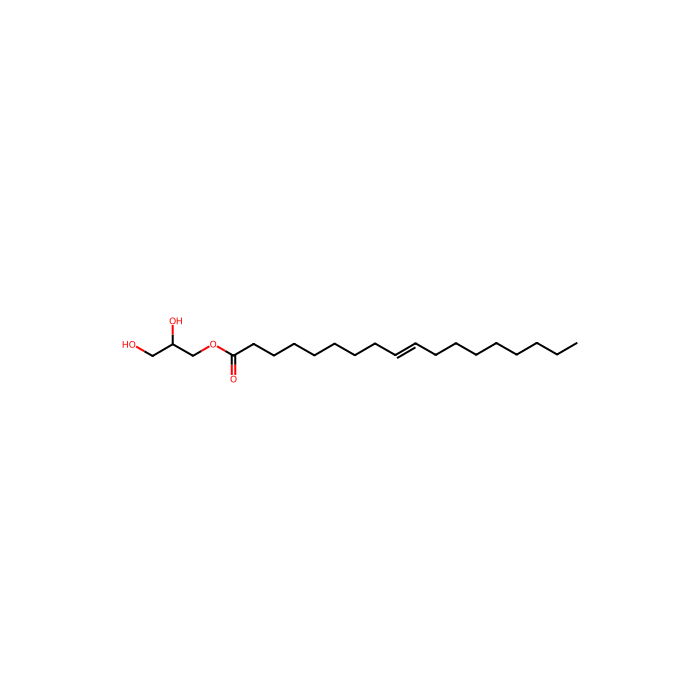
This compound belongs to the class of organic compounds known as 1-monoacylglycerols. These are monoacylglycerols containing a glycerol acylated at the 1-position.
External Descriptors
Not available
1. Djoumbou Feunang Y, Eisner R, Knox C, Chepelev L, Hastings J, Owen G, Fahy E, Steinbeck C, Subramanian S, Bolton E, Greiner R, and Wishart DS. ClassyFire: Automated Chemical Classification With A Comprehensive, Computable Taxonomy. Journal of Cheminformatics, 2016, 8:61.
Determine the necessary mass, volume, or concentration for preparing a solution.
Dilution Calculator
Determine the dilution needed to prepare a stock solution.
Reconstitution Calculator
Recensioni
Recensioni dei clienti
Application Protocols
Item-specific tested applications, recommended dilutions, or protocols: Not specified for this item; refer to CoA/Spec Sheet.
Note
As this is a small-molecule lipid rather than an antibody or assay kit, standardized immunoassay protocols do not apply. Users typically develop application-specific procedures (e.g., film casting and hydration for mesophases, dissolution for formulation screens) based on their experimental design.
Biological Roles
General/literature context (no clinical claims)
Chemical class: Monoacylglycerol (MAG) composed of glycerol esterified with elaidic acid (trans C18:1 Δ9). MAGs occur as intermediates in lipid metabolism and can be generated by partial hydrolysis of triacylglycerols or by monoacylglycerol lipase pathways.
Enzymatic transformations: Substrate for lipases and esterases that hydrolyze the ester bond to release glycerol and elaidic acid. In metabolic studies, monoelaidin can probe enzyme preferences for trans versus cis unsaturation and positional selectivity (1-MAG vs 2-MAG).
Membrane and colloid behavior: Amphiphilic structure enables self-assembly into micelles, lamellar, hexagonal, and cubic phases with water. These phases are studied for transport phenomena, diffusion of solutes, and protein–lipid interactions.
Signaling considerations: Unlike 2-arachidonoylglycerol (2-AG), monoelaidin is not a canonical endocannabinoid; however, MAGs generally can modulate enzyme activities and serve as model substrates in biochemical assays.
Physical biology: The trans double bond promotes tighter packing and higher melting relative to cis analogues (e.g., monoolein), influencing phase diagrams and rheology of lipid–water systems.
Item-specific biological testing data: Not specified for this item; refer to CoA/Spec Sheet. Use for research only.
Buffer Applications
This compound is not a conventional buffering agent. However, practical considerations when using aqueous buffers with monoelaidin (literature guidance):
Dispersions and mesophases: Hydration of solvent-free monoelaidin films with buffered saline (e.g., PBS) can produce lamellar or cubic phases depending on temperature and composition. Gentle heating above its melting point and mechanical mixing can aid incorporation.
Emulsions: Buffers can be used as the continuous phase for oil-in-water emulsions stabilized by monoelaidin; ionic strength and pH may affect interfacial behavior and stability indirectly (through co-solutes), rather than via acid–base equilibria of the lipid itself.
Additives: Avoid strong acids/bases that catalyze ester hydrolysis or acyl migration. Include antioxidants or chelators only if compatible with your study and not already present (not specified for this item).
Item-specific buffer specifications or recipes: Not specified for this item; refer to CoA/Spec Sheet.
Green Alternatives
Context
Monoelaidin itself is a lipid material; the main sustainability lever is solvent choice for dissolution, purification, and processing.
Replace chlorinated solvents (chloroform, DCM) when feasible with ethanol, isopropanol, ethyl acetate, or 2-MeTHF. For film formation, ethyl acetate or ethanol can often substitute with mild warming.
For enzymatic transformations (lipase-catalyzed hydrolysis/esterification), consider solvent-free systems, supercritical CO2, or green co-solvents (ethanol, glycerol carbonate) to enhance sustainability and enzyme compatibility.
Comparison summary
Chloroform: Excellent lipid solvency; high toxicity and environmental impact.
Ethanol: Renewable, low toxicity; may require heat for complete dissolution of high-melting MAGs.
Ethyl acetate: Biodegradable, good solvency; moderate volatility aids film casting.
2-MeTHF: Bio-based ether; good for extractions and some process steps; check peroxide formation controls and water content.
Ethanol | High | Moderate–High (warm) | Suitable for enzymatic work and greener prep
Ethyl acetate | Moderate–High | High | Good for film casting; easy removal
2-MeTHF | Moderate | Moderate | Check stability; avoid prolonged storage with air
Chloroform | Low | Very High | Use only when necessary; handle in fume hood
Note: Choose the least hazardous solvent that meets performance needs; validate effects on mesophase behavior.
Pharmaceutical Uses
Formulation roles (general/literature; no therapeutic claims)
Nonionic surfactant/emulsifier: Monoelaidin, like other monoacylglycerols, can stabilize emulsions and enhance dispersion of hydrophobic actives in research formulation studies.
Mesophase-forming lipid: Applicable in research on lipidic cubic phase (LCP) systems for controlled release or as matrices to study diffusion of solutes. Note that monoolein is more widely used; monoelaidin offers distinct phase behavior due to the trans double bond.
Solubilization and wetting: Can act as a wetting/solubilizing excipient in combination with co-surfactants and oils in self-emulsifying systems (research context).
Quality and regulatory notes
Pharmacopeial/compendial status for this specific monoelaidin item: Not specified for this item; refer to CoA/Spec Sheet.
Impurity profile: Free fatty acid, di- and triacylglycerols, and peroxides are quality-relevant. Low peroxide/acid values are often preferred in formulation research for stability.
Processing guidance
Melt processing: Melt and blend with co-excipients above Tm (literature ~70–74 °C) under inert gas to minimize oxidation; avoid prolonged high-temperature exposure to limit acyl migration.
Solvent processing: Ethanol or ethyl acetate can be used for solvent casting of films or preparation of concentrates; remove residual solvents thoroughly.
Physical Properties
Item-specific specs
Unless listed below, item-specific numerical specifications are not provided by the Product Data. Not specified for this item; refer to CoA/Spec Sheet.
Literature/general properties for monoelaidin (for reference only)
Physical state: Waxy solid to crystalline solid.
Melting point: Typically reported ~70–74 °C (literature) for the trans monoacylglycerol; higher than the cis analogue (monoolein) due to the E-alkenyl chain’s higher packing efficiency.
Boiling point: Not applicable (decomposes before boiling at ambient pressure) (literature).
Density: Not widely tabulated; expect ~0.9–1.0 g/mL (literature, approximate for long-chain monoacylglycerols); Not specified for this item; refer to CoA/Spec Sheet.
Solubility: Insoluble in water; soluble in alcohols (ethanol, isopropanol), chlorinated solvents (chloroform, dichloromethane), and ester/ether solvents (ethyl acetate, THF). Often dissolved in chloroform/methanol mixtures for analytical work (literature).
Partitioning: Highly hydrophobic (long C18 tail) but amphiphilic; forms lyotropic mesophases with water depending on temperature and composition (literature).
Refractive index, pKa, logP: Not commonly defined for solids of this class; Not specified for this item; refer to CoA/Spec Sheet.
Analytical identification (literature guidance)
Common analytical methods: 1H/13C NMR in CDCl3 or CD3OD; FTIR (strong ν(C=O) ~1740 cm−1); LC–MS in APCI(+) or ESI with ammonium adducts; GC–FID of derivatives (e.g., TMS) to assess mono-/di-/triacylglycerol distribution.
Quality and Grades
Item-specific
Grade/purity: Not specified for this item; refer to CoA/Spec Sheet.
Stabilizer content: Not specified for this item; refer to CoA/Spec Sheet.
General guidance for monoacylglyceride quality (literature/industry practice)
Isomeric composition: Monoacylglycerols can exist as 1-MAG and 2-MAG; 1→2 acyl migration may occur. High-purity research grades often specify the 1-isomer content and total MAG versus DAG/TAG impurities.
Oxidative quality: For unsaturated chains (elaidoyl), peroxide value and anisidine value indicate oxidation status. Low values are preferred for reproducible mesophase behavior and analytical work.
Residual solvents: For materials prepared or purified by solvent crystallization or chromatography, residual solvent levels may be listed on the CoA.
Chromatographic suitability: For lipid analysis or mesophase preparation, low UV background and minimal polar impurities (free fatty acid, glycerol) improve performance.
Suggested QC on receipt: Record appearance; check melting behavior (DSC), thin-layer chromatography (TLC) for MAG/DAG/TAG profile, and 1H NMR for glycerol and acyl-chain integrity.
Notes
If your application is sensitive to minor DAG/TAG or free fatty acid, request detailed specifications (isomer ratio, acid value, peroxide value).
Reaction and Applications
Applications (literature/typical for monoelaidin and related MAGs)
Lipid mesophases: Forms lyotropic liquid-crystalline phases with water; used as a model system for studying phase behavior of monoacylglycerols and, in some studies, as an alternative to monoolein.
Emulsification: Nonionic surfactant behavior supports formation of oil-in-water emulsions and microstructures for formulation research (food, cosmetic, and pharmaceutical technology research contexts).
Enzymology: Substrate for lipases (hydrolysis to glycerol + elaidic acid) and for acyltransferases in biocatalysis screens. Useful in kinetic studies distinguishing 1-MAG vs 2-MAG selectivity.
Materials science: Thin-film formation, self-assembled structures, and templating of nanoporous materials via evaporation-induced self-assembly.
Standards and controls: Reference material in chromatographic methods quantifying MAG/DAG/TAG distributions or monitoring hydrogenation/isomerization processes of fatty acids.
Practical tips
Drying: If using for mesophase or enzymology, dry under high vacuum at ambient or slightly elevated temperature (≤40 °C) to remove residual solvents and water.
Degassing: For oxidation-sensitive work, dissolve under inert gas, and include antioxidants only if compatible with your study (not included unless specified on CoA).
Avoid acyl migration: Keep solutions neutral, dry, and cool; minimize prolonged heating and strong bases/acids to preserve 1-MAG content.
Item-specific application notes from catalog: Not provided in Product Data.
Reaction Conditions
General literature guidance (not item-specific specifications)
Enzymatic hydrolysis/interesterification: Immobilized lipases (e.g., CALB) at 30–60 °C, solvent-free or in green co-solvents (ethanol, 2-propanol), with water activity control. Reaction times: 2–24 h depending on load and agitation. Monitor by TLC/GC.
Epoxidation of C=C: mCPBA (1.1–1.5 eq) in CH2Cl2 or EtOAc at 0–25 °C for 1–4 h; buffer the medium (NaHCO3) to limit peracid decomposition. Work up by aqueous washes; purify by silica with deactivated stationary phase (5–10% Et3N in eluent) to protect ester.
Hydrogenation: H2 (1–5 bar) over Pd/C (5–10 wt% of substrate) in EtOH/EtOAc at 20–40 °C until uptake ceases (1–6 h). Filter catalyst under inert atmosphere to minimize oxidation.
Film preparation and hydration (for mesophase studies): Dissolve in CHCl3 or EtOAc, cast thin film, dry under high vacuum (overnight). Hydrate with buffer at controlled temperature, mix to homogeneity, and equilibrate before measurements.
Practical considerations
Avoid acyl migration: Keep temperature and basicity low; short reaction times reduce 1→2 isomerization. Use molecular sieves or controlled water activity when employing enzymes.
Oxidation control: Work under N2/Ar; add chelators (e.g., EDTA) in aqueous phases if compatible; store intermediates at RT in the dark as provided by Product Data, minimizing air exposure.
Expected outcomes
Yields for functionalizations (hydrogenation/epoxidation) commonly 70–95% with proper workup (literature). Actual results depend on scale, purity, and workup efficiency.
Safety and Handling
Item-specific safety
GHS classification, signal word, hazard statements, and pictograms: Not specified for this item; refer to SDS.
Storage condition provided: Room temperature (Product Data). Keep tightly closed.
General safety considerations for monoacylglycerides (literature/typical practice)
Hazard profile: Generally regarded as low acute toxicity; may cause irritation to skin/eyes on contact. Handle as a laboratory chemical with standard precautions.
PPE: Laboratory coat, safety glasses, and appropriate gloves (e.g., nitrile). Avoid inhalation of dust/aerosols; use local exhaust when weighing powders or preparing aerosols.
Incompatibilities: Strong oxidizers. Unsaturated lipids can undergo autoxidation; minimize exposure to air, heat, and light. Avoid strong bases/acids that promote ester hydrolysis or acyl migration unless intended.
Thermal hazards: Melts near 70+ °C (literature). Heated material can cause thermal burns and may generate decomposition fumes.
Spill/cleanup: Absorb with inert material (e.g., vermiculite); wash surfaces with suitable solvent (ethanol or detergent) followed by water. Prevent entry into drains where emulsification could occur.
First aid (overview; defer to SDS): Eye—rinse cautiously with water for several minutes; Skin—wash with soap/water; Inhalation—move to fresh air; Ingestion—rinse mouth, seek medical advice if unwell.
Waste disposal
Dispose according to institutional and local regulations. Small quantities are typically managed as non-halogenated organic waste; avoid mixing with oxidizers.
Solvent Selection
Solubility and polarity considerations (literature)
Monoelaidin is amphiphilic but overall hydrophobic; it is effectively insoluble in water but dissolves well in moderately polar to nonpolar organic solvents.
Good solvents: Chloroform, dichloromethane, ethyl acetate, acetone (warm), ethanol/isopropanol, tetrahydrofuran. Hexanes/heptane can dissolve when warmed or with small alcohol co-solvent.
Typical analytical solvent systems: CHCl3/MeOH (2:1 or 9:1 v/v) for dissolution and TLC/LC sample prep.
Choosing solvents by application
Stock solutions for dosing/film casting: CHCl3 or CHCl3/MeOH enable rapid film formation under N2 with rotary evaporation, leaving uniform lipid films for hydration.
Biophysical studies (LCP/mesophases, SAXS): Start from solvent-free or ethanol solutions; carefully remove residual solvent to avoid mesophase perturbation.
Enzymatic reactions: Use green(er) alcohols (ethanol, 2-propanol) or solvent-free systems when possible to maintain lipase activity; avoid chlorinated solvents.
Comparison notes
Ethanol vs chloroform: Ethanol is safer/greener but may not fully dissolve high-melting MAGs at room temperature; mild heating (40–50 °C) helps. Chloroform dissolves readily at RT but poses health/environmental concerns.
THF/EtOAc: Useful compromise between solvency and safety; verify water content to minimize hydrolysis.
Item-specific solvent specs (UV cutoff, water content): Not specified for this item; refer to CoA/Spec Sheet.
Storage and Reconstitution
Item-specific
Storage conditions: Room temperature (as provided in Product Data). Shipped under normal conditions.
Appearance: Not specified for this item; refer to CoA/Spec Sheet.
General handling for monoacylglycerides (literature guidance)
Protection from oxidation: Although storage at room temperature is indicated, keep container tightly closed, under dry conditions, protected from light and heat. Purge headspace with inert gas after opening when feasible to limit autoxidation of the unsaturated chain.
Reconstitution/dissolution: For stock solutions, dissolve in ethanol, ethyl acetate, or chloroform at room temperature; gentle warming (40–50 °C) may be used to accelerate dissolution. For aqueous dispersions, prepare solvent-free lipid films first, then hydrate with buffer while mixing/warming as appropriate for your application.
Freeze–thaw: Not generally required/beneficial for solids; if preparing lipid dispersions, avoid repeated freeze–thaw cycles that can alter microstructure.
Shelf life: Not specified for this item; refer to CoA/Spec Sheet. Monitor for signs of oxidation (odor, discoloration) or increased free acid by TLC/NMR over time.
Research use
For research use only (per Product Data). Validate suitability in your specific application and consult the SDS for detailed storage incompatibilities and safety.
Structure and Identity
Item-specific (from Product Data)
SKU: M158351
Product name: Monoelaidin
CAS: 2716-53-2
CID: 5364833
InChIKey: 330301 (as provided)
Storage conditions: Room temperature; Shipped: Normal
Literature identity (general reference for monoelaidin; verify against CoA/SDS for this lot)
Common description: 1-monoacylglycerol of elaidic acid (trans-9-octadecenoic acid); typically the 1-O-(E-octadec-9-enoyl)glycerol isomer.
Molecular formula (literature): C21H40O4
Molecular weight (literature): ~356.54 g/mol
Key functional groups: Primary ester (monoacylglycerol), two free alcohols (secondary + primary), one trans (E) C=C in the C18 acyl chain.
Structural features (2D description): A glycerol backbone esterified at one terminus (sn-1) by an 18-carbon monounsaturated trans fatty acyl chain; the remaining two glycerol hydroxyls are free. The acyl chain contains a single trans double bond centered between C9–C10, giving a relatively linear hydrocarbon tail.
Stereochemistry: The elaidic double bond is E (trans). The glycerol center at C2 is prochiral; commercial materials may be racemic at glycerol unless otherwise specified.
Representative SMILES (literature): OCC(O)COC(=O)CCCCCCC/C=C\CCCCCCCC (for 1-monoelaidin). Note: exact SMILES for a specific isomer/mixture can vary; confirm on CoA.
Notes
If exact isomeric purity (1- vs 2-monoacylglycerol) or enantiomeric composition is critical, consult the item’s CoA/Spec Sheet.
Synthetic Utility
General synthetic roles (literature)
Acyl donor/acceptor chemistry: Monoelaidin serves as a defined monoacylglycerol substrate in transesterification, interesterification, and enzymatic acylation studies, enabling transfer of the elaidoyl group to other alcohols or glycerides.
Protecting-group logic: The MAG framework can act as a protected form of elaidic acid (as an activated yet stable ester), where selective cleavage (lipase-catalyzed or basic hydrolysis) regenerates elaidic acid under mild conditions.
Stereochemical probes: Distinguishing 1-MAG from 2-MAG is valuable in mechanistic studies of acyl migration and enzyme positional selectivity.
Materials precursor: Thin films of monoelaidin on substrates can be cross-linked or further functionalized (e.g., epoxidation of the C=C, followed by ring opening) to create surface-active or amphiphilic derivatives.
Representative transformations (literature)
Epoxidation of the trans double bond (e.g., mCPBA) to give the monoelaidin epoxide; subsequent diol formation via hydrolysis.
Hydrogenation to the saturated monostearin (using Pd/C under H2), offering control experiments contrasting cis/trans/saturated chain effects.
Enzymatic interesterification with vinyl esters or other glycerides using immobilized lipases (e.g., Candida antarctica lipase B) in solvent-free or green solvent systems.
Note: Exact reactivity and selectivity depend on isomeric purity (1- vs 2-MAG) and reaction conditions.
Target Specificity
Not applicable. This product is a small-molecule lipid (monoacylglyceride), not an affinity reagent or biologic. No antigen/epitope, species reactivity, clone, or isotype information applies.
Item-specific targeting data: Not specified for this item; refer to CoA/Spec Sheet.
Utilizziamo i cookie per garantire il corretto funzionamento del sito web e, ove consentito, per migliorare la tua esperienza. Puoi gestire le tue preferenze in qualsiasi momento nelle Impostazioni. Per saperne di più, consulta la nostra Cookie Policy.
Desidera che le inviamo un messaggio quando avremo sconti disponibili?
Ricordamelo più tardi
Grazie! Controlli la sua casella di posta per confermare.
Products are supplied to verified businesses, institutions, and qualified professionals for research and development use only. Not for use in humans, animals, diagnosis, or therapy.

 F2125170