Post-transition metal oxide - Inorganic post-transition metal salt - Inorganic oxide - Inorganic salt - Inorganic metalloid salt
Descrizione
This compound belongs to the class of inorganic compounds known as post-transition metal oxides. These are inorganic compounds containing an oxygen atom of an oxidation state of -2, in which the heaviest atom bonded to the oxygen is a post-transition metal.
External Descriptors
Not available
1. Djoumbou Feunang Y, Eisner R, Knox C, Chepelev L, Hastings J, Owen G, Fahy E, Steinbeck C, Subramanian S, Bolton E, Greiner R, and Wishart DS. ClassyFire: Automated Chemical Classification With A Comprehensive, Computable Taxonomy. Journal of Cheminformatics, 2016, 8:61.
Determine the necessary mass, volume, or concentration for preparing a solution.
Dilution Calculator
Determine the dilution needed to prepare a stock solution.
Reconstitution Calculator
Recensioni
Recensioni dei clienti
Application Protocols
No antibody- or assay-specific application protocols apply to this mineral catalyst. For chemical synthesis, see Reaction Conditions and Synthetic Utility tabs for literature-based procedural guidance. Always tailor activation temperature, catalyst loading, solvent, and time to the specific transformation and substrate.
Biological Roles
Item-specific
No biological role data are specified for this item; refer to CoA/Spec Sheet.
Literature/general context
Montmorillonite is a naturally occurring clay mineral with high surface area and cation-exchange capacity. While studied in environmental and geochemical contexts (e.g., adsorption of biomolecules, nutrient/ion exchange in soils), “K-10” is an acid-activated, engineered form optimized for catalysis, not for biological function.
In laboratory settings, K-10 can adsorb proteins, peptides, nucleobases, and small metabolites from aqueous mixtures due to surface charge and hydrogen-bonding interactions. These properties are leveraged in sample cleanup, removal of basic impurities, and concentration of trace organics (literature).
The material does not have inherent enzymatic or receptor-based activity; any interactions with biomolecules arise from nonspecific adsorption, ion exchange, and acid-catalyzed transformations at the surface.
Environmental fate: being a mineral solid, K-10 is insoluble and not biodegradable; it may act as a sink for cations and polar organics in water treatment studies (literature). Desorption behavior depends on pH and ionic strength.
No medical or clinical claims are made. Use is restricted to research and laboratory applications.
Buffer Applications
Montmorillonite K-10 is a heterogeneous solid acid catalyst and adsorbent; it is not used as a buffering agent.
Applicability
Not typically applicable for preparing defined pH buffer systems. It can alter pH and ionic strength of aqueous suspensions unpredictably due to surface acidity and ion exchange.
For pH control, employ conventional buffers (e.g., phosphate, acetate, Tris) appropriate to the pH range and ionic strength required.
Practical note (literature)
If K-10 is suspended in buffered media for adsorption studies, pre-equilibrate the clay with the buffer and verify pH drift, as acid sites may depress pH and sequester buffer cations.
Green Alternatives
Although Montmorillonite K-10 is itself a greener alternative to many homogeneous mineral acids, solvent and catalyst choices still impact sustainability. The comparisons below are based on literature and general green chemistry principles.
Advantages of K-10 (vs mineral acids)
Heterogeneous, reusable, and easy to separate by filtration; reduces aqueous neutralization/waste.
Operates under milder conditions; compatible with solvent-free and microwave protocols.
Lower corrosion and improved operator safety compared with H2SO4, HF, or AlCl3.
Alternative solid acids (trade-offs)
Amberlyst-15 (sulfonic resin): high Brønsted acidity; excellent in polar solvents and at ≤120 °C; may swell or degrade in certain solvents and lacks high-temp stability compared with K-10.
Zeolites (H-BEA, H-ZSM-5): shape-selective microporosity; superb thermal stability; diffusion limits for bulky substrates can reduce rates.
Silica–sulfuric acid or silica–phosphoric acid: easy to prepare; good activity; potential leaching of acid species under prolonged use.
Sulfated zirconia: superacidic; effective for isomerizations/alkylations; synthesis/handling complexity and potential sulfate leaching are considerations.
Greener solvent choices for K-10-catalyzed reactions (literature)
Prefer ethyl acetate, 2-MeTHF, CPME, or MeCN over chlorinated solvents where feasible.
Employ solvent-free conditions or azeotropic water removal in bio-based solvents to improve E-factor.
Regeneration and reuse
Simple thermal reactivation (e.g., 120–150 °C under vacuum/N2) drives off water/organics; calcination at higher temperatures can reduce activity by dealumination—balance is required.
Mini comparison table (literature)
K-10 vs AlCl3: heterogeneous, reusable, minimal aqueous workup vs stoichiometric corrosive waste.
K-10 vs H2SO4: milder, less corrosive, easier separation; may require longer times or higher loadings for some substrates.
Pharmaceutical Uses
Item-specific
No pharmacopeial grade or excipient status is specified for this item; refer to CoA/Spec Sheet.
Literature/general roles in pharmaceutical R&D and manufacturing (non-clinical, non-therapeutic)
Process adsorbent: removal of pigments, basic catalysts, and trace metals from reaction mixtures and API intermediates; color remediation of natural product extracts.
Heterogeneous acid catalyst: protection–deprotection steps (acetalization), esterifications, and cyclizations in medicinal chemistry routes, including microwave-assisted library synthesis.
Solid support: immobilization of reagents (e.g., halogenating agents, oxidants) to improve handling and quench safety during scale-up.
Drying aid: scavenging residual moisture in organic solutions or wet cakes prior to final drying.
Flow processing: packed-bed operations for continuous acylation/ketalization with straightforward filtration to remove fines.
Regulatory note
When used in GMP or pilot settings, control and qualify critical attributes (particle size, residual metals/ions, extractables/leachables, microbial burden where relevant). Ensure traceability and consistency via vendor CoA and incoming QC.
This product is for research use only and is not intended for clinical or therapeutic applications.
Physical Properties
Item-specific (from Product Data)
Appearance: Not specified for this item; refer to CoA/Spec Sheet.
Grade/Purity: Not specified for this item; refer to CoA/Spec Sheet.
Molecular Formula and Weight: Not specified for this item; refer to CoA/Spec Sheet.
Acidity: possesses Brønsted and Lewis sites; total acidity frequently cited in the 0.2–0.8 mmol H+/g range depending on activation (literature).
pH of 2–5% (w/v) aqueous slurry: mildly to moderately acidic (approx. pH 3–5 for K-10 variants; literature). The exact pH is formulation-specific.
Thermal stability: framework stable to >300 °C under inert/air; dehydroxylation accelerates above ~500–700 °C (literature). Catalytic acidity may diminish at high temperatures due to structural changes.
Swelling/solvation: acid-activated K-10 shows limited swelling compared with sodic montmorillonite; retains interlayer water that desorbs on heating (literature).
Solubility: insoluble in water and organic solvents; dispersible as a suspension; high sorption capacity for polar organics and water (literature).
Refractive index: mineral platelets n ~1.5–1.6 (literature) — not routinely specified for catalytic grades.
All numerical values above are typical literature ranges and are not product specifications.
Quality and Grades
Item-specific (from Product Data)
Grade/Purity: Not specified for this item; refer to CoA/Spec Sheet.
How quality is typically defined for Montmorillonite K-10 (literature/general)
Acid site density and strength: determines catalytic activity. Reported by titration (e.g., n-butylamine TPD), pyridine-IR (Brønsted vs Lewis), or Hammett indicators.
Surface area and porosity: BET area, BJH pore size distribution; higher mesoporosity favors diffusion of bulky substrates.
Particle size distribution: affects filtration, slurry handling, and bed pressure drop for flow applications.
Exchangeable cations and residual sulfate/chloride: acid activation can introduce anions/cations; low residuals are preferred for sensitive transformations.
pH of slurry and conductivity: quick checks of acidity/ionic content for QC.
Practical implications
Stabilizers: none are typically used; the catalyst is a neat mineral solid. If any stabilizer/anti-caking agent is present, it should be stated on the CoA (Not specified for this item).
Reproducibility: pre-drying/activation (e.g., 120–150 °C under nitrogen or vacuum) before use is advised to standardize water content and active site availability.
Chromatographic grade vs catalytic grade: K-10 is primarily a catalytic/adsorbent grade; “HPLC-grade” style UV-cutoff claims are not applicable.
Refer to the product’s CoA/Spec Sheet for item-specific metrics. Do not assume literature values as specifications.
Reaction and Applications
Item-specific
Manufacturer Applications: Not specified for this item; refer to CoA/Spec Sheet.
Literature/practice applications of Montmorillonite K-10 (heterogeneous solid acid)
Carbonyl chemistry
Acetalization/ketalization of aldehydes/ketones with diols; water removal via the clay enhances equilibrium conversion. Often conducted at RT–80 °C in toluene, CH2Cl2, or under solvent-free conditions.
Esterification and transesterification (e.g., fatty acid methyl/ethyl esters) under reflux or microwave heating.
Aldol and Knoevenagel-type condensations under mild conditions; K-10 can act as both acid catalyst and adsorbent, improving selectivity.
Aromatic substitution and annulations
Friedel–Crafts alkylation/acylation with improved tolerance to moisture compared with classical AlCl3; suitable for activated aromatics in CH2Cl2/toluene at 0–80 °C.
Pechmann condensation (coumarin synthesis) and Biginelli reaction (dihydropyrimidinones) under solvent-free/microwave conditions.
Rearrangements and dehydrations
Beckmann rearrangement of oximes to amides/lactams; clay confines intermediates, reducing byproducts.
Pinacol/Meerwein–Ponndorf–Verley–Oppenauer variants have been reported with clay-supported reagents.
Clay-supported reagents and scavenging
K-10 serves as a support for halogenating agents (e.g., NBS), oxidants (KMnO4), or sulfonyl chlorides; enhances dispersion and safety.
Post-reaction scavenging of amines, metal salts, and water to streamline workups.
Enabling technologies
Microwave-assisted synthesis: rapid heating of clay suspensions/solvent-free mixtures often reduces reaction times from hours to minutes.
Flow chemistry: packed-bed K-10 reactors enable continuous acetalizations, esterifications, and protection–deprotection sequences with facile regeneration.
Notes: Optimize catalyst loading (typically 10–100 wt% relative to substrate), activation (120–150 °C dry), and solvent choice to balance rate and selectivity (literature).
Reaction Conditions
The following guidance reflects typical literature practices for Montmorillonite K-10; optimize per substrate and scale. These are not product specifications.
Catalyst preparation/activation (literature)
Dry at 120–150 °C for 2–12 h under vacuum or flowing N2 to remove physisorbed water and expose acid sites. Cool in a desiccator before use. Avoid prolonged calcination >200–300 °C unless a specific protocol calls for it.
Typical loadings and formats
Batch: 10–100 wt% K-10 relative to limiting substrate; start at 30–50 wt% for condensations and adjust to rate/selectivity.
Packed-bed/flow: space velocity chosen to achieve target conversion; bed can be regenerated in situ by solvent flushing followed by thermal drying.
Solvents and media
Nonpolar/aprotic solvents (hexanes, toluene, CH2Cl2, EtOAc, MeCN) enhance rates; polar protic solvents suppress activity. Solvent-free/melt conditions are common for condensations and annulations.
Temperature/time (illustrative ranges from literature)
Acetalization/ketalization: 20–60 °C, 0.5–6 h; remove water (Dean–Stark or vacuum) to drive equilibrium.
Esterification/transesterification: 60–120 °C (or microwave 100–150 °C), 1–8 h.
Friedel–Crafts acylation/alkylation: 0–80 °C, 1–12 h depending on substrate activation.
Beckmann rearrangement: 60–120 °C, 1–6 h; solvent-free or in chlorinated/aromatic solvents.
Workup and reuse
Quench by dilution; filter through celite or sintered funnel; rinse clay with fresh solvent to recover product. Dry and reactivate spent clay thermally to reuse. Monitor for activity decay due to fouling; occasional solvent extraction or mild calcination can restore performance.
Monitoring/analytics
Track conversion by GC/HPLC; ensure removal of entrained fines by 0.45 µm filtration prior to analysis to avoid baseline drift from particulates.
Safety and Handling
Item-specific (from Product Data)
GHS Classification: Not specified for this item; refer to SDS.
Signal Word: Not specified for this item; refer to SDS.
H-Statements/Pictograms: Not specified for this item; refer to SDS.
Shipped In: Normal.
Research Use Note: For research use only.
General safety information (literature/practice; defer to SDS for authoritative guidance)
Likely hazards: nuisance/mineral dust; may cause mechanical irritation to eyes, skin, and respiratory tract upon overexposure. Acid-activated clays can be mildly acidic; prolonged skin contact may cause dryness or irritation.
PPE: safety glasses or goggles; lab coat; appropriate gloves (e.g., nitrile). Use a dust mask or respirator if dust generation cannot be controlled. Handle powders in a fume hood or ventilated enclosure to minimize inhalation.
First aid (overview):
Inhalation: move to fresh air; seek medical attention if symptoms persist.
Eye contact: rinse cautiously with water for several minutes; remove contact lenses if present and easy to do; seek medical attention if irritation continues.
Skin contact: wash with soap and water; apply moisturizer if dryness occurs.
Ingestion: rinse mouth; seek medical advice if unwell.
Incompatibilities: avoid strong bases (can neutralize acidity and alter performance); avoid HF and strong fluoride sources (silicate dissolution hazard). Strong mineral acids can further leach/dealuminate the clay, changing properties. Avoid storing with materials sensitive to dust contamination.
Special risks/handling tips:
Moisture sensitivity (performance): water strongly adsorbs and can deactivate acid sites; dry/activate before moisture-sensitive catalysis.
Dust control: gently transfer; consider pre-wetting in solvent for charging reactors to minimize airborne fines.
Thermal activation: avoid overheating beyond recommended regeneration temperatures to preserve structure and activity.
Always consult the product-specific SDS for classification, exposure limits, and emergency procedures.
Solvent Selection
Montmorillonite K-10 is a solid catalyst/adsorbent rather than a solvent; solvent choice influences activity, selectivity, and handling.
Item-specific
No solvent properties are specified for this item; refer to CoA/Spec Sheet for any handling notes.
Literature/practice guidance
Polarity effects: polar protic solvents (water, alcohols) compete with substrates for acid sites and can suppress activity; aprotic, nonpolar to moderately polar solvents (hexanes, toluene, CH2Cl2, EtOAc, MeCN) often give higher rates and cleaner profiles.
Solvent-free conditions: many K-10-catalyzed condensations and rearrangements proceed neat or under melt/microwave conditions—beneficial for green metrics and throughput.
Swelling/dispersion: K-10 disperses as a fine suspension in many organics; modest shear improves contact. In halogenated solvents (e.g., CH2Cl2), rapid wetting aids uniform coating of particles.
Moisture content: dry, water-lean solvents are preferred for moisture-sensitive reactions (acetalization, esterification). Add molecular sieves only if compatible; note that K-10 itself can act as a water scavenger.
Filtration/phase behavior: select solvents that allow rapid filtration and washing to recover product and catalyst; avoid viscous media that trap fines.
Comparison (literature)
K-10 vs silica–alumina: K-10 generally offers higher Brønsted acidity under milder conditions and better performance for carbonyl transformations.
K-10 vs zeolites: zeolites provide shape selectivity but can be diffusion-limited for bulky substrates; K-10’s mesoporosity often affords faster rates with sterically demanding reactants.
K-10 vs Amberlyst-15 (resin): resins excel in polar solvents at lower temperatures but can swell/degrade with some solvents; K-10 is thermally/solvent robust.
Storage and Reconstitution
Item-specific (from Product Data)
Storage Conditions: Not specified for this item; refer to CoA/Spec Sheet.
Shipped In: Normal.
General storage guidance (literature/practice)
Store tightly sealed in a dry place at ambient temperature. Protect from atmospheric moisture, acids, and bases that can alter acidity and performance. Use desiccant in secondary containment if possible.
Minimize repeated opening to limit moisture uptake; if clumping or diminished activity is observed, thermally reactivate before use.
Reconditioning/activation before use (literature)
Spread the clay in a shallow tray and dry at 120–150 °C for 2–12 h under vacuum or flowing nitrogen to remove adsorbed water/organics. Cool in a desiccator. For sensitive reactions, charge the reactor hot-dry clay under inert atmosphere.
Avoid excessive calcination temperatures (>200–300 °C) unless defined by a method, as over-dealumination can reduce Brønsted acidity.
Suspension/charging tips
To reduce dusting, pre-wet with reaction solvent to form a slurry before transfer. Rinse containers with solvent to recover fines into the reactor.
Shelf life
As an inorganic solid, K-10 is long-lived when kept dry and uncontaminated. Performance is best ensured by periodic reactivation and by preventing exposure to reactive vapors (amines, strong bases).
Always follow the product-specific CoA and SDS for definitive storage and handling instructions.
Structure and Identity
Brief overview: Montmorillonite K-10 is an acid-activated smectite clay widely used as a heterogeneous solid-acid catalyst and adsorbent.
Item-specific (from Product Data)
Product Name: Montmorillonite K-10 (SKU: M109698)
CAS: 1318-93-0
CID: 71586775
InChIKey: 111814 (as provided)
SMILES: Not specified for this item; refer to CoA/Spec Sheet.
Molecular Formula: Not specified for this item; refer to CoA/Spec Sheet.
Molecular Weight: Not specified for this item; refer to CoA/Spec Sheet.
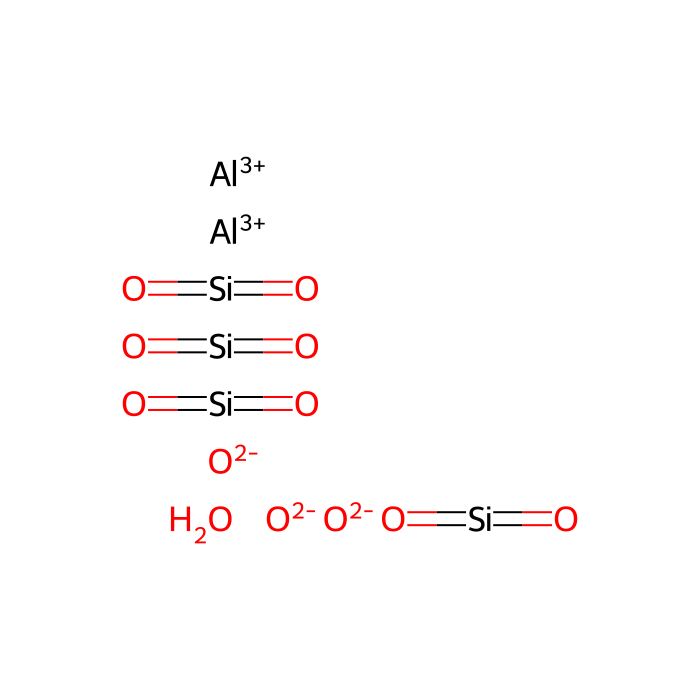
Composition: layered phyllosilicate (smectite), idealized layer is a 2:1 TOT sheet (tetrahedral–octahedral–tetrahedral) of Si–O and Al–O units with isomorphic substitutions (e.g., Al3+→Mg2+, Si4+→Al3+) generating permanent negative charge balanced by interlayer cations.
“K-10” denotes acid activation and partial dealumination yielding high surface area, enhanced Brønsted/Lewis acidity, and reduced swelling relative to natural montmorillonite.
Structural features: plate-like nanolamellae with interlayer galleries; surface silanols (Si–OH), bridged hydroxyls (Al–OH–Si), exchangeable cations and adsorbed water in galleries; defects and coordinatively unsaturated Al/Si centers confer Lewis acidity.
2D structure description: extended sheets of corner-sharing SiO4 tetrahedra sandwiching an Al(OH)6 octahedral sheet; layers stack with van der Waals forces and charge-compensating cations/water in between; acid treatment generates mesoporosity and acidic edge sites.
Notes: Because montmorillonite is non-stoichiometric and heterogeneous, exact molecular descriptors (e.g., a single SMILES or precise InChIKey) are not applicable; properties are reported as ranges (literature).
Synthetic Utility
Montmorillonite K-10 provides a versatile platform of Brønsted and Lewis acid sites coupled with high surface area and mesoporosity, enabling broad synthetic transformations.
Functional group interactions (literature)
Activates carbonyls (C=O) via protonation or coordination, promoting nucleophilic additions (acetals, imines), condensations (aldol/Knoevenagel), and rearrangements (Beckmann).
Facilitates C–C and C–O bond formation via dehydration mechanisms in annulations (Pechmann, Biginelli) and etherifications.
Stabilizes carbocation-like intermediates for mild Friedel–Crafts alkylations/acylations on activated aromatics and heteroarenes.
Acts as a heterogeneous proton source to drive protecting group manipulations (e.g., acetonide formation/cleavage under controlled conditions).
Strategic advantages in synthesis (literature)
Heterogeneous, reusable catalyst streamlines workup (filtration) and reduces neutralization/salt waste.
Compatibility with microwave heating and solvent-free conditions accelerates route scouting and parallel synthesis.
Scavenging capacity allows telescoping: after catalysis, the same bed can remove residual bases/amines and water, simplifying downstream processing.
Tunable activity: pre-treatment (drying, mild calcination) and solvent choice modulate acidity and selectivity.
Strong bases/chelators can permanently alter activity (ion exchange, dealumination).
For base-sensitive substrates, acidic microenvironments may overreact—monitor for side reactions (e.g., oligomerization of alkenes).
These features make K-10 a valuable tool for route development, protection strategies, and late-stage diversification in discovery chemistry.
Target Specificity
Not applicable. This product is a mineral solid catalyst/adsorbent, not a biological targeting reagent. No antigen/epitope, clone, isotype, or species reactivity data apply.
Utilizziamo i cookie per garantire il corretto funzionamento del sito web e, ove consentito, per migliorare la tua esperienza. Puoi gestire le tue preferenze in qualsiasi momento nelle Impostazioni. Per saperne di più, consulta la nostra Cookie Policy.
Desidera che le inviamo un messaggio quando avremo sconti disponibili?
Ricordamelo più tardi
Grazie! Controlli la sua casella di posta per confermare.
Products are supplied to verified businesses, institutions, and qualified professionals for research and development use only. Not for use in humans, animals, diagnosis, or therapy.

 B2324766