GRADE & PURITYMoligand™?Moligand™ — Aladdin's line of ligands and bioactive small molecules. Use for receptor, pathway, and binding studies needing defined small-molecule tools.≥99%
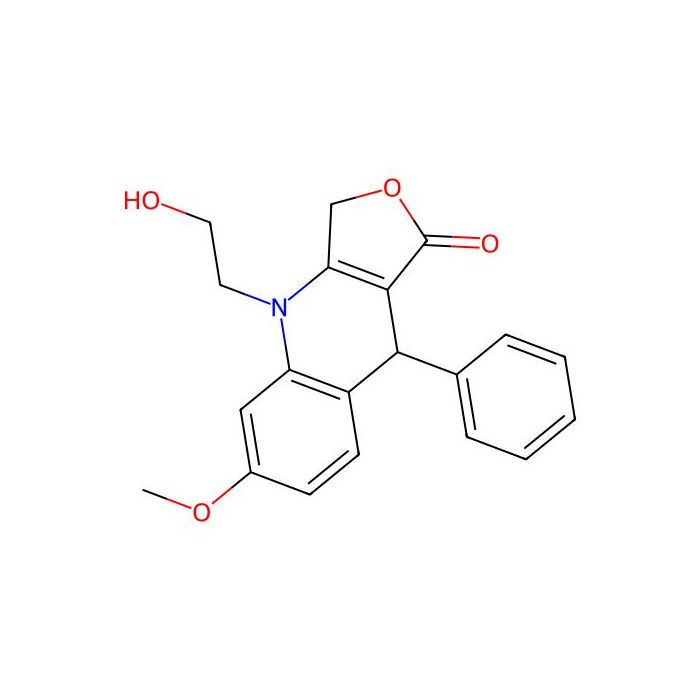
This compound belongs to the class of organic compounds known as phenylquinolines. These are heterocyclic compounds containing a quinoline moiety substituted with a phenyl group.
External Descriptors
Not available
1. Djoumbou Feunang Y, Eisner R, Knox C, Chepelev L, Hastings J, Owen G, Fahy E, Steinbeck C, Subramanian S, Bolton E, Greiner R, and Wishart DS. ClassyFire: Automated Chemical Classification With A Comprehensive, Computable Taxonomy. Journal of Cheminformatics, 2016, 8:61.
Determine the necessary mass, volume, or concentration for preparing a solution.
Dilution Calculator
Determine the dilution needed to prepare a stock solution.
Reconstitution Calculator
Recensioni
Recensioni dei clienti
Application Protocols
No item-specific, validated application protocols are provided for NSC756093.
General small-molecule handling protocol (not item-specific)
Receipt and logging
Inspect packaging from ice-chest shipment; confirm integrity. Record lot, mass, and storage in your inventory system.
Stock solution preparation
Equilibrate vial briefly to prevent condensation. Weigh required amount quickly, minimizing light exposure. Dissolve in anhydrous DMSO to 10–50 mM. Vortex and, if needed, sonicate gently in the dark. Filter (0.2 µm PTFE) for analytical use.
Aliquot into amber vials or plates; flush headspace with inert gas if stability is uncertain. Store at −20°C.
Working solution
Dilute into assay medium to the desired final concentration, keeping DMSO ≤0.1–1% v/v. Mix thoroughly and verify clarity. Prepare fresh just before use.
Documentation and QC
Confirm identity/purity against the CoA using LC–MS or NMR when critical. Run time-zero and end-point stability checks under assay conditions.
Adjust volumes, concentrations, and vessels to your specific application and institutional SOPs.
Biological Roles
Item-specific biological targets, pathways, or mechanisms are not provided in this listing.
General context (not item-specific)
As a Moligand™ small molecule, NSC756093 may be employed as a chemical probe candidate in discovery research, enabling interrogation of protein function or pathway modulation if a target is identified.
Potential study areas include enzyme modulation, receptor binding, or phenotypic screening; any biological role is contingent on verified target engagement and selectivity data developed by the researcher.
For metabolism and ADME characterization, standard in vitro assays (microsomal stability, plasma protein binding, permeability) can be used to profile the compound once the structure and purity are confirmed from the CoA and databases (CAS/CID cross-check).
Important
No biological activity or clinical utility is claimed or implied for this product. It is provided strictly for research use. Consult primary literature via the provided CAS (1629908-92-4) or CID (91826517) to identify any reported activities, and independently confirm results under your laboratory conditions.
Buffer Applications
This product is not a buffering reagent. No item-specific pKa or buffer capacity data are provided.
Practical guidance for use in buffered systems (general)
Prepare a concentrated stock in DMSO or another suitable solvent, then add to the target buffer to achieve the desired final concentration while keeping co-solvent at ≤0.1–1% v/v.
To reduce precipitation upon dilution into aqueous buffers, add stock slowly with mixing; consider inclusion of 0.01% nonionic surfactant if adsorption/aggregation is suspected.
Verify stability in the actual buffer (pH, ionic strength, temperature, and light) by LC–UV or LC–MS over the intended assay window.
If a specific pH-dependent form is required (salt vs. free base/acid), consult the CoA/Spec Sheet for ionization information before preparing buffered formulations.
Green Alternatives
Without item-specific solubility data, solvent selection should balance solvency needs with environmental, health, and safety profiles.
Greener solvent considerations (general)
Prefer DMSO or ethanol where compatible with the assay or process. These typically have more favorable EHS profiles than DMF/NMP.
For analytical sample prep, acetonitrile can replace chlorinated solvents while maintaining strong elution power for many small molecules.
Aqueous vehicles with co-solvents or cyclodextrins can reduce organic solvent load in biological assays.
Comparison (general guidance)
| Option | Greenness/EHS | Solvency | Notes |
|---|---|---|---|
| DMSO | Favorable among dipolar aprotics | High | Broad compatibility; modest viscosity |
| Ethanol | Renewable, low toxicity | Moderate | Good for mid-polar compounds; volatile |
| Acetonitrile | Low peroxide risk | Moderate–High | Widely used in LC; flammable |
| PEG-400 | Low volatility | Moderate | Useful as co-solvent for hydrophobes |
| DMF/NMP | Less preferred | Very High | Use only if required; manage exposure |
Actionable steps
Start with DMSO or ethanol stocks; attempt aqueous dilution with ≤1% co-solvent.
Minimize volume of high-hazard solvents; recover/recycle where feasible.
Validate that greener choices do not compromise stability or assay performance.
Pharmaceutical Uses
No pharmacopeial status or excipient role is provided for this item. It is supplied strictly for laboratory research use.
General formulation context (not item-specific)
Early discovery and preformulation: researchers may explore solubility, stability, and compatibility in common vehicles (e.g., DMSO, ethanol, PEG-400, Captisol, or lipid-based systems) for in vitro studies.
Analytical controls: can serve as an internal or system suitability standard in chromatographic methods for related chemotypes once identity and purity are verified.
Non-clinical use only
Not for human or veterinary use. No claims are made regarding safety, efficacy, or suitability for therapeutic applications.
Any progression toward regulated studies would require comprehensive characterization (identity, purity, residual solvents, solid form) and compliance with applicable quality systems—outside the scope of this catalog listing.
Physical Properties
Item-specific physicochemical constants are not included in this catalog entry.
Melting point: Not specified for this item; refer to CoA/Spec Sheet.
Boiling point: Not specified for this item; refer to CoA/Spec Sheet.
Density: Not specified for this item; refer to CoA/Spec Sheet.
Solubility: Not specified for this item; refer to CoA/Spec Sheet.
LogP/logD, pKa, refractive index: Not specified for this item; refer to CoA/Spec Sheet.
General guidance (literature/practice, not item-specific)
For small organic Moligand-type compounds, initial dissolution is commonly feasible in high–polarity, dipolar aprotic solvents such as DMSO or DMF; ethanol or acetonitrile may also be suitable depending on structure and ionization state.
Prepare a 10–50 mM DMSO master stock (amber vial, anhydrous solvent) and confirm solubility visually; filter (PTFE, 0.2 µm) if needed for analytical work.
Aqueous assay media: use co-solvent addition (e.g., 0.1–1% v/v DMSO) and incorporate nonionic surfactant (e.g., 0.01% Tween 20) if precipitation or adsorption is observed. Validate by LC/UV or LC–MS.
Light sensitivity is indicated by the storage instruction (“protect from light”); minimize exposure during weighing and solution prep.
Quality and Grades
Grade/Purity: Moligand™ (item-specific)
About Moligand™ (general description)
The Moligand™ designation is used for small-molecule ligands supplied for research screening, target engagement studies, and SAR exploration. Items are intended for laboratory research use only (not for human or veterinary use).
Documentation: Identity, purity, and analytical details (e.g., structure confirmation, chromatographic purity) are provided on the Certificate of Analysis/Specification Sheet. When specific numeric specifications (e.g., purity %, residual solvents, water content) are required, consult the CoA for this lot.
Implications for use
Chromatographic/analytical work: Verify UV profile and ionization behavior experimentally before method transfer; Moligand items are suitable starting points for LC/UV or LC–MS quantification once detector settings are established.
Formulation and screening: Because structural and stability details are not disclosed in the listing, perform small-scale solubility and stability scouting (pH, solvent, light) prior to high-throughput screening or plate storage.
Not specified for this item; refer to CoA/Spec Sheet
Appearance, exact purity value, stabilizers/inhibitors, residual solvent limits, elemental/metals limits, and any UV cutoffs.
Reaction and Applications
This Moligand™ item is supplied primarily as a research screening small molecule rather than a generic synthetic reagent. No manufacturer application notes are specified for this catalog entry.
General research applications (not item-specific)
Target engagement studies: use in biochemical or biophysical assays (e.g., enzyme inhibition/activation screens, thermal shift assays, MST/SPR) once identity and purity are verified.
Cell-based assays: evaluate phenotypic responses with careful control of solvent content and compound stability (light sensitivity noted). Include orthogonal readouts to confirm on-target effects.
Analytical reference: employ as a retention-time or response standard in LC/UV or LC–MS method development for related chemotypes.
Probe development: if structure is suitable and permitted by IP/use terms, can serve as a starting point for SAR by synthesis; derivatization strategies depend on the actual functional groups.
Practical tips
Stock preparation: prepare single-use aliquots in anhydrous DMSO (amber vials); avoid repeated freeze–thaw. Record exact mass and final volume to back-calculate stock concentration.
Adsorption/aggregation: pre-rinse plasticware with dilute DMSO, include low nonionic surfactant (e.g., 0.01% Tween 20) if signal loss suggests surface binding.
Stability checks: run quick LC–UV chromatograms at t=0 and post-incubation to detect degradation, isomerization, or light-induced changes.
Reaction Conditions
No item-specific reaction conditions are available for NSC756093 in this listing.
General guidance for handling unknown reactivity (not item-specific)
Conduct small-scale scouting experiments to assess stability under representative conditions: light vs. dark, air vs. inert, aqueous vs. anhydrous, acidic vs. basic media.
If derivatization is intended, begin with the mildest feasible conditions (room temperature, neutral pH, catalytic methods) and monitor by LC–MS to detect side reactions or degradation.
Protect from light during all manipulations, as indicated by the storage requirement, and consider amber glassware and foil wraps.
For moisture-sensitive candidates, use oven-dried glassware and anhydrous solvents; perform transfers under inert gas.
Because structure-specific parameters (e.g., pKa, oxidation potential) are not supplied, avoid strong oxidants/reductants and extremes of pH until compatibility is empirically verified.
Safety and Handling
Hazard classification details are not provided in this listing; handle as a potentially hazardous research chemical.
GHS signal word, hazard statements, pictograms: Not specified for this item; refer to SDS.
Primary risks: Unknown; adopt a conservative approach—avoid inhalation, ingestion, and skin/eye contact. Light sensitivity is noted; protect from light during handling.
Good laboratory practice (general)
PPE: lab coat, safety glasses, appropriate chemically resistant gloves (e.g., nitrile); use a certified fume hood for weighing and solution prep.
Incompatibilities: Until specific data are available, avoid strong oxidizers/reductants, strong acids/bases, and reactive metals. Use dry, oxygen-free conditions if the compound is suspected to be moisture/air sensitive.
First aid (general): In case of skin/eye contact, rinse with water for at least 15 minutes; remove contaminated clothing. If inhaled, move to fresh air. If ingested, rinse mouth—do not induce vomiting. Seek medical attention in all cases. Defer to SDS for authoritative instructions.
Spill/cleanup: Absorb with inert material, avoid dust/aerosol generation, collect in suitable waste container for disposal per institutional and local regulations.
Waste: Dispose of solutions and contaminated materials as halogenated or nonhalogenated organic waste according to actual composition and local rules.
Solvent Selection
Item-specific solubility is not provided. The following decision framework is general guidance for Moligand-type small molecules.
Primary stock solvent (screening standard):
DMSO (anhydrous) is typically first-line for 10–50 mM master stocks due to broad solvency, low volatility, and assay compatibility at ≤1% v/v.
Secondary options (if DMSO is unsuitable):
DMF or NMP (strong solvents; verify assay tolerance), acetonitrile or ethanol (more volatile but generally assay-compatible), or PEG-400/co-solvent blends for poorly soluble, lipophilic compounds.
Aqueous compatibility:
For biological assays, target ≤0.1–1% co-solvent. Consider cosolvent + cyclodextrin or serum proteins to enhance apparent solubility; confirm free concentration where relevant.
Light sensitivity: Use amber vials/syringes and limit exposure during dissolution and transfer.
Comparison (general, not item-specific)
DMSO: excellent solvency; good chemical inertness; higher viscosity; relatively “green” among dipolar aprotics.
DMF/NMP: very strong solvency; broader materials compatibility concerns; stricter handling policies in some labs.
Ethanol/Acetonitrile: lower solvency for very hydrophobic solids; faster evaporation; simpler removal in analytical prep.
Recommendation: Start with DMSO, confirm concentration by UV/LC–MS if a chromophore/ionizable handle is present, then back-dilute into the working medium.
Storage and Reconstitution
Item-specific storage and shipping (from Product Data)
Storage conditions: Store at −20°C. Protect from light.
Shipped in: Ice chest + ice pads.
Appearance: Not specified for this item; refer to CoA/Spec Sheet.
General reconstitution guidance (not item-specific)
Allow the sealed container to equilibrate to room temperature before opening to prevent moisture condensation. Open in low light or under amber illumination.
Prepare concentrated stock solutions in anhydrous DMSO (typical 10–50 mM) unless the CoA specifies a preferred solvent. Use amber vials and minimize light exposure during preparation and transfer.
Aliquot into single-use portions to avoid repeated freeze–thaw cycles. Clearly label with compound ID, concentration, solvent, lot, and date.
Storage of solutions: Keep frozen at −20°C (or lower if stability data suggest) and protected from light. Thaw at room temperature, mix gently, and use promptly. Discard if precipitation, discoloration, or new peaks in LC/UV are observed.
Not specified for this item; refer to CoA/Spec Sheet
Exact solubility, pH stability range, hygroscopicity, and any required stabilizers or antioxidants.
Structure and Identity
A Moligand-series small molecule supplied for research screening and chemical biology.
CAS: 1629908-92-4 (item-specific, from Product Data)
CID: 91826517 (item-specific, from Product Data)
InChIKey: 339536 (as provided; appears truncated—use the CoA or authoritative databases for the full 27-character InChIKey)
SMILES: Not specified for this item; refer to CoA/Spec Sheet.
Molecular formula: Not specified for this item; refer to CoA/Spec Sheet.
Molecular weight: Not specified for this item; refer to CoA/Spec Sheet.
Structural description
Item-specific structural features (functional groups, ring systems, stereochemistry) are not provided in this listing. Consult the CoA/Spec Sheet or the cited PubChem CID for literature structure images and identifiers.
Notes on identifiers
“NSC756093” references an NCI compound registry number (NSC). Cross-referencing NSC, CAS, and CID in primary databases is recommended to confirm identity prior to method development or biological screening.
For publication-quality reporting, verify and record: exact IUPAC name, canonical/isosmiles, and the full InChI/InChIKey from source databases or the CoA.
Synthetic Utility
Item-specific functional groups and reactivity are not provided; therefore, detailed synthetic transformations cannot be prescribed for this compound.
General considerations (not item-specific)
If structural information (from CoA or databases) reveals handles such as aryl halides, nitriles, carboxylates, amines, or alcohols, standard derivatizations (cross-coupling, amidation, reductive amination, O-alkylation/acylation) may be feasible to generate analogs for SAR.
When using a screening compound as a synthetic intermediate, confirm chemical stability under planned conditions (acid/base, nucleophiles/electrophiles, redox, light) to avoid degradation or isomerization.
For purity-critical applications (e.g., analytical standards), apply orthogonal purification and characterization (LC–MS, 1H/13C NMR, HRMS, Karl Fischer if relevant) to ensure trace impurities do not confound downstream studies.
Recommendation
Consult the CoA/Spec Sheet and authoritative databases (CAS 1629908-92-4; CID 91826517) to identify functional groups and plan any derivatization or scale-up with appropriate controls.
Target Specificity
No target, binding partner, or selectivity profile is provided for this product.
Target(s): Not specified for this item; refer to CoA/Spec Sheet and primary literature.
Assay context: Researchers should establish specificity through orthogonal assays (biochemical and biophysical), counterscreens against related targets, and concentration–response studies with appropriate controls.
Note: This section does not apply to antibodies/biologics; it is included here only to clarify that no target specificity information is available for this small-molecule Moligand™ item.
Need help choosing the grade?
Our grade selection guide covers purity, stabilizer status, and application suitability for all variants in our catalog.
We use cookies to ensure the website functions properly and, where permitted, to improve your experience. You can manage your preferences at any time in Settings. Learn more in our Cookie Policy.
Shall we send you a message when we have discounts available?
Remind me later
Thank you! Please check your email inbox to confirm.
Products are supplied to verified businesses, institutions, and qualified professionals for research and development use only. Not for use in humans, animals, diagnosis, or therapy.

 I2616672