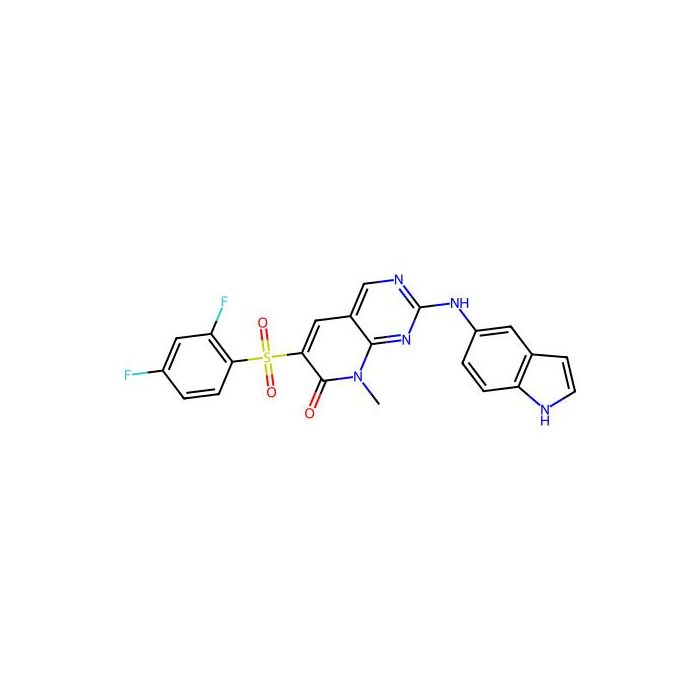
ON1231320 - ≥99% , CAS No.1312471-39-8

CAS: 1312471-39-8 Cat. No.: O651427 Formula: C22H15F2N5O3S Peso molecolare: 467.45
Disponibile su ordine
GRADE & PURITY ≥99%
Storage
Store at -20°C
Shipped In
Ice chest + Ice pads
★
Size
Germania (EU)
USA*
Price
Qty
1mg
O651427-1mg
Su ordinazione · 8–12 settimane
72,80€
5mg
O651427-5mg
Su ordinazione · 8–12 settimane
174,33€
10mg
O651427-10mg
Su ordinazione · 8–12 settimane
295,81€
25mg
O651427-25mg
Su ordinazione · 8–12 settimane
608,20€
50mg
O651427-50mg
Su ordinazione · 8–12 settimane
955,29€
100mg
O651427-100mg
Su ordinazione · 8–12 settimane
1.649,49€
Enter a quantity for the sizes you want to add.
🧪

Why this grade

≥99% for sensitive chromatographic and analytical workflows requiring minimal baseline interference.

🌡

Storage & shipping

Store at -20°C Ships Ice chest + Ice pads Check lot-specific COA for exact specifications.

📋

Quality documents

SDS, COA, datasheet, and spec sheet available for download. Lot-specific COA accessible via lot number lookup.

📚

Literature proof

Cited in 0 peer-reviewed publications across chromatography, organic synthesis, and cross-coupling reactions.

Panoramica

ON1231320 is a highly specific polo like kinase 2 (PLK2) inhibitor with an IC 50 of 0.31 µM. ON1231320 blocks tumor cell cycle progression in the G2/M phase in mitosis, causing apoptotic cell death. ON1231320, an arylsulfonyl pyrido-pyrimidinone, has antitumor activity

In Vitro

ON1231320 (Compound 7ao) has no inhibitory activity against PLK1, PLK3 and PLK4 (all IC 50 >10 µM). ON1231320 (0-5 µM; 24 hours) activates programmed cell death in human tumor cells. ON1231320 inhibits cell proliferation in 16 tumor cell lines (DU145, MCF-7, BT474, SK-OV-3, MIA-PaCa-2, SK-MEL-28, A549, U87, COLO-205, HELA, H1975, RAJI, U205, K562, GRANTA-519; IC 50 = 0.035-0.2 µM). ON1231320 does not appreciably inhibit tubulin polymerization. ON1231320 does not affect normal human fibroblasts. MCE has not independently confirmed the accuracy of these methods. They are for reference only. Apoptosis AnalysisCell Line: U2OS cells Concentration: 0-5 µM Incubation Time: 24 hours Result: Increased the activity of Caspases 3/7 in a dose-dependent manner. Induced apoptosis.

In Vivo

ON1231320 (Compound 7ao; 75 mg/kg; IP; alternate days (Q2D) for 20 days) results in significant inhibition of tumor growth . MCE has not independently confirmed the accuracy of these methods. They are for reference only. Animal Model: 6-8 week old NCR nu/nu female mice with MDAMB-231 triple negative breast cancer cells Dosage: 75 mg/kg Administration: IP; alternate days (Q2D) for 20 days Result: Resulted in significant inhibition of tumor growth (86.5%)

Form:Solid

IC50& Target:PLK2 0.31 μM (IC 50 ) PLK1 >10 μM (IC 50 ) PLK3 >10 μM (IC 50 ) PLK4 >10 μM (IC 50 )

Specifications

Specifiche e purezza
≥99%
Meccanismi biochimici e fisiologici
ON1231320 is a highly specific polo like kinase 2 (PLK2) inhibitor with an IC 50 of 0.31 µM. ON1231320 blocks tumor cell cycle progression in the G2/M phase in mitosis, causing apoptotic cell death. ON1231320, an arylsulfonyl pyrido-pyrimidinone, has anti
Condizioni di conservazione di stoccaggio
Store at -20°C
Spedito in
Ice chest + Ice pads
Questo prodotto richiede spedizione a catena fredda. I servizi di terra e altri servizi economici non sono disponibili.
Tipo di azione
INHIBITOR
Purezza
≥99%
Nomi e identificatori
Peso molecolare 467.45

Documentazione

📋 Safety Data Sheet (SDS)

Comprehensive hazard, handling, storage, and regulatory compliance document.

Download SDS →

✅ Certificate of Analysis (COA)

Lot-specific quality data. Enter your lot number to retrieve the exact COA.

Look up COA →

📊 Datasheet

Quick-reference summary of product specifications and applications.

View datasheet →

🔬 Specification Sheet

Full quality attributes and acceptance criteria for this grade.

View spec sheet →

Advanced Data

Certificati (CoA, COO, BSE/TSE e tabella di analisi)
C of A & Other Certificates(BSE/TSE, COO):
Analytical Chart:
Proprietà chimiche e fisiche
SolubilitàDMSO : 25 mg/mL (53.48 mM; Need ultrasonic)
Calcolatori di soluzioni
Recensioni

Recensioni dei clienti

Application Protocols
  • Item-specific validated protocols

    • None are provided in the Product Data for ON1231320.
  • General starting points for small-molecule screening (for reference only; optimize locally)

    • Stock preparation: Dissolve in anhydrous DMSO at 10–50 mM; vortex, brief sonication if needed; store aliquots at −20°C.
    • Cell-based assays: Dilute stocks into assay media to final 0.05–0.5% DMSO; include vehicle controls. Perform preliminary cytotoxicity or viability checks to set non-toxic concentration ranges.
    • Biochemical assays: Use assay buffer with 0.01–0.1% nonionic detergent if aggregation is suspected; verify no interference with detection modality (fluorescence/absorbance).
    • Analytical quantification: Establish a calibration curve by LC–MS or HPLC-UV using freshly prepared standards; assess carryover and stability in autosampler.

Note: These are generic templates, not item-specific, and should be adapted once ON1231320’s physicochemical properties are confirmed.

Biological Roles
  • Item-specific biology

    • Target, pathway, and mechanism are not specified in the Product Data for ON1231320. No biological role can be asserted here. Consult primary literature or the lot CoA/Spec Sheet by CAS (1312471-39-8) if available.
  • General guidance for using small molecules as research tools (non-clinical)

    • Validate target engagement with orthogonal readouts (biochemical potency vs cellular phenotype; CETSA/thermal shift, pull-downs, or probe competition if feasible).
    • Check selectivity via panel screening or counter-assays to rule out off-target effects and assay interference.
    • Characterize ADME-relevant properties in vitro only if needed for research (permeability, microsomal stability, plasma protein binding), avoiding any clinical extrapolation.
  • Experimental controls

    • Include vehicle controls (matching DMSO/EtOH %), and, where literature allows, a structurally unrelated positive control to benchmark effects.
    • Monitor compound stability in assay media over the assay time window (LC–MS profiling) to distinguish primary activity from degradants.

Research-use only: not for human or animal therapeutic or diagnostic applications.

Buffer Applications
  • Relevance

    • ON1231320 is a small-molecule library compound, not a buffering agent. Conventional buffer systems (PBS, HEPES, Tris, MOPS) are typically used to formulate assay media; ON1231320 would be added as a solute or vehicle-diluted stock.
  • Practical notes (general)

    • Prepare concentrated stocks in DMSO (or another suitable solvent) and dilute into pre-equilibrated buffer immediately before use to minimize precipitation.
    • Maintain constant vehicle concentration across control and treated samples (common ranges: 0.05–0.5% DMSO v/v) to avoid buffer-dependent artifacts.
    • If pH-dependent solubility is suspected (structure-dependent), evaluate precipitation across the intended pH range of your buffer.
Green Alternatives
  • Green handling of small-molecule stocks (general guidance)

    • Prefer minimal-DMSO strategies by preparing higher-concentration stocks to reduce v/v in assays while keeping within solubility limits.
    • For analytical/sample prep where feasible, substitute:
      • MeOH or EtOH in place of halogenated solvents.
      • Water-rich mobile phases and lower-organic gradients when chromatographic resolution permits.
  • Comparative considerations (generic; not item-specific)

    Solvent/Approach | Greener profile | Typical trade-offs --- | --- | --- Water + ≤2% DMSO cosolvent | Highest EHS profile | Limited solubility for hydrophobic compounds; precipitation risk on dilution Ethanol (≥95%) | Renewable, lower toxicity than MeOH/ACN | Protein denaturation in bioassays; volatility MeOH | Widely available, less toxic than ACN | Toxicity and VOC exposure still relevant ACN | Good LC performance, recyclable | Petrochemical source; toxicity; disposal cost 2-MeTHF vs THF (workups) | Bio-based option, lower peroxide risk | Different selectivity; water content control required

  • Operational green practices

    • Scale down screens (microplate formats) to minimize solvent use and waste.
    • Recycle high-purity ACN/MeOH from LC where permitted.
    • Use closed-cap autosampler vials and minimal dead volumes to reduce evaporative losses.

Note: No chemical structure is provided for ON1231320; solvent suitability must be confirmed experimentally.

Pharmaceutical Uses
  • Item-specific information

    • No pharmacopeial status, excipient role, or formulation use is provided in the Product Data for ON1231320. This product is supplied strictly for research use only.
  • General research/manufacturing context (non-clinical)

    • Small molecules in discovery are often utilized as reference standards for analytical method development (e.g., LC–MS calibration, stability-indicating methods) and for pre-formulation research (solubility screening, pKa estimation, salt screening) without any implication of clinical application.
    • If a salt form or polymorph is relevant, verify the form on the CoA; differences can alter solubility and stability in formulation studies.
  • Compliance reminder

    • Not for use in humans or animals. No claims are made regarding safety, efficacy, or therapeutic indications. Any GMP-related use would require separate qualification and documentation beyond the scope of this research-grade listing.
Physical Properties
  • Item-specific properties (Product Data)

    • Appearance: Not specified for this item; refer to CoA/Spec Sheet.
    • Molecular weight: Not specified for this item; refer to CoA/Spec Sheet.
  • Typical physicochemical fields (not specified for this item unless noted)

    • Melting point: Not specified for this item; refer to CoA/Spec Sheet.
    • Boiling point: Not specified for this item; refer to CoA/Spec Sheet.
    • Density: Not specified for this item; refer to CoA/Spec Sheet.
    • Refractive index: Not applicable/unknown for solids; Not specified for this item.
    • LogP/logD: Not specified for this item; refer to CoA/Spec Sheet.
    • Aqueous solubility: Not specified for this item; determine empirically.
  • Practical guidance (general/literature-style)

    • Solubility screening workflow for small-molecule library compounds:
      • Start with anhydrous DMSO (1–10 mg/mL), then DMF, then alcohols (MeOH/EtOH/IPA), then buffered aqueous with cosolvent (2–5% DMSO or 10–20% EtOH) if biological assays require it.
      • If poor wetting, gently warm (≤40°C) and sonicate briefly. Avoid prolonged heating.
      • Record pH/vehicle to ensure reproducibility; consider salt formation only if structure supports ionizable groups.
    • For hygroscopic or light-sensitive materials (unknown here), minimize ambient exposure and protect from light until specifications are confirmed from the CoA.
Quality and Grades
  • Item-specific quality

    • Grade/Purity: Not specified for this item; refer to CoA/Spec Sheet.
    • Stabilizers/Inhibitors: Not specified for this item; refer to CoA/Spec Sheet.
  • How to interpret typical library compound QC (general guidance)

    • Identity confirmation: Commonly by LC–MS (m/z within tolerance) and 1H NMR; HRMS and 13C NMR may be provided for select lots.
    • Purity reporting: Often HPLC/UPLC area% at one or more UV wavelengths. Note that area% is method-dependent; verify the method details (column, gradient, detection λ) on the CoA.
    • Residual solvents/water/metals: Unless stated on the Spec Sheet, these are not controlled to analytical-reagent standards. If your application is impurity-sensitive (e.g., bioassay IC50 quantitation), consider re-purification or orthogonal purity checks.
  • Practical implications for users

    • If low-UV baseline noise is important (e.g., LC-UV analytics), request UV cutoff data or run a quick blank with your mobile phase.
    • For quantitative biology/chemistry, create a reference curve using a verified neat mass by qNMR or 100% w/w internal-standard-calibrated balance to correct for purity.
    • If required, Aladdin can often accommodate custom QC (e.g., salt form verification, water content by KF, metal limits). Contact technical support with your lot number and analytical needs.
Reaction and Applications
  • Scope of use (based on category as a small-molecule library member)

    • High-throughput and focused screening in biochemical or cell-based assays, with ON1231320 as a tool compound candidate. No target specificity is provided in the Product Data; users should confirm intended biology independently.
    • SAR exploration: employ as a chemotype reference while enumerating analogs; compare potency/solubility/stability across the series.
    • Analytical reference: use as a chromatography retention/response standard; supports method development, spike–recovery, and system suitability tests.
  • Assay development considerations (general)

    • Establish a robust dilution scheme in DMSO (e.g., 10 mM mother stocks) and confirm solubility/precipitation limits upon aqueous dilution.
    • Verify chemical stability over assay time (light, pH, redox); run time-course LC–MS to check for degradation.
    • Control artifacts: assess compound aggregation (use 0.01–0.1% nonionic detergent when appropriate), autofluorescence/inner-filter effects (scan excitation/emission), and redox interference.
  • Synthetic chemistry context

    • Without structure, ON1231320 is not positioned here as a reagent/solvent. If needed as a synthetic intermediate, confirm functional groups from the CoA and assess compatibility with planned transformations before use.
  • Documentation

    • Maintain lot tracking, solution preparation logs, and raw data for reproducibility; attach the CoA/Spec Sheet to your ELN entry for this item.
Reaction Conditions
  • Relevance

    • No structure or reactivity profile is provided for ON1231320; therefore, specific reaction conditions cannot be recommended for its transformation.
  • General guidance if using as an analyte or in assay preparation

    • Stock solution preparation: Typically in anhydrous DMSO at 10–50 mM; equilibrate to room temperature before dispensing to avoid precipitation on cold dilution.
    • Analytical methods: LC–MS with water/ACN or water/MeOH gradients and 0.1% formic acid or volatile buffers (e.g., ammonium acetate) are common starting points. Optimize gradient and detection wavelength based on the compound’s UV/vis response once known.
    • Stability checks: Conduct accelerated stress tests (light, pH 2–9, 40°C) to map degradation pathways only after confirming compatibility with research aims.
  • Yields/kinetics

    • Not applicable: no synthetic reactions are specified for this item in the Product Data.
Safety and Handling
  • Item-specific safety (from Product Data)

    • GHS Classification: Not specified for this item; refer to SDS.
    • Signal word / H-statements / Pictograms: Not specified for this item; refer to SDS.
    • Storage: Store at −20°C. Shipped cold (ice chest + ice pads).
  • General laboratory precautions (guidance; defer to SDS)

    • Use in a certified chemical fume hood; avoid inhalation, ingestion, and skin/eye contact.
    • Recommended PPE: lab coat, safety glasses, and appropriate chemically resistant gloves (e.g., nitrile). Upgrade to splash goggles/face shield if handling larger quantities or aerosols.
    • Avoid incompatible operations until specific hazards are known. As a prudent practice for organic small molecules: keep away from strong oxidizers, strong acids/bases, and ignition sources; avoid prolonged light exposure.
    • First-aid overview (non-exhaustive):
      • Skin/eye contact: Rinse with water for ≥15 min; remove contaminated clothing; seek medical attention as needed.
      • Inhalation: Move to fresh air; obtain medical attention if symptoms persist.
      • Ingestion: Rinse mouth; do not induce vomiting unless directed by medical personnel.
  • Waste and spill response

    • Collect spills with inert absorbent; place in tightly closed, labeled container for disposal according to institutional and local regulations.
    • Dispose as organic chemical waste; segregate halogenated vs non-halogenated solvents during cleanup.

Always consult the product’s lot-specific SDS for authoritative hazard, exposure limits, and emergency measures.

Solvent Selection
  • Applicability

    • The specific solvent compatibility of ON1231320 is not provided. The guidance below reflects common practices for unknown small molecules used in screening.
  • Recommended screening order (general best practice)

    1. Anhydrous DMSO: primary choice for 10–50 mM stocks; broad solubilizing power and assay compatibility at ≤0.5% v/v in final wells.
    2. DMF: secondary for poorly DMSO-soluble compounds; confirm assay tolerance.
    3. Alcohols: MeOH or EtOH for analytical solutions (LC–MS, UV-vis) or for cosolvent systems.
    4. Aqueous buffers with cosolvent: 2–10% DMSO or 10–30% EtOH/PEG400; adjust pH only if ionizable groups are known.
    5. Volatile nonpolar solvents (for synthetic/analytical work): ACN, THF, or EtOAc as needed—verify stability.
  • Polarity/miscibility notes (general)

    • DMSO, DMF, MeOH, EtOH, ACN are fully water-miscible; PEG400 is partially miscible; EtOAc and THF are immiscible/limited with water.
    • For LC methods, ACN/H2O or MeOH/H2O with 0.1% FA or NH4OAc are standard; avoid buffers that may cause precipitation on dilution.
  • Practical tips

    • Warm gently (≤40°C) and sonicate to aid dissolution; filter through 0.22 µm PTFE/NYLON if particulates persist.
    • Always prepare vehicle-matched controls (same % DMSO/EtOH) for biological experiments.
    • Record solvent lot, water content, and pH as these affect solubility and stability.
Storage and Reconstitution
  • Item-specific instructions (from Product Data)

    • Storage: Store at −20°C.
    • Shipping: Ice chest with ice pads.
  • General best practices for small-molecule solids/solutions (guidance)

    • Upon receipt: Allow container to equilibrate to room temperature in a desiccator before opening to avoid condensation. If the item is a solution, keep cold and minimize time at ambient temperature.
    • Aliquoting: If repeated use is expected, prepare single-use aliquots under dry, inert atmosphere (optional but recommended) to limit moisture/oxygen exposure.
    • Reconstitution: Start with anhydrous DMSO to prepare a concentrated stock (e.g., 10–50 mM); confirm complete dissolution visually and, if critical, by analytical check (HPLC/LC–MS). Filter through 0.22 µm if needed.
    • Storage of solutions: Store aliquots at −20°C, protected from light. Avoid repeated freeze–thaw; thaw on ice, mix gently, and use promptly. Discard aliquots showing precipitation, discoloration, or LC–MS evidence of degradation.
    • Light/moisture protection: Use amber vials and desiccants where appropriate; purge headspace with inert gas if the compound is air/moisture sensitive (unknown here—verify via CoA/Spec Sheet).
  • Stability

    • Item-specific stability data are not provided; refer to the lot CoA/SDS. Validate in-use stability in your matrix (buffer/media/solvent) over the experimental timeframe.
Structure and Identity
  • Item-specific facts (from Product Data)

    • SKU: O651427
    • Product Name: ON1231320
    • CAS: 1312471-39-8
    • Category: 小分子和化合物库 (small-molecule and compound library)
    • Storage: Store at −20°C; shipped in ice chest with ice pads
    • Research Use: For research use only
    • Molecular formula: Not specified for this item; refer to CoA/Spec Sheet.
    • Molecular weight: Not specified for this item; refer to CoA/Spec Sheet.
    • SMILES: Not specified for this item; refer to CoA/Spec Sheet.
    • InChIKey: Not specified for this item; refer to CoA/Spec Sheet.
  • General notes for identity confirmation (literature/practice)

    • For small-molecule library items, identity is typically confirmed by LC–MS and 1H NMR; some suppliers also provide 13C NMR and HRMS. Always verify against the lot-specific CoA.
    • If structural identifiers are needed, consult cheminformatics databases by CAS (1312471-39-8) or request the Spec Sheet.
  • Structural description

    • 2D/functional group details cannot be summarized here because structure descriptors (SMILES/InChI) are not provided in the Product Data. Obtain the lot CoA or vendor spectral package for definitive structural features and any stereochemical information.
Synthetic Utility
  • Applicability

    • Without a disclosed structure or functional group information, ON1231320 is not positioned as a general synthetic reagent or building block in this listing.
  • How it can still support synthesis work (general)

    • Analytical reference: use as an external standard or spike-in for LC/GC method development, impurity profiling, or reaction monitoring when ON1231320 (by CAS) is the target or reference analyte.
    • If ON1231320 is part of a chemotype exploration, it can serve as a benchmark in SAR while analogs are synthesized, helping guide retrosynthetic choices and protecting-group strategies once the structural class is confirmed from the CoA/literature.
  • Next steps for synthetic planning

    • Obtain the structure (SMILES/InChI) from the CoA/Spec Sheet to identify reactive handles (e.g., aryl halides, heterocycles, carbonyls) and to plan cross-couplings, heteroatom alkylations, or condensations accordingly.
    • Verify stability toward bases/acids, redox conditions, and heat before attempting late-stage diversification.
Target Specificity
  • Item-specific data

    • Target, binding partner, or selectivity panel information is not provided for ON1231320 in the Product Data.
  • Guidance

    • If ON1231320 is being evaluated as a probe in target-based research, confirm its mechanism and specificity from primary literature or vendor documentation tied to CAS 1312471-39-8 and the lot CoA before designing experiments.
    • Incorporate orthogonal assays and counter-screens to assess target versus off-target activity and to rule out assay interference.

Shall we send you a message when we have discounts available?

Remind me later

Thank you! Please check your email inbox to confirm.

Oops! Notifications are disabled.