GRADE & PURITYMoligand™?Moligand™ — Aladdin's line of ligands and bioactive small molecules. Use for receptor, pathway, and binding studies needing defined small-molecule tools.10 mM in DMSO
Certificati (CoA, COO, BSE/TSE e tabella di analisi)
C of A & Other Certificates(BSE/TSE, COO):
Analytical Chart:
Calcolatori di soluzioni
Molarity Calculator
Determine the necessary mass, volume, or concentration for preparing a solution.
Dilution Calculator
Determine the dilution needed to prepare a stock solution.
Reconstitution Calculator
Recensioni
Recensioni dei clienti
Application Protocols
No manufacturer‑validated protocols are provided for this specific item. The following is general, assay‑agnostic guidance for handling small‑molecule research ligands.
A. Stock preparation and plating (general):
Equilibrate the vial to room temperature in a desiccator before opening to prevent moisture condensation. Work quickly under dry conditions.
Prepare a concentrated stock (e.g., 10–50 mM) in anhydrous DMSO. Vortex and, if needed, sonicate briefly. Filter through 0.2 µm PTFE if particulates persist.
Aliquot into single‑use low‑bind tubes or assay plates; store frozen to avoid repeat freeze–thaw.
B. Serial dilutions and assay setup:
Create serial dilutions in DMSO (e.g., 3‑fold or 10‑fold) and back‑dilute into assay buffer to achieve the desired final concentrations while keeping DMSO ≤0.5–1% v/v.
Include a full vehicle control row/column and, when possible, a positive control ligand.
For aggregation‑prone chemotypes, include 0.01–0.05% nonionic detergent and assess sensitivity of activity to detergent as an artifact check.
C. Data quality controls:
Confirm compound stability over assay time (re‑inject LC‑MS where feasible).
Assess fluorescence/absorbance interference by spectral scans of the compound alone at assay‑relevant concentrations.
Use orthogonal formats (e.g., enzymatic vs. biophysical) to corroborate hits.
Note: These steps are general guidance only; optimize for your specific assay and target.
Biological Roles
No target or pathway annotations are provided for this item in the Product Data.
General context for small‑molecule research ligands (informational; not specific to this item):
Research ligands can act as enzyme inhibitors, receptor ligands, modulators of protein–protein interactions, or chemical probes for pathway interrogation. Definitive roles depend on the molecular scaffold and validated bioactivity data.
If literature exists for CAS 1817628‑40‑2 or CID 118414536, it may identify the target family (e.g., kinase, GPCR, transporter, epigenetic enzyme) and mechanism (orthosteric/allosteric, covalent/reversible). Users should verify these details from peer‑reviewed sources.
In cell biology, ligands are commonly used to perturb signaling, validate target engagement (e.g., CETSA, NanoBRET), and develop SAR by testing analog series.
Recommendations:
Before use as a probe, consult chemical probe evaluation criteria (potency, selectivity, cellular activity, absence of assay interference such as aggregation/fluorescence, and availability of inactive controls/analogs).
Confirm off‑target liability using counterscreens and orthogonal assay formats. Consider solubility, permeability, and stability when assigning observed phenotypes to on‑target effects.
Note: This product is for research use only and is not assigned any clinical or diagnostic role.
Buffer Applications
This item is a small‑molecule ligand rather than a buffering agent. It is not typically used to control solution pH. However, buffer composition is critical for generating reliable data with small molecules.
General guidance for assay buffers with hydrophobic ligands (informational):
Base buffer: Choose a system appropriate to assay pH (e.g., HEPES 20–50 mM for pH 7.0–7.5; Tris 25–50 mM for pH 7.5–8.5; phosphate 10–50 mM for pH 6.0–8.0). Maintain ionic strength with 100–150 mM NaCl for protein stability when applicable.
Cosolvent: Keep DMSO at ≤0.5–1.0% v/v if possible. Match vehicle concentrations across all wells, including controls.
Detergent: Include 0.01–0.05% nonionic surfactant (Tween‑20, Triton X‑100, or Pluronic F‑127) to reduce nonspecific adsorption and aggregation artifacts.
Protein additives: 0.1–0.5 mg/mL BSA can reduce sticking to plastics in biochemical assays; avoid if it interferes with the readout.
Metal chelators: Add 0.1–1 mM EDTA only if metal‑dependent readouts are not required, to minimize adventitious metal effects.
Filtration and degassing: Filter buffers (0.22 µm) and degas for sensitive optical/biophysical methods (SPR, ITC) to ensure baseline stability.
Always pretest buffer composition for compatibility with the biological target and detection method before full screens.
Green Alternatives
Without item‑specific solvent or process requirements, green considerations center on the choice of vehicles and diluents for assay work.
Greener choices for routine handling (general guidance):
Prefer minimal DMSO percentages (≤0.5–1% v/v in assays) while maintaining solubility; this reduces environmental and biological burden.
Where feasible, consider bio‑based or lower‑toxicity co‑solvents for intermediate dilutions (e.g., ethanol or 2‑propanol) recognizing their lower solvency limits.
Replace DMF or NMP with safer alternatives such as Cyrene or propylene carbonate for sample preparation, when compatible with the biology and analytics.
Use micro‑scale preparations and pre‑aliquoted plates/tubes to reduce waste.
Illustrative comparison (general, not item‑specific):
DMSO vs ethanol: DMSO offers superior solvency; ethanol is greener but may not dissolve hydrophobic chemotypes at high concentration.
DMF vs Cyrene: DMF is effective but problematic toxicologically; Cyrene can substitute in some dissolution workflows though viscosity is higher and compatibility varies.
Acetonitrile vs water/MeOH gradients (analytics): For LC methods, aqueous methanol gradients may reduce ACN usage if detection sensitivity remains acceptable.
Operational best practices:
Implement solvent recycling where possible (e.g., ACN in LC‑MS facilities).
Select low‑hazard detergents (e.g., polysorbates) in minimal amounts for anti‑aggregation rather than using high co‑solvent levels.
Note: Confirm any substitution’s compatibility with the specific assay and compound.
Pharmaceutical Uses
No pharmacopeial status or excipient role is provided for this item. PF‑06426779 is supplied strictly for research use as a small‑molecule ligand (Moligand™ grade) and is not intended for incorporation into pharmaceutical products.
Context (general, non‑item‑specific):
Early discovery compounds may serve as tool ligands to validate biological targets, explore structure–activity relationships (SAR), and inform medicinal chemistry. Such research materials are distinct from GMP‑grade substances.
If this compound were to be considered in preclinical development, separate sourcing, GMP manufacturing, full quality characterization, and regulatory documentation would be required. That is outside the scope of this research listing.
Item‑specific statements required by policy:
Any therapeutic indications, dosage forms, or clinical applications: None provided and not applicable to this research item.
Compendial references (USP/EP/JP), residual solvent limits, or excipient monographs: Not specified for this item; refer to CoA/Spec Sheet if available for analytical data only.
Recommended practice:
Use only in laboratory research settings under appropriate institutional approvals. Do not use for human or veterinary administration, diagnostic procedures, or compounding.
Physical Properties
Item-specific physicochemical data were not provided for this catalog entry.
Appearance: Not specified for this item; refer to CoA/Spec Sheet.
Melting point: Not specified for this item; refer to CoA/Spec Sheet.
Boiling point: Not specified for this item; refer to CoA/Spec Sheet.
Density: Not specified for this item; refer to CoA/Spec Sheet.
Refractive index: Not specified for this item; refer to CoA/Spec Sheet.
pKa/logP/logD: Not specified for this item; refer to CoA/Spec Sheet.
Solubility: Not specified for this item; refer to CoA/Spec Sheet.
General laboratory guidance (literature/typical practice for screening ligands; not specifications):
Stock solutions for small-molecule ligands are commonly prepared in anhydrous DMSO (10–50 mM), then diluted into assay buffers to ≤0.5–1% DMSO v/v to minimize vehicle effects.
If aqueous work is intended, preliminarily assess solubility across pH 2–10, with and without co‑solvent (DMSO 0.5–5% v/v) and nonionic surfactant (e.g., 0.01–0.05% Tween‑20) to mitigate aggregation.
Determine compound aggregation/colloidal behavior by DLS or detergent-sensitivity controls, especially for hydrophobic chemotypes.
If crystallinity is observed, gentle warming (≤37 °C) and sonication can assist dissolution; avoid prolonged heat that could induce degradation.
Note: Use only the CoA/Spec Sheet for decision‑making where exact values are required (e.g., setting analytical acceptance criteria).
What Moligand™ implies (general program description; not a specification):
Moligand items are provided as small‑molecule research ligands intended for biochemical/biophysical screening, target validation, and assay development. They are not certified for clinical, diagnostic, or GMP manufacturing use.
Item‑specific quality metrics (e.g., purity by HPLC/LC‑MS, identity confirmation, residual solvents, salt form, water content) are provided on the lot‑specific CoA/Spec Sheet when applicable.
How to use the grade information:
For HTS and biophysical assays (SPR, ITC, DSF), verify lot purity and identity from the CoA to ensure signal attribution to the intended compound.
For medicinal chemistry follow‑up, confirm salt form and counter‑ions; these can affect solubility, dissolution rate, and assay behavior.
If low‑UV background is required (e.g., HPLC method development), confirm UV cutoff/impurity profile on the CoA; if not available, run an in‑house UV scan of the specific lot.
Item‑specific statements required by policy:
Purity percentage, stabilizers, metal limits, water/peroxide content, and UV cutoff: Not specified for this item; refer to CoA/Spec Sheet.
Appearance and form: Not specified for this item; refer to CoA/Spec Sheet.
Reaction and Applications
This catalog item is positioned as a research ligand (Moligand™) rather than a synthetic reagent. Consequently, its primary applications are in discovery biology and biophysics, not in preparative organic reactions.
Expected research applications (general, non‑item‑specific):
Biochemical assays: Enzyme activity or binding readouts (fluorescence/intensity, FRET/TR‑FRET, luminescence, radiometric) to profile potency and mechanism.
Biophysical characterization: SPR, ITC, DSF/TSA, MST, and NMR ligand‑observed methods (WaterLOGSY, STD‑NMR) to quantify affinity and binding thermodynamics.
Cellular/phenotypic assays: Pathway reporter assays, target engagement (e.g., CETSA), and chemical genetics workflows, with careful control of vehicle concentration and cytotoxicity.
ADME screening: In vitro microsomal stability, plasma protein binding, Caco‑2/PAMPA permeability to inform follow‑up chemistry.
Practical tips (general):
Verify identity and purity with the lot’s CoA before critical experiments. If necessary, run orthogonal checks (LC‑MS, 1H NMR) to confirm form/salt.
Prepare concentrated, single‑use DMSO aliquots to prevent freeze‑thaw degradation and water uptake. Filter stocks (0.2 µm PTFE) if particulate is observed.
Assess compound aggregation artifacts by adding a low level of nonionic detergent, running counterscreens, and using orthogonal assay formats.
Establish a robust vehicle control ladder and plate map to identify solvent‑related effects.
Note: No manufacturer‑provided reaction chemistry applications are listed for this item.
Reaction Conditions
No preparative or transformation chemistry is specified for this product, and it is not positioned as a reagent for named reactions. Consequently, there are no recommended reaction conditions.
General laboratory notes (informational):
If analog synthesis or derivatization is pursued after confirming the structure from authenticated sources, select conditions based on the functional groups present (e.g., amide couplings for carboxylic acids/amines, Buchwald–Hartwig/Suzuki couplings for aryl halides/boronates, etc.). Consult primary literature for temperature, catalysts, and solvent choices.
For stability: Many drug‑like molecules may be sensitive to strong acids/bases, oxidants, or prolonged heating. Conduct small‑scale stability screens before committing to multi‑step sequences.
Because reaction chemistry is out of scope for this catalog item, users should focus on assay‑ready handling (see Solvent Selection, Application Protocols, and Storage & Reconstitution).
Safety and Handling
Safety data specific to this item were not provided. Always consult the SDS shipped with the product for authoritative guidance.
From Product Data:
GHS classification: Not specified for this item; refer to SDS.
Signal word, H‑statements, pictograms: Not specified for this item; refer to SDS.
General laboratory precautions for research ligands (not product‑specific):
PPE: Wear lab coat, safety glasses, and appropriate chemically resistant gloves (e.g., nitrile). Work in a certified chemical fume hood to avoid inhalation of dust/aerosols.
Avoid contact with skin and eyes. Do not ingest or inhale powders or vapors. Prevent environmental release; collect waste in properly labeled containers.
Storage incompatibilities: Until specific data are confirmed, segregate from strong oxidizers, strong acids/bases, and reducing agents. Keep dry and tightly closed.
Thermal/light sensitivity: Many small molecules can be light‑ and/or heat‑sensitive. Protect from light and avoid repeated warming cycles.
First‑aid overview: If inhaled—move to fresh air; seek medical attention. Skin contact—wash with soap and water. Eye contact—rinse with water for ≥15 minutes, remove contacts. Ingestion—rinse mouth; seek medical attention.
Spill response: Avoid dust generation; absorb with inert material, collect for disposal in accordance with local regulations.
Research use note: For research use only. Not for human or veterinary use, diagnostics, or household purposes.
Solvent Selection
Because structure and solubility parameters are not specified for this item, select solvents empirically, starting with screening‑standard vehicles.
General solvent strategy for research ligands (literature/practice):
Primary stock solvent: DMSO (anhydrous) is the default for most small molecules due to broad solvency and assay compatibility at ≤0.5–1% v/v.
Secondary options: DMF (strong solvency; more hygroscopic), ethanol or isopropanol (biological compatibility but lower solvency for highly lipophilic compounds), acetonitrile (miscible with water; often acceptable up to ~1% v/v in assays).
Aqueous buffers: Use co‑solvent approaches and mild surfactants (e.g., 0.01–0.05% Tween‑20 or Pluronic F‑127) to improve wetting and minimize aggregation.
Practical selection notes:
Begin with 10–50 mM DMSO stock. If precipitation occurs upon dilution into buffer, increase dilution steps, adjust final DMSO to 0.5–1% v/v, or add 0.01–0.05% nonionic surfactant.
For spectroscopic assays, confirm that the solvent does not interfere (absorbance/fluorescence). Run vehicle controls at the highest matching solvent percentage.
Note: Always confirm compatibility with the specific biological assay and target.
Storage and Reconstitution
From Product Data:
Storage conditions: Store at −80 °C.
Shipped in: Dry ice packs + cold packs.
Item‑specific details not provided and should be obtained from the CoA/Spec Sheet:
Appearance/form, stabilizers, and exact salt/solvate state: Not specified for this item; refer to CoA/Spec Sheet.
General best practices for small‑molecule ligands (informational):
On receipt: Keep the container sealed and cold. Allow to warm to room temperature in a desiccator before opening to prevent moisture condensation.
Solid material: If supplied as a solid, minimize headspace exposure; promptly prepare aliquots or a master stock solution.
Solutions: If supplied in solution, verify solvent composition and concentration on the label/CoA. Store as directed; avoid repeated freeze–thaw.
Stock solutions: Prepare concentrated DMSO stocks (e.g., 10–50 mM) using anhydrous solvent. Dispense into single‑use aliquots, cap tightly, and store at −20 to −80 °C. Protect from light if chromophoric groups are suspected.
Freeze–thaw: Avoid repeated cycles. Thaw once, use immediately, and discard leftovers or refreeze only once if stability data support it.
Stability checks: Periodically assess by LC‑MS/HPLC if long‑term storage is planned.
Reminder: For research use only. Consult the lot‑specific CoA and SDS for any additional handling or storage instructions.
Structure and Identity
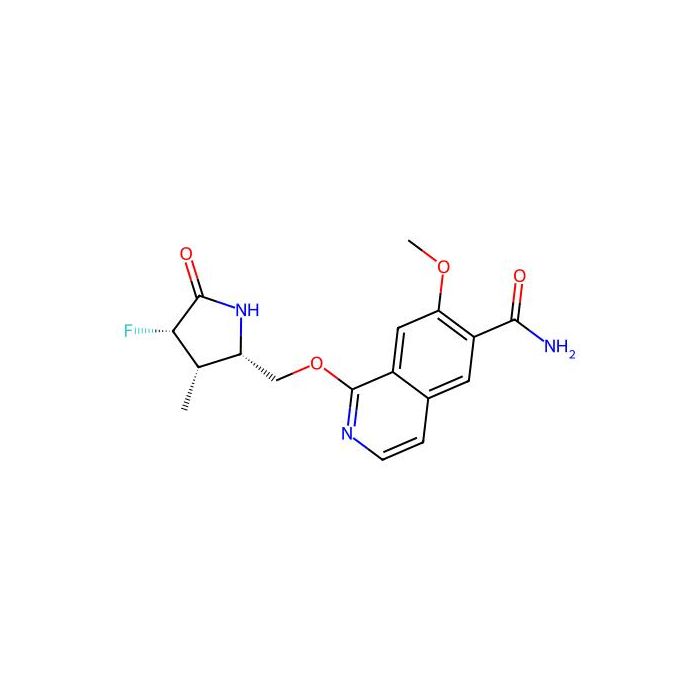
Brief overview: PF-06426779 is supplied as a Moligand small‑molecule research ligand intended for screening and assay development. The precise structural identifiers for this catalog item are not disclosed in the Product Data below.
CAS: 1817628-40-2 (per Product Data)
PubChem CID: 118414536 (per Product Data)
Molecular formula: Not specified for this item; refer to CoA/Spec Sheet.
Molecular weight: Not specified for this item; refer to CoA/Spec Sheet.
SMILES: Not specified for this item; refer to CoA/Spec Sheet.
InChIKey: Not specified for this item; refer to CoA/Spec Sheet.
Stereochemistry/functional groups: Not specified for this item; refer to CoA/Spec Sheet.
General guidance (literature/context):
PF‑ prefixes often denote internally coded research ligands; public literature, if available for this exact CAS/CID, may describe the core scaffold, heteroatoms, and intended target class. Users should confirm structural details from primary literature or the CoA tied to the delivered lot.
For cheminformatics workflows (QSAR, docking, PAINS filtering), obtain structure files (SDF/MOL) from validated sources tied to this exact CAS/CID and verify against the accompanying certificate.
2D structure description: Not available in Product Data. If required, derive from an authenticated structure file and document ring systems, heteroatoms, and any ionizable centers before deploying in computational or biophysical assays.
Synthetic Utility
PF‑06426779 is offered as a research ligand rather than a synthetic building block, and no functional group information is provided in the Product Data. Accordingly, it is not positioned for use as a general reagent or intermediate in synthesis.
General considerations (informational):
If structural information is obtained from authenticated sources (CoA or peer‑reviewed literature), chemists may evaluate derivatization points (e.g., exposed aryl positions, heteroatom handles, or available amine/acid functions) to create analogs for SAR studies.
For conjugation to probes (biotin, fluorophores), linkable vectors often require introduction of a spacer at a site that preserves activity; this demands knowledge of the binding pharmacophore and tolerated regions.
Protecting‑group strategies, coupling conditions, and late‑stage functionalization suitability depend entirely on the underlying scaffold and should be designed only after structural confirmation.
Bottom line: Without confirmed structural details, this item should be treated as a ready‑to‑use screening ligand rather than a synthetic reagent. Any synthetic adaptation should begin from a verified structure and literature precedent.
Target Specificity
No target, pathway, or selectivity profile is provided for this item in the Product Data.
Target class, species reactivity, binding epitope, isotype/clone (antibody‑style attributes): Not applicable and not provided.
If literature exists for CAS 1817628‑40‑2 or CID 118414536, consult those sources for primary target(s), off‑target panels, and selectivity ratios. Verify that any literature pertains to the same structure and salt form as supplied.
Recommendation:
Establish target specificity experimentally via orthogonal assays (biochemical vs. biophysical vs. cellular), include negative controls/analogs, and profile common off‑targets relevant to the target class.
Need help choosing the grade?
Our grade selection guide covers purity, stabilizer status, and application suitability for all variants in our catalog.
We use cookies to ensure the website functions properly and, where permitted, to improve your experience. You can manage your preferences at any time in Settings. Learn more in our Cookie Policy.
Shall we send you a message when we have discounts available?
Remind me later
Thank you! Please check your email inbox to confirm.
Products are supplied to verified businesses, institutions, and qualified professionals for research and development use only. Not for use in humans, animals, diagnosis, or therapy.