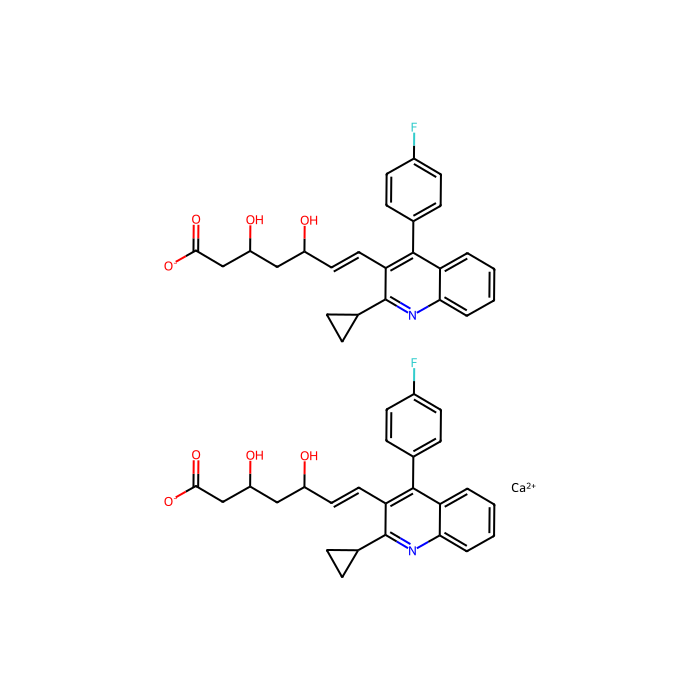
Pitavastatin Calcium - ≥99% , HMG-CoA reductase inhibitor, CAS No.147526-32-7, HMG-CoA reductase inhibitor

CAS: 147526-32-7 Cat. No.: P129617 Formula: C50H46CaF2N2O8 Peso molecolare: 880.98 Numero EC: 807-641-2 PubChem CID: 5282451
Disponibile su ordine
QUALITÀ & PUREZZA ≥99%
Synonyms
(3R,5S,6E)-7-[2-Cyclopropyl-4-(4-fluorophenyl)-3-quinolinyl]-3,5-dihydroxy-6-heptenoic acid hemicalcium salt|Itavastatin calcium|NK 104|PITAVASTATIN CALCIUM [ORANGE BOOK]|calcium bis{(3R,5S,6E)-7-[2-cyclopropyl-4-(4-fluorophenyl)quinolin-3-yl]-3,5-dihydroxyhept-6-enoate}|Pitavastatin calcium|Pitavastatin calcium (JAN)|PITAVASTATIN CALCIUM (MART.)|6-Heptenoic acid, 7-(2-cyclopropyl-4-(4-fluorophenyl)-3-quinolinyl)-3,5-dihydroxy-, calcium salt (2:1), (S-(R*,S*-(E)))-|Livalo (TN)|Alipza|PITAVASTATIN CALCIUM [MART.]|Redevant|Livalo|P-872441|(+)-monocalciumbis{(3r,5s,6e)-7-[2-cyclopropyl-4-(4-fluorophenyl)-3-quinolyl]-3,5-dihydroxy-6-hepten|NK 104 (acid)|Calcium (3R,5S,E)-7-(2-cyclopropyl-4-(4-fluorophenyl)-quinolin-3-yl)-3,5-dihydroxyhept-6-enoate|Calcium (3R,5S,E)-7-(2-cyclopropyl-4-(4-fluorophenyl)quinolin-3-yl)-3,5-dihydroxyhept-6-enoate|PITAVASTATIN CALCIUM [WHO-DD]|Bis((3R,5S,6E)-7-(2-cyclopropyl-4-(4-fluorophenyl)-3-quinolyl)-3,5-dihydroxy-6-heptenoate) monocalcium salt|6-Heptenoic acid, 7-[2-cyclopropyl-4-(4-fluorophenyl)-3-quinolinyl]-3,5-dihydroxy-, calcium salt (2:1), (3R,5S,6E)-|Bis((3R,5S,6E)-7-(2-cyclopropyl-4-(4-fluorophenyl)-3-quinolyl)-3,5-dihydroxy-6-heptenoate), monocalcium salt|Livazo|Monocalcium bis((3R,5S,6E)-7-(2-cyclopropyl-4-(4-fluorophenyl)quinolin-3-yl)-3,5-dihydroxyhept-6-enoate)|Nisvastatin|calcium bis((3R,5S,6E)-7-(2-cyclopropyl-4-(4-fluorophenyl)quinolin-3-yl)-3,5-dihydroxyhept-6-enoate)|NKS-104|(+)-MONOCALCIUMBIS[(3R,5S,6E)-7-[2-CYCLOPROPYL-4(4-FLUOROPHENYL)-3-QUINOLYL]3,5-DIHYDROXY-6-HEPTENO ATE]|Pitavastatin hemicalcium|PITAVASTATIN CALCIUM SALT [MI]|Flovas|NK-104|calcium (E,3R,5S)-7-[2-cyclopropyl-4-(4-fluorophenyl)quinolin-3-yl]-3,5-dihydroxyhept-6-enoate|PITAVASTATIN CALCIUM [JAN]|Pitavastatin hemicalcium;NK-104
Storage
Store at -20°C
Shipped In
Ice chest + Ice pads
★
Dimensione
Germania (EU)
USA*
Prezzo
Qtà
10mg
P129617-10mg
—
9 Disponibile

10,33€

15,53€
Salva 5,21 € (33.52%)
50mg
P129617-50mg
—
6 Disponibile

14,66€

22,47€
Salva 7,81 € (34.75%)
250mg
P129617-250mg
—
6 Disponibile

29,42€

44,17€
Salva 14,75 € (33.40%)
1g
P129617-1g
—
3 Disponibile

79,75€

119,66€
Salva 39,92 € (33.36%)
Enter a quantity for the sizes you want to add.

Panoramica

Pitavastatin Calcium is a competitive inhibitor of the enzyme HMGCR (HMG-CoA reductase) results in a reduction in LDL cholesterol synthesis. Alternate studies show that pitavastatin can suppress oxygen production in endothelial cells by inhibiting NADPH oxidase. In addition, pitavastatin reduces the expression of eNOS mRNA while increasing the NO dependent response stimulated by acetylcholine and the calcium ionophore, A23187. Furthermore, pitavastatin inhibits the up-regulation of conductance calcium-activated potassium channels by lowering cholesterol levels in cells.
A competitive inhibitor of HMG-CoA reductase

Specifiche

Sinonimi
(3R,5S,6E)-7-[2-Cyclopropyl-4-(4-fluorophenyl)-3-quinolinyl]-3,5-dihydroxy-6-heptenoic acid hemicalcium salt | Itavastatin calcium | NK 104 | PITAVASTATIN CALCIUM [ORANGE BOOK] | calcium bis{(3R,5S,6E)-7-[2-cyclopropyl-4-(4-fluorophenyl)quinolin-3-yl]-3,5-dihydroxyhept-6-enoate} | Pitavastatin calcium | Pitavastatin calcium (JAN) | PITAVA Mostra altro
Specifiche e purezza
≥99%
Meccanismi biochimici e fisiologici
Pitavastatin calcium is a novel member of the medication class of statins.Potent, competitive inhibitor of HMG-CoA reductase (K i = 1.7nM). Blocks cholesterol synthesis. Displays cardioprotective properties. Orally active.
Condizioni di conservazione di stoccaggio
Store at -20°C
Spedito in
Ice chest + Ice pads
Questo prodotto richiede spedizione a catena fredda. I servizi di terra e altri servizi economici non sono disponibili.
Tipo di azione
INHIBITOR
Meccanismo d'azione
HMG-CoA reductase inhibitor
Nota
Wherever possible, you should prepare and use solutions on the same day. However, if you need to make up stock solutions in advance, we recommend that you store the solution as aliquots in tightly sealed vials at -20°C. Generally, these will be useable for up to one month. Before use, and prior to opening the vial we recommend that you allow your product to equilibrate to room temperature for at least 1 hour. Need more advice on solubility, usage and handling? Please visit our frequently asked questions (FAQ) page for more details.
Purezza
≥99%
Nomi e identificatori
Pubchem Sid
Pubchem Sid Url
https://pubchem.ncbi.nlm.nih.gov/substance/488195263
Sorrisi canonici
C1CC1C2=NC3=CC=CC=C3C(=C2C=CC(CC(CC(=O)[O-])O)O)C4=CC=C(C=C4)F.C1CC1C2=NC3=CC=CC=C3C(=C2C=CC(CC(CC(=O)[O-])O)O)C4=CC=C(C=C4)F.[Ca+2]
IUPAC Name
calcium;(E,3R,5S)-7-[2-cyclopropyl-4-(4-fluorophenyl)quinolin-3-yl]-3,5-dihydroxyhept-6-enoate
InChIKey
RHGYHLPFVJEAOC-FFNUKLMVSA-L
INCHI
1S/2C25H24FNO4.Ca/c2*26-17-9-7-15(8-10-17)24-20-3-1-2-4-22(20)27-25(16-5-6-16)21(24)12-11-18(28)13-19(29)14-23(30)31;/h2*1-4,7-12,16,18-19,28-29H,5-6,13-14H2,(H,30,31);/q;;+2/p-2/b2*12-11+;/t2*18-,19-;/m11./s1
Isomeri SMILES
C1C(C1)C2=NC3=CC=CC=C3C(=C2/C=C/[C@@H](O)C[C@@H](O)CC(=O)[O-])C4=CC=C(C=C4)F.C1C(C1)C2=NC3=CC=CC=C3C(=C2/C=C/[C@@H](O)C[C@@H](O)CC(=O)[O-])C4=CC=C(C=C4)F.[Ca+2]
CAS alternativo
147511-69-1
PubChem CID
5282451
Peso molecolare
880.98

Dati avanzati

Taxonomic Classification

Taxonomy Tree

KingdomOrganic compounds
SuperclassOrganoheterocyclic compounds
ClasseQuinolines and derivatives
SubclassPhenylquinolines
Intermediate Tree Nodes Not available
Direct ParentPhenylquinolines
Alternative Parents Phenylpyridines  Medium-chain hydroxy acids and derivatives  Medium-chain fatty acids  Beta hydroxy acids and derivatives  Fluorobenzenes  Halogenated fatty acids  Heterocyclic fatty acids  Hydroxy fatty acids  Aryl fluorides  Unsaturated fatty acids  Heteroaromatic compounds  Secondary alcohols  Carboxylic acid salts  Organic calcium salts  Organic metal halides  Azacyclic compounds  Carboxylic acids  Monocarboxylic acids and derivatives  Hydrocarbon derivatives  Carbonyl compounds  Organopnictogen compounds  Organic oxides  Organic zwitterions  Organofluorides  Organonitrogen compounds  
Molecular FrameworkNot available
Substituents Phenylquinoline - 4-phenylpyridine - Medium-chain hydroxy acid - Medium-chain fatty acid - Beta-hydroxy acid - Fluorobenzene - Halobenzene - Halogenated fatty acid - Heterocyclic fatty acid - Hydroxy fatty acid - Aryl fluoride - Aryl halide - Monocyclic benzene moiety - Hydroxy acid - Pyridine - Unsaturated fatty acid - Fatty acyl - Benzenoid - Fatty acid - Heteroaromatic compound - Carboxylic acid salt - Secondary alcohol - Carboxylic acid derivative - Azacycle - Monocarboxylic acid or derivatives - Carboxylic acid - Organic calcium salt - Organic metal halide - Organooxygen compound - Organic oxide - Organopnictogen compound - Organic oxygen compound - Hydrocarbon derivative - Organohalogen compound - Alcohol - Organofluoride - Organic nitrogen compound - Carbonyl group - Organic zwitterion - Organonitrogen compound - Organic salt - Aromatic heteropolycyclic compound
DescrizioneThis compound belongs to the class of organic compounds known as phenylquinolines. These are heterocyclic compounds containing a quinoline moiety substituted with a phenyl group.
External Descriptors calcium salt - statin (synthetic)
Struttura 3D
Modello di struttura chimica interattiva


Obiettivi associati (umani)
HMGCR Tclin HMG-CoA reductase (2475 Activities)
Activity TypeRelationActivity valueUnitsAction TypeJournalPubMed IddoiAssay Aladdin ID
RARG Tclin Retinoic acid receptor gamma (1154 Activities)
Activity TypeRelationActivity valueUnitsAction TypeJournalPubMed IddoiAssay Aladdin ID
RXRA Tclin Retinoid X receptor alpha (3637 Activities)
Activity TypeRelationActivity valueUnitsAction TypeJournalPubMed IddoiAssay Aladdin ID
BJ (6930 Activities)
Activity TypeRelationActivity valueUnitsAction TypeJournalPubMed IddoiAssay Aladdin ID
HEK293 (82097 Activities)
Activity TypeRelationActivity valueUnitsAction TypeJournalPubMed IddoiAssay Aladdin ID
TDP1 Tchem Tyrosyl-DNA phosphodiesterase 1 (345557 Activities)
Activity TypeRelationActivity valueUnitsAction TypeJournalPubMed IddoiAssay Aladdin ID
NR4A1 Tchem Nuclear receptor subfamily 4 group A member 1 (458 Activities)
Activity TypeRelationActivity valueUnitsAction TypeJournalPubMed IddoiAssay Aladdin ID
Obiettivi associati (non umani)
Pseudomonas aeruginosa (123386 Activities)
Activity TypeRelationActivity valueUnitsAction TypeJournalPubMed IddoiAssay Aladdin ID
Klebsiella pneumoniae (43867 Activities)
Activity TypeRelationActivity valueUnitsAction TypeJournalPubMed IddoiAssay Aladdin ID
Staphylococcus aureus (210822 Activities)
Activity TypeRelationActivity valueUnitsAction TypeJournalPubMed IddoiAssay Aladdin ID
Acinetobacter baumannii (41033 Activities)
Activity TypeRelationActivity valueUnitsAction TypeJournalPubMed IddoiAssay Aladdin ID
Escherichia coli (133304 Activities)
Activity TypeRelationActivity valueUnitsAction TypeJournalPubMed IddoiAssay Aladdin ID
Cryptococcus neoformans (21258 Activities)
Activity TypeRelationActivity valueUnitsAction TypeJournalPubMed IddoiAssay Aladdin ID
Candida albicans (78123 Activities)
Activity TypeRelationActivity valueUnitsAction TypeJournalPubMed IddoiAssay Aladdin ID
rep Replicase polyprotein 1ab (378 Activities)
Activity TypeRelationActivity valueUnitsAction TypeJournalPubMed IddoiAssay Aladdin ID
Meccanismi d'azione
Certificati (CoA, COO, BSE/TSE e tabella di analisi)
C of A & Other Certificates(BSE/TSE, COO):
Analytical Chart:

Find and download the COA for your product by matching the lot number on the packaging.

12 results found

Lot NumberCertificate TypeDataOggetto
D2301867D2301867Certificate of AnalysisSep 22, 2026 P129617
D2301876D2301876Certificate of AnalysisSep 22, 2026 P129617
D2301878D2301878Certificate of AnalysisSep 22, 2026 P129617
D2301885D2301885Certificate of AnalysisSep 22, 2026 P129617
J1417061J1417061Certificate of AnalysisNov 06, 2025 P129617
K2329081K2329081Certificate of AnalysisSep 08, 2025 P129617
K2329082K2329082Certificate of AnalysisSep 08, 2025 P129617
K2329083K2329083Certificate of AnalysisSep 08, 2025 P129617
D2301868D2301868Certificate of AnalysisMar 10, 2025 P129617
D2301873D2301873Certificate of AnalysisMar 10, 2025 P129617
D2301877D2301877Certificate of AnalysisMar 10, 2025 P129617
G1918124G1918124Certificate of AnalysisFeb 09, 2023 P129617
Proprietà chimiche e fisiche
SolubilitàDMSO 51 mg/mL Water <1 mg/mL Ethanol <1 mg/mL
Peso molecolare881.000 g/mol
XLogP3
Hydrogen Bond Donor Count4
Hydrogen Bond Acceptor Count12
Rotatable Bond Count14
Exact Mass880.285 Da
Monoisotopic Mass880.285 Da
Topological Polar Surface Area187.000 Ų
Heavy Atom Count63
Formal Charge0
Complexity626.000
Isotope Atom Count0
Defined Atom Stereocenter Count4
Undefined Atom Stereocenter Count0
Defined Bond Stereocenter Count2
Undefined Bond Stereocenter Count0
The total count of all stereochemical bonds2
Covalently-Bonded Unit Count3
Domande frequenti e articoli
Citations of This Product
Calcolatori di soluzioni
Recensioni

Recensioni dei clienti

Application Protocols

No vendor-validated protocols are provided for this item. The following are general, non-binding examples for research use only.

Example 1: Preparation of 10 mM DMSO stock

  • Weigh appropriate amount quickly to minimize moisture uptake.
  • Add DMSO to achieve 10 mM; vortex and sonicate as needed until fully dissolved.
  • Aliquot into amber vials (e.g., 50–100 µL) and store at −20°C. Avoid repeated freeze–thaw.

Example 2: LC–MS/MS calibration standards

  • Prepare a 1 mg/mL primary stock in MeOH with 0.1% NH4OH.
  • Serially dilute into 50:50 MeOH:water (0.1% NH4OH) to desired µg/mL → ng/mL range.
  • Store aliquots at −20°C; verify stability over intended run time.

Example 3: Cell-based assay dosing

  • Dilute DMSO stock into pre-warmed complete media to achieve final DMSO ≤0.1% v/v.
  • Optional: include 0.1% fatty acid–free BSA to reduce adsorption.
  • Add slowly with gentle mixing; incubate per assay design. Include vehicle control.

Notes

  • Filter sterilize aqueous working solutions if sterility is required (0.22 µm, low-bind materials).
  • Confirm absence of precipitation visually and by UV/LC–MS before critical experiments.
  • These are general guidelines only and do not constitute specifications.
Biological Roles

General mechanistic context (literature; no medical/clinical claims):

  • Pitavastatin is a member of the statin class that acts as a competitive inhibitor of 3-hydroxy-3-methylglutaryl–coenzyme A reductase (HMGCR), the rate-limiting enzyme of the mevalonate pathway responsible for converting HMG-CoA to mevalonate.
  • The open-chain dihydroxyheptenoate motif mimics the tetrahedral intermediate of the HMG-CoA → mevalonate reduction, enabling high-affinity, reversible binding to HMGCR.
  • In cellular systems, perturbation of the mevalonate pathway can influence levels of downstream isoprenoids (e.g., farnesyl pyrophosphate, geranylgeranyl pyrophosphate), which in turn modulate protein prenylation and membrane association of small GTPases (e.g., Rho, Rac, Ras) (biochemical pathway knowledge).
  • Lipophilicity/ionization: As a calcium salt, the compound exhibits ionic character in water, while the aglycone/free-acid form is lipophilic. This duality affects membrane permeability, protein binding, and distribution in in vitro systems.

Research implications:

  • Tool compound for dissecting HMGCR function, feedback regulation (SREBP pathway), and compensatory uptake/synthesis of lipids in cells.
  • Useful in pathway rescue experiments with downstream metabolites (e.g., mevalonate, geranylgeraniol) to attribute observed cellular phenotypes to mevalonate-pathway modulation.

Note: Biological roles and mechanisms are provided for research context only. This product is for research use only and is not intended for diagnostic or therapeutic use.

Buffer Applications

This product is not a buffering agent and is not typically used to set or maintain pH in laboratory buffers.

Practical handling in buffers (general guidance):

  • Stock prep: Dissolve first in DMSO or ethanol, then dilute into assay buffer with thorough mixing. Maintain final organic content at levels compatible with the assay (commonly ≤0.1–1% v/v).
  • pH considerations: Solubility in aqueous media generally improves above neutral pH (e.g., pH 8–9); however, confirm that your biological system tolerates the pH and that the compound remains in the desired chemical form (monitor for lactonization under acidic conditions).
  • Adsorption mitigation: Include low levels of carrier protein (e.g., 0.1% BSA) or non-ionic surfactant (e.g., 0.01% Tween 80) if compatible, to reduce non-specific binding to plastics and improve dose accuracy at low concentrations.
  • Avoid strong chelators (e.g., EDTA) if maintaining the calcium complex is necessary; otherwise, EDTA may exchange with Ca2+ and alter apparent solubility/behavior.
Green Alternatives

While Pitavastatin Calcium itself is the research target compound (not a solvent/reagent), greener choices can be made for its handling and analysis.

Greener solvent choices for solution prep (general):

  • Prefer ethanol or aqueous ethanol over DMF/DMF where assay tolerates alcohols; DMSO is acceptable but not benign—minimize final volume fraction.
  • Use water with modest basification (e.g., NaHCO3 or NH4HCO3 buffers) to aid dissolution when possible; avoid halogenated solvents.

Analytical method considerations:

  • LC–MS mobile phases employing water–acetonitrile with volatile buffers (e.g., ammonium formate/acetate) are preferable to non-volatile salts; consider acetonitrile reduction by optimizing gradients or switching partially to methanol where sensitivity allows.
  • Implement microflow or reduced flow LC to cut solvent consumption.

Small comparison (general guidance):

  • DMSO vs ethanol for stock solutions:
    • Solubility: DMSO typically higher; ethanol moderate.
    • Green impact: ethanol favored (renewable, lower toxicity).
    • Assay compatibility: both commonly tolerated at ≤1% v/v; verify.

Operational practices:

  • Prepare higher-concentration stocks to minimize total solvent mass added to assays.
  • Use glassware to reduce adsorption losses and rework.
  • Consolidate analytical runs and employ multi-analyte panels to reduce solvent and sample use.
Pharmaceutical Uses

No clinical or therapeutic claims are made for this research product.

Research/formulation-related contexts (general, literature-informed):

  • Commonly employed as a reference standard in pharmaceutical analysis (e.g., assay/content uniformity, impurity profiling, and dissolution method development) due to its defined identity as the calcium salt.
  • Useful in pre-formulation studies to examine salt effects, solid-state properties (polymorphs/solvates), and compatibility with excipients. Calcium salts can display distinct hygroscopicity and compressibility relative to free acids.
  • Employed in stability-indicating method development: forced-degradation studies (acid/base, oxidation, light, heat) to establish degradation pathways and validate LC methods.
  • May serve as a positive control in in vitro target/pathway assays for screening campaigns investigating HMG-CoA reductase–related biology.

Regulatory/compendial status: Specific pharmacopeial monographs, if any, are not provided here; consult relevant pharmacopeias and vendor CoA/Spec Sheet for compendial compliance information.

Note: For research use only; not for human or veterinary use, clinical administration, or compounding.

Physical Properties

Item-specific specifications (this lot):

  • Appearance: Not specified for this item; refer to CoA/Spec Sheet.
  • Molecular weight (item specification): Not specified for this item; refer to CoA/Spec Sheet.

Literature/general values and qualitative behavior (for guidance only):

  • Physical state: typically a solid for the isolated calcium salt (literature).
  • Melting behavior: many statin calcium salts show high-melting/decomposition; exact value for this item is not specified; refer to CoA/Spec Sheet.
  • Solubility profile:
    • Water: calcium salts of statins are often sparingly soluble to slightly soluble in water; solubility can increase under basic pH or with cosolvents (literature).
    • Organic solvents: DMSO and DMF usually dissolve the calcium salt efficiently; methanol/ethanol can dissolve at modest concentrations; low solubility in nonpolar solvents (literature).
  • pKa/logP: Values are formulation- and ionization-dependent; for the free acid statin core, logP is typically high (lipophilic), while the calcium salt behaves as an ionic complex with very different apparent partitioning (literature). No numeric values are specified for this item.
  • Refractive index, density, UV cutoff, residual water/peroxide/metal limits: Not specified for this item; refer to CoA/Spec Sheet.

Practical notes (general): If preparing aqueous solutions, adjust pH slightly basic or use a cosolvent (e.g., DMSO→buffer dilution) to mitigate precipitation of the calcium salt.

Quality and Grades
  • Grade/purity: Not specified for this item; refer to CoA/Spec Sheet.
  • Stabilizers: Not specified for this item; refer to CoA/Spec Sheet.

Interpretive guidance (general):

  • Research-use small molecules are commonly offered as neat solids without added stabilizers. When a specific purity grade (e.g., ≥98% HPLC) or residual solvent profile is critical for your workflow (bioassay, LC–MS quantitation, or salt-screening), confirm on the item’s CoA/Spec Sheet.
  • If labeled HPLC grade (not specified here), such designation usually indicates low UV background and tight control of non-volatile residues suited for analytical use.
  • If a hydrate/solvate state is indicated (not specified here), correct for water/solvent of crystallization when preparing standard solutions to ensure accurate molarity.
  • Identity/purity verification (recommended practice):
    • Record a reference 1H NMR/LC–MS upon receipt and compare to literature spectra.
    • Use orthogonal purity assessments (HPLC-UV at multiple wavelengths; ELSD or MS for non-UV impurities) for bioassay-critical campaigns.
  • Trace metals/UV cutoff/water/peroxides: Not specified for this item; refer to CoA/Spec Sheet.

Documentation: Retain batch-specific CoA and SDS with your experimental records to support method validation or screening provenance.

Reaction and Applications

This product is a finished small-molecule research compound rather than a synthetic reagent. Accordingly, its primary laboratory uses are analytical and biological assay–oriented rather than as a building block.

Research applications (general, literature-informed):

  • Reference standard for analytical method development and validation (HPLC/UPLC-UV, LC–MS/MS) including calibration curves, recovery studies, and system suitability testing.
  • Positive control or probe compound for biochemical and cellular studies interrogating the mevalonate pathway and HMG-CoA reductase–related biology (no clinical/therapeutic claims).
  • Permeability and transporter interaction assays (e.g., OATP family) as part of mechanistic ADME studies in vitro.
  • Salt/solid-state investigations (XRPD/DSC/TGA) and polymorph screening of the calcium complex for formulation science research.

Practical tips:

  • For LC–MS work, prepare fresh standards in MeOH or ACN:water with a small amount of base to minimize adsorption and improve peak shape; store frozen aliquots to limit degradation.
  • Avoid strong acids during sample prep to prevent lactonization or hydrolysis of the dihydroxy acid motif (literature behavior common to statins); monitor by LC–MS for formation of lactone or isomerization products.
  • For cell-based assays, pre-dissolve in DMSO and add slowly with mixing to avoid local supersaturation; consider using serum-containing media or protein carriers to maintain apparent solubility and reduce non-specific binding.
Reaction Conditions

This product is not typically used as a reagent or substrate in synthetic reactions; therefore, canonical reaction conditions (catalysts, temperatures, yields) are not applicable.

Conditioning for analytical/biological use (general guidance):

  • Stock solutions: 10–50 mM in DMSO at room temperature with vortexing/sonication; filter if necessary using low-protein-binding PTFE/PP filters.
  • Aqueous dilutions: Add organic stock slowly to vigorously mixed buffer; final organic content ≤0.1–1% v/v as assay permits. Pre-warm buffers to room temperature to minimize precipitation.
  • pH control: For water-first dissolution, adjust to pH ~8–9 with dilute base (e.g., NaOH, NH4OH), dissolve completely, then titrate back toward assay pH while monitoring for precipitation.
  • Stability considerations (literature for statins): Avoid strong acid and elevated temperatures that can promote lactonization or dehydration of the dihydroxy acid. Protect from prolonged light exposure.
  • Chromatography: Reverse-phase LC with water–acetonitrile or water–methanol and volatile buffers (ammonium formate/acetate) at pH 3–6 or slight basic conditions can yield sharp peaks; inclusion of 0.01–0.1% formic acid or 5–10 mM ammonium acetate is common for MS compatibility.

All numeric parameters above are general literature/experience-based guidance; optimize for your specific assay and instrumentation.

Safety and Handling

Authoritative safety data are provided in the product SDS; always consult the SDS before use. The following are general laboratory handling practices for small-molecule research compounds of this class.

  • GHS classification, signal word, pictograms, H-statements: Not specified for this item; refer to SDS.
  • Likely hazards (general): May cause irritation to eyes, skin, or respiratory tract if dust is generated. Avoid inhalation and contact. No dust explosion data available for this item.
  • PPE: Wear lab coat, safety glasses, and appropriate gloves (e.g., nitrile). Handle powders in a fume hood or ventilated enclosure to minimize dust exposure.
  • Incompatibilities (general): Strong oxidizers and strong acids/bases may degrade the molecule; avoid prolonged contact with chelating agents (e.g., EDTA) if maintaining the calcium complex is important. Hygroscopic uptake can alter apparent mass for some salts; keep tightly closed.
  • First aid (overview, defer to SDS):
    • Inhalation: Move to fresh air; seek medical attention if symptoms persist.
    • Skin/eye contact: Rinse with copious water for at least 15 minutes; remove contaminated clothing; seek medical advice for persistent irritation.
    • Ingestion: Rinse mouth; do not induce vomiting; seek medical attention.
  • Handling tips (general):
    • Minimize freeze–thaw by aliquoting stock solutions.
    • Protect from light if performing long analytic runs; some statins show light sensitivity (literature).
    • Use clean, dry tools; avoid static that can aerosolize fine powders.

For research use only; not for human or animal use.

Solvent Selection

Solubility behavior for Pitavastatin Calcium is primarily governed by its ionic calcium–dicarboxylate/diol complex and lipophilic aromatic core.

  • Polarity/miscibility (general, literature):
    • Highly soluble in polar aprotic solvents such as DMSO and DMF.
    • Moderately soluble in lower alcohols (MeOH, EtOH); solubility may benefit from slight warming and sonication.
    • Generally sparingly soluble in water at neutral pH; solubility improves with mild basification (e.g., NaOH) or with cosolvent systems.
    • Poorly soluble in nonpolar solvents (hexanes, toluene).
  • Recommended stock preparation (practical):
    • Prepare concentrated stocks in DMSO (e.g., 10–50 mM), then dilute into aqueous buffers for assays, keeping final DMSO ≤0.1–1% v/v as assay-tolerated.
    • For aqueous-first approaches, dissolve with gentle basification to pH ~8–9, then back-adjust to assay pH after full dissolution (verify stability by LC–MS).
  • When to choose alternatives:
    • If DMSO is undesired, ethanol or 1:1 ethanol:water (slightly basic) can be effective, but watch for precipitation upon dilution into low-organic buffers.
    • For LC–MS reference standards, methanol or acetonitrile:water (with a small base, e.g., 0.1% NH4OH) can improve chromatographic peak shape and recovery.
  • Adsorption considerations: Like many lipophilic acids, adsorption to plastics can occur at low nM–µM levels; use low-bind polypropylene or glass and include carrier protein (e.g., 0.1% BSA) in biological buffers where compatible.
Storage and Reconstitution

Item-specific directions:

  • Storage conditions: Store at −20°C (per Product Data).
  • Shipping: Shipped in ice chest with ice pads (per Product Data).
  • Appearance: Not specified for this item; refer to CoA/Spec Sheet.

General handling and reconstitution guidance (research use):

  • Upon receipt: Allow the sealed container to equilibrate to room temperature before opening to reduce moisture condensation.
  • Solid storage: Keep tightly closed in the original container. Protect from light and moisture. If long-term storage is planned, consider placing inside a desiccator at −20°C.
  • Stock solutions: Prepare concentrated stocks in DMSO (e.g., 10–50 mM) or in MeOH/EtOH as compatible. Filter if particulate is observed.
  • Aliquoting: Dispense single-use aliquots into amber vials or low-bind tubes to avoid repeated freeze–thaw cycles.
  • Freeze–thaw: Minimize cycles; thaw on ice or at room temperature, mix gently, and promptly return unused portion to −20°C.
  • Aqueous stability: Avoid strongly acidic conditions that can promote lactonization (general statin behavior). For aqueous storage, short-term (hours to a day) at 2–8°C may be acceptable; verify by LC–MS.
  • Documentation: Record exact masses, solvent lots, and calculated molarities. If hydrate/solvate content is unknown, verify by Karl Fischer/TGA or prepare solutions gravimetrically from an assay-corrected potency on the CoA when available.

For research use only; not for human or animal use.

Structure and Identity

Brief overview: Pitavastatin Calcium is the calcium salt of a dihydroxyheptenoic acid statin scaffold, supplied for research use only.

  • SKU: P129617
  • Product name: Pitavastatin Calcium
  • CAS: 147526-32-7 (literature)
  • PubChem CID: 5282451 (literature)
  • InChIKey: Not specified for this item; refer to CoA/Spec Sheet.
  • SMILES: Not specified for this item; refer to CoA/Spec Sheet.
  • Molecular formula: For the calcium salt (dianion·Ca2+), often reported as C50H46CaF2N2O8 (literature)
  • Molecular weight: ~880.98 g/mol for the calcium salt (literature)

Structural features (general chemistry knowledge):

  • Statin chemotype bearing a chiral, open-chain dihydroxyheptenoate “pharmacophore” present as the calcium salt of the hydroxy acid (i.e., deprotonated diol–carboxylate coordinated to Ca2+).
  • Aromatic system with a nitrogen-containing bicyclic ring (quinoline-type) and a para-fluorophenyl substituent (literature descriptions of pitavastatin core).
  • Contains secondary alcohol(s), a carboxylate (as Ca-salt), an alkene, and multiple aryl rings; overall an anionic complex with Ca2+.
  • Stereochemistry: the statin side chain typically contains at least one defined chiral center in the dihydroxy acid motif (literature). Specific stereochemical descriptors for this item are not specified; refer to CoA/Spec Sheet.

2D structure in words (general description): a fused bicyclic aromatic nitrogen heteroaromatic ring bearing a lipophilic aryl substituent is connected via a spacer to an alkenyl chain terminating in a dihydroxy carboxylate moiety, present here as a calcium salt.

Synthetic Utility

Pitavastatin Calcium is a finished active small molecule, not a typical synthetic building block. Its synthetic utility in the bench chemistry sense is limited; however, it can be useful in certain study types.

  • Derivatization studies (general): The statin scaffold can be modified in medicinal chemistry to probe structure–activity relationships (SAR) around the heteroaromatic core and the dihydroxy acid side chain. Researchers may start from related intermediates rather than the calcium salt itself.
  • Salt/metallorganic coordination studies: The calcium complex offers a platform to investigate metal–carboxylate coordination and counterion effects on solubility, crystallinity, and dissolution—relevant to salt selection workflows.
  • Analytical synthesis utility: Serves as a benchmark for validating synthetic routes to pitavastatin analogs by co-injection or spectral comparison (NMR/LC–MS), ensuring correct stereochemistry and open-chain acid state vs. lactone.

If a reactive handle is required for conjugation or probe synthesis, chemists typically use protected/lactone forms or advanced intermediates rather than the calcium salt to maintain control over the diol/carboxylate chemistry. For transformations of the statin core (e.g., cross-couplings on the aryl/heteroaryl moieties), appropriately protected precursors are recommended.

Target Specificity

Item-specific antibody/biomolecule targeting details are not applicable to this small-molecule product.

  • Target class (general, literature): Enzyme ligand for HMG-CoA reductase (HMGCR), acting as a competitive inhibitor via the dihydroxyheptenoate motif.
  • Specific dataset for this catalog item (clone, isotype, epitope, species reactivity, KD/IC50 values): Not specified for this item; refer to primary literature and your assay-determined parameters.

Note: Any potency/selectivity figures should be established under your own assay conditions or sourced from peer-reviewed literature; they are not provided as specifications for this product.

Desidera che le inviamo un messaggio quando avremo sconti disponibili?

Ricordamelo più tardi

Grazie! Controlli la sua casella di posta per confermare.

Ops! Le notifiche sono disabilitate.