Poloxamer 407 - purified, non-ionic , CAS No.9003-11-6

CAS: 9003-11-6 Cat. No.: P434419 Numero EC: 618-355-0
Disponibile su ordine
GRADE & PURITY purified, non-ionic
Synonyms
Emkalyx L101 | Pluronic F 68 | Regulaid | Magcyl | Pluronic L 64 | Pronon 204 | Teric PE60 | Pluronic F 38 | Pluronic L | Teric PE40 | Pluronic L44 | Pluronic P-75 | Rokopol 30P9 | Slovanik 630 | Hydrowet | Pluronic 31R2 | Pluronic L 68 | Monolan PB | Plu
Storage
Store at 2-8°C
Shipped In
Wet ice
★
Size
Germania (EU)
USA*
Price
Qty
50g
P434419-50g
—
2 Disponibile
69,33€
250g
P434419-250g
—
3 Disponibile
225,53€
Enter a quantity for the sizes you want to add.
🧪
Why this grade

purified, non-ionic for sensitive chromatographic and analytical workflows requiring minimal baseline interference.

🌡

Storage & shipping

Store at 2-8°C Ships Wet ice Check lot-specific COA for exact specifications.

📋

Quality documents

SDS, COA, datasheet, and spec sheet available for download. Lot-specific COA accessible via lot number lookup.

📚

Literature proof

Cited in 661 peer-reviewed publications across chromatography, organic synthesis, and cross-coupling reactions.

Panoramica

Poloxamer 407 is a water-soluble, non-ionic surfactant with low toxicity and good solubilizing capacity. This triblock copolymer is composed of a hydrophobic residue of polyoxypropylene (POP) flanked by two hydrophilic units of polyoxyethylene (POE).

Application:

as an inhibitor of lipoprotein lipase activity to assess hepatic very-low-density lipoprotein (VLDL)- triglyceride (TG) secretion in mice;for VLDL secretion assay in mice;to intraperitoneally inject the mice by dissolving in phosphate buffer saline (PBS) for hepatic triglyceride production  

Specifications

Sinonimi
Emkalyx L101 | Pluronic F 68 | Regulaid | Magcyl | Pluronic L 64 | Pronon 204 | Teric PE60 | Pluronic F 38 | Pluronic L | Teric PE40 | Pluronic L44 | Pluronic P-75 | Rokopol 30P9 | Slovanik 630 | Hydrowet | Pluronic 31R2 | Pluronic L 68 | Monolan PB | Plu
Specifiche e purezza
purified, non-ionic
Meccanismi biochimici e fisiologici
Poloxamer 407 (P407) exhibits reversible gelation properties above a particular polymer concentration and temperature. Poloxamer 407-based sterile injectable formulations serve to be a good candidate for drug delivery. P407 thermo-responsive hydrogels are
Condizioni di conservazione di stoccaggio
Store at 2-8°C
Spedito in
Wet ice
Questo prodotto richiede spedizione a catena fredda. I servizi di terra e altri servizi economici non sono disponibili.
Nomi e identificatori
Pubchem Sid508814478
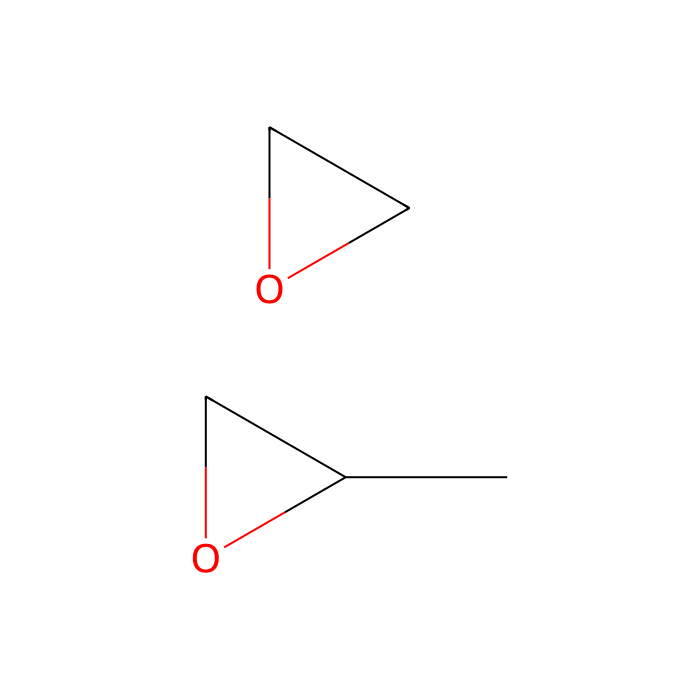
Sorrisi canoniciCC1CO1.C1CO1
IUPAC Name2-methyloxirane;oxirane
InChIKeyRVGRUAULSDPKGF-UHFFFAOYSA-N
INCHI1S/C3H6O.C2H4O/c1-3-2-4-3;1-2-3-1/h3H,2H2,1H3;1-2H2
Isomeri SMILES CC1CO1.C1CO1
CAS alternativo 691397-13-4
Reaxy-Rn 13268566
Reaxys-RN_link_address https://www.reaxys.com/reaxys/secured/hopinto.do?context=S&query=IDE.XRN=13268566&ln=

Documentazione

📋 Safety Data Sheet (SDS)

Comprehensive hazard, handling, storage, and regulatory compliance document.

Download SDS →

✅ Certificate of Analysis (COA)

Lot-specific quality data. Enter your lot number to retrieve the exact COA.

Look up COA →

📊 Datasheet

Quick-reference summary of product specifications and applications.

View datasheet →

🔬 Specification Sheet

Full quality attributes and acceptance criteria for this grade.

View spec sheet →

Advanced Data

Taxonomic Classification

Taxonomy Tree

KingdomOrganic compounds
SuperclassOrganoheterocyclic compounds
ClasseEpoxides
SubclassNot available
Intermediate Tree Nodes Not available
Direct ParentEpoxides
Alternative Parents Oxacyclic compounds  Dialkyl ethers  Hydrocarbon derivatives  
Molecular FrameworkNot available
Substituents Oxacycle - Ether - Oxirane - Dialkyl ether - Organic oxygen compound - Hydrocarbon derivative - Organooxygen compound - Aliphatic heteromonocyclic compound
DescrizioneThis compound belongs to the class of organic compounds known as epoxides. These are compounds containing a cyclic ether with three ring atoms(one oxygen and two carbon atoms).
External Descriptors Not available
Struttura 3D
Modello di struttura chimica interattiva


Certificati (CoA, COO, BSE/TSE e tabella di analisi)
C of A & Other Certificates(BSE/TSE, COO):
Analytical Chart:

Find and download the COA for your product by matching the lot number on the packaging.

13 results found

Lot NumberCertificate TypeDataOggetto
H2603075Certificate of AnalysisAug 19, 2026 P434419
K2301427Certificate of AnalysisAug 03, 2026 P434419
K2301428Certificate of AnalysisAug 03, 2026 P434419
K2301429Certificate of AnalysisAug 03, 2026 P434419
K2301462Certificate of AnalysisAug 03, 2026 P434419
D2629004Certificate of AnalysisMay 14, 2026 P434419
E2427402Certificate of AnalysisNov 03, 2023 P434419
E2607125Certificate of AnalysisNov 03, 2023 P434419
F2617017Certificate of AnalysisNov 03, 2023 P434419
F2622058Certificate of AnalysisNov 03, 2023 P434419
G2512029Certificate of AnalysisNov 03, 2023 P434419
K2415117Certificate of AnalysisNov 03, 2023 P434419
K2524139Certificate of AnalysisNov 03, 2023 P434419
Proprietà chimiche e fisiche
Solubilitàsoluble, clear, colorless
Indice di rifrazione1.459
Punto di ebollizione (°C)> 149 °C
Punto di fusione (°C)40-50 °C
Peso molecolare102.130 g/mol
XLogP3
Hydrogen Bond Donor Count0
Hydrogen Bond Acceptor Count2
Rotatable Bond Count0
Exact Mass102.068 Da
Monoisotopic Mass102.068 Da
Topological Polar Surface Area25.100 Ų
Heavy Atom Count7
Formal Charge0
Complexity36.700
Isotope Atom Count0
Defined Atom Stereocenter Count0
Undefined Atom Stereocenter Count1
Defined Bond Stereocenter Count0
Undefined Bond Stereocenter Count0
The total count of all stereochemical bonds0
Covalently-Bonded Unit Count2
Domande frequenti e articoli
Poloxamers Explained: A Comprehensive Guide to Non-Ionic Block Copolymer Surfactants
A Panoramic Guide to Surfactants: Definitions & Mechanisms, Key Metrics, Application Scenarios, and Selection Navigation (Tables 1–3)
Materials Can “Switch”: How Smart Polymers Respond to Temperature, pH, and Light (with Experimental Selection Tips & Product Navigation)
Understanding Hydrophilic Polymers in Aqueous Systems: Hydration Mechanisms, Structural Knobs, and Task-Oriented Selection Guide (Including Tables 1–3)
Biomedical Polymer Insights: Role-Based Task Map, Six Key Material Levers, and a Risk-Driven Evidence Chain (including the Product Navigation Guide and Product Tables 1–3)
Review of the Structural Characteristics, Biological Functions, and Application Advances of Lycopene
Tissue Dissociation for Single-Cell Preparation: Sample Handling and Quality Control Strategies
Key Judgments in Medical Hydrogel R&D: From Polymer Source and Crosslinking Strategy to Sterilization Planning, Scale-Up Feasibility, and Quality Control
Injectable Thermosensitive Gels: Gelation Behavior, Rheological Properties, and Drug Release Characteristics
Potassium Fatty Acid Soaps: Structure and Formulation Applications—Production Processes, Alkalinity, Foam Control, and Low-Foam Cleaning
Solvents, Co-solvents, and Solubilization Systems in Home and Personal Care Formulations: Classification, Functions, and Selection Guide
Signal Transduction Mechanism of Graphene Biosensors: From Molecular Recognition to Electrical/Optical Signal Readout and Materials Selection
From Structure to Selection: Mechanisms and Application Assessment of Low-Foam Oil and Wax Removal with Fatty Acid Methyl Ester Ethoxylates (FMEE)
Mechanism of Action and Selection Logic of Defoamers for Daily Chemical Products: Foam Stability, Foam-Breaking Mechanisms, and Representative Raw Material Analysis
Mechanisms and Troubleshooting of Foam Reduction in Personal and Household Care Formulations: Film Rupture, Weak Interfacial Films, Insufficient Surfactant Supply, and Phase-State Disturbance
Structural Logic of Nonionic Surfactants: Mechanisms of Action, Classification Features, and Selection Principles
Application of Conductive Carbon Black in Coatings: Selection Criteria, Dispersion Control, and Conductive Network Construction
Understanding the Four Classes of Surfactants Through Molecular Charge: Application Logic of Anionic, Cationic, Amphoteric and Zwitterionic, and Nonionic Surfactants in Personal Care and Home Care
Mechanistic Analysis of Topical Glutathione in Skincare: Cellular Redox Regulation, Skin Delivery Challenges, and SLN-Based Delivery Strategies
Antioxidant Mechanisms, Stability, and Delivery Strategies of Resveratrol in Skincare Research
Antioxidant Mechanisms of Ferulic Acid in Skincare, Vitamin C/E Synergy, and Stable Delivery Applications
Mechanism of Action of Porous Silica in Oil-Control Loose Powder: Pore Structure, Capillary Imbibition, and Surface Modification
Exosome-Related Ingredients in Skincare Products: Sources and Preparation, Quality Control, Evidence of Efficacy, and Safety Assessment
Mechanism of Action of Tranexamic Acid in Pigmentation Care: From the Plasmin System to Regulation of Inflammation-Driven Pro-Melanogenic Signaling
Potential Mechanisms of p-Cymene in Problem-Prone Skin: Membrane Perturbation, Inflammatory Signaling Modulation, and Localized Delivery
How Coenzyme Q10 Acts on the Skin: Mitochondrial Electron Transfer, Antioxidant Protection of Membrane Lipids, and Lipid-Carrier Delivery
What Is Direct Compression? Process Characteristics, Suitability Criteria, and Excipient Selection
Citations of This Product
Calcolatori di soluzioni
Recensioni

Recensioni dei clienti

Shall we send you a message when we have discounts available?

Remind me later

Thank you! Please check your email inbox to confirm.

Oops! Notifications are disabled.