Polyvinyl alcohol(PVA) is a linear hydrophilic synthetic polymer with a backbone composed of only carbon atoms. Due to its inertness and stability, it is considered safe and biocompatible. It is also biodegradable under both anaerobic and aerobic conditions. Owing to its unique properties such as adhesiveness, safety, strength, film-forming, swelling, and non-carcinogenicity, it is widely used in paper, adhesives,food, biomedical and pharmaceutical industries. The partially hydrolyzed PVA(87–89%) is more soluble in water and it has more flexibility and adhesion tohydrophobic surfaces.
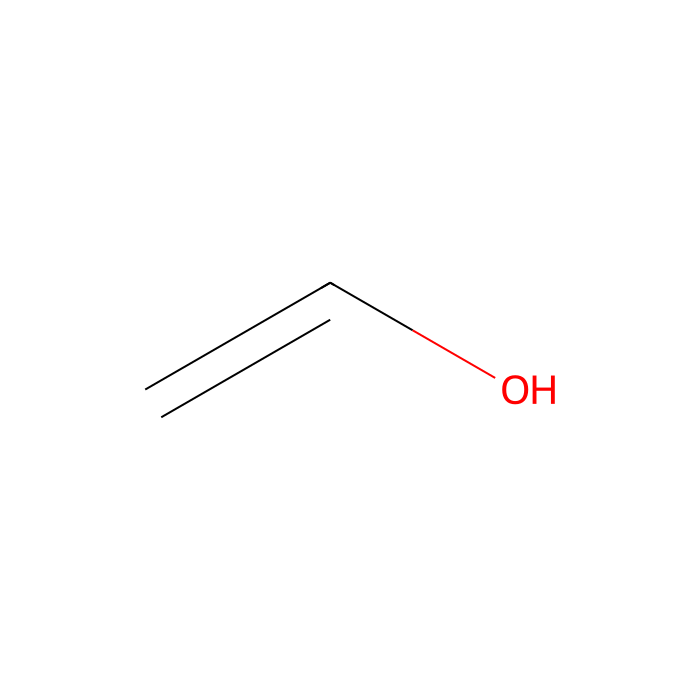
This compound belongs to the class of organic compounds known as enols. These are compounds containing the enol functional group, with the structure HO(R)C=CR'. Ketones that have one or more alpha-hydrogen atoms undergo keto-enol tautomerization, the tautomer being an enol.
External Descriptors
Not available
1. Djoumbou Feunang Y, Eisner R, Knox C, Chepelev L, Hastings J, Owen G, Fahy E, Steinbeck C, Subramanian S, Bolton E, Greiner R, and Wishart DS. ClassyFire: Automated Chemical Classification With A Comprehensive, Computable Taxonomy. Journal of Cheminformatics, 2016, 8:61.
Determine the necessary mass, volume, or concentration for preparing a solution.
Dilution Calculator
Determine the dilution needed to prepare a stock solution.
Reconstitution Calculator
Recensioni
Recensioni dei clienti
Application Protocols
No item-specific validated protocols were provided for SKU P434377. The following general, non-binding procedures are common starting points in research settings (literature/guidance only):
Preparation of 10 wt% PVA aqueous solution
Add 90 g deionized water to a beaker with overhead stirring; heat to 90–95 °C. Slowly add 10 g PVA, avoiding clumping. Maintain temperature until fully dissolved (solution clears). Cool to room temperature, adjust volume, degas, and filter if feasible.
Surface passivation of glass (simple)
Clean substrate, then immerse in 0.5–1 wt% PVA in water for 10–30 min, rinse lightly with water, and dry at 60–80 °C. Use for reduction of nonspecific adsorption in imaging flow cells (optimize concentration and time for your system).
Borate-crosslinked hydrogel (quick gel)
Mix equal volumes of 8 wt% PVA (neutral pH) and 2–4 wt% sodium tetraborate solution; gel forms within seconds–minutes. Rinse thoroughly to remove unreacted borate if used with biological samples.
Emulsion polymerization stabilizer
Prepare aqueous phase with 0.5–2 wt% PVA relative to monomer, adjust pH and electrolytes, and introduce monomer under high shear before thermal/radical initiation. Optimize PVA grade (DH/Mw) for desired particle size distribution.
These are starting points only; optimize for the specific grade provided on the CoA/Spec Sheet. For regulated applications, develop and validate full SOPs.
Biological Roles
PVA is a synthetic polymer and does not have native biological functions. However, in research settings it is widely used because of its aqueous compatibility and generally favorable biocompatibility profile.
General properties relevant to bio-research (literature)
Low protein adsorption and nonionic character can reduce nonspecific interactions on surfaces; PVA coatings are used to passivate glass/plastic for single-molecule and live-cell imaging workflows.
Hydrogel formation (physical or chemical crosslinking) enables 3D cell culture scaffolds, diffusion studies, and controlled release research (non-clinical). Water content and crosslink density govern permeability to solutes and macromolecules.
Cryoprotection/viscosity modification: PVA solutions can modulate ice nucleation and viscosity in biochemical assays (grade- and protocol-dependent); certain PVA fractions exhibit ice recrystallization inhibition in research contexts.
Compatibility considerations (general)
Endotoxin, residual acetate, and low-mass oligomers can influence cell responses; for sensitive biological studies, verify bioburden/endotoxin and choose appropriate purification grades when available (check CoA/Spec Sheet for this item).
Sterilization: Aqueous PVA solutions tolerate autoclaving at typical lab conditions (e.g., 121 °C, 15–20 min), though repeated cycles may alter viscosity and DH slightly; filtration (0.22 µm) is a gentler alternative when viscosity allows.
Limitations
Swelling and softness in aqueous environments can limit mechanical stability; blending (e.g., with gelatin, alginate) or crosslinking can mitigate.
Not inherently bioactive; functionalization (e.g., with RGD peptides or carboxylation followed by carbodiimide coupling) is often required for cell-adhesive applications.
Buffer Applications
PVA is not a buffering reagent and does not establish or maintain pH. However, it is frequently incorporated into buffered systems to modulate physical properties and surface interactions (literature/general guidance).
Uses in buffered media
Viscosity modifier: 0.1–5 wt% PVA in common buffers (e.g., PBS, Tris, HEPES) increases viscosity and reduces convective flow, aiding imaging or microfluidics.
Surface passivation: Coating glass/plastic with dilute PVA (e.g., 0.1–1 wt%) can reduce nonspecific adsorption in ELISA plates, flow cells, or single-molecule assays.
Hydrogel matrices: PVA dissolved in buffer and crosslinked (borate, dialdehydes) to form gels for diffusion or release studies; buffer pH and ionic strength influence gelation and swelling.
Practical tips
Prepare PVA stock in water at elevated temperature (80–95 °C), cool, then blend with concentrated buffer to minimize salt-induced aggregation during dissolution.
Filter if possible to remove undissolved particulates; degas to avoid bubbles in imaging chambers.
Not typically applicable
PVA does not provide buffering capacity; for pH control choose conventional buffer pairs (e.g., phosphate, Tris, HEPES) and add PVA only for rheology or surface control.
Green Alternatives
PVA is often itself a greener choice for film-forming and binder applications due to its water processability and low VOC requirements. Nonetheless, alternative polymers may offer advantages depending on end use.
Environmental considerations (general)
Water-based processing minimizes solvent emissions. PVA is non-ionic and typically low-toxicity. Biodegradability is context-dependent and enhanced under specific environmental or biological conditions, especially for lower Mw/partially hydrolyzed or modified PVA.
Comparison (literature/general; select use-cases)
Option | Pros | Cons | Typical Use
--- | --- | --- | --- | ---
PVA (this item) | Water-processable; excellent film clarity and oxygen barrier (dry); robust colloid stabilizer | Moisture sensitive; barrier drops at high RH; needs heating for dissolution (high DH) | Films, binders, hydrogels, emulsions
PEG/PEO | Water-soluble; good biocompatibility; low Tg plasticizer | Poor film strength/barrier; more prone to creep | Hydrogel blends, plasticizer for PVA
Cellulose derivatives (HPMC, MC) | Renewable origin; water/ethanol soluble (grade-dependent) | Lower clarity; thermal gelation can complicate processing | Pharmaceutical coatings, thickeners
PVP | Excellent solubility; strong complexation with small molecules | Hygroscopic; can discolor on heating | Binder, nanoparticle stabilizer
Starch/PLA blends | Renewable; biodegradable | Processing complexity; mechanical variability | Packaging R&D, compostable materials
Greener processing tips (general)
Prefer deionized water as solvent; recover and reuse rinse waters where possible.
Use energy-efficient dissolution: lid reactors, controlled ramp to 90–95 °C, optimize solids loading to reduce heating time.
Crosslink with low-toxicity agents where feasible (e.g., citric acid, genipin for aminated blends) and avoid solvent-borne systems when water-borne alternatives suffice.
Pharmaceutical Uses
No item-specific pharmacopeial grade or compliance information was provided. The following summarizes general, non-clinical roles of PVA as a pharmaceutical excipient (literature/general; for research and formulation development only).
Excipient roles
Film-former in immediate-release and taste-masking coatings; provides clarity and adhesion on tablets/capsules.
Binder in wet granulation and direct compression; improves tablet hardness and reduces friability.
Matrix former in transdermal and buccal film research; modulates dissolution and mechanical properties when blended with plasticizers (e.g., glycerol, PEG) and other polymers.
Stabilizer in aqueous suspensions and emulsions; protective colloid in drug particle milling and spray drying studies.
Regulatory context (general)
Poly(vinyl alcohol) has monographs in major pharmacopeias (e.g., USP/NF, Ph.Eur.) defining viscosity ranges, DH, and impurity limits for excipient grades. This listing does not specify such compliance—verify CoA/Spec Sheet for this SKU.
Processing considerations
Dissolution typically requires heating; solution pH and ionic strength can affect viscosity and stability.
Plasticization (e.g., glycerol, triethyl citrate) reduces brittleness of cast films.
Crosslinking or blending (e.g., with PVP, HPMC) tunes disintegration and moisture sensitivity.
Caution
Avoid therapeutic claims; evaluate biocompatibility, extractables/leachables, and residuals appropriate to the intended non-clinical formulation study.
Physical Properties
Note: No item-specific specifications were provided. Values below are general literature ranges for PVA and vary with molecular weight (Mw), degree of hydrolysis (DH), and crystallinity.
Item-specific facts (from Product Data)
Appearance: Not specified for this item; refer to CoA/Spec Sheet.
Molecular Weight: Not specified for this item; refer to CoA/Spec Sheet.
Literature/typical properties (non-binding)
Physical form: White to off-white granular powder or flakes; forms clear, tough films from aqueous solution.
Glass transition temperature (Tg): ~70–90 °C (common range; increases with DH and Mw).
Melting/softening: 180–230 °C with partial thermal degradation; true sharp melting often obscured by dehydration and chain scission (varies with DH/crystallinity).
Density: ~1.19–1.31 g/cm³ at 25 °C (grade-dependent).
Refractive index (films): nD ~1.48–1.50 (typical literature range).
Solubility: Water-soluble for many partially to fully hydrolyzed grades; solubility improves with decreasing DH and decreasing Mw. Soluble in DMSO, DMF, hot formamide; generally insoluble in most common aprotic hydrocarbons and chlorinated solvents.
Aqueous solution viscosity: Strongly grade- and concentration-dependent (e.g., 4 wt% solutions spanning ~3–60 mPa·s for typical commercial ranges; consult specific viscosity/Mw on CoA).
pKa: Alcoholic –OH; effective acidity very weak (pKa ~15–16 for secondary alcohols; polymer context similar—literature estimate).
Film properties: High oxygen barrier when dry; barrier decreases at high relative humidity due to plasticization by water.
Notes on water interactions (general)
Extensive intra-/inter-chain H-bonding; hydration breaks H-bonds, lowering Tg and modulus. Solubility often requires heating (80–95 °C) and vigorous stirring.
Quality and Grades
No item-specific grade, purity, or stabilizer information was provided. Always consult the CoA/Specification Sheet for definitive parameters for SKU P434377.
Item-specific (from Product Data)
Grade/Purity: Not specified for this item; refer to CoA/Spec Sheet.
Stabilizer/Additives: Not specified for this item; refer to CoA/Spec Sheet.
How PVA grades are commonly defined (literature/general)
Degree of hydrolysis (DH): Fraction of acetate groups converted to –OH. Typical commercial DH ranges: ~87–89% (partially hydrolyzed) and ~98–99+% (fully hydrolyzed). DH influences solubility, solution pH, and film properties.
Molecular weight/viscosity grade: Often expressed by viscosity of a standard aqueous solution (e.g., 4 wt% at 20 °C) or by nominal Mw (e.g., 13–23 kDa, 30–70 kDa, 85–124 kDa, etc.). Higher Mw yields higher solution viscosity and stronger films.
Ash content and residual acetate: Reported on CoA; lower ash favors optical/electronic uses.
pH of aqueous solution: Commonly measured on 4 wt% solution (typical ~5–7, depending on DH and residual acetate); item-specific spec required for precise value.
Implications of DH and Mw (general)
Partially hydrolyzed PVA dissolves more readily in cold water and has better colloidal stabilizing performance; fully hydrolyzed PVA exhibits higher crystallinity, better solvent/grease resistance, and slower cold-water solubility (often requires heating).
Recommended verification for critical applications
Confirm DH, viscosity grade, Mw distribution (GPC), volatile content, and residual monomer/acetate per intended application (e.g., electronics, biomedical research, or membrane casting).
Reaction and Applications
No manufacturer application notes were provided; below are widely used research applications of PVA (literature/general) with practical guidance.
Film-former and binder
Casting transparent, flexible films for optics, packaging research, and barrier studies. Control RH during drying to tune crystallinity and mechanical properties.
Binder for ceramics, battery electrodes, and pigment formulations; burnout above ~500 °C leaves minimal ash (grade-dependent—verify CoA for ash specs).
Emulsifier/protective colloid
Stabilizes suspension and emulsion polymerizations (e.g., vinyl acetate, styrenics, PVDF latex) via steric stabilization and interfacial adsorption. DH and Mw affect particle size and stability.
Hydrogel formation
Physical gels by freeze–thaw cycling (crystallite junctions). Chemical crosslinking via borate (diol–borate complexes), glutaraldehyde (acetal/hemiformal linkages), dialdehydes, epoxides, isocyanates, or carbodiimide-mediated coupling (after carboxylation).
Electrospinning and 3D shaping
Forms continuous nanofibers from aqueous or polar aprotic solutions; commonly blended with PEO, gelatin, or nanofillers (CNTs, clays) to tune conductivity and mechanics.
Templating and supports
Stabilizer for metal nanoparticle synthesis (e.g., Ag, Au) and oxide sols; substrate/binder for printable electronics, conductive inks (after doping/filler addition).
Barrier and separation materials
Gas barrier coatings, pervaporation and nanofiltration membranes (often crosslinked or blended to reduce water uptake).
Practical tips
Control DH and Mw to match process: partially hydrolyzed grades excel in colloidal stabilization; fully hydrolyzed grades yield stronger, more water-resistant films post-crosslinking.
Avoid high shear at low hydration to prevent gel balls; premix with cold water then heat under agitation.
Reaction Conditions
No reaction testing is provided for this specific SKU. The following are general, literature-based conditions for preparing and using PVA solutions and for common modifications.
Dissolving PVA (aqueous)
Charge deionized water (70–80% of final volume) to jacketed vessel; heat to 80–95 °C with strong agitation.
Sprinkle PVA slowly to avoid agglomerates; maintain 90–95 °C for 30–120 min depending on Mw/DH until translucent and bubble-free.
Cool to room temperature; adjust to final volume, filter (as viscosity permits), and degas.
Typical concentrations: 0.5–5 wt% for coatings/emulsions; 5–20 wt% for film casting and electrospinning (grade-dependent).
Crosslinking (examples; literature)
Borate complexation: Add sodium tetraborate (e.g., 1–4 wt% relative to PVA) to neutral–alkaline PVA solution; gelation within seconds–minutes depending on diol density and ionic strength.
Glutaraldehyde crosslinking: Acid-catalyzed (e.g., pH 1–3 using HCl) at ambient–50 °C; GA at 0.1–2 wt% on polymer. Post-cure and thorough washing recommended.
Epoxide or isocyanate crosslinkers: Mild base (epoxide) or moisture-controlled conditions (isocyanate); 20–60 °C typical.
Emulsion/suspension polymerization aid
PVA dosage: Often 0.1–3 wt% relative to monomer; higher DH and Mw increase particle stabilization but can elevate viscosity. Temperature commonly 50–80 °C depending on initiator system.
Electrospinning
Solution: 8–15 wt% PVA in water or water/DMSO; voltage 10–25 kV; flow 0.2–1.0 mL/h; tip–collector distance 10–20 cm. Optimize with humidity control (30–50% RH) to prevent bead formation.
Expected outcomes
Viscosity and gelation kinetics scale strongly with Mw and DH; verify with small-scale trials. Always validate conditions for the specific grade on the CoA.
Safety and Handling
Always consult the product’s SDS for authoritative safety information. No GHS details were provided for this specific item; general best practices for handling PVA are summarized below.
Item-specific hazard data (from Product Data)
Signal Word: Not specified for this item; refer to SDS.
H-Statements: Not specified for this item; refer to SDS.
GHS Classification: Not specified for this item; refer to SDS.
Pictograms: Not specified for this item; refer to SDS.
General safety characteristics (literature/generic)
Low inherent toxicity; may cause mechanical irritation to eyes and respiratory tract as dust.
Combustible organic polymer; fine dust can pose a combustible dust explosion hazard in air—avoid dust clouds and ignition sources.
Thermal decomposition can release acetic acid (if partially hydrolyzed), aldehydes, ketones, and carbon oxides.
Handling and PPE (general)
Use in well-ventilated areas; minimize dust. Wear safety glasses with side shields, lab coat, and suitable gloves (e.g., nitrile). Use dust mask/respirator if airborne particulates are generated above exposure limits.
Avoid contact with strong oxidizers, strong acids/bases at elevated temperature (can promote hydrolysis/degradation), and reactive acylating agents.
First aid (overview; defer to SDS)
Inhalation: Move to fresh air; seek medical attention if symptoms persist.
Eye contact: Rinse cautiously with water for several minutes; remove contact lenses if present and easy to do.
Skin contact: Wash with soap and water.
Ingestion: Rinse mouth; seek medical advice if large quantities are ingested.
Storage incompatibilities and stability (general)
Store dry, away from moisture and heat sources to prevent caking and premature degradation. Avoid strong oxidizers. PVA is not a peroxide-forming substance.
Solvent Selection
As a water-compatible polymeric solute/film-former, PVA’s solvent behavior is governed by hydrogen bonding and crystallinity.
Polarity and interactions (general)
Strongly hydrogen-bonding polymer with multiple secondary –OH groups; forms extensive H-bond networks with water and polar aprotic solvents capable of H-bond acceptance (DMSO, DMF).
Miscibility/solubility profile (literature)
Water: Soluble for many grades; dissolution may require 80–95 °C with stirring, especially for fully hydrolyzed/high-Mw PVA. Cold-water solubility improves with lower DH and lower Mw.
Alcohols: Limited solubility in lower alcohols; can swell or partially dissolve, depending on DH and water content.
Polar aprotic: Soluble in DMSO and hot DMF; limited in NMP depending on grade; insoluble in most ketones and esters unless water is present.
Nonpolar/chlorinated: Generally insoluble (e.g., hexane, toluene, DCM).
Practical selection tips (general)
Use deionized water for most applications; degas to reduce bubble entrapment in films.
For rapid dissolution of high-DH/high-Mw grades, start with 60–70 °C to wet out, then ramp to 90–95 °C with strong agitation; avoid local overheating.
For organic processing (e.g., electrospinning from DMSO/DMF), ensure complete dissolution and control humidity to avoid premature water uptake.
Comparison snapshot (general guidance)
Water: Green, low cost, best film clarity; can plasticize PVA at high RH.
DMSO: Strong solvent for high Mw; high boiling point eases casting but slows drying.
DMF: Effective at elevated temperature; consider toxicity and regulatory constraints.
Mixed aqueous/organic: Tailor viscosity and evaporation rate for coatings and electrospinning.
Storage Conditions: Not specified for this item; refer to CoA/Spec Sheet.
Shipped In: Not specified for this item; refer to CoA/Spec Sheet.
General storage guidance (literature/practice)
Store dry PVA in tightly closed containers at ambient temperature in a cool, dry place. Protect from moisture (prevents caking and variability in solids content) and from prolonged heat or direct sunlight. Keep away from strong oxidizers.
For long-term consistency, minimize repeated opening in humid environments; consider desiccant packs.
Reconstitution/preparation of solutions (general)
Wetting: Disperse PVA into water at 50–70 °C with strong agitation to avoid formation of gelled agglomerates.
Dissolution: Raise to 90–95 °C and maintain until the solution becomes clear and uniform. Typical solids: 0.5–20 wt% depending on viscosity grade and application.
Cooling/finishing: Cool with gentle stirring; adjust to final volume. Degas under mild vacuum or by holding warm to release entrained air. Filter if viscosity permits (e.g., 0.45–5 µm) for optical clarity.
Sterilization: Autoclave compatible for many grades; consider 0.22 µm filtration for sensitive applications to minimize viscosity changes.
Shelf life notes (general)
Dry PVA is stable for years under proper storage. Aqueous solutions are best used within weeks; add biocide only if appropriate for the intended research use. Monitor viscosity and pH over time.
Research Use Note
For research use only.
Structure and Identity
Brief overview: Poly(vinyl alcohol) (PVA) is a synthetic, linear polyhydroxy polymer composed of repeating vinyl alcohol units generated by hydrolysis of poly(vinyl acetate).
Item-specific facts (from Product Data)
Product Name: Poly(vinyl alcohol)
SKU: P434377
CAS: 9002-89-5
PubChem CID: 11199
InChIKey: 144987 (as provided; polymers often lack a unique InChIKey)
SMILES: Not specified for this item; refer to CoA/Spec Sheet.
Molecular Formula: Not specified for this item; refer to CoA/Spec Sheet.
Molecular Weight: Not specified for this item; refer to CoA/Spec Sheet.
Literature description of structure (general)
Repeating unit: –[CH2–CH(OH)]–n (empirical repeat unit formula C2H4O)
Topology: Linear carbon backbone with pendant secondary alcohols at every other carbon.
Stereochemistry: Atactic in most commercial grades (stereochemical configuration at the –CH(OH)– center is typically random).
Origin: Prepared by hydrolysis (saponification) of poly(vinyl acetate); “degree of hydrolysis” (DH) denotes residual acetate content.
2D structural features in words
The polymer chain consists of an sp3-hybridized hydrocarbon backbone. Each second carbon bears a hydroxyl substituent capable of intra-/inter-chain hydrogen bonding, leading to crystallinity dependent on DH and tacticity.
PVA is a polymer mixture characterized by distributions: number-average molecular weight (Mn), weight-average molecular weight (Mw), polydispersity index (PDI), and DH. These parameters strongly influence solubility, viscosity, and film properties.
Synthetic Utility
From a synthetic chemistry perspective, PVA is a polyvalent, hydroxyl-rich polymer scaffold and process aid (literature/general).
Functional handles and transformations
Alcohol functionality: Esterification (acyl chlorides/anhydrides), etherification (e.g., Williamson after activation), carbonate formation, urethane linkages with isocyanates.
Acetal/ketal chemistry: Reaction with aldehydes/ketones to form polyacetals (e.g., PVA–glutaraldehyde networks) under acid catalysis.
Carbodiimide coupling: Following carboxylation (e.g., via partial succinylation), PVA can be coupled to amines/peptides for biofunctional materials.
Click-chemistry routes: Introduction of azide/alkyne handles (e.g., via tosylation-then-substitution) enables CuAAC conjugation of small molecules or dyes.
Support and medium roles
Protective colloid in emulsion/suspension polymerization, influencing particle size distribution via steric stabilization.
Solid support/binder for heterogeneous catalysts or reagents; pyrolysis of PVA-coated supports can yield carbonaceous films.
Membranes and separations
Crosslinked PVA membranes exhibit selectivity in pervaporation (e.g., water/organic separations) and dialysis; modification with sulfonic, carboxylic, or quaternary ammonium groups yields ion-conducting or anion-exchange materials.
Retrosynthetic note
PVA is typically obtained by hydrolysis of PVAc; control of hydrolysis conditions dictates DH and microstructure, which in turn determine reactivity and solubility of the resulting polymer for subsequent derivatization.
Target Specificity
Not applicable to this product type. Poly(vinyl alcohol) is a polymeric reagent/material, not an antibody, probe, or ligand with defined biological target specificity.
Utilizziamo i cookie per garantire il corretto funzionamento del sito web e, ove consentito, per migliorare la tua esperienza. Puoi gestire le tue preferenze in qualsiasi momento nelle Impostazioni. Per saperne di più, consulta la nostra Cookie Policy.
Desidera che le inviamo un messaggio quando avremo sconti disponibili?
Ricordamelo più tardi
Grazie! Controlli la sua casella di posta per confermare.
Products are supplied to verified businesses, institutions, and qualified professionals for research and development use only. Not for use in humans, animals, diagnosis, or therapy.

 I2307538