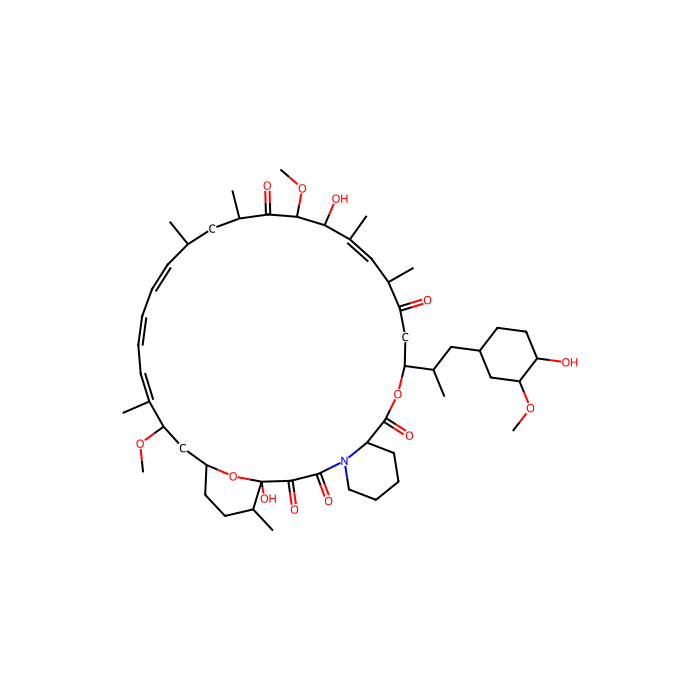
Rapamycin (AY-22989) - Moligand™, 10mM in DMSO , CAS No.53123-88-9

CAS: 53123-88-9 Cat. No.: R408790 Formula: C51H79NO13 Peso molecolare: 914.19 Numero EC: 610-965-5
Disponibile su ordine
GRADE & PURITY Moligand™ ? Moligand™ — Aladdin's line of ligands and bioactive small molecules. Use for receptor, pathway, and binding studies needing defined small-molecule tools. 10mM in DMSO
Synonyms
Rapamune, Sirolimus, NSC-2260804
Storage
Store at -80°C
Shipped In
Dry ice packs + Cold packs
★
Size
Germania (EU)
USA*
Price
Qty
1ml
R408790-1ml
—
4 Disponibile
78,01€
Enter a quantity for the sizes you want to add.
🧪
Why this grade

Moligand™, 10mM in DMSO Moligand™ for sensitive chromatographic and analytical workflows requiring minimal baseline interference.

🌡

Storage & shipping

Store at -80°C Ships Dry ice packs + Cold packs Check lot-specific COA for exact specifications.

📋

Quality documents

SDS, COA, datasheet, and spec sheet available for download. Lot-specific COA accessible via lot number lookup.

📚

Literature proof

Cited in 90 peer-reviewed publications across chromatography, organic synthesis, and cross-coupling reactions.

Panoramica

Information


In vitro

Rapamycin inhibits endogenous mTOR activity in HEK293 cells with IC50 of ~0.1 nM, more potently than iRap and AP21967 with IC50 of ~5 nM and ~10 nM, respectively. In Saccharomyces cerevisiae, Rapamycin treatment induces a severe G1/S cell cycle arrest and inhibition of translation initiation to levels below 20% of control. Rapamycin significantly inhibits the cell viability of T98G and U87-MG in a dose-dependent manner with IC50 of 2 nM and 1 μM, respectively, while displaying little activity against U373-MG cells with IC50 of >25 μM despite the similar extent of the inhibition of mTOR signaling. Rapamycin (100 nM) induces G1 arrest and autophagy but not apoptosis in Rapamycin-sensitive U87-MG and T98G cells by inhibiting the function of mTOR.

In vivo

Treatment with Rapamycin in vivo specifically blocks targets known to be downstream of mTOR such as the phosphorylation and activation of p70S6K and the release of inhibition of eIF4E by PHAS-1/4E-BP1, leading to complete blockage of the hypertrophic increases in plantaris muscle weight and fibre size. Short-term Rapamycin treatment, even at the lowest dose of 0.16 mg/kg, produces profound inhibition of p70S6K activity, which correlates with increased tumor cell death and necrosis of the Eker renal tumors. Rapamycin inhibits metastatic tumor growth and angiogenesis in CT-26 xenograft models by reducing the production of VEGF and blockage of VEGF-induced endothelial cell signaling. Rapamycin treatment at 4 mg/kg/day significantly reduces tumor growth of C6 xenografts, and tumor vascular permeability.
Cell Data

cell lines:

Concentrations:Dissolved in DMSO, final concentrations ~25 μM

Incubation Time:72 hours

Powder Purity:≥99%

Specifications

Sinonimi
Rapamune, Sirolimus, NSC-2260804
Specifiche e purezza
Moligand™, 10mM in DMSO
Meccanismi biochimici e fisiologici
Rapamycin (AY-22989, Rapamune, Sirolimus, NSC-2260804) is a specific mTOR inhibitor with IC50 of ~0.1 nM HEK293 cells.
Condizioni di conservazione di stoccaggio
Store at -80°C
Spedito in
Dry ice packs + Cold packs
Questo prodotto richiede spedizione a catena fredda. I servizi di terra e altri servizi economici non sono disponibili.
Grado
Moligand™
Nomi e identificatori
Isomeri SMILES
C[C@@H]1CC[C@H]2C[C@@H](/C(=C/C=C/C=C/[C@H](C[C@H](C(=O)[C@@H]([C@@H](/C(=C/[C@H](C(=O)C[C@H](OC(=O)[C@@H]3CCCCN3C(=O)C(=O)[C@@]1(O2)O)[C@H](C)C[C@@H]4CC[C@H]([C@@H](C4)OC)O)C)/C)O)OC)C)C)/C)OC
RTECS
VE6250000
Peso molecolare
914.19
Reaxy-Rn
5848501

Documentazione

📋 Safety Data Sheet (SDS)

Comprehensive hazard, handling, storage, and regulatory compliance document.

Download SDS →

✅ Certificate of Analysis (COA)

Lot-specific quality data. Enter your lot number to retrieve the exact COA.

Look up COA →

📊 Datasheet

Quick-reference summary of product specifications and applications.

View datasheet →

🔬 Specification Sheet

Full quality attributes and acceptance criteria for this grade.

View spec sheet →

Advanced Data

Obiettivi associati (umani)
FKBP1A Tclin Peptidyl-prolyl cis-trans isomerase FKBP1A (10 Activities)
Activity TypeActivity Value -log(M)Mechanism of ActionActivity ReferencePublications (PubMed IDs)
FKBP1B Tchem Peptidyl-prolyl cis-trans isomerase FKBP1B (1 Activities)
Activity TypeActivity Value -log(M)Mechanism of ActionActivity ReferencePublications (PubMed IDs)
FKBP5 Tchem Peptidyl-prolyl cis-trans isomerase FKBP5 (1 Activities)
Activity TypeActivity Value -log(M)Mechanism of ActionActivity ReferencePublications (PubMed IDs)
EIF4E Tchem Eukaryotic translation initiation factor 4E (1 Activities)
Activity TypeActivity Value -log(M)Mechanism of ActionActivity ReferencePublications (PubMed IDs)
PDCD4 Tchem Programmed cell death protein 4 (1 Activities)
Activity TypeActivity Value -log(M)Mechanism of ActionActivity ReferencePublications (PubMed IDs)
MTOR Tclin Serine/threonine-protein kinase mTOR (7 Activities)
Activity TypeActivity Value -log(M)Mechanism of ActionActivity ReferencePublications (PubMed IDs)
Certificati (CoA, COO, BSE/TSE e tabella di analisi)
C of A & Other Certificates(BSE/TSE, COO):
Analytical Chart:

Find and download the COA for your product by matching the lot number on the packaging.

4 results found

Lot NumberCertificate TypeDataOggetto
K2425162Certificate of AnalysisOct 12, 2026 R408790
I2601005Certificate of AnalysisSep 03, 2026 R408790
L2230022Certificate of AnalysisSep 01, 2026 R408790
I2405002Certificate of AnalysisJul 10, 2026 R408790
Proprietà chimiche e fisiche
Rotazione specifica [α]-150° (C=0.2,MeOH)
Punto di fusione (°C)177 °C(dec.)
Domande frequenti e articoli
PI3K-Akt-mTORC Signaling
Rapamycin
Rapamycin: A Life-Balance Regulator Born from Easter Island Soil
Small-Molecule Inhibitors: A Practical Guide for Research Selection — A Minimal Evidence Chain and Scenario-Based Validation Framework (Including a Selection Matrix, Case Cards, and Product Tables 1–4)
Functional System Overview of Cellular Metabolic Enzymes in Energy Metabolism, Redox, and Signal Transduction
Central–Peripheral Signaling Networks Regulated by Neuropeptides and the Integration of Energy Metabolism
Molecular Basis of Ferroptosis-Immune Metabolism Crosstalk
Establishment and Application of Animal Models of Epilepsy (EP)
Autophagy Signaling Pathways and Selective Autophagy Research
Applications of Endocrinology/Hormones in Metabolic Regulation, Reproductive Function, and Disease Research
Role of the HER3 Signaling Network in Tumor Progression, Therapeutic Resistance, and Targeted Intervention
From Metabolic Flux to Protein Degradation: How Metabolic Enzymes and Protein Degradation Systems Jointly Regulate Cell Fate
Molecular Classification, Oncogenic Drivers, and Resistance Mechanisms of Non-Small Cell Lung Cancer
Mechanisms of Action, Representative Compounds, and Research Applications of Senolytics
Regulatory Mechanisms of Aging-Related Nutrient Sensing, Inflammation, and Homeostatic Signaling Pathways
Molecular Mechanisms by Which Natural Products Regulate Adipose Browning
AUTAC or AUTOTAC? Mechanistic Differences Between First- and Second-Generation Autophagy-Targeting Degradation Technologies
Polarity Exposure and Passive Membrane Permeability of bRo5 Molecules: TPSA, EPSA, ETR, and Molecular Chameleonicity
Molecular Basis of Cellular Senescence and Anti-Aging Intervention Research
Molecular Mechanisms and Experimental Evaluation of Mitophagy: PINK1–Parkin, Receptor Recognition, and Lysosomal Flux
Molecular Mechanisms, Selective Degradation, and Disease Regulation of Autophagy
Regulation of Aging by Dietary Restriction, Rapamycin, AKG, and Carglumic Acid
Citations of This Product
Calcolatori di soluzioni
Recensioni

Recensioni dei clienti

Shall we send you a message when we have discounts available?

Remind me later

Thank you! Please check your email inbox to confirm.

Oops! Notifications are disabled.