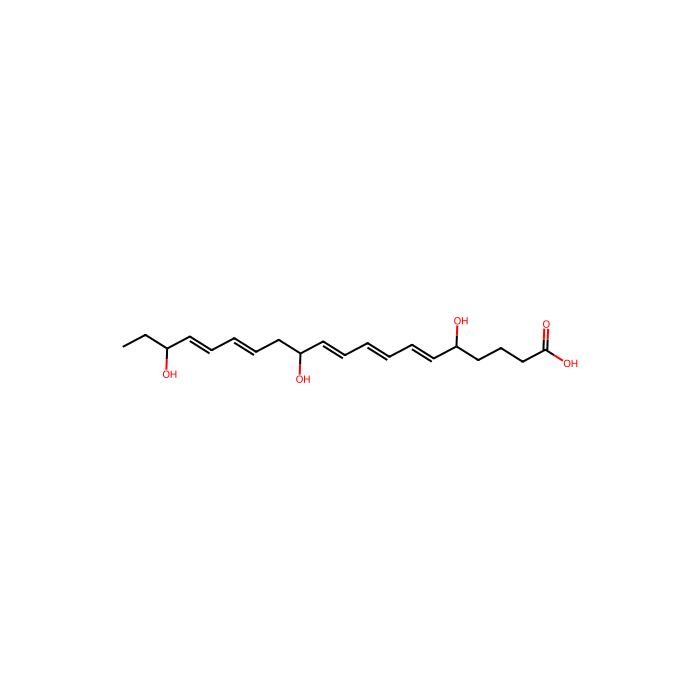
Resolvin E1 Sodium Salt - Moligand™ , Agonist of chemerin receptor 1, CAS No.1309610-43-2, Agonist of chemerin receptor 1

CAS: 1309610-43-2 Cat. No.: R331811 Formula: C₂₀H₂₉O₅・Na Peso molecolare: 372.43 PubChem CID: 10473088
Disponibile su ordine
QUALITÀ & PUREZZA Moligand™ ? Moligand™ — Aladdin's line of ligands and bioactive small molecules. Use for receptor, pathway, and binding studies needing defined small-molecule tools.
Synonyms
(5S,12R,18R)-trihydroxy-(6Z,8E,10E,14Z,16E)-icosapentaenoic acid|5S,12R,18R-trihydroxy-6Z,8E,10E,14Z,16E-eicosapentaenoic acid|6,8,10,14,16-Eicosapentaenoic acid, 5,12,18-trihydroxy-, (5S,6Z,8E,10E,12R,14Z,16E,18R)-|(5S,6Z,8E,10E,12R,14Z,16E,18R)-5,12,18-Trihydroxy-6,8,10,14,16-eicosapentaenoic acid|5S,12R,18R-trihydroxy-6Z,8E,10E,14Z,16E-EPA|Resolvin E1|(5S,12R,18R)-trihydroxy-(6Z,8E,10E,14Z,16E)-eicosapentaenoic acid|RX-10001|RvE1|(5S,6Z,8E,10E,12R,14Z,16E,18R)-5,12,18-trihydroxyicosa-6,8,10,14,16-pentaenoic acid|(6Z,8E,10E,14Z,16E)-5,12,18-trihydroxyicosa-6,8,10,14,16-pentaenoic acid
Storage
Store at -80°C
Shipped In
Dry ice packs + Cold packs
★
Dimensione
Germania (EU)
USA*
Prezzo
Qtà
0.25mg
R331811-0.25mg
Su ordinazione · 8–12 settimane
786,95€
2.5mg
R331811-2.5mg
Su ordinazione · 8–12 settimane
7.266,36€
Enter a quantity for the sizes you want to add.

Panoramica

Resolvin E1 Sodium Salt is an omega-3 polyunsaturated fatty acid derivative. It has been observed that Resolvin E1 Sodium Salt can inhibit neuropathic pain and spinal cord microgial activation after peripheral nerve injury. In addition, Resolvin E1 Sodium Salt has anti-inflammatory, pro-resolution, and anti-nociceptive properties.

Specifiche

Sinonimi
(5S,12R,18R)-trihydroxy-(6Z,8E,10E,14Z,16E)-icosapentaenoic acid | 5S,12R,18R-trihydroxy-6Z,8E,10E,14Z,16E-eicosapentaenoic acid | 6,8,10,14,16-Eicosapentaenoic acid, 5,12,18-trihydroxy-, (5S,6Z,8E,10E,12R,14Z,16E,18R)- | (5S,6Z,8E,10E,12R,14Z,16E,18R)-5,12,18-Trihydroxy-6,8,10,14,16-eicosapentaenoic acid | 5S,12R,18R-trihydroxy-6Z,8E,10E Mostra altro
Specifiche e purezza
Moligand™
Condizioni di conservazione di stoccaggio
Store at -80°C
Spedito in
Dry ice packs + Cold packs
Questo prodotto richiede spedizione a catena fredda. I servizi di terra e altri servizi economici non sono disponibili.
Grado
Moligand™
Tipo di azione
AGONIST
Meccanismo d'azione
Agonist of chemerin receptor 1
Nomi e identificatori
Sorrisi canonici
CCC(C=CC=CCC(C=CC=CC=CC(CCCC(=O)O)O)O)O
IUPAC Name
(5S,6Z,8E,10E,12R,14Z,16E,18R)-5,12,18-trihydroxyicosa-6,8,10,14,16-pentaenoic acid
InChIKey
AOPOCGPBAIARAV-OTBJXLELSA-N
INCHI
1S/C20H30O5/c1-2-17(21)11-8-5-9-14-18(22)12-6-3-4-7-13-19(23)15-10-16-20(24)25/h3-9,11-13,17-19,21-23H,2,10,14-16H2,1H3,(H,24,25)/b4-3+,9-5-,11-8+,12-6+,13-7-/t17-,18+,19-/m1/s1
Isomeri SMILES
CC[C@H](/C=C/C=C\C[C@H](/C=C/C=C/C=C\[C@H](CCCC(=O)O)O)O)O
PubChem CID
10473088
Peso molecolare
372.43

Dati avanzati

Taxonomic Classification

Taxonomy Tree

KingdomOrganic compounds
SuperclassLipids and lipid-like molecules
ClasseFatty Acyls
SubclassEicosanoids
Intermediate Tree Nodes Not available
Direct ParentHydroxyeicosapentaenoic acids
Alternative Parents Long-chain fatty acids  Hydroxy fatty acids  Unsaturated fatty acids  Secondary alcohols  Polyols  Monocarboxylic acids and derivatives  Carboxylic acids  Organic oxides  Hydrocarbon derivatives  Carbonyl compounds  
Molecular FrameworkAliphatic acyclic compounds
Substituents Hydroxyeicosapentaenoic acid - Long-chain fatty acid - Hydroxy fatty acid - Fatty acid - Unsaturated fatty acid - Secondary alcohol - Carboxylic acid derivative - Carboxylic acid - Monocarboxylic acid or derivatives - Polyol - Organic oxide - Organic oxygen compound - Hydrocarbon derivative - Carbonyl group - Organooxygen compound - Alcohol - Aliphatic acyclic compound
DescrizioneThis compound belongs to the class of organic compounds known as hydroxyeicosapentaenoic acids. These are eicosanoic acids with an attached hydroxyl group and five CC double bonds.
External Descriptors Hydroxy/hydroperoxyeicosapentaenoic acids
Struttura 3D
Modello di struttura chimica interattiva


Obiettivi associati (umani)
CMKLR1 Tchem Chemokine-like receptor 1 (1 Activities)
Activity TypeActivity Value -log(M)Mechanism of ActionActivity ReferencePublications (PubMed IDs)
Meccanismi d'azione
Certificati (CoA, COO, BSE/TSE e tabella di analisi)
C of A & Other Certificates(BSE/TSE, COO):
Analytical Chart:
Proprietà chimiche e fisiche
Peso molecolare350.400 g/mol
XLogP32.400
Hydrogen Bond Donor Count4
Hydrogen Bond Acceptor Count5
Rotatable Bond Count13
Exact Mass350.209 Da
Monoisotopic Mass350.209 Da
Topological Polar Surface Area98.000 Ų
Heavy Atom Count25
Formal Charge0
Complexity488.000
Isotope Atom Count0
Defined Atom Stereocenter Count3
Undefined Atom Stereocenter Count0
Defined Bond Stereocenter Count5
Undefined Bond Stereocenter Count0
The total count of all stereochemical bonds5
Covalently-Bonded Unit Count1
Calcolatori di soluzioni
Recensioni

Recensioni dei clienti

Application Protocols

Not specified for this item; refer to CoA/Spec Sheet.

No tested applications, recommended dilutions, or positive control samples are provided in the Product Data for SKU R331811. Users should develop and validate protocols appropriate to their platform (analytical, biochemical, or cell-based) and consult the SDS for handling guidance.

Biological Roles

The following describes the biochemical context of Resolvin E1 (RvE1); it is provided for research background only and does not imply medical or clinical use.

  • Origin and biosynthesis (literature/general)

    • RvE1 is an enzymatically oxygenated derivative of eicosapentaenoic acid (EPA). Reported routes involve cytochrome P450 or aspirin‑acetylated COX‑2 to generate 18‑hydro(peroxy)-EPA, followed by 5‑lipoxygenase and related enzymes to furnish 5S,12R,18R‑trihydroxy‑eicosapentaenoate.
  • Molecular features (literature/general)

    • Three hydroxyl groups and a conjugated pentaene system confer specificity in receptor recognition and metabolic turnover.
    • The sodium salt mirrors the ionic state at physiological pH, improving aqueous compatibility in vitro.
  • Biochemical roles (literature/general)

    • Classified as a specialized pro‑resolving mediator (SPM) implicated in the active resolution phase of inflammatory responses in experimental systems.
    • Engages defined receptor pathways in vitro (e.g., ChemR23/ERV1 and interactions with leukotriene pathways have been reported in the literature), supporting its use as a ligand tool in mechanistic studies.
  • Metabolic fate (literature/general)

    • Subject to rapid enzymatic metabolism (e.g., dehydrogenation/oxidation at hydroxyl positions, further oxygenation), necessitating careful timing and stabilization in biological assays.

Use this product as a well‑characterized research ligand/standard to interrogate SPM biochemistry; consult primary literature for receptor expression systems and downstream signaling readouts.

Buffer Applications

Resolvin E1 sodium salt is not a buffering agent and is not used to control pH. Consequently, no canonical buffer recipes apply.

  • Practical note (literature/general)
    • For aqueous work, incorporate the compound into physiological buffers (e.g., PBS, HEPES) via a co‑solvent (DMSO or ethanol) or carrier proteins (fatty acid–free BSA) if compatible with your assays.
    • Prepare immediately before use, protect from light, and maintain low temperatures to mitigate oxidative degradation.
Green Alternatives

While Resolvin E1 sodium salt is not a commodity solvent or bulk reagent where “green replacement” is straightforward, greener handling can reduce environmental and laboratory hazards.

  • Solvent choices (literature/general)

    • Prefer ethanol or aqueous buffer with minimal DMSO when compatible with your assay to reduce reliance on high‑boiling aprotic solvents.
    • Avoid chlorinated solvents for routine handling; they offer no advantage for this amphipathic lipid and complicate waste streams.
  • Process and packaging

    • Use small, single‑use aliquots to minimize degradation and waste.
    • Employ amber glass vials to reduce light exposure without additional plastic packaging.
  • Waste minimization

    • Consolidate organic waste streams (alcohols/DMSO) and avoid unnecessary derivatizations that require hazardous reagents (e.g., diazomethane). If derivatization is necessary, consider safer alternatives (e.g., TMS‑diazomethane) with appropriate training.

Small comparison (literature/general)

  • DMSO vs Ethanol for stock solutions
    • DMSO: superior solvency; higher persistence in waste; potential biological effects at modest %.
    • Ethanol: renewable feedstock, lower toxicity; may require slightly larger volumes for equivalent solubility.

Overall recommendation: Favor lower-toxicity, renewable solvents (ethanol, water with carriers) and low‑temperature, inert‑atmosphere techniques to extend material life, thereby reducing repeat syntheses and waste.

Pharmaceutical Uses

No therapeutic or clinical claims are made for this product. It is supplied strictly for research use only.

  • Research/formulation context (literature/general)

    • Employed as a reference standard in analytical method development and stability studies relevant to lipid mediator characterization.
    • Utilized in preformulation screening to study solubilization strategies for amphipathic lipids (co‑solvents, complexation, carrier proteins) and to assess adsorption to plastics and glassware.
    • Useful in impurity profiling and forced‑degradation studies to map oxidative/isomerization pathways under light, heat, and oxygen exposure.
  • Pharmacopeial status

    • Not specified for this item; refer to CoA/Spec Sheet. Resolvin E1 is not a common pharmacopeial monograph substance.
  • Excipient role

    • Not applicable; RvE1 is a bioactive lipid mediator standard rather than an excipient.
Physical Properties

Item-specific specifications are not provided in the Product Data. The following are literature/general values and guidance for Resolvin E1 and its sodium salt; do not treat as product specifications.

  • Physical state/appearance: Not specified for this item; refer to CoA/Spec Sheet.
  • Molecular weight (literature): 372.43 g/mol for the sodium salt; 350.45 g/mol for the free acid.
  • Molecular formula (literature): C20H29O5Na (sodium salt); C20H30O5 (free acid).
  • pKa (literature, carboxyl group of analogous long‑chain polyunsaturated acids): ~4.5–5.0; ionized at neutral pH. Specific pKa for RvE1 not separately established.
  • LogP/logD (literature, qualitative): amphipathic lipid; high hydrophobicity for free acid; sodium salt exhibits improved apparent aqueous solubility relative to the free acid.
  • Solubility (literature, qualitative): soluble in polar aprotic/organic solvents (DMSO, ethanol, methanol); limited water solubility as free acid; sodium salt shows increased aqueous compatibility, often requiring co‑solvent for concentrated stocks.
  • Melting/boiling point: Not typically defined; RvE1 is a thermolabile, oxidatively sensitive lipid mediator; avoid heating.
  • Density, refractive index, UV cutoff: Not specified for this item; refer to CoA/Spec Sheet.

Practical note (literature/general): Due to multiple double bonds, RvE1 is prone to photo‑ and auto‑oxidation; handle under inert gas, minimize exposure to light, and keep cold to preserve integrity.

Quality and Grades
  • Item-specific grade: Moligand™ (as provided). Specific acceptance criteria (purity, residual solvents, water content, metal limits, stabilizers, UV specs) are not disclosed in the Product Data. Not specified for this item; refer to CoA/Spec Sheet.

About the Moligand™ designation (general context)

  • Moligand™ is used to denote a research‑grade material suitable as a ligand/standard in biochemical and pharmacological investigations. While exact thresholds are proprietary and may vary by item, such materials are typically supported by identity confirmation (e.g., HRMS/NMR) and impurity control appropriate for assay work.

What this means for your work (general guidance)

  • Expect a focus on structural identity and performance in research assays. For trace-level requirements (e.g., peroxide values for lipids, residual solvents), consult the batch‑specific CoA.
  • UV behavior, stabilizers, and extinction coefficients: Not specified for this item; verify on CoA or measure in-house under your assay conditions.
  • If you require additional documentation (e.g., custom specifications, impurity profiles, LC–MS chromatograms), contact Aladdin Scientific technical support with the SKU (R331811) to discuss availability.

Regulatory note

  • For research use only; not for use in diagnostics, therapeutics, or human/animal consumption.
Reaction and Applications

This compound is primarily used as a bioactive lipid standard and ligand in research rather than as a general synthetic reagent. Applications typically emphasize analytical and biochemical studies.

  • Research applications (literature/general)

    • Reference standard for LC–MS/MS lipidomics to quantify endogenous RvE1 in biological samples.
    • Tool compound for receptor/ligand studies, signaling pathway elucidation, and structure–activity explorations with specialized pro‑resolving mediators.
    • Positive control in assays examining enzymatic biosynthesis from EPA (e.g., 5‑LOX/12‑LOX/CYP pathways) and downstream metabolic fate.
  • Chemical handling/transformation (literature/general)

    • Derivatization to methyl esters for GC analysis (e.g., diazomethane or methanolic HCl—use extreme caution with diazomethane).
    • Formation of trimethylsilyl (TMS) or PFB derivatives for enhanced detection; keep derivatizations cold and oxygen‑free.
  • Practical tips (literature/general)

    • Use freshly opened aliquots; minimize freeze–thaw cycles.
    • Work under inert gas and amber light conditions. Include internal standards (e.g., deuterated RvE1, if available) for quantitative work.
    • Employ antioxidants or metal chelators only if they do not interfere with your assays; verify by controls.

Note: No item-specific application testing data are provided in the Product Data; adapt general practices to your platform and consult the SDS/CoA for constraints.

Reaction Conditions

No item-specific reaction data are provided. The following are literature/general conditions relevant to handling, derivatization, and analysis of Resolvin E1 for research purposes.

  • Stock preparation and handling

    • Dissolve in anhydrous DMSO or ethanol under inert gas; typical stock 1–10 mM. Aliquot into amber vials, flush with N2/Ar, seal, and store at −80°C. Avoid repeated freeze–thaw.
  • Derivatization for analytics (examples; literature/general)

    • Methyl ester formation: diazomethane in ether at 0–5°C, seconds to minutes; quench promptly and remove excess reagent safely. Safer alternative: TMS‑diazomethane in hexane/MeOH at 0–25°C.
    • Silylation of alcohols: BSTFA or MTBSTFA with catalytic imidazole/pyridine, 25–60°C, 15–60 min, under anhydrous conditions for GC compatibility.
  • Stability considerations

    • Avoid strong acids/bases and elevated temperatures; these promote double‑bond migration and decomposition.
    • Exclude oxygen and light to suppress peroxidation; include metal chelators in buffer if compatible with downstream assays.
  • Analytical examples (literature/general)

    • LC–MS/MS: reverse‑phase C18, aqueous buffer with 0.01–0.1% formic acid or ammonium acetate and acetonitrile/methanol gradient; ESI negative mode commonly used for carboxylates. Optimize to your instrument.

All conditions above are general literature guidance and must be optimized for your system. Consult peer‑reviewed methods when establishing assays.

Safety and Handling
  • GHS classification, signal word, pictograms, H‑statements: Not specified for this item; refer to SDS.
  • General hazard profile (literature/general): Resolvin E1 sodium salt is a research chemical, not intended for human or veterinary use. Low volatility; main concerns are skin/eye contact and potential irritation. Polyunsaturated lipids can undergo oxidative degradation producing reactive species—avoid inhalation/ingestion of dusts/aerosols.

Handling guidance (literature/general)

  • Use in a chemical fume hood. Avoid breathing vapors, mists, or aerosols from stock preparations.
  • PPE: lab coat, safety glasses, and appropriate chemically resistant gloves (e.g., nitrile). For solution prep, consider double‑gloving; change gloves frequently to prevent permeation by organic solvents (DMSO, ethanol).
  • Incompatibilities: Strong oxidizers; prolonged exposure to air/oxygen, heat, and light accelerates oxidation/isomerization. Avoid basic or strongly acidic conditions that may induce isomerization or esterification, unless intentionally performing derivatization.
  • Special risks: Highly unsaturated chains are susceptible to peroxidation. Work quickly on ice, under inert atmosphere (N2/Ar), and protect from light (amber vials/foil). Consider adding a minute amount of antioxidant only if compatible with downstream assays.

First-aid overview (literature/general)

  • Skin/eye contact: Rinse with water for at least 15 minutes; remove contaminated clothing. Seek medical advice if irritation persists.
  • Ingestion/inhalation: Rinse mouth; move to fresh air; obtain medical attention if unwell.

Always consult the product’s SDS for authoritative and up-to-date safety information.

Solvent Selection

Resolvin E1 sodium salt is an amphipathic, highly unsaturated lipid mediator. Solvent choice impacts stability and assay compatibility.

  • Polarity/miscibility profile (literature/general)

    • Readily soluble in DMSO and alcohols (ethanol, methanol). The sodium salt form improves apparent aqueous compatibility but concentrated stocks in pure water may still be challenging; use co‑solvent.
    • Limited solubility in non‑polar solvents (e.g., hexanes) due to ionic carboxylate; the free acid is more soluble in non‑polar media.
  • Typical use scenarios (literature/general)

    • Prepare a concentrated stock (e.g., 1–10 mM) in anhydrous DMSO or ethanol under inert gas, store at −80°C in amber vials, and dilute into aqueous buffers immediately before use.
    • For cell-based assays, final organic solvent content is commonly kept ≤0.1–0.2% v/v; verify tolerance with your system.
  • Comparative considerations (literature/general)

    • DMSO: highest solvating power; may affect cells/receptors at higher %.
    • Ethanol: good solubility; evaporates readily; can be preferable for short exposures.
    • Aqueous buffer (physiological pH): feasible with the sodium salt at low concentrations; consider adding carrier proteins (e.g., fatty acid–free BSA) if compatible with the experiment.

Small comparison (literature/general)

  • DMSO: strong solvency; potential assay interference at >0.5%.
  • Ethanol: moderate solvency; faster evaporation; lower freezing point aids low‑temp handling.
  • PBS/HEPES: limited direct solubility; co‑solvent needed; avoid prolonged room‑temperature exposure to minimize oxidation.
Storage and Reconstitution
  • Storage (Product Data)

    • Store at −80°C.
    • Shipped on dry ice packs + cold packs to maintain low temperature during transit.
  • Reconstitution

    • Not specified for this item; refer to CoA/Spec Sheet.
  • General handling reminders (literature/general)

    • Use small, single‑use aliquots in amber vials to minimize freeze–thaw and light exposure.
    • If preparing solutions, consider anhydrous DMSO or ethanol under inert gas; keep solutions on ice during use and return immediately to −80°C storage.
  • Stability note

    • Polyunsaturated lipids are oxidation‑prone; maintain cold, dark, oxygen‑limited conditions throughout storage and handling to preserve integrity.
Structure and Identity

Resolvin E1 (RvE1) is a specialized pro‑resolving lipid mediator derived from eicosapentaenoic acid (EPA), provided here as the sodium salt for research use.

  • Item-specific identifiers (Product Data)

    • CAS: 1309610-43-2
    • PubChem CID: 10473088
    • InChIKey: 10920 (as provided)
    • Grade: Moligand™
    • SKU: R331811
  • Structural features (literature/general)

    • Core scaffold: C20 polyunsaturated fatty acid with one carboxylate terminus (as sodium carboxylate) and three secondary alcohols.
    • Functional groups: carboxylate (–COO− Na+), three hydroxyls (typically at C5, C12, C18), and a conjugated pentaene system with defined geometries (6Z,8E,10E,14Z,16E; literature).
    • Stereochemistry: commonly reported as 5S,12R,18R for RvE1 (literature).
  • Formula and mass (literature/general)

    • Free acid molecular formula (literature): C20H30O5 (MW ≈ 350.45 g/mol)
    • Sodium salt (literature): C20H29O5Na (MW ≈ 372.43 g/mol)
  • 2D structural description (literature/general)

    • A linear 20‑carbon chain terminating in a carboxylate; internal positions bear hydroxyl substituents; multiple alternating cis/trans double bonds form a partially conjugated system along the chain. No rings or heteroatoms beyond O; counterion Na+ balances the carboxylate.
  • SMILES/InChI (literature)

    • Not specified for this item; refer to CoA/Spec Sheet. (No item-specific SMILES provided.)
Synthetic Utility

Although Resolvin E1 sodium salt is primarily a target molecule/standard rather than a reagent, it has value in synthesis and analytical chemistry workflows.

  • As an analytical standard (literature/general)

    • Calibrant for LC–MS/MS and HRMS in lipidomics. Deuterated analogs (where available) serve as internal standards; unlabeled RvE1 defines retention time, fragmentation, and ionization conditions.
  • As a chemical handle (literature/general)

    • Carboxylate group enables esterification (e.g., to methyl/ethyl esters) and amide coupling for probe development, provided stereochemical integrity is preserved.
    • Hydroxyl groups can be transiently protected (e.g., silyl ethers) during synthetic manipulations in structure–activity relationship (SAR) studies.
  • Reactivity considerations (literature/general)

    • Multiple conjugated alkenes are sensitive to acid/base, heat, and oxygen, leading to isomerization and peroxidation. Reactions should be performed cold, under inert atmosphere, with oxygen‑free solvents.
  • Retrosynthetic insight (literature/general)

    • The C20 polyene with three stereodefined alcohols invites convergent assembly via alkynyl–vinyl couplings (e.g., alkyne zipper/isomerization then partial reductions) and late‑stage stereoselective oxygenations. While not performed on this product, knowledge of these disconnections aids in preparing analogs and labeled standards.
Target Specificity

Not specified for this item; refer to CoA/Spec Sheet.

Note: While literature discusses potential receptors for Resolvin E1, no item-specific target data, clone information, or validated binding specifications are provided in the Product Data.

Domande frequenti

What is Moligand??
Moligand? is one of Aladdin Scientific's premium product lines, formulated for high-purity applications across multiple workflows. Compared to standard grades in the same workflow, Moligand? products typically offer tighter specifications, more rigorous QC, and stronger lot-to-lot consistency.
How should this product be stored?
Store at ?80 °C. Ultra-low temperature storage is required to maintain the specified shelf life.
How is this product shipped?
This product ships frozen with dry ice and cold packs. Unpack on arrival and transfer it to the storage condition stated above; handle dry ice with insulated gloves in a ventilated area.
What are the CAS number, molecular formula and molecular weight?
The CAS Number is 1309610-43-2, the molecular formula is C20H29O5?Na, and the molecular weight is 372.43 g/mol. InChIKey AOPOCGPBAIARAV-OTBJXLELSA-N.
What documentation is provided?
Available product documentation, including Certificates of Analysis (COA), Safety Data Sheets (SDS), and specification sheets, is shown in the product document area. Document availability and access follow the current site policy.

Hai bisogno di aiuto per scegliere la qualità?

La nostra guida alla selezione delle qualità copre purezza, stato dello stabilizzatore e idoneità all'applicazione per tutte le varianti del nostro catalogo.

Visualizza la guida alle qualità Moligand™ →

Desidera che le inviamo un messaggio quando avremo sconti disponibili?

Ricordamelo più tardi

Grazie! Controlli la sua casella di posta per confermare.

Ops! Le notifiche sono disabilitate.