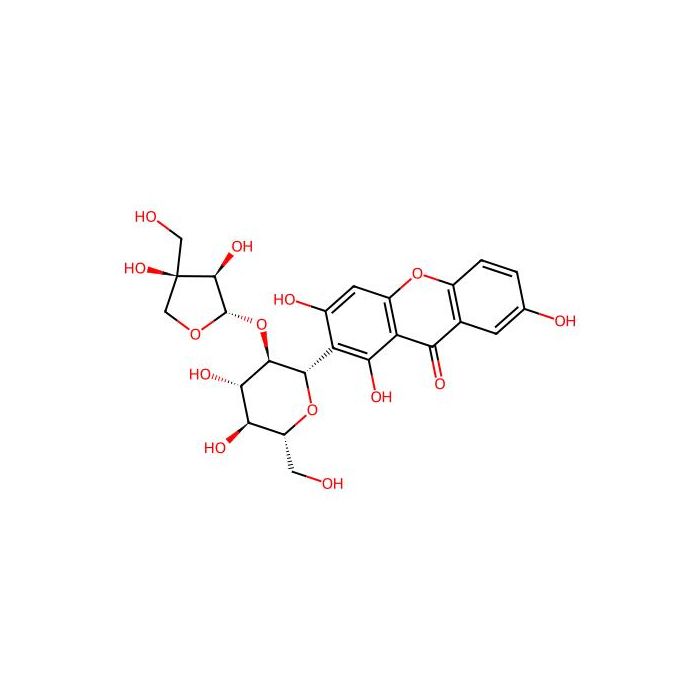
Sibiricaxanthone B - ≥98% , CAS No.241125-81-5

CAS: 241125-81-5 Cat. No.: S664614 PubChem CID: 21581293
Disponibile su ordine
GRADE & PURITY ≥98%
Storage
Room temperature
Shipped In
Normal
★
Size
Germania (EU)
USA*
Price
Qty
10mg
S664614-10mg
Su ordinazione · 8–12 settimane

101,44€

152,64€
Salva 51,20 € (33.54%)
Enter a quantity for the sizes you want to add.
🧪

Why this grade

≥98% for sensitive chromatographic and analytical workflows requiring minimal baseline interference.

🌡

Storage & shipping

Room temperature Ships Normal Check lot-specific COA for exact specifications.

📋

Quality documents

SDS, COA, datasheet, and spec sheet available for download. Lot-specific COA accessible via lot number lookup.

📚

Literature proof

Cited in 0 peer-reviewed publications across chromatography, organic synthesis, and cross-coupling reactions.

Specifications

Specifiche e purezza
≥98%
Condizioni di conservazione di stoccaggio
Room temperature
Spedito in
Normal
Purezza
≥98%
Nomi e identificatori
Sorrisi canoniciC1C(C(C(O1)OC2C(C(C(OC2C3=C(C4=C(C=C3O)OC5=C(C4=O)C=C(C=C5)O)O)CO)O)O)O)(CO)O
IUPAC Name2-[(2S,3R,4S,5S,6R)-3-[(2S,3R,4R)-3,4-dihydroxy-4-(hydroxymethyl)oxolan-2-yl]oxy-4,5-dihydroxy-6-(hydroxymethyl)oxan-2-yl]-1,3,7-trihydroxyxanthen-9-one
InChIKeyLLMCZIBSELEBMK-UKHOTDCGSA-N
INCHI1S/C24H26O14/c25-5-13-17(30)19(32)21(38-23-22(33)24(34,6-26)7-35-23)20(37-13)14-10(28)4-12-15(18(14)31)16(29)9-3-8(27)1-2-11(9)36-12/h1-4,13,17,19-23,25-28,30-34H,5-7H2/t13-,17-,19+,20+,21-,22+,23+,24-/m1/s1
Isomeri SMILES C1[C@@]([C@H]([C@@H](O1)O[C@@H]2[C@H]([C@@H]([C@H](O[C@H]2C3=C(C4=C(C=C3O)OC5=C(C4=O)C=C(C=C5)O)O)CO)O)O)O)(CO)O
PubChem CID 21581293

Documentazione

📋 Safety Data Sheet (SDS)

Comprehensive hazard, handling, storage, and regulatory compliance document.

Download SDS →

✅ Certificate of Analysis (COA)

Lot-specific quality data. Enter your lot number to retrieve the exact COA.

Look up COA →

📊 Datasheet

Quick-reference summary of product specifications and applications.

View datasheet →

🔬 Specification Sheet

Full quality attributes and acceptance criteria for this grade.

View spec sheet →

Advanced Data

Taxonomic Classification

Taxonomy Tree

KingdomOrganic compounds
SuperclassOrganoheterocyclic compounds
ClasseBenzopyrans
Subclass1-benzopyrans
Intermediate Tree Nodes Dibenzopyrans - Xanthenes
Direct ParentXanthones
Alternative Parents Phenolic glycosides  C-glycosyl compounds  Chromones  O-glycosyl compounds  Disaccharides  Pyranones and derivatives  1-hydroxy-2-unsubstituted benzenoids  1-hydroxy-4-unsubstituted benzenoids  Oxanes  Vinylogous acids  Tertiary alcohols  Oxolanes  Heteroaromatic compounds  Secondary alcohols  Polyols  Acetals  Oxacyclic compounds  Dialkyl ethers  Organic oxides  Primary alcohols  Hydrocarbon derivatives  
Molecular FrameworkAromatic heteropolycyclic compounds
Substituents Phenolic glycoside - Xanthone - C-glycosyl compound - Chromone - Disaccharide - O-glycosyl compound - Glycosyl compound - 1-hydroxy-4-unsubstituted benzenoid - 1-hydroxy-2-unsubstituted benzenoid - Pyranone - Oxane - Pyran - Benzenoid - Oxolane - Vinylogous acid - Tertiary alcohol - Heteroaromatic compound - Secondary alcohol - Acetal - Dialkyl ether - Ether - Oxacycle - Polyol - Hydrocarbon derivative - Alcohol - Organic oxygen compound - Primary alcohol - Organooxygen compound - Organic oxide - Aromatic heteropolycyclic compound
DescrizioneThis compound belongs to the class of organic compounds known as xanthones. These are polycyclic aromatic compounds containing a xanthene moiety conjugated to a ketone group at carbon 9. Xanthene is a tricyclic compound made up of two benzene rings linearly fused to each other through a pyran ring.
External Descriptors Not available
Struttura 3D
Modello di struttura chimica interattiva


Certificati (CoA, COO, BSE/TSE e tabella di analisi)
C of A & Other Certificates(BSE/TSE, COO):
Analytical Chart:
Proprietà chimiche e fisiche
Peso molecolare538.500 g/mol
XLogP3-1.200
Hydrogen Bond Donor Count9
Hydrogen Bond Acceptor Count14
Rotatable Bond Count5
Exact Mass538.132 Da
Monoisotopic Mass538.132 Da
Topological Polar Surface Area236.000 Ų
Heavy Atom Count38
Formal Charge0
Complexity860.000
Isotope Atom Count0
Defined Atom Stereocenter Count8
Undefined Atom Stereocenter Count0
Defined Bond Stereocenter Count0
Undefined Bond Stereocenter Count0
The total count of all stereochemical bonds0
Covalently-Bonded Unit Count1
Calcolatori di soluzioni
Recensioni

Recensioni dei clienti

Application Protocols

Not applicable. No tested immunoassay or imaging protocols are provided for this small-molecule product. For analytical use, typical protocols include:

  • Prepare a DMSO or methanol stock solution at a known concentration using an analytical balance and volumetric glassware.
  • Verify concentration by UV–vis (if an extinction coefficient is known for the specific lot) or by quantitative NMR/LC–MS with an internal standard.
  • For LC–MS, dilute to working levels (e.g., 0.1–10 µg/mL) in initial mobile phase; filter through 0.2 µm PTFE.

Always adapt procedures to your instrumentation and confirm stability under the chosen conditions.

Biological Roles

No item-specific biological data are provided in the Product Data. The following contextualizes Sibiricaxanthone B within the broader xanthone family for research purposes only (no medical or clinical claims).

  • Natural occurrence (literature): xanthones are widely distributed in plants (e.g., Clusiaceae/Guttiferae, Gentianaceae, Hypericaceae) where they function as specialized (secondary) metabolites. Individual named xanthones often co-occur in species-specific profiles.
  • Putative roles in planta: defense against herbivory/microbes, allelopathy, and oxidative stress modulation via phenolic redox chemistry. The extent depends on substitution (number/position of OH, OMe, prenyl groups).
  • Biophysical properties: the conjugated xanthone chromophore exhibits characteristic UV–vis absorption, making these compounds useful as spectroscopic markers in plant metabolomics and localization studies (e.g., fluorescence or absorbance microscopy with appropriate filters).
  • Metabolism and transformations (literature): phenolic xanthones can undergo phase II-type reactions in biological systems (e.g., glucuronidation/sulfation) and oxidative transformations mediated by peroxidases or cytochromes in plant or microbial contexts. Details for Sibiricaxanthone B specifically are not provided here.
  • Research utility: serves as an authentic standard for target/untargeted LC–MS metabolomics, aiding annotation levels 1–2 per Metabolomics Standards Initiative when matched with retention time and fragmentation against a reference.

For any biological assays, verify identity/purity of the specific lot and assess solution stability (especially in aqueous media) to avoid misinterpretation from degradation or aggregation.

Buffer Applications

Sibiricaxanthone B is a neutral small molecule and is not used as a buffering agent. It does not define a useful conjugate-acid/base pair for pH control.

  • Practical note: If dissolving the compound for biochemical assays, prepare concentrated stocks in DMSO or alcohol and dilute into pre-made biological buffers (e.g., PBS, HEPES) while monitoring for precipitation. Adjusting buffer pH to manipulate solubility should only be attempted after verifying the compound’s acid/base functionality from its CoA and small-scale tests.
Green Alternatives

While Sibiricaxanthone B is a target compound rather than a solvent or reagent, greener choices can be made in its handling, purification, and analysis. The points below compare common options used around xanthone isolation, formulation, and analytics.

Greener solvent choices for dissolution and workup (general guidance):

  • Replace DMF/DMAC with DMSO, ethanol, or propylene carbonate when feasible for stock solutions (check stability and response factors).
  • Favor ethyl acetate, 2-MeTHF, or cyclopentyl methyl ether (CPME) over chlorinated solvents for liquid–liquid extraction and normal-phase chromatography.
  • For reversed-phase prep/analytical LC, use MeOH–water gradients in place of acetonitrile where method performance allows (evaluate selectivity and backpressure).

Mini-comparison (literature/general):

  • DMSO vs DMF: similar solubilizing power; DMSO offers lower chronic toxicity concerns and better biodegradability profile.
  • 2-MeTHF/CPME vs THF/Et2O: reduced peroxide formation risk and superior process greenness; may alter solubility/selectivity.
  • EtOAc vs DCM: higher boiling point and lower halogenated waste burden; compatible with a wide range of extractions.

Operational improvements:

  • Implement micro-scale screening of solvent systems to minimize waste during method development.
  • Use solid-phase extraction (SPE) with aqueous ethanol elution where possible to reduce halogenated solvent use.
  • Apply ambient-temperature crystallization or antisolvent precipitation (e.g., EtOH/water) to avoid energy-intensive evaporations.

All substitutions should be validated for purity, recovery, and stability of Sibiricaxanthone B.

Pharmaceutical Uses

No pharmacopeial status or excipient role is provided in the Product Data. The information below is limited to research/formulation context and does not imply therapeutic use.

  • Research reference material: Sibiricaxanthone B can serve as an analytical reference standard for raw-material authentication and QC of botanical extracts in a research setting (HPLC/UPLC-DAD, LC–MS/MS). Lot-specific purity and identity should be verified prior to use.
  • Formulation studies (preformulation, research only):
    • Solubility screening in co-solvent systems (DMSO, PEG 300, ethanol, propylene glycol) and lipidic vehicles to support in vitro assay delivery.
    • Solid-form screening (amorphous vs. crystalline) and assessment of hygroscopicity/photostability, if the study design requires.
  • Regulatory note: No pharmacopeial monograph or compendial grade is indicated. For any regulated work, develop in-house specifications and analytical methods aligned with ICH Q6A/Q3 series where applicable.
  • Compatibility: Avoid reactive excipients (strongly basic amines, peroxides) that could compromise polyphenolic/conjugated systems. Validate adsorption losses to plastics vs. glass during low-dose handling.

All uses are for laboratory research only. This product is not for human or veterinary use and is not supplied with any clinical or GMP qualification.

Physical Properties

Item-specific physico-chemical specifications are not provided in the Product Data for Sibiricaxanthone B.

  • Appearance: Not specified for this item; refer to CoA/Spec Sheet.
  • Melting point: Not specified for this item; refer to CoA/Spec Sheet.
  • Boiling point: Not typically reported for xanthones (decompose before boiling under atmospheric pressure); not specified for this item.
  • Density: Not specified for this item; refer to CoA/Spec Sheet.
  • Solubility (general, literature for xanthones): usually sparingly soluble in water; readily soluble in organic polar aprotic media such as DMSO and DMF; solubility in alcohols (MeOH, EtOH) is often good; solubility in nonpolar solvents depends on substitution (prenylation increases nonpolar solubility).
  • LogP / partitioning (general, literature): xanthone cores are moderately lipophilic; substituents (phenolic OH vs. methoxy/prenyl) shift cLogP significantly. Item-specific cLogP not provided.
  • pKa (general, literature): phenolic OH groups—if present—typically exhibit pKa values ~7–10 depending on ring electronics and intramolecular H-bonding. Item-specific pKa not provided.
  • Refractive index/UV cutoff: Not specified for this item; refer to CoA/Spec Sheet.

Spectroscopic features (literature, general to xanthones):

  • UV–vis: intense bands in the near-UV arising from π→π* transitions of the conjugated chromophore; additional bathochromic shifts possible with phenolic/methoxy substituents.
  • NMR: downfield carbonyl carbon (~180–185 ppm, 13C); aromatic pattern consistent with fused tricyclic system; phenolic OH (if present) often exchangeable and chelation-shifted.

For method development, determine actual solubility and extinction coefficients with the supplied lot before quantitative work.

Quality and Grades
  • Grade/Purity: Not specified for this item; refer to CoA/Spec Sheet.

Guidance on interpreting quality for natural-product small molecules:

  • Identity confirmation: Expect NMR (1H/13C), HRMS (or MS), and HPLC/UPLC purity reporting on the lot-specific CoA. For closely related isomers (common within xanthone families), 2D NMR (HSQC/HMBC/NOESY) and comparison to literature data are typically used to confirm substitution patterns.
  • Purity reporting: Chromatographic purity (e.g., area% by HPLC/UPLC at a specified wavelength) is standard. Note that polyphenolics can show wavelength-dependent area%—review the method parameters on the CoA.
  • Residual solvents/metals: For natural products and semisynthetic isolates, residual solvent limits follow ICH Q3C guidelines when applicable; specific ppm levels are not provided here and should be checked on the CoA.
  • Stabilizers: None stated in Product Data. If stabilizers or counterions are present, they will be explicitly listed on the CoA/label.
  • Lot-to-lot variability: Plant-derived compounds can display subtle variability (hydrate content, polymorph, counterion traces). Verify assay on receipt for critical applications.
  • Recommended acceptance testing on receipt (best practice):
    • Verify identity by LC–MS and 1H NMR vs. reference.
    • Confirm purity by your target method (e.g., 254/280/330 nm UPLC) to align with your assay conditions.
    • Assess solution stability in your intended solvent and storage temperature over 24–72 h.

Contact Aladdin Scientific for documentation packs (CoA, NMR, HPLC trace) for your specific lot.

Reaction and Applications

Manufacturer applications: not specified in the Product Data. The following outlines common research uses for xanthone-class small molecules like Sibiricaxanthone B.

  • Reference and standards:
    • Analytical standard for natural-products chemistry, dereplication, and plant metabolomics (HPLC/UPLC-DAD, LC–MS/MS), enabling retention-time and MS/MS library matching.
    • Calibration for quantitation in extraction/fractionation workflows from botanical matrices.
  • Chemical derivatization (general for xanthones; substitution dependent):
    • Phenolic protection (e.g., methylation with MeI/Me2SO4, silylation with TBS-Cl) and subsequent acylation/alkylation to generate analog panels.
    • Reduction of the xanthone carbonyl to xanthene derivatives (e.g., NaBH4/BF3·OEt2 or catalytic hydrogenation under controlled conditions; literature).
    • Electrophilic aromatic substitutions (halogenation, nitration) guided by existing substituents; subsequent cross-couplings if aryl halides are introduced.
  • Photophysics/materials:
    • The xanthone chromophore is a useful probe for photophysical studies (triplet yields, ISC). If pursuing, confirm the exact substitution of Sibiricaxanthone B from its CoA before interpreting photophysics.
  • Bioassay screening (research use only):
    • Used as a test article in in vitro biochemical or cell-based assay panels to map SAR within the xanthone family. Employ DMSO stocks and perform stability checks to avoid assay artifacts.

Note: Concrete reactivity pathways depend on the actual substitution pattern of Sibiricaxanthone B. Consult the lot documentation prior to planning synthetic transformations.

Reaction Conditions

Item-specific reaction conditions are not provided. The following are literature-style, general conditions relevant to xanthone chemistry; adapt to the confirmed structure of Sibiricaxanthone B from its CoA.

  • O-Methylation / Protection (if phenols present):
    • MeI/K2CO3 or Me2SO4 in acetone/DMF, rt–50 °C, 2–16 h. For selective mono-methylation, control equivalents and temperature. Work up and purify by silica gel (monitor by TLC at 254/366 nm).
  • Selective demethylation of aryl methyl ethers:
    • BBr3 (1–3 eq per OMe) in dry DCM, −78 to 0 °C, 1–6 h. Quench with MeOH/H2O at low temperature. Alternative: AlCl3/thiophenol in toluene for milder conditions.
  • Carbonyl reduction:
    • NaBH4 with catalytic BF3·OEt2 in THF or Et2O, 0–25 °C; or catalytic hydrogenation (Pd/C, H2 1–3 bar, MeOH/EtOH), 2–12 h, to access xanthenol/xanthene derivatives. Monitor to avoid over-reduction or ring saturation.
  • Electrophilic halogenation:
    • NBS/NCS in AcOH/DMF at 0–25 °C, 0.5–4 h; regioselectivity dictated by substitution.
  • Cross-coupling (after aryl halide installation):
    • Suzuki–Miyaura: Pd(PPh3)4 (1–3 mol%), base (K2CO3/Cs2CO3), dioxane/H2O or toluene/EtOH/H2O, 60–100 °C, 2–16 h.
  • Analytical controls:
    • LC–MS and UPLC-DAD (monitor 240–280 and 310–380 nm) for conversion and impurity tracking; confirm identity by 1H/13C NMR.

Yields vary widely with substitution; conduct small-scale optimization and protect phenolic OH as needed to achieve chemoselectivity.

Safety and Handling

Hazard classification data are not provided in the Product Data for this item. Always consult the SDS for authoritative information.

  • GHS Classification: Not specified for this item; refer to SDS.
  • Signal Word / H-statements / Pictograms: Not specified for this item; refer to SDS.

General safety guidance for research use of plant-derived xanthones:

  • Potential hazards: organic solids may cause skin/eye irritation and respiratory irritation as dust/aerosol. Some polyphenolic compounds may be photosensitive and undergo slow oxidation.
  • PPE: lab coat, safety glasses or goggles, appropriate chemical-resistant gloves (e.g., nitrile). Avoid generating dust; handle in a fume hood during weighing and solution prep.
  • Storage incompatibilities: avoid strong oxidizing agents and strong bases/acids that may promote decomposition or undesired salt formation/esterification. Keep away from direct light if phenolic chromophores are present (general precaution for conjugated natural products).
  • First-aid overview (general):
    • Inhalation: move to fresh air; seek medical attention if symptoms persist.
    • Skin contact: wash with soap and water; remove contaminated clothing.
    • Eye contact: rinse cautiously with water for several minutes; remove contact lenses if present and easy to do; seek medical advice if irritation continues.
    • Ingestion: rinse mouth; do not induce vomiting; seek medical attention.
  • Fire-fighting: organic solid; use CO2, dry chemical, or foam; combustion may produce COx and irritant fumes.

Always defer to the SDS and institutional SOPs. For scale-up or high-energy operations, perform a risk assessment and consider DSC/TGA screening for thermal behavior.

Solvent Selection

Sibiricaxanthone B is a neutral, aromatic natural product; specific solubility data are not provided. The following guidance is based on literature behavior of xanthones and common practice for small-molecule libraries.

  • Primary stock preparation (screening use):
    • DMSO: typically the most reliable solvent for 10–50 mM stocks; warm gently (25–40 °C) and vortex/sonicate.
    • Methanol or ethanol: suitable for analytical standards and LC–MS sample prep; may be combined with water (with small % of base if phenolic deprotonation is required; verify compound stability first).
  • Miscibility and co-solvent systems:
    • Aqueous work: prepare a DMSO concentrate, then dilute into buffered media to ≤0.5–1% DMSO v/v to minimize precipitation and assay interference.
    • For nonpolar formulations, EtOAc or 2-MeTHF can dissolve more hydrophobic xanthones (literature, substitution-dependent).
  • Polarity context (general): xanthones are moderately polar aromatics (due to the carbonyl) but can range from polar (polyphenolic) to lipophilic (prenylated). Assess with a small solvent panel.
  • Practical tips:
    • Filter 0.2 µm PTFE or PVDF after dissolution to remove particulates before UHPLC/LC–MS.
    • Avoid strong bases/acids in solution unless specifically needed; they may induce transesterification, oxidative degradation, or salt formation.
    • If light-sensitive, wrap vials in foil or use amber glass, particularly for UV-based quantification.

Always verify solubility and stability for your lot prior to scale or critical assays.

Storage and Reconstitution

Storage and shipping conditions (from Product Data):

  • Storage Conditions: Room temperature.
  • Shipped In: Normal.

Best-practice guidance for small-molecule solids (general; verify with your CoA):

  • Keep tightly closed in a dry, inert atmosphere (desiccator with silica gel or P2O5). Protect from light if the material is strongly colored or known to be photosensitive (common for conjugated xanthones).
  • For long-term archiving, consider 2–8 °C in the dark, especially for polyphenolic compounds; equilibrate to room temperature before opening to prevent moisture condensation.

Reconstitution (research-use suggestions):

  • Prepare a concentrated stock in dry DMSO (e.g., 10–50 mM) or methanol. Sonication and mild warming (≤40 °C) can aid dissolution. Record exact mass and volume for traceability.
  • Filter the solution (0.2 µm PTFE/PVDF) prior to analytical injections.
  • For aqueous assays, add the organic stock to buffer slowly with mixing to a final organic content typically ≤1% v/v to minimize precipitation. Perform a small solubility/stability check at the intended temperature and pH.

Stability monitoring:

  • Inspect periodically for discoloration or precipitation. Verify purity by HPLC/UPLC after reconstitution if solutions are stored >24–48 h.

Note: Item-specific limits (water, metals, UV cutoff, peroxide, etc.) are not specified for this item; refer to the CoA/Spec Sheet.

Structure and Identity

Sibiricaxanthone B is a named natural-product xanthone, typically isolated from plant sources and categorized in Aladdin’s small-molecule/compound libraries.

  • SKU: S664614
  • Product Name: Sibiricaxanthone B
  • CAS: 241125-81-5
  • PubChem CID: 21581293
  • InChIKey (as provided): 202725
  • SMILES: Not specified for this item; refer to CoA/Spec Sheet.
  • Molecular Formula: Not specified for this item; refer to CoA/Spec Sheet.
  • Molecular Weight: Not specified for this item; refer to CoA/Spec Sheet.

Structural features (general xanthone scaffold; literature):

  • Core framework: xanthone (9H-xanthen-9-one) — a tricyclic dibenzo-γ-pyrone system containing a central pyran ring fused to two benzene rings and a ketone at C-9.
  • Functional-group motifs typically encountered in named plant xanthones include phenolic hydroxyls and/or methoxy groups, sometimes prenyl or isoprenyl substituents; the exact substitution pattern for Sibiricaxanthone B is not specified in the provided Product Data.
  • Conjugated aromatic system with a carbonyl chromophore; strong UV absorbance bands are characteristic for xanthones (literature).

2D structure description (generic to xanthones; literature): two benzene rings flanking a central oxygen-bridged ring, with a carbonyl at the bridgehead position. Substituents (if any) occupy ring positions and modulate polarity, H-bonding, and UV–vis behavior.

Identity assurance:

  • Use orthogonal confirmation where needed (HRMS, 1D/2D NMR, and UHPLC retention vs. an authentic reference). Match against the specific Sibiricaxanthone B CoA for exact formula/structure once provided.
Synthetic Utility

Although Sibiricaxanthone B is a specific natural xanthone whose substitution pattern is not provided in the Product Data, the xanthone core offers versatile synthetic handles. The following utility points are general to xanthones and should be adapted once the exact structure is confirmed from the CoA.

  • Carbonyl reactivity:
    • Reduction of the 9-one to xanthenol/xanthene frameworks (e.g., NaBH4 with Lewis acid activation, or catalytic hydrogenation) enabling access to fluorescent xanthene analogs.
    • Nucleophilic additions are typically limited by conjugation; strongly activated conditions or organometallics can lead to ring-open/reclose chemistry—evaluate carefully at small scale.
  • Aromatic derivatization:
    • Electrophilic substitution (halogenation, nitration, sulfonylation) guided by existing directing effects; subsequent Pd-catalyzed cross-coupling (Suzuki, Buchwald–Hartwig if aryl halides or pseudohalides are introduced).
    • Directed ortho metalation (DoM) strategies have been reported on appropriately protected xanthones to introduce sidechains.
  • Phenolic chemistry (if OH groups are present):
    • Protection (methyl/benzyl/silyl), O-alkylation/acylation for prodrugs or solubility tuning, and selective demethylation (e.g., BBr3, AlCl3/thiols) to access polyhydroxy patterns.
  • Late-stage diversification:
    • Prenylation/alkylation under phase-transfer or metal-catalyzed conditions to modulate lipophilicity.
    • Oxidative couplings to generate dimeric motifs (with careful control to avoid over-oxidation).

For structure–reactivity planning, obtain the exact substitution map of Sibiricaxanthone B. Pilot reactions with analytical monitoring (LC–MS, 1H NMR) are recommended to assess selectivity and stability.

Target Specificity

Not applicable. Sibiricaxanthone B is a small molecule, not an antibody, enzyme, or affinity reagent. There are no antigen/epitope, clone, or isotype attributes. If used in biochemical assays, any observed target engagement is assay-dependent and must be determined empirically.

Shall we send you a message when we have discounts available?

Remind me later

Thank you! Please check your email inbox to confirm.

Oops! Notifications are disabled.