Micropolvere di silice - ≥99,7% base metalli, sferico, 8μm , CAS No.14808-60-7

CAS: 14808-60-7 Cat. No.: S292679 Formula: SiO2 Peso molecolare: 60.08 Numero EC: 238-878-4
Disponibile su ordine
GRADE & PURITY ≥99.7% metals basis spherical,8μm
Synonyms
DIOSSIDO DI SILICIO|Silice|Quarzo|Dioxosilano|7631-86-9|Gel di silice|Cristobalite|14808-60-7|Anidride silicica|Tridimite|Sabbia|112945-52-5|61790-53-2|KIESELGUHR|Silice diatomacea|112926-00-8|Wessalon|Aerosil|Ossido di silicio(IV)|Zorbax sil|Silice, amor
Storage
Room temperature
Shipped In
Normale
★
Size
Germania (EU)
USA*
Price
Qty
100g
S292679-100g
—
3 Disponibile

25,95€

30,28€
Salva 4,34 € (14.33%)
500g
S292679-500g
—
3 Disponibile

84,95€

98,84€
Salva 13,88 € (14.05%)
Enter a quantity for the sizes you want to add.
🧪
Why this grade

≥99,7% base metalli, sferico, 8μm for sensitive chromatographic and analytical workflows requiring minimal baseline interference.

🌡

Storage & shipping

Room temperature Ships Normale Check lot-specific COA for exact specifications.

📋

Quality documents

SDS, COA, datasheet, and spec sheet available for download. Lot-specific COA accessible via lot number lookup.

📚

Literature proof

Cited in 84 peer-reviewed publications across chromatography, organic synthesis, and cross-coupling reactions.

Specifications

Sinonimi
DIOSSIDO DI SILICIO | Silice | Quarzo | Dioxosilano | 7631-86-9 | Gel di silice | Cristobalite | 14808-60-7 | Anidride silicica | Tridimite | Sabbia | 112945-52-5 | 61790-53-2 | KIESELGUHR | Silice diatomacea | 112926-00-8 | Wessalon | Aerosil | Ossido di silicio(IV) | Zorbax sil | Silice, amor
Specifiche e purezza
≥99,7% base metalli, sferico, 8μm
Condizioni di conservazione di stoccaggio
Room temperature
Spedito in
Normale
Purezza
≥99.7% metals basis
Nomi e identificatori
Pubchem Sid
Sorrisi canonici
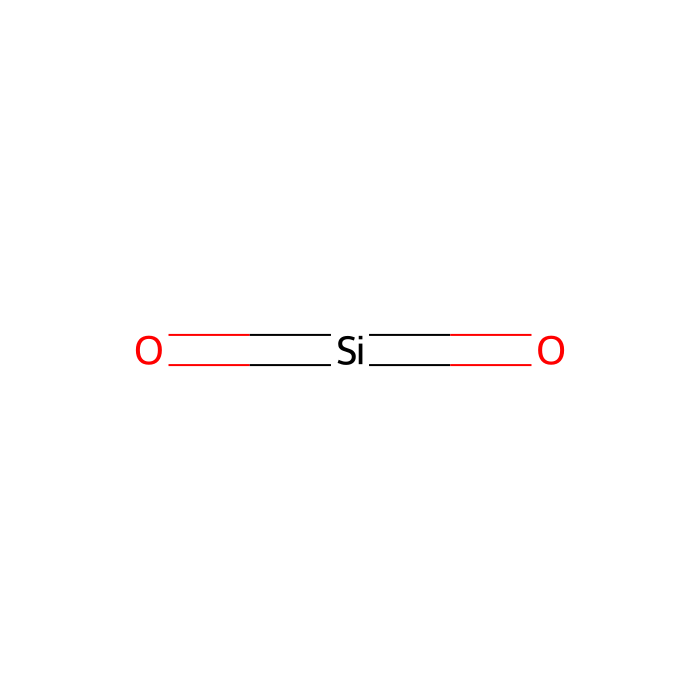
O=[Si]=O
IUPAC Name
dioxosilane
InChIKey
VYPSYNLAJGMNEJ-UHFFFAOYSA-N
INCHI
1S/O2Si/c1-3-2
Isomeri SMILES
O=[Si]=O
RTECS
VV7328000
CAS alternativo
60676-86-0
Peso molecolare
60.08
Reaxy-Rn
6114654
Reaxys-RN_link_address
https://www.reaxys.com/reaxys/secured/hopinto.do?context=S&query=IDE.XRN=6114654&ln=

Documentazione

📋 Safety Data Sheet (SDS)

Comprehensive hazard, handling, storage, and regulatory compliance document.

Download SDS →

✅ Certificate of Analysis (COA)

Lot-specific quality data. Enter your lot number to retrieve the exact COA.

Look up COA →

📊 Datasheet

Quick-reference summary of product specifications and applications.

View datasheet →

🔬 Specification Sheet

Full quality attributes and acceptance criteria for this grade.

View spec sheet →

Advanced Data

Taxonomic Classification

Taxonomy Tree

KingdomInorganic compounds
SuperclassMixed metal/non-metal compounds
ClasseMetalloid organides
SubclassMetalloid oxides
Intermediate Tree Nodes Not available
Direct ParentMetalloid oxides
Alternative Parents Metalloid salts  Inorganic salts  Inorganic oxides  
Molecular FrameworkNot available
Substituents Metalloid oxide - Inorganic oxide - Inorganic salt - Inorganic metalloid salt
DescrizioneThis compound belongs to the class of inorganic compounds known as metalloid oxides. These are inorganic compounds containing an oxygen atom of an oxidation state of -2, in which the heaviest atom bonded to the oxygen is a metalloid.
External Descriptors silicon oxide
Struttura 3D
Modello di struttura chimica interattiva


Certificati (CoA, COO, BSE/TSE e tabella di analisi)
C of A & Other Certificates(BSE/TSE, COO):
Analytical Chart:

Find and download the COA for your product by matching the lot number on the packaging.

14 results found

Lot NumberCertificate TypeDataOggetto
H2205458Certificate of AnalysisMay 18, 2026 S292679
H2205460Certificate of AnalysisMay 18, 2026 S292679
K2125292Certificate of AnalysisSep 08, 2025 S292679
G2108353Certificate of AnalysisApr 03, 2025 S292679
G2108354Certificate of AnalysisApr 03, 2025 S292679
D2628025Certificate of AnalysisFeb 13, 2023 S292679
G2310211Certificate of AnalysisFeb 13, 2023 S292679
G2310220Certificate of AnalysisFeb 13, 2023 S292679
G2310224Certificate of AnalysisFeb 13, 2023 S292679
G2310228Certificate of AnalysisFeb 13, 2023 S292679
H2615139Certificate of AnalysisFeb 13, 2023 S292679
B23061002Certificate of AnalysisFeb 09, 2023 S292679
E2526077Certificate of AnalysisJun 17, 2022 S292679
H2205461Certificate of AnalysisJun 17, 2022 S292679
Proprietà chimiche e fisiche
Indice di rifrazione1.544
Punto di ebollizione (°C)2230°C
Punto di fusione (°C)1670°C
Peso molecolare60.084 g/mol
XLogP3
Hydrogen Bond Donor Count0
Hydrogen Bond Acceptor Count2
Rotatable Bond Count0
Exact Mass59.9668 Da
Monoisotopic Mass59.9668 Da
Topological Polar Surface Area34.100 Ų
Heavy Atom Count3
Formal Charge0
Complexity18.300
Isotope Atom Count0
Defined Atom Stereocenter Count0
Undefined Atom Stereocenter Count0
Defined Bond Stereocenter Count0
Undefined Bond Stereocenter Count0
The total count of all stereochemical bonds0
Covalently-Bonded Unit Count1
Domande frequenti e articoli
Ceramic Materials Guide: Basic Definitions, Classification Framework, and Research-Task-Oriented Selection (with Product Navigation and Tables 1–4)
How Matting Agents in Coatings Build Low-Gloss Coating Surfaces: Mechanisms, Formulation Trade-Offs, and Product Selection
Guide to Selecting Polyurethane Coating Systems: Application Analysis for Wood, Flooring, Plastics, Automotive, and Industrial Protection
Capable of Swelling, Adsorption, and Cation Exchange: What Makes Montmorillonite Clay Different?
Application Positioning, Scenario Selection, and Key Use Considerations for Chlorinated Rubber Resin in Coatings
Formulation Design of Chlorinated Rubber Coatings: Component Synergy and Performance Control
What Is Silica Sol: Mechanism of Action, Application Scenarios, and Selection Criteria for Nanosilica Dispersions
Types, Mechanisms of Action, Key Quality Indicators, and Selection and Application of Common Cellulose Ethers in Wall Putty
What Are the Differences Between Polyvinyl Alcohol 1788, 2488, and 2699? Understanding Workability, Bonding Strength, and Relative Water Resistance from the Perspective of Degree of Polymerization and Degree of Hydrolysis
Why Do Rust Spots Appear on Neutral Wall Putty? Iron Sources, Moisture Migration, Oxidative Color Development, and Prevention Measures
Common Problems and Formulation Adjustment Strategies for Neutral Putty Under High Summer Temperatures
Differences and Application Selection of Cassava- and Corn-Based Pregelatinized Starch in Neutral Putty Formulations
Citations of This Product
Calcolatori di soluzioni
Recensioni

Recensioni dei clienti

Shall we send you a message when we have discounts available?

Remind me later

Thank you! Please check your email inbox to confirm.

Oops! Notifications are disabled.