
 A2424390
Determine the necessary mass, volume, or concentration for preparing a solution.
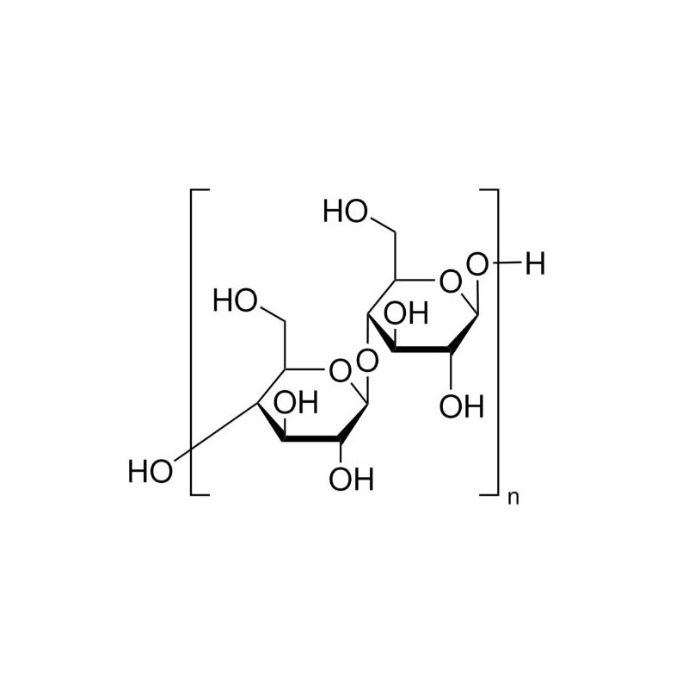
Silicified Microcrystalline Cellulose - JP, Ph.Eur., Colloidal anhydrous, E 460(i) and Silica, E 551, NF , CAS No.9004-34-6
Disponibile su ordine
Solo %1 rimasto/i
GRADE & PURITY JP ? Japanese Pharmacopoeia grade — conforms to JP monograph standards. Use for pharmaceutical products subject to Japanese regulatory requirements. Ph.Eur. ? European Pharmacopoeia grade — conforms to Ph.Eur. monographs across EU member states. Use for pharmaceutical work needing European compendial compliance. Colloidal anhydrous ? Colloidal anhydrous form — fine, water-free colloidal particles (e.g. colloidal silica). Use as a flow aid, thickener, or in moisture-sensitive formulations. E 460(i) and Silica ? EU food-additive code E 460(i) and Silica — this product corresponds to microcrystalline cellulose with silica. The E-number signals it meets the identity/spec expected for that additive in food-contact use. E 551 ? EU food-additive code E 551 — this product corresponds to silicon dioxide (silica). The E-number signals it meets the identity/spec expected for that additive in food-contact use. NF ? National Formulary grade — meets NF monograph standards, often for excipients. Use for pharmaceutical excipients and products requiring NF compliance.
Synonyms
cellulose|DEAE-CELLULOSE|9004-34-6|(6S)-2-(hydroxymethyl)-6-[(3S)-4,5,6-trihydroxy-2-(hydroxymethyl)oxan-3-yl]oxyoxane-3,4,5-triol|Diethylaminoethyl cellulose|Cellulosepulver|DEAE-Sephacel(R)|Diethylaminoethyl-Sephacel(R)|CHEBI:156274|AKOS015895024|EN300-
Storage
Room temperature
Shipped In
Normal