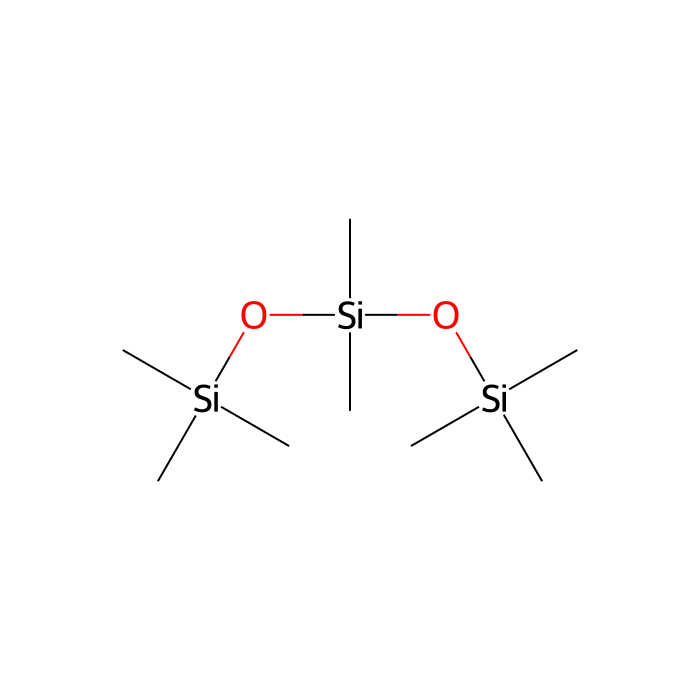
Silicone oil - viscosity 10,000 cSt (25 °C) , CAS No.63148-62-9

CAS: 63148-62-9 Cat. No.: S433162 Formula: [-Si(CH3)2O-]n Numero EC: 613-156-5
Disponibile su ordine
QUALITÀ & PUREZZA viscosity 10,000 cSt (25 °C)
Synonyms
dimethicone macromolecule | Pentamethyl(trimethylsilyloxy)disiloxane | dimeticonum | MFCD00148360 | NCGC00254904-01 | Dimethylbis(trimethylsilyloxy)silane | dimethyl-bis(trimethylsilyloxy)silane | Q2013799 | DTXSID9040710 | KF 96A1 | CO9816 | Ctamethyltri
Storage
Room temperature
★
Dimensione
Germania (EU)
USA*
Prezzo
Qtà
250ml
S433162-250ml
3 Disponibile
5 Disponibile

190,82€

222,92€
Salva 32,11 € (14.40%)
Enter a quantity for the sizes you want to add.
🧪
Perché questa qualità

viscosity 10,000 cSt (25 °C) per flussi di lavoro cromatografici e analitici sensibili che richiedono un'interferenza minima della linea di base.

🌡

Stoccaggio e spedizione

Room temperature Spedizione . Consultare il COA specifico del lotto per le specifiche esatte.

📋

Documenti di qualità

SDS, COA, scheda tecnica e scheda delle specifiche disponibili per il download. COA specifico del lotto accessibile tramite ricerca per numero di lotto.

📚

Prova documentale

Citato in 419 pubblicazioni peer-reviewed su cromatografia, sintesi organica e reazioni di accoppiamento incrociato.

Panoramica

Silicone oil is a liquid based siloxane that is part of the methyl silicone fluid system. It has a viscosity of 10000 cSt with a refractive index of ~ 1.404 and a dielectric strength of ~ 15 kV/mm. It′s surface tension tends to increase with an increase in the viscosity.


Application

Silicone oil can be used for applications such as: protective coatings for building materials, a cosmetic additive, a dielectric coolant, a lubricant and antiflatulent agent.

Specifiche

Sinonimi
dimethicone macromolecule | Pentamethyl(trimethylsilyloxy)disiloxane | dimeticonum | MFCD00148360 | NCGC00254904-01 | Dimethylbis(trimethylsilyloxy)silane | dimethyl-bis(trimethylsilyloxy)silane | Q2013799 | DTXSID9040710 | KF 96A1 | CO9816 | Ctamethyltri
Specifiche e purezza
viscosity 10,000 cSt (25 °C)
Condizioni di conservazione di stoccaggio
Room temperature
Nomi e identificatori
Pubchem Sid
Sorrisi canonici
CO[Si](C)(C)OC
IUPAC Name
dimethyl-bis(trimethylsilyloxy)silane
InChIKey
CXQXSVUQTKDNFP-UHFFFAOYSA-N
INCHI
1S/C8H24O2Si3/c1-11(2,3)9-13(7,8)10-12(4,5)6/h1-8H3
Isomeri SMILES
C[Si](C)(C)O[Si](C)(C)O[Si](C)(C)C
CAS alternativo
9006-65-9
Reaxy-Rn
1733694
Reaxys-RN_link_address
https://www.reaxys.com/reaxys/secured/hopinto.do?context=S&query=IDE.XRN=1733694&ln=

Documentazione

📋 Scheda di dati di sicurezza (SDS)

Documento completo su pericoli, manipolazione, stoccaggio e conformità normativa.

<<<<<<< HEAD Scarica SDS → ======= Scarica SDS → >>>>>>> release248-p3

✅ Certificato di analisi (COA)

Dati di qualità specifici del lotto. Inserisci il numero di lotto per recuperare il COA esatto.

Cerca COA →

📊 Scheda tecnica

Riepilogo di riferimento rapido delle specifiche e applicazioni del prodotto.

Visualizza scheda tecnica →

🔬 Scheda delle specifiche

Attributi di qualità completi e criteri di accettazione per questa qualità.

Visualizza scheda delle specifiche →

Dati avanzati

Taxonomic Classification

Taxonomy Tree

KingdomOrganic compounds
SuperclassOrganometallic compounds
ClasseOrganometalloid compounds
SubclassOrganosilicon compounds
Intermediate Tree Nodes Not available
Direct ParentSiloxanes
Alternative Parents Trialkylheterosilanes  Organic metalloid salts  Organic oxygen compounds  Hydrocarbon derivatives  
Molecular FrameworkAliphatic acyclic compounds
Substituents Siloxane - Trialkylheterosilane - Organoheterosilane - Organic metalloid salt - Organic oxygen compound - Hydrocarbon derivative - Organic salt - Aliphatic acyclic compound
DescrizioneThis compound belongs to the class of organic compounds known as siloxanes. These are saturated silicon-oxygen hydrides with unbranched or branched chains of alternating silicon and oxygen atoms (each silicon atom is separated from its nearest silicon neighbours by single oxygen atoms). The general structure of unbranched siloxanes is H3Si[OSiH2]nOSiH3. H3Si[OSiH2]nOSiH[OSiH2OSiH3]2 is an example of a branched siloxane. By extension hydrocarbyl derivatives are commonly included.
External Descriptors organosilicon compound
Struttura 3D
Modello di struttura chimica interattiva


Meccanismi d'azione
Certificati (CoA, COO, BSE/TSE e tabella di analisi)
C of A & Other Certificates(BSE/TSE, COO):
Analytical Chart:

Find and download the COA for your product by matching the lot number on the packaging.

4 results found

Lot NumberCertificate TypeDataOggetto
C2603132C2603132Certificate of AnalysisMar 12, 2026 S433162
C2330816C2330816Certificate of AnalysisJan 19, 2026 S433162
C2330817C2330817Certificate of AnalysisJan 19, 2026 S433162
C2330818C2330818Certificate of AnalysisJan 19, 2026 S433162
Proprietà chimiche e fisiche
Indice di rifrazione1.403
Punto di infiammabilità (°F)214.0 °F
Punto di infiammabilità (°C)101.1℃
Punto di ebollizione (°C)>140 °C/0.002 mmHg
Peso molecolare236.530 g/mol
XLogP3
Hydrogen Bond Donor Count0
Hydrogen Bond Acceptor Count2
Rotatable Bond Count4
Exact Mass236.108 Da
Monoisotopic Mass236.108 Da
Topological Polar Surface Area18.500 Ų
Heavy Atom Count13
Formal Charge0
Complexity149.000
Isotope Atom Count0
Defined Atom Stereocenter Count0
Undefined Atom Stereocenter Count0
Defined Bond Stereocenter Count0
Undefined Bond Stereocenter Count0
The total count of all stereochemical bonds0
Covalently-Bonded Unit Count1
Domande frequenti e articoli
A Panoramic Guide to Silicone Materials: Structural Mechanisms, Core Properties, Value Chain, and Product Categories
A Panorama Guide to Synthetic Resins: Definitions & Polymerization Mechanisms, Classification Frameworks, Common Resins and Applications, Packaging Codes, and a Selection Roadmap (Tables 1–3)
Optical & Optoelectronic Materials Selection Guide:Positioning materials, key metrics, and validation paths along “Generation → Guiding → Control → Readout” (with product navigation and Tables 1–4)
Biomedical Polymer Insights: Role-Based Task Map, Six Key Material Levers, and a Risk-Driven Evidence Chain (including the Product Navigation Guide and Product Tables 1–3)
uide to Hydrophobic Polymers and Hydrophobic Surfaces: Wetting Models, Evaluation Metrics, and Task-Oriented Material Selection (including Tables 1–3)
Applications of Self-Assembled Monolayers (SAMs), Microcontact Printing, and Soft Lithography in Surface Functionalization and Micro/Nanopatterning
Understanding Silicone Resins from Their Structure: Siloxane Backbones, M/D/T/Q Units, and Coating Performance Regulation
Key Control Points in Polyurethane Coating Formulation Design and Application
Structure–Property Relationship of Silicone Resins: Mechanisms of Heat Resistance, Weatherability, Hydrophobicity, and Coating Performance Analysis
Potassium Fatty Acid Soaps: Structure and Formulation Applications—Production Processes, Alkalinity, Foam Control, and Low-Foam Cleaning
Causes, Diagnosis, and Control Strategies for Elevated Off-State Current in Semiconducting Single-Walled Carbon Nanotube Transistors
Applicability Boundaries, Failure Risks, and Alternative System Selection for Chlorinated Rubber Resin in Coatings
Waterborne Resin Application Guide: Formulation Synergy, Troubleshooting, and Technology Development Trends
Diagnosis of Coating Performance Issues and Selection of Resin Modification Routes
The Role of Polyether-Modified Polysiloxanes in Controlling Coating Leveling and Smooth Tactile Feel: Molecular Structure, Surface Migration, and Interfacial Control Mechanisms
Resin Polarity in Coating Formulations: From Molecular Structure to Dissolution, Compatibility, Interfacial Interactions, and Formulation Design
Starting from Dimethicone: An Analysis of the Structure, Properties, and Formulation Selection of Personal Care Silicones
What Is Synthetic Biology? The Industrialization Pathway from Upstream Reagent Toolchains to Biomanufacturing Applications
From Structure to Selection: Mechanisms and Application Assessment of Low-Foam Oil and Wax Removal with Fatty Acid Methyl Ester Ethoxylates (FMEE)
Mechanism of Action and Selection Logic of Defoamers for Daily Chemical Products: Foam Stability, Foam-Breaking Mechanisms, and Representative Raw Material Analysis
Mechanisms and Troubleshooting of Foam Reduction in Personal and Household Care Formulations: Film Rupture, Weak Interfacial Films, Insufficient Surfactant Supply, and Phase-State Disturbance
Application of Conductive Carbon Black in Coatings: Selection Criteria, Dispersion Control, and Conductive Network Construction
Types, Mechanisms of Action, Key Quality Indicators, and Selection and Application of Common Cellulose Ethers in Wall Putty
Influencing Factors and Control Strategies for Blistering in Neutral Wall Putty: An Experimental Analysis Based on HPMC Dosage, Viscosity, and Ground Calcium Carbonate Fineness
How to Select Binding/Gel Materials for Neutral Wall Putty? A Comparison of Pregelatinized Starch, PVA, and Redispersible Polymer Powder Based on Four Application Trials
What Are the Differences Between Polyvinyl Alcohol 1788, 2488, and 2699? Understanding Workability, Bonding Strength, and Relative Water Resistance from the Perspective of Degree of Polymerization and Degree of Hydrolysis
Common Problems and Formulation Adjustment Strategies for Neutral Putty Under High Summer Temperatures
Differences and Application Selection of Cassava- and Corn-Based Pregelatinized Starch in Neutral Putty Formulations
Mechanism of Action of Porous Silica in Oil-Control Loose Powder: Pore Structure, Capillary Imbibition, and Surface Modification
Solid Supports in Packed Gas Chromatography Columns: Definition, Mechanisms of Action, Classification, and Selection
Citations of This Product
Calcolatori di soluzioni
Recensioni

Recensioni dei clienti

Desidera che le inviamo un messaggio quando avremo sconti disponibili?

Ricordamelo più tardi

Grazie! Controlli la sua casella di posta per confermare.

Ops! Le notifiche sono disabilitate.