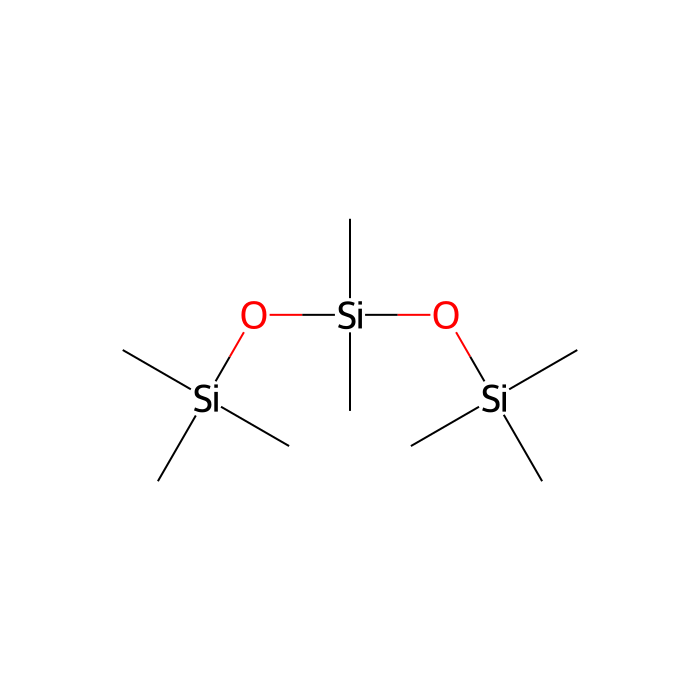
Determine the necessary mass, volume, or concentration for preparing a solution.
viscosity 5 cSt (25 °C) for sensitive chromatographic and analytical workflows requiring minimal baseline interference.
Room temperature Ships Check lot-specific COA for exact specifications.
SDS, COA, datasheet, and spec sheet available for download. Lot-specific COA accessible via lot number lookup.
Cited in 416 peer-reviewed publications across chromatography, organic synthesis, and cross-coupling reactions.
Silicone oil is low viscosity liquid polymerized siloxanes with organic side chains.
Purpose
Personal care products such as:
Antiperspirants
Deodorants
Hair sprays
Cleansing creams
Skin creams
Lotions
Bath oils
Suntan products
Nail polishes
Industrial applications such as:
Glass vial and lens coatings
Household product ingredients
Mechanical fluids
Penetrating oil ingredients
Surface active agents
Coatings
Electrical insulating fluids and polish ingredients
Advantages
Good dielectric properties
High water repellency
High shearability without breakdown
High compressibility
High spreadability
Low surface tension
Low fire hazard and reactivity
Low vapor pressure
Good heat stability
Good leveling and easy rubout
Essentially odorless and nontoxic
Soluble in a wide range of solvents
Non volatile carrier
No animal cross contamination
No porcine contamination
Application
Low viscosity silicone oil has been used to prepare cellulose based electrorheological particles for medical devices. The diffusive behavior of spreading of a silicone oil polymer on solid surfaces was studied. It was also used to investigate Marangoni flow, induced by two liquid droplets on a solid surface, exposed in air. Many diverse applications of silicone oil are as heat exchangers, hydrophobic coating of glass, ceramics, textiles and leathers, component of salves.
Comprehensive hazard, handling, storage, and regulatory compliance document.
Download SDS →Lot-specific quality data. Enter your lot number to retrieve the exact COA.
Look up COA →Full quality attributes and acceptance criteria for this grade.
View spec sheet →Taxonomy Tree
| Kingdom | Organic compounds |
|---|---|
| Superclass | Organometallic compounds |
| Classe | Organometalloid compounds |
| Subclass | Organosilicon compounds |
| Intermediate Tree Nodes | Not available |
| Direct Parent | Siloxanes |
| Alternative Parents | Trialkylheterosilanes Organic metalloid salts Organic oxygen compounds Hydrocarbon derivatives |
| Molecular Framework | Aliphatic acyclic compounds |
| Substituents | Siloxane - Trialkylheterosilane - Organoheterosilane - Organic metalloid salt - Organic oxygen compound - Hydrocarbon derivative - Organic salt - Aliphatic acyclic compound |
| Descrizione | This compound belongs to the class of organic compounds known as siloxanes. These are saturated silicon-oxygen hydrides with unbranched or branched chains of alternating silicon and oxygen atoms (each silicon atom is separated from its nearest silicon neighbours by single oxygen atoms). The general structure of unbranched siloxanes is H3Si[OSiH2]nOSiH3. H3Si[OSiH2]nOSiH[OSiH2OSiH3]2 is an example of a branched siloxane. By extension hydrocarbyl derivatives are commonly included. |
| External Descriptors | organosilicon compound |
Find and download the COA for your product by matching the lot number on the packaging.
| Lot Number | Certificate Type | Data | Oggetto |
|---|---|---|---|
| Certificate of Analysis | Mar 10, 2026 | S433164 | |
| Certificate of Analysis | Mar 10, 2026 | S433164 | |
| Certificate of Analysis | Mar 10, 2026 | S433164 | |
| Certificate of Analysis | Mar 19, 2025 | S433164 | |
| Certificate of Analysis | Mar 19, 2025 | S433164 | |
| Certificate of Analysis | Mar 19, 2025 | S433164 | |
| Certificate of Analysis | Mar 19, 2025 | S433164 | |
| Certificate of Analysis | Mar 19, 2025 | S433164 | |
| Certificate of Analysis | Mar 19, 2025 | S433164 | |
| Certificate of Analysis | Mar 19, 2025 | S433164 | |
| Certificate of Analysis | May 12, 2023 | S433164 | |
| Certificate of Analysis | May 12, 2023 | S433164 |
| Indice di rifrazione | 1.403 |
|---|---|
| Punto di infiammabilità (°F) | 214.0 °F |
| Punto di infiammabilità (°C) | 101.1℃ |
| Punto di ebollizione (°C) | >140 °C/0.002 mmHg |
| Peso molecolare | 236.530 g/mol |
| XLogP3 | |
| Hydrogen Bond Donor Count | 0 |
| Hydrogen Bond Acceptor Count | 2 |
| Rotatable Bond Count | 4 |
| Exact Mass | 236.108 Da |
| Monoisotopic Mass | 236.108 Da |
| Topological Polar Surface Area | 18.500 Ų |
| Heavy Atom Count | 13 |
| Formal Charge | 0 |
| Complexity | 149.000 |
| Isotope Atom Count | 0 |
| Defined Atom Stereocenter Count | 0 |
| Undefined Atom Stereocenter Count | 0 |
| Defined Bond Stereocenter Count | 0 |
| Undefined Bond Stereocenter Count | 0 |
| The total count of all stereochemical bonds | 0 |
| Covalently-Bonded Unit Count | 1 |