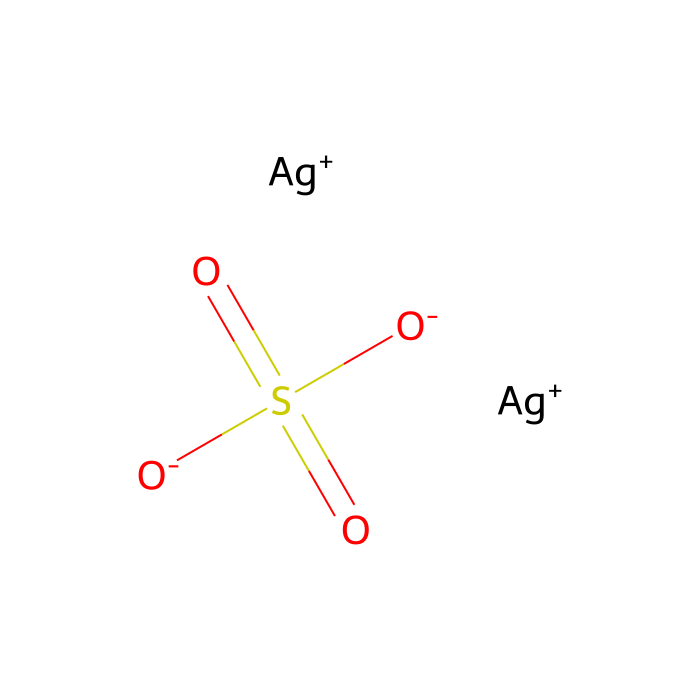
Silver sulfate - AR , CAS No.10294-26-5

CAS: 10294-26-5 Cat. No.: S100117 Formula: Ag2SO4 Peso molecolare: 311.8 Numero EC: 233-653-7 PubChem CID: 159865
Disponibile su ordine
QUALITÀ & PUREZZA AR ? Analytical Reagent grade — high-purity chemicals meeting strict assay limits for lab analysis. Use when accuracy matters and trace impurities could skew results.
Synonyms
Sulfate d'argent|silver (I) sulfate|silver(I) sulphate|DISILVER MONOSULPHATE|Sulphuric acid, silver salt|Disilver(1+) sulfate|Disilver sulfate|SILVER SULFATE [INCI]|Sulfuric acid disilver(I) salt|SILVER SULPHATE (AG2SO4)|silver(I)sulfate|Silver sulfate (Ag2SO4)|Silversulfate|Sulfuric acid silver salt (1:2)|Silbersulfat|Silver sulfate|Sulfuric acid, silver(1+) salt (1:2)|Sulfuric acid, disilver(1+) salt|SilverSulfateAg2SO4|silver(I) sulfate|sulfato de prata|Sulfuric acid,silver salt|DISILVER SULPHATE|SILVER SULFATE [MI]|SILVER SULFATE [WHO-DD]|solfato d'argento|silver (I) sulphate|Disilver monosulfate|SILVER SULFATE [VANDF]|1,1-Cycohexanediacetimide (3,3-Penta-methyleneglutarimide)|7-Methyl-1H-indole-2,3-dione #|Silver sulfate, Premion|disilver;sulfate
Storage
Room temperature
Shipped In
Normal
★
Dimensione
Germania (EU)
USA*
Prezzo
Qtà
5g
S100117-5g
—
5 Disponibile
51,98€
25g
S100117-25g
—
4 Disponibile
200,36€
100g
S100117-100g
—
1 Disponibile
728,81€
500g
S100117-500g
Su ordinazione · 8–12 settimane
3.384,10€
Enter a quantity for the sizes you want to add.

Panoramica

An ionic compound of silver employed in silver plating

Specifiche

Sinonimi
Sulfate d'argent | silver (I) sulfate | silver(I) sulphate | DISILVER MONOSULPHATE | Sulphuric acid, silver salt | Disilver(1+) sulfate | Disilver sulfate | SILVER SULFATE [INCI] | Sulfuric acid disilver(I) salt | SILVER SULPHATE (AG2SO4) | silver(I)sulfate | Silver sulfate (Ag2SO4) | Silversulfate | Sulfuric acid silver salt (1:2) | Silb Mostra altro
Specifiche e purezza
AR
Meccanismi biochimici e fisiologici
Silver sulfate is an ionic compound of silver employed as a non-staining substitute to silver nitrate. This sulfate is stable under ordinary conditions of use and storage, though it darkens upon exposure to air or light. It is slightly soluble in water.
Condizioni di conservazione di stoccaggio
Room temperature
Spedito in
Normal
Grado
AR
Nomi e identificatori
Pubchem Sid
Pubchem Sid Url
https://pubchem.ncbi.nlm.nih.gov/substance/488188306
SMILES
[O-]S(=O)(=O)[O-].[Ag+].[Ag+]
IUPAC Name
disilver;sulfate
InChIKey
YPNVIBVEFVRZPJ-UHFFFAOYSA-L
InChI
1S/2Ag.H2O4S/c;;1-5(2,3)4/h;;(H2,1,2,3,4)/q2*+1;/p-2
Isomeri SMILES
[O-]S(=O)(=O)[O-].[Ag+].[Ag+]
WGK Germania
3
PubChem CID
159865
Peso molecolare
311.8

Dati avanzati

Taxonomic Classification

Taxonomy Tree

KingdomInorganic compounds
SuperclassMixed metal/non-metal compounds
ClasseTransition metal oxoanionic compounds
SubclassTransition metal sulfates
Intermediate Tree Nodes Not available
Direct ParentTransition metal sulfates
Alternative Parents Inorganic silver salts  Inorganic oxides  
Molecular FrameworkNot available
Substituents Transition metal sulfate - Inorganic silver salt - Inorganic oxide - Inorganic salt
DescrizioneThis compound belongs to the class of inorganic compounds known as transition metal sulfates. These are inorganic compounds in which the largest oxoanion is sulfate, and in which the heaviest atom not in an oxoanion is a transition metal.
External Descriptors Not available
Struttura 3D
Modello di struttura chimica interattiva


Certificati (CoA, COO, BSE/TSE e tabella di analisi)
C of A & Other Certificates(BSE/TSE, COO):
Analytical Chart:

Find and download the COA for your product by matching the lot number on the packaging.

31 results found

Lot NumberCertificate TypeDataOggetto
A2314284A2314284Certificate of AnalysisOct 13, 2026 S100117
A2314286A2314286Certificate of AnalysisOct 13, 2026 S100117
A2314290A2314290Certificate of AnalysisOct 13, 2026 S100117
A2314306A2314306Certificate of AnalysisOct 13, 2026 S100117
F2605534F2605534Certificate of AnalysisJun 11, 2026 S100117
F2611710F2611710Certificate of AnalysisJun 11, 2026 S100117
F2605549F2605549Certificate of AnalysisJun 11, 2026 S100117
F2605536F2605536Certificate of AnalysisJun 11, 2026 S100117
K2510567K2510567Certificate of AnalysisNov 20, 2025 S100117
K2510481K2510481Certificate of AnalysisNov 20, 2025 S100117
K2510480K2510480Certificate of AnalysisNov 20, 2025 S100117
K2510390K2510390Certificate of AnalysisNov 20, 2025 S100117
D2602015D2602015Certificate of AnalysisNov 20, 2025 S100117
H2520728H2520728Certificate of AnalysisAug 22, 2025 S100117
G2326591G2326591Certificate of AnalysisJul 31, 2023 S100117
J2513025J2513025Certificate of AnalysisJul 31, 2023 S100117
G2326660G2326660Certificate of AnalysisJul 31, 2023 S100117
G2326657G2326657Certificate of AnalysisJul 31, 2023 S100117
G2326655G2326655Certificate of AnalysisJul 31, 2023 S100117
G2326649G2326649Certificate of AnalysisJul 31, 2023 S100117
A2329068A2329068Certificate of AnalysisFeb 02, 2023 S100117
A2329076A2329076Certificate of AnalysisFeb 02, 2023 S100117
A2314285A2314285Certificate of AnalysisJan 29, 2023 S100117
A2314283A2314283Certificate of AnalysisJan 29, 2023 S100117
K2218641K2218641Certificate of AnalysisNov 21, 2022 S100117
B2223027B2223027Certificate of AnalysisFeb 25, 2022 S100117
B2223038B2223038Certificate of AnalysisFeb 25, 2022 S100117
B2223035B2223035Certificate of AnalysisFeb 25, 2022 S100117
B2223031B2223031Certificate of AnalysisFeb 25, 2022 S100117
B2223030B2223030Certificate of AnalysisFeb 25, 2022 S100117
B2223029B2223029Certificate of AnalysisFeb 25, 2022 S100117
Proprietà chimiche e fisiche
SolubilitàSoluble in water (8 mg/ml at 25 °C), nitric acid, sulfuric acid, and ammonium hydroxide. Insoluble in alcohol.
SensibilitàLight sensitive.
Punto di ebollizione (°C)1085°C
Punto di fusione (°C)652°C
Peso molecolare311.8
XLogP3
Hydrogen Bond Donor Count0
Hydrogen Bond Acceptor Count4
Rotatable Bond Count0
Exact Mass311.762 Da
Monoisotopic Mass309.762 Da
Topological Polar Surface Area88.600 Ų
Heavy Atom Count7
Formal Charge0
Complexity62.200
Isotope Atom Count0
Defined Atom Stereocenter Count0
Undefined Atom Stereocenter Count0
Defined Bond Stereocenter Count0
Undefined Bond Stereocenter Count0
The total count of all stereochemical bonds0
Covalently-Bonded Unit Count3
Sicurezza e pericoli (GHS)
Pictogrammi
GHS05,   GHS09
Segnale
Danger
Indicazioni di pericolo

H315:Causes skin irritation

H319:Causes serious eye irritation

H335:May cause respiratory irritation

H400:Very toxic to aquatic life

Precauzioni

P273:Avoid release to the environment.

P280:Wear protective gloves/protective clothing/eye protection/face protection.

P391:Collect spillage.

P501:Dispose of contents/container to an approved waste disposal plant.

P264+P265:Wash hands [and …] thoroughly after handling. Do not touch eyes.

P305+P354+P338:IF IN EYES: Immediately rinse with water for several minutes. Remove contact lenses if present and easy to do. Continue rinsing.

P317:Get emergency medical help.

WGK Germania
3
Classe
9
RIDADR
UN 3077 9 / PGIII
Domande frequenti e articoli
Citations of This Product
Calcolatori di soluzioni
Recensioni

Recensioni dei clienti

Application Protocols

No validated bioassay protocols (e.g., WB, IHC, IF, FC) apply to this inorganic reagent. For chemical applications, typical workflows include:

  • Halide scavenging: Charge a reactor with the organic solution containing the halide substrate. Add 1.2–2.0 equiv of silver sulfate as a solid. Stir at ambient temperature until precipitation ceases and analysis confirms halide removal. Filter and proceed.
  • Reference electrode preparation (general outline): Prepare sulfuric acid of defined molarity. Equilibrate with excess Ag2SO4 to saturation. Assemble Ag wire in contact with the saturated solution and Ag2SO4 solid phase under appropriate junction design. Calibrate vs a standard reference electrode.

These outlines are general literature practices and should be adapted to your system. Always consult primary references and internal SOPs.

Biological Roles

Not a biological metabolite or buffer component. Silver sulfate is an inorganic salt used as a laboratory reagent and in electrochemical reference systems. Silver ions can interact with biomolecules (e.g., bind to thiols), but this product is supplied strictly for research and laboratory use. No biological function or role in metabolism is attributed to silver sulfate under physiological conditions.

If experiments involve biological matrices:

  • Expect strong binding/precipitation with chloride- and sulfide-containing media, which will sequester Ag+ as insoluble salts.
  • Exercise caution to avoid unintended antimicrobial effects in microbiological systems due to Ag+ interactions.

For research use only; not for food, drug, or household use.

Buffer Applications

Silver sulfate is not a buffering agent and is not typically used to prepare pH buffer systems. If your work involves electrochemical reference electrodes, sulfuric acid solutions saturated with Ag2SO4 are used to assemble Ag|Ag2SO4|H2SO4 reference electrodes; however, the acid provides the ionic medium rather than buffering capacity.

For conventional buffer preparation, select appropriate acid/base pairs (e.g., phosphate, acetate, citrate) suited to your target pH range.

Green Alternatives

Context: Silver reagents are effective halide scavengers/activators but involve critical metal use and potential aquatic toxicity. Consider greener strategies where feasible, balancing performance and waste minimization.

Alternatives and tradeoffs (literature/general):

| Option | Benefits | Tradeoffs | |---|---|---| | Phase-transfer or solid-supported scavengers (e.g., polymer-bound quaternary ammonium, Ag-free resins) | Avoids silver waste; easier separation | Often less universal; may not achieve complete halide removal with recalcitrant substrates | | Silver carbonate (Ag2CO3) or silver oxide (Ag2O) | Lower nitrate load; commonly used in Koenigs–Knorr and oxidation setups | Still silver-based; basic conditions may be incompatible | | Silver triflate (AgOTf) catalytic with halide abstractors | Use catalytic Ag+ with stoichiometric non-metal scavengers | AgOTf is expensive; triflate waste considerations | | Non-silver halide traps (e.g., copper(I) salts) | Lower criticality metal in some jurisdictions | Different selectivity; potential redox side reactions |

Greener practice with Ag2SO4 itself:

  • Stoichiometry control: Use the minimum effective amount; leverage heterogeneous kinetics to avoid excess.
  • Recovery/recycling: Collect AgX precipitates and submit for silver recovery to close the metal loop.
  • Solvent choices: Favor lower-toxicity solvents (e.g., acetonitrile over chlorinated solvents where chemically compatible).
  • Process intensification: Employ continuous flow or packed-bed formats with immobilized silver sources to reduce inventory and waste.

Note: Selection must consider substrate sensitivity, regulatory constraints, and performance requirements.

Pharmaceutical Uses

This product is intended for research use only. Silver sulfate is not typically employed as a pharmaceutical excipient. In pharmaceutical and fine-chemical manufacturing contexts, silver sulfate may appear as a process reagent, for example:

  • Halide scavenging during synthesis to remove chloride or bromide from reaction streams.
  • Preparation of chloride-free reference electrodes for analytical measurements.

Any use in GMP environments requires qualification of supplier specifications and documentation. For lot-specific purity, residuals, and elemental impurity profiles aligned with relevant pharmacopeial chapters (e.g., ICH Q3D considerations for elemental impurities), consult the CoA/Spec Sheet and your quality system.

Physical Properties

Item-specific specifications: Not specified for this item; refer to CoA/Spec Sheet.

Literature/general properties (for planning; not item specifications):

  • Physical state: White to off-white, crystalline inorganic solid.
  • Melting/decomposition: Reported to decompose on strong heating; silver sulfate is thermally stable to several hundred °C before decomposition to silver oxide/silver and sulfur oxides (literature).
  • Density: High, typical of heavy metal sulfates (literature, qualitative).
  • Solubility:
    • Water: Sparingly soluble at ambient temperature; solubility increases with temperature and in acidic media (literature).
    • Acids: Readily dissolves in concentrated sulfuric and nitric acid via complex equilibria (literature).
    • Organic solvents: Essentially insoluble in common organic solvents (alcohols, ethers, hydrocarbons, chlorinated solvents) (literature).
  • Electrical properties: Electrochemically relevant as a reference electrode couple (Ag|Ag2SO4|H2SO4) in non-chloride systems (literature).

Practical implications:

  • Its low water solubility enables heterogeneous halide scavenging/precipitation (AgX formation) while maintaining low ionic strength in the bulk.
  • Dissolution can be facilitated by mild acidification if homogeneous Ag+ delivery is required.

Method notes:

  • When quantitative solubility or density is critical for your protocol, consult primary literature or request the CoA for the specific lot.
Quality and Grades

Item-specific (from Product Data):

  • Grade: AR (Analytical Reagent)

What AR-grade typically implies (general guidance):

  • AR-grade materials meet purity and impurity control suitable for analytical use, including titrimetric and gravimetric applications. While exact impurity limits (e.g., alkali metals, halides, moisture) vary by manufacturer, AR-grade emphasizes consistent composition and low interfering contaminants.

Practical implications for silver sulfate:

  • Low halide background: Important when using silver sulfate for halide scavenging, argentometric steps, or for preparing Ag/Ag2SO4 reference electrodes.
  • Trace metals and organics: Kept low to minimize side reactions in organic synthesis where Ag+ serves as a Lewis acid/halide abstractor.

Specifications for this item: Not specified for this item; refer to CoA/Spec Sheet for detailed assay, trace impurity limits, and any additional tests (e.g., acid insoluble matter, loss on drying).

Stabilizers/additives:

  • None stated for this item. If stabilizers or anticaking agents are of concern, consult the CoA.

Use recommendations:

  • For critical analytical applications, verify lot-specific data (assay, halide test) prior to use.
  • For electrochemical reference electrode preparation, confirm sulfate concentration and purity requirements are met by the AR-grade lot.
Reaction and Applications

Core roles of silver sulfate in the lab (literature/general guidance):

  • Halide scavenger: Ag+ precipitates halides as AgX (X = Cl, Br, I). Silver sulfate provides Ag+ in a non-nucleophilic, low-solubility form, enabling heterogeneous halide abstraction in organic media without introducing nitrate or perchlorate.
  • Lewis acid/activator: Ag+ can activate certain leaving groups (e.g., promote ionization of benzylic/allylic halides) allowing capture by nucleophiles under mild conditions. The sulfate counterion is relatively benign compared to strongly coordinating anions.
  • Electrochemical reference preparation: Used to charge/prepare Ag|Ag2SO4|H2SO4 reference electrodes (chloride-free systems) commonly applied in nonaqueous or chloride-sensitive electrochemistry.
  • Precipitation/analytical chemistry: Selective precipitation and argentometric operations in sulfate media when chloride contamination must be avoided.

Practical tips:

  • Heterogeneous use: Stir vigorously to maintain contact between solid Ag2SO4 and the solution. Monitor for AgX formation; filtration through inert media (e.g., glass frit) is straightforward.
  • Avoid halide-containing glassware/washings when precise halide scavenging is needed.
  • Acid assistance: A small amount of sulfuric or nitric acid may increase the effective Ag+ delivery by enhancing dissolution, if homogeneous conditions are necessary.
  • Light: While Ag2SO4 itself is not notably photosensitive, the resulting AgX precipitates can darken under light; minimize prolonged bright light exposure during sensitive operations.

Compatibility:

  • Incompatible with strong reducing environments that may reduce Ag+ to Ag(0), deactivating the reagent.
Reaction Conditions

General guidance from literature/practice (not item specifications):

  • Stoichiometry: Use ≥1.0 equiv per equivalent of halide to be scavenged; slight excess (1.2–2.0 equiv) ensures complete precipitation of AgX in heterogeneous systems.
  • Solvent: Polar aprotic media (e.g., acetonitrile, nitromethane, DMF) promote substrate solubility while keeping Ag2SO4 largely heterogeneous. For homogeneous Ag+ delivery, use dilute aqueous mineral acid (H2SO4 or HNO3), avoiding chloride sources.
  • Temperature: Ambient to 60 °C is typical; higher temperatures can accelerate heterogeneous kinetics but monitor for substrate sensitivity.
  • Atmosphere: Inert atmosphere is generally not required for the salt itself; use inert conditions if the organic substrate or products are air/moisture sensitive.
  • Order of addition: Add Ag2SO4 to the stirred solution of substrate; for sensitive halide abstractions, pre-slurry the salt and add the halide-containing solution slowly to control precipitation and heat.
  • Workup: Filter off AgX/Ag2SO4 solids through a glass frit or filter aid; rinse with compatible solvent. Treat collected solids as silver-containing waste for potential recovery.
  • Analytical follow-up: Monitor halide removal by ion chromatography, argentometric titration, or by disappearance of halide signals in suitable spectroscopic methods.

Performance notes:

  • Complexing agents (amines, thiols) can bind Ag+ and inhibit halide scavenging; avoid or compensate with higher loading.
Safety and Handling

GHS/SDS status for this catalog item: Not specified for this item; refer to the SDS for authoritative classification, pictograms, and H/P statements.

General laboratory precautions for silver salts and inorganic sulfates (informational, not a substitute for SDS):

  • Hazards: Silver compounds can be toxic to aquatic life and may cause skin/eye irritation. Avoid inhalation/ingestion and minimize environmental release. Sulfate counterion is generally low reactivity, but Ag+ can form insoluble/colored precipitates with halides and sulfides.
  • Incompatibilities: Avoid contact with strong reducing agents, finely divided metals, sulfide sources (risk of Ag2S formation), and halide-rich matrices if uncontrolled precipitation is problematic. Complexation may occur with ammonia and amines.
  • PPE: Wear lab coat, safety glasses, and suitable chemical-resistant gloves. Use a dust mask/respirator if handling large quantities of powder outside a fume hood.
  • Handling: Work in a well-ventilated hood. Prevent dust formation. Use dedicated tools to avoid halide contamination when halide scavenging performance matters.
  • First aid (overview): In case of skin/eye contact, rinse cautiously with water for several minutes; remove contaminated clothing. If inhaled, move to fresh air. If swallowed, rinse mouth; seek medical advice. Always follow site-specific emergency procedures.
  • Spills/Waste: Avoid discharge to drains. Collect solids/wet residues in dedicated heavy-metal waste streams for recovery/recycling per institutional and regulatory guidance.
  • Storage: Store tightly closed at room temperature, away from incompatible materials (see above).
Solvent Selection

As an inorganic salt, silver sulfate is not used as a solvent. Solvent choice concerns its dissolution/dispersion and reaction environment.

General solubility/miscibility profile (literature):

  • Water: Sparingly soluble at room temperature; solubility improves with temperature and acidity.
  • Mineral acids: Dissolves readily in concentrated H2SO4 and HNO3; useful when homogeneous Ag+ delivery is desired without introducing chloride.
  • Organic solvents: Essentially insoluble in most organic media; can be used as a heterogeneous reagent in polar aprotic solvents when acting as a halide scavenger (precipitating AgX at the solid–liquid interface).

Selection guidance:

  • For halide abstraction in organic synthesis: Use polar aprotic solvents (e.g., acetonitrile, nitromethane) or chlorinated solvents when the substrate is soluble; the reagent remains heterogeneous and efficient at trapping halides as AgX (literature).
  • For electrochemical reference electrode preparations: Use aqueous sulfuric acid of defined molarity with suspended Ag2SO4 (Ag|Ag2SO4|H2SO4 systems).
  • For catalytic/Lewis-acid roles: Mild acidified aqueous or mixed aqueous–organic media can deliver low, controlled levels of Ag+.

Comparison notes:

  • Versus silver nitrate: AgNO3 is much more water-soluble; choose Ag2SO4 to avoid nitrate introduction and to minimize oxidizing strength while maintaining chloride-free conditions.
Storage and Reconstitution

Item-specific (from Product Data):

  • Storage conditions: Room temperature
  • Shipped in: Normal conditions

General guidance:

  • Container: Store in a tightly closed, chemically resistant container to prevent moisture uptake and contamination with halides or reducing agents.
  • Light and environment: Normal laboratory lighting is acceptable; avoid prolonged exposure to sources of sulfide or halide vapors.
  • Shelf life: Inorganic salts such as silver sulfate are typically stable when stored properly; consult the CoA/Spec Sheet for any lot-specific recommendations.

Reconstitution:

  • Solid reagent; no reconstitution is required. For preparing solutions or slurries, use compatible media as dictated by your application (e.g., dilute sulfuric acid for homogeneous Ag+; organic solvent slurry for heterogeneous use).
  • If making standardized solutions, prepare fresh or store in amber glass to minimize potential light-induced changes in any AgX that may form adventitiously.

Note: Always refer to the SDS and CoA for definitive handling and storage information for your specific lot.

Structure and Identity

Overview: Silver sulfate is an inorganic silver(I) salt of sulfuric acid, providing Ag+ in a non-nucleophilic sulfate counterion.

Item-specific (from Product Data):

  • SKU: S100117
  • CAS: 10294-26-5
  • CID: 159865
  • InChIKey: 443545 (as provided)
  • Grade/Purity: AR (Analytical Reagent)
  • Storage: Room temperature; shipped under normal conditions

Literature/Computed identifiers (for reference; not item specifications):

  • Preferred name: Silver(I) sulfate
  • Molecular formula: Ag2SO4 (literature)
  • Molecular weight: ~311.80 g/mol (literature)
  • SMILES: [O-]S(=O)(=O)[O-].[Ag+].[Ag+] (literature)

Structural features (general chemistry):

  • Ionic compound composed of two monocationic silver(I) centers (d10) and one dianionic sulfate tetrahedron (SO4^2−).
  • 2D description: Central sulfur atom tetrahedrally coordinated to four oxygen atoms (two formal S=O, two S–O−), with charge balanced by two Ag+ counterions; no discrete covalent Ag–O bonds in the idealized formula, but Ag+ associates electrostatically with sulfate oxygens in the crystal lattice.
  • Functional groups: Inorganic sulfate anion; metal cations Ag(I).
  • Stereochemistry: Not applicable; no chiral centers.

Notes:

  • For authoritative identifiers and batch-specific details, refer to the product CoA/Spec Sheet.
Synthetic Utility

Functional profile (literature/general):

  • Halide abstraction/argentation: Ag+ forms highly insoluble AgX (X = Cl, Br, I), driving reactions that generate cationic intermediates from alkyl/allylic/benzylic halides, often enabling nucleophilic substitution under milder conditions than classical SN1/SN2 protocols.
  • Non-nucleophilic counterion: Sulfate is weakly coordinating and far less nucleophilic than, for example, nitrate; this can reduce side reactions (e.g., undesired nitration) and is advantageous when chloride contamination must be avoided.
  • Heterogeneous reagent advantages: Solid Ag2SO4 provides surface-mediated halide trapping without fully dissolving, which can simplify product isolation and minimize ionic strength changes.
  • Electroanalytical support: Prepares and maintains Ag|Ag2SO4 reference systems for chloride-free measurements in acidic media.

Use cases:

  • Driving dehydrohalogenation/ionization equilibria where removal of halide is rate- or equilibrium-determining.
  • Workup aid to scrub residual halide from reaction mixtures pre-catalysis (e.g., Pd-catalyzed couplings that are chloride-sensitive) without introducing strongly oxidizing anions.

Notes:

  • Where stronger Lewis acidity is required, AgOTf or AgBF4 are alternatives, but Ag2SO4 is a practical, less hazardous counterion source when moderate activation suffices.
Target Specificity

Not applicable. This product is an inorganic salt, not a biological targeting reagent (e.g., antibody, ligand, or inhibitor). No antigen/epitope specificity data are associated with silver sulfate.

Domande frequenti

How should this product be stored?
Store at room temperature.
What does AR mean?
AR is a defined analytical purity tier suitable for general analytical and reagent applications. It specifies a minimum assay percentage, controlled limits on common impurities (water, heavy metals, residue on ignition), and lot-to-lot consistency. AR is one of several purity tiers — choose based on the sensitivity and regulatory requirements of your method.
How is this product shipped?
This product ships under standard ambient conditions. No temperature-controlled packaging is required.
What are the CAS number, molecular formula and molecular weight?
The CAS Number is 10294-26-5, the molecular formula is Ag2SO4, and the molecular weight is 311.8 g/mol. InChIKey YPNVIBVEFVRZPJ-UHFFFAOYSA-L.
What documentation is provided?
Available product documentation, including Certificates of Analysis (COA), Safety Data Sheets (SDS), and specification sheets, is shown in the product document area. Document availability and access follow the current site policy.

Desidera che le inviamo un messaggio quando avremo sconti disponibili?

Ricordamelo più tardi

Grazie! Controlli la sua casella di posta per confermare.

Ops! Le notifiche sono disabilitate.