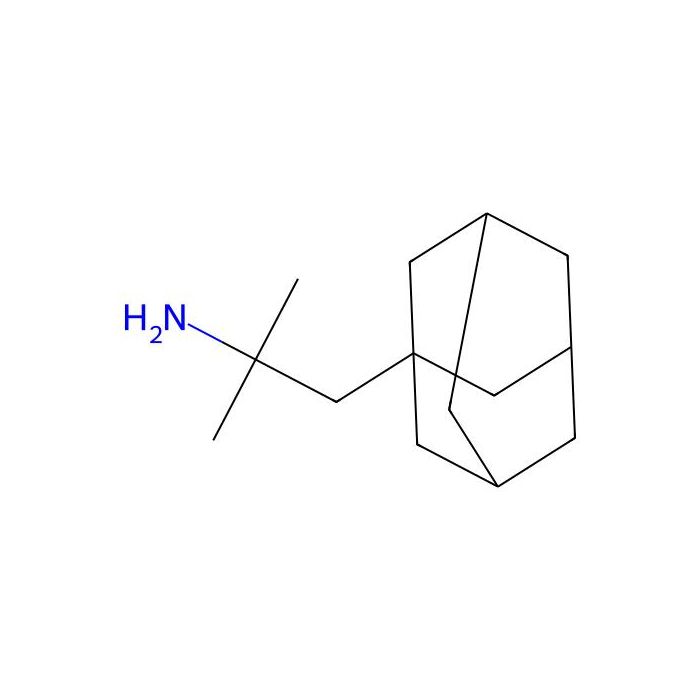
This compound belongs to the class of organic compounds known as monoalkylamines. These are organic compounds containing an primary aliphatic amine group.
External Descriptors
Not available
1. Djoumbou Feunang Y, Eisner R, Knox C, Chepelev L, Hastings J, Owen G, Fahy E, Steinbeck C, Subramanian S, Bolton E, Greiner R, and Wishart DS. ClassyFire: Automated Chemical Classification With A Comprehensive, Computable Taxonomy. Journal of Cheminformatics, 2016, 8:61.
Certificati (CoA, COO, BSE/TSE e tabella di analisi)
C of A & Other Certificates(BSE/TSE, COO):
Analytical Chart:
Proprietà chimiche e fisiche
Peso molecolare
207.350 g/mol
XLogP3
3.700
Hydrogen Bond Donor Count
1
Hydrogen Bond Acceptor Count
1
Rotatable Bond Count
2
Exact Mass
207.199 Da
Monoisotopic Mass
207.199 Da
Topological Polar Surface Area
26.000 Ų
Heavy Atom Count
15
Formal Charge
0
Complexity
225.000
Isotope Atom Count
0
Defined Atom Stereocenter Count
0
Undefined Atom Stereocenter Count
0
Defined Bond Stereocenter Count
0
Undefined Bond Stereocenter Count
0
The total count of all stereochemical bonds
0
Covalently-Bonded Unit Count
1
Calcolatori di soluzioni
Molarity Calculator
Determine the necessary mass, volume, or concentration for preparing a solution.
Dilution Calculator
Determine the dilution needed to prepare a stock solution.
Reconstitution Calculator
Recensioni
Recensioni dei clienti
Application Protocols
No tested biological assay protocols are provided for this item. As a general chemical reagent:
For analytical standards: Prepare accurately weighed stocks (e.g., in DMSO or ACN), verify concentration by qNMR or UV if chromophore is known, and store aliquots at −80 °C.
For screening assays: Validate solubility in the assay medium at the highest test concentration. Include vehicle controls and precipitation checks (light scattering, visual inspection, or nephelometry).
For synthetic use: Pilot reactions on 10–50 mg scale to evaluate compatibility before scale-up.
Always adapt protocols to your specific application and confirm with the CoA/Spec Sheet.
Biological Roles
Biological function details for Somantadine are not provided in the Product Data. No claims are made regarding physiological effects. The item is designated For research use only.
Guidance for researchers (general):
If the compound will be evaluated in biochemical or cellular assays, first confirm identity and purity by orthogonal methods and establish stability in the assay buffer/media (e.g., time-course LC-MS for degradation/metabolism in microsomes or serum, if applicable).
Determine DMSO stock stability at common concentrations (10–100 mM) and light sensitivity. Perform freeze–thaw studies if repeated use is expected.
Assess nonspecific binding to plastics and serum proteins using equilibrium dialysis or rapid ultrafiltration where relevant.
If literature indicates known biological pathways or targets for Somantadine (not provided here), incorporate appropriate positive/negative controls in your assays, and validate concentration–response with at least two independent lots. Always avoid inferring biological activity without direct experimental evidence under your conditions.
Buffer Applications
This product is not a conventional buffering reagent, and no pKa or acid/base functionality information is provided. Buffer formulation guidance is therefore not typically applicable.
Practical notes (general):
If the compound must be formulated in aqueous buffer for assays, select a buffer system (e.g., phosphate, HEPES, Tris) appropriate to your target pH and confirm compound stability and solubility at intended concentrations.
Maintain DMSO content ≤1–2% v/v in biological assays unless otherwise validated. Filter sterilize (0.22 µm) only if the compound is demonstrably stable and non-adsorptive to the membrane material.
Green Alternatives
Because the specific structure and typical solvent/process context for this item are not provided, green chemistry considerations are offered in general terms.
Solvent choice: Prefer greener solvents when feasible (e.g., 2-MeTHF over THF; EtOAc or CPME over DCM; toluene or anisole over chlorinated aromatics; MeOH/EtOH over isopropanol/acetone when performance is acceptable). Validate purity and reaction performance.
Energy minimization: Explore room-temperature or flow alternatives to high-temperature batch processing once reactivity is understood.
Waste reduction: Design telescoped sequences and use catalytic rather than stoichiometric reagents where compatible with the compound’s functional groups.
Workup optimization: Favor aqueous workups with benign salts, and crystallization over chromatographic purification when possible.
Hazard avoidance: If the compound is air-/moisture-sensitive (unknown), choose conditions that avoid pyrophoric reagents and peroxide-forming ethers unless necessary.
Illustrative comparison (general guidance):
DCM vs EtOAc: EtOAc offers lower toxicity and better biodegradability for extractions and normal-phase chromatography, with trade-offs in selectivity and volatility.
THF vs 2-MeTHF: 2-MeTHF can reduce peroxide risk and enable partial biobased sourcing, though it has a broader boiling range and distinct solvation properties.
Apply these principles after confirming Somantadine’s solubility/reactivity profile to ensure that greener choices meet technical requirements.
Pharmaceutical Uses
No pharmacopeial status, excipient role, or manufacturing use is provided for this item. Aladdin supplies this material strictly for research and laboratory use only; it is not intended for human or veterinary use, nor for clinical applications.
General R&D context:
If employed as a reference standard or research chemical in pre-formulation studies, confirm salt form, polymorph, and moisture content, as these can impact apparent solubility and stability.
For in vitro work, qualify solvent systems (e.g., DMSO stocks into buffered saline with surfactant such as 0.01–0.05% Tween 80 when needed to prevent precipitation) and document any aggregation/precipitation on dilution.
If exploring solid-form attributes, perform XRPD/DSC/TGA and slurry experiments to screen for alternative forms under relevant conditions (aqueous, alcohols, ethers, esters).
Physical Properties
Overview: Item-specific physical properties are not listed in the provided data. Consult the CoA/Spec Sheet for authoritative values.
Appearance: Not specified for this item; refer to CoA/Spec Sheet.
Melting point: Not specified for this item; refer to CoA/Spec Sheet.
Boiling point: Not specified for this item; refer to CoA/Spec Sheet.
Density: Not specified for this item; refer to CoA/Spec Sheet.
Refractive index: Not specified for this item; refer to CoA/Spec Sheet.
Solubility profile (water/organic): Not specified for this item; refer to CoA/Spec Sheet.
LogP / partitioning: Not specified for this item; refer to CoA/Spec Sheet.
pKa (if applicable): Not specified for this item; refer to CoA/Spec Sheet.
Practical guidance (general):
If physical form is unknown, start with a small solubility screen (e.g., water, MeOH, EtOH, ACN, DMSO, DMF, acetone, EtOAc, toluene, hexanes) at room temperature, then with gentle warming (≤40–50 °C) if needed.
Record approximate solubility (mg/mL) and clarity; preserve aliquots for future reference.
If hygroscopicity is unknown, minimize exposure to ambient air and handle under dry N2/Ar until behavior is established.
Quality and Grades
Item-specific grade/purity is not provided in the Product Data and should be confirmed on the CoA/Spec Sheet for your lot.
Grade/Purity: Not specified for this item; refer to CoA/Spec Sheet.
Stabilizers/inhibitors: Not specified for this item; refer to CoA/Spec Sheet.
Interpreting common grades (general guidance):
Research grade: Suitable for most R&D workflows; impurity thresholds are fit-for-purpose but not typically warranted for regulated methods.
Analytical/HPLC grade: Low UV absorbance and tight impurity control suitable for chromatography and spectroscopic assays.
≥98–99% purity (assay by HPLC/GC/NMR): Typical for small-molecule standards/intermediates; review impurity profile and water content if assay-sensitive.
Quality control best practices:
Review chromatographic purity, residual solvents, water (Karl Fischer), and identity (NMR/HRMS). If UV methods are used, assess UV cutoff and any stabilizers.
For stability-indicating methods, request or develop forced degradation data (acid/base/oxidation/thermal/light) to inform handling.
Document lot-to-lot comparability; retain a reference aliquot under recommended storage (−80 °C) for method bridging if necessary.
Reaction and Applications
Manufacturer application notes were not provided for this listing. Without a confirmed structure, only general guidance can be offered.
General R&D use cases for small organic molecules:
Reference standard or internal standard in analytical workflows after identity is verified (HPLC/UPLC-MS, GC-MS, NMR). Establish response factors and stability in the assay matrix.
Building block or intermediate in multistep synthesis. Prior to scale-up, assess compatibility with common transformations (acid/base, redox, coupling). Perform micro-scale stress tests to identify liabilities (e.g., hydrolysis, oxidation).
Method development substrate: Evaluate chromatographic retention/selectivity across reversed-phase and normal-phase systems to design purification strategies.
Practical tips:
Confirm purity by orthogonal methods (HPLC and NMR). Where peak purity is critical, use MS and PDA to detect co-eluting impurities.
If salt form vs free base/acid is uncertain, obtain anion/cation analysis (IC, elemental analysis) and pH of aqueous solution/slurry.
For solid-phase handling, assess thermal behavior (DSC/TGA) to inform drying and storage. For oily materials, determine water content and consider azeotropic drying (e.g., toluene) if compatible.
Please consult the CoA/Spec Sheet for any manufacturer-stated applications specific to Somantadine and align your workflow accordingly.
Reaction Conditions
No structure-specific reaction conditions can be recommended from the provided data. Use the following general approach to define suitable conditions once functional groups are identified:
Solvent selection: Start with a broad compatibility panel (polar aprotic, protic, and nonpolar) and narrow based on solubility and reaction performance.
Temperature: Establish a stability window via DSC/TGA and solution stability screens; then select reaction temperatures that avoid decomposition while achieving acceptable kinetics.
Catalysts/bases/acids: Screen mild conditions first (e.g., organic bases such as DIPEA, DBU; acids such as AcOH, TFA) before moving to stronger reagents.
Atmosphere: Default to inert gas (N2/Ar) until oxygen/moisture tolerance is proven.
Workup: Favor quench protocols that minimize emulsions and degradation (e.g., buffered aqueous quench, bisulfite/iodometric workups where relevant to carbonyl/halogen chemistry).
Documentation: Capture conversion and selectivity by LC/GC and confirm product integrity by NMR/MS before scaling.
Safety and Handling
Safety overview: GHS details are not provided in the Product Data. Always refer to the official SDS for this specific lot prior to use.
GHS classification: Not specified for this item; refer to SDS.
Signal word / H-statements / pictograms: Not specified for this item; refer to SDS.
General laboratory precautions (good practice when hazard profile is unknown):
PPE: lab coat, safety glasses, and appropriate chemically resistant gloves (e.g., nitrile). Handle in a fume hood to avoid inhalation of dusts/vapors.
Avoid skin/eye contact and ingestion; prevent aerosolization. Use secondary containment during transfers.
Storage incompatibilities: Until chemistry is confirmed, segregate from strong oxidizers, strong acids/bases, and reducing agents. Avoid reactive metals if functionality is unknown.
Cold-chain handling: Item is stored at −80 °C and shipped on dry ice + cold packs; minimize thaw cycles. Do not seal in airtight vials while cold to avoid vacuum lock; allow pressure equilibration upon warming in a hood.
First-aid (summary guidance; defer to SDS):
Inhalation: Move to fresh air; seek medical attention if symptoms occur.
Skin/eye contact: Rinse with water for ≥15 minutes; remove contaminated clothing; seek medical advice.
Ingestion: Rinse mouth; obtain medical attention immediately.
Waste: Collect in an appropriate, labeled container for organic or aqueous chemical waste per institutional and local regulations.
Solvent Selection
Solvent selection is compound-dependent; because solubility/polarity are not specified for this item, begin with a structured screening approach.
Recommended screening (small scale, 1–5 mg):
Polar protic: Water, MeOH, EtOH, i-PrOH.
Polar aprotic: DMSO, DMF, DMAc, ACN, acetone.
Moderately polar: EtOAc, 2-MeTHF.
Nonpolar: Toluene, DCM, MTBE, hexanes/heptane.
Guidance and tips:
Start with DMSO (analytical grade) for stock solutions if biological assays are planned; then dilute into aqueous buffer with ≤1–2% DMSO final.
If crystallinity or limited solubility is observed, sonication and gentle warming (≤40–50 °C) can assist dissolution; avoid prolonged heating unless stability is known.
For moisture-/air-sensitive compounds (unknown status), favor anhydrous solvents and handle under dry N2/Ar until stability is established.
If the compound is an amine or acid (unknown), solubilization can be improved by forming a salt with a volatile counterion (e.g., HCl or TFA for amines; NH4+ for acids) when compatible with your downstream application.
Comparison considerations (general):
DMSO vs DMF: DMSO is broadly solvating and assay-friendly at low percentages; DMF offers lower viscosity but is less desirable for biological systems.
MeOH/EtOH: Good for preliminary screens; watch for transesterification/acetal formation in acid/base catalysis.
2-MeTHF/EtOAc: Greener choices for extractions and crystallizations when suitable solubility is observed.
Storage and Reconstitution
Storage and shipping (item-specific):
Storage conditions: Store at −80 °C.
Shipped in: Dry ice packs + cold packs.
General handling and reconstitution:
Upon receipt, keep the package closed until ready to use. Inspect for evidence of thawing; if thawed, consult QC before use.
If supplied as a solid: Allow the container to warm to room temperature in a desiccator before opening to prevent moisture condensation. Quickly subdivide into single-use aliquots in inert-atmosphere conditions if moisture/air sensitivity is suspected.
If supplied as an oil/solution: Mix thoroughly before aliquoting. For solutions, verify solvent identity and concentration on the label/CoA.
Reconstitution solvent: Not specified for this item; select based on a small solubility screen (e.g., DMSO, MeOH, ACN, water) and application requirements. Filter only if the compound is known to be stable and non-adsorptive.
Freeze–thaw: Avoid repeated freeze–thaw cycles. Prepare single-use aliquots; store tightly sealed at −80 °C in chemically compatible vials (e.g., amber glass or fluoropolymer-lined caps if light/solvent sensitivity is a concern).
Stability: Item-specific stability, hygroscopicity, and light sensitivity are Not specified for this item; refer to CoA/Spec Sheet and SDS. Periodically verify integrity by HPLC/LC-MS for long-term studies.
Structure and Identity
Brief overview: Key identifiers are provided below; detailed structure fields are not specified for this item and should be confirmed from the product CoA/Spec Sheet.
SKU: S1067080
Product name: Somantadine
CAS: 79594-24-4
PubChem CID: 50234 (as provided)
InChIKey: 269299 (as provided)
SMILES: Not specified for this item; refer to CoA/Spec Sheet.
Molecular formula: Not specified for this item; refer to CoA/Spec Sheet.
Molecular weight: Not specified for this item; refer to CoA/Spec Sheet.
Structural features (general guidance):
Functional groups, ring systems, stereochemistry: Not specified for this item; refer to CoA/Spec Sheet.
If you require a 2D depiction or atom connectivity, request the structure file (SDF/MOL) from the CoA/Spec Sheet or confirm via the provided CAS number with your in-house reference database.
Identity verification recommendations (general):
Cross-check CAS vs. supplier lot CoA and an independent database.
Acquire orthogonal characterization: 1H/13C NMR, HRMS, and, if applicable, IR; compare to reference spectra.
For purity/identity confirmation in QC, consider HPLC/UPLC with diode-array detection and MS, using a verified reference standard when available.
Synthetic Utility
Without a confirmed structure, specific reactivity patterns and named transformations cannot be assigned to this item. The following are general considerations for integrating an unknown small molecule into synthetic workflows:
Functional group compatibility: Conduct small-scale challenge tests under acidic (e.g., 1–2 M HCl), basic (e.g., 1–2 M NaOH), and oxidative (e.g., H2O2, mCPBA) conditions to map liabilities.
Protection/deprotection: If amines, alcohols, or acids are suspected, evaluate standard protecting groups (Boc, Cbz, TBDMS, benzyl) for strategic manipulation, verifying stability and orthogonality.
Coupling strategies: For potential nucleophiles/electrophiles, screen amide coupling (EDC/HOBt, HATU), alkylation/acylation, and cross-coupling only after functionality is confirmed by spectroscopic analysis.
Purification: Develop a scalable purification path (crystallization vs chromatography). For silica sensitivity, consider neutral alumina or reverse-phase techniques.
Recommendation: Obtain or request a structure disclosure (SMILES/SDF) or verify independently via NMR/HRMS before committing to route design or scale-up.
Target Specificity
Not applicable. This product is a small-molecule chemical reagent, not an antibody or biologic. No antigen, epitope, species reactivity, clone, or isotype information applies.
We use cookies to ensure the website functions properly and, where permitted, to improve your experience. You can manage your preferences at any time in Settings. Learn more in our Cookie Policy.
Shall we send you a message when we have discounts available?
Remind me later
Thank you! Please check your email inbox to confirm.
Products are supplied to verified businesses, institutions, and qualified professionals for research and development use only. Not for use in humans, animals, diagnosis, or therapy.