Spherical alumina - ≥99.7%,Used as a filler, with a particle size of 90um , CAS No.1344-28-1

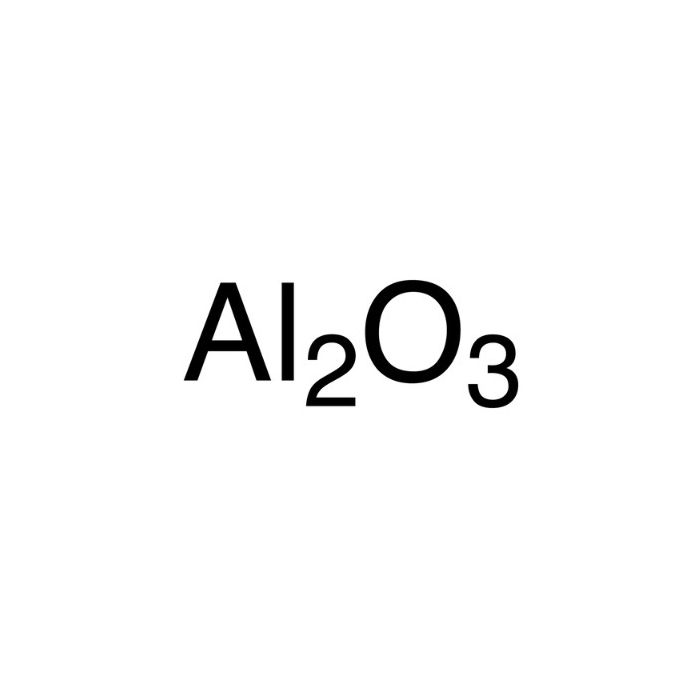
CAS: 1344-28-1 Cat. No.: S1507029 Formula: Al2O3 Peso molecolare: 101.96 Numero EC: 215-691-6
Disponibile su ordine
GRADE & PURITY ≥99.7% Used as a filler, with a particle size of 90um
Storage
Room temperature,Desiccated
Shipped In
Normal
★
Size
Germania (EU)
USA*
Price
Qty
500g
S1507029-500g
Su ordinazione · 8–12 settimane
43,30€
Enter a quantity for the sizes you want to add.
🧪
Why this grade

≥99.7%,Used as a filler, with a particle size of 90um for sensitive chromatographic and analytical workflows requiring minimal baseline interference.

🌡

Storage & shipping

Room temperature,Desiccated Ships Normal Check lot-specific COA for exact specifications.

📋

Quality documents

SDS, COA, datasheet, and spec sheet available for download. Lot-specific COA accessible via lot number lookup.

📚

Literature proof

Cited in 1673 peer-reviewed publications across chromatography, organic synthesis, and cross-coupling reactions.

Panoramica

Spherical alumina produced by high-temperature melt spraying method has the characteristics of high sphericity and high content of alpha phase alumina. It exhibits superior performance when used as a filler for rubber, plastics, and ceramic raw materials.
Its particles have high sphericity and wide particle size distribution, which can be used for high-density filling of rubber and plastic, resulting in a mixture with low viscosity and good flowability. High density filling is possible, and compared to crystalline silicon powder, a mixture with high thermal conductivity and good heat dissipation can be obtained.
Due to its spherical appearance, the wear and tear on equipment such as mixers, molding machines, and molds is greatly reduced, which can extend the service life of the equipment.

Specifications

Specifiche e purezza
≥99.7%,Used as a filler, with a particle size of 90um
Condizioni di conservazione di stoccaggio
Room temperature,Desiccated
Spedito in
Normal
Purezza
≥99.7%
Nomi e identificatori
Sorrisi canonici
O=[Al]O[Al]=O
INCHI
1S/2Al.3O/q2*+3;3*-2
Isomeri SMILES
[O-2].[O-2].[O-2].[Al+3].[Al+3]
RTECS
BD1200000
Peso molecolare
101.96
Reaxy-Rn
11323344
Reaxys-RN_link_address
https://www.reaxys.com/reaxys/secured/hopinto.do?context=S&query=IDE.XRN=11323344&ln=

Documentazione

📋 Safety Data Sheet (SDS)

Comprehensive hazard, handling, storage, and regulatory compliance document.

Download SDS →

✅ Certificate of Analysis (COA)

Lot-specific quality data. Enter your lot number to retrieve the exact COA.

Look up COA →

📊 Datasheet

Quick-reference summary of product specifications and applications.

View datasheet →

🔬 Specification Sheet

Full quality attributes and acceptance criteria for this grade.

View spec sheet →

Advanced Data

Struttura 3D
Modello di struttura chimica interattiva


Certificati (CoA, COO, BSE/TSE e tabella di analisi)
C of A & Other Certificates(BSE/TSE, COO):
Analytical Chart:

Find and download the COA for your product by matching the lot number on the packaging.

2 results found

Lot NumberCertificate TypeDataOggetto
A2606601Certificate of AnalysisDec 22, 2025 S1507029
A2606602Certificate of AnalysisDec 22, 2025 S1507029
Proprietà chimiche e fisiche
SensibilitàHygroscopic;Moisture sensitive
Indice di rifrazione1.768
Punto di ebollizione (°C)2977°C
Punto di fusione (°C)2000°C
Domande frequenti e articoli
Applications of Self-Assembled Monolayers (SAMs), Microcontact Printing, and Soft Lithography in Surface Functionalization and Micro/Nanopatterning
Self-Assembled Nanodielectrics (SANDs): Self-Assembled Nanodielectric Layers for Low-Voltage Thin-Film Transistors (with Product Selection Guide)
Research Value of Polyelectrolyte Multilayers: Layer-by-Layer Design of Interfacial Composition, Mass Transport, and Function
Polyetherimide (PEI): Structural Features, Main Properties, and Typical Application Directions
Experimental Selection and Outcome Assessment of Heterogeneous Metal Catalysts in Organic Synthesis
Limitations and Future Development of Epoxy Resins: Safety, Environmental Protection, Recycling, Bio-Based Materials, and High-Performance Trends
Four Core Applications of Epoxy Resins: Bonding, Protection, Load-Bearing, and Insulation Protection
Guide to Epoxy Resin Performance Design: System Composition, Key Properties, Process Control, and Application Selection
Guide to Selecting Polyurethane Coating Systems: Application Analysis for Wood, Flooring, Plastics, Automotive, and Industrial Protection
Comprehensive Performance Analysis of Polyurethane Coating Films: Soft/Hard Segment Structure, Microphase Separation, Crosslinking and Curing, and Selection of Representative Chemicals
Structure–Property Relationship of Silicone Resins: Mechanisms of Heat Resistance, Weatherability, Hydrophobicity, and Coating Performance Analysis
Silicone Resin Coating Formulation Design: From Application Conditions to Matching Resins, Pigments and Fillers, Curing, and Substrates
How Should Montmorillonite Be Rationally Modified? Organic Modification, Inorganic Modification, and Application-Oriented Selection and Validation
What Is Silica Sol: Mechanism of Action, Application Scenarios, and Selection Criteria for Nanosilica Dispersions
Diagnosis of Coating Performance Issues and Selection of Resin Modification Routes
Structural Design Logic of Common Resin Modification Technologies: Molecular Chain Structure, Functional Groups, Phase Structure, Crosslinked Networks, and Hybrid/Functional Design
Resin Polarity in Coating Formulations: From Molecular Structure to Dissolution, Compatibility, Interfacial Interactions, and Formulation Design
Signal Transduction Mechanism of Graphene Biosensors: From Molecular Recognition to Electrical/Optical Signal Readout and Materials Selection
Color-Development Mechanisms, Formulation Forms, and Selection/Application Logic of Colorants in Personal Care Products
Vanadium-Aluminum Master Alloy: Vanadium Source Control and Quality Essentials in High-End Titanium Alloy Melting
UVA Absorption Mechanism of Avobenzone: Keto–Enol Tautomerism, Photochemical Instability, and Formulation Photostabilization Strategies
Solid Supports in Packed Gas Chromatography Columns: Definition, Mechanisms of Action, Classification, and Selection
Citations of This Product
Calcolatori di soluzioni
Recensioni

Recensioni dei clienti

Domande frequenti

What is the purity of this product?
This product is supplied at ≥99.7% purity (chemical assay). Lot-specific values are stated on the Certificate of Analysis.
How should this product be stored?
Store at room temperature, desiccated. Keep the container tightly closed with desiccant — the material is moisture-sensitive.
How is this product shipped?
This product ships under standard ambient conditions. No temperature-controlled packaging is required.
What are the CAS number, molecular formula and molecular weight?
The CAS Number is 1344-28-1, the molecular formula is Al2O3, and the molecular weight is 101.96 g/mol.
What documentation is provided?
Available product documentation, including Certificates of Analysis (COA), Safety Data Sheets (SDS), and specification sheets, is shown in the product document area. Document availability and access follow the current site policy.

Desidera che le inviamo un messaggio quando avremo sconti disponibili?

Ricordamelo più tardi

Grazie! Controlli la sua casella di posta per confermare.

Ops! Le notifiche sono disabilitate.