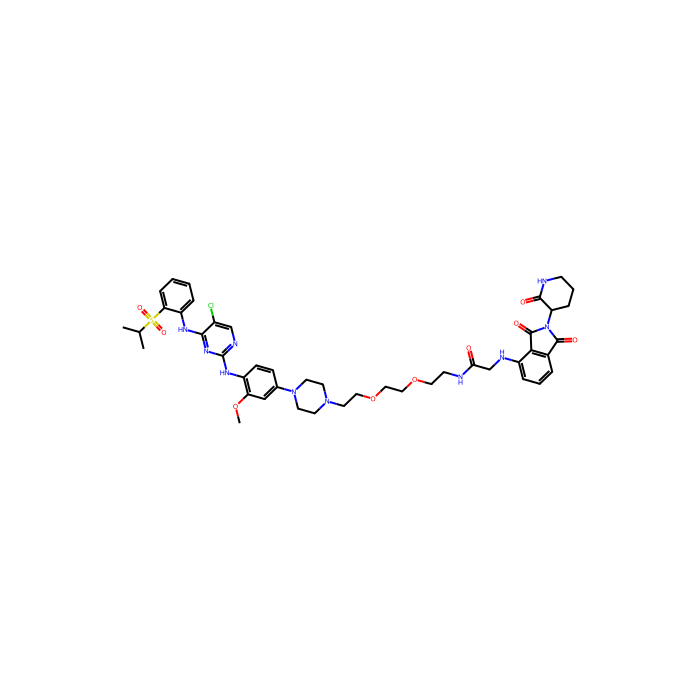
Certificati (CoA, COO, BSE/TSE e tabella di analisi)
C of A & Other Certificates(BSE/TSE, COO):
Analytical Chart:
Proprietà chimiche e fisiche
Solubilità
Solvent:DMSO, Max Conc. mg/mL: 94.75, Max Conc. mM: 100
Calcolatori di soluzioni
Molarity Calculator
Determine the necessary mass, volume, or concentration for preparing a solution.
Dilution Calculator
Determine the dilution needed to prepare a stock solution.
Reconstitution Calculator
Recensioni
Recensioni dei clienti
Application Protocols
No tested application protocols are provided for TL 13-22. As a general guide for screening compounds:
Prepare DMSO stock (e.g., 10 mM) and verify clarity after dilution into the assay buffer at the intended final concentration.
Include matched vehicle controls and, where applicable, positive and negative control compounds validated for the assay.
Record plate layout, compound ID (SKU T288725), batch/lot number, stock concentration, dilution scheme, and final solvent percentage in ELNs.
Refer to your laboratory’s SOPs for platform-specific protocols (e.g., enzymatic assays, cell viability, biophysical binding). This listing does not imply suitability for any particular protocol.
Biological Roles
No biological roles or mechanisms are provided for TL 13-22. As a member of a small-molecule screening library, it may be evaluated in diverse research assays, but there are no item-specific biological function claims.
General guidance for evaluating biological relevance (non-clinical):
Once the chemical structure is confirmed, assess physicochemical properties (MW, cLogP, TPSA, HBD/HBA) against the needs of your assay system (e.g., permeability for cell-based assays).
Screen for assay interference risks (e.g., autofluorescence, redox activity, metal chelation, detergent-like behavior) to avoid misleading readouts.
If used in target-based studies, support any observed activity with orthogonal methods and counter-screens designed to rule out aggregators and nonspecific binders.
Note: For research use only. No medical, diagnostic, or therapeutic applications are claimed or supported.
Buffer Applications
This product is not a buffering agent. Buffer preparation guidance is not typically applicable.
Practical notes for assay buffers when using small-molecule stocks (general):
Maintain consistent final organic co-solvent (e.g., 0.1–1% DMSO) across all wells, including controls.
Choose buffer systems compatible with the detection modality and compound stability (e.g., HEPES or phosphate at pH 7.2–7.5 for many enzymatic assays; avoid primary amines for NHS-based conjugation screens).
Add 0.01–0.05% non-ionic surfactant (e.g., Tween-20) only if validated to reduce nonspecific adsorption/aggregation without affecting the assay biology.
For precise buffer recipes, refer to assay-specific SOPs rather than this product listing.
Green Alternatives
With no structural or solvent requirement disclosed for TL 13-22, green chemistry considerations focus on solvent and process choices used during handling and assay preparation.
Prefer greener solvents for sample prep when feasible: ethanol, isopropanol, acetone, ethyl acetate, or water, following the solvent selection guides (e.g., CHEM21/ACS GCI). DMSO is widely used and relatively benign but consider its environmental persistence.
Minimize use of high-hazard solvents (e.g., DMF, NMP) unless essential for solubility; if used, implement exposure controls and waste segregation.
Reduce waste by preparing concentrated stocks and performing serial dilutions close to the point of use. Adopt miniaturized assays to cut solvent volumes.
Energy efficiency: Store only as required (−20°C per item) and avoid unnecessary freeze–thaw cycles; consolidate shipments when possible to reduce cold-chain impact.
Illustrative solvent comparison (general):
Water/ethanol: Green, but limited solubility for hydrophobic compounds.
Acetonitrile/acetone: Moderate green profile, volatile, good for LC and cleanup.
DMSO: High solubilizing power, low volatility, widely accepted in screening; handle spills carefully due to transdermal transport potential.
Finalize greener choices after confirming the compound’s solubility and stability profile.
Pharmaceutical Uses
No pharmacopeial status or excipient role is provided for TL 13-22, and it is supplied strictly for research use only.
General considerations (non-clinical, pre-formulation research):
If the compound advances to preclinical research, early developability assessments may include solubility screens (pH 1–8), stability in simulated gastric/intestinal fluids, and exploratory salt/cocrystal screening when applicable.
For in vitro ADME research, establish basic parameters (solubility, permeability, microsomal stability, and plasma protein binding) once the structure is available. These activities lie outside the scope of this catalog listing and require dedicated SOPs.
No claims are made regarding therapeutic use, safety, or efficacy.
Physical Properties
Item-specific data
Appearance: Not specified for this item; refer to CoA/Spec Sheet.
Melting point: Not specified for this item; refer to CoA/Spec Sheet.
Boiling point: Not specified for this item; refer to CoA/Spec Sheet.
Density: Not specified for this item; refer to CoA/Spec Sheet.
Refractive index: Not specified for this item; refer to CoA/Spec Sheet.
Solubility: Not specified for this item; refer to CoA/Spec Sheet.
logP/logD: Not specified for this item; refer to CoA/Spec Sheet.
pKa: Not specified for this item; refer to CoA/Spec Sheet.
Solubility panel (room temperature, 10 mM target): DMSO, DMF, acetonitrile, methanol, ethanol, isopropanol, PBS (pH 7.4), acetate buffer (pH 5), and basic carbonate buffer (pH 10). Start with DMSO to create a 10–50 mM stock, then dilute into assay buffers with ≤1% DMSO final.
Thermal properties: If solid, obtain DSC/TGA to determine melting/decomposition; if liquid, assess volatility by TGA. These inform storage and handling.
Spectroscopy: Record UV–Vis (200–400 nm) to understand absorbance for HPLC detection and potential photolability; collect IR (ATR) to identify major functional groups.
Partitioning: Determine shake-flask logP or estimate cLogP from structure (once available) to anticipate permeability and adsorption to plastics.
Notes
Because this is a library compound with incomplete public specs, rely on the supplied CoA and perform confirmatory in-house QC prior to use in sensitive experiments.
Quality and Grades
Item-specific grade/purity
Grade/Purity: Not specified for this item; refer to CoA/Spec Sheet.
How to interpret common grades for library compounds (general guidance)
Screening/compound library grade typically targets ≥90–95% purity by HPLC with identity confirmed by MS/1H NMR. UV cutoffs, water content, or trace metal limits are generally not defined unless stated on the CoA.
If the compound is delivered as a DMSO solution (not stated here), purity is often reported at time of formulation; re-check by LC–MS after thawing due to potential degradation.
Recommended QC on receipt
Purity assessment: Analytical HPLC/UPLC with at least two orthogonal methods (e.g., C18 gradient with UV and MS detection).
Identity: High-resolution MS and 1H NMR; obtain 13C NMR if material quantity permits.
Residual solvents/water: Karl Fischer for hygroscopic solids or lyophilized materials; GC for residual solvent profile when relevant.
Stabilizers/additives
Not specified for this item; refer to CoA/Spec Sheet. If stabilizers are present (e.g., BHT for oxidizable compounds), they should be disclosed on the CoA and may affect certain assays.
For exact acceptance criteria, use the batch CoA accompanying your shipment.
Reaction and Applications
Item context
TL 13-22 is listed as a small-molecule library member intended for research screening. No specific reactivity or application claims are provided for this item.
General research applications for library compounds
Biochemical/biophysical screening: Evaluate in enzymatic or binding assays (e.g., thermal shift, SPR, MST) using DMSO stocks and standardized plate maps. Keep solvent controls and determine apparent solubility at assay conditions to avoid false positives from aggregation/precipitation.
Cellular assays: If used, confirm compound stability in culture media and adsorption to plastics/serum proteins. Include vehicle controls and assess cytotoxicity windows where relevant to the biology studied (no clinical/therapeutic claims).
Analytical method development: Establish LC–MS methods (ESI±) for quantification and stability-indicating analysis; monitor potential degradation under assay conditions (light, pH, redox).
Computational triage: Once the structure is known, perform PAINS/REOS filtering and in silico liabilities screening; corroborate actives with orthogonal assays to minimize artefacts.
Good practices
Use fresh aliquots to minimize freeze–thaw.
Confirm identity/purity before committing to large screening campaigns.
Track batch/lot numbers and plate maps meticulously for traceability.
Any specific reaction chemistry (as a reagent or substrate) cannot be described without the structure; consult the CoA or contact Aladdin Scientific for structural details.
Reaction Conditions
Item-specific reaction conditions are not applicable because TL 13-22 is offered as a screening compound with undisclosed structure and no reagent role.
General experimental conditions for handling small molecules in analytical/assay contexts:
Stock preparation: Dissolve accurately weighed solid in anhydrous DMSO to 10–50 mM; sonicate gently if needed. Filter through 0.22 µm PTFE if particulate persists and the compound is not adsorbed.
Stability checks: Incubate diluted solutions at assay temperature and sample at 0, 2, 6, and 24 h for LC–MS analysis to verify chemical stability and rule out hydrolysis/oxidation.
Light sensitivity: If the UV spectrum indicates strong absorption <300 nm, use amber vials and minimize light exposure.
Temperature: Keep concentrated stocks at −20°C; thaw on ice and mix thoroughly before use; avoid multiple freeze–thaw cycles by aliquoting.
For any synthetic transformations involving this scaffold, consult literature reaction conditions only after the full structure is known.
Safety and Handling
GHS and hazard data (item-specific)
Signal word: Not specified for this item; refer to SDS.
Hazard statements (H-phrases): Not specified for this item; refer to SDS.
GHS classification/pictograms: Not specified for this item; refer to SDS.
Storage and shipping (item-specific)
Storage: Store at −20°C (per Product Data). Protect from moisture and light unless otherwise stated on the label/CoA.
Shipping: Ice chest with ice pads (per Product Data), indicating temperature sensitivity.
General laboratory precautions (professional guidance)
Handle inside a chemical fume hood. Avoid inhalation of dust/aerosols and skin/eye contact.
PPE: Lab coat, safety glasses, and appropriate chemically resistant gloves (e.g., nitrile). For weighing powders, consider a dust mask or work in a balance enclosure.
Incompatibilities: Unknown for this specific item; until defined, avoid strong oxidizers, strong acids/bases, and reactive metals. Do not mix with incompatible solvents without preliminary tests.
First aid (overview):
Skin/eye contact: Rinse with water for ≥15 minutes; remove contaminated clothing; seek medical advice.
Inhalation: Move to fresh air; monitor breathing; seek medical attention if symptoms persist.
Ingestion: Rinse mouth; do not induce vomiting; seek medical advice.
Waste: Collect in organic waste compatible with the solvent matrix used; follow institutional hazardous waste procedures.
Always consult the product-specific SDS for authoritative safety information before use.
Solvent Selection
Because the structure and polarity of TL 13-22 are not provided, solvent selection must be empirical and guided by small-molecule screening best practices.
Primary stock solvent: DMSO (anhydrous) is the default for discovery compounds; target 10–50 mM stocks. Verify solubility visually and by analytical LC.
Alternative solvents: DMF, NMP, acetonitrile, methanol, or ethanol when DMSO solubility is inadequate or interferes with assays.
Aqueous compatibility: Pre-dilute organic stock into buffer with vigorous mixing; keep final organic co-solvent ≤0.5–1% v/v in biochemical assays to minimize solvent effects.
Plastic adsorption: Hydrophobic compounds may adsorb to polypropylene; consider low-bind tubes or supplement with 0.01–0.05% nonionic surfactant if compatible with the assay.
pH-assisted solubilization: If acidic/basic groups are present (once known), use appropriate buffers (e.g., basic for acids, acidic for bases) to enhance solubility; back-neutralize after dissolution if needed for assays.
Simple decision guide (general):
Highly polar/ionizable: Try water/buffer first, then MeOH/EtOH.
Moderately lipophilic: ACN or MeOH; final dilution into buffer.
Highly lipophilic: DMSO or DMF stocks; consider cosolvent systems (DMSO/ACN) and surfactants compatible with your readout.
Document the final solvent composition in all experimental reports for reproducibility.
Storage and Reconstitution
Item-specific guidance
Storage condition: Store at −20°C (per Product Data). Keep container tightly closed. Protect from moisture and light unless the CoA indicates otherwise.
Shipping condition: Ice chest with ice pads (per Product Data). Inspect upon arrival to ensure cold-chain integrity.
Reconstitution (general guidance for library compounds)
If solid: Equilibrate to room temperature in a desiccator before opening to prevent moisture condensation. Prepare a concentrated stock in anhydrous DMSO (typ. 10–50 mM). Vortex and, if necessary, sonicate briefly to aid dissolution.
If supplied in solution: Mix gently after thawing; avoid vigorous agitation that may introduce bubbles or promote oxidation.
Aliquoting: Dispense single-use aliquots (e.g., 10–50 µL) into inert, low-bind vials or plates to minimize freeze–thaw.
Freeze–thaw: Avoid repeated cycles. Document the number of thaws per aliquot.
Stability notes
Exact shelf life and stability in solution: Not specified for this item; refer to CoA/Spec Sheet. In practice, many small-molecule DMSO stocks remain stable for weeks to months at −20°C if protected from moisture and light, but confirm by LC–MS prior to critical experiments.
For authoritative instructions, defer to the product label and batch CoA.
SMILES: Not specified for this item; refer to CoA/Spec Sheet.
Molecular formula: Not specified for this item; refer to CoA/Spec Sheet.
Molecular weight: Not specified for this item; refer to CoA/Spec Sheet.
Category: Small molecule and compound library member (小分子和化合物库)
Interpretive notes (general)
TL 13-22 is listed as a discrete screening compound. Without a structure, functional groups, ring systems, and stereochemistry cannot be described. Obtain the exact structure (SMILES/InChI) from the CoA or vendor SDS prior to planning experiments, QSAR, or computational docking.
Recommended preliminary characterization upon receipt for library members:
Verify identity by LC–MS (exact mass) and 1H NMR.
Confirm purity by HPLC/UPLC with UV and/or ELSD detection.
Cross-check CAS, CID, and InChIKey in curated databases once full identifiers are available.
2D structure description (general guidance)
Not available for this item. Once the SMILES/InChI is provided, generate a 2D depiction and annotate: heteroatoms, conjugation, H-bond donors/acceptors, formal charge, and stereocenters. These features guide solubility, permeability, and reactivity assessments.
Synthetic Utility
Synthetic applications cannot be detailed without the structure. However, for researchers considering derivatization or SAR around TL 13-22 once the scaffold is known, the following general strategies apply:
Identify functional handles (e.g., aryl halides, nitriles, carboxylates, amines, alcohols) for diversification via cross-coupling, amide formation, reductive amination, or nucleophilic substitutions.
Map liabilities: Oxidation-prone moieties (e.g., phenols, aldehydes, anilines) may require protection or antioxidant handling; hydrolysis-prone esters/carbamates may need alternative linkers.
Parallel synthesis: Use robust, high-yielding transformations (Buchwald–Hartwig, Suzuki–Miyaura, amide couplings) compatible with automation to explore SAR efficiently.
Late-stage functionalization: Consider C–H activation or photoredox methods to access analogs rapidly if the core allows.
Obtain the exact structure and any protecting group/stereochemical information from the CoA before planning synthetic campaigns.
Target Specificity
No target, epitope, or specificity information is provided for TL 13-22. This product is not an antibody or biologic; target-binding data, if any, would arise from user-run screening assays and are not part of this catalog listing.
We use cookies to ensure the website functions properly and, where permitted, to improve your experience. You can manage your preferences at any time in Settings. Learn more in our Cookie Policy.
Shall we send you a message when we have discounts available?
Remind me later
Thank you! Please check your email inbox to confirm.
Products are supplied to verified businesses, institutions, and qualified professionals for research and development use only. Not for use in humans, animals, diagnosis, or therapy.