Certificati (CoA, COO, BSE/TSE e tabella di analisi)
C of A & Other Certificates(BSE/TSE, COO):
Analytical Chart:
Proprietà chimiche e fisiche
Sensibilità
light sensitive
Calcolatori di soluzioni
Molarity Calculator
Determine the necessary mass, volume, or concentration for preparing a solution.
Dilution Calculator
Determine the dilution needed to prepare a stock solution.
Reconstitution Calculator
Recensioni
Recensioni dei clienti
Application Protocols
No application protocols are provided for this item. If you plan to use TPE74 in materials/device fabrication, consider drafting SOPs that address:
Inert-atmosphere handling and light protection during solution prep and casting/spin-coating.
Filtration, substrate preparation (cleaning/activation), and film-thickness control.
Post-deposition treatments (thermal annealing, solvent vapor annealing) validated for stability.
These are general suggestions; develop protocol specifics based on verified solubility, thermal profile, and performance endpoints for your lot.
Biological Roles
No biological roles are provided for this item, and it is listed under Materials Science with a research-use-only notice. Without a disclosed structure or biomolecular context, it is not appropriate to assign metabolic or signaling functions.
If TPE74 is evaluated in bio-adjacent research (e.g., as a sensor component or label), ensure biocompatibility, cytotoxicity, and photostability are established empirically for the specific formulation and exposure conditions.
Follow institutional biosafety and chemical hygiene guidelines; do not use in diagnostic, therapeutic, or clinical settings.
Buffer Applications
This product is not positioned as a buffering agent, and no acid–base properties or aqueous handling instructions are provided.
If aqueous work is attempted (e.g., colloids, dispersions), select buffers only after verifying solubility/stability and avoid light exposure. Use surfactants or co-solvents judiciously, and confirm compatibility with your analytical/device objectives.
For traditional biological buffer systems (PBS, HEPES, Tris), there is no item-specific applicability disclosed.
Green Alternatives
In the absence of structure and solvent requirements, green chemistry considerations are provided as general guidance for materials synthesis and processing.
Solvent hierarchy (general): Prefer safer solvents (e.g., ethanol, IPA, ethyl acetate, 2-MeTHF, propylene carbonate, dimethyl carbonate, Cyrene) over chlorinated aromatics or DMF/DMSO where feasible. Validate solubility and film quality before adoption.
Energy efficiency: Use room-temperature processes where possible; explore photochemical or electrochemical routes that reduce thermal input—balanced against the material’s light sensitivity (use appropriate shielding and controls).
Waste minimization: Employ micro-scale screening for solvent/process selection, and closed-loop solvent recovery for device fabrication workflows.
Safer packaging/handling: Maintain inert conditions with minimal purges and use septum-capped vials to limit repeated headspace exchanges.
Comparison snapshot (general, not item-specific):
Chlorobenzene/o-DCB: strong solvents for many conjugated organics; drawbacks include toxicity and persistence.
2-MeTHF/anisole: often viable greener substitutes with lower toxicity and better sustainability metrics; may alter drying kinetics and film morphology.
Propylene carbonate/Cyrene: high-boiling, polar, and greener; may be viscous and slower to dry; compatibility must be verified.
Implement substitutions only after confirming performance equivalence for your specific TPE74 use case.
Pharmaceutical Uses
No pharmacopeial status, excipient role, or formulation guidance is provided for this product. It is designated for research use only and categorized under Materials Science.
Do not use in human or veterinary applications.
If explored in formulation science research (e.g., materials for delivery devices, coatings), ensure full toxicological and regulatory assessments are performed independently and outside the scope of this product listing.
Physical Properties
Item-specific physical data
Melting point (MP): Not specified for this item; refer to CoA/Spec Sheet.
Boiling point (BP): Not specified for this item; refer to CoA/Spec Sheet.
Density: Not specified for this item; refer to CoA/Spec Sheet.
Refractive index: Not specified for this item; refer to CoA/Spec Sheet.
Solubility: Not specified for this item; refer to CoA/Spec Sheet.
LogP/logD: Not specified for this item; refer to CoA/Spec Sheet.
pKa: Not applicable/Not specified for this item; refer to CoA/Spec Sheet.
General guidance (literature/practice, not item-specific)
Given the storage under argon and protection from light, TPE74 may be sensitive to oxygen and/or photolysis. In practice, such materials are commonly handled in dry, oxygen-free conditions.
Materials science small molecules (if aromatic/conjugated) often display low aqueous solubility and prefer organic media (chlorinated solvents, aromatics, or high-boiling polar aprotics). Only adopt this guidance after verifying with the CoA/solubility notes for your lot.
Confirm identity and purity by NMR, HRMS, and, when applicable, GPC (for oligomeric content), and HPLC/UPLC.
If the compound is light-sensitive, minimize exposure during melting point or thermal analysis; use DSC/TGA with light-shielding when practical.
Always defer to the item’s CoA/Spec Sheet for definitive physical property values.
Quality and Grades
Item-specific grade/purity
Grade/Purity: Not specified for this item; refer to CoA/Spec Sheet.
Interpreting grade information (general guidance)
When provided, material grades (e.g., electronic grade, OLED grade, AR grade) indicate suitability for specific applications:
Electronic/OLED grade: typically emphasizes low metal/ionic residues and narrow batch-to-batch variability in optoelectronic performance (e.g., HOMO/LUMO, PL/EL characteristics). UV-Vis background and particulate control are often critical.
Analytical reagent (AR) or ≥x% purity: emphasizes compositional purity by chromatographic/NMR criteria; not necessarily optimized for device performance.
HPLC/spectrophotometric grades: focus on low UV background and minimal fluorescing impurities.
Stabilizers and additives
If stabilizers, inhibitors, or antioxidants are present, they will be disclosed on the CoA/Spec Sheet. None are specified here.
What the current listing tells you
Argon-charged packaging and cold, light-protected storage indicate sensitivity considerations. Maintain the same conditions to preserve quality.
For application-critical work (e.g., device fabrication), request the latest CoA, impurity profile, residual solvent/moisture data, and any optoelectronic metrics measured by the manufacturer.
Always use the lot-specific CoA to set acceptance criteria for incoming QC.
Reaction and Applications
Manufacturer applications
The product page lists no specific applications. Category placement is Materials Science; use is for research only.
General materials research contexts (literature/practice; not item-specific claims)
Depending on structure, materials of this class are often investigated for optoelectronics (e.g., emitters/transport layers), sensing, or as functional building blocks in thin films and composites. The precise role of TPE74 should be confirmed from its CoA and any provided application notes.
Laboratory handling for reactions (generic tips for air/light-sensitive organics)
Work under inert atmosphere (argon/glovebox) and protect from light to mitigate oxidation or photodegradation.
Use dry, degassed solvents when preparing solutions or performing any post-functionalization.
If further derivatization is intended, confirm functional group compatibility via small-scale trials and monitor by NMR/UPLC.
Characterization endpoints to consider
UV–Vis and photoluminescence (if chromophoric), cyclic voltammetry (electrochemical stability), thermal analysis (DSC/TGA), surface analysis for films (AFM, profilometry), and purity by NMR/HPLC/HRMS.
Because the specific chemistry of TPE74 is not disclosed here, any particular reaction class (e.g., cross-coupling, cycloadditions) should only be selected after reviewing the structure in the CoA/Spec Sheet.
Reaction Conditions
No reaction conditions are specified for TPE74. If you plan to derivatize or process this material, consider the following general practices for air-/light-sensitive organic solids:
Atmosphere: Argon or nitrogen; perform transfers in a glovebox or via Schlenk line. Use amberized glassware and foil wraps to limit light.
Solvents: Dry, degassed solvents matched to the compound’s solubility (verify with CoA and small-scale tests). Common screening set includes toluene, THF, acetonitrile, DMF, DMSO, anisole, and chlorinated aromatics when necessary.
Temperature: Begin at ambient; escalate cautiously. Monitor stability by TLC/HPLC and in situ spectroscopies. Avoid prolonged heating under light.
Catalysts/bases/acids: Choose only after confirming functional group compatibility; trace metals may impact materials performance—employ high-purity catalysts and rigorous workup.
Workup: Quench under inert conditions where relevant, protect from light, and minimize air exposure during filtration and solvent removal.
Expected yields, times, and detailed parameters must be established empirically for TPE74 once its structure and reactivity are confirmed from the CoA/Spec Sheet.
Safety and Handling
GHS/SDS information (item-specific)
Signal word: Not specified for this item; refer to SDS.
Hazard statements (H-phrases): Not specified for this item; refer to SDS.
GHS classification/pictograms: Not specified for this item; refer to SDS.
Storage and shipment (item-specific)
Store at 2–8°C, protected from light, argon charged.
Shipped on wet ice to maintain the cold chain.
General laboratory precautions (best practice; not item-specific)
Handle in a fume hood or inert-atmosphere glovebox/schlenk line when opening argon-charged containers.
Wear appropriate PPE: lab coat, safety glasses, and chemical-resistant gloves (e.g., nitrile). If powders are involved, consider antistatic measures and dust control.
Use amber glassware/foil wrapping to limit light exposure during weighing, dissolution, and transfers.
Incompatibilities to consider for air-/light-sensitive organics: oxidants, strong acids/bases, and prolonged exposure to air or moisture. Verify specifics with the SDS.
First-aid overview (refer to SDS for details)
Inhalation: Move to fresh air; seek medical attention if symptoms persist.
Skin/eye: Rinse with water for at least 15 minutes; remove contaminated clothing; seek medical attention as needed.
Ingestion: Rinse mouth; do not induce vomiting; seek medical attention.
Always consult the official SDS for authoritative hazard and response guidance.
Solvent Selection
Because no solubility and structural details are provided, specific solvent recommendations cannot be made for this item.
Item-specific status
Solubility profile: Not specified for this item; refer to CoA/Spec Sheet.
General decision framework (materials-oriented; literature/practice)
If the compound is a neutral, aromatic/conjugated small molecule: common screening solvents include toluene, chlorobenzene, o-dichlorobenzene (o-DCB), THF, DMF, DMSO, and acetonitrile. Start with small-scale tests under inert atmosphere and reduced light.
If ionic or strongly polar: consider high-permittivity solvents (DMSO, DMF, NMP) and alcohols as appropriate.
For film formation/device work: evaluate high-boiling solvents (o-DCB, anisole, mesitylene) versus greener options (2-MeTHF, Cyrene, dimethyl carbonate) balancing solubility, drying time, and morphology.
Water miscibility: assume low unless verified; confirm experimentally or from the CoA.
Practical tips
Filter solutions (0.2 µm PTFE) before spin-coating or casting to remove particulates.
If light-sensitive, use amber vials and minimize exposure during dissolution and transfer.
Verify solvent purity (water content, inhibitors) when sensitivity to moisture/oxidation is suspected.
Definitive solvent choices should be based on lot-specific solubility notes and your application requirements.
Storage and Reconstitution
Item-specific storage
Store at 2–8°C, protected from light, under argon.
Shipped on wet ice; maintain cold chain upon receipt.
Handling on receipt
Allow the sealed container to equilibrate to room temperature before opening to avoid moisture condensation. Open only under inert atmosphere (glovebox or argon backfill) and minimize light exposure (amber glassware/foil wrap).
Reconstitution/solution preparation
Solvent and concentration: Not specified for this item; refer to CoA/Spec Sheet. Perform small-scale solubility screens under inert conditions.
Filter solutions (0.2 µm PTFE) for device or analytical use; protect solutions from light and air (crimp-sealed septa vials with argon headspace).
Aliquoting and reuse
If frequent access is expected, aliquot into dry, amber vials under argon to minimize freeze–thaw and headspace oxygen ingress.
Reseal containers tightly and, if possible, re-establish an inert headspace after each use.
Stability
No shelf-life or stability data are provided. For long-term storage, keep at 2–8°C, dark, under argon, and monitor quality periodically (e.g., by NMR/HPLC/UV–Vis) to detect degradation.
Always consult the lot-specific CoA/Spec Sheet and SDS for definitive guidance.
Structure and Identity
Overview
Product name: TPE74 (SKU: T1504997)
CAS: 2411400-89-8
Category: Materials Science (research use only)
Item-specific identifiers (from Product Data)
Molecular formula: Not specified for this item; refer to CoA/Spec Sheet.
Molecular weight: Not specified for this item; refer to CoA/Spec Sheet.
SMILES: Not specified for this item; refer to CoA/Spec Sheet.
InChIKey: Not specified for this item; refer to CoA/Spec Sheet.
Appearance: Not specified for this item; refer to CoA/Spec Sheet.
Structural features
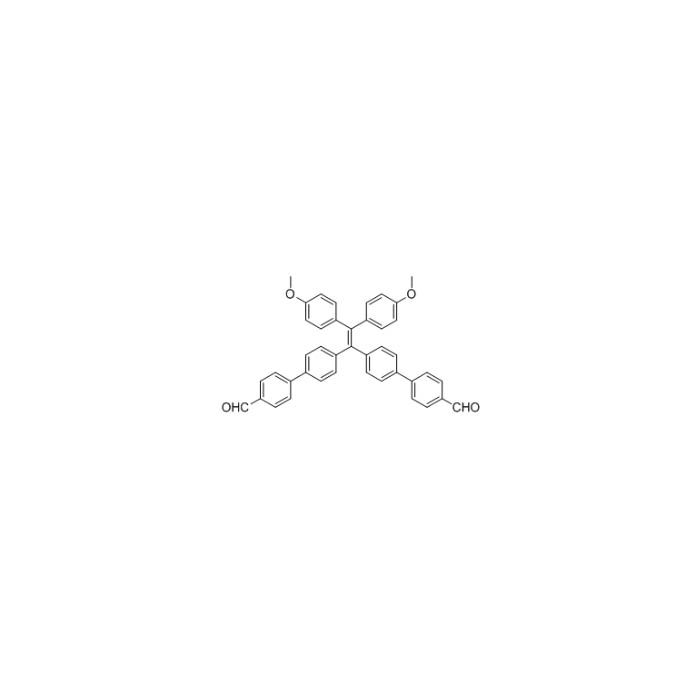
The precise chemical structure for TPE74 is not provided in the product data. Any discussion of ring systems, functional groups, or stereochemistry would be speculative. Please consult the CoA/Spec Sheet for definitive structural information associated with CAS 2411400-89-8.
2D structure (descriptive)
Not available in the provided data. If structural diagrams or identifiers (SMILES/InChI) are supplied with your lot’s CoA, those should be treated as authoritative for structural depiction and database registration.
Notes for registration and compliance
Use the CAS number and your lot-specific CoA to register this material in ELN/LIMS and to cross-reference spectral or analytical data obtained in-house.
Synthetic Utility
Because the molecular structure is not disclosed, specific retrosynthetic value or reaction manifolds cannot be asserted for this item.
General considerations for materials-oriented building blocks (literature/practice)
If TPE74 contains cross-coupling handles (e.g., aryl halides, boronates, stannanes, triflates), it may be adaptable to Suzuki–Miyaura, Buchwald–Hartwig, or Stille protocols to access derivatives. Confirm via CoA before planning.
Air/light sensitivity flags suggest avoiding strong oxidants and controlling moisture/oxygen during transformations; employ glovebox or Schlenk techniques.
Purification strategies: gradient normal-phase or reversed-phase chromatography under low-light, recrystallization from dry solvents, and, if needed, sublimation under high vacuum for device-grade purity.
These are general strategies; tailor to the confirmed functional groups and stability profile from the lot-specific documentation.
Target Specificity
Not applicable. This product is not an antibody, enzyme, or affinity reagent. No target, epitope, or isotype information is associated with TPE74.
We use cookies to ensure the website functions properly and, where permitted, to improve your experience. You can manage your preferences at any time in Settings. Learn more in our Cookie Policy.
Shall we send you a message when we have discounts available?
Remind me later
Thank you! Please check your email inbox to confirm.
Products are supplied to verified businesses, institutions, and qualified professionals for research and development use only. Not for use in humans, animals, diagnosis, or therapy.