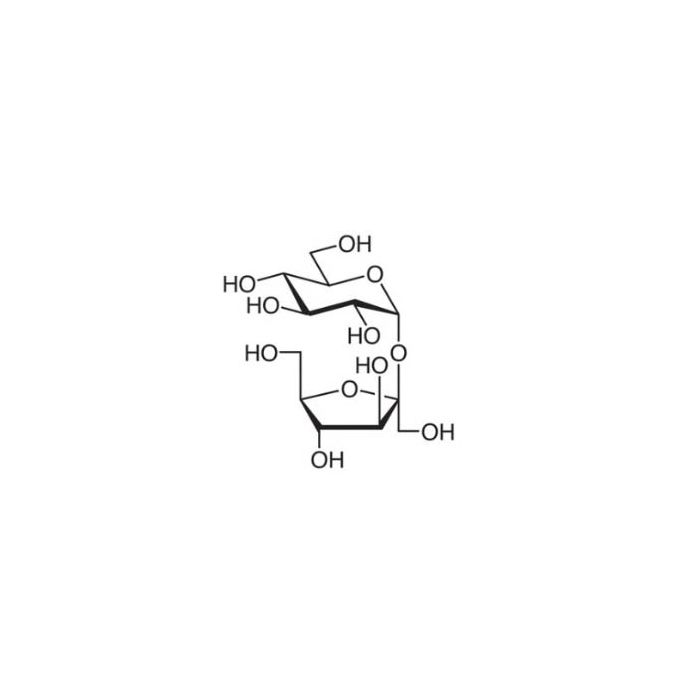
Sucrose - PharmPure™, JP, BP, Ph.Eur., NF , CAS No.57-50-1

CAS: 57-50-1 Cat. No.: S774719 Formule: C12H22O11 Poids moléculaire: 342.30 Beilstein Registry Number: 90825 Numéro CE: 200-334-9
DISPONIBLE À COMMANDE
QUALITÉ & PURETÉ PharmPure™ ? PharmPure™ — Aladdin's line of biopharmaceutical raw and starting materials. Use for pharma manufacturing inputs needing high purity and documentation. JP ? Japanese Pharmacopoeia grade — conforms to JP monograph standards. Use for pharmaceutical products subject to Japanese regulatory requirements. BP ? British Pharmacopoeia grade — conforms to BP monograph requirements. Use for pharmaceutical products marketed under UK/BP regulatory standards. Ph.Eur. ? European Pharmacopoeia grade — conforms to Ph.Eur. monographs across EU member states. Use for pharmaceutical work needing European compendial compliance. NF ? National Formulary grade — meets NF monograph standards, often for excipients. Use for pharmaceutical excipients and products requiring NF compliance.
Synonyms
Sucrose|Saccharose|α-D-Glc-(1→2)-β-D-Fru, α-D-Glucopyranosyl β-D-fructofuranoside|β-D-Fructofuranosyl-α-D-glucopyranoside|D(+)-Saccharose|Sugar
Storage
Room temperature
Shipped In
Normal
★
Taille
USA
Allemagne (EU)*
Prix
Qté
100g
S774719-GMP-100g
4 En stock
—
29,90$US
500g
S774719-GMP-500g
Sur commande · 8–12 semaines
89,90$US
Enter a quantity for the sizes you want to add.

Spécifications

Synonymes
Sucrose | Saccharose | α-D-Glc-(1→2)-β-D-Fru, α-D-Glucopyranosyl β-D-fructofuranoside | β-D-Fructofuranosyl-α-D-glucopyranoside | D(+)-Saccharose | Sugar
Spécifications et pureté
PharmPure™, JP, BP, Ph.Eur., NF
Conditions de stockage de stockage
Room temperature
Expédié en
Normal
Grade
BP, JP, NF, Ph.Eur., PharmPure™
Product Line
S774719-GMP-100g
Noms et identifiants
Sourires canoniques
C(C1C(C(C(C(O1)OC2(C(C(C(O2)CO)O)O)CO)O)O)O)O
IUPAC Name
(2R,3R,4S,5S,6R)-2-[(2S,3S,4S,5R)-3,4-dihydroxy-2,5-bis(hydroxymethyl)oxolan-2-yl]oxy-6-(hydroxymethyl)oxane-3,4,5-triol
InChIKey
CZMRCDWAGMRECN-UGDNZRGBSA-N
INCHI
1S/C12H22O11/c13-1-4-6(16)8(18)9(19)11(21-4)23-12(3-15)10(20)7(17)5(2-14)22-12/h4-11,13-20H,1-3H2/t4-,5-,6-,7-,8+,9-,10+,11-,12+/m1/s1
Isomères SMILES
C([C@@H]1[C@H]([C@@H]([C@H]([C@H](O1)O[C@]2([C@H]([C@@H]([C@H](O2)CO)O)O)CO)O)O)O)O
WGK Allemagne
2
RTECS
WN6500000
Poids moléculaire
342.30
Beilstein
90825
Reaxy-Rn
11343410
Reaxys-RN_link_address
https://www.reaxys.com/reaxys/secured/hopinto.do?context=S&query=IDE.XRN=11343410&ln=

Données avancées

Taxonomic Classification

Taxonomy Tree

KingdomOrganic compounds
SuperclassOrganic oxygen compounds
ClasseOrganooxygen compounds
SubclassCarbohydrates and carbohydrate conjugates
Intermediate Tree Nodes Glycosyl compounds
Direct ParentO-glycosyl compounds
Alternative Parents Disaccharides  C-glycosyl compounds  Ketals  Oxanes  Tetrahydrofurans  Secondary alcohols  Polyols  Oxacyclic compounds  Primary alcohols  Hydrocarbon derivatives  
Molecular FrameworkAliphatic heteromonocyclic compounds
Substituents O-glycosyl compound - Disaccharide - C-glycosyl compound - Ketal - Oxane - Tetrahydrofuran - Secondary alcohol - Oxacycle - Organoheterocyclic compound - Polyol - Acetal - Hydrocarbon derivative - Primary alcohol - Alcohol - Aliphatic heteromonocyclic compound
DescriptionThis compound belongs to the class of organic compounds known as o-glycosyl compounds. These are glycoside in which a sugar group is bonded through one carbon to another group via a O-glycosidic bond.
External Descriptors Disaccharides
Structure 3D
Modèle de structure chimique interactif


Certificats (CoA, COO, BSE/TSE et tableau d'analyse)
C of A & Other Certificates(BSE/TSE, COO):
Analytical Chart:

Find and download the COA for your product by matching the lot number on the packaging.

1 results found

Lot NumberCertificate TypeDateArticle
GMC2616179GMC2616179Certificate of AnalysisMar 17, 2026 S774719
Propriétés chimiques et physiques
SensibilitéMoisture sensitive
Rotation spécifique [α]66.5 ° (C=26, H2O)
Point de fusion (°C)185-187℃
Poids moléculaire342.300 g/mol
XLogP3-3.700
Hydrogen Bond Donor Count8
Hydrogen Bond Acceptor Count11
Rotatable Bond Count5
Exact Mass342.116 Da
Monoisotopic Mass342.116 Da
Topological Polar Surface Area190.000 Ų
Heavy Atom Count23
Formal Charge0
Complexity395.000
Isotope Atom Count0
Defined Atom Stereocenter Count9
Undefined Atom Stereocenter Count0
Defined Bond Stereocenter Count0
Undefined Bond Stereocenter Count0
The total count of all stereochemical bonds0
Covalently-Bonded Unit Count1
FAQ et articles
GMP
JP Grade Reagents Explained
BP grade: The British Pharmacopoeia Standard, Demystified
Buffer exchange of a sample using a dialysis bag
Buffer Additives to Prevent Protein Precipitation
NF Grade Explained: Standards, Tests, and Uses
How should laboratory strains be preserved?
GST-Tagged Protein Purification
Functional Sweetener Maltitol: Physicochemical Properties, Application Practices, and Aladdin Product Selection Guide
Sources, Biological Functions, Isolation/Characterization, and Emerging Applications of Exosomes
Glucose Oxidase: A Versatile Biocatalyst Across Multiple Fields
Research Progress in Detection Technologies for Soluble Sugars in Plants
An Introduction to Research-Grade Carbohydrates: Decoding the “Glycan Language” and a Product-Selection Guide (with Tables 1–3)
Calcium Gluconate: Physicochemical Properties, Pharmacopoeial Quality Control, and Application Guidelines
Trehalose: Physicochemical Characteristics, Manufacturing Processes, and Application Guidelines
16 Frequently Asked Questions About Nourseothricin
Phycocyanin: A Review of Sources, Structural Features, Production Processes, Applications, and Claimed Benefits
Experimental Animal Numbering, Marking, Grouping, and Depilation: Standardized Procedures and Practical Considerations
Agarose Precast Gels: Composition, Advantages, and Application Workflows for Standardized Nucleic Acid Electrophoresis Matrices
Physicochemical Properties of Diphenylamine, Analytical Applications, and a Review of Its DNA Colorimetric Reaction
Functional Properties, Application Scenarios, and Manufacturing Processes of Maltotetraose (G4): A Review
Pyran and the “Pyran Family” Research Selection Guide: Key Structural Points, a Classification Roadmap, and Experimental Selection Navigation
What a Disagreement in Specific Rotation Results Reveals About Method Control: Why Specific Rotation Values for Chiral Samples Cannot Be Discussed Apart from Measurement Conditions
From Sucrose to Monosaccharides: Key Enzymatic Nodes and Regulatory Logic in Sugar Conversion
Structural Characteristics, Operational Methods, and Separation Applications of Dextran Gels
Porous Graphitic Carbon (PGC) Chromatography Columns: Creating New Selectivity for Challenging Separations through Molecular Shape and the π-Electron Cloud on the Graphitic Surface
Performance Sources and Formulation Applications of Enzyme-Based Ingredients in Daily Chemical Products: Fermentation Transformation, Enzymatic Reactions, and Application Principles
Establishment and Evaluation Methods of Diabetic Animal Models
Comparison of Reducing Sugar Detection Methods: Selection of Fehling’s Reagent, Benedict’s Method, DNS Method, and HPLC
Evaluation of Blood-Brain Barrier Permeability: Tracer Extravasation, TEER Measurement, and Interpretation of In Vitro Model Results
The Moisturizing and Low-Moisture Protective Mechanisms of Trehalose: From Its α,α-1,1 Structure and Hydration Dynamics to In Vitro Skin Barrier Research
Exosome-Related Ingredients in Skincare Products: Sources and Preparation, Quality Control, Evidence of Efficacy, and Safety Assessment
Mechanisms by Which Fructan-Rich Ophiopogon japonicus Tuberous Root Extract Supports Skin Moisturization and Barrier Function
What Is Direct Compression? Process Characteristics, Suitability Criteria, and Excipient Selection
Density-Gradient Separation Media: Principles, Types, and Application Selection
Citations of This Product
Calculateurs de solution
Avis

Avis des clients

Besoin d'aide pour choisir la qualité ?

Notre guide de sélection des qualités couvre la pureté, le statut du stabilisant et l'adéquation à l'application pour toutes les variantes de notre catalogue.

Voir le guide des qualités PharmPure™ → Voir le guide des qualités JP → Voir le guide des qualités BP → Voir le guide des qualités Ph.Eur. → Voir le guide des qualités NF →

Souhaitez-vous que nous vous envoyions un message lorsque des réductions seront disponibles?

Me rappeler plus tard

Merci ! Veuillez vérifier votre boîte de réception e-mail pour confirmer.

Oups ! Les notifications sont désactivées.