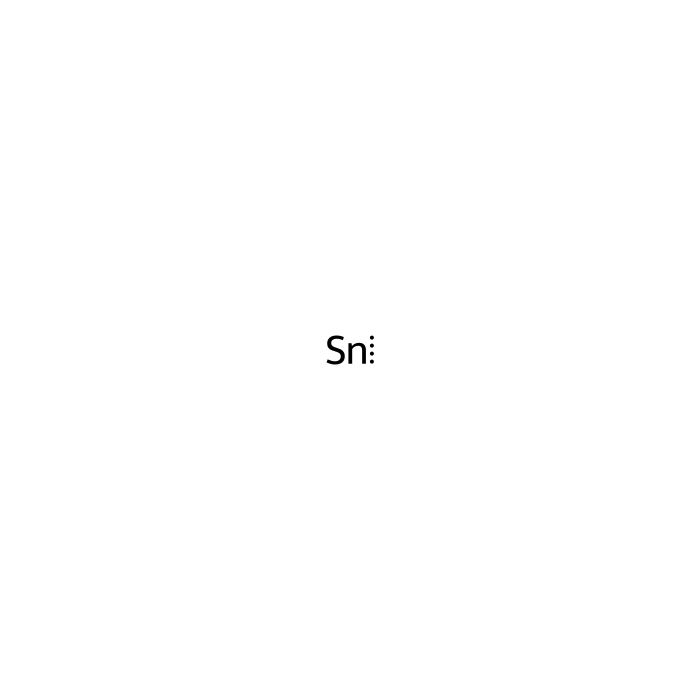
Tin - for elemental analysis , CAS No.7440-31-5

CAS: 7440-31-5 Cat. No.: T141462 Formule: Sn Poids moléculaire: 118.71 Numéro CE: 231-141-8
DISPONIBLE À COMMANDE
QUALITÉ & PURETÉ for Elemental analysis ? Elemental-analysis grade — controlled C/H/N/S and trace background for accurate elemental data. Use in CHNS and related elemental determinations.
Synonyms
Diethylnorspermine, N(1),N(11)-|Tin|TIN-|Tin foil|Tin, rod, 100mm, diameter 3.0mm, 99.99+%|TIN [WHO-DD]|Tin foil, 0.1mm (0.004in) thick|Tin(11)|4-methoxy-6-prop-2-enyl-1,3-benzodioxole|FIDEXABAN [INN]|Zinn|Tin foil, 0.18mm (0.007in) thick|Tin, metal|Zinn [German]|TIN [HSDB]|Tin Nanorods|Metallic tin|Tin pieces, 99.9999+% (metals basis)|Muscol|Tin shot, 3mm (0.1in)|Tin wire, 3.2mm (0.13in) dia|TIN ELEMENT|Wang|Sulfur-Free Tin Concentrate: Sn @ approx. 18 wt% in Hydrocarbons|Tin foil, 0.025mm (0.001in) thick, hard|Sn|stannum|TIN [VANDF]|Samarium Fluoride (SmF3) Sputtering Targets|TETROFOSMIN [WHO-DD]|Tin powder; Tin; Stannum; Metallic tin; Tin, elemental|Tin granules|Tin plate 3.2mm (0.13in) thick|ZN5|Legal X [Street Name]|Tin Nanoprisms|Tin foil, 0.127mm (0.005in) thick|Tin shot|Tin foil, 0.5mm (0.02in) thick|Tin Metal (shot)|Tin Metal Organic Framework|Ultra Thin Tin Foil|STANNUM METALLICUM [HPUS]|TIN [INCI]|Tin, elemental|Tin foil, 0.25mm (0.01in) thick|tin atom|n-ethylmaleimide (nem)|Sn(0)|Tin foil, 0.05mm (0.002in) thick|Tin powder|Etain|Stannum metallicum|Tin foil, 0.33mm (0.013in) thick|Tin foil, 1.0mm (0.04in) thick|Tin foil, 2.0mm (0.08in) thick|SDCCGSBI-0050179.P002|Tin mossy|estano|TIN [MI]
Storage
Argon charged,Room temperature
Shipped In
Normal
★
Taille
USA
Allemagne (EU)*
Prix
Qté
10g
T141462-10g
Sur commande · 8–12 semaines

95,90$US

123,90$US
Enregistrer 28,00 $US (22.60%)
Enter a quantity for the sizes you want to add.

Spécifications

Synonymes
Diethylnorspermine, N(1),N(11)- | Tin | TIN- | Tin foil | Tin, rod, 100mm, diameter 3.0mm, 99.99+% | TIN [WHO-DD] | Tin foil, 0.1mm (0.004in) thick | Tin(11) | 4-methoxy-6-prop-2-enyl-1,3-benzodioxole | FIDEXABAN [INN] | Zinn | Tin foil, 0.18mm (0.007in) thick | Tin, metal | Zinn [German] | TIN [HSDB] | Tin Nanorods | Metallic tin | Tin p Afficher plus
Spécifications et pureté
for elemental analysis
Conditions de stockage de stockage
Argon charged,Room temperature
Expédié en
Normal
Grade
for Elemental analysis
Noms et identifiants
SMILES
[Sn]
IUPAC Name
tin
InChIKey
ATJFFYVFTNAWJD-UHFFFAOYSA-N
InChI
1S/Sn
Isomères SMILES
[Sn]
WGK Allemagne
3
RTECS
XP7320000
Poids moléculaire
118.71

Données avancées

Taxonomic Classification

Taxonomy Tree

KingdomInorganic compounds
SuperclassHomogeneous metal compounds
ClasseHomogeneous post-transition metal compounds
SubclassNot available
Intermediate Tree Nodes Not available
Direct ParentHomogeneous post-transition metal compounds
Alternative Parents Not available
Molecular FrameworkNot available
Substituents Homogeneous post-transition metal
DescriptionThis compound belongs to the class of inorganic compounds known as homogeneous post-transition metal compounds. These are inorganic compounds containing only metal atoms,with the largest atom being a post-transition metal atom.
External Descriptors elemental tin
Structure 3D
Modèle de structure chimique interactif


Certificats (CoA, COO, BSE/TSE et tableau d'analyse)
C of A & Other Certificates(BSE/TSE, COO):
Analytical Chart:

Find and download the COA for your product by matching the lot number on the packaging.

1 results found

Lot NumberCertificate TypeDateArticle
K1920044K1920044Certificate of AnalysisSep 06, 2023 T141462
Propriétés chimiques et physiques
SensibilitéMoisture sensitive.
Point d'ébullition (°C)2260°C
Point de fusion (°C)232°C
Poids moléculaire118.71
XLogP3
Hydrogen Bond Donor Count0
Hydrogen Bond Acceptor Count0
Rotatable Bond Count0
Exact Mass119.902 Da
Monoisotopic Mass119.902 Da
Topological Polar Surface Area0.000 Ų
Heavy Atom Count1
Formal Charge0
Complexity0.000
Isotope Atom Count0
Defined Atom Stereocenter Count0
Undefined Atom Stereocenter Count0
Defined Bond Stereocenter Count0
Undefined Bond Stereocenter Count0
The total count of all stereochemical bonds0
Covalently-Bonded Unit Count1
Sécurité et dangers (GHS)
Pictogramme(s)
Signal
Warning
Mentions de danger

H302:Harmful if swallowed

H319:Causes serious eye irritation

H335:May cause respiratory irritation

H336:May cause drowsiness or dizziness

H373:May causes damage to organs through prolonged or repeated exposure

Conseils de prudence

P260:Do not breathe dust/fume/gas/mist/vapors/spray.

P264:Wash hands [and …] thoroughly after handling.

P270:Do not eat, drink or smoke when using this product.

P271:Use only outdoors or in a well-ventilated area.

P280:Wear protective gloves/protective clothing/eye protection/face protection.

P312:Call a POISON CENTER or doctor/... if you feel unwell.

P330:Rinse mouth.

P301+P312:IF SWALLOWED: call a POISON CENTER/doctor/... IF you feel unwell.

P304+P340:IF INHALED: Remove person to fresh air and keep comfortable for breathing.

P305+P351+P338:IF IN EYES: Rinse cautiously with water for several minutes. Remove contact lenses if present and easy to do - continue rinsing.

P501:Dispose of contents/container to an approved waste disposal plant.

WGK Allemagne
3
RTECS
XP7320000
FAQ et articles
Reagents for Elemental Analysis — Overview
Panorama Guide to Lithium-Ion Battery Electrode Materials: Working Principles, Materials Map, and Selection Navigation (incl. Tables 1–4)
Post-Transition Metals and Their Salts: A Classification Guide from Definitions to Value-Chain Applications (Including Product Lists in Tables 1–4)
NiMH Nickel–Metal Hydride Batteries: A Full View of the MH (Metal Hydride) Negative Electrode—Working Mechanism, Materials Families, and a Selection Map (with Tables 1–2)
Thermoelectric Materials Selection Guide: Evaluation Framework, Temperature-Range–System Map, and Modularization Gatekeeping Criteria (with Product Navigation Tables 1–4)
Why Metal Nanocatalysts Can “Save Energy Yet Lose Performance Easily”: Durability Logic from Active Sites to Support/Interface Engineering (Including Selection Guide and Product Tables A–D)
Citations of This Product
Calculateurs de solution
Avis

Avis des clients

Foire aux questions

What does for elemental analysis mean?
for elemental analysis indicates that the chemical has been purified and tested specifically for use in trace and elemental analysis. Key specifications typically include controlled UV absorbance at common detection wavelengths, low non-volatile residue, controlled moisture content, and verified lot-to-lot consistency. for elemental analysis is used for mobile phases, sample preparation and analytical standards in this workflow.
How should this product be stored?
Store at room temperature under argon. It is supplied under an argon blanket; reseal under inert gas after each use.
How is this product shipped?
This product ships under standard ambient conditions. No temperature-controlled packaging is required.
What are the CAS number, molecular formula and molecular weight?
The CAS Number is 7440-31-5, the molecular formula is Sn, and the molecular weight is 118.71 g/mol. InChIKey ATJFFYVFTNAWJD-UHFFFAOYSA-N.
What documentation is provided?
Available product documentation, including Certificates of Analysis (COA), Safety Data Sheets (SDS), and specification sheets, is shown in the product document area. Document availability and access follow the current site policy.

Souhaitez-vous que nous vous envoyions un message lorsque des réductions seront disponibles?

Me rappeler plus tard

Merci ! Veuillez vérifier votre boîte de réception e-mail pour confirmer.

Oups ! Les notifications sont désactivées.