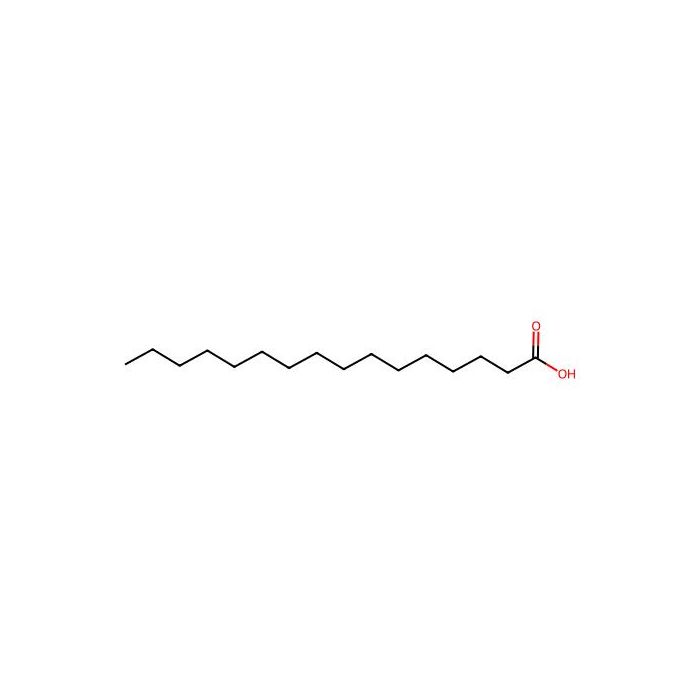
Palmitic acid - Stearic acid ≤ 0.5% , CAS No.57-10-3

CAS: 57-10-3 Cat. No.: P753896 分子式: C16H32O2 分子量: 256.42 Beilstein Registry Number: 607489 EC番号: 200-312-9
在庫切れ
グレード&純度 Stearic acid ≤ 0.5%
Synonyms
Hexadecanoic acid|1-Pentadecanecarboxylic acid|C16:0|Cetylic acid|NSC 5030 PamOH
Storage
Room temperature
Shipped In
Normal
利用可能なオプションがありません。

仕様

同義語
Hexadecanoic acid | 1-Pentadecanecarboxylic acid | C16:0 | Cetylic acid | NSC 5030 PamOH
仕様と純度
Stearic acid ≤ 0.5%
保管条件
Room temperature
入荷
Normal
名前と識別子
カノニカル・スマイル
CCCCCCCCCCCCCCCC(=O)O
IUPAC Name
hexadecanoic acid
InChIKey
IPCSVZSSVZVIGE-UHFFFAOYSA-N
INCHI
1S/C16H32O2/c1-2-3-4-5-6-7-8-9-10-11-12-13-14-15-16(17)18/h2-15H2,1H3,(H,17,18)
異性体SMILES
CCCCCCCCCCCCCCCC(=O)O
WGKドイツ
3
RTECS
RT4550000
代替CAS番号
57-10-3
NSC番号
5030
MeSH用語
Acid, Hexadecanoic;Acid, Palmitic;Calcium Palmitate;Hexadecanoic Acid;Palmitate, Calcium;Palmitate, Sodium;Palmitic Acid;Sodium Palmitate
分子量
256.42
Beilstein
607489
Reaxy-Rn
607489
Reaxys-RN_link_address
https://www.reaxys.com/reaxys/secured/hopinto.do?context=S&query=IDE.XRN=607489&ln=

詳細データ

Taxonomic Classification

Taxonomy Tree

KingdomOrganic compounds
SuperclassLipids and lipid-like molecules
分類Fatty Acyls
SubclassFatty acids and conjugates
Intermediate Tree Nodes Not available
Direct ParentLong-chain fatty acids
Alternative Parents Straight chain fatty acids  Monocarboxylic acids and derivatives  Carboxylic acids  Organic oxides  Hydrocarbon derivatives  Carbonyl compounds  
Molecular FrameworkAliphatic acyclic compounds
Substituents Long-chain fatty acid - Straight chain fatty acid - Monocarboxylic acid or derivatives - Carboxylic acid - Carboxylic acid derivative - Organic oxygen compound - Organic oxide - Hydrocarbon derivative - Organooxygen compound - Carbonyl group - Aliphatic acyclic compound
説明This compound belongs to the class of organic compounds known as long-chain fatty acids. These are fatty acids with an aliphatic tail that contains between 13 and 21 carbon atoms.
External Descriptors Straight chain fatty acids
3 D構造
インタラクティブ化学構造モデル


関連ターゲット(人間)
FFAR1 Tchem Free fatty acid receptor 1 (0 Activities)
Activity TypeActivity Value -log(M)Mechanism of ActionActivity ReferencePublications (PubMed IDs)
証明書(CoA、COO、BSE/TSEと分析図)
C of A & Other Certificates(BSE/TSE, COO):
Analytical Chart:

Find and download the COA for your product by matching the lot number on the packaging.

2 results found

Lot NumberCertificate Type日付商品
K2505731K2505731Certificate of AnalysisNov 30, 2024 P753896
L2417087L2417087Certificate of AnalysisNov 30, 2024 P753896
化学的性質と物理的性質
溶解度Insoluble in water, slightly soluble in petroleum ether, soluble in ethanol, easily soluble in ether, chloroform, and glacial acetic acid.
感度Moisture sensitive.
屈折率1.4273
引火点(°F)235.4 °F
引火点(°C)113℃
沸点(°C)271.5°C
融点(°C)62°C
分子量256.420 g/mol
XLogP36.400
Hydrogen Bond Donor Count1
Hydrogen Bond Acceptor Count2
Rotatable Bond Count14
Exact Mass256.24 Da
Monoisotopic Mass256.24 Da
Topological Polar Surface Area37.300 Ų
Heavy Atom Count18
Formal Charge0
Complexity178.000
Isotope Atom Count0
Defined Atom Stereocenter Count0
Undefined Atom Stereocenter Count0
Defined Bond Stereocenter Count0
Undefined Bond Stereocenter Count0
The total count of all stereochemical bonds0
Covalently-Bonded Unit Count1
よくある質問と記事
HepG2 Cell Steatosis Model Establishment Protocol
Fatty Acids from Basics to Lab Practice: Structural Classification, Research Uses, and Selection Tips (with an Aladdin Representative Product Quick-Reference Table)
Review of the Principles, Common Methods, and Key Application Considerations for the Determination of Glycerol and Triglyceride Contents
Review of the Structural Characteristics, Biological Functions, and Application Advances of Lycopene
Revisiting Titanium Tetrachloride: New Advances in the Direct Amidation and Esterification of Carboxylic Acids
DAST-Mediated Amidation at Room Temperature: Method Features, Practical Value, and Scope of Applicability
Central–Peripheral Signaling Networks Regulated by Neuropeptides and the Integration of Energy Metabolism
Acetyl-Group Metabolic Enzyme Network and In Vitro Enzymology Analysis
mtDNA Stress and cGAS–STING/AIM2 Innate Immune Activation Mediated by CRAT Deficiency
Why Do Cancer Cells Synthesize Their Own Fatty Acids? From the De Novo Fatty Acid Synthesis Pathway to Experimental Assessment
Potassium Fatty Acid Soaps: Structure and Formulation Applications—Production Processes, Alkalinity, Foam Control, and Low-Foam Cleaning
What Is the Difference Between Triethanolamine and Diethanolamine: Understanding Their Formulation Functions, Application Differences, and Selection Logic from a Molecular-Structure Perspective
Why Can 6501 (Cocamide DEA) Stabilize Foam and Build Viscosity? Structural Mechanism, 1:1/1:1.5 Differences, and Application Selection
Differences, Functions, and Selection Guidelines for Sodium Hydroxide Flakes, Granules, Liquid Caustic Soda, and Caustic Soda in Household and Personal Care Product Manufacturing: The Functional and Application Logic of Sodium Hydroxide
From Structure to Selection: Mechanisms and Application Assessment of Low-Foam Oil and Wax Removal with Fatty Acid Methyl Ester Ethoxylates (FMEE)
Mechanism of Action and Selection Logic of Defoamers for Daily Chemical Products: Foam Stability, Foam-Breaking Mechanisms, and Representative Raw Material Analysis
Understanding Anionic Surfactants in Household and Personal-Care Formulations from a Structural Perspective: Structural and Performance Differences among Representative Raw Materials such as LAS, AES, K12, AOS, MES, and FMES
Understanding Ceramides from the Perspective of the Stratum Corneum Lipid Barrier: Moisturizing and Barrier-Repair Mechanisms, Ingredient Selection, and Formulation Research Considerations
Establishment and Evaluation Methods of Diabetic Animal Models
β-Hydroxybutyrate Detection Methods and Metabolic Significance: Comparative Applications of Enzymatic Assays, Blood Ketone Meters, and LC-MS
Mechanistic Analysis of Topical Glutathione in Skincare: Cellular Redox Regulation, Skin Delivery Challenges, and SLN-Based Delivery Strategies
Applications of Endocrinology/Hormones in Metabolic Regulation, Reproductive Function, and Disease Research
Protective and Potential Reparative Mechanisms of Prinsepia utilis Seed Oil on the Skin Barrier: Fatty Acid Composition, Epidermal Lipid Metabolism, and Research Evidence
Structure, Stratum Corneum Distribution, and Stratum Corneum Conditioning Mechanism of Capryloyl Salicylic Acid: Barrier Effects and Safety Evaluation
Regulatory Mechanisms, Research Methods, and Modification-Omics Analysis of Protein Post-Translational Modifications
Potential Mechanisms of Tea Polyphenols in Oily, Acne-Prone Skin: Effects of EGCG on Sebum Production, Lipid Peroxidation, and Inflammatory Responses
Gentiana Root Extract and Gentiopicroside: Chemical Composition, Antioxidant and Inflammation-Modulating Mechanisms, and Their Potential Effects on Skin Barrier Homeostasis
The Sebum-Regulating Potential of Zinc PCA and Its Relationship with Stratum Corneum Hydration
Mechanisms by Which Fructan-Rich Ophiopogon japonicus Tuberous Root Extract Supports Skin Moisturization and Barrier Function
How Palmitoyl Pentapeptide-4 Acts on the Skin: From the KTTKS Sequence and Skin Delivery to Collagen Matrix Responses
The Logic of Biomimetic Peptide Action in Skin: Sequence and Conformation, Skin Delivery, Stability, and Target Matching
Antidiabetic Mechanisms, Representative Bioactive Compounds, and Research Applications of Natural Products
The Combination Logic of Palmitoyl Tripeptide-1 and Palmitoyl Pentapeptide-4: Skin Delivery, Matrix Signaling, and Regulation of Collagen Homeostasis
How Ectoine Regulates Skin Hydration: Zwitterionic Structure, Preferential Hydration, and Barrier-Support Mechanisms
Molecular Mechanisms by Which Natural Products Regulate Adipose Browning
Are Lipids Fats? Understanding the Multiple Functions of Lipids from Cellular Metabolism to mRNA Delivery
Bakuchiol Is Not “Plant Retinol”: Chemical Structure, Anti-Aging Mechanisms, and Functional Similarities and Differences Compared with Retinol
Structure, Emollient and Moisturizing Effects, and Source Identification of Squalane: From Complete Hydrogenation of Squalene to Stable Isotope Analysis
Why Do Skincare Oligopeptides Have Different Effects? — Molecular Structure, Skin Delivery, and Mechanisms of Action
Stratum Corneum Penetration and Skin Mechanisms of Panthenol: Moisturization, Barrier Repair, and Soothing Effects
Citations of This Product
ソリューション計算機
レビュー

顧客レビュー

Shall we send you a message when we have discounts available?

Remind me later

Thank you! Please check your email inbox to confirm.

Oops! Notifications are disabled.